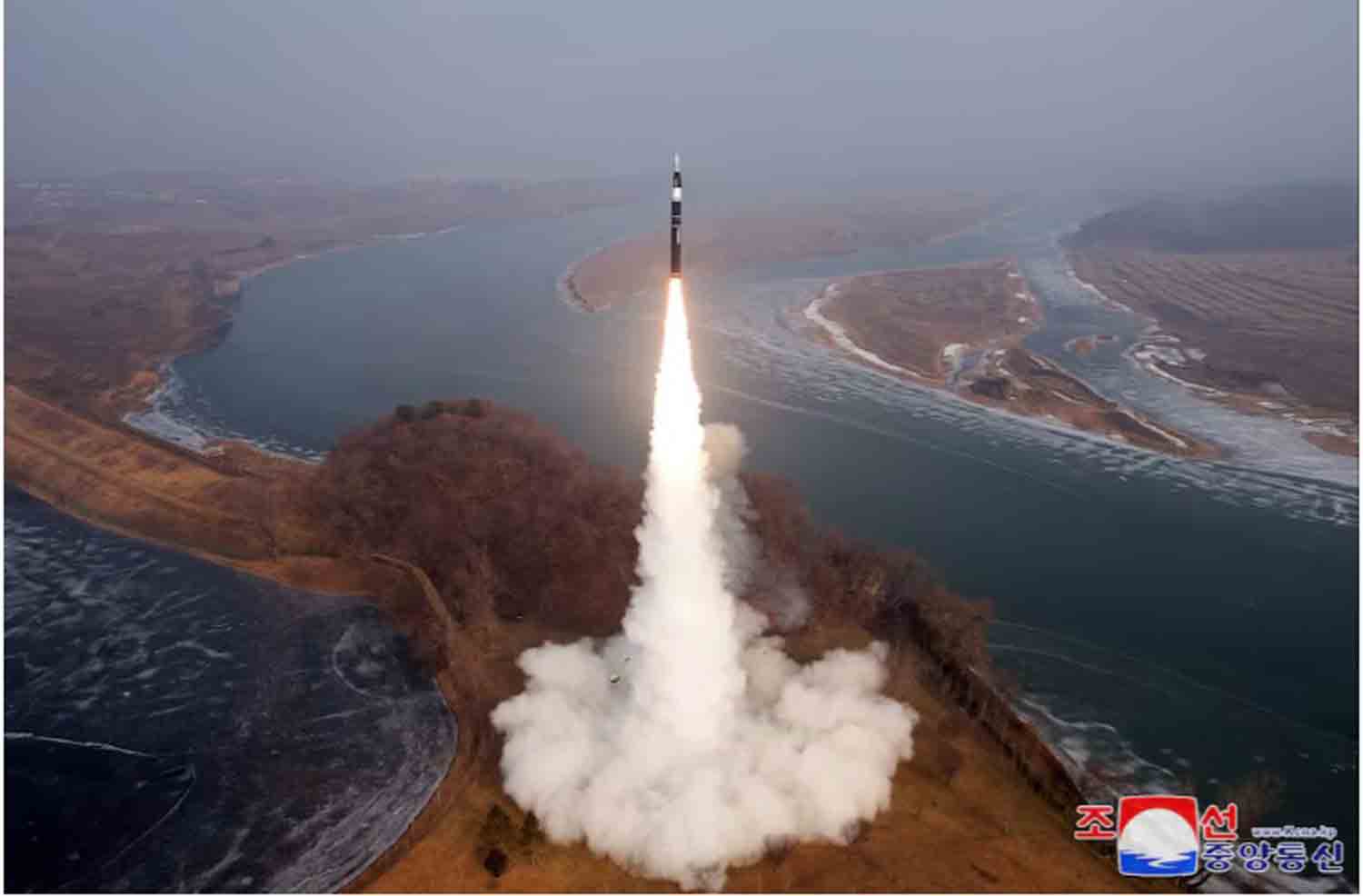
North Korea’s latest test of a high-thrust solid-fuel intercontinental ballistic missile (ICBM) engine signals a major push toward multiple independently targetable re-entry vehicle (MIRV) capability, according to a new report by the Institute for the Study of War.
The report says the program is designed to complicate US and allied missile defense systems while strengthening Pyongyang’s second-strike nuclear deterrent.
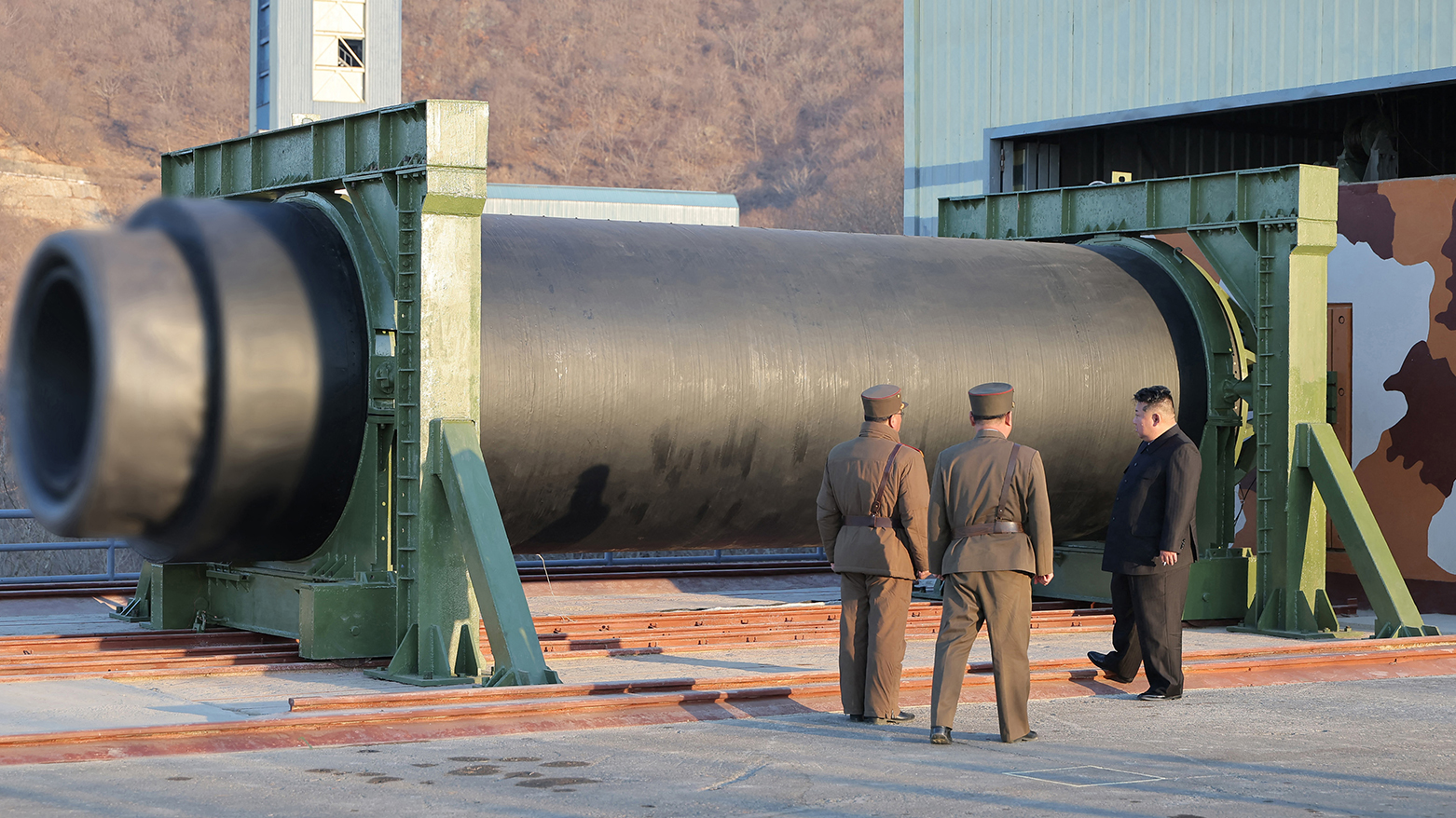
According to North Korean state media, Kim Jong Un personally observed a high-thrust solid-fuel engine ejection test on March 29, using advanced carbon-fiber composite materials.
Engine Thrust Exceeds Major Global ICBMs
North Korea claims the new engine produces 2,500 kilonewtons (kN) of thrust, a significant jump from the 1,971 kN engine tested in September 2025.
For comparison, the report notes that this would exceed the thrust levels of several major operational ICBMs:
- LGM-30 Minuteman III — ~891 kN
- RT-2PM2 Topol-M — ~913 kN
- DF-41 — ~1,100–1,400 kN
This level of thrust would potentially allow North Korea to carry multiple warheads over intercontinental ranges, including targets in the United States.
MIRV Capability Could Overwhelm Missile Defense
The report says the test strongly suggests progress toward MIRV capability.
A MIRV system allows a single missile to deploy multiple nuclear warheads against separate targets, significantly complicating interception efforts.
This would shorten response timelines for the United States Department of Defense, South Korea, and Japan.
However, ISW notes that engine thrust alone is not sufficient for a fully operational MIRV system.
A previous June 2024 test reportedly dispersed three re-entry vehicles, but a decoy failed before release, suggesting the program remains technically immature.
Broader Strategic Weapons Expansion
The test is part of North Korea’s new five-year defense plan (2026–2030).
The report says Pyongyang is investing heavily in:
- submarine-launched ballistic missiles
- naval nuclear forces
- AI-enabled unmanned strike systems
- satellite assets
- electronic warfare systems
This reflects a broader operating concept that combines nuclear and conventional precision strike capability.
Russia and China Ties Help Sanctions Resistance
A major focus of the ISW report is North Korea’s growing international engagement.
Since the Ukraine war, Pyongyang has deepened ties with Russia, China, and other non-Western states.
Notably, Alexander Lukashenko visited Pyongyang on March 25–26, signing a Treaty of Friendship and Cooperation with Kim Jong Un.
The report says these ties help North Korea:
- evade sanctions
- strengthen military development
- gain diplomatic leverage
- support economic recovery

Budget Growth Signals Economic Recovery
North Korea’s national budget reportedly increased by 5.8% in 2026, the highest rise since 2013.
The report links this to improving trade relations with China and Russia, along with foreign currency inflows from military support linked to the Ukraine conflict.
ISW notes that a significant portion of this increase is likely funding strategic weapons development.
Japan Outreach Rejected
The report also says North Korea rejected diplomatic outreach from Japanese Prime Minister Sanae Takaichi.
Kim Yo Jong said Pyongyang has no intention of meeting Japan at this stage.
ISW assesses this as part of North Korea’s effort to undermine trilateral cooperation among the US, South Korea, and Japan.
China Firms Accused of Sanctions Violations
The report further notes that Chinese firms are allegedly exporting electronics and electric vehicles to North Korea in violation of UN sanctions.
Trade data for early 2026 reportedly showed a 22% year-on-year increase in bilateral trade.
This trend is likely helping Pyongyang weather economic pressure while continuing strategic weapons expansion.