Ten weeks into the campaign against Iran, a difficult conclusion is emerging:
The gap between tactical success and strategic outcome is widening.
While the United States achieved notable operational successes — including coordinated strikes with Israeli forces — the broader strategic objectives remain unfulfilled.
Wars are not judged by battlefield performance alone.
They are judged by outcomes.
And by that measure, the current trajectory raises serious concerns.
Iran’s Military Capability: Degraded, Not Defeated
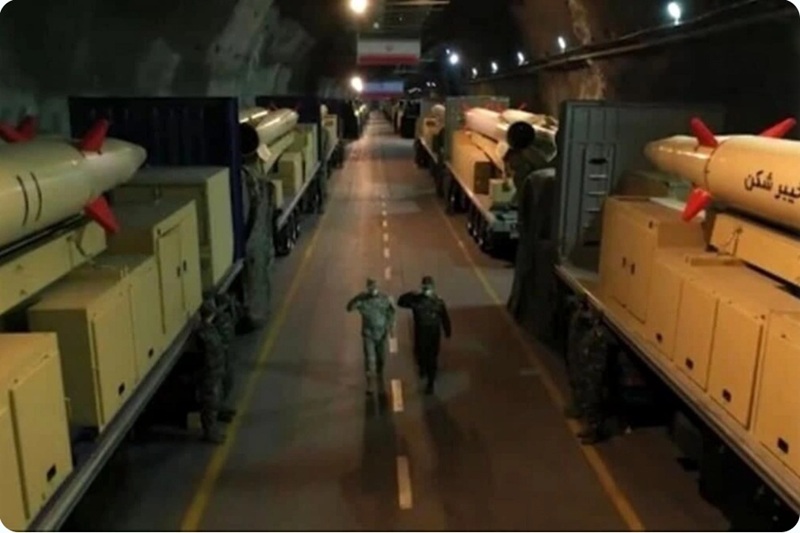
Recent intelligence assessments suggest that Iran has already restored much of its operational capacity:
- Access regained to 30 of 33 missile sites along the Strait of Hormuz
- Around 90% of underground missile facilities are partially or fully operational
New: Classified military intelligence assessments from early this month show Iran has regained access to most of its missile sites, launchers and underground facilities. Including: U.S. intel assesses Iran has restored operational access to 30 of the 33 missile sites it maintains…
— Jonathan Swan (@jonathanvswan) May 12, 2026
This indicates that:
Damage inflicted during the campaign has not fundamentally degraded Iran’s core military capabilities.
Iran’s doctrine has long emphasized:
- Mobility
- Redundancy
- Underground infrastructure
These features are specifically designed to absorb and recover from strikes.
Regime Stability: Hardened, Not Weakened
One of the implicit objectives of the campaign was to increase pressure on the Iranian regime.
That has not materialized.
Instead:
- The regime remains intact
- Internal power may have shifted toward more hardline elements
- Figures aligned with the Islamic Revolutionary Guard Corps (IRGC) appear strengthened
Rather than collapse, the system has adapted —
and possibly become more rigid and less flexible.
The Nuclear Issue: Still Unresolved
On the nuclear front, the core concerns remain unchanged:
- Iran retains a large stockpile of enriched uranium
- Approximately 440 kg near weapons-grade levels
- Technical expertise for further enrichment remains intact
Most critically:
The knowledge cannot be destroyed — only delayed.
This limits the long-term effectiveness of purely military solutions.
Hormuz Leverage: Still Intact
Iran’s ability to influence the Strait of Hormuz — a key global energy chokepoint — also remains largely intact.
Before the conflict:
- The waterway was stable
After weeks of military action:
- The threat environment has increased
- Risk to global shipping has grown
This suggests the campaign has:
Added instability without removing leverage.
Tactical Success vs Strategic Failure
There is no denying:
- U.S.–Israel military coordination was effective
- Certain targets were successfully hit
- Tactical execution met high standards
But strategy is about outcomes.
And the core objectives were not achieved:
- No regime change
- No decisive military degradation
- No resolution of the nuclear issue
- No removal of Iran’s regional leverage
A Fundamental Misreading of Iran
At the heart of the problem is a strategic miscalculation.
Iran is not structured like conventional states.
Its security doctrine is built on:
- Asymmetric warfare
- Proxy networks
- Strategic patience
- High tolerance for economic and human cost
This makes traditional cost-benefit pressure less effective.
Iran is not easily coerced through conventional escalation.
The Risk Ahead: Escalation Without Strategy
There is now a growing danger:
Escalation in search of a breakthrough
If policymakers continue pursuing short-term “quick wins”:
- The conflict could deepen
- Regional instability could expand
- Strategic clarity could further erode
Without acknowledging current realities, future decisions risk being based on flawed assumptions.
No Easy Solutions — But Wrong Ones Are Clear
There is no simple answer to the Iran challenge.
Options often discussed — including:
- Supporting opposition groups
- Targeted killings
- Proxy strategies
None, on their own, provide a comprehensive solution.
What is clear, however:
Repeating ineffective approaches is not strategy.
Conclusion: Time for Strategic Reset
If the conflict were to end under current conditions, it would likely be remembered as:
A campaign that achieved tactical success but strategic failure
The path forward requires:
- Honest reassessment
- Clear definition of achievable objectives
- Alignment between military action and political goals
Because without that:
Even successful operations can produce worse outcomes than the status quo they aimed to change.