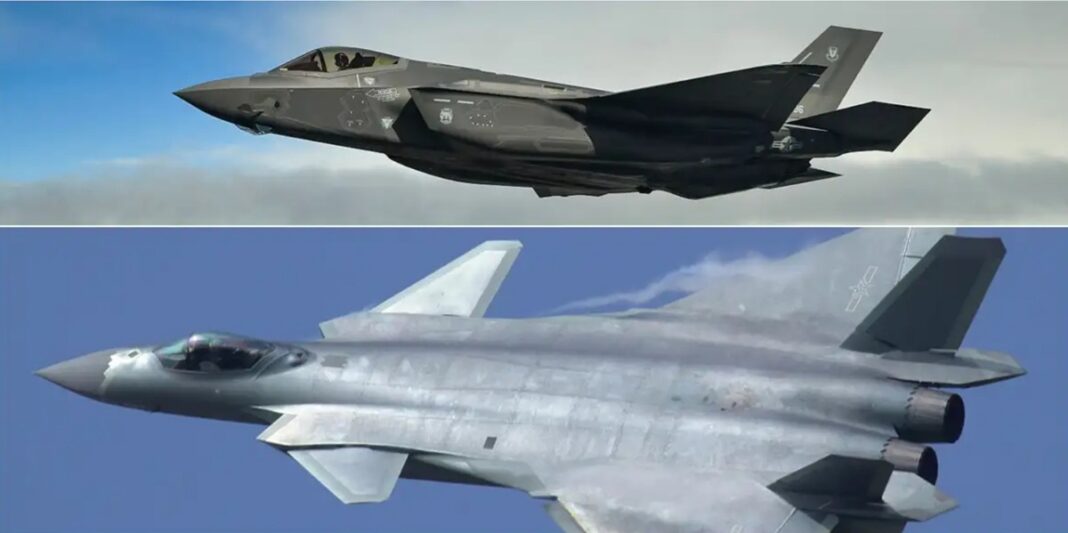
For decades, military aviation dominance was defined by technology, pilot training, and battlefield tactics. The United States led this paradigm, leveraging superior aircraft like the F-22 and F-35 to maintain global air superiority.
But that model is now being challenged.
China’s rapid transformation of its aerospace industry — particularly through AI-driven “dark factory” production — is introducing a new variable into the equation:
Industrial capacity is becoming as important as combat capability.
The emergence of near-continuous, automated production lines for the J-20 stealth fighter signals a shift from qualitative superiority to quantitative endurance.
This is not just a technological evolution.
It is a strategic revolution.
What Are ‘Dark Factories’? China’s Industrial Breakthrough
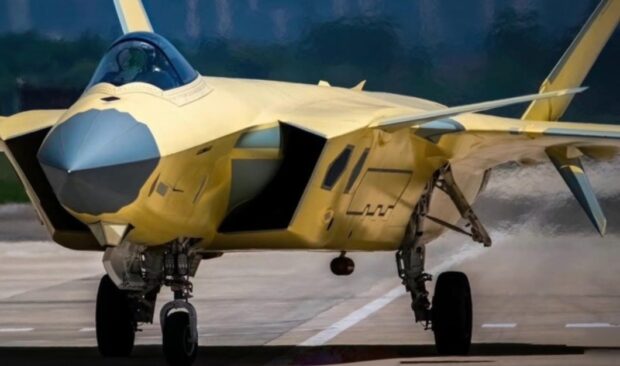
China’s “dark factory” concept refers to highly automated production facilities that operate with minimal human intervention — often in low-light or lights-out conditions.
In aerospace manufacturing, this includes:
- AI-controlled machinery
- Autonomous guided vehicles (AGVs)
- Machine-to-machine communication systems
- Real-time production synchronization
These systems allow factories to run for 21+ hours per day, significantly increasing output while reducing downtime.
Human involvement has reportedly declined by up to 80%, with personnel focusing only on:
- Final assembly
- Quality assurance
- Complex systems integration
👉 The result is a high-efficiency, resilient production model that is less vulnerable to labor shortages or operational disruptions.
Why Industrial Power Now Defines Airpower
Modern warfare — especially in a high-intensity Indo-Pacific scenario — is likely to be:
- Prolonged
- Attritional
- Resource-intensive
In such conflicts, replacement rate becomes critical.
Even the most advanced aircraft can be neutralized if:
- Losses cannot be replenished quickly
- Maintenance cycles slow operational tempo
- Supply chains are disrupted
This is where China’s strategy stands out:
It is preparing not just to fight — but to sustain war at scale.
China’s J-20 Production Surge: Quantity Meets Capability
China’s fifth-generation stealth fighter, the J-20, is now at the center of this transformation.
Current Estimates:
- 300+ J-20 aircraft produced
- 320–350 operational by 2026
- Production rate: 100–120 aircraft annually
Some projections suggest:
Up to 1,000 J-20 fighters by 2030
This would represent a massive leap in force structure.
Unlike earlier generations, the J-20 is not just a prestige platform — it is being produced at scale for operational dominance.
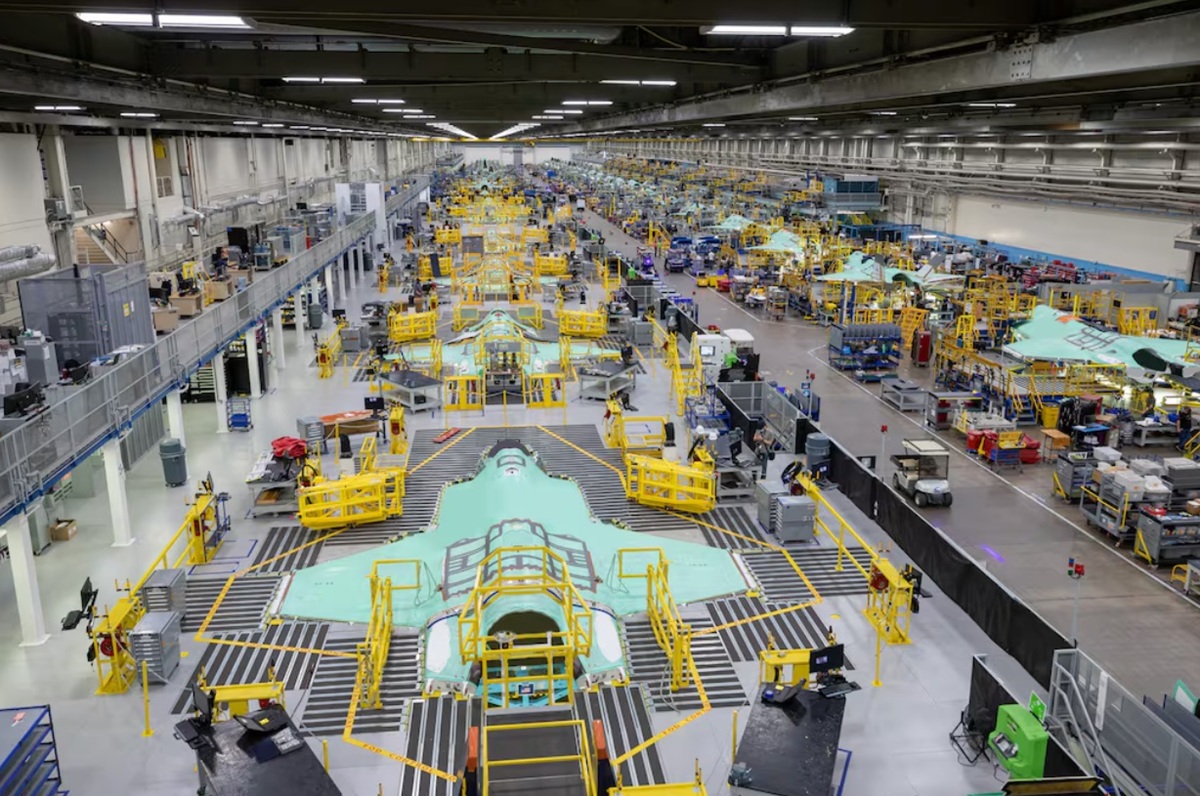
China vs U.S. Aircraft Production Capacity
China: Scale and Automation
- J-20 production: ~100–120/year
- Multiple active production lines
- AI-driven automation reduces bottlenecks
- Rapid infrastructure expansion
Strategic focus: volume, speed, resilience
United States: Precision and Complexity
- F-35 production: ~140–150/year (global program)
- Highly complex supply chain involving multiple countries
- Greater reliance on skilled labor
- Higher per-unit cost and longer production cycles
Strategic focus: technological superiority, interoperability
The Strategic Trade-Off
| Factor | China | United States |
|---|---|---|
| Production Model | Automated, scalable | Complex, distributed |
| Output Focus | High volume | High capability |
| Supply Chain | Centralized | Globalized |
| Wartime Resilience | Increasing | Potentially constrained |
In a prolonged conflict:
China’s model may favor endurance —
while the U.S. model favors precision and integration.
WS-15 Engine: Unlocking Full J-20 Potential

A major breakthrough in China’s aerospace capability is the WS-15 engine.
Key Advantages:
- ~18.5-ton thrust class
- Enables supercruise (supersonic flight without afterburners)
- Improved fuel efficiency
- Reduced infrared signature
👉 This significantly enhances:
- Range
- Survivability
- Combat performance
It also reduces reliance on foreign engine technology — a critical step toward full aerospace independence.
J-20S and the Future of AI-Driven Combat
China’s development of the two-seat J-20S represents a major doctrinal shift.
Unlike traditional fighters, the J-20S is designed to act as:
- A command node
- A drone swarm controller
- An electronic warfare coordinator
This reflects the rise of:
Manned–unmanned teaming (MUM-T)
In future conflicts, fighter jets may act less as individual combat units — and more as battlefield orchestrators.
China’s Sixth-Generation Push: J-36 and J-50
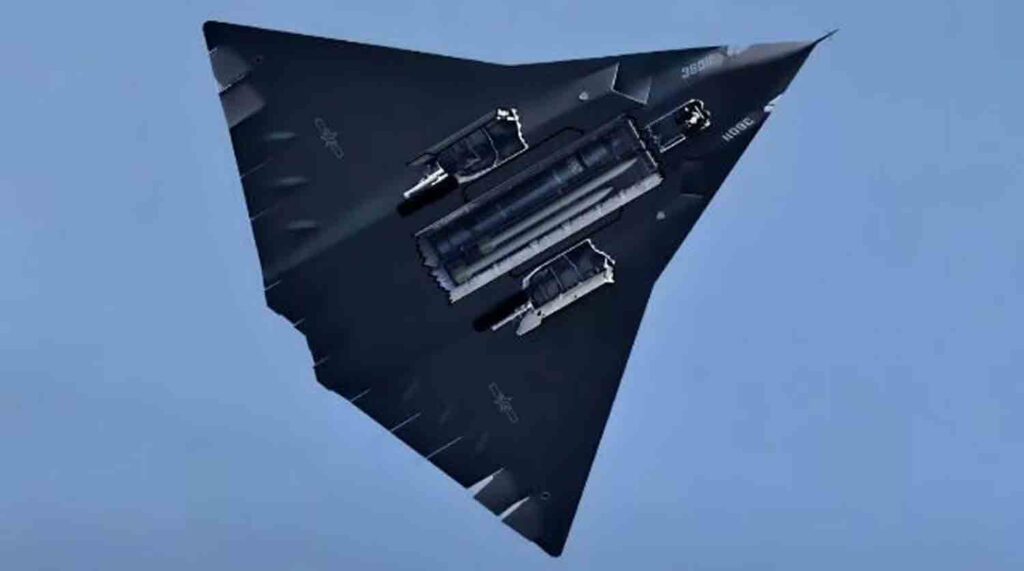
China is already preparing for the next phase:
- J-36 – large, long-range stealth platform
- J-50 – smaller, network-centric design
Both emphasize:
- AI integration
- Sensor fusion
- Autonomous teaming
The strategy is clear:
Compete across multiple generations simultaneously
The Indo-Pacific Impact: Airpower Balance Shifting
China’s rapid expansion is reshaping the Indo-Pacific:
- Increased pressure on U.S. forward bases
- Greater risk to airborne support assets
- More complex operational environments
For U.S. allies like:
- Japan
- South Korea
- Australia
The challenge is not just capability —
but scale and sustainability.
The Real Battlefield: Industrial Ecosystems
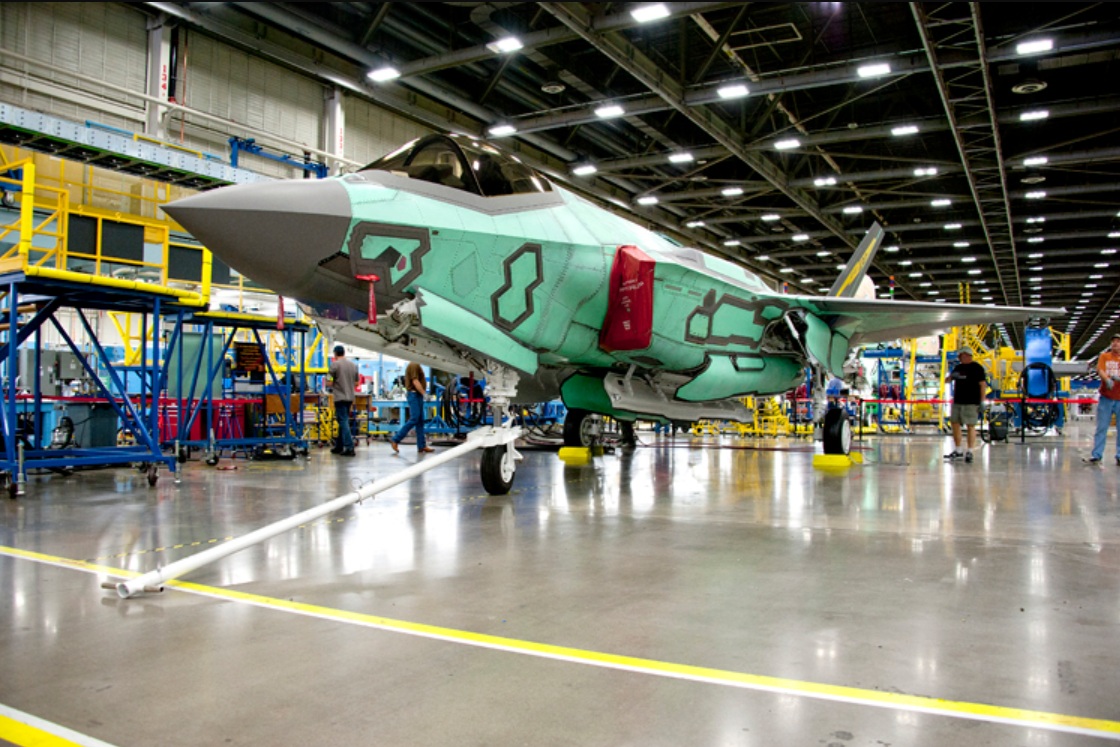
Modern military competition is increasingly defined by:
Industrial ecosystems
Key factors include:
- Production speed
- Supply chain resilience
- Repair and maintenance capacity
- Workforce sustainability
China’s “dark factory” model directly addresses these areas.
Challenges for the United States
Despite its advantages, the U.S. faces structural challenges:
- Complex global supply chains
- Higher production costs
- Slower industrial mobilization
- Political and budgetary constraints
However, the U.S. still maintains:
- Superior combat experience
- Advanced software ecosystems
- Strong alliances
The competition is not one-sided —
but it is intensifying.
Future Outlook: Quantity vs Quality — Or Both?
The emerging airpower competition is not simply:
- China = quantity
- U.S. = quality
Instead, both sides are evolving:
- China is improving technology
- The U.S. is exploring industrial expansion
The real question is:
Who can combine scale and sophistication most effectively?
Conclusion: The Airpower Race Has Entered a New Era
China’s AI-driven aerospace production represents a fundamental shift in military competition.
The key takeaway:
Air superiority will no longer be decided solely in the skies —
but in factories, supply chains, and industrial systems.
The future of warfare will depend on:
- Who can build faster
- Who can sustain longer
- Who can adapt quicker
In this evolving landscape:
- China is building industrial momentum
- The U.S. retains technological leadership
The outcome of this race will define:
Global military balance in the 21st century