Pakistan’s sudden activation of multiple restricted air corridors across Khyber Pakhtunkhwa, Punjab, Sindh, and Balochistan has intensified strategic signaling across South Asia following India’s recent Agni-series MIRV-capable ballistic missile test.
The sweeping NOTAM (Notice to Airmen) restrictions, issued between May 12 and 14, have drawn close scrutiny from regional defence analysts, many of whom believe the activity may be linked to possible validation exercises involving Pakistan’s newly unveiled Fatah-III supersonic cruise missile system.
BREAKING:
Pakistan has issued another NOTAM (Notice to Airmen), Restricting Multiple Air Corridors over Punjab, Sindh and Balochistan.
Airspace is only Restricted from Ground UpTo 10,000 feet.
Date: 14-15 May 2026.
Via: @Mohsin_o2 pic.twitter.com/wCSHYc3b9S
— The Strategic Journal (@TSJOfficial_0) May 12, 2026
The timing is particularly significant because the restrictions emerged only days after India successfully demonstrated advanced MIRV capability during a major Agni-series missile test.
India’s Agni-5 MIRV Test Changed the Strategic Equation
India’s Defence Research and Development Organisation (DRDO) confirmed that New Delhi successfully completed another major Agni-series missile flight involving Multiple Independently Targetable Re-entry Vehicle (MIRV) capability.
The test reportedly involved:
- Multiple payload deployments
- Separate impact points in the Indian Ocean Region
- Maneuverable re-entry vehicles designed to overwhelm missile defenses
MIRV capability dramatically enhances strategic deterrence because a single missile can carry multiple warheads aimed at separate targets.
This significantly complicates interception calculations for adversaries.
Pakistan’s NOTAM Activity Raises Fatah-III Speculation
Open-source intelligence (OSINT) observers noted that Pakistan’s restricted corridors focused heavily on:
- Low-altitude tactical airspace
- Flight ceilings between ground level and 10,000 feet
- Coordinated inland and coastal operational zones
This pattern differs from traditional ballistic missile launch corridors.
Instead, it more closely resembles:
- Cruise missile testing
- Drone warfare exercises
- Low-altitude strike simulations
- Tactical aviation operations
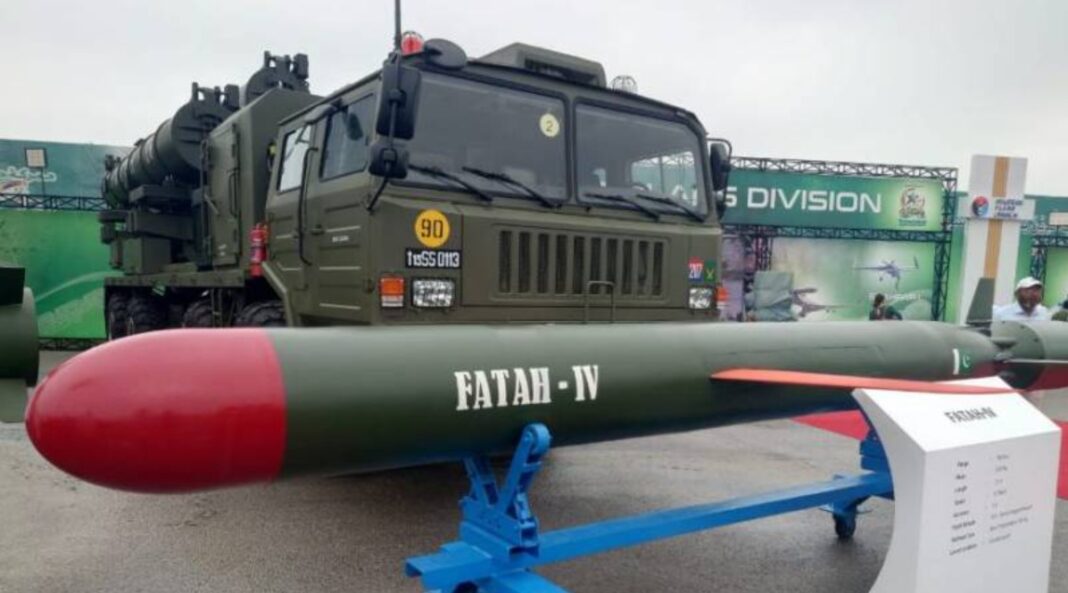
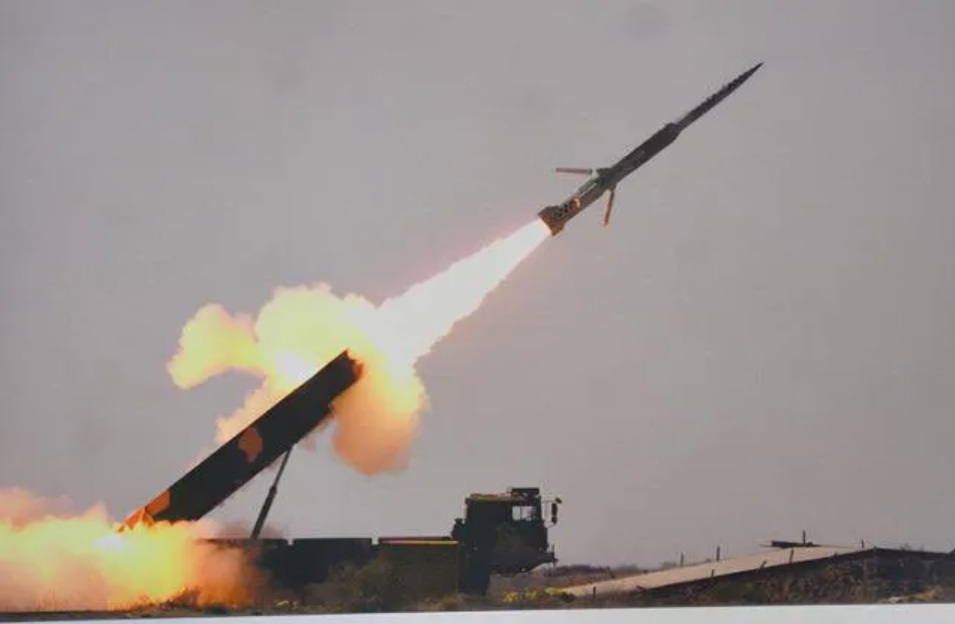
Many analysts therefore believe the restrictions may relate to the Fatah-III, Pakistan’s newly introduced supersonic cruise missile reportedly capable of speeds between Mach 2.5 and Mach 4.
What Is Pakistan’s Fatah-III Missile?
Pakistan publicly unveiled the Fatah-III between May 7 and 11, presenting it as:
Its first officially acknowledged operational supersonic cruise missile.
Estimated Characteristics:
- Speed: Mach 2.5–4
- Range: ~290–450 km
- Terrain-following low-altitude penetration profile
- Precision strike capability
Regional analysts widely view the system as:
Pakistan’s response to India’s BrahMos missile capability.
Some experts also believe the missile may incorporate technology linked to China’s HD-1 ramjet missile program.
Why Low-Altitude Restrictions Matter
The low-altitude nature of Pakistan’s NOTAMs is strategically important.
Cruise missiles rely heavily on:
- Terrain-following flight paths
- Radar evasion
- Low observability
Unlike ballistic missiles, which travel at high altitudes, cruise missiles often remain close to the ground to reduce detection windows.
The current restrictions therefore strongly support speculation involving:
- Cruise missile validation
- Drone-assisted targeting
- Tactical penetration exercises
Somiani and Gadani: Pakistan’s Strategic Testing Backbone
Pakistan simultaneously activated the strategically important:
- Somiani firing range
- Gadani firing range
Both are located along the Balochistan coastline and have historically supported:
- Ballistic missile tests
- Cruise missile validation
- Naval strike exercises
- Drone warfare drills
The synchronized activation of inland aviation corridors and coastal firing ranges suggests a broader integrated exercise architecture.
Analysts believe the activity may involve:
- Launch coordination
- Telemetry monitoring
- Drone reconnaissance
- Electronic warfare support
- Multi-domain strike rehearsal
Pakistan’s Evolving Military Doctrine
The broader significance lies in Pakistan’s evolving operational philosophy.
Islamabad increasingly emphasizes:
- Distributed launcher survivability
- Precision-guided strike systems
- Rapid-response conventional deterrence
- Tactical flexibility
Rather than matching India missile-for-missile, Pakistan appears focused on:
Mobility, survivability, and rapid strike capability.
This includes:
- Fatah-series missiles
- Tactical drones
- Electronic warfare integration
- Low-altitude penetration systems
India-Pakistan Missile Competition Enters New Phase
The combination of:
- India’s MIRV advancements
- Pakistan’s Fatah-III unveiling
- Expanded tactical missile exercises
suggests South Asia is entering:
A new phase of accelerated precision-strike competition
Key trends include:
India:
- MIRV-capable ballistic missiles
- Long-range strategic deterrence
- Missile defense expansion
- Aerospace modernization
Pakistan:
- Tactical cruise missiles
- Distributed strike systems
- Mobile launch survivability
- Conventional deterrence flexibility
Strategic Risks: Faster Weapons, Shorter Timelines
A major concern for analysts is the compression of crisis decision-making timelines.
Modern systems now feature:
- High speed
- Precision guidance
- Low-altitude penetration
- Rapid launch readiness
This increases risks of:
- Miscalculation
- Escalation
- Compressed response windows
The strategic environment is becoming more technologically intense and operationally dynamic.
No Official Confirmation — But Strong Signals
Pakistan has not officially confirmed any missile launch tied to the current operational window.
However, Pakistan traditionally announces missile tests only after completion, preserving operational secrecy during exercises.
Analysts caution against interpreting the activity as imminent nuclear escalation.
NOTAMs remain standard safety procedures during:
- Tactical drills
- Missile tests
- Drone operations
- Live-fire exercises
Nevertheless, the convergence of these developments has intensified global attention on South Asia’s evolving missile environment.
Conclusion: Strategic Signaling in a Rapidly Changing Region
The current military activity highlights how rapidly evolving missile and aerospace technologies are reshaping deterrence dynamics across South Asia.
India’s MIRV capability and Pakistan’s apparent focus on supersonic low-altitude strike systems reflect two different — but increasingly competitive — approaches to strategic deterrence.
The broader trend is unmistakable:
- Faster weapons
- More survivable systems
- Distributed launch architectures
- Greater operational ambiguity
Until Pakistan officially confirms any validation launch, the current activity remains best understood as:
A highly visible demonstration of readiness, deterrence signaling, and strategic ambiguity within one of the world’s most sensitive nuclear rivalries.