
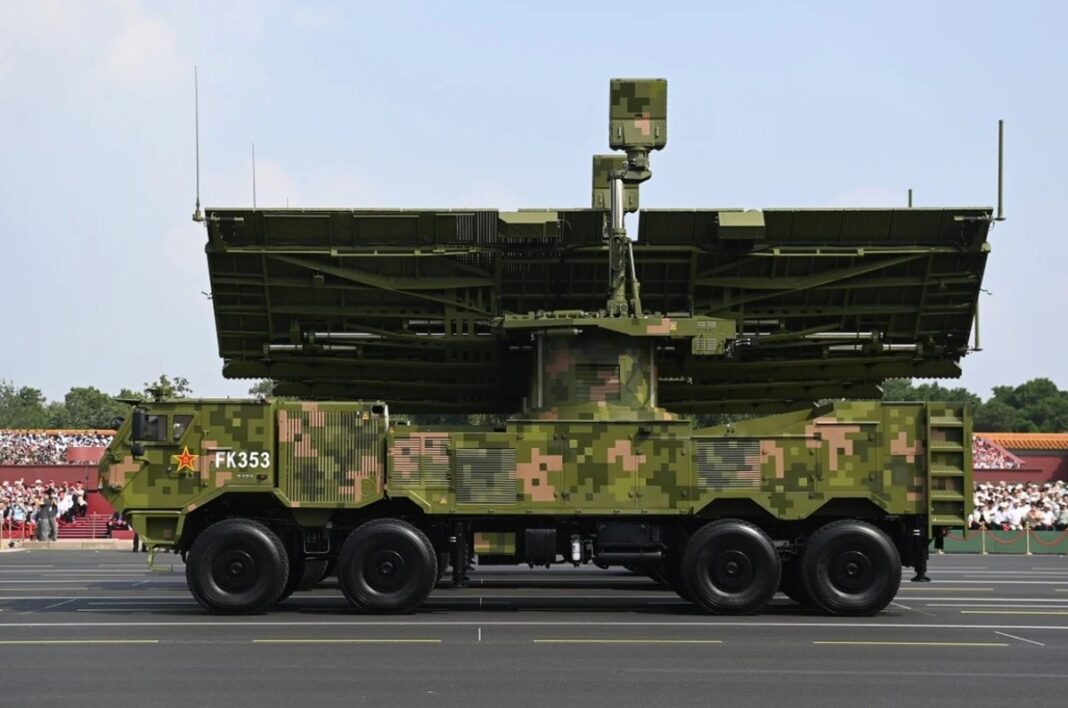
China has reportedly achieved a significant breakthrough in high-power microwave (HPM) weapon technology, with military researchers claiming they have developed a 100-gigawatt-class directed-energy weapon capable of disrupting satellites, drones, missiles, and advanced electronic systems.
According to a research paper published by scientists at China’s National University of Defense Technology (NUDT), the new system marks the transition of high-power microwave weapons from laboratory experiments to operational military technology.
If independently verified, the development could represent one of China’s most important advances in electronic warfare, counter-space capabilities, and anti-access/area-denial (A2/AD) strategy.
🚨🇨🇳 China’s new 100 GW microwave weapon could fry US satellites in orbit
China has moved high-power microwave (HPM) weapons from laboratory prototypes to real military systems, a rare military research paper from the National University of Defense Technology reveals.
🔸 The… pic.twitter.com/mPzYB0hwjZ
— Sputnik (@SputnikInt) July 11, 2026
However, the reported capabilities have not been independently confirmed by Western governments or defense analysts, and publicly available details remain limited.
What Is a High-Power Microwave Weapon?

Unlike conventional weapons that destroy targets through explosive force, high-power microwave weapons use concentrated bursts of electromagnetic energy to disable or damage electronic systems.
These weapons generate extremely powerful microwave pulses capable of:
- Burning out electronic circuits
- Disrupting communications
- Damaging radar systems
- Crippling satellite electronics
- Disabling drones
- Interrupting missile guidance systems
- Neutralizing command-and-control networks
Because modern militaries depend heavily on electronics, HPM weapons are increasingly viewed as a key component of future warfare.
China’s Claimed Breakthrough
According to the Chinese research paper, scientists have overcome one of the biggest technical challenges in microwave weapon development.
Instead of relying on a single massive pulse generator, engineers reportedly synchronized multiple microwave pulse generators into one integrated system capable of producing an output exceeding 100 gigawatts.
Researchers say this architecture avoids the electrical insulation limits that traditionally prevent individual generators from reaching extremely high power levels.
The result is a much more powerful directed-energy weapon with greater operational flexibility.
Could It Really Threaten Satellites?
One of the most striking claims involves the weapon’s potential effect on satellites.
According to the researchers, even a one-gigawatt microwave pulse could interfere with or damage satellites operating in Low Earth Orbit (LEO) under certain conditions.
If accurate, a 100-gigawatt-class system would theoretically possess significantly greater disruptive potential.
This has fueled speculation that the technology could eventually threaten large satellite constellations such as:
- Starlink
- Military communications satellites
- Intelligence satellites
- Reconnaissance spacecraft
- Navigation satellites
It is important to note, however, that the real-world effectiveness of ground-based microwave weapons against orbiting satellites depends on numerous factors, including distance, atmospheric attenuation, beam control, target shielding, pointing accuracy, and satellite hardening. These claims have not been independently verified.
Beyond Satellites: A Weapon for Electronic Warfare
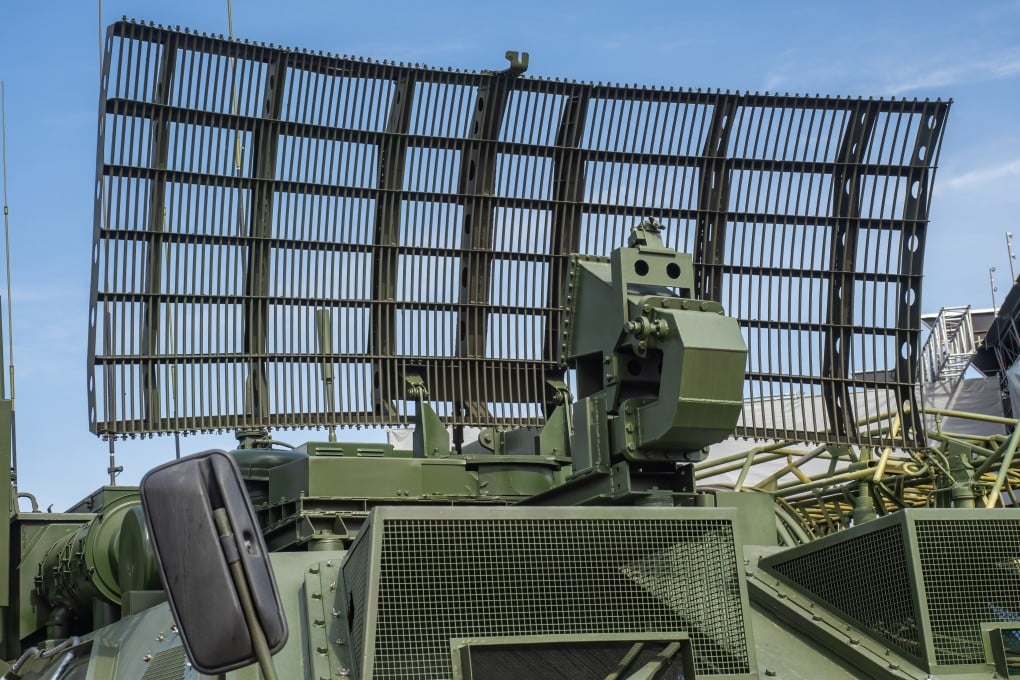
The system’s most immediate military value may lie closer to Earth.
High-power microwave weapons are widely viewed as effective against:
Swarms of drones
Rather than destroying drones individually, an HPM pulse could potentially disable multiple unmanned aircraft simultaneously by damaging onboard electronics.
Cruise missiles
Modern cruise missiles rely heavily on electronic navigation and flight-control systems that may be vulnerable to electromagnetic attack.
Battlefield communications
Military radio networks, data links, command centers, and tactical communications could all become potential targets.
Radar installations
Directed microwave energy may degrade radar performance or temporarily disable air-defense systems during combat operations.
Cold-Weather Readiness
The Chinese research also claims the system includes an instant-activation mechanism capable of operating at temperatures as low as –40°C.
If confirmed, this would represent an important operational improvement.
Many advanced electronic systems require warm-up periods or experience reduced performance in extreme cold.
Instant readiness would allow deployment in:
- High-altitude regions
- Arctic environments
- Mountain warfare
- Northern border operations
Such capabilities could prove particularly relevant given China’s increasing military activities on the Tibetan Plateau and in northern regions.
China Expanding Directed-Energy Weapons
The latest report suggests China has already produced several gigawatt-class microwave systems, with some reportedly delivered to military users for operational evaluation.
This fits into a broader modernization effort by the People’s Liberation Army (PLA), which has invested heavily in:
- Laser weapons
- Hypersonic missiles
- Electromagnetic railguns
- Artificial intelligence
- Electronic warfare
- Counter-space technologies
Chinese military publications increasingly describe electromagnetic dominance as an essential element of future warfare.
How the U.S. and Others Compare
China is not alone in pursuing directed-energy weapons.
The United States has spent decades developing similar technologies.
Programs include:
- THOR (Tactical High-power Operational Responder) – Designed to disable drone swarms using microwave energy.
- Leonidas – A microwave counter-drone system developed by Epirus for short-range air defense.
- CHAMP (Counter-electronics High Power Microwave Advanced Missile Project) – Demonstrated the ability to disable electronic systems using microwave pulses delivered by a cruise missile.
Russia has also claimed progress in electromagnetic weapons, although publicly verified operational systems remain limited.
The growing investment by major powers highlights the increasing importance of directed-energy weapons in modern military planning.
Strategic Implications
If China’s reported achievement proves technically viable, it could significantly strengthen several elements of its military strategy.
1. Counter-Space Operations
China already possesses anti-satellite missiles, cyber capabilities, and electronic warfare systems.
Microwave weapons could provide an additional non-kinetic method of disrupting space-based assets without creating orbital debris.
2. Anti-Access/Area Denial (A2/AD)
Electronic attacks could complicate the operations of U.S. carrier strike groups and allied forces operating in the Western Pacific by degrading communications, surveillance, and precision-guided weapons.
3. Counter-Drone Warfare
Future battlefields are expected to feature large numbers of autonomous drones.
Microwave weapons offer the possibility of engaging multiple targets simultaneously at a lower cost than missile interceptors.
4. Electronic Battlefield Dominance
Disrupting enemy sensors and communications before kinetic strikes could become a central feature of future joint operations.
Technical Challenges Remain
Despite the ambitious claims, several important technical hurdles remain.
Delivering microwave energy over long distances while maintaining sufficient power density is extremely challenging.
Additional obstacles include:
- Atmospheric absorption
- Beam focusing
- Precise target tracking
- Power generation
- Thermal management
- Protection against countermeasures
Most military experts caution that laboratory performance does not automatically translate into operational effectiveness.
Until independent verification becomes available, many of the reported capabilities should be treated with caution.
Why Space Is Becoming the Next Battlefield
The reported development also reflects a broader shift in military competition.
Modern armed forces rely extensively on satellites for:
- GPS navigation
- Communications
- Intelligence gathering
- Missile warning
- Weather forecasting
- Precision targeting
As dependence on space infrastructure grows, countries are increasingly investing in technologies capable of protecting—or disrupting—orbital assets.
High-power microwave weapons represent one possible avenue in this evolving competition, alongside cyber operations, anti-satellite missiles, electronic jamming, and directed-energy systems.
Outlook
China’s reported progress in developing a 100-gigawatt high-power microwave weapon underscores the growing importance of directed-energy technologies in future military competition.
While many of the system’s claimed capabilities remain unverified, the research highlights Beijing’s determination to expand its electronic warfare and counter-space arsenal as part of a broader military modernization program.
If the technology can be successfully transitioned from research into reliable operational service, it could provide China with a powerful non-kinetic option for disrupting satellites, communications networks, drones, and precision-guided weapons—capabilities that are increasingly central to modern warfare.
For defense planners worldwide, the announcement serves as another reminder that future conflicts may be decided not only by missiles and aircraft, but also by the ability to dominate the electromagnetic spectrum, where disabling an adversary’s electronics may prove just as decisive as destroying physical targets.