For three decades after the Cold War, Americans lived under a quiet strategic assumption:
The U.S. homeland was largely untouchable.
Wars happened overseas. Missile threats were aimed at forward bases, aircraft carriers, or allies in Europe and Asia. Washington worried about terrorism, rogue states, and regional instability — not massive missile strikes on New York, Texas, California, or the Pentagon.
That era may be ending.
Inside the Pentagon, defense planners are increasingly preparing for a future once considered almost unthinkable:
A coordinated Chinese or Russian missile assault against the U.S. homeland involving hypersonic glide vehicles, cruise missiles, drones, cyber attacks, and AI-guided swarm warfare.
The fear is no longer theoretical.
Military planners increasingly believe future wars may begin with a devastating first wave designed to blind America, cripple communications, damage nuclear infrastructure, overwhelm command systems, and slow U.S. retaliation.
The response now taking shape in Washington is unprecedented:
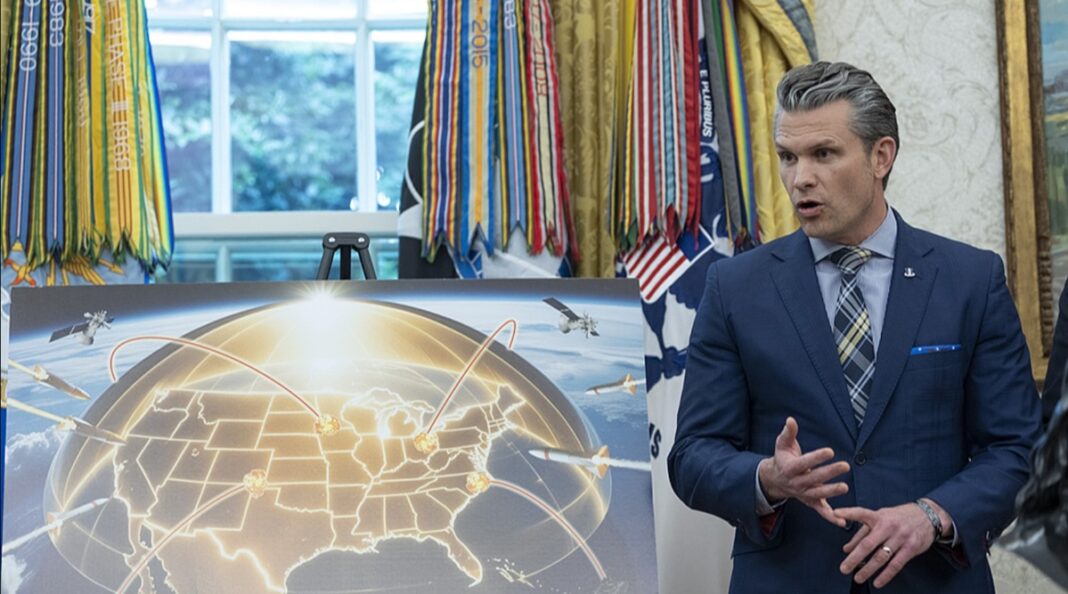
A proposed $1.2 trillion nationwide missile shield known as the “Golden Dome.”
But here is the question keeping strategists awake at night:
Can any missile shield actually stop China or Russia in the hypersonic age?
Why America Suddenly Feels Vulnerable
For years, American missile defense was designed around a relatively narrow threat set:
- Rogue states like North Korea
- Limited ballistic missile launches
- Small-scale nuclear scenarios
Systems such as:
- Ground-Based Midcourse Defense (GMD)
- THAAD
- Patriot PAC-3
- Aegis Ballistic Missile Defense
were never built for sustained peer-war missile saturation.
Today’s threat environment looks dramatically different.
A future U.S.-China or U.S.-Russia war could involve:
✔ Hundreds of missiles launched simultaneously
✔ Hypersonic glide vehicles maneuvering unpredictably
✔ Drone swarms overwhelming defenses
✔ Cruise missiles flying at ultra-low altitude
✔ Cyber warfare targeting radar and command systems
✔ Electronic warfare designed to blind sensors
The concern inside Washington has fundamentally changed.
The question is no longer:
Can China or Russia hit America?
The question is:
Can America survive the opening hours of war without catastrophic disruption?
What Exactly Is the Golden Dome?
Despite the nickname, Golden Dome is not simply an American version of Israel’s Iron Dome.
The scale is vastly different.
Israel’s Iron Dome protects a small country from short-range rockets.
America’s Golden Dome would attempt to protect:
- Major U.S. cities
- Nuclear command infrastructure
- Missile silos
- Bomber bases
- Naval facilities
- Aircraft carrier ports
- Energy grids
- Communications infrastructure
across an entire continent.
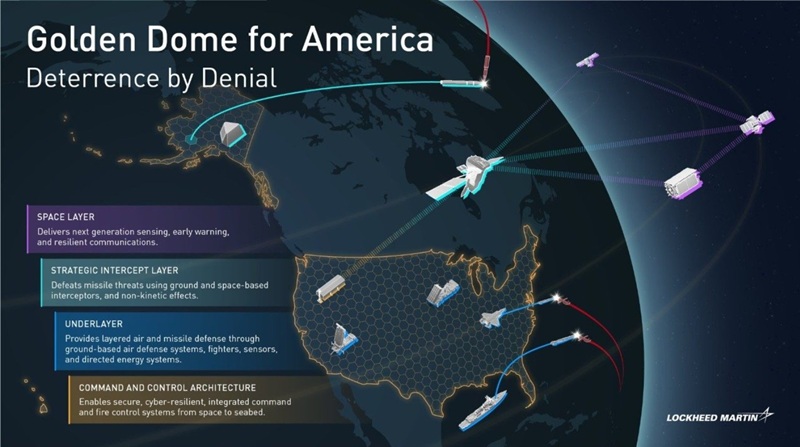
The proposed architecture involves:
1. Space-Based Layer
Orbital tracking systems and potentially space interceptors designed to detect missiles during boost or midcourse phases.
2. Ground-Based Strategic Layer
Long-range interceptors defending against ballistic and hypersonic threats.
3. Regional Defense Layer
THAAD and Patriot systems defending critical infrastructure.
4. Maritime Layer
Navy destroyers using SM-3 and SM-6 interceptors to establish defensive corridors around North America.
The vision is clear:
One giant integrated national shield combining land, sea, air, cyber, and space defenses into a single battle network.
Why China and Russia Terrify Pentagon Planners
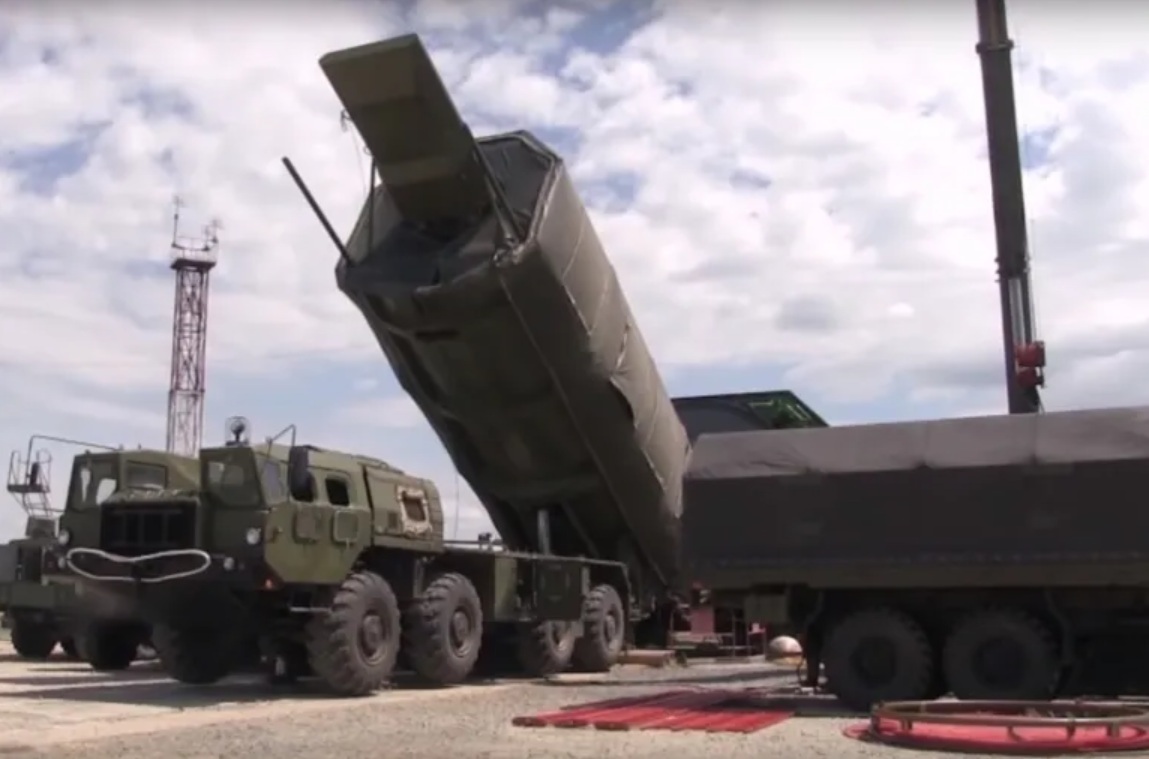
Russia’s Hypersonic Arsenal
Russia already fields some of the world’s most advanced strategic systems.
Key concerns include:
Avangard Hypersonic Glide Vehicle
Travels at Mach 20+, maneuvering unpredictably inside the atmosphere.
Unlike traditional ballistic missiles:
It changes direction.
That makes interception dramatically harder.
Sarmat ICBM
Capable of carrying:
- Multiple nuclear warheads
- Glide vehicles
- Decoys designed to confuse missile defenses
A-235 Nudol
Russia’s next-generation anti-missile and anti-satellite system.
Moscow openly views missile defense as part of a broader nuclear competition.
Russian doctrine increasingly prioritizes:
Penetrating American defenses — not avoiding them.
China’s Missile Production Surge Is Even More Concerning
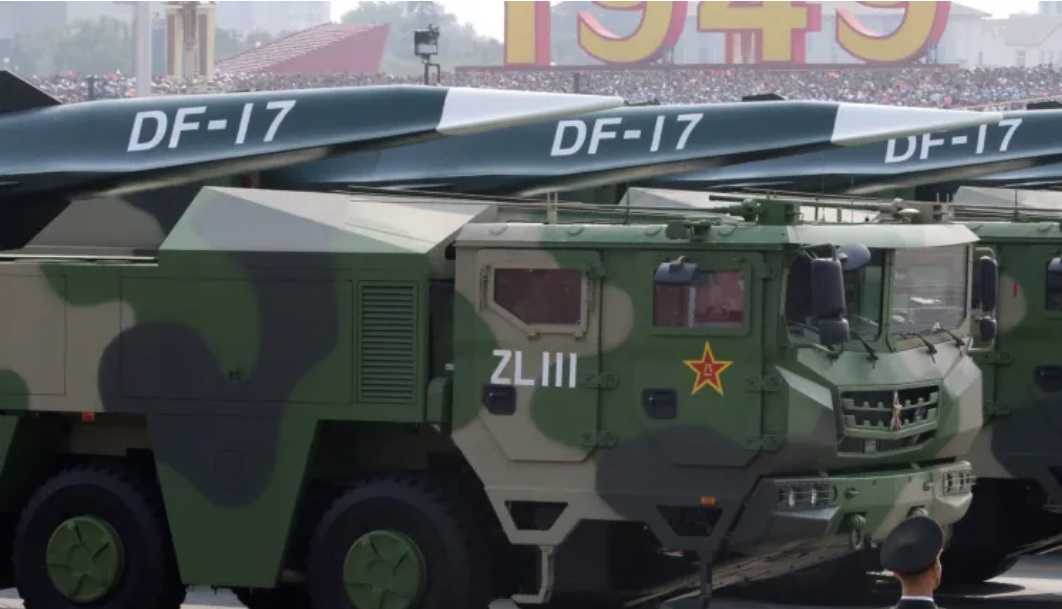
China’s missile buildup may be even more alarming for U.S. planners.
The DF-17 already gives Beijing an operational hypersonic strike capability.
But the bigger concern is:
Production scale.
China’s industrial base increasingly outpaces Western defense manufacturing.
Beijing is rapidly expanding production of:
- DF-41 ICBMs
- Hypersonic glide systems
- Cruise missiles
- Anti-ship ballistic missiles
- Drone warfare systems
Some analysts increasingly argue:
China may eventually overwhelm defenses through quantity alone.
Unlike the U.S., China’s centralized industrial system can surge production rapidly during crisis.
The Pentagon increasingly fears a future where:
Missile production becomes the new aircraft carrier race.
The Hard Truth: Defense Is Losing the Cost War
One brutal reality shadows Golden Dome:
The economics favor the attacker.
Interceptor missiles often cost:
Millions of dollars each.
Meanwhile:
- Drones can cost thousands
- Cruise missiles cost far less
- Swarm attacks multiply pressure exponentially
The wars in:
- Ukraine
- The Red Sea
- The Middle East
already demonstrated how defenders burn through expensive interceptors quickly.
China and Russia are studying this carefully.
Future doctrine may focus on:
Saturation warfare
Meaning:
Throw so many threats simultaneously that defense simply collapses.
Why AI and Space Warfare Matter
Golden Dome is not just about missiles.
It is about:
Machine-speed warfare.
Future combat may depend on:
- AI targeting systems
- Autonomous interception
- Space-based tracking
- Cyber resilience
- Electronic warfare survival
The reality is sobering:
A human-controlled missile defense system may simply react too slowly.
Future survival may depend on:
AI making combat decisions faster than human operators can think.
That introduces dangerous new questions:
What happens if:
- AI makes mistakes?
- Satellites are destroyed?
- Communications collapse?
Future wars may increasingly resemble:
Digital ecosystem battles — not traditional missile exchanges.
Could Golden Dome Trigger a New Arms Race?
Critics warn Golden Dome may create unintended consequences.
China and Russia already view large-scale missile defense as:
A threat to nuclear deterrence.
Why?
Because deterrence relies on:
Mutually assured destruction.
If Beijing or Moscow believe Washington could eventually weaken retaliation:
They may simply:
✔ Build more missiles
✔ Deploy more warheads
✔ Expand hypersonic production
✔ Develop anti-satellite weapons
✔ Invest in cyber disruption
In trying to make America safer:
Golden Dome could accelerate the very arms race it seeks to stop.
The Bigger Question: Is America Entering a Post-Sanctuary Era?
The deeper geopolitical shift may be psychological.
For decades:
America assumed wars happened elsewhere.
Today:
- China can potentially strike Guam, Hawaii, and the mainland
- Russia fields global nuclear reach
- Drones shrink distance
- Cyber warfare ignores borders
The U.S. homeland is no longer automatically protected by geography.
Two oceans no longer guarantee safety.
That reality explains why Golden Dome matters.
This is not merely a defense project.
It is:
America preparing psychologically for vulnerability.
Conclusion: Can Golden Dome Actually Work?
The honest answer is uncomfortable:
Probably not perfectly.
No missile shield can guarantee protection against:
Hundreds of advanced peer-level weapons arriving simultaneously.
But supporters argue:
Perfect defense is not the goal.
Even:
- Partial interception
- Reduced casualties
- Protected nuclear command
- Preserved retaliation capability
could fundamentally alter deterrence.
The bigger truth may be this:
Golden Dome is not about becoming invulnerable.
It is about ensuring America survives long enough to fight back.
Because in the hypersonic age:
The first hours of war may decide everything.