
China on Friday sharply criticized reports that the United States plans to deploy its Typhon Missile System to Japan for military exercises, warning the move could destabilize regional security and trigger a new arms race in Asia.
Speaking at a regular press briefing, Chinese Foreign Ministry spokesperson Guo Jiakun said Beijing firmly opposes the deployment of medium-range missile systems by Washington in Asian countries and has repeatedly raised concerns about the issue.
When asked to comment on reports that the US is planning to deploy the Typhon mid-range missile system at Kanoya Air Base in Kagoshima Prefecture, #Japan, from June to September for joint military drills, and relocate the system to #US military bases in Japan after the exercises,… pic.twitter.com/eDA4B8noLs
— Global Times (@globaltimesnews) May 22, 2026
The comments came in response to media reports suggesting the United States plans to deploy the Typhon Missile System to Kanoya Air Base from June to September for joint military drills before potentially relocating the system to permanent U.S. military facilities in Japan.
Guo described the Typhon system as “A strategically offensive weapon” that undermines the security interests of neighboring countries.
“It endangers regional strategic security and heightens the risks of military confrontation and arms races, bringing nothing but harm to regional peace and stability,” Guo said.
He added that many countries in Asia, including Japan, had voiced opposition to such deployments and urged Washington and Tokyo to “Rectify erroneous moves” and safeguard regional stability.
What Is the Typhon Missile System?
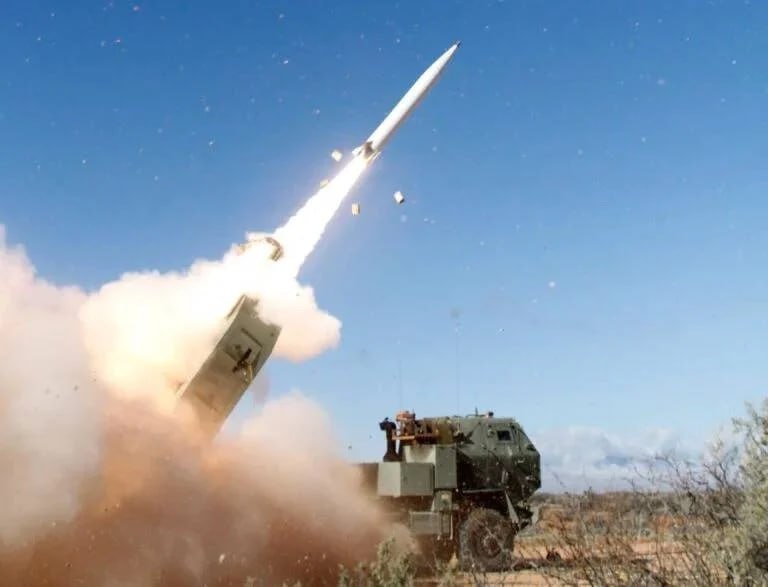
The Typhon Missile System is part of the U.S. Army’s effort to expand long-range strike capabilities in the Indo-Pacific.
The launcher can reportedly fire:
- Tomahawk cruise missiles
- SM-6 multi-role missiles
giving U.S. forces the ability to strike targets at extended ranges across contested regions.
Military analysts increasingly view the system as a central part of Washington’s Indo-Pacific deterrence strategy aimed at countering growing Chinese military power.
A deployment to Japan would significantly expand America’s missile footprint in Northeast Asia and could intensify already strained regional tensions between China and Japan.
China Also Reiterates Opposition to US Arms Sales to Taiwan
During the briefing, Guo also addressed reports that the United States may temporarily pause some arms transfers to Taiwan, to preserve munitions supplies amid the ongoing conflict involving Iran.
The issue emerged after U.S. Acting Navy Secretary Hung Cao reportedly said Washington was reassessing some military stockpiles due to operational demands.
Taiwanese authorities later said they had received no information suggesting any adjustment to American weapons deliveries.
Guo reiterated Beijing’s longstanding opposition to US arms sales to Taiwan, calling China’s position “Consistent, unequivocal and firm.”
The Taiwan issue remains one of the most sensitive flashpoints in US-China relations with Beijing repeatedly warning Washington against deepening military ties with Taipei.
China Criticizes Japan’s Growing Defense Spending
Beijing also used Friday’s briefing to criticize Japan over rising military expenditure.
According to the latest figures cited by China’s Foreign Ministry:
Japan’s defense spending in 2025 increased by 9.7% with both total spending and its share of GDP reaching record levels.
Arms imports reportedly surged 76% over the last five years, while defense spending has risen for 14 consecutive years.
Guo accused Japanese political forces of steadily abandoning the country’s post-war identity as a “Peaceful nation” and moving toward what he described as “Neo-militarism.”
The criticism followed reports that Japan’s ruling Liberal Democratic Party (LDP) is considering raising defense spending targets closer to 3–3.5% of GDP, up from the current NATO-style benchmark of 2%, which Japan only recently surpassed.
Tokyo has increasingly accelerated military modernization amid concerns over:
- China’s military expansion
- North Korean missile activity
- Regional security tensions.
Wang Yi to Visit Canada in First Foreign Minister Visit in a Decade

Separately, China announced that Foreign Minister Wang Yi will visit Canada from May 28 to 30 at the invitation of Canadian Foreign Minister Anita Anand.
According to Beijing, the visit will be The first trip by a Chinese foreign minister to Canada in 10 years and is intended to help stabilize and strengthen bilateral relations after years of diplomatic strain.
Ahead of the Canada visit, Wang will also chair a high-level United Nations Security Council meeting in New York City, on May 26, focused on:
“Upholding the Purposes and Principles of the UN Charter and Strengthening the UN-Centered International System.”
He is also expected to attend a Global Governance meeting and hold talks with António Guterres and several foreign ministers.
Rising Tensions in the Indo-Pacific
China’s criticism of the reported Typhon Missile System deployment highlights broader geopolitical tensions reshaping the Indo-Pacific security environment.
As Washington expands military cooperation with allies such as Japan and strengthens deterrence architecture around Taiwan and the East China Sea, Beijing increasingly sees regional missile deployments as part of a broader U.S. effort to constrain Chinese military influence.
At the same time, Japan’s accelerating military buildup and rising defense spending continue to trigger strong reactions from China, underscoring how rapidly security competition in East Asia is intensifying.