The technological rivalry between the United States and China entered a new phase as Chinese President Xi Jinping used China’s flagship artificial intelligence summit in Shanghai to present Beijing as a responsible leader in global AI governance, while US President Donald Trump accused China of exploiting American election data and expanding cyber influence.
The contrasting messages highlighted the growing geopolitical battle over artificial intelligence, a technology increasingly viewed as central to economic power, military capability, cybersecurity, and global influence.
Xi Jinping Calls for Responsible AI Development
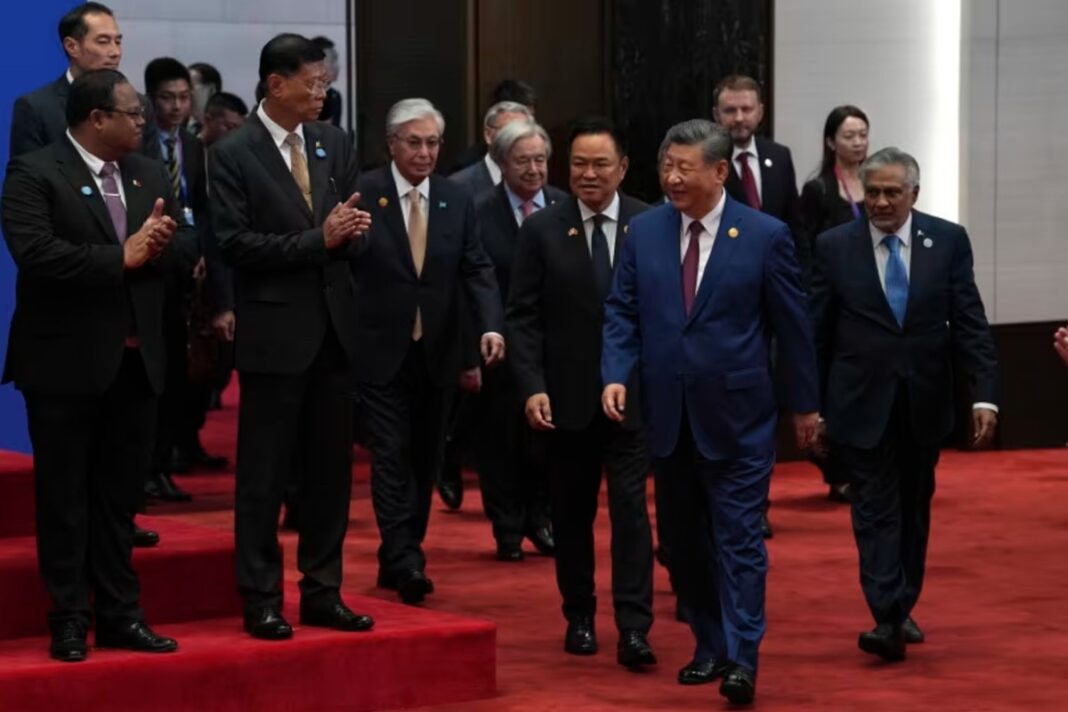
Speaking at the opening ceremony of the World Artificial Intelligence Conference (WAIC) in Shanghai, Xi Jinping urged governments and technology companies to ensure artificial intelligence develops in a safe and beneficial manner.
Xi emphasized that AI should serve humanity rather than become a source of instability.
“With AI advancing at a staggering speed, we must ensure its development is for good and for humanity,” Xi said.
He also stressed the importance of improving AI oversight to prevent systems from becoming uncontrollable, signaling Beijing’s intention to play a leading role in shaping international AI regulations.
Trump Accuses China of Election Interference
Almost simultaneously in Washington, President Donald Trump delivered a sharply different message.
Trump alleged that Chinese entities had illegally obtained approximately 220 million American voter records as part of broader efforts to influence US elections. Beijing has categorically denied those allegations.
The exchange reflects the widening strategic competition between the world’s two largest economies, where artificial intelligence has become a major national security issue alongside semiconductors and advanced computing.
AI Becomes the New Frontline in US-China Competition
Artificial intelligence is rapidly becoming one of the most contested areas in the US-China strategic rivalry.
Washington continues to view China’s AI development as a potential national security threat, particularly regarding:
- Cybersecurity vulnerabilities
- Critical infrastructure protection
- Military AI applications
- Data security
- Advanced semiconductor development
Meanwhile, Beijing argues that excessive national security restrictions slow technological progress and fragment global innovation.
Xi indirectly criticized Washington’s approach by warning against:
- Expanding the concept of national security into every AI-related field.
- Prioritizing one country’s security over global technological cooperation.
China Launches New Global AI Organization (WAICO)
One of the most significant announcements during the Shanghai summit was the launch of the World Artificial Intelligence Cooperation Organization (WAICO).
The new organization includes 29 member countries, among them:
- Pakistan
- Russia
- Indonesia
- Several developing nations
China says WAICO aims to:
- Promote international AI cooperation
- Develop common AI governance standards
- Expand AI accessibility
- Encourage technology sharing among member countries
Analysts describe the initiative as China’s attempt to establish an alternative global AI framework outside Western-led institutions.
China’s AI Diplomacy Strategy
Experts believe Beijing is using artificial intelligence not only as a technological tool but also as a diplomatic instrument.
According to analysts, China views AI as an opportunity to:
- Build stronger strategic partnerships
- Increase influence across the Global South
- Shape future international AI regulations
- Reduce dependence on Western technology ecosystems
Unlike during the early development of the internet—when the United States largely shaped global standards—China now believes it has the technological capacity to influence AI governance from the beginning.
Chinese AI Companies Narrow the Gap
Although American companies such as OpenAI, Google, Anthropic, and Meta remain global leaders in frontier AI models, Chinese firms are rapidly closing the gap.
Among China’s fastest-growing AI companies are:
- DeepSeek
- Zhipu AI
These firms have attracted international attention by offering:
- High-performance language models
- Open-source alternatives
- Lower operating costs
- Greater accessibility for developers
Industry data indicates that Chinese AI models have significantly increased their global market presence, particularly among developers seeking affordable alternatives to proprietary US systems.
Open-Source AI Gives China an Advantage
China’s AI strategy differs from that of many American companies.
Instead of focusing exclusively on the most advanced frontier models, Beijing is emphasizing:
- Large-scale AI deployment
- Industrial automation
- Robotics
- Manufacturing integration
- Open-source AI adoption
This strategy could allow Chinese AI systems to spread more rapidly across developing countries where lower costs are a major advantage.
Cybersecurity Disputes Continue
The AI rivalry increasingly includes cybersecurity accusations from both sides.
The United States has alleged that Chinese organizations have engaged in efforts to train AI systems using advanced American AI models through techniques known as model distillation.
Meanwhile, Chinese regulators recently warned of an alleged security “backdoor” in Anthropic’s Claude Code software.
Anthropic responded that the feature was an experimental abuse-detection mechanism rather than a hidden vulnerability.
The exchange illustrates the growing distrust surrounding AI development between Washington and Beijing.
AI Governance Talks Begin Despite Tensions
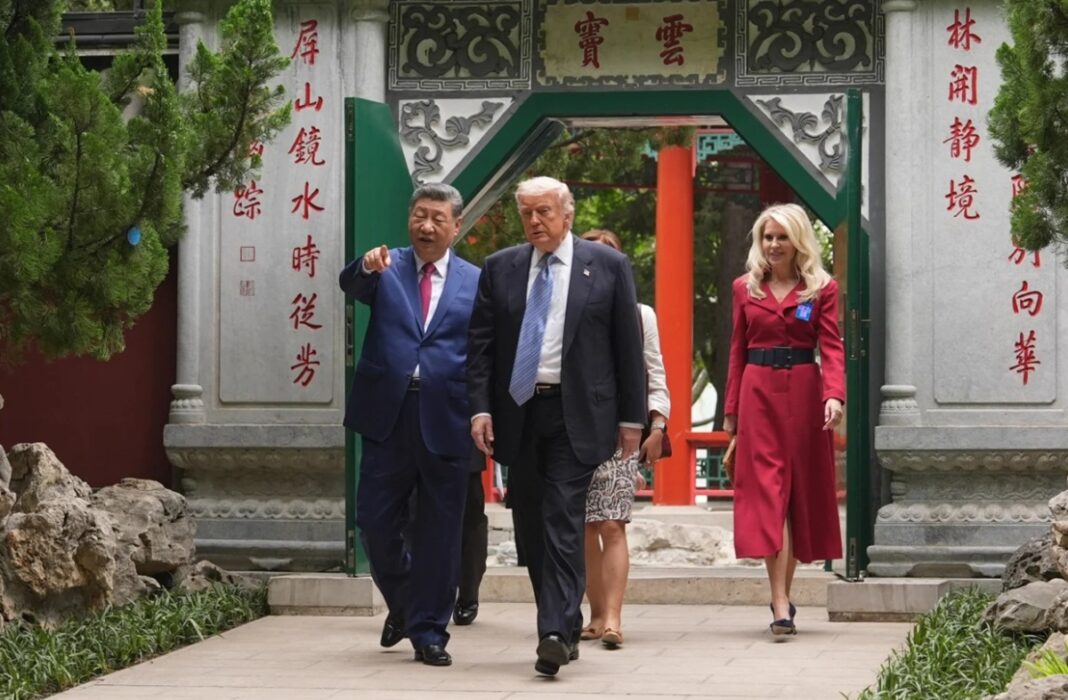
Despite ongoing disputes, both governments have agreed to begin formal discussions on AI governance following recent high-level meetings between Xi Jinping and Donald Trump.
Experts argue that sustained dialogue will be essential because advanced AI increasingly affects:
- National security
- Cyber defense
- Economic competitiveness
- Military modernization
- International regulations
However, mutual suspicion remains high, making meaningful cooperation difficult.
Shanghai AI Summit Draws Global Attention
This year’s World Artificial Intelligence Conference attracted unprecedented international participation.
According to organizers, attendees included:
- United Nations Secretary-General António Guterres
- Nobel Prize winners
- Turing Award recipients
- More than 1,000 technology companies
- Researchers and policymakers from dozens of countries
Notably, this marked the first time Xi Jinping personally attended the event since its launch in 2018, underscoring the importance Beijing now places on AI leadership.
Western Concerns Over China’s AI Vision
Western governments remain cautious about China’s growing influence over international AI governance.
Some analysts argue that if China succeeds in shaping global AI standards, it could promote governance models reflecting its own approach to internet regulation and digital oversight.
Others question whether China’s newly launched WAICO organization will gain broad international support, particularly among Western democracies.
Most experts believe future AI governance will likely emerge through parallel institutions rather than a single global framework.
Conclusion
Artificial intelligence has become the latest arena in the strategic competition between China and the United States.
While Washington focuses on maintaining technological superiority through advanced AI research and security controls, Beijing is pursuing a broader strategy centered on open-source innovation, international partnerships, industrial deployment, and global governance.
Xi Jinping’s appearance at the Shanghai AI summit and the launch of WAICO signal China’s determination to become a rule-maker—not just a participant—in the future of artificial intelligence.
As AI reshapes global economics, military capabilities, and digital governance, the contest between Washington and Beijing is likely to define the international technology landscape for years to come.