Tuesday, April 21, 2026
Home Blog Page 103

Former Mossad operatives disclose information regarding the ‘exploding pagers’ attack

0
Pagers on display at a meeting room at the Gold Apollo company building in New Taipei City, Taiwan.

The Israeli intelligence agency, Mossad, dedicated over ten years to orchestrating an operation that led to the detonation of pagers and walkie-talkies throughout Lebanon in September, as reported by CBS following interviews with two recently retired senior agents who played pivotal roles in the initiative.

According to CBS sources, Mossad initially focused on walkie-talkies, developing a battery that housed an explosive device. The agency then infiltrated the supply chain using a network of shell companies to obscure its involvement.

“We create a pretend world. We are a global production company: We write the screenplay, we’re the directors, we’re the producers, we’re the main actors,” stated one of the former agents. Ultimately, Israeli operatives are said to have sold over 16,000 of these explosive walkie-talkies to the militant group Hezbollah, as detailed in the report.

Mossad did not stop there; they targeted devices that Hezbollah members would carry “at all times.” This led to the introduction of pagers in 2022. The two former agents indicated that the agency conducted extensive testing to ascertain the precise amount of explosives required to injure a pager user while minimizing collateral damage.

The devices created by Mossad were reportedly devoid of any intelligence functions and were incapable of tracking or surveillance. A former operative noted, “There’s almost no way to tap it,” emphasizing that the pagers were essentially small explosives.

Mossad discovered that Hezbollah was procuring these devices from a Taiwanese company named Gold Apollo. In response, it established several shell companies, including one in Hungary, to mislead Gold Apollo into collaboration while keeping its plans concealed from the Taiwanese firm. The intelligence agency took full control of the production of the pagers, which were then marketed through its authorized partnership with Gold Apollo.

Additionally, the agency employed the saleswoman from Gold Apollo who was engaged with Hezbollah to promote their product. They also launched an extensive fake advertising campaign on platforms like YouTube and other online venues, which included fabricated testimonials endorsing the quality of their pagers.

“When [Hezbollah] purchases from us, they have no idea they are dealing with Mossad. It’s like the ‘Truman Show’; everything is orchestrated by us behind the scenes,” remarked one former agent. By September 2024, the Lebanese group had acquired approximately 5,000 pagers, as reported by CBS.

These initiatives were designed to incapacitate and intimidate their adversaries, as acknowledged by former agents. “Our goal is to make them feel exposed, which they indeed are,” stated a former Mossad operative. Another operative indicated that the intelligence agency intended for those ensnared in the scheme to act as a living cautionary tale for Israel’s enemies.

“Those individuals who are missing hands and eyes serve as tangible evidence, walking in Lebanon, of ‘don’t challenge us,’” he conveyed to CBS. The attacks on September 17 resulted in the deaths of at least 42 individuals, including 12 civilians, and left over 3,500 injured, among them women and children. For months, West Jerusalem denied any connection to the events until Prime Minister Benjamin Netanyahu acknowledged responsibility for the attacks in mid-November.

The operation faced widespread international backlash, with UN Human Rights Commissioner Volker Turk labeling it a “shocking” and “unacceptable” violation of human rights laws. Russian Foreign Minister Sergey Lavrov described it as a “blatant example of terrorist tactics.”

Kremlin officials say several countries are ready to facilitate talks between Putin and Trump

0
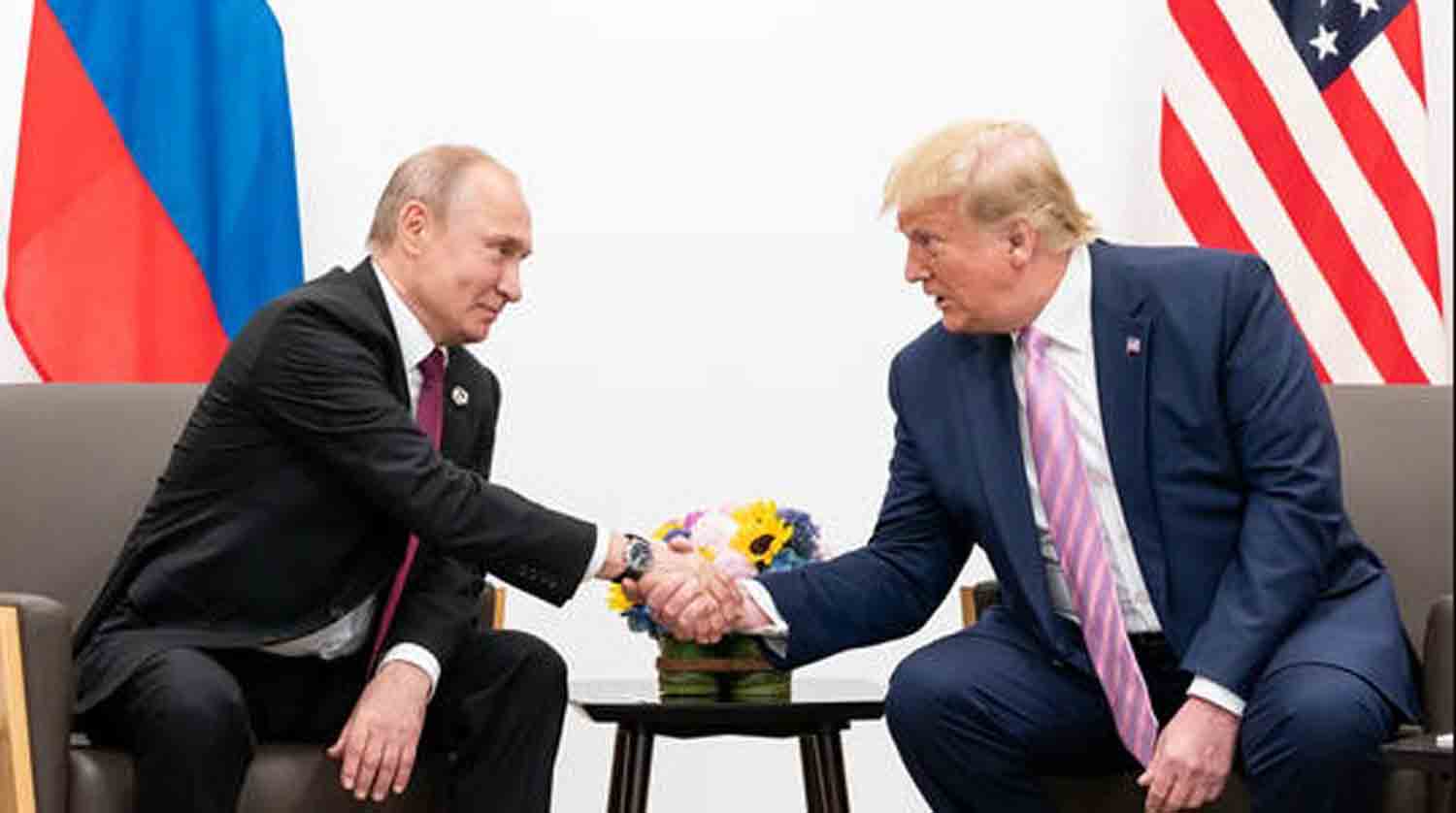
Russian President Vladimir Putin and then-US President Donald Trump on the sidelines of the G20 Summit in Osaka, Japan, June 28, 2019.

Several  nations have expressed their willingness to facilitate discussions between Russian President Vladimir Putin and US President-elect Donald Trump, according to Yury Ushakov, an aide to Kremlin.

During a press conference on Monday, Ushakov was inquired about whether Hungarian Prime Minister Viktor Orban and Slovak Prime Minister Robert Fico had proposed to host a meeting between the leaders of the two nuclear powers.

“We have received various proposals from different nations,” he informed the media. “I will refrain from naming specific countries to avoid influencing any potential outcomes. However, such proposals have indeed been made and continue to be made.”

President-elect Donald Trump has asserted that he could swiftly mediate a resolution between Russia and Ukraine, expressing his readiness to engage with Putin at the earliest opportunity. Nevertheless, the Kremlin stated on Sunday that there are currently no concrete plans for a meeting.

Reports indicate that Trump’s team is contemplating a freeze of the conflict along the existing front lines, a notion that both Russia and Ukraine have deemed unacceptable. Moscow maintains that Ukraine must abandon its NATO aspirations and relinquish claims to Crimea and four other regions that are now part of Russia.

Peace negotiations that took place in Belarus and Türkiye collapsed in the spring of 2022, with both parties accusing each other of setting unrealistic demands. Putin later remarked that Ukrainian negotiators abruptly left the discussions after initially agreeing to make Ukraine a neutral state and limit its military capabilities. In 2024, senior US State Department official Victoria Nuland stated that Washington and its allies had advised Kiev against accepting the terms proposed by Moscow.

Switzerland, Türkiye, and Saudi Arabia have shown interest in facilitating negotiations between Russia and Ukraine, while China, Brazil, and Indonesia have proposed frameworks aimed at resolving the conflict.

In a departure from other NATO allies, Hungary and Slovakia have voiced their opposition to unconditional support for Ukraine, advocating for a resolution through diplomatic channels.

Earlier this month, Orban and Putin engaged in a detailed phone conversation regarding the situation in Ukraine, as reported by the Kremlin. Additionally, Fico made an unexpected trip to Moscow on Monday, where he informed reporters after meeting with Putin that Ukraine’s choice not to extend a natural gas transit contract would adversely affect Slovakia’s economy, given that Slovakia relies on Russian gas transported through Ukrainian territory.

Israel has officially confirmed its involvement in the assassination of Hamas leader Haniyeh for the first time

0
A poster of assassinated Hamas leader Ismail Haniyeh at the Hamas office in Sanaa, Yemen.

Israel’s Minister of Defence, Israel Katz, has publicly confirmed for the first time that his country was responsible for the assassination of Hamas political leader Ismail Haniyeh. He also issued a warning that the Yemen-based Houthi group will face a significant retaliation.

During an event honoring personnel from the Defence Ministry on Monday evening, Katz stated that Israel has “dealt a severe blow to the axis of evil” and intends to inflict similar damage on the Houthi terrorist organization in Yemen, which he described as the last remaining threat.

Katz emphasized, “When the Houthi terrorist organization launches missiles at Israel, I want to send a clear message: We have defeated Hamas, we have defeated Hezbollah, we have compromised Iran’s defense capabilities, and we have undermined the Assad regime in Syria.”

He further declared that Israel would target Houthi strategic infrastructure and eliminate their leaders, drawing parallels to previous actions against Haniyeh, Sinwar, and Nasrallah. “We will carry out these operations in Hodeidah and Sanaa,” he added.

In recent months, the Houthis have conducted multiple missile strikes against Israel, including a recent attack on Tel Aviv using what they referred to as a hypersonic ballistic missile. This incident resulted in minor injuries to over a dozen individuals when the missile bypassed Israeli defense systems and hit a public park in Jaffa.

Haniyeh was killed on July 31 during a visit to Tehran for the inauguration of Iranian President Masoud Pezeshkian.

Reports from Iranian state media indicated that the Hamas leader and his bodyguard lost their lives when an “airborne guided projectile” struck a military veterans’ residence in northern Tehran around 2 a.m. local time.

Iranian and Palestinian officials attributed the assassination to Israel, although Israeli authorities had not confirmed or denied their involvement at that time.

The assassination of Haniyeh incited widespread anger in Palestine and raised concerns about a potential escalation of regional conflict, as Iran’s Supreme Leader Ayatollah Ali Khamenei vowed to deliver “harsh punishment” in response.

In October, Iran retaliated by launching a series of missiles targeting several Israeli cities, claiming it was in response to the killings of its allied leaders, including those from Hamas and Hezbollah.

The Israeli military reported that only a “few” impacts were recorded in central and southern Israel, while the country’s emergency services reported two injuries from falling debris in the Tel Aviv area.

No Israeli deaths were reported. Palestinian authorities said a man was killed by falling debris in the occupied West Bank.

Threats to Panama and Greenland: Trump is pursuing a more aggressive foreign policy, rather than traditional diplomacy

0
Donald Trump gestures at Turning Point USA's AmericaFest in Phoenix, Arizona, U.S.

Donald Trump’s unexpected assertion regarding the potential reclamation of the Panama Canal, along with his assertion that the United States should possess Greenland, indicates that the forthcoming U.S. president intends to adopt a foreign policy that disregards traditional diplomatic protocols.

As Trump readies to assume office on January 20, his team is preparing him to navigate two significant foreign policy challenges: the ongoing war in Ukraine and various conflicts in the Middle East, both of which he has vowed to address promptly.

However, on Sunday, Trump appeared more inclined to issue threats towards U.S. allies such as Panama and Denmark, which governs Greenland as a territory. In recent weeks, Canada has also been subjected to his provocations, with suggestions that it should become the 51st state of the United States.

Supporters of Trump’s stance argue that he is simply a vigorous proponent of “America First” policies, which entail a blunt defense of U.S. interests—economic or otherwise—when engaging with allies, often overlooking the repercussions they may encounter.

“The premise is that what benefits America will ultimately benefit the rest of the world,” stated Victoria Coates, a senior national security official during Trump’s administration from 2017 to 2021. “He adopts a pragmatic perspective on what constitutes America’s interests in any given context.”

Regarding Panama, Trump claimed that the U.S. should reassert control over the crucial Central American waterway, alleging that Panama was imposing excessive charges on shippers, a claim that the Panamanian president strongly refuted.

During a rally in Arizona, Trump expressed his commitment to preventing the canal from falling into “wrong hands,” highlighting concerns about potential Chinese influence over this critical passage. Two of Trump’s foreign policy advisers, who requested anonymity, indicated that he was addressing a broader concern that they believe will be a key focus in his potential second term: the increasing Chinese influence over Latin American governments and economies.

While China does not have direct control over the canal, a subsidiary of CK Hutchison Holdings, based in Hong Kong, has been managing two ports at the Caribbean and Pacific entrances of the canal for an extended period. Tricia McLaughlin, an adviser to Vivek Ramaswamy, who is set to co-chair a government efficiency commission alongside Tesla’s CEO Elon Musk, remarked, “It’s all about leverage and flexing. China is the second-largest user of the Panama Canal, and he is attempting to counter their influence in Latin America.”

Critics argue that this approach may alienate important allies. They warn that aggressive tactics could drive natural partners closer to rival powers like China and Russia, making them less inclined to engage in economic or security agreements with the United States. Mayer Mizrachi Matalon, the conservative mayor of Panama City and a supporter of Trump, issued a strong statement on Sunday, asserting, “We are not, nor will we ever be, a 51st state.”

John Bolton, who served as Trump’s national security adviser during his first term and has since become a critic, noted that there are valid discussions regarding the fees Panama imposes for canal passage, as well as the strategic significance of Greenland to the U.S. and NATO.

However, he noted that Trump is jeopardizing the opportunity for those discussions “due to his inability to refrain from speaking out.”

During his first term, Trump was not hesitant to criticize or threaten allies, particularly European NATO members, whom he accused of underfunding the alliance’s military efforts. Nevertheless, his threats directed at geographically close allies like Canada and Panama just weeks before assuming office suggest a heightened readiness to wield U.S. power as a blunt tool for securing concessions.

The White House opted not to provide a comment, and Trump’s transition team did not reply to a request for input.

TRUMP STILL INTERESTED IN GREENLAND

On Sunday, Trump revived a proposal he had previously mentioned during his first term—suggesting that the U.S. should purchase Greenland, which has gained strategic significance as Arctic trade routes become more accessible due to climate change.

Several officials involved in the transition or closely associated with Trump have informally discussed the implications of acquiring the Danish territory in recent weeks, according to three sources who spoke to Reuters. One potential avenue could involve establishing a Compact of Free Association (COFA) with Greenland, should the island achieve full independence from Denmark, a prospect that some polls indicate has long-term support among Greenlanders.

A COFA, which the United States currently maintains with three Pacific island nations, allows for a high level of economic integration between the U.S. and the foreign entity while preserving the latter’s independence.

Danish officials initially dismissed Trump’s interest in acquiring the island during his presidency from 2017 to 2021; however, he has maintained his fascination with the concept, according to two associates and transition advisers.

Recently, Trump has also speculated about the possibility of Canada becoming a U.S. state, a notion that experts deem largely unrealistic. Nevertheless, Elliott Abrams, a senior fellow at the Council on Foreign Relations, suggests there is a strategic rationale behind Trump’s provocative statements. He pointed out that Justin Trudeau, the Canadian prime minister, is currently facing unpopularity and increasing pressure to resign.

Trump has threatened to impose tariffs on Canadian imports unless Canada takes action to curb the influx of migrants and drugs into the United States. “Trump is intensifying the pressure on Trudeau; I believe this is part of a negotiation regarding tariffs,” Abrams stated. “We may see similar tactics employed with Mexico in the future.”

McLaughlin, an adviser to Ramaswamy, concurred, remarking, “This serves as a warning to Trudeau that Canada is in a subordinate position; they should not challenge the U.S. until they have fulfilled their obligations regarding tariffs.”

Afghanistan welcomes reopening of Saudi embassy in Kabul

0

Afghanistan’s Foreign Ministry expressed its approval on Monday regarding the reopening of Saudi Arabia‘s Embassy in Kabul, marking the first such event since the Taliban regained control in 2021.

On Sunday, the Saudi Embassy announced via X that it was resuming its operations “in line with the government’s commitment to provide comprehensive services to the Afghan people.”

Zia Ahmad Takal, a deputy spokesperson for Afghanistan’s Foreign Ministry, stated, “We are pleased to see the Saudi Arabian Embassy reopen in Kabul and assure them of our full cooperation and commitment to their safety.”

Takal conveyed optimism that the embassy’s reopening would enhance bilateral relations and collaboration between the two nations, while also facilitating timely responses to the needs and concerns of Afghans residing in Saudi Arabia.

Currently, no country officially recognizes the interim Taliban government, although several nations maintain diplomatic ties with them.

US military presence in Syria is unwarranted: Trump’s National Security Advisor nominee

0
Mike Waltz, speaks during a hearing on Capitol Hill.

Mike Waltz, appointed as national security adviser by President-elect Donald Trump, has expressed that U.S. troops should not remain in Syria, emphasizing the importance of avoiding extended involvement in Middle Eastern conflicts.

In a Sunday interview, Waltz addressed several critical foreign policy matters, including the situation in Syria, the plight of American-Israeli hostages in Gaza, and Iran’s nuclear ambitions.

Waltz highlighted that Washington’s main priorities in Syria are the threat from Daesh terrorists and the protection of Israel’s borders.

“President Trump is absolutely correct. His mandate was overwhelmingly against entangling us in Middle Eastern wars,” Waltz stated.

“We do not require American forces operating in Syria in any capacity. However, we are monitoring the situation regarding ISIS, Israel’s border, and the broader dynamics with our Gulf allies.”

Regarding Iran, Waltz underscored the importance of preventing Tehran from acquiring nuclear weapons.

“If Iran develops a nuclear weapon, the Saudis will seek one as well,” he remarked.

On the topic of Gaza, Waltz noted that Hamas is increasingly isolated and urged for the release of American-Israeli hostages. “Hamas has every exit blocked except one: release our hostages if you wish to survive,” he stated.

Waltz also mentioned that the Houthis in war-torn Yemen would be reclassified as a terrorist organization once Trump takes office.

Additionally, he commended Israel’s covert operations aimed at disrupting communication networks in Lebanon.


Who are the potential beneficiaries of the gas conflict between Slovakia and Ukraine? It is not Russia

0
Russian President Vladimir Putin shakes hands with Slovak Prime Minister Robert Fico during a meeting in Moscow, Russia.

The recent conflict regarding gas transit between Slovakia and Ukraine, triggered by Ukraine’s decision to stop the flow of Russian gas through its territory, has created significant disruptions in Europe’s already fragile energy markets.

On Sunday, Slovak Prime Minister Robert Fico made an unexpected trip to Moscow, where he engaged in discussions with President Vladimir Putin. Following the meeting, Fico reported that Putin had assured him of Russia’s “readiness… to continue supplying gas to the West and to Slovakia, which will be nearly impossible after January 1, 2025.”

In a post on Facebook, Fico mentioned that European Union leaders were notified on Friday about his upcoming visit to Moscow. He characterized the trip as a reaction to conversations with Ukrainian President Volodymyr Zelenskyy, who has expressed opposition to any gas transit through Ukraine once the current contract concludes on December 31.

Earlier on Thursday, after a meeting with European Union leaders in Brussels, Zelenskyy declared that Ukraine would cease allowing the transit of Russian gas.

He further clarified that the ban would extend to any gas flow “originating from Russia,” suggesting that even gas from Azerbaijan would not be permitted to transit through Ukraine.

The ongoing situation is likely to further strain the relationship between Kyiv and Bratislava. Since Fico’s return to power in October 2023, tensions with Zelenskyy have been escalating.

Fico has increasingly aligned himself with Hungary’s Viktor Orban, adopting a critical view of military assistance to Ukraine.

As a landlocked nation, Slovakia is heavily reliant on Russian gas, supplied by Gazprom through a pipeline that traverses Ukraine. SPP, Slovakia’s primary gas purchaser, has indicated that a loss of Eastern gas supplies could lead to an additional financial burden of $156.2 million.

Robert Fico stated during a confrontational press conference following a one-day summit of EU leaders in Brussels, “If anyone is going to obstruct the transit of gas to Slovakia, if anyone is going to drive up gas prices in Europe, and if anyone is going to inflict significant economic harm on the European Union, it is President Zelenskyy.”

He further asserted, “Ukraine will not be invited to NATO. It will lose a third of its territory, and foreign military forces will be present there.”

The gas conflict between Slovakia and Ukraine highlights a larger issue within the European energy landscape, which may lead to a shift in the continent’s energy reliance away from traditional suppliers, including Russia.

As tensions rise, a critical question emerges: Who benefits from the ongoing gas conflict between Slovakia and Ukraine? It appears that the United States and its expanding liquefied natural gas (LNG) sector stand to gain, as evidenced by a review of EU gas import statistics.

The cessation of Russian gas transit

Ukraine’s choice to stop the transit of Russian gas through its territory has initiated a significant shift in Europe’s energy landscape.

This move was influenced by Ukraine’s determination to prevent any gas from Russia from passing through, even if the gas originates from Azerbaijan, a major global gas producer.

Azerbaijan shares a border with Russia, and one suggested solution to the transit dilemma was for Baku to supply its gas to Europe via the pipeline that runs through Ukraine.

However, Ukraine has resisted this proposal, concerned that it would inadvertently benefit Putin, allowing Russia to profit from its gas sales to Azerbaijan.

While Slovakia, an EU member since 2004, aims to minimize economic disruption, Ukraine’s firm position on Russian gas flows adds complexity to the situation.

The expiration of the gas transit agreement could jeopardize Slovakia’s energy security, potentially leading to increased gas prices.

The role of the United States

In this context, a notable development arises. Amid the ongoing diplomatic tensions and President Zelensky’s remarks, it is clear that US LNG suppliers are poised to gain from the termination of the Russian gas transit agreement.

Recently, European Commission President Ursula von der Leyen indicated that the EU is exploring the possibility of substituting Russian LNG imports with those from the US.

“We still receive a significant amount of LNG from Russia, so why not replace it with American LNG, which is more cost-effective for us and helps lower our energy prices?” she stated to the press.

The United States has swiftly positioned itself as a top exporter of liquefied natural gas (LNG) since 2022, following significant declines in Europe’s gas imports from Russia due to the Russia-Ukraine conflict. In response, Europe has increasingly relied on the US to fulfill its natural gas requirements.

American firms, such as Cheniere Energy and Freeport LNG, are taking advantage of this surge in demand by securing long-term agreements with European clients.

By 2023, the US had become the largest LNG supplier to the European Union, representing nearly 50 percent of total imports, as reported by the European Council. This signifies a nearly threefold increase in US LNG imports compared to 2021.

Conversely, the proportion of Russian pipeline gas in EU imports plummeted from over 40 percent in 2021 to approximately 8 percent in 2023. When considering both pipeline gas and LNG, Russia’s share fell to below 15 percent of total EU gas imports.

LNG imports from Russia decreased from over 150 billion cubic meters (bcm) in 2021 to under 43 bcm in 2023. In contrast, imports from the US rose from 18.9 bcm in 2021 to 56.2 bcm in 2023, while imports from Norway increased from 79.5 bcm in 2021 to 87.7 bcm in 2023.

In response to Trump’s warning, Mexico’s President claims the Panama Canal belongs to the Panamanian people

0
Mexico's President Claudia Sheinbaum

Mexican President Claudia Sheinbaum voiced her support for the government of Panama on Monday, following U.S. President-elect Donald Trump’s remarks about potentially reasserting U.S. control over the Panama Canal. “The Panama Canal rightfully belongs to the Panamanians,” Sheinbaum stated during her regular morning press briefing.

Her remarks came a day after Trump criticized Panama for allegedly imposing high fees for the use of the canal while addressing supporters in Arizona. Following the rally, he shared an image on Truth Social depicting an American flag over a narrow waterway, captioned: “Welcome to the United States Canal!”

Trump’s statements marked an unusual instance of a U.S. leader suggesting that he could compel a sovereign nation to relinquish territory. In response, Panamanian President Jose Raul Mulino promptly condemned Trump’s remarks. “Every square meter of the Panama Canal and its surrounding areas belongs to Panama and will continue to belong to Panama,” Mulino asserted in a statement on X.

“We are not for sale and will never be for sale” Greenland’s responding to Trump’s remarks.

0
Greenland's Prime Minister Mute Bourup Egede speaks at a press conference during the opening of the European Commission's new office in Nuuk, Greenland.

Greenland’s elected leader firmly stated on Monday that the territory is not for sale, in response to remarks made by U.S. President-elect Donald Trump concerning the “ownership and control” of the Arctic island, which has been under Danish sovereignty for over 600 years.

“Greenland belongs to us. We are not for sale and will never be for sale. We must not abandon our long-standing fight for freedom,” asserted Prime Minister Mute Egede in a written statement.

On Sunday, Trump announced his selection of Ken Howery, a former envoy to Sweden, as his ambassador to Denmark, while also commenting on Greenland’s status as a semi-autonomous region of Denmark that hosts a significant U.S. Air Force base. He stated on Truth Social, “For purposes of National Security and Freedom throughout the World, the United States of America feels that the ownership and control of Greenland is an absolute necessity.”

Trump, who is set to take office on January 20, did not provide further details regarding his statement.

The Danish foreign ministry and the prime minister’s office were not immediately available for comment. Rasmus Jarlov, a member of parliament from the opposition Conservative Party, emphasized on the social media platform X that the Danish government must clearly assert that control over Greenland is not open for discussion or negotiation. “If U.S. activities aim to take control of Danish territory, it must be prohibited and countered. They should not be allowed there at all,” Jarlov, who leads the parliament’s defense committee, stated.

Greenland, with its capital Nuuk located closer to New York than to Copenhagen, is rich in minerals, oil, and natural gas. However, its economic development has been sluggish, resulting in a dependence on fishing and annual financial support from Denmark. The Pituffik air base enhances Greenland’s strategic significance for the U.S. military, particularly for its ballistic missile early-warning system, as it serves as the most direct route from Europe to North America.

During his previous presidency, Trump expressed a desire to purchase Greenland in 2019, but this proposal was swiftly rejected by both Denmark and Greenland’s local authorities before any formal negotiations could occur. Danish Prime Minister Mette Frederiksen described Trump’s offer as “absurd,” prompting him to label her response as “nasty” and ultimately cancel a planned visit to Copenhagen. Frederiksen continues to serve as Denmark’s prime minister.

Since 2009, Greenland has had the option to declare independence from Denmark. Despite having a population of approximately 56,000 and relying heavily on budget transfers from Copenhagen, the island has yet to take this step. In a separate incident on Sunday, Trump threatened to reassert U.S. control over the Panama Canal, accusing Panama of imposing excessive fees for passage, which elicited a strong response from Panamanian President Jose Raul Mulino.

Switzerland implements additional EU sanctions against Russia and Belarus

0

Switzerland has implemented the latest sanctions package from the European Union targeting Russia and Belarus, as announced by the government on Monday. This decision follows the EU’s recent actions against Moscow’s vessels and Chinese entities involved in trade with the Russian military.

The Swiss authorities have identified 54 individuals and 30 companies and organizations, freezing their assets effective December 24, and prohibiting 52 ships from offering services.

According to the Swiss government, “These vessels are primarily tankers associated with Russia’s shadow fleet, which are evading the price cap on Russian crude oil and petroleum products, or are engaged in transporting military supplies for Russia or stolen grain from Ukraine.”

Individuals on the sanctions list will be prohibited from entering Switzerland. In accordance with EU measures, Switzerland has also imposed financial and travel restrictions on 26 individuals and two organizations from Belarus.

Gaps in the Gaza ceasefire negotiations have narrowed, according to both parties

0
Israeli tanks take a position, as smoke from an airstrike rises over Gaza, amid the ongoing conflict in Gaza between Israel and Hamas, near the Israel-Gaza border, as seen from Israel.

According to statements from Israeli and Palestinian officials on Monday, the gaps between Israel and Hamas regarding a potential ceasefire in Gaza have diminished, although significant differences remain unresolved.

This month, a renewed effort by mediators from Egypt, Qatar, and the United States to halt the conflict and secure the release of Israeli and foreign hostages has gained traction, yet no significant progress has been reported.

A Palestinian official involved in the discussions indicated that while some contentious issues have been addressed, there is still no consensus on the identities of certain Palestinian prisoners to be released by Israel in exchange for hostages, nor on the specific positioning of Israeli troops in Gaza.

These comments align with those made by Israeli diaspora minister Amichai Chikli, who noted that both matters are still under negotiation. However, he emphasized that the parties are closer to an agreement than they have been in recent months. “The duration of this ceasefire could range from six months to ten years, depending on the evolving situation on the ground,” Chikli stated during an interview with Israel’s Kan radio. He highlighted that the future governance and reconstruction of Gaza post-conflict would be crucial.

The length of the ceasefire has consistently been a major point of contention in multiple rounds of unsuccessful negotiations. While Hamas seeks an end to the conflict, Israel insists on the termination of Hamas’ governance in Gaza as a prerequisite. “The complete resolution of the war remains unresolved,” the Palestinian official remarked.

Israeli minister Zeev Elkin, part of Prime Minister Benjamin Netanyahu’s security cabinet, mentioned on Israel’s Army Radio that the goal is to establish a mutually agreed framework to address this disparity in a subsequent phase of the ceasefire agreement.

Chikli indicated that the initial phase would focus on humanitarian efforts, lasting 42 days and involving the release of hostages.

HOSPITAL

The conflict was ignited by Hamas’ attack on southern Israel on October 7, 2023, which resulted in the deaths of 1,200 individuals and the abduction of 251 people to Gaza, according to Israeli reports. In response, Israel’s military actions against Hamas in Gaza have reportedly led to the deaths of over 45,200 Palestinians, as stated by health officials in the Hamas-controlled region. The majority of the 2.3 million residents have been displaced, and significant portions of Gaza lie in ruins.

On Monday, medics reported that at least 11 Palestinians lost their lives due to Israeli airstrikes. One of the few hospitals still partially operational in northern Gaza, an area that has faced intense Israeli military pressure for nearly three months, urgently requested assistance after sustaining damage from Israeli fire. “We are under constant daily threat,” stated Hussam Abu Safiya, the director of Kamal Adwan Hospital. “The bombardment continues from all sides, impacting the building, the departments, and the staff.”

The Israeli military did not provide an immediate response. However, on Sunday, it announced that it was supplying fuel and food to the hospital and assisting in the evacuation of some patients and staff to safer locations. Palestinians allege that Israel aims to permanently depopulate northern Gaza to establish a buffer zone, a claim that Israel refutes. The Israeli government asserts that its operations around the three communities at the northern edge of the Gaza Strip—Beit Lahiya, Beit Hanoun, and Jabalia—are focused on targeting Hamas militants.

On Monday, Tom Fletcher, the United Nations’ aid chief, stated that Israeli forces have obstructed efforts to deliver essential aid in northern Gaza. “North Gaza has been under a near-total siege for over two months, raising the specter of famine,” he remarked. “South Gaza is extremely overcrowded, leading to horrific living conditions and escalating humanitarian needs as winter approaches.”

Bangladesh has requested India to return former Prime Minister Hasina for judicial proceedings, according to the Foreign Ministry

0

The interim government of Bangladesh has formally communicated with India, requesting the return of former Prime Minister Sheikh Hasina to Dhaka. The 77-year-old leader of the Awami League has been residing in India since August 5, when she left Bangladesh in the wake of widespread protests that led to the collapse of her 16-year administration.

The International Crimes Tribunal (ICT) based in Dhaka has issued arrest warrants for Sheikh Hasina, along with her ministers, advisors, and former military and civil officials, accusing them of “crimes against humanity and genocide.”

Touhid Hossain, the foreign affairs advisor for the interim government, informed the media, “We have sent a note verbale to the Indian government indicating that Bangladesh wishes to have her returned for the judicial proceedings.”

Previously, Home Advisor Jahangir Alam mentioned that his office had reached out to the External Affairs Ministry in India to facilitate Ms. Hasina’s extradition. “We have sent a letter to the foreign ministry regarding her extradition. The process is currently underway,” he stated to reporters.

Mr. Alam noted that an extradition treaty exists between Dhaka and New Delhi, which could allow for Ms. Hasina’s return to Bangladesh under this agreement.

This diplomatic request for Sheikh Hasina’s return follows a visit by Foreign Secretary Vikram Misri to Bangladesh, where he engaged in discussions with Chief Advisor Muhammad Yunus, a Nobel laureate. Mr. Misri described the talks as frank, candid, and constructive, covering a wide range of issues pertinent to the “extremely important bilateral relationship.” He also mentioned that India had raised concerns regarding attacks on minorities, including Hindus, with Bangladeshi leaders.

A statement from the Chief Advisor’s office indicated that Sheikh Hasina’s presence in India was a topic of discussion. The Chief Advisor expressed, “Our people are concerned because she is making many statements from there. It creates tensions.”

Prior to the Foreign Secretary’s visit, Ms. Hasina criticized the interim government and accused Muhammad Yunus of operating a “fascist regime.” In a virtual address to Awami League supporters in London, she claimed that Yunus was the “mastermind” behind the political unrest that led to the downfall of her administration.

“Since August 5, there has been a surge in attacks against minorities and places of worship for Hindus, Christians, and Buddhists. We strongly condemn these actions. The Jamaat and terrorists are operating freely under the new regime,” she stated. “Bangladesh is currently under the control of a fascist regime that has stripped away the democratic rights of its citizens. The progress our government made in poverty reduction and infrastructure development, as well as the strengthening of democracy, is being reversed under Yunus’s leadership,” she continued.

Kremlin dismisses Turkish media claims regarding the life of Assad and his wife in Moscow

0
Syria's President Bashar al-Assad and his wife Asma, plant trees in city of Draykish, near Tartous, Syria December 30, 2020.

The Kremlin dismissed Turkish media claims on Monday that Asma al-Assad, the British-born spouse of former Syrian president Bashar al-Assad, was seeking a divorce and planning to leave Russia. Kremlin spokesperson Dmitry Peskov also refuted allegations that Assad was under confinement in Moscow and that his assets had been frozen. When questioned during a conference call about the accuracy of these reports, Peskov stated, “No, they do not reflect reality.”

Reports from Turkish and Arabic media on Sunday indicated that Asma al-Assad had initiated divorce proceedings in Russia, where the Assad family had recently been granted asylum following a rapid takeover of Damascus by rebel forces.

A delegation from Russia has arrived in Iran to hold discussions with President Pezeshkian

0

A Russian delegation has arrived in Tehran for discussions that will include a meeting with Iranian President Masoud Pezeshkian, as reported by the Russian state news agency TASS on Monday. This visit comes as both nations are preparing to finalize a comprehensive cooperation agreement.

According to Iran’s Foreign Ministry Spokesperson Esmaeil Baghaei, efforts are underway to establish a date for the agreement’s completion, with plans for it to be signed during a bilateral visit scheduled for January.

Since the onset of the Ukraine conflict, Russia has strengthened its relationships with Iran and other nations that are adversarial towards the United States, including North Korea. In October, Russian Foreign Minister Sergei Lavrov indicated that Moscow and Tehran aim to formalize a deal that would enhance defense collaboration.

The delegation from Russia is led by Deputy Prime Ministers Alexei Overchuk and Vitaly Savelev, as reported by Interfax.

Interfax also noted that the discussions will focus on the collaborative efforts between Iran and the member states of the Eurasian Economic Union (EAEU) regarding a comprehensive free trade zone agreement. In September, the United States accused Tehran of supplying short-range ballistic missiles to Russia for use in Ukraine and subsequently imposed sanctions on vessels and companies allegedly involved in the transfer of Iranian arms. Tehran has denied these allegations.

South Korea observes indications that North Korea is mobilizing additional troops and drones for Russia

0
North Korean leader Kim Jong Un oversees a performance test of drones during a visit to the Drone Institute of North Korea's Academy of Defence Sciences at an undisclosed location in North Korea.

South Korea’s military reported on Monday that it has observed indications of North Korea‘s preparations to deploy additional troops and weaponry, including suicide drones, to Russia in support of its conflict in Ukraine.

According to Seoul’s Joint Chiefs of Staff (JCS), North Korea has already supplied 240mm multiple rocket launchers and 170mm self-propelled howitzers, and is reportedly gearing up to manufacture more suicide drones for shipment to Russia following a test overseen by leader Kim Jong Un last month.

A JCS official noted, “Suicide drones are a key focus for Kim Jong Un,” highlighting North Korea’s intention to provide these drones to Russia. These drones have been extensively utilized in the Ukraine conflict, and Kim has mandated their mass production along with updates to military strategy and training, citing the increasing global competition, as reported by state media.

Seoul, Washington, and Kyiv estimate that approximately 12,000 North Korean troops are currently in Russia. The JCS indicated that at least 1,100 of these personnel have been killed or injured, aligning with a recent briefing from South Korea’s intelligence agency, which reported around 100 fatalities and another 1,000 injuries in the Kursk region.

The strengthening of military relations between Pyongyang and Moscow could present heightened risks to Seoul, particularly as North Korea modernizes its conventional forces, which are considered less advanced than those of the South, and gains valuable combat experience, according to the official.

In recent weeks, North Korea has sent up to 10,000 soldiers to the heavily fortified border area, aiming to transform it into a desolate zone while erecting barriers and barbed wire. However, the JCS noted that the number of troops in the area decreased to several hundred over the weekend.

The Joint Chiefs of Staff (JCS) released images purportedly depicting a group of North Korean soldiers testing an electrified wire fence with a goat. Additionally, there is speculation that North Korea may conduct a test launch of an intermediate-range hypersonic missile around the end of the year, coinciding with the inauguration of U.S. President-elect Donald Trump, while also increasing the number of garbage balloons sent to South Korea. Since late May, North Korea has launched thousands of balloons carrying bags of trash, claiming it is a response to South Korean activists who have sent balloons with propaganda leaflets.

An official indicated that, with support from Russia, North Korea is likely to engage in various strategic provocations next year, including the launch of intercontinental ballistic missiles and a potential nuclear test, aimed at strengthening its bargaining position with the United States.

A significant explosion has occurred at a military base in South Korea

0
Soldiers conduct military exercises at a base in South Korea.

An explosion has occurred at a military base in South Korea during an inspection of facilities that store hazardous materials, as reported by the Yonhap news agency, referencing police and firefighting officials.

The incident, which took place on Monday morning at a logistics center in Gimhae, located 310 kilometers southeast of Seoul, resulted in injuries to three individuals. According to the agency, all victims are civilians who sustained burns, but their conditions are reported to be non-life-threatening.

The explosion happened while officials were inspecting a newly built tank facility designated for hazardous materials. Investigations into the cause of the blast are currently underway.

In a related incident in October, a failed launch of a Hyunmoo-2 short-range ballistic missile led to an explosion and significant fire at a South Korean military base in Gangneung, on the eastern coast. Fortunately, there were no injuries reported during that event, which coincided with joint US-South Korean military exercises.

Later that month, a fire severely damaged a warehouse belonging to the US Forces Korea (USFK) in Busan. Firefighters took 19 hours to bring the blaze under control, but no injuries were reported, as the warehouse was unoccupied due to ongoing renovations, according to the US military.

A delegation from Saudi Arabia engaged with the leader of Syria’s newly established administration

0
The leader of Syria's Hay'at Tahrir al-Sham (HTS) group, Abu Mohammed al-Jolani, addresses a crowd in Damascus' landmark Umayyad Mosque on 8 December, 2024.

A Saudi delegation convened with Ahmed Al-Sharaa, the head of the new Syrian administration, in Damascus on Sunday, as reported by Saudi media on Monday.

According to Al-Arabiya news channel, the delegation, led by a consultant from the royal court, met with Al-Sharaa at the People’s Palace in the Syrian capital.

Details regarding the discussions held during the meeting were not disclosed.

The broadcaster referenced a prior statement from Al-Sharaa, indicating that both Saudi Arabia and Syria are eager to establish a collaborative vision for Damascus, focusing on cooperation and economic growth.

Bashar Assad, who has been Syria’s leader for nearly 25 years, sought refuge in Russia following the takeover of Damascus by anti-regime factions on December 8, which marked the end of the Baath Party’s long-standing rule since 1963.

This shift occurred after Hayat Tahrir al-Sham (HTS) forces swiftly captured significant cities in an offensive that unfolded in less than two weeks.

Seoul’s investigation into martial law uncovers a strategy aimed at inciting an attack from North Korea

0
South Korea's main opposition Democratic Party leader Lee Jae-myung looks on as people hold placards that read "Step down President Yoon Suk Yeol" and "Investigate his act of rebellion immediately", at a rally to condemn South Korean President's surprise declarations of the martial law last night and to call for his resignation, at the national assembly in Seoul, South Korea.

An ongoing investigation into the unsuccessful martial law in South Korea has revealed intentions to “provoke” North Korea into launching an attack, according to information disclosed by police.

These detailed strategies were found in a notebook belonging to a former military intelligence commander, who has also been detained as part of the investigation initiated following President Yoon Suk Yeol’s decision to impose martial law on December 3.

The objective was to incite Pyongyang to strike at the de facto western inter-Korean maritime boundary, referred to as the Northern Limit Line (NLL) in the Yellow Sea, as reported by the police.

On Monday, authorities indicated that the plans were elaborated over 60 to 70 pages in the notebook of former Army Maj. Gen. Noh Sang-won, as reported by Seoul-based Yonhap News.

Noh, who previously served as the chief of the Defence Intelligence Command (DIC), had his residence in the Ansan area of Gyeonggi province searched by police.

Expelled from the military in 2018 due to a sexual abuse scandal, Noh is known to be a close associate of former Defence Minister Kim Yong-Hyun, who has also been taken into custody.

Previously, opposition parties alleged that Kim’s actions were aimed at instigating a conflict with Pyongyang to legitimize the imposition of martial law.

Spiritual advisor

North Korea has reported drone activity over Pyongyang, claiming to have shot down one of the drones and attributing the incident to the South Korean military.

Authorities are currently investigating President Yoon and his aides regarding the martial law decree, marking the 17th instance in South Korea’s history. Yoon has since been impeached and is awaiting trial by the Constitutional Court.

Several military personnel have also been detained.

Noh was running a fortune-telling enterprise from his residence while serving as a “spiritual advisor.”

Yoon has been summoned for questioning again on Wednesday by investigators, as the Constitutional Court is scheduled to conduct the first hearing of the impeachment trial on Friday.

To date, the 63-year-old leader, facing significant challenges, has ignored orders to participate in any investigative questioning.

The former prosecutor-turned-president, whose responsibilities have been suspended, has declined to acknowledge notices from the Constitutional Court.

Nevertheless, the Constitutional Court announced on Monday that it will continue with the trial, stating that notices to Yoon will be deemed served regardless of whether he acknowledges them.

Kremlin evaluates the likelihood of a meeting between Trump and Putin

0

No arrangements have been established for a meeting between Russian President Vladimir Putin and US President-elect Donald Trump, according to Kremlin spokesman Dmitry Peskov.

On Sunday, Trump emphasized his desire to address the Ukraine crisis, indicating that he would be open to a discussion with the Russian leader to halt the violence. “President Putin expressed his wish to meet with me as soon as possible. We must wait for this, but it is essential to end that war,” Trump stated.

When asked by TASS on Monday if a face-to-face meeting could occur before Trump’s inauguration at the end of January, Peskov responded that “there has been no significant movement in that direction at this time.” He had previously mentioned that there had been no communication between Russia and the Trump team regarding the resolution of the Ukraine situation.

These comments followed Putin’s suggestion last week that “there will be plenty to discuss” with Trump. “Naturally, I am open to dialogue at any time; I will be prepared to meet with him if he desires,” the Russian president remarked during his annual Q&A session. However, he noted that he was uncertain when initial contact might take place, recalling that he had not communicated with Trump since the president-elect’s first term.

Trump has consistently promised to swiftly resolve the Ukraine conflict while encouraging both sides to agree to a ceasefire. Earlier this month, he held discussions with French President Emmanuel Macron and Ukraine’s President Vladimir Zelensky, later asserting that Kiev “would like to reach an agreement.” However, Ukraine has dismissed any possibility of territorial concessions to Russia while insisting on security guarantees.

According to various media reports, one potential peace initiative being contemplated by Trump could involve freezing the conflict along the existing front line without acknowledging Russia’s claims over territories contested by Ukraine, while also putting a hold on Kiev’s aspirations for NATO membership.

Russia has identified Ukraine’s neutrality as a primary objective; however, it has consistently dismissed the idea of a conflict freeze, contending that such a move would merely allow the West to bolster Ukraine’s military capabilities. President Putin has indicated that Moscow would be willing to announce a ceasefire and initiate peace negotiations once Ukraine withdraws from all Russian-claimed territories, which encompass the Donetsk, Lugansk, Kherson, and Zaporozhye regions.

A recent poll indicates that 80% of Americans think the government is concealing information regarding drones

0

A recent survey reveals that nearly 80% of Americans believe the US government is concealing information regarding the recent surge of unexplained drone sightings nationwide. Approximately half of the respondents perceive these drones as a potential threat.

More than half of the population is actively following this developing story, and those who are more engaged tend to suspect government involvement or efforts to obscure the truth.

Specifically, 53% of participants view these drones as a threat to national security, while 78% think the government is withholding information from the public.

The CBS News/YouGov survey, conducted from December 18 to 20, included 2,244 US adults and has a margin of error of 2.4 percentage points.

The increase in sightings began in mid-November, with numerous reports of large, unidentified drones appearing at night over New Jersey. This phenomenon quickly attracted media coverage, leading to additional sightings in states such as New York and Pennsylvania, and eventually across various regions of the country, including the southern states, the Midwest, and the Pacific coast.

The increasing frequency of sightings has led local, state, and federal authorities to take measures aimed at alleviating public anxiety and confusion. Despite this, various agencies, including the FBI, Department of Homeland Security (DHS), FAA, and Department of Defense (DoD), have not identified any credible threats.

In a joint statement released last week, the FBI, DHS, FAA, and DoD noted, “The FBI has received tips regarding over 5,000 reported drone sightings in recent weeks, resulting in around 100 leads. The federal government is collaborating with state and local officials to investigate these claims. After a thorough review of the technical data and citizen reports, we conclude that the sightings consist of a mix of legitimate commercial drones, hobbyist drones, law enforcement drones, manned fixed-wing aircraft, helicopters, and stars that were mistakenly identified as drones.”

State and local law enforcement, along with various independent experts, have reported similarly inconclusive results, although many cases remain open.

While the US military has acknowledged several drone incursions over military installations in the past year, Pentagon officials have stated that such occurrences are not uncommon and are typically not indicative of hostile intent. Nevertheless, public skepticism persists, with many individuals calling for greater transparency and accountability from government representatives.

US President-elect Donald Trump expressed strong opinions on the matter, suggesting that any unidentified aerial object should be shot down.

“Mystery drone sightings are occurring nationwide. Can this really be happening without our government’s awareness? I do not believe so!” he stated in a post on Truth Social last week. “The public deserves to know, and immediately. If not, shoot them down!”