Monday, April 20, 2026
Home Blog Page 91

Lebanon’s Mikati is set to meet Syrian leader Sharaa in Damascus, sources say

0
Lebanon's caretaker Prime Minister Najib Mikati speaks during a press conference in Beirut, Lebanon.

Lebanese caretaker Prime Minister Najib Mikati is scheduled to meet with Syria’s de facto leader, Ahmed al-Sharaa, in Damascus on Saturday, according to two sources from Lebanon. This marks the first visit by a head of government to Syria’s capital since Bashar al-Assad’s regime fell. Additionally, it will be the first visit by a Lebanese prime minister to Syria in 15 years.

Lebanon’s newly appointed president, Joseph Aoun, expressed on Thursday that there exists a historic opportunity for “a serious and equal dialogue” with Syria, which had significant influence over Lebanon during the Assad family’s lengthy rule, maintaining a military presence there for 29 years until 2005—a situation that faced considerable opposition from many Lebanese.

Sharaa, who leads the rebel forces that ousted Assad on December 8, assured last month during a meeting in Damascus with prominent Lebanese Druze leader Walid Jumblatt that Syria would refrain from interfering in Lebanon’s internal matters. Mikati received a phone invitation from Sharaa for the visit last week. Lebanese Foreign Minister Abdallah Bou Habib, who is expected to join Mikati, indicated during a December 26 conversation with his Syrian counterpart that Lebanon is eager to establish positive neighborly relations with Syria.

The last Lebanese prime minister to visit Damascus was Saad al-Hariri in 2010. Relations between Damascus and Beirut have often been tense since both nations gained independence in the 1940s. The Iran-backed Lebanese Shi’ite group Hezbollah played a crucial role in supporting Assad during the Syrian civil war, combating the Sunni Islamist factions that sought to overthrow him. Historically, the Assad regime had a significant influence in Lebanon during the 1975-90 civil war, deploying troops in 1976 and maintaining dominance for 15 years post-conflict. While many Lebanese perceived Syria as an occupying force during that time, some factions supported its involvement.

The murder of former Lebanese Prime Minister Rafik al-Hariri in Beirut in 2005 triggered widespread protests across Lebanon and led to significant pressure from Western nations, ultimately resulting in Syria’s withdrawal of its troops. An initial international investigation pointed to high-ranking officials in both Syria and Lebanon as being involved in the assassination. Although Syria refuted any connection, former Syrian Vice President Abdel-Halim Khaddam claimed that President Assad had issued threats against Hariri months prior, a statement that Assad contested.

Fifteen years later, a court supported by the United Nations found three members of Hezbollah guilty in absentia for their involvement in the assassination, a claim that Hezbollah continues to reject.

Ukraine expects a meeting between Trump and Zelenskiy, along with quick communication after the inauguration

0

Ukraine is anticipating high-level engagement with the incoming U.S. administration as soon as Donald Trump assumes office, including a potential meeting between the president-elect and President Volodymyr Zelenskiy, as stated by Kyiv on Friday.

Kyiv views the establishment of strong relations with Trump as a critical objective and has been reaching out to the Republican candidate who won the U.S. presidential election in November, with hopes of swiftly concluding Russia’s nearly three-year war against Ukraine.

“We are looking forward to a meeting between our presidents because our priority is to collaborate closely with America… we are preparing for interactions at the highest levels immediately following the inauguration,” said Heorhii Tykhyi, spokesman for the Ukrainian foreign ministry, during a briefing in Kyiv.

Trump has indicated a readiness to meet with Russian President Vladimir Putin as a potential step towards resolving the conflict.

Previously, Kyiv has expressed disapproval of Western leaders engaging with Putin, contending that such actions legitimize a pariah and diminish the Russian leader’s isolation. However, it has not opposed the possibility of a Trump-Putin meeting.

Trump has designated retired lieutenant general Keith Kellogg as his envoy for issues related to the war. Sources informed Reuters earlier this week that Kellogg’s planned fact-finding trip to Kyiv and other European capitals has been postponed until after Trump’s inauguration on January 20.

Tykhyi stated on Friday that the postponement of the visit was due to legal considerations rather than political ones, highlighting the Logan Act, which restricts the capacity of private American citizens to engage in negotiations regarding U.S. conflicts with foreign officials.

EU worries about Trump potentially reversing Biden’s Russia sanctions – Financial Times

0
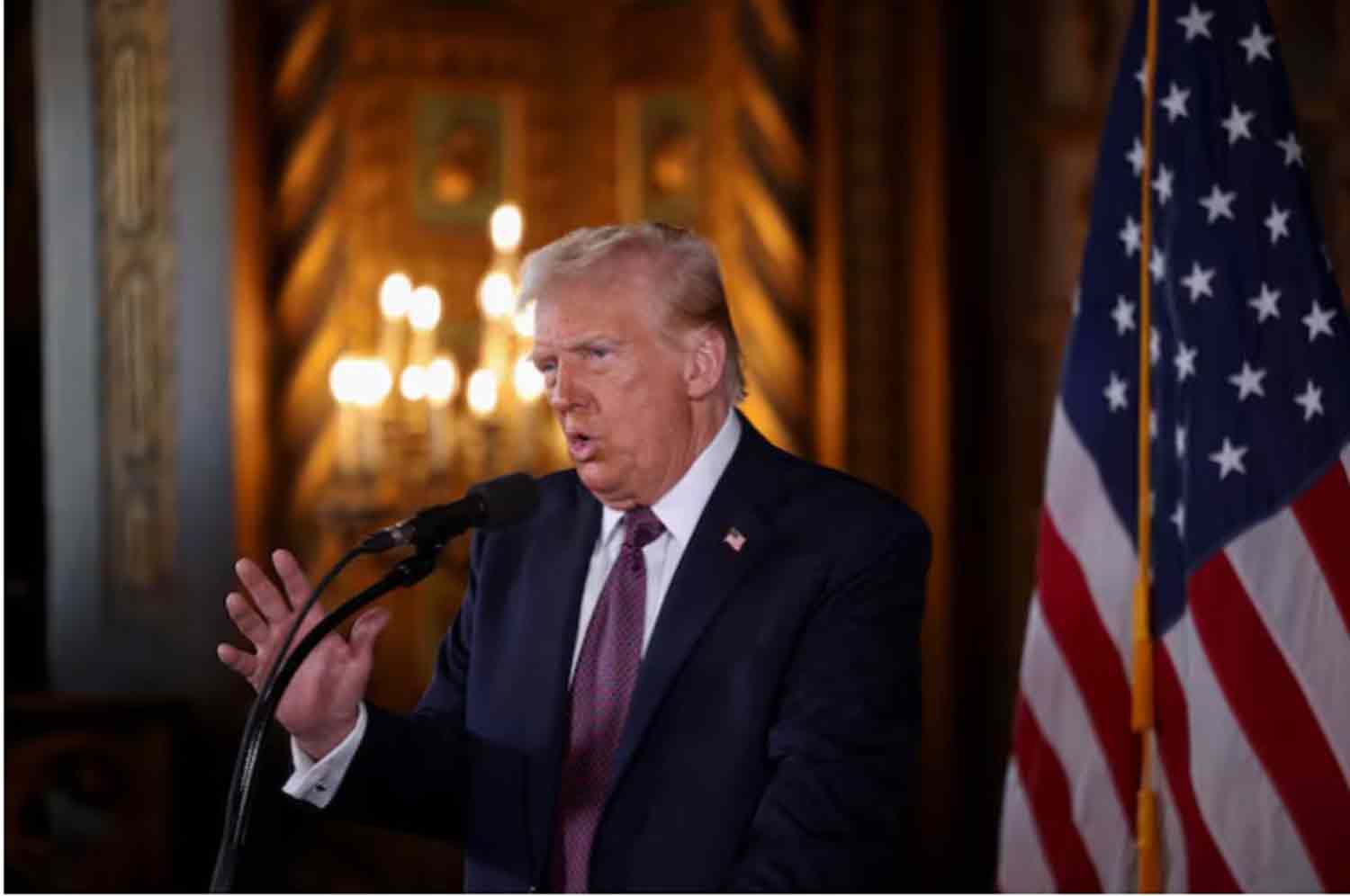
Donald Trump makes remarks at Mar-a-Lago in Palm Beach, Florida.

EU officials are apprehensive that the incoming US President Donald Trump may reverse some of the sanctions placed on Russia during Joe Biden’s administration, as reported by the Financial Times on Friday. Since 2022, Russia has faced approximately 40,000 sanctions from Western nations.

The British publication indicates that Brussels officials are worried that Trump could undo certain decisions made by his predecessor “merely because they were enacted by Biden.”

In response, Brussels is reportedly working to evaluate hundreds of sanctions and executive orders established by Biden to determine which potential reversals could most significantly affect the European Union. Some officials expressed to the FT that Trump might disregard EU interests entirely when reassessing Biden’s foreign policy actions.

“There is a concern that he may choose to reverse measures simply because they were implemented by Biden,” a source reportedly stated. “We need to understand the implications of such actions for us.”

Following the onset of hostilities in February 2022, Biden implemented a series of sanctions aimed at destabilizing Russia’s economy. These measures included freezing a substantial portion of Russia’s sovereign assets, utilizing the interest from those funds to support a loan for Ukraine, targeting major banks and key industries, and imposing travel bans on numerous high-ranking officials, including President Vladimir Putin and Foreign Minister Sergey Lavrov.

Russia has denounced the sanctions as “illegal” and characterized the asset freezes as “theft.” President Putin has asserted that the nation’s economy has managed to endure extraordinary Western pressure, highlighting that this situation has spurred the growth of domestic industries.

Certain US sanctions against Moscow were implemented prior to 2022. Former President Barack Obama imposed a series of measures in response to Crimea’s secession from Ukraine and its subsequent integration into the Russian Federation following a Western-supported coup in Kiev in 2014.

During his initial term, President Trump largely maintained these restrictions, while his administration also enacted new sanctions targeting specific Russian officials.

Efforts to resolve the Kurdish conflict in Turkey are now challenged by developments in Syria

0
Supporters of the pro-Kurdish Peoples' Equality and Democracy Party (DEM Party) display flags with a portrait of jailed Kurdistan Workers Party (PKK) leader Abdullah Ocalan, in Istanbul, Turkey.

Efforts to resolve a 40-year militant conflict have sparked optimism for peace in Turkey; however, the fragile status of Kurdish forces in Syria and ambiguity regarding Ankara’s intentions have left many Kurds feeling apprehensive about the future. Abdullah Ocalan, the imprisoned leader of the Kurdistan Workers Party (PKK), has reportedly expressed a readiness to urge the PKK to disarm as part of a peace initiative aimed at concluding the insurgency he initiated against NATO-member Turkey in 1984.

This conflict has resulted in over 40,000 fatalities, hindered development in the predominantly Kurdish southeastern region, and created significant political rifts. The pro-Kurdish DEM Party engaged with Ocalan in late December and has since initiated discussions with other political entities, including President Tayyip Erdogan’s AK Party (AKP), regarding Ocalan’s suggestions, with both parties characterizing the discussions as “positive.”

According to two sources from DEM, the party plans to visit Ocalan again on January 15 at his prison on Imrali Island, where he has been incarcerated since 1999. They anticipate that this meeting will produce a tangible plan for advancing peace negotiations.

“We expect the process to take shape and a clear roadmap to be determined to establish the legal framework in the second meeting with Ocalan,” stated Gulistan Kilic Kocyigit, deputy chair of the DEM Party parliamentary group, in an interview with Reuters. As the third-largest party in parliament, DEM’s position is significant. While it remains uncertain what Ocalan might seek in any agreement, DEM has reported that he mentioned aspirations for a “democratic transformation” in Turkey. The Kurdish population has long advocated for enhanced political and cultural rights, as well as economic assistance, and DEM is also calling for Ocalan’s release.

The recent ousting of Bashar al-Assad in Syria has significantly altered the landscape of the peace process, placing Syrian Kurdish forces in a precarious position as they face opposition from Turkey-backed factions, while the new authorities in Damascus maintain a cooperative relationship with Ankara.

Turkey has issued a warning regarding a potential military incursion into northern Syria targeting the Kurdish YPG militia, demanding their disbandment. Ankara labels them as terrorists linked to the PKK, yet they are also partners with the United States in combating the Islamic State, which complicates the situation further.

Currently, the implications of Assad’s downfall on the PKK’s willingness to disarm remain uncertain. A prominent PKK leader recently expressed support for Ocalan’s initiatives but refrained from addressing the disarmament topic directly. The commander of the Syrian Kurdish forces has suggested that a resolution with Turkey could involve the withdrawal of foreign fighters, including those from the PKK, to prevent further hostilities in the region.

“pointing guns and talking about peace”

Kocyigit emphasized that navigating a peace process in Turkey amidst these circumstances poses a significant challenge for the government. She stated, “You cannot point guns at the Kurds in Kobani and talk about peace in Turkey.” The Kurdish issue is multifaceted and requires consideration of both Turkey’s internal factors and its international implications. She urged Turkey to recognize the role of Kurds in shaping Syria’s future.

While Ankara has remained relatively quiet about the discussions with Ocalan, which were initiated following a proposal from Erdogan’s key ally in October, a senior AKP member expressed optimism after engaging with a DEM delegation. Abdullah Guler remarked, “We see everyone’s good-willed effort to contribute to the process,” and indicated that the aim is to resolve the matter within the year, suggesting that forthcoming developments may be unexpected.

He did not elaborate on the specific developments, but another AKP member indicated that conditions might be favorable for the PKK to disarm by February. When questioned about the possibility of an amnesty for PKK members, Guler stated that a general amnesty was not currently being considered.

Ozgur Ozel, the leader of the main opposition Republican People’s Party, proposed the establishment of a parliamentary commission involving all parties to tackle the issues faced by the Kurdish population.

In the southeast, there is a prevailing skepticism among Kurds regarding the prospects for peace, largely due to previous disappointments. This doubt is evident in recent opinion polls. A SAMER survey of approximately 1,400 individuals, conducted in the southeast and major cities across Turkey, revealed that only 27% of participants believed that the initial call from Ocalan to cease hostilities would lead to a genuine peace process.

The last peace negotiations fell apart in 2015, resulting in a spike in violence and a crackdown on members of pro-Kurdish parties. Guler emphasized that the current process would differ significantly from the discussions held a decade ago, noting that the circumstances have evolved.

Erdogan’s position is crucial

According to DEM’s Kocyigit, a key factor in enhancing confidence in the peace process would be a show of support from Erdogan. “His explicit acknowledgment of his involvement in the process would have a tremendous impact. If he publicly demonstrates this backing, public support would likely increase swiftly,” she remarked.

Erdogan has maintained a firm stance against the PKK, asserting after a recent cabinet meeting that “those who opt for violence will be buried alongside their weapons.” He reiterated his frequent warning regarding potential military action against Syrian Kurdish forces, stating, “We may come suddenly one night.”

He expressed his belief that “in the end, brotherhood, unity, togetherness, and peace will prevail,” while cautioning that if this path is obstructed, “we will not hesitate to employ the iron fist of our state wrapped in a velvet glove.”

Yuksel Genc, coordinator of the Diyarbakir-based polling organization SAMER, emphasized the significance of Erdogan’s remarks. She noted that “the harsh rhetoric from Erdogan and his associates is hindering the restoration of trust among Kurds in the new process,” highlighting concerns regarding the fate of Kurds in Syria.

On the domestic front, Ankara has indicated a commitment to addressing the Kurdish issue, recently unveiling a $14 billion development initiative aimed at bridging the economic divide between the southeast and the rest of Turkey.

While an end to the conflict would be broadly welcomed throughout Turkey, the government faces a delicate challenge due to the prevalent animosity towards Ocalan and the PKK among many Turks, following four decades of violence, with numerous individuals opposing peace negotiations.

“I certainly do not support it. I am against such negotiations or discussions. I view this as a disrespect to our martyrs [soldiers] and their families,” stated Mehmet Naci Armagan, a tourism professional in Istanbul.

Putin has assured that gas supplies to Slovakia will continue, according to Fico

0
Russian President Vladimir Putin shakes hands with Slovak Prime Minister Robert Fico during a meeting in Moscow, Russia.

Russian President Vladimir Putin assured Slovakia that Gazprom would explore alternative methods to supply contracted gas following the cessation of transit through Ukraine, as stated by Slovak Prime Minister Robert Fico on Friday.

Fico met with Putin in Moscow on December 22 to address gas supply issues and the ongoing conflict in Ukraine, particularly after Ukraine’s decision to halt Russian gas transit starting January 1.

Fico has indicated potential retaliatory actions against Kyiv, emphasizing Slovakia’s desire to maintain Russian gas deliveries via Ukraine to manage costs and continue benefiting from transit revenues associated with gas shipments to Europe.

“I discussed our contract with Gazprom, which stipulates that they must find a way to deliver gas to us,” Fico informed a parliamentary committee. “We can potentially utilize the southern flow route through Turkey, but for now, we have sufficient storage, and our domestic consumption is secured.”

Fico noted that Putin assured him that Russia would fulfill its commitments, despite the limited capacity of the TurkStream pipeline and its connections for transporting Russian gas through Turkey to Europe.

“President Putin confirmed that they will uphold their obligations,” Fico stated. He also mentioned that some gas could be routed through Western Europe, highlighting Slovakia’s pipeline links to the gas networks of its central and western European neighbors.

Fico argued that Europe has incurred significant financial losses, amounting to billions of euros, due to the increase in gas prices resulting from the absence of approximately 13.5 billion cubic meters of gas that previously flowed through Ukraine, including around 3 billion cubic meters for Slovak consumption.

Fico indicated that an agreement was nearly reached to maintain gas shipments through Ukraine, with Russian gas transferring ownership prior to entering Ukraine, as part of a deal involving either Azerbaijan or the Slovak gas importer SPP. However, Ukrainian President Volodymyr Zelenskiy dismissed the idea of extending any gas flows through Ukraine during the EU summit in December.

Russia has expressed its approval of Trump’s willingness to address issues through dialogue

0
Russian President Vladimir Putin and then-US President Donald Trump on the sidelines of the G20 Summit in Osaka, Japan, June 28, 2019.

Russia has expressed its approval of U.S. President-elect Donald Trump‘s stated intention to address issues through dialogue, according to Kremlin spokesman Dmitry Peskov. He emphasized that Russian President Vladimir Putin is prepared to engage in discussions with Trump. Peskov indicated that there may be advancements in arranging a meeting between the two leaders following Trump’s inauguration on January 20. While Trump mentioned on Thursday that efforts were underway to schedule a meeting with Putin, he did not provide a specific timeline.

During his campaign, Trump asserted that he could resolve the Russia-Ukraine conflict within 24 hours, although he and his advisors have more recently suggested that a resolution might take a few months after he assumes office. His upcoming presidency has generated optimism for a diplomatic solution, yet it has also raised concerns in Kyiv that a swift peace agreement could come at a significant cost to Ukraine.

Peskov reiterated that Putin has consistently expressed his openness to discussions with global leaders, including Trump. He stated, “No preconditions are necessary; only a mutual desire and political will to engage in dialogue and address existing issues are required.” He added, “We recognize that Mr. Trump has also expressed his willingness to resolve problems through dialogue, and we welcome this.” While Peskov noted that no concrete plans for a meeting have been established, he mentioned that Russia is operating under the assumption that both parties are amenable to it. “It seems that after Mr. Trump takes office, there will be some progress.”

On Thursday, Trump remarked, “President Putin is eager to meet. He has expressed this publicly, and we need to bring an end to that war. It’s a disastrous situation.” Trump’s advisers have suggested strategies to conclude the conflict that would essentially hand over significant portions of the country to Russia for the foreseeable future.

Peskov stated that Russia’s stance remains unchanged, as articulated by Putin last June. At that time, Putin indicated that Russia would be open to ending the war if Ukraine abandoned its aspirations for NATO membership and completely withdrew from four regions that Russia partially controls and claims as its own.

Kyiv has dismissed this proposal as equivalent to capitulation. While Peskov spoke favorably of Trump, he was notably critical of the outgoing President Joe Biden. He claimed that the Biden administration, in its final ten days, “plans to do everything possible to prolong the war,” which may include imposing new sanctions on Russia.

Peskov added, “We understand that the administration will likely attempt to leave a challenging legacy regarding bilateral relations for the incoming Trump and his team.”

Japan’s foreign minister is set to travel to South Korea to strengthen security collaboration

0
Japan's Foreign Minister Takeshi Iwaya

Japanese Foreign Minister Takeshi Iwaya is set to visit South Korea on Monday to strengthen security collaboration between the two East Asian nations and their shared ally, the United States, in response to China‘s increasing influence in the region. This visit marks the first time in seven years that a Japanese foreign minister has traveled to Seoul. During his trip, Iwaya will engage in discussions with South Korean Foreign Minister Cho Tae-yul and Acting President Choi Sang-mok, as confirmed by the Japanese government.

Iwaya’s objective is to reaffirm the significance of bilateral relations and to ensure ongoing coordination on policies, particularly regarding North Korea, in light of the current strategic landscape, as stated in a press release. However, enhancing trilateral security cooperation may face challenges due to the political instability in South Korea following the impeachment of President Yoon Suk Yeol.

The upcoming transition to a second Trump administration on January 20 also means that none of the original leaders who established the trilateral security cooperation agreement in 2023—U.S. President Joe Biden, Yoon, and former Japanese Prime Minister Fumio Kishida—will remain in office.

“The trilateral will move forward; the real question is whether it will thrive,” remarked U.S. Ambassador to Japan Rahm Emanuel during a press conference in Tokyo before his return to the United States. He emphasized that nurturing and developing this cooperation will require significant effort. Meanwhile, President Yoon has been secluded in his hillside residence in Seoul since parliament voted to impeach and suspend him last month due to his brief martial law decree issued on December 3.

Investigators have been prevented from apprehending him by the presidential security service and military guards. Iwaya’s upcoming visit follows a meeting last week between the South Korean foreign minister and outgoing U.S. Secretary of State Antony Blinken, who voiced “serious concerns” regarding certain actions taken by Yoon during his martial law declaration.

The day after, Iwaya met with Blinken in Tokyo. Following his time in South Korea, Iwaya will head to the Philippines to discuss matters of security and economic collaboration, and he will also visit Palau to attend the second inauguration of President Surangel Whipp before returning to Japan.

Ukraine has received the first 3 billion euros from the G7 loan via the EU

0
Ukrainian Prime Minister Denys Shmyhal speaks at the 7th German-Ukrainian Business Forum in Berlin, Germany.

Ukraine has received its initial tranche of 3 billion euros (approximately $3.09 billion) from the European Union, part of a loan arrangement established by the Group of Seven (G7) nations and supported by revenues from frozen Russian sovereign assets, as announced by Kyiv and Brussels on Friday.

In October, G7 leaders committed to providing around $50 billion in loans to Ukraine through various channels.

“Today, we are delivering €3 billion to Ukraine, marking the first payment of the EU’s share of the G7 loan. This funding empowers Ukraine to continue its fight for freedom and ultimately succeed,” stated European Commission President Ursula von der Leyen on the social media platform X.

Ukrainian Prime Minister Denys Shmyhal confirmed the receipt of these funds in a statement via the Telegram app.

The funding mechanisms established by the G7 include a Macro-Financial Assistance Loan from the EU, the IMF’s Multi-Donor Administered Account for Ukraine, and a newly established Financial Intermediary Fund for Ukraine at the World Bank. In December 2024, the U.S. Treasury Department allocated the $20 billion U.S. portion of the G7 loan to the World Bank fund.

NATO will not support Trump’s proposed defense spending goal but will aim for higher objectives

0
U.S. army soldiers stand in formation during the visit of NATO Secretary General Mark Rutte to the multinational battle group at the Novo Selo training ground, Bulgaria.

NATO is unlikely to accept Donald Trump’s suggestion for a significant increase in defense spending but is expected to consider surpassing its current target, according to officials and analysts.

The president-elect stated on Tuesday that NATO members should allocate 5% of their gross domestic product (GDP) to defense, a substantial rise from the existing 2% target, which no NATO member, including the United States, currently achieves.

Trump’s remarks, made during a press conference that also covered various topics including Greenland, Canada, and Panama, highlighted his ongoing emphasis on NATO funding during his first term and his warnings regarding the protection of allies who do not meet the spending target.

NATO officials acknowledged the necessity for increased defense spending but did not support the 5% figure, which analysts believe would be politically and economically unfeasible for nearly all member nations, necessitating hundreds of billions of dollars in additional funding.

Nevertheless, a new spending target is anticipated to be established at a NATO summit in The Hague in June, driven by concerns over potential Russian aggression following the situation in Ukraine and Trump’s calls for increased spending, according to officials.

The main unresolved issues are what the new target will be and whether it will meet Trump’s expectations. Some predict that NATO’s 32 members may eventually agree, after extensive negotiations, on a target of approximately 3% of GDP. However, even this figure would be challenging for many nations, most of which are struggling to meet or are falling short of the current 2% goal set a decade ago.

Italian Defence Minister Guido Crosetto stated to Reuters, “A change appears to be on the horizon. I doubt it will reach 5%, as that would be unfeasible for nearly every nation globally at this time. However, it will not remain at 2%, which we are already finding difficult to achieve; it will exceed that figure.” Currently, Italy allocates approximately 1.5% of its GDP to defence, placing it among eight NATO members that do not fulfill the existing target.

Poland, sharing a border with Ukraine, leads NATO in defence spending, dedicating 4.12% of its GDP last year, according to alliance estimates. Estonia follows with 3.43%, and the United States at 3.38%. NATO projects that the total defence expenditure of its members will reach $1.474 trillion in 2024, with around $968 billion from the United States and $507 billion from European nations and Canada. The average spending across NATO is approximately 2.71% of its GDP.

Some officials and analysts interpret Trump’s suggestion of a 5% target as a strategic starting point for negotiations, anticipating he may ultimately agree to a figure closer to 3%. During the previous U.S. presidential election campaign, Trump advocated for a 3% target, indicating that this would necessitate a roughly 30% increase in defence budgets for most NATO countries.

Unpopularity of defence spending

In response to the shock of Russia’s invasion of Ukraine, numerous European nations have significantly increased their defence budgets in recent years. However, with constrained public finances and the unpopularity of defence spending in certain countries, it may prove challenging for governments to secure the additional billions required to reach a 3% GDP allocation for defence. While Trump has compared NATO defence spending to membership fees, these expenditures are ultimately determined by individual national governments.

Fenella McGerty, a specialist in defense economics at the International Institute for Strategic Studies, noted that the recent growth in defense spending has been “remarkable,” but emphasized that it typically takes years for nations to meet new objectives. She stated, “Even if Europe maintains this extraordinary growth rate—over 10% in real terms in 2024—it would still require another decade to reach just 3% of GDP.”

Despite this, numerous European governments argue that the continent should enhance its self-defense capabilities and reduce its dependence on the United States. France and the Baltic nations are advocating for collective European Union borrowing to finance defense expenditures. The outcome of this discussion may hinge on the upcoming national elections in Germany, which has thus far resisted this proposal.

To achieve greater self-sufficiency, European allies must invest more in developing capabilities currently provided by the U.S., such as air-to-air refueling, heavy military air transport, and electronic warfare, according to Camille Grand, a former NATO official in charge of defense investment. “These capabilities are expensive, and many are significant investments,” Grand remarked, now affiliated with the European Council on Foreign Relations.

She indicated that the current security landscape suggests European nations should allocate approximately 3% of their GDP to defense. Marie-Agnes Strack-Zimmermann, chair of the European Parliament’s defense subcommittee, asserted that while Europe needs to increase its defense spending, it should not become overly fixated on a specific target. “We need to mobilize significantly more funds, but we shouldn’t allow Trump to drive us to distraction,” she stated.

US House passes sanctions on the International Criminal Court over its actions related to Israel

0
The International Criminal Court building is seen in The Hague, Netherlands.

The US House of Representatives voted on Thursday to impose sanctions on the International Criminal Court (ICC) in response to its issuance of arrest warrants for Israeli Prime Minister Benjamin Netanyahu and his former defense minister related to Israel’s actions in Gaza. The legislation, known as the “Illegitimate Court Counteraction Act,” passed with a vote of 243 to 140 and aims to penalize any foreign individual who investigates, arrests, detains, or prosecutes U.S. citizens or those from allied nations, including Israel, who are not members of the ICC.

The bill received support from 45 Democrats and 198 Republicans, with no Republican opposing it. Representative Brian Mast, the Republican chairman of the House Foreign Affairs Committee, stated during a speech prior to the vote, “America is passing this law because a kangaroo court is seeking to arrest the prime minister of our great ally, Israel.”

This vote marks one of the first actions taken by the new Congress, highlighting the strong backing for Israel among Republicans, who now hold the majority in both chambers. President-elect Donald Trump is set to be inaugurated on January 20 for a second term. The newly appointed Republican majority leader in the Senate, John Thune, has indicated that the act will be considered promptly in his chamber, allowing Trump to sign it into law soon after his inauguration. The ICC is a permanent institution that prosecutes individuals for war crimes, crimes against humanity, genocide, and the crime of aggression in member states or by their nationals.

The court has stated that its decision to issue warrants against Israeli officials aligns with its standard procedure in all cases, following the prosecutor’s evaluation that sufficient evidence exists to move forward. The court believes that promptly seeking arrest warrants could help avert further crimes.

Republicans in Congress have criticized the ICC since it announced arrest warrants for Netanyahu and his former defense chief, Yoav Gallant, accusing them of war crimes and crimes against humanity during the 15-month conflict in Gaza. Israel has dismissed these allegations.

In June, the Republican-controlled House passed legislation aimed at sanctioning the ICC; however, the Senate, which was then under Democratic control, did not consider the measure.

Israeli officials convene to deliberate on the partitioning of Syria

0
Benjamin Netanyahu (second right) meets Israeli forces on Syria's Mount Hermon.

Israeli ministers are said to have convened this week to deliberate on confidential strategies aimed at partitioning Syria into provincial regions.

According to Israel Hayom, Defence Minister Israel Katz led a small ministerial gathering on Tuesday that concentrated on Turkey’s role in Syria and the objectives of Syria’s de facto leader, Ahmed al-Sharaa, who is also known by his nom de guerre Abu Mohammed Jolani, the commander of Hay’at Tahrir al-Sham (HTS).

The meeting took place ahead of an upcoming discussion with Prime Minister Benjamin Netanyahu, during which the ministers reportedly revisited an Israeli initiative initially disclosed by Middle East Eye in December.

This initiative proposes the division of Syria into provincial regions, or cantons, which Israel Hayom characterized as a means to “protect the security and rights of all Syrian ethnic groups,” including the Druze and Kurdish communities.

Eli Cohen, Israel’s Minister of Energy and Infrastructure, is reported to have recommended that this proposal be considered at an international conference organized by Israel, although Israeli politicians are aware that any initiative linked to their country is likely to encounter considerable opposition within Syria.

In December, regional security sources said a plot indicating that the ousting of Bashar al-Assad’s regime had disrupted an existing Israeli strategy aimed at fragmenting Syria into three distinct regions. This plan was intended to sever Syria’s connections with Iran and Hezbollah, both of which were backing Assad.

Israel’s strategy involved forging military and strategic alliances with the Kurdish forces in northeastern Syria and the Druze community in the south, while allowing Assad to remain in power in Damascus, supported by Emirati funding and oversight.

Additionally, this approach aimed to curtail Turkey’s influence in northwestern Syria, an area dominated by HTS and Turkish-backed rebel factions that played a significant role in Assad’s downfall.

The outlined plan seems to align with discussions held recently by Katz and other Israeli officials, and it was referenced in a speech last November by Israeli Foreign Minister Gideon Saar.

Saar emphasized the necessity for Israel to engage with the Kurds and Druze in both Syria and Lebanon, noting that there were important “political and security aspects” to consider.

“We must analyze developments within this framework and recognize that in a region where we will always be a minority, we can form natural alliances with other minority groups,” Saar stated.

Turkey and Israel in Syria

However, this sentiment does not appear to be widely shared. In December, Sheikh Hikmat al-Hijri, the leader of Syria’s Druze community, denounced Israel’s actions in Syria, asserting the need for his country to preserve its social and territorial integrity.

In an exclusive interview with MEE from his residence in Qanawat, a town in the Sweida province of southern Syria, Hijri expressed his concerns, stating, “The Israeli invasion worries me, and I reject it.”

Hours after the HTS-led rebels overthrew the Assad regime on December 8, Israel commenced the deployment of troops into Syrian territory.

The incursion originated from the Golan Heights, a region that Israel has controlled since 1967.

Israeli security officials have indicated that Israel intends to retain its positions in the seized areas until they determine that “stability” has been restored.

The strategy to partition Syria underscores the apprehensions within Israel’s leadership regarding the growing Turkish influence in the region.

On Monday, an Israeli government commission warned that Turkey could represent a more significant threat to Israel than Iran in Syria, particularly if it supports a hostile “Sunni Islamist” faction in Damascus.

Ankara has positioned itself as a key beneficiary of Assad’s downfall, having provided support to HTS and other rebel groups that played a crucial role in the offensive that led to his ousting.

Russia aims to boost its AI capabilities through collaboration with China to better compete with the U.S.

0

Russia’s initiative to seek China‘s assistance in advancing artificial intelligence is perceived as an attempt to counter America’s dominance in this sector, particularly as the outgoing Biden administration is anticipated to implement new export controls aimed at restricting Beijing’s access to AI chips.

At the start of the new year, Russian President Vladimir Putin directed the state-owned Sberbank to collaborate with China on AI research and development, as reported by the Kremlin.

“President Putin recognizes that Russia is in a global race for AI against the United States and has allocated state resources to compete in information and cyberspace—domains where artificial intelligence is expected to bolster Russia’s efforts against what they perceive as Western narratives and influence,” stated Samuel Bendett, an adjunct senior fellow at the Center for a New American Security.

Moscow regards Beijing’s achievements in AI as a model to emulate, and its partnership with China is seen as a crucial move to acquire essential skills, knowledge, and technology related to artificial intelligence, Bendett noted.

The United States currently holds a dominant position in artificial intelligence innovation, with China trailing significantly, as highlighted in a November report from the Stanford Institute for Human-Centered Artificial Intelligence. Meanwhile, Russia is positioned 31st out of 83 nations in terms of AI implementation, innovation, and investment, according to the Global AI Index published by U.K.-based Tortoise Media.

In response to sanctions

The Western sanctions placed on Russia following its invasion of Ukraine in 2022 have hindered the nation’s AI progress, prompting Moscow to seek assistance from Beijing to mitigate these limitations, as noted by Bendett in his report titled “The Role of AI in Russia’s Confrontation with the West.”

Sberbank, which has been directed by Putin to partner with China, is currently under Western sanctions.

As Russia’s largest financial institution, Sberbank spearheads the country’s AI development initiatives.

The outgoing Biden administration is anticipated to introduce a new series of export control measures designed to further restrict China’s access to chips essential for AI technology. These measures may be implemented as soon as Friday, according to Bloomberg.

Sberbank’s CEO, German Gref, stated in 2023 that Russia faces challenges in acquiring graphics processing units and microchips essential for advancing AI technology, as reported by Reuters.

However, Alexander Vedyakhin, the bank’s first deputy CEO, mentioned in December that despite the impact of Western sanctions, Russia has the potential to enhance its AI capabilities by 2030 through domestic innovation.

Additionally, Russia has been exploring collaboration with China to leverage AI in military applications. According to Bendett, high-level meetings between Russian and Chinese military officials took place in 2024, and ongoing discussions between their defense ministries are expected to focus on how AI can support large-scale conventional conflicts, such as the situation in Ukraine.

Furthermore, Russian and Chinese representatives convened in Beijing early last year to explore the military uses of AI, particularly in the development of autonomous weaponry, as indicated by Russia’s Foreign Ministry.

AI-Enhanced Weaponry

In December, Ukraine reported that Russia had commenced the deployment of AI-enhanced strike drones featuring advanced capabilities that allow them to bypass air defenses, pinpoint critical targets, and function autonomously.

James Lewis, the director of the Strategic Technologies Program at the Center for Strategic and International Studies, indicated that Russia is expected to leverage AI technology to improve drone functionalities and develop weapons with superior target recognition and faster attack capabilities.

The partnership between China and Russia in AI presents “new risks for the U.S.,” although Lewis noted that the military use of AI cannot offset poor strategic decisions on the battlefield.

During an AI conference in Moscow last month, Song Haitao, president of the Shanghai Artificial Intelligence Research Institute, announced that China intends to formalize an agreement with Russia’s Sberbank to enhance collaborative efforts in AI development.

At the conference, President Putin commended China for its significant advancements in AI technology and its applications, particularly in the creation of “smart cities” and the implementation of “modern governance.”

Sam Bresnick, a research fellow at Georgetown University’s Center for Security and Emerging Technology, noted that while the exact advantages for Beijing in assisting Moscow with AI development remain uncertain, China may seek military technologies and wartime intelligence from Russia in exchange.

“Russia excels in submarine manufacturing, and there has been speculation that China could gain from such technology. Additionally, helicopter technology is another area of interest,” Bresnick remarked.

He further stated, “The conflict in Ukraine has produced an immense volume of data. China would likely be keen to acquire this information, as having access to more militarily relevant data from Russia could enhance China’s own military AI systems.”

Liu Pengyu, a spokesperson for the Chinese Embassy in Washington, expressed to VOA on Thursday that “regarding the application of artificial intelligence, China strongly promotes the principles of ‘people-oriented’ and ‘intelligent for good,’ ensuring that AI is safe, reliable, and controllable, thereby facilitating global sustainable development and improving the collective well-being of humanity.”

Russia is monitoring the situation in Greenland, while Europe remains wary of comments made by Trump

0
A polar bear family group, consisting of an adult female and two cubs, crosses glacier ice in Southeast Greenland.

Russia has indicated that it is closely monitoring developments regarding Greenland, particularly in light of U.S. President-elect Donald Trump‘s comments about potential military or economic actions to assert control over the territory, which is currently under Danish sovereignty.

Kremlin spokesperson Dmitry Peskov addressed reporters on Thursday, stating, “We are observing this rather dramatic development of the situation, but thankfully, it remains at the level of statements for now.”

Peskov further emphasized, “The Arctic region is a critical area of our national and strategic interests. We are actively present in the Arctic and will maintain our presence there.”

Greenland, which predominantly lies above the Arctic Circle, has been a part of the Kingdom of Denmark since 1953, although it operates with its own government.

National security

During a news conference in Florida on Tuesday, Trump asserted that the United States requires Greenland for security reasons and did not dismiss the possibility of employing economic or military strategies to secure it.

“People really don’t even know if Denmark has any legal right to it. But if they do, they should give it up because we need it for national security. That’s for the free world. I’m talking about protecting the free world,” Trump stated.

Chinese and Russian naval presence is widespread in the region, and we will not allow that to continue, he stated.

Greenland, like much of the Arctic, is experiencing rapid warming, which is altering the geopolitical landscape, according to analyst Liana Fix from the Council on Foreign Relations.

“The Arctic is increasingly becoming a battleground for great power competition and rivalry. The United States is worried about losing its influence in this area,” Fix noted.

“As the Arctic becomes more accessible for trade and the extraction of critical minerals, particularly rare earth elements, it is also evolving into a more militarized zone,” she explained, highlighting Russia’s collaboration with the Chinese coast guard in the region.

Not for sale

Denmark has firmly stated that Greenland is not for sale. Foreign Minister Lars Lokke Rasmussen dismissed the notion that Trump’s remarks posed a foreign policy crisis for his administration.

“I perceive a president entering the White House with a heightened interest in the Arctic, which I can understand. We share that focus from the Danish perspective, as well as within NATO,” Rasmussen remarked on Wednesday.

Denmark is currently confronted with a significant challenge, according to analyst Fix.

“It is evident that enhanced collaboration with the United States, particularly regarding investments in Greenland and military partnerships, would benefit all parties involved,” Fix stated in an interview with VOA.

While several European leaders dismissed Trump’s remarks, most refrained from openly criticizing the incoming U.S. president.

German Chancellor Olaf Scholz emphasized that fundamental Western values are at stake.

“The principle of inviolability of borders is applicable to every nation, irrespective of its location, whether to the east or west of us,” he remarked.

French Foreign Minister Jean-Noel Barrot took a firmer stance, asserting, “It is unacceptable for the European Union to allow any country, starting with Russia, to dictate its sovereign borders,” he stated on Wednesday.

Greenland independence

In terms of Greenland’s future, the local government is advocating for a referendum on complete independence, asserting that the decision should rest solely with its people.

Greenland is entering a new era and a new year, positioning itself at the forefront of global attention. The Greenlandic population stands as one, irrespective of their location. In these times, it is essential for us to unite as a people to prepare for the promising future that our nation is approaching, stated Prime Minister Mute Egede during his visit to Copenhagen on Thursday.

Ukraine makes further advances against Russia as Moscow continues its efforts in Donetsk

0
House destroyed by Russian missile strike, Chernihiv, Ukraine.

Ukrainian forces have initiated a new unexpected offensive within Russian territory, broadening their foothold in the Kursk region towards the north and east, as Kyiv’s counteroffensive marks its five-month milestone this week.

Geolocated videos revealed Ukrainian troops advancing from their base in Sudzha towards Berdin, seizing fields and entering the settlement on Sunday.

By Monday, they had also taken control of the settlements of Russkoye Porechnoye and Novosotnitsky, all situated along the primary route connecting Sudzha to the regional capital, Kursk.

Russian military bloggers reported that Ukrainian forces maintained control over the settlements of Martynovka, Cherkasskoye Porechnoye, and Mikhaylovka.

According to these bloggers, Ukrainian forces executed their advance in three waves, employing company-sized assaults supported by armored vehicles.

One factor contributing to their success appeared to be the proficient use of electronic warfare.

“Our drones are currently ineffective against it, as enemy electronic warfare has effectively grounded them,” noted one reporter.

Additionally, Ukrainian forces reportedly utilized High Mobility Artillery Rocket Systems (HIMARS) to impede Russian reinforcements.

“As observed in August, the enemy is actively concealing their offensive maneuvers with HIMARS strikes,” a Russian reporter stated. “They are attempting to eliminate our viable reserves, artillery, and drone operators.”

Explosions were reported at an aviation technical base located in Kursk, approximately 70 kilometers (40 miles) from areas controlled by Ukraine. The Kursk military operations headquarters asserted that they had intercepted multiple Ukrainian missiles, implying that some may have successfully penetrated their defenses.

The Institute for the Study of War, a think tank based in Washington, noted that reports indicate Ukrainian forces are utilizing long-range artillery to target Russian rear positions and electronic warfare to disrupt Russian drones, thereby enhancing their mechanized operations in Kursk through more effective combined arms strategies.

In addition to missiles, Ukraine has deployed domestically produced long-range drones to strike Russian energy infrastructure. A Ukrainian drone recently targeted a gas condensate transshipment terminal in the port of Ust-Luga, near Leningrad, resulting in a significant fire.

Ukrainian officials have cited several motivations for their counteroffensive, primarily the presence of tens of thousands of Russian troops who would otherwise be engaged in assaults on Ukrainian territory.

“The Russians have stationed their elite units in the Kursk region, with North Korean soldiers also participating. Crucially, the occupiers are unable to reallocate all of these forces to other fronts, particularly in Donetsk, Sumy, Kharkiv, or Zaporizhia,” stated Ukrainian President Volodymyr Zelenskyy during an evening address on Monday.

“Since the commencement of operations in Kursk, the enemy has suffered over 38,000 casualties in this region alone, including around 15,000 irrecoverable losses,” he added.

The General Staff of the Ukrainian Armed Forces released a report detailing the Russian military equipment destroyed in Kursk, which includes 104 tanks, 575 armored combat vehicles, over 1,000 additional vehicles, and 330 artillery systems.

Additionally, Ukraine reported the capture of 860 Russian soldiers in Kursk, intending to use them for the exchange of its own prisoners of war.

Is Russia depleting its tank supply?

While Russia has managed to replenish its personnel, its capacity to replace military equipment remains uncertain.

According to estimates from Ukraine’s defense ministry, in 2024, Ukrainian forces have destroyed 3,689 Russian tanks, 8,956 armored combat vehicles, and more than 13,000 artillery systems. The Ukrainian Navy also reported sinking five ships and 458 smaller vessels.

Russia has been retrieving Soviet-era armor from storage and refurbishing it for active duty, but the sustainability of this practice is questionable.

One assessment of Russian military hardware indicated that approximately 48 percent of its tanks and a similar percentage of armored fighting vehicles remain operational; however, satellite imagery has revealed that a significant number of these are in such poor condition that they are not usable.

The International Institute for Strategic Studies, based in London, estimated a year ago that Russia had a supply of armor sufficient for two to three years.

Recent Russian offensives against Ukrainian positions over the past week have raised concerns regarding the state of Russian armor.

Russian military efforts have concentrated heavily on the twin towns of Pokrovsk and Myrnohrad in Donetsk, with 26 attacks reported on Friday along a front that extends 45 kilometers (30 miles) to the south.

“Intense fighting persists along the entire front line, with the most heated activity occurring near Pokrovsk,” President Zelenskyy stated in his address on Saturday evening.

On Tuesday, there were 41 combat engagements in this region, out of a total of 176 across the entire front.

At its nearest point, Russian forces were positioned just 1.5 kilometers (1 mile) from Pokrovsk, where approximately 7,300 civilians were still residing and working.

“The intensity of the conflict has escalated. We are now facing a distinct motorized rifle brigade and a motorized rifle regiment from the Russian Federation,” reported Serhiy Okishev, a sergeant with the 25th Separate Airborne Brigade engaged in the Pokrovsk area, during a telethon.

He noted, however, that Russian troops appeared to be deploying fewer armored vehicles, opting instead for buggies, golf carts, and civilian vehicles. It remains uncertain whether this shift is due to a shortage of armored assets or a strategy for enhanced maneuverability.

A spokesperson for Ukrainian forces in Kurakhove echoed this sentiment on Friday, stating that “the Russians have shifted to infantry-only assaults in recent weeks, and when armored vehicles are utilized, they are primarily for fire support and do not participate in the assaults themselves.”

The Russians maintain a significant distance from their armored vehicles due to their heightened concerns regarding our anti-tank missile systems, he stated.

Ukraine is making substantial investments in long-range and unmanned systems

Over the past year, Ukraine has significantly bolstered its defense industry, particularly focusing on various types of unmanned systems and developing innovative tactics.

On Monday, Ukraine’s military intelligence informed the news outlet TSN that its Magura V sea drone successfully shot down two Russian Mi8 helicopters over the Black Sea on December 31.

This incident occurred near Cape Tarkhankut, approximately 15 kilometers (10 miles) from Sevastopol.

Unit 13 of military intelligence, which operates the Magura surface drone, set a trap for Russian aircraft tasked with detecting and neutralizing naval drones. An anonymous source revealed, “In this operation, our objective was not to evade aviation as usual; we specifically aimed to target air threats.”

Commander-in-chief Oleksandr Syrskii announced that the armed forces are “increasing the number of brigades with an enhanced unmanned component” and are establishing a dedicated brigade for unmanned systems.

In December alone, operators from the Defense Forces of Ukraine struck over 54,000 enemy targets, with nearly half—49 percent—attributed to kamikaze drones, he shared on social media.

Ukrainian Prime Minister Denys Shmyhal announced on Friday that Ukraine aims to produce approximately 3,000 cruise missiles and drone missiles this year, along with a minimum of 30,000 long-range drones.

Under the ‘Weapons of Victory’ initiative, Shmyhal indicated that the government would establish long-term contracts with manufacturers lasting between three to five years, with a particular focus on enhancing long-range capabilities and missile development.

These drone and missile initiatives are part of a broader strategy to elevate Ukraine’s defense industrial capacity to around $30 billion, a significant increase from the projected $7 billion in 2024.

U.S. President-elect Donald Trump has expressed his intention to conclude the war this year, which raises the possibility of a ceasefire along existing front lines.

When asked about the potential for hosting a multinational force of European peacekeepers in Ukraine, President Zelenskyy acknowledged France’s proposal but emphasized that such an arrangement should be linked to Ukraine’s accession to NATO.

“It should certainly align with our path to NATO. This does not imply that the presence of European forces would preclude a future within NATO,” Zelenskyy stated. “I noted that Trump is supportive of this concept.”


NATO takes charge of Poland’s air defense systems, crucial for supporting Ukraine, just days before Trump’s inauguration

0
Surface-to-air missile launchers of the Patriot system of 37th Air Defense Missile Squadron from the 3rd Warsaw Air Defense Missile Brigade stand during a demonstration training of the IOC Initial Operational Capability of the anti-aircraft and anti-missile system and its integration into a IBCS command system, Sochaczew.

NATO has officially taken control of air defense operations in Poland from the United States, just days prior to the inauguration of President-elect Donald Trump, as confirmed by a NATO spokesperson. This transition raises concerns regarding the new administration’s stance on the alliance and its support for Ukraine.

Colonel Martin O’Donnell stated that NATO assumed command on Thursday and will assist in protecting logistics hubs in Poland essential for sustaining aid to Ukraine in its conflict with Russia. This initiative is part of a larger strategy that has been developing for several months, aimed at redistributing the responsibility of supporting Ukraine from the US to European nations, particularly in light of uncertainties surrounding US backing under the Trump administration.

NATO allies are preparing for a potential reduction in US support for Ukraine over the coming year. Trump has expressed skepticism about the effectiveness of aid to Ukraine and the US commitment to NATO. Although he has indicated a desire to end the conflict, he has not clarified whether his administration will maintain military assistance to Ukraine.

In anticipation of the leadership change, the US has been working to shift aid to Ukraine from a US-centric approach to a NATO-led framework, partly to insulate the support from potential changes under Trump, according to CNN.

O’Donnell noted, “That work is ongoing, with NATO shouldering more and more responsibility every day,” highlighting the evolving role of NATO in this context.

The Biden administration has aimed to position Ukraine as favorably as possible before the Trump administration takes office, both in military terms and for any future negotiations. On Thursday, the US announced a final military aid package of $500 million for Ukraine, marking the last expected contribution from the outgoing administration.

In the last month, NATO has gradually started to assume responsibilities from the US initiative aimed at supporting Ukraine, known as the Security Assistance Group-Ukraine (SAG-U), which managed the distribution of Western arms and equipment to Kyiv. The air defense systems in Poland, now under NATO’s command, play a crucial role in safeguarding the logistics centers that facilitate the delivery of these weapons.

Another vital component of the support for Ukraine has been the US-led Ukraine Defense Contact Group (UDCG), which consists of around 50 nations that have provided military assistance to Ukraine.

On Thursday, US Defense Secretary Lloyd Austin presided over the Biden administration’s final UDCG meeting at Ramstein Air Base in Germany, urging participating nations to sustain the forum’s momentum. It remains uncertain whether the Trump administration will continue to lead the forum or if a European nation will take over the leadership.

“We must not stop now,” Austin emphasized during a press conference on Thursday. “The coalition to support Ukraine must not flinch. It must not falter. And it must not fail.”

Trump says Putin wants to meet, and arrangements are underway

0
Russian President Vladimir Putin and then-US President Donald Trump on the sidelines of the G20 Summit in Osaka, Japan, June 28, 2019.

US President-elect Donald Trump announced on Thursday that arrangements are being made for a meeting with Russian President Vladimir Putin.

“He wants to meet, and we are in the process of setting it up,” Trump stated prior to a gathering with Republican governors at his Mar-a-Lago estate in Palm Beach, Florida, as reported by Reuters. He did not disclose the timing of the meeting.

Trump, who will assume office on January 20, has been critical of outgoing President Joe Biden’s unconditional support for Ukraine and has pledged to swiftly encourage negotiations between Russia and Ukraine during his campaign.

He referred to Ukrainian President Volodymyr Zelensky as the “greatest salesman on earth,” highlighting Zelensky’s persistent appeals to Western nations for increased military and financial support.

While Trump did not outline a specific strategy for achieving peace, media sources suggest that his team is contemplating a strategy to freeze the conflict along the existing front lines.

In comments to the press on Thursday, Kremlin spokesperson Dmitry Peskov indicated that Moscow “had received no requests” regarding a Trump-Putin meeting. “It makes sense, of course, to wait until [Trump] takes office,” Peskov remarked.

Trump’s designated envoy for Ukraine, Keith Kellogg, expressed optimism about reaching an agreement between Russia and Ukraine within 100 days following Inauguration Day. He also criticized Biden for not engaging in dialogue with Putin since 2022, when Russia initiated its military actions in Ukraine.

Negotiations between Moscow and Kiev collapsed in the spring of 2022, with both parties accusing one another of making unreasonable demands. According to Putin, the Ukrainian delegation had initially agreed to some of Russia’s proposals but then abruptly withdrew from the discussions.


Indonesia will boost defense collaborations and strengthen maritime security, says a top diplomat

0
Indonesia's Foreign Minister Sugiono

Indonesia plans to enhance its current defense partnerships and intensify its approach to strategic matters affecting its sovereignty, particularly in areas such as maritime security and the protection of sea routes and fisheries, as stated by its foreign minister on Friday.

Sugiono, who is known by a single name, emphasized that Indonesia will persist in advocating for the establishment of a code of conduct between ASEAN and China regarding the South China Sea, while also prioritizing the central role of ASEAN.

Indonesia views itself as neutral in the ongoing disputes over this vital maritime route for global trade, yet it has faced challenges due to incursions by China’s coast guard into its exclusive economic zone. China asserts its claim over nearly the entirety of the South China Sea, leading to tensions with Malaysia, Vietnam, and the Philippines, particularly concerning the activities of China’s extensive coast guard fleet within their EEZs. China maintains that its operations are lawful within its claimed territory.

“In terms of geostrategy, Indonesia is situated near a potential regional conflict zone, the South China Sea. Our stance is to prioritize peaceful conflict resolution,” Sugiono remarked, noting that Indonesia will continue to advocate for constructive discussions regarding the code of conduct.

Commitments to draft this code were initially made in 2002, but substantive negotiations only commenced in 2017, with limited progress achieved thus far. Much time has been spent on establishing a negotiation framework and signing various agreements to facilitate the process.

Key contentious points include whether the code will be legally binding, enforceable, and aligned with international maritime law, under which a 2016 international arbitration ruling determined that China’s extensive territorial claims lack legal foundation. China, however, does not acknowledge this ruling.

In a comprehensive address outlining Indonesia’s foreign policy, which was attended by members of the diplomatic community, Sugiono emphasized the nation’s commitment to finalizing negotiations on free trade agreements and enhancing its international trade relations, particularly with non-traditional partners in Africa and the Pacific.

He clarified that Indonesia’s membership in the BRICS coalition—comprising Russia, China, Brazil, India, Iran, Egypt, and South Africa—does not signify a shift in Indonesia’s international stance, but rather reinforces its principle of a free and active foreign policy. Additionally, he reiterated Indonesia’s unwavering support for the Palestinian cause, advocating for a ceasefire and accountability for Israel regarding its actions in the Gaza conflict.

United States has stated that it does not intend to expand its military presence in Greenland

0
U.S. Embassy building is pictured in Copenhagen, Denmark.

The U.S. embassy in Copenhagen announced on Thursday that there are no current intentions to expand the military presence in Greenland, following President-elect Donald Trump‘s renewed interest in acquiring the strategically significant Arctic territory. Trump, set to assume office on January 20, stated earlier this week that U.S. control over the island is an “absolute necessity” and did not dismiss the possibility of employing military or economic measures, including tariffs against Denmark, to achieve this goal.

Greenland, recognized as the largest island globally, has been under Danish control for centuries, although its 57,000 residents now manage their own internal affairs. A spokesperson confirmed to Reuters, “There are no plans to increase the United States’ current military footprint in Greenland. We will continue to collaborate closely with Copenhagen and Nuuk to ensure that any proposals align with our shared security interests.”

The U.S. military has a permanent installation at the Pituffik air base located in the northwestern part of Greenland. The island plays a vital role in the U.S. military’s ballistic missile early-warning system, as it serves as the shortest route between Europe and North America. Analyst Jens Wenzel from Nordic Defence Analysis remarked to Reuters, “I believe the Americans are quite concerned that Russia could potentially launch a significant attack against the United States, which could be initiated from the Russian side.”

There is currently a lack of effective oversight regarding airspace in Greenland, which has become somewhat of a free-for-all, he stated. Greenland benefits from U.S. security assurances through Denmark’s NATO membership. While the former colony enjoys a degree of self-governance within the Danish realm, matters of security and foreign policy remain under the purview of Copenhagen.

Danish Prime Minister Mette Frederiksen expressed this week that she could not envision the United States resorting to military action in Greenland, emphasizing that the decision ultimately lies with the Greenlandic people.

‘BALANCING ACT’

Frederiksen convened leaders from Denmark’s political parties for a briefing at 1830 GMT on Thursday regarding Trump’s renewed interest in the territory. She previously dismissed Trump’s 2019 proposal to purchase Greenland. On Wednesday, Frederiksen met with Greenland’s leader, Mute Egede, in Copenhagen. Egede advocates for his region’s independence and has asserted that it is not for sale.

Egede also engaged in discussions with the outgoing U.S. ambassador in Copenhagen on Wednesday, as reported by the embassy. Last month, Trump announced Ken Howery as the new U.S. envoy to Denmark. A co-founder of PayPal, Howery is associated with the “PayPal Mafia,” a group of former employees and executives from the digital finance company, which includes notable Trump supporters like Peter Thiel and Elon Musk.

“They’re navigating a delicate situation,” remarked Lin Alexandra Mortensgaard, a Greenland expert at the Danish Institute for International Studies, referring to the prime ministers of Denmark and Greenland. “It involves balancing the representation of an autonomous territory with that of a sovereign state while also considering the interests of Denmark’s closest ally,” she added.

Denmark’s European partners, France and Germany, have reacted to Trump’s statements by emphasizing the sanctity of national borders. On Thursday, British Foreign Minister David Lammy expressed his belief that Trump acknowledged Greenland as part of Denmark, suggesting that the U.S. president-elect’s comments were influenced by concerns regarding Russian and Chinese activities in the Arctic. The Kremlin stated on Thursday that it is closely monitoring the “dramatic developments” concerning Greenland, asserting that the Arctic is within Russia’s strategic national interests.

In Greenland, public opinion regarding the island’s future seems to be split, with some residents welcoming Trump’s comments while others express skepticism. Danish lawmakers from various political parties have called on Prime Minister Frederiksen, a member of the Social Democrats, to firmly reject any foreign attempts to challenge Greenland’s status. Former conservative minister Rasmus Jarlov remarked on X that the U.S. aims to assume Denmark’s role in Greenland, urging the Danish government to respond with a clear and unequivocal rejection.

In a lighter vein, Adam Price, the screenwriter of the popular Danish TV series “Borgen,” humorously noted on Instagram that it is becoming increasingly challenging to create political fiction as real-life politics grow more extreme. He added, “All that’s left is to get some popcorn.”

Why are Trump supporters enthusiastic about Imran Khan?

0
US President-elect Donald Trump in his first term developed strong rapport with Imran Khan when latter was Pakistan's prime minister.

Richard Grenell, a close associate of Donald Trump, the soon-to-be president of the United States, sparked widespread attention last November when he called for the release of Pakistan’s imprisoned former Prime Minister Imran Khan during protests in Islamabad.

In a subsequent tweet that has since been deleted, Grenell stated, “Watch Pakistan. Their Trump-like leader is in prison on false charges, and the people have been inspired by the US Red Wave. Stop the political prosecutions around the world!”

Both tweets attracted hundreds of thousands of views, and on December 16, just a day after Trump appointed him as a presidential envoy for special missions, Grenell reiterated his call for Khan’s release, which then exceeded 10 million views.

The message gained additional traction when Matt Gaetz, another Republican and a former Trump nominee for attorney general, also urged, “Free Imran Khan.”

These posts on X (formerly Twitter) were perceived as a significant endorsement for Khan’s Pakistan Tehreek-e-Insaf (PTI) party, which has been advocating for their leader’s release since August 2023.

However, many analysts expressed doubt that the interest shown by Trump’s allies would translate into substantial pressure on Pakistan to free the former prime minister. Some also highlighted the irony of the PTI, the nation’s most popular political party, seeking assistance from the US, especially after previously accusing Washington of being involved in Khan’s ousting less than three years ago.

Khan’s administration was ousted in April 2022 following a parliamentary no-confidence vote, concluding nearly four years in power.

He claimed that his removal was the result of a conspiracy orchestrated by the United States in collaboration with Pakistan’s influential military, prompting widespread protests from his supporters. Both the United States and the Pakistani military have categorically rejected these claims.

Since his ousting, Khan and his political party have encountered significant repression. He has been incarcerated since August 2023 on multiple charges and convictions. Additionally, his party’s emblem—a cricket bat—was prohibited from participating in Pakistan’s national elections last February, compelling its candidates to run as independents.

In the interim, relations between Pakistan and the United States seem to have slightly improved, particularly with the Biden administration’s appointment of Donald Blome as the US ambassador to Pakistan in May 2022, a position that had been unfilled since August 2018.

During the ongoing crackdown on Khan and the Pakistan Tehreek-e-Insaf (PTI), US officials have generally avoided making public statements, labeling the situation as an internal issue for Pakistan. Nevertheless, prominent Pakistani diaspora organizations in the US, predominantly supportive of Khan and the PTI, have actively lobbied American lawmakers for assistance on Khan’s behalf.

The vocal support from the Pakistani diaspora in the United States, especially concerning Imran Khan’s release, introduces additional complexities to the bilateral relationship, according to Hassan Abbas, a professor at the National Defense University in Washington, DC, in an interview with Al Jazeera.

Their advocacy resulted in a congressional hearing in March of last year focused on the “future of democracy” in Pakistan, driven by bipartisan requests for President Biden and Secretary of State Antony Blinken to examine the contentious elections scheduled for February 2024.

In October, over 60 Democratic lawmakers urged Biden to use U.S. leverage to facilitate Khan’s release. Shortly before the U.S. elections on November 5, Atif Khan, a senior leader of the PTI in the U.S., met with Lara Trump, the daughter-in-law of former President Trump, to address concerns regarding Khan’s imprisonment.

On January 22, just two days after the new Trump administration assumes office, another congressional hearing is anticipated on Capitol Hill concerning the protests in Islamabad last November, which resulted in the deaths of at least 12 PTI supporters. The PTI holds the authorities responsible for these fatalities.

Thus far, Islamabad has downplayed the importance of remarks from Trump associates. Last month, the Pakistani foreign office stated that the country aims for relations grounded in “mutual respect, mutual interest, and noninterference in each other’s domestic affairs.”

Mumtaz Zahra Baloch, the foreign office spokesperson, remarked during a media briefing, “We would prefer not to comment on statements made by individuals in their personal capacity.”

Rana Ihsaan Afzal, spokesperson for Prime Minister Shehbaz Sharif of Pakistan, stated that the government considers comments from individuals such as Grenell or Gaetz to be the views of “private American citizens.”

“The government does not engage with the remarks of individual citizens. We anticipate collaborating with the new administration, and a formal response will only be necessary if there is significant agitation at the governmental level,” Afzal conveyed to Al Jazeera.

Imran Khan as a savior?

Syed Mohammad Ali, a non-resident scholar at the Middle East Institute, characterized the PTI supporters’ appeal for US backing as somewhat ironic.

“Having previously advocated for US intervention to remove the PTI government, the PTI-supporting diaspora is now seeking the incoming US administration’s involvement in Pakistani political affairs,” Ali remarked to Al Jazeera.

“However, aside from this irony, it indicates that many overseas Pakistanis, distanced from their homeland, view Imran Khan as their savior.”

During his first term, Trump criticized Pakistan for being “nothing but lies and deceit,” but he later established a rapport with Khan during Khan’s tenure as Prime Minister from 2018 to 2022.

The initial meeting between the two occurred in Washington in July 2019, followed by a subsequent encounter in Davos in January 2020, during which Trump referred to Khan as his “very good friend.”

In contrast, the relationship between Khan and Biden has been notably strained. Khan has frequently criticized Biden for failing to reach out to him since he took office in November 2020.

Husain Haqqani, the former Pakistani ambassador to the US, recognized the effectiveness of the Pakistani diaspora in rallying support. “They have successfully encouraged members of both political parties to advocate for Khan’s release,” he stated.

Nonetheless, Haqqani, who is a senior fellow at the Hudson Institute, warned that Pakistan is not a significant focus in Trump’s foreign policy agenda.

“It is unrealistic for PTI supporters to believe they can exert influence over US officials in this manner. Aside from a few statements, there is no indication of a substantial shift in policy,” Haqqani remarked.

Ali, a lecturer at Johns Hopkins University, highlighted the disconnect between domestic political dynamics in the US and its foreign policy decisions.

“The Trump administration may pursue a more transactional strategy. While Pakistan has historically gained during Republican administrations, it currently does not play a crucial role in US strategic plans,” he noted.

Haqqani pointed out that US leverage typically involves sanctions and economic pressures, but with Pakistan no longer being a major recipient of aid, the avenues for influence are limited.

“Pakistan was once a primary recipient of US aid following 9/11. However, in recent years, that aid has significantly diminished. The US is primarily concerned with issues such as Pakistan’s nuclear and missile capabilities, its ties with China, and its alleged support for militant groups,” he explained.

“And Khan does not provide significant value in addressing any of these issues.”

Fico indicates that Slovakia may consider suspending aid to Ukraine due to the interruption of gas supplies

0
Slovakia's Prime Minister Robert Fico

Slovakia is considering potential actions against Ukraine, including the possibility of withholding aid, if a resolution is not reached regarding the suspended Russian gas transit through its territory, Prime Minister Robert Fico stated on Thursday following discussions with EU Energy Commissioner Dan Jorgensen.

Fico has accused Kyiv of harming Slovakia by failing to renew a gas transit agreement with Russia. He has warned of possible retaliatory measures, such as cutting emergency electricity supplies to Ukraine, and mentioned that the government might also suspend humanitarian aid or exercise its veto power within the European Union concerning Ukraine-related matters.

In a press conference in Brussels, Fico emphasized that while the government aims to avoid escalating tensions, it will consider actions if a solution is not achieved. He pointed out that the cessation of gas transit to Ukraine could result in a loss of 500 million euros ($516 million) in transit fees and an additional 1 billion euros in increased gas prices for Slovakia. Both Slovakia and the European Commission have agreed to establish a working group to evaluate the situation and explore potential EU assistance.

Russian gas exports to Europe through Ukraine ceased on New Year’s Day when a transit contract expired. Kyiv has declined to renegotiate any agreements that would generate revenue for Moscow, which could be utilized to support its military actions in Ukraine. Last year, Slovakia attempted unsuccessfully to extend the transit agreement and explored options for purchasing gas and taking ownership before it was sent to Ukraine for transit.

Fico stated that Ukrainian President Volodymyr Zelenskiy eliminated the possibility of reaching an agreement during the EU summit in December.