Monday, April 20, 2026
Home Blog Page 92

Who is Joseph Aoun, the Lebanese army commander elected president?

0
General Joseph Aoun

General Joseph Aoun, the newly elected president of Lebanon, has maintained a stance of neutrality for the Lebanese army during the recent conflict between Israel and Hezbollah. He instructed the military to focus on maintaining civil peace, despite the loss of soldiers in the conflict. Aoun, a seasoned military leader at 60 years old, is the fifth army commander in Lebanon’s history to ascend to the presidency, filling a vacancy that had persisted for over two years.

Since assuming command of the army in 2017, Aoun has navigated the institution through a severe national financial crisis that has significantly devalued the currency and, consequently, the salaries of his troops. This situation has tested the army’s role as a stabilizing force in Lebanon since the civil war that lasted from 1975 to 1990. Throughout the prolonged conflict between Israel and Hezbollah, Aoun ensured that the army did not engage directly with Israeli forces, even as over 40 Lebanese soldiers lost their lives due to Israeli airstrikes.

Hezbollah has suffered considerable losses in this conflict, with many of its senior commanders killed and significant damage inflicted on its strongholds. Aoun’s public statements are infrequent, and he has not publicly addressed the issue of Hezbollah’s military capabilities, which are generally regarded as superior to those of the Lebanese army. He plays a crucial role in supporting a 60-day ceasefire negotiated by the United States and France in November, which stipulates the deployment of the Lebanese military in southern Lebanon as both Israeli and Hezbollah forces withdraw.

In discussions with lawmakers prior to Thursday’s election, officials from the U.S. and Gulf nations conveyed their support for him as the prospective new president, although they did not provide a formal endorsement, according to parliamentarians who spoke to Reuters.

In a rare 2017 interview with the pro-Hezbollah Lebanese newspaper Al-Akhbar, Aoun mentioned his intention to “limit political interference” within the military. He refrained from publicly discussing his presidential candidacy and did not engage with Lebanon’s fragmented political factions to gather support, a common practice among other candidates before elections.

UNCOMMON POLITICAL REMARKS

Aoun was born in Sin el-Fil, near Beirut, and joined the army in 1983 amid Lebanon’s civil conflict. His initial role was as a platoon commander in the army rangers in 1985, and his training included two infantry officer courses in the United States. Shortly after his appointment as commander, the military launched an operation to eliminate Islamic State militants from a stronghold near the Syrian border, earning commendation from the U.S. ambassador at the time, who remarked that the military had performed “excellently.”

As he ascends to the presidency, a position designated for a Maronite Christian within Lebanon’s sectarian framework, he will follow the path of previous army commanders who have held the office, including the last president, Michel Aoun, who is not related to him.

In a rare political commentary for a military leader, Aoun expressed his discontent with the ruling politicians regarding Lebanon’s financial crisis that began in 2021. He highlighted the plight of soldiers who are experiencing hunger alongside the general populace and challenged politicians by asking, “What actions do you plan to take?”

The United States, which has provided over $2.5 billion in assistance to the Lebanese Armed Forces (LAF) since 2006, has recently increased its support, including financial aid for military salaries.

Aoun acknowledged the backing from allied nations, particularly Qatar, as “significant support during this period.” Under Aoun’s leadership, U.S. assistance to the military has persisted, aligning with a broader U.S. strategy aimed at reinforcing state institutions to diminish Hezbollah’s influence, which is classified as a terrorist organization by Washington. Aoun is married and has two children.

Orban’s opponent stresses strong EU and NATO ties and a pragmatic approach to Russia

0
Peter Magyar leader of opposition TISZA party

Peter Magyar, the opposition candidate challenging Prime Minister Viktor Orban, stated to Reuters that if elected in the upcoming 2026 elections, he would ensure Hungary remains firmly integrated within the European Union and NATO, while also seeking to establish “pragmatic relations” with Russia.

Magyar’s centre-right Tisza Party emerged on the Hungarian political scene last year, presenting the most significant challenge to Orban’s leadership since he assumed office in 2010. Magyar’s rising popularity has been reflected in recent polls, where Tisza has outperformed Orban’s Fidesz party.

Orban has faced criticism from various EU leaders regarding his government’s connections with Russia and its stance against military support for Ukraine, all while his administration grapples with reviving the economy in the wake of inflation challenges. Magyar, a former government insider and the dynamic leader of Tisza, expressed his intention to unlock billions of euros in frozen EU funds to stimulate economic growth by implementing robust anti-corruption measures. He also indicated a desire to join the European Union prosecutor’s office, a move that has been dismissed by Budapest’s nationalist government, which is currently embroiled in a rule of law conflict with Brussels.

This ongoing dispute has resulted in Hungary losing access to essential EU funding. “We are a member of the EU, this club, and a member of NATO… naturally, this is an open economy, and we must maintain good relations with other powers… while eastern connections are significant, we currently export approximately 80% of our goods to the EU market,” Magyar remarked to Reuters during an interview in Tisza’s modest office located in a Budapest apartment building. He also confirmed that his party intends to contest the elections independently, dismissing the possibility of forming alliances with other opposition groups.

PRAGMATIC RUSSIA STRATEGY

The government led by Orban has maintained strong connections with Moscow, even in the aftermath of the conflict in Ukraine, and has openly criticized the EU’s sanctions against Russia. He is perceived to have a close relationship with U.S. President-elect Donald Trump.
When discussing his stance on Russia, Magyar stated that he would take a “pragmatic” approach.
“I do not believe in the existence of friendships in politics… whether it be an Orban-Trump or Orban-Putin friendship. What exists are interests, and it is essential for leaders to advocate for the interests of their nations… for this, alliances are necessary, but they should be based on shared values.”

Hungary continues to depend significantly on imports of Russian gas and crude oil, and in 2014, Orban awarded a contract to Russia’s Rosatom to construct a nuclear power plant without a competitive bidding process, a project that is still in progress.
“I believe the Paks nuclear project cannot be stopped… This is an international agreement, and while we can negotiate various aspects, such as financing—which has some unfavorable terms—refinancing could be an option. We need to approach negotiations pragmatically,” Magyar remarked, noting that his administration would adopt a similar approach towards China.
Orban has led initiatives in Central Europe to attract Chinese electric vehicle and battery manufacturing facilities to Hungary, currently anticipating new plants from BYD and CATL to enhance the economy starting in the latter half of 2025.
Magyar expressed that while foreign direct investment is crucial for economic growth, relying on Chinese and South Korean battery manufacturers could be a misstep.
“A nation can truly be sovereign and independent only if it possesses a robust economy… one that is not dependent on Chinese loans or Russian influence or ‘assistance,’ but is capable of standing on its own.”

German Defense Minister: Open to Revising Ramstein Format in the Event of US Withdrawal

0
German Defence Minister Boris Pistorius attends a session of Germany's lower house of parliament, the Bundestag, in Berlin, Germany.

German Defence Minister Boris Pistorius stated on Thursday that the regular meetings of allies focused on expediting and coordinating arms deliveries to Ukraine should ideally remain under U.S. leadership, particularly in light of the incoming Trump administration.

“If the United States decides to discontinue this format, we will need to make our own choices,” Pistorius remarked during the Ukraine Defense Contact Group (UDCG) meeting.

He noted that it is premature to predict the future of this format following the inauguration of President-elect Donald Trump on January 20. Pistorius expressed surprise at Trump’s suggestion of potentially using military or economic measures to pursue the acquisition of Greenland but remained hopeful that such remarks would not alter contemporary U.S. policy.

“I am uncertain about his intentions, but alliances are meant to be enduring; otherwise, they would merely be loose coalitions,” Pistorius commented.

The UDCG, which includes around 50 allies and typically convenes every few months at Ramstein Air Base in Germany, was established in 2022 by former U.S. Defense Secretary Lloyd Austin. Pistorius confirmed that Germany would be supplying additional guided missiles for the IRIS-T systems to Ukraine, which were originally designated for the German military, and would adhere to its timeline for delivering the promised systems.


Kremlin responded to Trump’s remarks on Greenland and Canada, asserting Russia has interests in the Arctic

0
A polar bear family group, consisting of an adult female and two cubs, crosses glacier ice in Southeast Greenland.

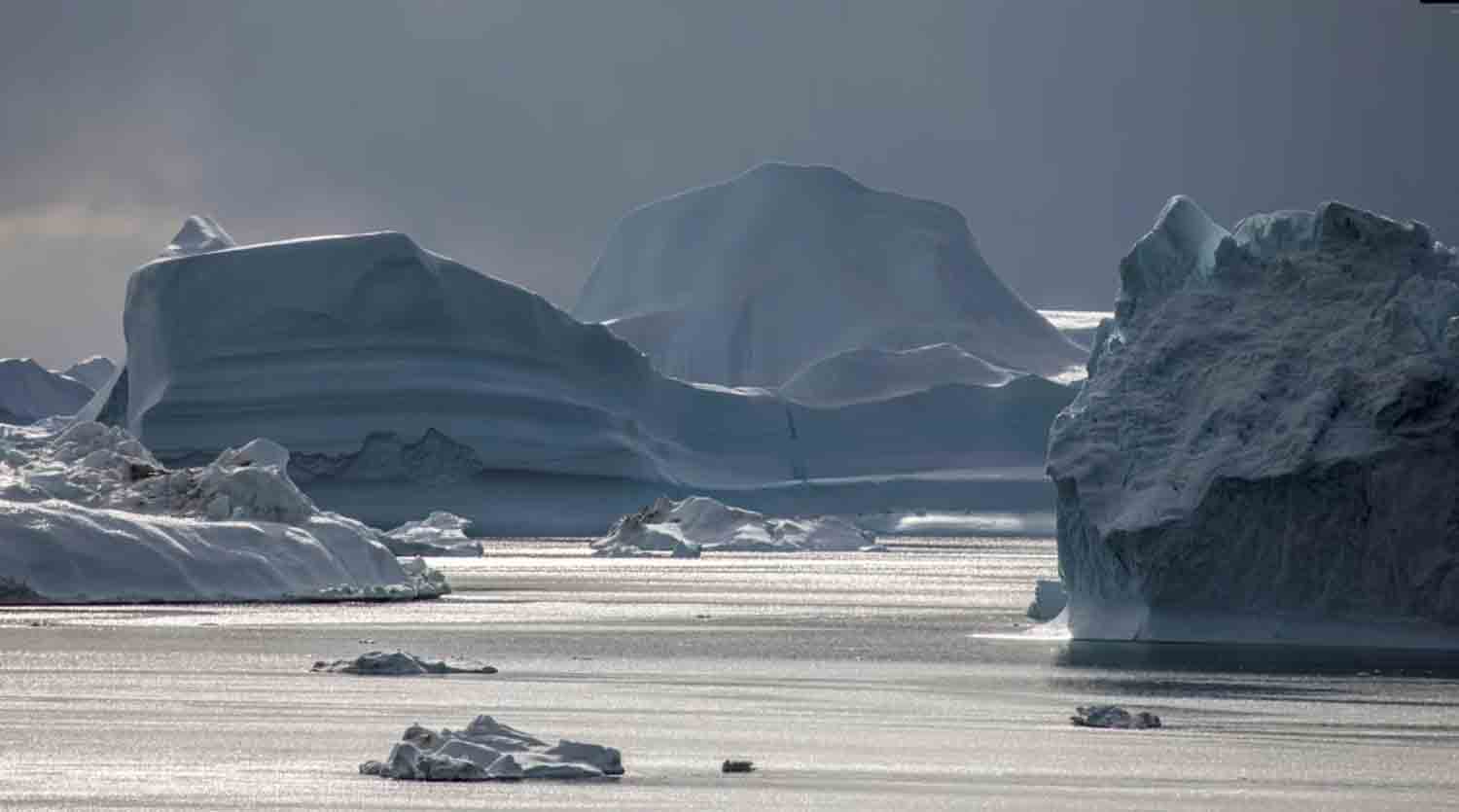
On Thursday, the Kremlin emphasized Russia’s strategic national interests in the Arctic in response to comments made by U.S. President-elect Donald Trump regarding the potential acquisition of Greenland, the annexation of Canada, and control over the Panama Canal.

Trump, set to assume office on January 20, has not dismissed the possibility of employing military or economic measures to pursue these acquisitions, reflecting a broader expansionist vision he has advocated since his election victory on November 5.

Additionally, Trump has suggested the idea of transforming Canada into a U.S. state and has expressed intentions to rename the Gulf of Mexico to the Gulf of America. In light of Trump’s remarks about Greenland and Canada, the Kremlin indicated that, as the nation with the longest Arctic coastline, it is closely monitoring the “dramatic development” of these events.

“The Arctic represents a zone of our national and strategic interests,” stated Peskov. “We are committed to maintaining an atmosphere of peace and stability in the Arctic region.”

Peskov noted that while the situation is evolving, it remains at the level of rhetoric for now. He remarked that U.S. efforts to acquire Greenland, which date back to the 19th century, are primarily concerns for the United States and Denmark, but he observed that Europe is responding with caution to Trump’s statements.

“Europe is responding very cautiously, almost timidly, as it is understandably apprehensive about reacting to Trump’s comments,” Peskov added.

German Chancellor Olaf Scholz reacted with astonishment to Trump’s statements regarding Greenland and Canada, emphasizing that European allies concurred on the importance of border integrity as a core tenet of international law.

In response to Trump’s comments about the Panama Canal, which the U.S. constructed and governed until its transfer to Panama in 1999, the Kremlin acknowledged the remarks but indicated that the matter was for the United States and Panama to resolve.

“The management of the canal rests solely with the Panamanian authorities, and that will remain unchanged,” Foreign Minister Javier Martinez-Acha stated to the press on Tuesday.

Armenian authorities have approved a proposal to begin the process of applying for EU membership

0

On Thursday, the Armenian government approved a bill aimed at initiating the country’s application to join the European Union. This move comes as Armenia has increasingly strengthened its ties with Western nations, distancing itself from its historically close relationship with Moscow, which has been criticized for not adequately supporting Armenia against its longstanding adversary, Azerbaijan.

The legislation was proposed following a successful petition drive. According to a document reviewed by Reuters, the government expressed its support for the bill’s introduction to parliament, stating that it would mark “the beginning of the accession process of the Republic of Armenia to the European Union.” A response from Brussels was not immediately available.

Three other former Soviet republics—Estonia, Latvia, and Lithuania—have successfully joined the EU, a process that involves extensive negotiations and alignment with EU laws, among other requirements.

During the cabinet meeting on Thursday, Armenian Prime Minister Nikol Pashinyan emphasized that the public should not anticipate a swift accession, noting that any such move would ultimately require a referendum. In 2023, Pashinyan conveyed to the European Parliament Armenia’s willingness to align closely with the EU, although he refrained from endorsing full membership. Kremlin spokesman Dmitry Peskov remarked that Russia needs to clarify Brussels’ stance, asserting that Armenia cannot join the EU while still being a member of the Eurasian Economic Union, a trade bloc comprising several post-Soviet states.

Armenia maintains a cordial relationship with the European Union; however, the path to membership is fraught with challenges. The country, which is landlocked and mountainous, has a population of 2.7 million and does not share a border with the EU. Since the late 1980s, Armenia has been embroiled in a conflict with Azerbaijan, a key gas supplier to EU nations.

In 2023, Azerbaijan launched a rapid military campaign to reclaim Nagorno-Karabakh, a region that had been predominantly governed by its ethnic Armenian population with support from Yerevan for over thirty years, leading to a mass exodus of residents.

Recently, Azerbaijani President Ilham Aliyev characterized Armenia as a “fascist” threat that must be eliminated, a statement that Yerevan interprets as a potential precursor to renewed hostilities.

Biden is set to push for new sanctions against Russia before Trump takes office

0

President Joe Biden is anticipated to announce new sanctions aimed at Russia‘s economy this week, as reported by a U.S. official. This initiative is part of efforts to strengthen Kyiv’s military capabilities against Moscow prior to Donald Trump’s inauguration.

In conjunction with the sanctions, the Biden administration is preparing to provide $500 million in additional military assistance to Ukraine, which is expected to include air defense missiles, air-to-ground munitions, and support equipment for F-16 fighter jets, according to an unnamed U.S. official.

The impending return of President-elect Donald Trump to the White House on January 20 has raised hopes for a diplomatic solution to the ongoing conflict, while simultaneously instilling concerns in Kyiv that a swift resolution might come with significant concessions. Trump’s advisors have suggested plans that could result in Ukraine relinquishing substantial territories to Russia for the foreseeable future. Biden’s team aims to position Ukraine favorably on the battlefield to enhance their negotiating power with Russia in the coming year.

Details regarding the specific sanctions Biden plans to impose during his final days in office remain unclear, but his aides are reportedly keeping Trump’s team informed about the measures being taken. The official noted that most of the promised weapons and munitions have already been delivered to Ukraine, with the remainder en route, ensuring that Ukraine’s critical munitions stockpiles are in a robust state. Ukrainian President Volodymyr Zelensky’s administration has consistently advocated for increased military support, which Biden has ultimately provided, despite initial hesitations, leading to tense discussions on issues such as Abrams tanks, F-16 fighter jets, and longer-range ATACMS missile systems.

In hindsight, the U.S. official remarked that none of the measures taken have resulted in significant advantages for Ukraine on the battlefield. The official indicated that Ukraine may require security assurances, potentially including NATO membership, to deter any future Russian aggression following peace talks. Russia commenced its invasion of Ukraine in February 2022.

Additionally, U.S. military officials are analyzing North Korean military activities in the context of the Ukraine conflict to better understand how they might respond to any potential conflicts in Asia. It is estimated that thousands of North Korean troops are aiding Russian forces in the war against Ukraine.

Furthermore, the United States is expected to impose additional sanctions on Chinese entities that are believed to be assisting Russia, according to the official. U.S. Treasury Secretary Janet Yellen informed Reuters last month that the U.S. continues to aim at diminishing Russia’s oil revenues and its access to foreign resources to sustain the war in Ukraine.

U.S. and Arab negotiators have made progress in Gaza peace talks, but no formal agreement has been reached

0
Children at tent camp for displaced people in Gaza

U.S. and Arab mediators have made some strides in their efforts to establish a ceasefire agreement between Israel and Hamas in Gaza, although Palestinian sources involved in the discussions indicated on Thursday that these advancements are insufficient to finalize a deal.

As negotiations continued in Qatar, the Israeli military conducted airstrikes throughout the region, resulting in the deaths of at least 17 individuals, according to Palestinian medical personnel.

Qatar, the U.S., and Egypt are intensifying their efforts to broker a ceasefire in the ongoing 15-month conflict and to secure the release of remaining hostages held by Hamas before President Joe Biden’s term concludes.

President-elect Donald Trump has issued a warning that there will be significant consequences if the hostages are not released by his inauguration on January 20.

On Thursday, a Palestinian official involved in the mediation process stated that the lack of a finalized agreement does not imply that the negotiations are stagnant, emphasizing that this represents the most serious attempt to achieve a resolution thus far.

“There are comprehensive discussions taking place, with mediators and negotiators meticulously analyzing every word and detail. Progress has been made in narrowing existing gaps, but a deal has yet to be reached,” he conveyed to Reuters, without providing additional specifics.

On Tuesday, Eden Bar-Tal, the Director General of the Israeli Foreign Ministry, affirmed Israel’s commitment to securing an agreement for the return of its hostages from Gaza, while noting that Hamas is creating obstacles to this process.

The two parties have been at a standstill for a year over two critical issues. Hamas has stated it will only release its remaining hostages if Israel agrees to cease hostilities and withdraw all troops from Gaza, while Israel maintains that it will not end the conflict until Hamas is dismantled and all hostages are freed.

SEVERE HUMANITARIAN CRISIS

On Thursday, reports indicated that the death toll from Israel’s military operations included eight Palestinians who lost their lives in a residential building in Jabalia, the largest of Gaza’s historic refugee camps, where Israeli forces have been active for over three months. Additionally, nine individuals, including a father and his three children, were killed in two separate airstrikes targeting homes in the central Gaza Strip, according to health officials. There has been no comment from the Israeli military regarding these incidents.

Palestinian health officials report that over 46,000 individuals have died as a result of the ongoing conflict in Gaza. The region has suffered extensive destruction, and the majority of its 2.1 million residents have been displaced multiple times, facing severe shortages of food and medical supplies, as noted by humanitarian organizations.

Israel has denied obstructing humanitarian aid to Gaza, asserting that it has enabled the delivery of hundreds of truckloads of food, water, medical supplies, and shelter materials to warehouses and shelters in the past week. The military campaign was initiated by Israel following a Hamas attack on southern Israel on October 7, 2023, which resulted in the deaths of 1,200 people and the abduction of over 250 hostages, according to Israeli sources.

On Wednesday, the Israeli military announced the recovery of the body of Israeli Bedouin hostage Youssef Al-Ziyadna, along with evidence suggesting that his son Hamza, who was taken on the same day, may also be deceased. Prime Minister Benjamin Netanyahu stated, “We will continue to make every effort to return all of our hostages, the living and the deceased.”

Chad claims the thwarted presidential assault was by a disorganized, inebriated group

0
Chad's President and junta leader Mahamat Idriss Deby

An attempted assault on the presidential compound in Chad was thwarted by security forces on Wednesday, according to a government spokesperson. The attack was executed by a disorganized group of intoxicated individuals armed with knives and machetes, who were swiftly subdued.

On Wednesday night, gunfire erupted near the president’s office in the capital, N’Djamena, as the military cordoned off the surrounding streets. The government later announced that security forces had successfully prevented an effort to destabilize the nation, asserting that the situation was fully under control.

In a subsequent interview on national television, government spokesperson Abderaman Koulamallah reported that a group of 24 attackers, seemingly under the influence of alcohol and drugs, arrived at the presidential compound in one or two vehicles that appeared to malfunction at the entrance. Upon disembarking, they assaulted the four presidential guards stationed there, resulting in one fatality and two injuries.

The assailants advanced a short distance into the compound before the guards returned fire, killing 18 and capturing the remaining six, Koulamallah stated. He indicated that the public prosecutor would release further information on Thursday, but suggested that the incident was “probably not” a terrorist act. “These individuals came from a specific neighborhood in N’Djamena, which I will not disclose. They were not equipped with military-grade weapons, and their actions were disorganized and utterly baffling.”

N’Djamena experienced a tranquil Thursday morning as daily activities returned to normal. There were no reports of gunfire overnight, although some residents indicated that the military continued to restrict access to areas surrounding the presidency.

Chad is currently governed by President Mahamat Idriss Deby, who took control following the death of his father, the former President Idriss Deby, who was killed by rebels while visiting troops engaged in combat against militias in the northern region in 2021.

The elder Deby had been in power since a military coup in the early 1990s, overseeing a nation rich in oil resources yet classified as one of the poorest in Africa. Recently, his son terminated a defense cooperation agreement with France, a long-standing ally that had positioned Chad as a crucial partner in combating Islamic extremism in the Sahel region of West and Central Africa, which has faced a series of coups in recent years.

Turkey will inform the U.S. of the need to eliminate terrorists from Syria, a Turkish source says

0
Fighters from the Kurdish People's Protection Units (YPG) stand guard at the site of Turkish airstrikes near northeastern Syrian Kurdish town of Derik, known as al-Malikiyah in Arabic.

Turkish officials are set to inform U.S. Under Secretary of State John Bass during his discussions in Ankara this week that the elimination of terrorist groups is essential for achieving stability and security in Syria, according to a source from the Turkish Foreign Ministry.

Bass’s visit occurs amidst Turkey’s ongoing warnings regarding a potential cross-border military operation into northeastern Syria targeting the Kurdish YPG militia, should the group fail to comply with Turkey’s demands.

The YPG leads the U.S.-backed Syrian Democratic Forces (SDF), which have been pivotal in the fight against the Islamic State in Syria. However, Ankara considers the YPG a terrorist organization linked to Kurdish militants who have been engaged in a long-standing insurgency against the Turkish government, insisting that the group must disarm and dissolve.

During his meetings in Ankara on Thursday and Friday, Bass is scheduled to engage with Turkey’s deputy foreign ministers, with discussions primarily centered on the situation in Syria.

The talks are anticipated to concentrate on measures to foster stability and security in Syria, as well as to promote the formation of an inclusive government. The Turkish representatives are expected to reiterate the necessity of removing terrorist elements for these objectives to be realized. Additionally, the discussions will likely cover the potential expansion of U.S. sanctions exemptions for Syria to facilitate the country’s reconstruction efforts.

Ankara has consistently urged its NATO partner, Washington, to cease its backing of the YPG. The Turkish government has conducted multiple incursions against this group and currently holds significant areas in northern Syria. Since the removal of former President Bashar al-Assad, Syria’s Kurdish factions have faced challenges, particularly with the new administration’s favorable stance towards Turkey.

Taiwan’s navy demonstrates its capabilities through a simulated attack drill

0
Navy personnel stand on board the Kuang Hua VI-class missile boat and Tuo Chiang-class corvette as the Taiwan military demonstrates combat readiness ahead of the upcoming Lunar New Year holidays as part of an annual exercise in Kaohsiung, Taiwan.

On Thursday, Taiwan’s navy conducted a simulation aimed at repelling enemy vessels, concluding three days of New Year exercises. The operation featured two of its latest and most sophisticated warships leading a flotilla into the Taiwan Strait.

China, which claims Taiwan as part of its territory, routinely deploys its air force and navy in the vicinity of the island, a strategy that the Taipei government describes as a continuous pressure campaign.

Last year, China also executed two significant military exercises around Taiwan.

At the Zuoying naval base located in Kaohsiung, two Tuo Chiang-class corvettes were joined by four smaller Kuang Hua VI-class missile boats in a drill designed to simulate the approach of hostile ships. “When we identify a target at sea that continues to close in, this is our response,” stated navy Captain Chen Ming-feng during a press briefing at the base.

The domestically produced Tuo Chiang corvettes have earned the nickname “aircraft carrier killer” due to their arsenal of anti-ship missiles, along with the capability to carry Sky Sword anti-aircraft missiles. Featuring a catamaran design, these advanced, highly maneuverable stealth vessels are engineered to engage larger warships while operating near Taiwan’s coastline.

Taiwan’s naval forces are significantly outmatched by China’s, which boasts three aircraft carriers, nuclear-powered submarines, and a fleet of hundreds of additional warships.

Taiwan’s air force showcased its Patriot ground-to-air missiles and Ching-kuo Indigenous Defence Fighters to reporters during drills that commenced on Tuesday. Taiwan firmly opposes Beijing’s assertions of sovereignty, asserting that the future of the island should be determined solely by its residents.

Russian attack in Zaporizhzhia, Ukraine, has killed 13 and injured 113

0

A guided bomb strike by Russian forces on Wednesday resulted in the deaths of at least 13 individuals and left 113 others injured in the southeastern Ukrainian city of Zaporizhzhia, according to local authorities. The explosion scattered bodies across a roadway and caused injuries among residents. Public transportation systems also sustained damage from the attack.

On Thursday morning, prosecutors revised the number of injured from 63 to 113. Rescue operations at the attack site were concluded the previous evening.

The Ukrainian prosecutor general’s office reported that high-rise residential buildings, an industrial facility, and other critical infrastructure were affected. Debris from the blast struck a tram and a bus carrying passengers, as noted in their Telegram update. Regional governor Ivan Fedorov informed reporters that Russian forces deployed two guided bombs targeting a residential area.

Fedorov indicated that out of the 60 individuals hospitalized following the incident, ten remain in critical condition, and he declared Thursday an official day of mourning.

In a statement to national television, he remarked that the city’s medical services had received the highest volume of assistance requests since the onset of Russia’s full-scale invasion on February 24, 2022. President Volodymyr Zelenskiy condemned the attack on X, stating, “There is nothing more cruel than launching aerial bombs on a city, knowing that ordinary civilians will suffer,” and called on Ukraine’s Western allies to intensify their pressure on Russia.

Regional officials have confirmed additional explosions following the initial strike. Fedorov reported that Russian forces shelled the town of Stepnohirsk, located south of Zaporizhzhia, resulting in the deaths of two individuals. Two residents were rescued alive from the debris.

Russia frequently conducts air strikes in the Zaporizhzhia region, which is partially under its control. Moscow asserts that it has annexed this Ukrainian region along with four others, including Crimea.

Public broadcaster Suspilne also indicated that two people lost their lives and ten others were injured in attacks on various locations within the southern region of Kherson, which is similarly partially occupied by Russian troops.

Sweden’s military is set to acquire tanks from KNDS in a deal valued at $2 billion

0

Sweden’s government announced on Thursday that the country will procure tanks from the German-French defense manufacturer KNDS for a total of 22 billion Swedish crowns (approximately $1.97 billion). The acquisition consists of 44 Leopard 2 A8 tanks, along with upgrades for 66 existing units, as detailed in an official statement.

“This investment is essential,” Johnson stated during an interview with public broadcaster SVT, emphasizing that the new tanks will support Sweden’s objective of expanding its military forces.

The delivery of the tanks is scheduled to commence in 2028 and will extend through 2031, as indicated in the government announcement.

Musk considered strategies to oust British Prime Minister Starmer ahead of the election, reports the Financial Times

0

Billionaire Elon Musk has reportedly engaged in private conversations with associates regarding the potential removal of British Prime Minister Keir Starmer prior to the upcoming general election, according to a Thursday report by the Financial Times. Musk, recognized as the wealthiest individual globally and a close supporter of U.S. President-elect Donald Trump, recently expressed his backing for a German anti-immigration party ahead of elections set for February. He has also made several public statements regarding British politics, urging Prime Minister Starmer to resign.

Musk is contemplating strategies to undermine the Labour government and is gathering insights on how to bolster support for alternative political movements in the UK to instigate a governmental shift, as reported by sources familiar with the situation. Musk did not provide a response to a Reuters inquiry outside of regular business hours. One source indicated to the Financial Times that Musk believes Western civilization is under threat.

Previously, Musk criticized Starmer for allegedly failing to prosecute gangs involved in the sexual exploitation of young girls during Starmer’s tenure as director of public prosecutions from 2008 to 2013. In response, Starmer defended his record as the leading prosecutor in Britain. Additionally, Musk is set to interview Alice Weidel, the leader of the Alternative for Germany party, in a live session on X on Thursday. This party, which Musk has endorsed, has been classified as right-wing extremist by German security agencies.

Norwegian Prime Minister Jonas Gahr Stoere voiced his apprehension earlier this week regarding Elon Musk’s engagement in the political matters of nations beyond the United States.

Trump aims to solidify his legacy and broaden the United States’ influence by focusing on Greenland

0
A view of Pituffik Space Base (formerly Thule Air Base) in Greenland.

U.S. President-elect Donald Trump is reportedly committed to the idea of acquiring Greenland, viewing it as a means to enhance America’s influence in the Western Hemisphere and solidify his legacy, according to three sources familiar with his perspective.

On Tuesday, the Republican indicated that he would not dismiss the possibility of employing military or economic measures to obtain the Danish territory once he assumes office on January 20, alarming European allies who are concerned about the sanctity of borders amid rising global tensions.

Although Trump had previously mentioned the idea of acquiring Greenland during his first term, his recent statements suggest that this ambition is deeply rooted rather than a mere whim. A source informed Reuters that the former real estate mogul is not expected to resort to military action to take control of Greenland. However, he is serious about exploring alternative strategies, such as exerting diplomatic or economic pressure on Denmark, to secure the world’s largest island that is not classified as a continent.

“The true legacy is the expansion of the United States,” the source remarked. “In the last 70 years, we haven’t added any new territory to our holdings. He discusses it frequently.”

In 1959, Alaska and Hawaii were admitted as the 49th and 50th states under Republican President Dwight Eisenhower. Another associate of Trump noted that a list of foreign policy priorities compiled by senior Trump officials after his November 5 election victory prominently featured the goal of “Buying Greenland.”

Trump has characterized the potential acquisition of Greenland as a matter of national security. In response, Denmark has firmly stated that Greenland is not for sale. While Denmark has governed Greenland for centuries, the island’s 57,000 residents currently manage their own domestic affairs. Advisors to Trump have indicated that they anticipate a reallocation of U.S. foreign policy focus and resources towards the Americas if Trump were to assume office again. Trump harbors concerns about Chinese and Russian influence in the region, which he perceives as America’s sphere of influence, according to two advisors involved in Latin American policy planning.

Three current and former associates of Trump, who are knowledgeable about his perspectives, have noted that he is also keen on territorial expansion as a strategy to establish a lasting legacy. Recently, Trump has publicly suggested the idea of acquiring Greenland, taking control of the Panama Canal, and even integrating Canada into the United States. “Every decision President Trump makes is in the best interest of the United States and the American people,” stated Karoline Leavitt, a spokesperson for Trump, in a comment to Reuters. “This is why President Trump has highlighted genuine national security and economic issues concerning Canada, Greenland, and Panama.”

TRUMP’S INSPIRATION

One of Trump’s inspirations is former President William McKinley, who served from 1897 until his assassination in 1901. During his presidency, McKinley oversaw the acquisition of several territories, including Puerto Rico and Hawaii. Trump has often lauded McKinley on the campaign trail for his implementation of expansive tariffs and, in December, expressed intentions to rename Denali— the name given by indigenous Alaskans for North America’s tallest peak— in honor of the 25th president.

An adviser to Trump, discussing the former president’s interest in Greenland, shared a social media post featuring a map of a proposed “super U.S.,” which would encompass both Canada and the United States. This concept, he argued, would diminish Russian influence in the Arctic, an area that has become increasingly significant in the context of Great Power rivalry.

Greenland is rich in oil, gas, and mineral resources and is strategically located near Arctic shipping lanes. These factors have gained importance for U.S. policymakers as Russia and China aim to enhance their presence in the Arctic. As part of NATO through Denmark, Greenland holds strategic value for the U.S. military, particularly for its ballistic missile early-warning system, since the most direct route from Europe to North America passes through this Arctic territory, which hosts the northernmost U.S. military base.

The specifics of how Trump would pursue the acquisition of Greenland remain uncertain. Some advisers during the transition period have informally considered the option of establishing a Compact of Free Association (COFA) with Greenland, should the island achieve full independence from Denmark, as reported by Reuters in December. A COFA, which the U.S. currently maintains with three Pacific island nations, allows for a high level of economic integration while preserving the foreign country’s independence. It is unclear whether Trump is aware of these discussions.

A former national security adviser from Trump’s administration, which spanned from 2017 to 2021, revealed that Trump initially proposed the idea of purchasing Greenland in 2017 and became increasingly serious about it by 2019. This interest prompted a series of meetings at the White House, during which advisers presented various strategies to enhance U.S. influence over Greenland. However, when Trump’s intentions were made public through U.S. media, Denmark publicly dismissed the proposal, and the administration ultimately did not pursue any actions to acquire the territory. Historically, the U.S. has attempted to purchase Greenland from Denmark; notably, in 1946, President Harry Truman’s administration made a covert offer of $100 million, which Denmark declined.

Taliban officials have described India as a “key regional partner” following their recent discussions

0

The Taliban‘s foreign office has expressed its view of India as a “significant regional and economic partner” following discussions with a senior official from India’s foreign ministry, marking the highest-level talks with New Delhi since the Taliban’s takeover of Afghanistan in 2021.

On Wednesday, India’s Foreign Secretary Vikram Misri met with acting Taliban Foreign Minister Amir Khan Muttaqi in Dubai. According to a statement from Afghanistan’s foreign ministry, the two sides explored opportunities to enhance bilateral relations and increase trade through the Chabahar Port in Iran, a project India has been developing to facilitate trade routes that avoid the ports of Karachi and Gwadar in Pakistan.

The statement from Afghanistan’s foreign ministry, released late Wednesday, emphasized that the Islamic Emirate is committed to strengthening political and economic relations with India as part of its balanced, economy-oriented foreign policy. Following the meeting in Delhi, India’s foreign ministry indicated that it is contemplating involvement in development initiatives in Afghanistan and aims to enhance trade connections.

While no foreign government, including India, officially recognizes the Taliban regime, India maintains a small diplomatic presence in Kabul to support trade, humanitarian aid, and medical assistance, having provided humanitarian aid to Afghanistan under Taliban rule. Additionally, regional powers such as China and Russia have indicated their readiness to increase trade and investment in Afghanistan. The discussions in Delhi may provoke concerns in Pakistan, which shares borders with both nations and has a history of conflict with India, having fought three wars in the past.

Pakistan and Afghanistan maintain a tense relationship, with Pakistan alleging that numerous militant attacks within its borders have originated from Afghan territory, a claim that the Afghan Taliban refutes. Earlier this week, India’s foreign office expressed condemnation regarding airstrikes carried out by Pakistan on Afghan soil late last year.

Experts suggest that Russian technology could enhance North Korea’s ICBM capabilities

0

U.S. experts indicate that the transfer of Russian space technologies to Pyongyang, in exchange for its backing of Moscow’s military actions in Ukraine, could significantly bolster North Korea‘s intercontinental ballistic missile (ICBM) capabilities.

During a press briefing in Seoul on Monday, U.S. Secretary of State Antony Blinken stated, “The DPRK [North Korea] is already receiving military equipment and training from Russia. We now have credible information suggesting that Moscow plans to provide advanced space and satellite technology to Pyongyang.”

U.S. defense officials report that North Korea has sent approximately 12,000 troops to Russia, with around 1,000 already reported as casualties in the conflict against Ukrainian forces in the Kursk region.

For several months, high-ranking diplomats and defense analysts have noted that North Korea is expecting technical support from Russia for its nuclear and missile initiatives in return for its assistance.

Robert Peters, a research fellow specializing in nuclear deterrence and missile defense at the Heritage Foundation, pointed out that any technological aid from Russia is likely to focus on advancing North Korea’s ICBM program, disguised as support for non-military satellite initiatives, since technologies for space launch vehicles can also be utilized for ballistic missiles.

“It would be politically difficult for Russia to publicly declare its intention to assist North Korea with its ICBM program,” Peters remarked to VOA’s Korean Service on Tuesday. “The Russians can maintain a pretense of merely aiding North Korea with a satellite program. However, I believe no one is deceived by this.”

Peters identifies two significant areas where North Korea could gain from Russia’s space program: accuracy and reliability, both essential for the effective delivery of nuclear warheads.

“Achieving precise targeting for the warhead package is a complex challenge,” he noted. “Over the last 35 years, both the United States and Russia have developed methods to accurately deliver warheads that were not feasible during the Cold War.”

He also pointed out that North Korean engineers have faced difficulties in ensuring that warheads can survive reentry from space while still producing a viable yield.

Vann Van Diepen, who held the position of deputy assistant secretary of state for international security and nonproliferation from 2009 to 2016, informed VOA Korean that advancements in satellite deployment and maneuvering technologies could bolster North Korea’s intercontinental ballistic missile (ICBM) capabilities.

“If technology related to space launch vehicles or boosters is transferred under the guise of ‘space technology,’ it could potentially enhance liquid-propellant ICBMs,” Van Diepen stated.

Numerous satellites are known to utilize liquid propellants for improved efficiency and control.

Bruce Bennett, a senior defense analyst at the RAND Corporation, added that components from satellite launch vehicles could be repurposed for North Korea’s liquid-fueled ICBMs.

“This could potentially extend the range or increase the payload capacity of a liquid-fueled ICBM, allowing it to carry additional warheads,” Bennett remarked.

Most of the identified intercontinental ballistic missiles (ICBMs) in North Korea are thought to utilize liquid propellants.

Emerging Threat

Peters indicated that support from Russia could represent a significant risk to the continental United States.

“The primary motivation for North Korea to develop ICBMs is to aim at the United States, as they do not require ICBMs to target South Korea or Japan,” he stated, noting that this situation might lead East Asian allies to question whether Washington could uphold its regional deterrence obligations in the face of a direct threat.

Even in the absence of direct technology transfers related to ICBMs, Van Diepen remarked that improved satellite technology in North Korea poses a threat to the U.S. and its allies.

“If Russia assists North Korea in enhancing its reconnaissance satellites — such as providing higher resolution imaging — it would bolster North Korea’s targeting and intelligence capabilities. This, of course, is detrimental to both the United States and the alliance,” Van Diepen explained. “Thus, even without technology transfers that would directly benefit North Korea’s ICBM initiatives, this development remains unfavorable and something the United States would oppose.”

In November 2023, North Korea declared that it had successfully placed a military reconnaissance satellite into orbit following two unsuccessful attempts. According to The Associated Press, Seoul suspects that support from Russia played a significant role in this achievement.

Bruce Bechtol, a former U.S. defense intelligence officer, informed VOA Korean that North Korea has been focused on improving its satellite capabilities for intelligence, surveillance, and reconnaissance purposes.

“The North Koreans have previously launched a satellite into orbit, but they require specific technology for intelligence collection, which they would need to acquire from a benefactor, either China or Russia,” he explained. “It seems they are obtaining this technology from Russia, which is concerning.”

China’s Position

China has been navigating a delicate balance between its apprehensions regarding the potential transfer of missile technology from Russia to North Korea and its relationships with both Moscow and Pyongyang.

“North Korea and Russia are two independent sovereign states. The development of their bilateral relations is a matter for them to decide,” stated Liu Pengyu, a spokesperson for the Chinese Embassy in Washington, in an email to VOA Korean on Tuesday.

On Monday, North Korea announced the launch of what it described as a new hypersonic intermediate-range missile, which traveled approximately 1,100 kilometers before falling into the sea off its eastern coast. This test occurred just two weeks prior to the return of U.S. President-elect Donald Trump to office. During his first term, Trump engaged in three meetings with North Korean leader Kim Jong Un, but those discussions ultimately failed to yield a nuclear agreement.

Experts, including Bennett, speculate that Russia may have provided North Korea with insights into advanced materials, such as the new carbon fiber that Pyongyang claims to have utilized in the development of this missile.

“They conducted a hypersonic missile test earlier last year, indicating they had already acquired some of that technology. However, in most technological advancements, there is a progression from basic to advanced capabilities,” Bennett noted. “It is likely that Russian scientists have collaborated with their North Korean counterparts to enhance the missile’s design compared to what was tested a year ago.”

Russia has called Israel’s actions in Syria “unlawful,” a threat to its future, and a violation of international norms

0
Russia's UN representative Vassily Nebenzia

Israel’s actions in Syria, described as “unlawful” by Russian Ambassador to the UN Vassily Nebenzia, threaten the nation’s future, violate international standards, and exacerbate the humanitarian crisis in the region, he stated during a UN Security Council meeting on Wednesday.

Following the collapse of Bashar Assad’s government in late 2024, Israel initiated a significant bombing campaign targeting Syrian sites. The Israel Defense Forces (IDF) also expanded their presence into internationally recognized Syrian territory, encroaching upon the UN-designated buffer zone between the two nations from the Golan Heights, an area Israel has occupied since 1967.

Nebenzia reported that the Israeli military has taken control of approximately 500 square kilometers of Syrian land. He emphasized that “Israel’s actions constitute a serious breach of international legal frameworks, including various resolutions from both the UN Security Council and the General Assembly,” urging the international community to deliver an “honest assessment” of the current situation.

West Jerusalem’s actions are seen as a threat to Syria’s territorial integrity, as warned by Nebenzia, who noted that Israel attempts to frame the outcomes of its military operations as a “fait accompli.”

The envoy highlighted that Israeli airstrikes and shelling, along with escalating violence across various regions of Syria, result in significant suffering and casualties among civilians, while also disrupting essential civil infrastructure. He emphasized that these developments are likely to raise serious concerns.

Moscow remains committed to supporting the Syrian populace in various areas, including the provision of humanitarian aid and the reconstruction of damaged infrastructure. The diplomat indicated that Russia aims to establish conditions conducive to the return of Syrian refugees.

In early December 2024, a surprise offensive by the jihadist group Hayat Tahrir al-Sham (HTS) led to the ousting of Assad, causing a rapid collapse of the Syrian military. Following this, the president resigned and sought refuge in Moscow.

Russia had established agreements with the Assad regime that facilitated its military presence in Syria, primarily along the Mediterranean coast. In late December, HTS leader Ahmed Hussein al-Sharaa, known as Abu Mohammad al-Julani, remarked that Damascus still holds “strategic interests” in maintaining strong relations with Russia, asserting that the new authorities do not wish for Russia to withdraw from Syria.

Trump’s advisor on Ukraine establishes a 100-day deadline to resolve the conflict

0
Keith Kellogg during a Senate armed services committee hearing on the conflict in Ukraine.

US President-elect Donald Trump’s designated special envoy has expressed his intention to facilitate a resolution to the Russia-Ukraine conflict within the first 100 days of his administration, commencing on Inauguration Day, January 20.

“I understand the urgency,” retired US Army lieutenant general Keith Kellogg stated during an interview with Fox News on Wednesday. “I would like to establish a personal and professional target. Let’s aim for 100 days and work from there.”

Kellogg emphasized Trump’s dedication to rekindling discussions between Russian President Vladimir Putin and Ukrainian President Vladimir Zelensky in order to achieve a resolution to the hostilities that have resulted in significant casualties on both sides.

“He’s not attempting to appease Putin or the Russians. His goal is to protect Ukraine and uphold its sovereignty. He will ensure that the process is just and fair,” Kellogg remarked.

He contended that “the most significant error made by President [Joe] Biden was his failure to engage in any dialogue with Putin.”

“He hasn’t communicated with him in over two years,” Kellogg noted, adding that Trump “does engage with both adversaries and allies.”

Trump has consistently promised to swiftly negotiate a successful peace agreement, though he has provided limited details. Reports suggest that his team is contemplating a strategy to freeze the conflict along the existing front lines.

Negotiations between Moscow and Kiev collapsed in the spring of 2022, with both parties accusing one another of setting unrealistic conditions. Putin has indicated that for any agreement to be viable, Ukraine must forgo its aspirations to join NATO and relinquish its claims to Crimea and four other territories that have been incorporated into Russia.

Israeli military tightens media regulations over war crime prosecution concerns

0

The Israeli military has implemented new restrictions on media coverage of soldiers engaged in active combat, driven by increasing concerns over potential legal repercussions for reservists traveling internationally due to allegations of war crimes in Gaza.

This decision followed an incident where an Israeli reservist on vacation in Brazil had to leave the country abruptly after a Brazilian judge mandated an investigation by federal police, prompted by claims from a pro-Palestinian organization regarding his conduct during his service in Gaza.

According to the updated regulations, media outlets are prohibited from revealing the full names or faces of soldiers ranked colonel and below during interviews. This policy mirrors existing restrictions for pilots and special forces personnel, as explained by Lieutenant Colonel Nadav Shoshani, an Israeli military spokesperson. Furthermore, interviewees must not be associated with any specific combat incidents they were involved in.

“This guideline aims to safeguard our soldiers and ensure their protection from incidents instigated by anti-Israel activists globally,” Shoshani stated.

He noted that current military protocols already discourage soldiers from sharing videos and images from conflict zones on social media, although compliance is not always perfect given the size of the military. Additionally, there are established rules and guidelines for soldiers traveling abroad. Shoshani pointed out that activist organizations, such as the Hind Rajab Foundation based in Belgium, have been “connecting the dots” between soldiers who share content from Gaza and their subsequent vacation photos and videos.

In the previous year, the International Criminal Court released arrest warrants for Israeli Prime Minister Benjamin Netanyahu, former Defence Minister Yoav Gallant, and Hamas leader Ibrahim Al-Masri, citing alleged war crimes in Gaza, which sparked significant backlash in Israel. Shoshani noted that there have been “a handful” of instances where reservists traveling internationally faced scrutiny, including the situation in Brazil, all initiated by activist groups urging authorities to conduct investigations. “They did not initiate an investigation, nor did they file any charges,” he stated.

Greenland is strategically important to the U.S., says Trump’s national security adviser

0
Mike Waltz, speaks during a hearing on Capitol Hill.

Greenland holds significant importance for the national security of the United States, as stated by U.S. Congressman Mike Waltz on Wednesday. This remark followed comments from U.S. President-elect Donald Trump, who suggested that the U.S. should assert control over the island.

In an interview with Fox News, Waltz, who has been selected to serve as Trump’s national security adviser, addressed Trump’s interest in U.S. governance of the Arctic territory. He noted, “Russia is striving to dominate the Arctic, operating over 60 icebreakers, some of which are nuclear-powered. In contrast, we have only two, and one recently experienced a fire.”

Waltz further emphasized, “This situation involves critical minerals and natural resources. As the polar ice caps recede, China is also increasing its icebreaker fleet and advancing into the region. This is fundamentally about oil and gas, and it directly impacts our national security.”

Trump, set to take office on January 20, did not dismiss the possibility of military or economic measures to acquire the island, which is an autonomous territory of Denmark. During his first term, he proposed that Denmark consider selling Greenland, a suggestion that was firmly rejected by the Danish government.

Greenland’s Prime Minister Mute Egede has reiterated that the island is not for sale. On Wednesday, the government of the Arctic island acknowledged the evolving security landscape in the region and expressed eagerness to collaborate with the incoming Trump administration and other NATO allies to maintain security and stability.

As part of NATO through Denmark’s membership, Greenland occupies a strategically vital position, serving as the shortest route between Europe and North America, which is crucial for U.S. military operations and its ballistic missile early-warning system.