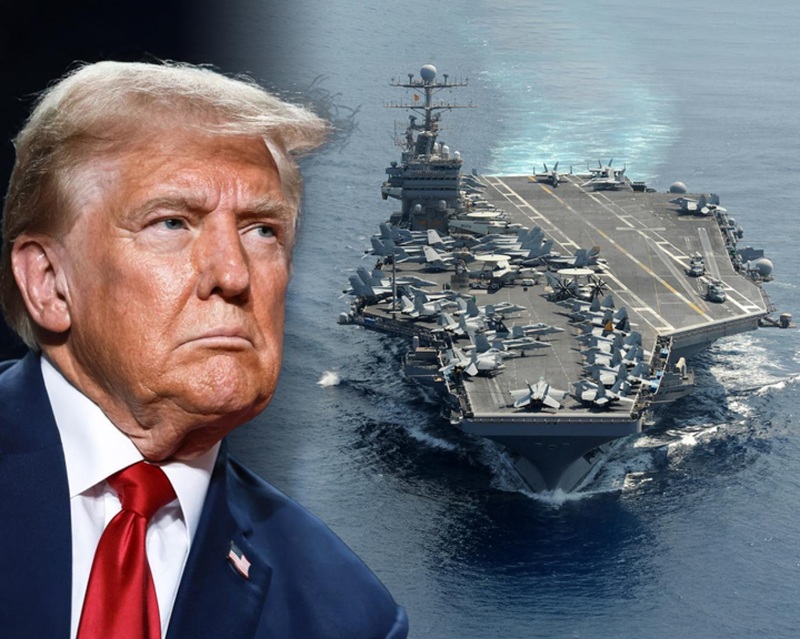
U.S. President Donald Trump’s latest remarks on the war with Iran appear to serve two strategic purposes: reassuring financial markets that the conflict may soon end and preparing the political ground for a unilateral declaration of victory.
PRESIDENT TRUMP on when the war in Iran will end: “I think soon, very soon. Look, everything they have is gone, including their leadership.” pic.twitter.com/ke0omxUETI
— Fox News (@FoxNews) March 9, 2026
While Trump emphasized military success and suggested that the operation could be nearing completion, the broader strategic picture indicates that ending the conflict may prove far more complicated.
A Narrative of Rapid Success
Trump’s comments highlight what the administration presents as a series of battlefield achievements.
According to his statements, U.S. forces have:
- Struck more than 5,000 targets across Iran
- Severely degraded Iranian military infrastructure
- Eliminated key levels of Iran’s leadership
- Reduced missile and drone attacks significantly
The implication is clear: the campaign has largely accomplished its objectives and may soon conclude.
Such messaging appears designed to signal that the war is moving toward a controlled endpoint rather than an open-ended military engagement.
Calming Markets and Allies
Another likely objective of Trump’s messaging is to stabilize markets and reassure allies.
Global oil prices have surged since the conflict began, while the disruption of shipping routes—particularly in the Strait of Hormuz—has raised fears of prolonged economic fallout.
By repeatedly suggesting the war could end soon, the administration may be attempting to reduce uncertainty in financial markets and energy trading systems.
Markets often react as much to perceived timelines as to battlefield developments.
Preparing the Ground for a Victory Declaration
The framing of the conflict also appears to set up a possible political exit strategy.
Declaring victory early would allow the United States to avoid a prolonged war while claiming that its core objectives have been achieved.
Historically, political leaders have sometimes relied on strategic narratives of success to bring military campaigns to a close before costs escalate further.
Trump’s emphasis on degraded Iranian capabilities and weakened leadership fits that pattern.
Iran’s Strategic Calculations
However, the conflict cannot end solely through Washington’s declaration.
Iran also has a decisive role in determining when hostilities stop—and its incentives may push in the opposite direction.
From Tehran’s perspective, ending the war immediately could leave the country in a significantly weakened position.
The conflict has reportedly damaged:
- Military infrastructure
- Missile capabilities
- Oil export capacity
- Prospects for sanctions relief
Without concessions such as sanctions relief or access to frozen financial assets, Iranian leaders may see little benefit in accepting an early ceasefire.
The Hormuz Factor
Another critical factor shaping the conflict’s trajectory is the Strait of Hormuz, through which roughly 20 percent of global oil supply passes.
Iran retains the ability to disrupt shipping in the strait, even if direct confrontation with U.S. forces declines.
Continued instability in this corridor could prolong the conflict indirectly by maintaining pressure on global energy markets.
A Strategic Dilemma for Washington
If the United States declares victory and withdraws forces while Iran continues regional attacks, Washington could face a difficult choice.
Remaining outside the conflict may appear politically attractive but could allow ongoing instability.
Re-entering the war, however, would undermine the credibility of any earlier declaration that the mission had been completed.
This dilemma illustrates the risks of attempting to end a complex conflict through political narrative alone.
The Role of Regional Mediators
Diplomatic efforts may ultimately depend on mediation by countries in the Gulf Cooperation Council (GCC).
Several Gulf states maintain communication channels with both Washington and Tehran and could attempt to craft arrangements that allow both sides to claim success.
Such diplomatic compromises are often necessary for ending conflicts where neither side is willing to accept outright defeat.
However, the role of other regional actors—particularly Israel—could complicate any settlement.
The Uncertain Endgame
Trump’s messaging suggests a clear desire to bring the war to a close quickly.
Yet the strategic realities of the conflict—including Iran’s incentives, regional dynamics, and economic pressures—suggest that the path to a durable ceasefire remains uncertain.
For now, the administration’s narrative of success may represent the beginning of an exit strategy rather than the end of the war itself.