Europe is rapidly expanding its military space capabilities as security concerns over Russia and shifting US strategic priorities force governments to rethink long-term defense autonomy, according to a new report by the International Institute for Strategic Studies (IISS).
The March 2026 research paper, “Advancing European Military Capacity in Space,” outlines how European governments are investing heavily in satellite communications, intelligence systems, missile early warning, launch infrastructure, and space surveillance.
However, the report warns that despite major spending commitments, Europe remains deeply dependent on the United States for critical military space functions.
Russia-Ukraine War Driving Europe’s Space Defense Push
According to the IISS, Russia’s war against Ukraine has fundamentally changed Europe’s strategic outlook in space.
The study notes that any future conflict involving NATO allies would unfold in a contested space environment, where satellites for communications, navigation, intelligence, and missile warning could become priority targets.
The report specifically highlights Russia’s operational counterspace capabilities, including:
- anti-satellite missile systems
- electronic jamming
- cyber operations
- orbital proximity missions
- GPS spoofing
These threats have pushed Europe to prioritize sovereign military space assets.
Europe Has Already Committed More Than $100 Billion
The IISS estimates that currently announced European investments already exceed $109 billion.
Major spending includes:
- Germany: €35 billion by 2030
- France: €10.2 billion
- EU IRIS² constellation: €10.6 billion
- ESA resilience program: €1.2 billion
This includes major programs in:
- secure satellite communications
- ISR satellites
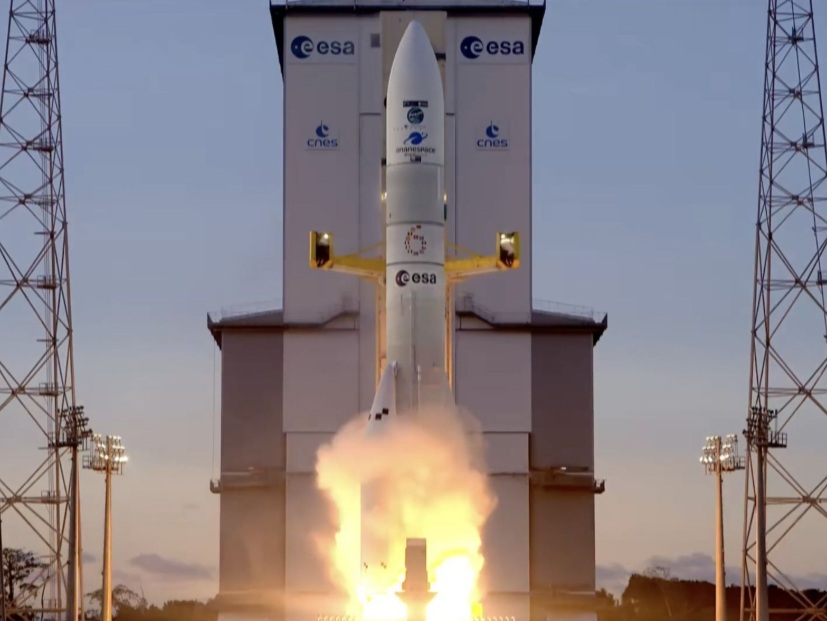
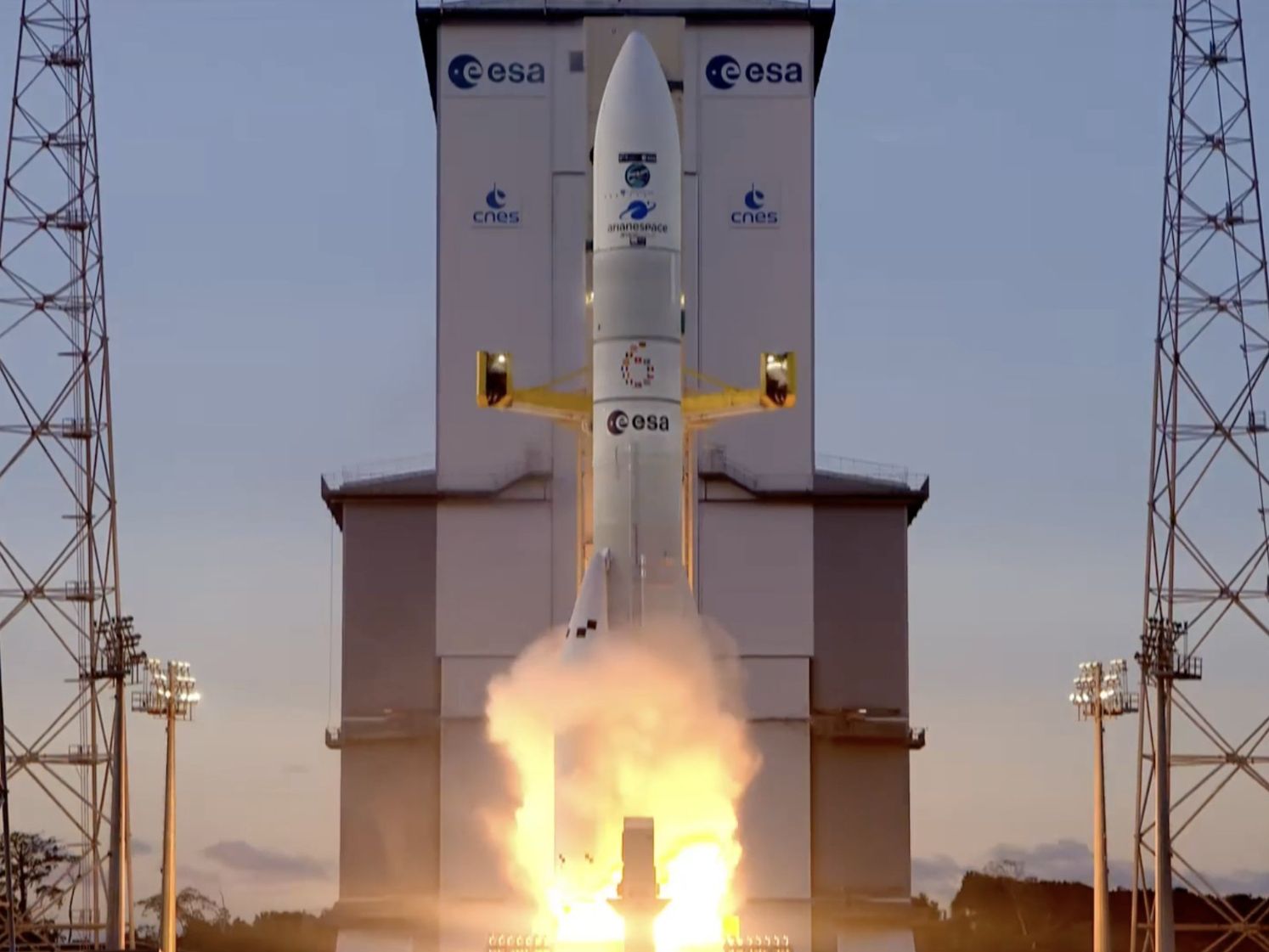
- launch systems
- missile early warning
- space situational awareness
Yet the report warns these investments remain strategically fragmented.
Europe, it says, is still building “an aggregation of national systems rather than an integrated operational architecture.”
Europe Still Depends on US for Critical Space Warfare Systems
The most serious concern identified by the IISS is Europe’s reliance on the United States for high-end military space enablers.
These include:
- launch capacity
- space-based ISR
- missile early warning
- satellite surveillance
- deep space tracking

The report states that the most acute dependencies lie in:
Missile Early Warning
Europe still relies heavily on US systems such as SBIRS for ballistic missile launch detection.
Intelligence and Surveillance
Persistent theater-level ISR remains dominated by US capabilities.
Launch Infrastructure
Europe still faces limitations in medium and heavy launch cadence compared with the United States and SpaceX.
Europe Needs $25 Billion More for Space Autonomy
One of the strongest findings in the IISS report is the projected cost of autonomy.
The institute estimates:
- $10 billion additional spending for burden-sharing capability
- $25 billion minimum for autonomous operational capability
This figure excludes:
- personnel
- cyber resilience
- training
- hardened ground systems
- infrastructure overheads
The report warns that even with aggressive investment, full autonomy may not be achievable before 2040.
Strategic Shift After US Policy Changes
The study also links Europe’s urgency to changing US defense priorities.
Washington is increasingly shifting strategic focus toward:
- homeland defense
- Indo-Pacific competition
- China
As a result, European allies are being pushed to assume greater responsibility for their own defense.
This includes the space domain, where satellites now play a central role in:
- command and control
- battlefield intelligence
- precision targeting
- missile defense
- logistics coordination
Europe’s Future Warfare Will Depend on Space
The IISS report makes clear that future warfare in Europe will not only be fought on land, sea, and air.
It will also be fought in orbit.
From satellite communications to missile launch detection and anti-jamming navigation systems, military space assets are now central to deterrence and warfighting.
The report concludes that Europe must move beyond fragmented national programs and develop a coherent integrated space defense architecture.
Without that, additional satellites alone will not translate into operational strength.