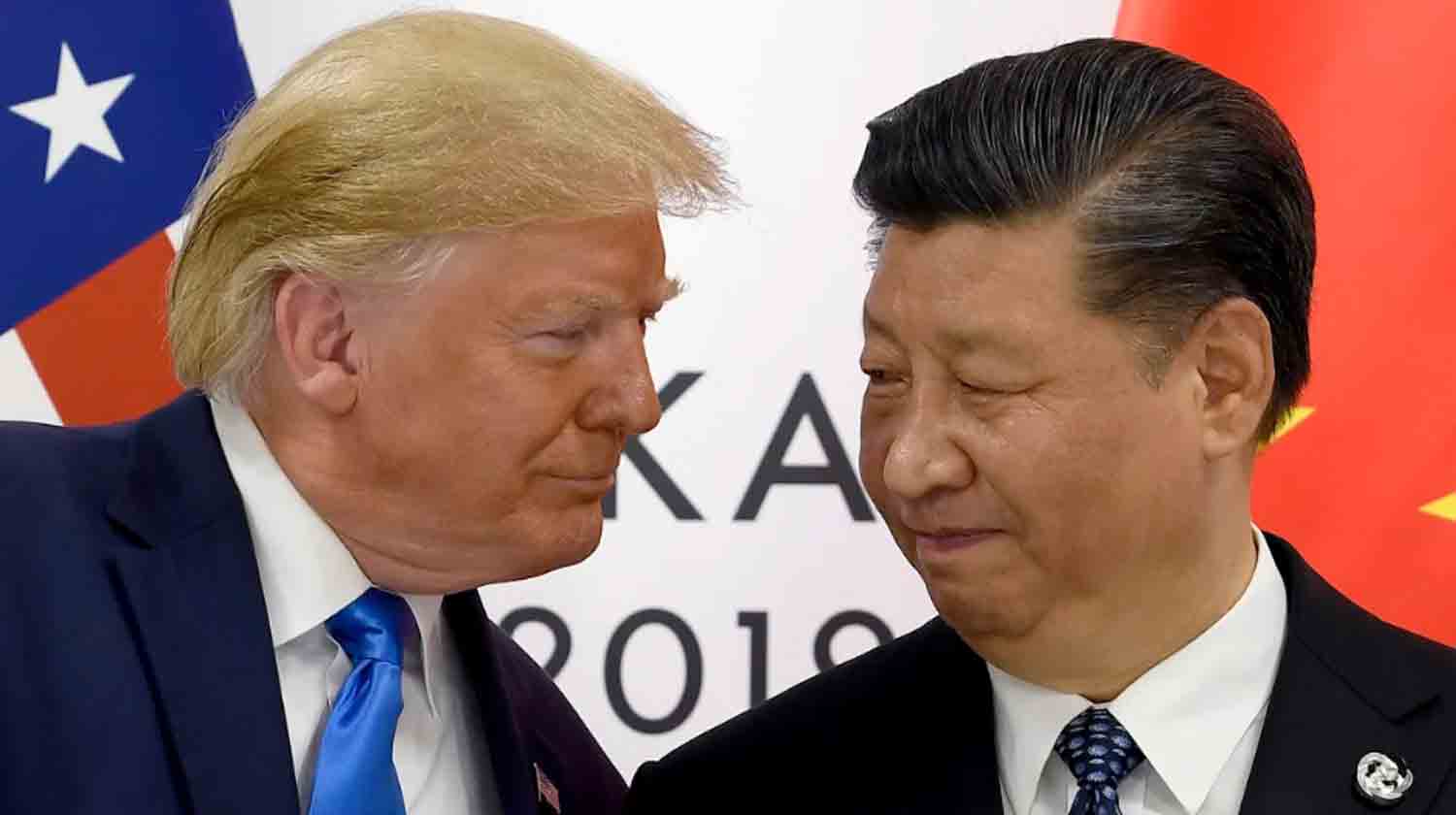
Two back-to-back social media messages from Donald Trump may offer the clearest view yet into an emerging U.S. strategy linking the Iran ceasefire track with economic pressure on China.
Read separately, the posts appear to address different issues.
Read together, they suggest a broader negotiation architecture that combines diplomatic incentives for Iran with economic coercion aimed at Beijing.
The first message outlines what appears to be a framework for de-escalation with Iran — including references to no uranium enrichment, sanctions and tariff relief, and progress on multiple negotiating points.
The second message threatens a 50% tariff on any country supplying military weapons to Iran, effective immediately and without exemptions.
Taken together, the two posts appear to form a classic carrot-and-stick strategy.
— Rapid Response 47 (@RapidResponse47) April 8, 2026
The Carrot for Iran, the Stick for China
The first post functions as the diplomatic incentive.
It signals possible relief measures for Tehran in exchange for limits on its nuclear and military capabilities.
The second post, however, is widely interpretable as pressure on Beijing.
— Rapid Response 47 (@RapidResponse47) April 8, 2026
Trump did not explicitly mention China.
He may not need to.
Among Iran’s external partners, China is the only major economy for which a sweeping 50% tariff would carry major consequences for bilateral trade.
U.S.-China annual trade remains above $500 billion, making Beijing uniquely exposed to such a measure.
By contrast, trade with Russia and North Korea remains too limited to produce comparable leverage.
This makes the tariff threat less about Tehran itself and more about China’s strategic relationship with Iran.
Missile Supply Chain Concerns Intensify Pressure
At the center of the pressure campaign is the alleged transfer of military-grade chemicals.
Reports cited in your draft point to Iranian-flagged vessels departing Gaolan Port in Zhuhai carrying sodium perchlorate, a critical oxidizer precursor used in solid rocket propellant.
Sodium perchlorate
This compound is strategically significant because it can be used in the production of ballistic missiles.
The shipments were sufficient to help rebuild a substantial portion of Iran’s missile stockpile.
That transforms the tariff threat into a strategic signal aimed at Beijing’s role in the broader regional conflict.
Mid-May Talks Could Become Decisive
The timing of the posts also appears linked to upcoming negotiations.
The mid-May summit as a potential inflection point, where U.S. negotiators may seek movement on:
- Iran ceasefire terms
- nuclear restrictions
- proxy activity
- sanctions relief
- China trade concessions
This creates a three-direction pressure architecture:
- crude oil waiver expiration
- tariff threat over military supplies
- rare earth and trade leverage
The reference to Treasury waivers on Iranian crude exports to China further raises the stakes.
If these waivers are allowed to expire, Chinese refiners and shipping networks could face secondary sanctions.
That would significantly increase economic pressure on Beijing.
Beijing Faces Strategic Cost Calculation
The central strategic question for Xi Jinping is whether continued support for Iran carries greater economic cost than accommodation with Washington.
This is less a demand to sever ties with Tehran and more a repricing of the relationship.
Washington appears to be putting a price on China’s Iran policy.
The proposed cost: 50% of all goods sold into the U.S. market.
That is a major escalation in economic signaling.
Why This Matters Beyond Iran
The broader significance lies in how multiple supply chains intersect.
Energy molecules, missile propellants, semiconductors, magnets, and rare earth processing all now sit inside the same geopolitical framework.
Rare earth elements
This means the negotiations are no longer only about Iran.
They are about global trade architecture, strategic materials, and market access.
In that sense, the dual posts may represent the opening phase of a much larger U.S.-China bargaining process.