Recent U.S. air and naval strikes against Iran appear to serve a broader strategic purpose than simply reopening the Strait of Hormuz. According to multiple U.S. officials, the attacks are systematically degrading Iran’s military capabilities while creating conditions for more complex military operations should President Donald Trump decide to escalate the conflict.
The assessment suggests the current campaign is not solely about responding to Iranian attacks on commercial shipping. Instead, it may represent a classic military approach known as “shaping operations”—targeted strikes designed to weaken an adversary’s defenses before any larger offensive is launched.
While the White House has not announced plans for expanded military action, officials say the ongoing campaign provides Washington with greater flexibility by reducing Iran’s ability to respond to future operations.
What Are “Shaping Operations”?
In military doctrine, shaping operations are preliminary actions intended to improve the chances of success in later phases of a conflict.
Rather than seeking immediate battlefield victory, these operations focus on:
- Destroying enemy air defenses
- Eliminating radar and surveillance systems
- Disrupting missile launch capabilities
- Weakening command-and-control networks
- Reducing logistical support
- Limiting an adversary’s ability to retaliate
According to officials familiar with U.S. planning, the current strikes fit this pattern by systematically targeting assets that would complicate any future American military operation against Iran.
One U.S. official described the campaign as helping “set the stage” should additional military action become necessary.
Why the Strait of Hormuz Remains Central
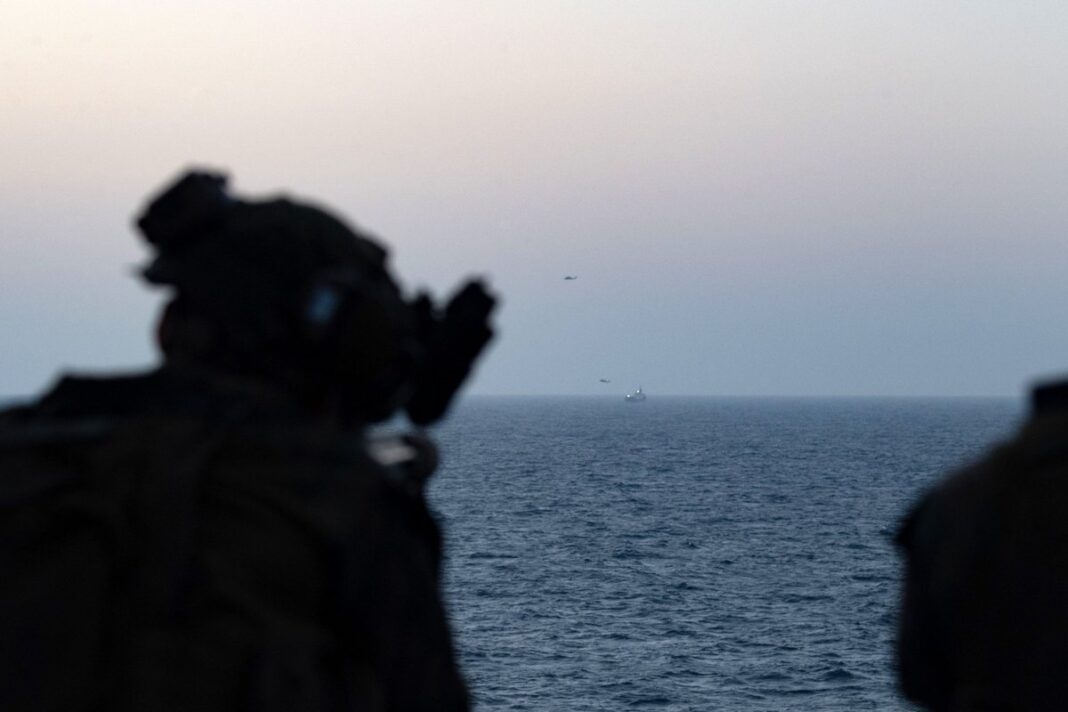
The latest escalation follows renewed Iranian attacks on commercial shipping transiting the Strait of Hormuz, one of the world’s most important maritime chokepoints.
The narrow waterway connects the Persian Gulf with the Gulf of Oman and carries roughly 20% of global seaborne oil exports.
Any prolonged disruption threatens:
- Global oil supplies
- Energy prices
- International shipping
- Supply chains
- Regional economic stability
Washington has repeatedly stated that maintaining freedom of navigation through the Strait remains a core national security objective.
What Has the US Targeted So Far?
According to U.S. military statements, recent operations have focused on reducing Iran’s ability to threaten shipping and regional military forces.
Reported targets include:
- Air-defense systems
- Coastal radar installations
- Ballistic missile sites
- Drone launch facilities
- Fast attack boats
- Naval infrastructure
- Maritime surveillance assets
Many of these systems form part of Iran’s anti-access/area-denial (A2/AD) strategy, which is designed to complicate military operations in the Persian Gulf through a combination of missiles, drones, mines, and fast attack craft.
By degrading these capabilities, U.S. planners may be seeking to reduce operational risks for future missions.
Could Kharg Island Become the Next Objective?
One of the most closely watched possibilities involves Kharg Island, Iran’s primary oil export terminal.
Located in the northern Persian Gulf, the island reportedly handles around 90% of Iran’s crude oil exports, making it one of the country’s most strategically valuable economic assets.
Earlier reports indicated that U.S. military planners had examined contingency options involving:
- Securing parts of Iran’s coastline
- Protecting shipping lanes
- Potential operations involving Kharg Island
President Donald Trump recently stated that previous strikes deliberately avoided targeting Iran’s oil export infrastructure but suggested that option remains available if military conditions change.
Military analysts caution that any attempt to seize or directly attack Kharg Island would carry significant risks, as Iran retains the ability to launch missiles, drones, and coastal defense weapons from the mainland.
Pickaxe Mountain Remains Another Potential Flashpoint
Another frequently mentioned objective is Pickaxe Mountain, a heavily fortified site reportedly associated with Iran’s nuclear infrastructure.
Open-source assessments suggest the facility is built deep underground near one of Iran’s major nuclear complexes, making it difficult to destroy using conventional precision-guided munitions.
Although no military action has been announced against the site, President Trump has publicly referenced it when discussing potential options.
Defense experts note that deeply buried facilities require specialized planning, intelligence, and weapons, making them among the most challenging targets in modern warfare.
Iran Still Retains Significant Military Capabilities
Despite months of U.S. and Israeli operations, analysts believe Iran continues to possess substantial military capabilities.
These reportedly include:
- Ballistic missiles
- Cruise missiles
- Long-range drones
- Anti-ship missiles
- Naval mines
- Fast attack craft
- Proxy forces across the Middle East
Iran’s ability to threaten commercial shipping does not depend solely on its conventional navy.
Many analysts argue that Tehran can continue disrupting maritime traffic using asymmetric capabilities such as drones, missile batteries, and small attack boats.
This explains why recent U.S. strikes have focused heavily on missile and drone infrastructure rather than only naval vessels.
The Strategic Debate Inside Washington
According to officials familiar with internal discussions, the Trump administration continues debating how aggressively to expand military operations.
Some policymakers reportedly favor maintaining pressure through sustained precision strikes and economic sanctions.
Others argue that stronger military action may be necessary to permanently reduce Iran’s ability to threaten regional shipping.
Defense Secretary Pete Hegseth has reportedly supported a more forceful military approach, although administration officials have not publicly outlined future operational plans.
At the same time, diplomatic channels remain active, suggesting Washington is attempting to combine military pressure with negotiations.
Military Pressure and Diplomacy Often Go Together
Security analysts note that public discussion of military options can serve multiple purposes.
On one hand, signaling possible operations against high-value targets such as Kharg Island may increase pressure on Tehran during negotiations.
On the other hand, revealing too much about potential military planning can reduce operational surprise.
Mark Cancian, a retired U.S. Marine Corps officer and defense analyst, has argued that publicly discussing possible objectives may strengthen diplomatic leverage but could also provide Iran with additional time to prepare defensive measures.
Similarly, former Pentagon official Imran Bayoumi has suggested that President Trump’s public statements should be viewed separately from actual military planning, noting that internal deliberations are often more measured than political messaging.
Critics Question the Long-Term Strategy
Although U.S. operations have reportedly inflicted significant damage on Iranian military infrastructure, critics argue that tactical success does not automatically translate into strategic victory.
Some lawmakers and analysts contend that:
- Iran has not fundamentally altered its regional policies.
- Maritime threats continue despite repeated strikes.
- Proxy networks remain active.
- The risk of regional escalation persists.
These critics argue that military pressure alone may not produce lasting political concessions without a broader diplomatic framework.
Supporters of the current strategy counter that sustained military pressure is necessary to reduce Iran’s operational capabilities before meaningful negotiations can occur.
Why This Matters Beyond the Middle East
The conflict’s implications extend well beyond the Persian Gulf.
Any sustained disruption in the Strait of Hormuz could affect:
- Global energy markets
- Inflation
- Shipping insurance costs
- Asian energy imports
- European fuel supplies
- International financial markets
Because many of the world’s largest economies depend on Gulf energy exports, developments in the region continue to attract close attention from governments, investors, and defense planners.
Strategic Analysis
The current U.S. campaign increasingly resembles a phased military strategy rather than a series of isolated retaliatory strikes. By targeting air defenses, missile sites, radar systems, and maritime assets, Washington appears to be reducing Iran’s ability to contest future operations while preserving flexibility for political leaders.
Whether those preparations ultimately lead to expanded military action remains uncertain. Much will depend on Iran’s response, the effectiveness of ongoing diplomatic efforts, and Washington’s assessment of the costs and risks of further escalation.
For now, the strikes suggest that the United States is seeking to shape both the military and diplomatic environment simultaneously—a strategy intended to maximize leverage while keeping multiple options available.
Conclusion
The latest wave of U.S. strikes against Iran highlights an evolving military campaign that appears to serve objectives beyond protecting commercial shipping. By systematically targeting critical military infrastructure, Washington may be preparing the battlefield for broader contingencies while simultaneously increasing pressure on Tehran to return to negotiations.
Although officials have emphasized freedom of navigation in the Strait of Hormuz, the selection of targets and public discussion of options such as Kharg Island indicate that strategic planning extends well beyond maritime security. Whether this approach succeeds will depend on the balance between military pressure, diplomatic engagement, and the willingness of both sides to avoid a wider regional conflict.
Frequently Asked Questions
What are shaping operations?
Shaping operations are military actions conducted before a larger campaign to weaken an opponent’s defenses, disrupt command systems, and improve conditions for potential future operations.
Why is the Strait of Hormuz important?
The Strait of Hormuz carries about one-fifth of global seaborne oil exports, making it one of the world’s most critical energy chokepoints.
Why is Kharg Island strategically important?
Kharg Island is Iran’s principal oil export terminal and a key source of government revenue, making it an important strategic and economic asset.
Does targeting military infrastructure mean a larger invasion is imminent?
Not necessarily. Preparatory strikes can provide military options without guaranteeing that a broader offensive will occur. Political decisions, diplomacy, and battlefield conditions all influence future actions.
Why is Iran still able to threaten shipping?
Even if parts of its conventional military are weakened, Iran retains asymmetric capabilities—including drones, missiles, mines, and fast attack craft—that can pose risks to commercial shipping and regional security.