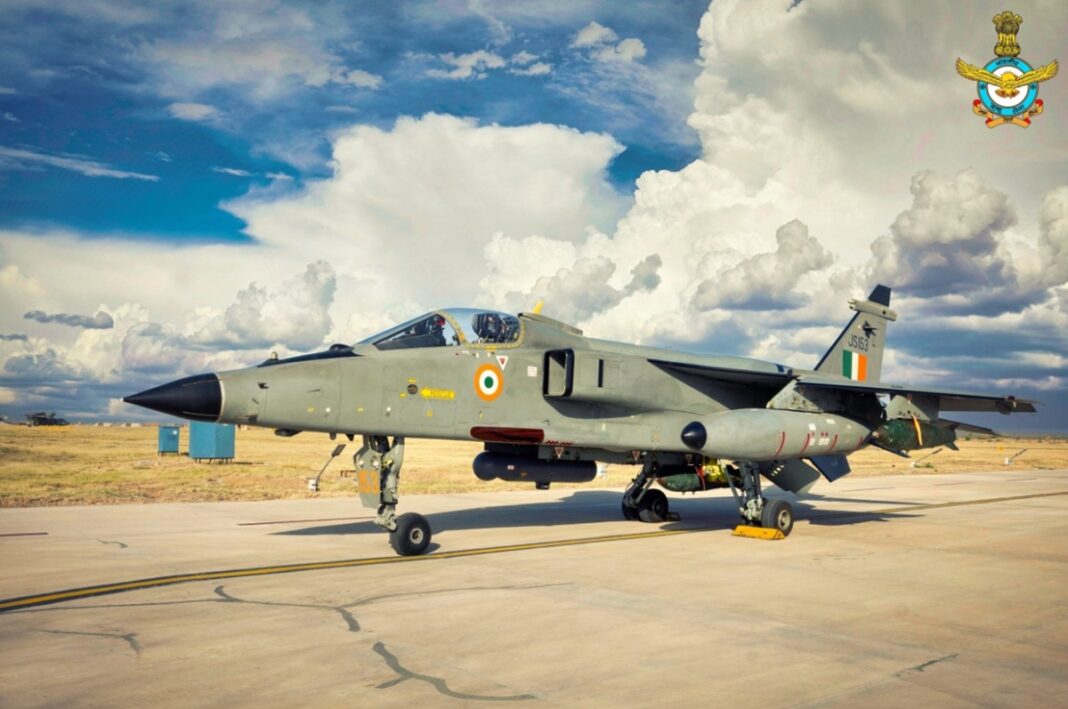
The Indian Air Force (IAF) is set to receive nine retired Royal Air Force (RAF) Jaguar aircraft from the United Kingdom, not for combat service but as “donor aircraft” to provide spare parts for India’s aging Jaguar fleet.
At first glance, the transfer may appear routine. However, it highlights a much deeper issue: India is increasingly relying on retired foreign aircraft to keep one of its principal strike fleets operational because global production lines and spare-part supply chains have largely disappeared.
The move also underscores broader challenges facing the IAF, including delayed fighter induction programs, declining squadron strength, and the growing pressure to sustain legacy aircraft until next-generation platforms become available.
India is buying retired British Jaguars. Not because the aircraft is making a comeback, but because the IAF still needs the fleet flying 🇮🇳
Nine retired RAF Jaguars are being acquired as a source of spare parts, helping sustain six Jaguar squadrons while India waits for new… pic.twitter.com/xvnJ1mhVWO
— Military Observer (@TheMilObserverr) June 19, 2026
Why Is India Receiving Retired RAF Jaguars?
According to information reported in the Indian media, the UK has transferred nine retired RAF Jaguar aircraft to India since January 2026.
The aircraft include:
- Five Jaguar GR1 strike aircraft
- Four Jaguar T2 trainer variants
These aircraft are not airworthy and will never fly again.
Instead, engineers will dismantle them to recover valuable components such as:
- Rolls-Royce Adour engines
- Landing gear assemblies
- Hydraulic systems
- Avionics
- Cockpit equipment
- Structural components
- Ejection-seat parts
Each donor aircraft can reportedly provide dozens of reusable components that help keep operational Jaguars flying.
A Fleet Running Out of Spare Parts
The Jaguar was jointly developed by Britain and France during the 1960s and entered Indian service in the late 1970s.
Production ended decades ago.
Today, India is the world’s last military operator of the Jaguar after both Britain and France retired the aircraft years ago.
This creates a significant logistical challenge.
Most original manufacturers no longer produce spare parts, forcing India to rely on:
- Reverse engineering
- Domestic manufacturing
- Cannibalizing retired aircraft
- Purchasing surplus airframes from former operators
The latest UK transfer follows similar acquisitions from other countries.
India previously obtained:
- 31 retired Jaguars from France in 2018
- 20 retired Jaguars from Oman in 2025, along with Adour engines and thousands of spare parts
Reports also suggest India has explored acquiring additional retired Jaguars from countries such as Nigeria and Ecuador.
Why the Jaguar Still Matters to India
Despite its age, the Jaguar remains one of the Indian Air Force’s primary deep strike aircraft.
The fleet has undergone extensive modernization through the DARIN (Display Attack Ranging Inertial Navigation) upgrade program.
The latest DARIN III standard includes:
- Glass cockpit
- AESA radar integration
- Modern navigation systems
- Digital mission computers
- Precision-guided weapon capability
- Improved electronic warfare systems
These upgrades have significantly improved the aircraft’s combat effectiveness despite its Cold War-era design.
Current plans envision Jaguars remaining operational until approximately 2035.
The Real Problem Is Fighter Shortages
The Jaguar story is less about one aircraft and more about the Indian Air Force’s broader modernization challenges.
The IAF’s authorized fighter strength is 42.5 squadrons, a level considered necessary to address potential two-front contingencies involving China and Pakistan.
However, the operational fleet has reportedly fallen to around 29 squadrons, creating a substantial capability gap.
Several modernization programs intended to replace older aircraft have experienced delays, including:
- Tejas Mk1A
- Tejas Mk2
- Advanced Medium Combat Aircraft (AMCA)
Because replacements are arriving more slowly than expected, India has been forced to extend the service lives of older aircraft, including Jaguars, MiG-29s, Mirage 2000s, and Su-30MKIs.
Engine Problems Continue to Limit the Fleet
One of the Jaguar’s biggest limitations remains its Rolls-Royce Turbomeca Adour Mk811 engine.
The engine has long been criticized for relatively modest thrust, particularly during operations in India’s:
- High-temperature environments
- High-altitude airbases
Several years ago, India examined replacing the engines with Honeywell F125IN turbofans, which would have offered significantly greater thrust and better performance.
However, the project was reportedly abandoned because of cost concerns and technical integration challenges.
As a result, India continues operating Jaguars with their original powerplants, increasing the importance of securing additional spare engines from retired aircraft.
What This Means for India’s Combat Readiness
The transfer illustrates a practical reality faced by many air forces operating legacy aircraft.
Cannibalizing retired aircraft is neither unusual nor unique to India. The United States and several NATO countries have used similar approaches to support aging fleets such as the B-52 bomber and older transport aircraft.
However, India’s dependence on donor Jaguars also reflects structural challenges in its fighter modernization program.
Every retired aircraft acquired abroad temporarily extends the Jaguar fleet’s lifespan, but it does not solve the underlying issue of replacing aging combat platforms.
Without faster induction of new fighters, the IAF may continue relying on legacy aircraft well into the next decade.
Strategic Implications
The continued reliance on Jaguars carries several strategic implications.
1. Modernization Delays Are Affecting Force Structure
The need to sustain a 40-year-old aircraft indicates that indigenous replacement programs are taking longer than originally planned.
This creates pressure on operational readiness during a period of increasing regional security competition.
2. Logistics Are Becoming a Strategic Challenge
Maintaining aircraft after global production has ended requires increasingly expensive engineering solutions.
Reverse engineering and sourcing obsolete components become more difficult with each passing year.
3. Capability Gap Remains
Although upgraded Jaguars remain capable precision strike platforms, they lack many features found in modern fourth- and fifth-generation fighters, including:
- Advanced stealth characteristics
- Superior sensors
- Network-centric warfare capabilities
- Higher survivability in heavily defended airspace
Against sophisticated integrated air defense systems, their operational effectiveness would depend heavily on electronic warfare support and escort aircraft.
What the UK Transfer Signals
The UK still reportedly possesses additional retired Jaguar airframes, suggesting future transfers remain possible if India requires more spare parts.
For London, disposing of retired aircraft through transfer to India provides a practical way to strengthen defense cooperation while supporting an important strategic partner.
For New Delhi, however, the acquisition is primarily a logistics solution rather than a capability enhancement.
No additional combat aircraft are entering service.
Instead, India is buying time until replacement fighters become available.
Outlook
The transfer of nine retired RAF Jaguars to India is not a story about expanding air power—it is a story about sustaining it.
The acquisition highlights the Indian Air Force’s determination to keep its Jaguar fleet operational despite shrinking global spare-part availability. It also underscores the broader challenge facing India’s military aviation modernization: balancing immediate operational needs against long-term force renewal.
Until programs such as the Tejas Mk1A, Tejas Mk2, and AMCA enter service in larger numbers, the Jaguar—supported by donor aircraft from around the world—is likely to remain an important, if aging, component of India’s strike capability.
For defense analysts, the development serves as a reminder that military strength depends not only on acquiring advanced platforms but also on sustaining existing fleets through effective logistics, industrial capacity, and timely modernization.