Wednesday, April 22, 2026
Home Blog Page 112

Netherlands is urging the EU to end visa-free travel with Georgia

0

The Dutch foreign minister announced on Thursday that the Netherlands intends to request the European Union to suspend its visa-free travel arrangements with Georgia, following the arrest of over 300 individuals during pro-EU protests in the South Caucasus nation. For the past week, demonstrators in Georgia have been voicing their opposition to the government’s choice to cease negotiations regarding EU membership.

Dutch Foreign Affairs Minister Caspar Veldkamp stated that he would formally approach the EU to emphasize to the Georgian government that their current trajectory has consequences.

At present, Georgian citizens can travel to the EU for short stays without needing a visa. Veldkamp made these comments to reporters prior to a two-day meeting of foreign ministers from the Organization for Security and Cooperation in Europe in Malta. He also indicated that he would request the OSCE to investigate the actions of the Georgian government.

According to Georgian media, the Interior Ministry has reported that more than 300 individuals have been detained since the protests erupted in response to the government’s decision to halt EU accession talks. Georgian Prime Minister Irakli Kobakhidze, leader of the pro-Russian Georgian Dream party, has accused opposition factions of inciting unrest.


Russia’s Lavrov and the US’s Blinken are scheduled to participate in the upcoming OSCE meeting

0

Russian Foreign Minister Sergei Lavrov and U.S. Secretary of State Antony Blinken are expected to confront each other regarding the ongoing conflict in Ukraine during an annual meeting of the Organization for Security and Cooperation in Europe (OSCE) in Malta on Thursday. The situation in Ukraine is anticipated to be the primary focus of discussions, which will also include the formal approval of last-minute agreements concerning senior positions within the security and rights organization. Western nations have frequently accused Russia of violating human rights and international standards.

This marks Lavrov’s first visit to a European Union member state since the onset of Russia’s full-scale invasion of Ukraine in February 2022. Although Lavrov and Blinken, whose tenure concludes next month, are not scheduled for a direct meeting, they have occasionally found themselves at the same international events since the war began, with limited interactions. Their most recent encounter occurred in March 2023 during a G20 meeting in New Delhi, which the Russian foreign ministry reported lasted under ten minutes.

Following that brief meeting, Blinken stated at a press conference that he urged Lavrov to pursue diplomatic avenues. In contrast, Lavrov described the interaction as constructive but noted that he did not receive any new insights regarding U.S. positions. The OSCE gathering will include foreign ministers and officials from 57 participating states across North America, Europe, and Central Asia, and is further complicated by the impending return of Donald Trump to the White House. Trump’s advisers are reportedly discussing strategies to resolve the conflict in Ukraine that would involve significant territorial concessions to Russia.

As Trump prepares to assume office again in just over a month, Western nations are expected to reaffirm their support for Ukraine, while Russia is likely to continue its criticism of the OSCE, which Lavrov claimed last year was becoming “essentially an extension of NATO and the European Union.”

VETO POWERS

The OSCE emerged as a successor to an organization established during the Cold War to facilitate dialogue between Eastern and Western nations. In recent years, particularly following Russia’s invasion of Ukraine, Moscow has effectively utilized its veto power to obstruct various decisions.

This year, Armenia and Azerbaijan have reportedly hindered the OSCE budget due to ongoing disputes related to their conflict in the Nagorno-Karabakh region. Diplomats indicate that an agreement was reached this week to appoint individuals to four senior OSCE roles, including the position of secretary general, which will be filled by Turkey’s Feridun Sinirlioglu, who previously served as foreign minister in a caretaker government in 2015.

The most significant annual decision within the OSCE—determining which country will assume the rotating chairmanship—has already been resolved. Finland is set to take on this role in celebration of the 50th anniversary of the Helsinki Final Act, which established the groundwork for the current OSCE framework.

Coup attempt or martial law: An analysis of the recent events in South Korea

0
Soldiers advance to the main building of the National Assembly after South Korean President Yoon Suk Yeol declared martial law.

The political turmoil that led to South Korean President Yoon Suk Yeol‘s brief attempt to impose martial law (rescinded merely five and a half hours after its announcement) did not arise unexpectedly. Although the opposition has been quick to promote its own interpretation of events, it is clear that the circumstances are intricate and warrant a more thorough examination.

Contextual Overview

The roots of this issue trace back to the 2022 South Korean presidential elections. During this period, Yoon Suk Yeol, a former prosecutor general who had shifted to the conservative side following a dispute with then-President Moon Jae-in—despite having previously prosecuted two conservative leaders—secured the presidency by a mere 0.73%, marking an exceptionally narrow victory in the nation’s electoral history.

From the outset, Yoon encountered significant obstacles, as the opposition party, the Democratic Party, maintained a qualified majority, holding just over half but less than two-thirds of the National Assembly seats.

This power imbalance enabled the Democratic Party to obstruct presidential initiatives while advancing their own policies, which were frequently met with presidential vetoes. Consequently, this deadlock stifled legislative progress and exacerbated societal polarization.

The parliamentary elections held in April 2024 did not significantly alter the political landscape. Although these elections were characterized as a notable setback for the ruling party, the conservatives actually received a marginally higher number of votes compared to four years prior (108 votes versus 103). The Democratic Party was unable to achieve a two-thirds majority; however, it maintained a qualified majority, enabling it to pass or obstruct legislation without needing to consider the opposition. It became evident that the legislative paralysis affecting the national assembly would continue throughout Yoon’s term.

At the same time, the government launched criminal investigations against the contentious opposition leader, Lee Jae-myung, who had effectively transformed the Democratic Party into a personal following. There are significant grounds for the accusations against him, and irrespective of the prevailing political divisions, he would likely have faced imprisonment—especially given that five key witnesses in various cases either died or took their own lives before they could provide testimony. In one instance, he received a suspended sentence, while another case ended in acquittal, which was regarded as a legal anomaly. Nevertheless, he is still confronted with four additional legal challenges.

Considering that even a suspended sentence upheld by the Supreme Court would terminate Lee’s political career, the scenario quickly turned into a contest of “who will outmaneuver whom first”: either the government would succeed in convicting the Democratic Party leaders, or the party would manage to initiate impeachment proceedings against the president.

Internal conflicts within the ruling party, intensified by a movement known as “People for Impeachment” and supported by various NGOs, including labor unions, university academics, and Catholic leaders, theoretically provided the opposition with an opportunity to gather 200 votes—sufficient to initiate impeachment proceedings regardless of the reasons behind it. Nevertheless, many of the allegations made against the president by his adversaries are as unfounded as his own assertions regarding anti-state or pro-North Korean elements, which he cited to rationalize the declaration of martial law.

Analysis of the attempted coup and its potential motivations

The incidents that transpired during the brief period of “martial law” bring to mind the military coups orchestrated by former South Korean leaders Park Chung-hee and Chun Doo-hwan, echoing the adage, “History repeats itself, first as tragedy, second as farce.”

At 11 PM local time on December 3, following a private meeting reportedly called by the Minister of National Defense, President Yoon addressed the public, declaring martial law for the first time since 1979. He stated it was necessary to safeguard the Republic of Korea from the threats posed by North Korean communist forces, to eliminate the so-called pro-North Korean anti-state elements undermining the freedom and well-being of the populace, and to uphold the constitutional order.

Yoon accused the opposition of immobilizing the government through anti-state actions. “The National Assembly has turned into a refuge for criminals, hindering the judicial and administrative systems and seeking to undermine the free democratic framework through legislative tyranny,” he stated.

Following Yoon’s speech, General Park An-soo, the commander of martial law, issued a decree prohibiting all political activities, including protests and political parties. Military vehicles were deployed in the city; however, despite the blockade of the parliament building, lawmakers, supported by the public, successfully entered. A total of 190 members of parliament then voted unanimously to revoke martial law in line with the constitution. Military forces began to withdraw, and shortly after, the president addressed the nation again. He expressed his desire to protect the country, but stated that due to the parliament’s opposition to his decision, martial law would be lifted.

The situation became increasingly complex when it was revealed that neither the Prime Minister of South Korea nor the head of the ruling party had been made aware of the president’s decision. The ruling party leader was among the first to denounce the action as inappropriate and voted against it in the National Assembly. The news of the imposition of martial law even reached officials in Washington. US Deputy Secretary of State Kurt Campbell expressed that the United States was closely monitoring the situation with “grave concern,” emphasizing that democracy is fundamental to the US-South Korea alliance and that any political conflicts should be resolved peacefully and in accordance with the law.

In South Korea, the public did not perceive the situation as dire, particularly since the Democratic Party has been warning of a looming dictatorship and encouraging protests since their leader faced the threat of imprisonment. Consequently, Yoon’s actions backfired, drawing criticism even from leaders within his own party. It is crucial to note that the current South Korean military differs significantly from its past during the dictatorship; it is not inclined to use force against civilians. In this light, it is reassuring that the president chose to avoid actions that could have led to violence.

Interestingly, Yoon Suk-Yeol’s decisions also left Pyongyang perplexed. Instead of a comprehensive morning news segment, North Korean state media primarily played music. Meanwhile, North Korean newspapers reported that yet another “progressive organization” had called for impeachment, although they did not reference the recent developments. As of this writing, the North Korean Central News Agency has yet to issue a statement on the situation.

What might have led the president to undertake such a seemingly ill-advised action?

One theory posits that Yoon simply succumbed to pressure. Another suggests that either he or his advisors—reportedly, the idea of martial law was proposed by Minister of National Defense Kim Yong-hyun, a former head of the presidential security service and Yoon’s former classmate—miscalculated the capabilities and effectiveness of South Korean security forces in an attempt to preemptively address the situation. A third theory indicates that the decision may have been made impulsively due to external pressures, compelling the president to commit fully.

Additionally, there is a notion that misinformation from Yoon’s opponents may have influenced him into making a decision that could lead to his political demise. It is important to recognize that President Yoon is not an experienced politician. Having transitioned from the role of prosecutor general to the presidency just a year prior, he may not fully grasp the intricacies of bureaucratic operations, especially given that the prosecutor’s office in South Korea operates as a militarized entity with stringent internal discipline. This situation draws parallels to the Park Geun-hye administration, where a close-knit group of advisors swayed the leader through selective information.

Some conspiracy theorists speculate that the United States may have had a hand in this situation. Although Yoon maintains a pro-American position, he has not changed his approach to Ukraine, resulting in a delegation led by Ukrainian Minister of Defense Rustem Umerov leaving South Korea without any agreements. With the increasing relationship between Moscow and Pyongyang, there were concerns that South Korea might soon cross a “red line” by providing military assistance to Kyiv, but this did not materialize. Consequently, it is plausible that the outgoing Biden administration may have shared some “reliable intelligence” with Yoon, prompting him to take significant risks.

What lies ahead?

A setback of this magnitude, which has distanced nearly everyone from the president, could be tantamount to political self-destruction. The more Yoon attempts to hold onto power, the further his already low approval ratings are likely to decline; he will face scrutiny for previous errors, making it challenging to communicate his perspective. The opposition has already called for Yoon’s immediate resignation, as an attempt to impose martial law without proper justification is viewed as insurrection. On December 4, opposition parties in the National Assembly submitted a motion to initiate impeachment proceedings against Yoon. Given that several conservative lawmakers supported this move, they are likely to gather the necessary 200+ votes to proceed with the impeachment.

Additionally, the South Korean government and presidential administration have announced their resignations. Among those resigning are Chief of Staff Chung Jin-suk, National Security Bureau Director Shin Won-sik, Chief of Policy Sung Tae-yoon, and other senior officials.

What implications does this have for the major political parties?

Although impeachment may delay the judicial proceedings against the opposition leader, societal divisions continue to be pronounced. Consequently, the Democratic Party is pursuing retroactive legislation aimed at reducing statutes of limitations on specific offenses, which could lead to the dismissal of certain cases. Meanwhile, the conservative party has adopted a strong position, distancing itself from the president, which may enhance their prospects in the forthcoming presidential elections, particularly if the judiciary operates within legal parameters and Lee faces imprisonment.

How does this situation influence global instability and Russia’s interests?

It is crucial to avoid conflating distinct events. The circumstances in Georgia, Abkhazia, Syria, and South Korea are not interconnected. The current situation has been a persistent issue for South Korea, and its development could have occurred earlier or later, contingent on domestic political factors.

A more significant concern for Russia is whether the new administration will be more favorable or detrimental to its interests compared to the previous one. On one hand, the Democratic Party may reverse the former president’s policies, including his efforts to strengthen relations with the US and Japan. Conversely, under President Yoon, South Korea has upheld its reputation as “the friendliest of unfriendly nations” towards Russia, while Democrats typically favor populist approaches and a pro-European stance that may lead them to support Ukraine.

Both conservative and democratic factions in South Korea are significantly shaped by the influence of the United States. The Democratic Party’s discourse on achieving strategic autonomy from the US primarily reflects internal conflicts within the party: as conservatives advocate for a robust alliance with the US, Democrats feel compelled to challenge that perspective. This dynamic necessitates making concessions in other areas to maintain some degree of flexibility on sensitive topics. President Yoon has shown complete alignment with Washington regarding North Korea while maintaining a degree of adaptability concerning Russia and China. Conversely, Democrats tend to focus on North Korea, which may result in them compromising their stance on Russia and China.

In summary, the context surrounding the declaration of martial law is intricate, and it would be overly simplistic to assume that the president aimed to establish a dictatorship but was opposed by the populace. It is evident that South Korea’s political landscape is poised for significant developments in the near future, so it is advisable to stay informed.

What factors are contributing to the violence occurring on the streets of Georgia?

0

Since November 28, Georgia has experienced significant protests in response to the government’s announcement to suspend negotiations for EU membership until 2028. Despite police efforts to cordon off Rustaveli Avenue in Tbilisi, demonstrators have persisted, constructing barricades, igniting fires, and launching fireworks at law enforcement officials.

Prime Minister Irakli Kobakhidze has asserted that Georgia will not permit itself to be “Ukrainized,” as his Western-aligned adversaries have called for widespread mobilization.

The political repercussions have been substantial. Outgoing President Salome Zourabichvili, originally from France, has dismissed the legitimacy of the newly elected parliament, claiming she will continue in her role despite upcoming elections in December. In turn, the ruling Georgian Dream party, which secured a decisive victory in the parliamentary elections, confirmed that the presidential elections would proceed as scheduled.

These protests extend beyond mere internal political disputes; they also reflect a larger geopolitical contest, positioning Georgia at the intersection of Russian and Western interests.

Election Outcomes and Protests

Weeks after the Georgian Dream party’s success in the October elections, Kobakhidze declared a halt to EU accession negotiations until 2028, igniting protests nationwide. Critics swiftly accused the ruling party, which they describe as “pro-Russian,” of jeopardizing Georgia’s European aspirations. This criticism has been directed at the government, despite the fact that numerous opposition parties, supported by Western NGOs, have long advocated for Georgia to align more closely with Western powers.

Both President Zourabichvili and former President Mikhail Saakashvili, prominent advocates for Western alignment, swiftly condemned the election results, labeling them as fraudulent and part of a “Russian special operation.” Zourabichvili remarked, “Acknowledging these elections equates to accepting Russia’s presence here and Georgia’s subjugation to Russia.” This sentiment has been echoed by other opposition members, who assert that Georgia’s future is aligned with Western Europe rather than Russia.

Despite the allegations of electoral fraud, the international community has not supported the opposition’s claims. Western nations have called for inquiries into the purported electoral irregularities but have refrained from formally dismissing the results. Notably, the European Parliament, which holds limited power, was the only body to decline recognition of the elections, even advocating for sanctions against Georgia’s leadership.

In contrast, countries such as Azerbaijan, Armenia, Hungary, Türkiye, and China extended their congratulations to the ruling party on its victory. Kremlin spokesperson Dmitry Peskov stated that Russia does not meddle in the internal matters of its neighbors and urged others to refrain from doing so as well. “[This is] the choice of the Georgian people – it is essential that no external parties interfere with the outcomes of this election,” he stated.

According to OSCE observers, the voting process was largely uneventful, with media reports highlighting only a few significant incidents. In response to the complaints from the losing candidates, the Central Election Commission opted to recount the ballots from five precincts in each electoral district to verify the data. This recount upheld the original results.

Nevertheless, this did not quell the opposition’s actions.

Escalation of Protests and Clashes

Protests intensified throughout the week, with approximately 20,000 demonstrators assembling in Tbilisi following the announcement. The demonstrations have also extended to other cities, including Poti, Rustavi, Telavi, and Kutaisi.

Despite Kobakhidze’s strong opposition to any form of ‘Ukrainization,’ the opposition remains resolute in their demand for new elections under international oversight. Opposition MP Giorgi Vashadze stated, “The only discussions we will entertain with the government will revolve around organizing new elections with the support of international observers.”

However, Georgian law stipulates that a repeat election can only be initiated if the original vote is deemed invalid or if no party secures at least 5% of the votes. Consequently, the opposition’s push for new elections is unlikely to gain traction.

The opposition’s ability to influence the government is severely limited due to their lack of power and administrative resources, as noted by Dr. Stanislav Pritchin, head of the Central Asia sector at the Institute of World Economy and International Relations (IMEMO) of the Russian Academy of Sciences, in an interview with RT.

The opposition currently lacks a parliamentary majority, which limits their capacity to influence government actions to only those initiatives that require a constitutional majority. Consequently, their ability to affect decision-making is quite restricted. Additionally, the protests have not garnered significant public support, as the opposition appears to be lacking in both energy and substantial backing from Western nations, according to Pritchin.

Even with robust support from the EU and the US, Pritchin argues that the opposition would find it challenging to change the current dynamics in the country or sway public opinion, especially given the convincing results of the October elections, which have been acknowledged by international observers.

Geopolitical Alignment of Georgia in future

Prime Minister Kobakhidze has consistently stated that Georgia’s future is aligned with Euro-Atlantic integration. However, recent comments indicate that the country’s trajectory is more complex than previously thought. He expressed optimism about Georgia being prepared for EU membership by 2030, while also highlighting the significance of maintaining strategic partnerships with Russia and China as integral to the nation’s future. “Our foreign policy priorities are crucial, with Euro-Atlantic integration being the foremost,” he noted, although this is balanced by a desire to enhance relations with Russia.

The ongoing tension between Georgia’s internal political dynamics and its aspirations for EU membership is intensified by the influence of Western nations, particularly the EU and the US, urging Georgia to strengthen its alignment against Moscow. Although Georgia has sought to engage in diplomatic relations with Russia, significant tensions persist regarding Abkhazia and South Ossetia, territories that Georgia intends to reintegrate but are recognized as independent by Russia.

Conversely, the opposition, which receives support from Western powers, advocates for a stronger commitment to the EU and NATO, even if it jeopardizes relations with Moscow. Given the divided electorate and the stark polarization among political groups, the current protests are unlikely to subside without a major political transformation—either through reforms or a potential downfall of the Georgian Dream administration.

On November 30, the US announced the suspension of its strategic partnership with Georgia, citing “anti-democratic” actions by the ruling party. The State Department asserted that the Georgian Dream’s decision to halt the EU accession process has rendered the country more susceptible to Russian influence.

The following day, December 1, Kaja Kallas, the new EU High Representative for Foreign Affairs and Security Policy and former Prime Minister of Estonia, suggested that the EU may consider sanctions against Georgia in response to the severe crackdown on protests.

Following the escalation of the Ukraine conflict in 2022, Georgian officials claimed that a “global war party” aimed to establish a “second front” against Russia in Georgia. Former Prime Minister Irakli Garibashvili alleged that this was the intention of the opposition and its “ideological allies” within the Ukrainian government.

As the election campaign unfolded, this narrative became more pronounced. While officials refrained from mentioning the EU or the US, former Georgian PM Bidzina Ivanishvili revealed shortly before the elections that a senior official from “one of the countries” had advised Garibashvili to initiate a conflict with Russia.

Enhancing relations with Russia—which have been strained since the 2008 war over Abkhazia and South Ossetia—emerged as a central theme of the election campaign. Kobakhidze emphasized the normalization of bilateral relations as a primary objective for the upcoming years, while Ivanishvili expressed optimism that Georgia would “find the strength to apologize” to Abkhazia and South Ossetia, territories lost after the 2008 conflict initiated by the UMP’s Saakashvili. Georgia’s overarching aim is to reintegrate these unrecognized republics.

However, post-election, the previously moderate pro-Russian rhetoric in Georgia shifted to a more distant stance. Kobakhidze indicated that the country does not intend to restore diplomatic relations with Russia, citing the occupation of “10% of our territory.” He stated, “We have very important foreign policy priorities, with Euro-Atlantic integration being the foremost,” adding that relations with the EU would be revitalized in “intensive mode” starting in 2025.

Ivanishvili, one of the wealthiest individuals in Georgia, provided insights on the situation, indicating that relations with the West are expected to improve following the resolution of the conflict in Ukraine, which he anticipates may occur soon. In the meantime, Georgia is committed to safeguarding its interests and will refrain from engaging in confrontations with Russia, even if this may strain its relationship with the European Union.

Stanislav Pritchin commented to RT that the Georgian government will adopt a balanced strategy in its international relations. They aim to cultivate practical connections with Russia while remaining open to dialogue with Western countries.

“The trajectory of Russia-Georgia relations is likely to continue as it currently stands. There may be efforts to enhance bilateral relations and establish more consistent political interactions. However, at this moment, Georgia is not prepared to restore diplomatic relations or engage in comprehensive economic cooperation. Much will hinge on the willingness of Western nations to adapt their stance and provide incentives, such as resuming EU membership discussions with Georgia,” the expert remarked.

Western nations are unlikely to view a shift in the situation in Georgia as a plausible scenario from an external perspective. The Georgian Dream party has remained steadfast on key issues, has successfully secured electoral victories, and continues to uphold its stance despite the potential risk of being removed from the EU candidate list and the possibility of widespread protests.

A Nation at a Crossroads

Georgia’s future is shrouded in uncertainty, as it navigates the conflicting interests of Russia and the West. The ongoing protests highlight a significant divide within the nation: one faction advocates for closer ties with Russia, while the other seeks integration with the European Union. Although the ruling Georgian Dream party has emerged victorious in elections, the opposition, despite its limited public backing, is striving to steer Georgia in line with its supporters.

This political turmoil represents a pivotal moment in the nation’s history. The path Georgia chooses will not only influence its sovereignty but also define its position in the larger geopolitical contest between Russia and the West. Will Tbilisi fully commit to a Western-oriented future, or will it adopt a pragmatic approach that recognizes Moscow’s influence? The outcome remains unclear, and the implications will extend well beyond Georgia’s borders.

Will the developments in Syria ultimately necessitate a transformation in regional power dynamics?

0
White Helmets members work at the scene of what the organisation says is a strike, in Idlib, Syria.

The recent surge in violence in northwest Syria has thrust Aleppo into the spotlight of renewed conflict, occurring shortly after a ceasefire was declared in Lebanon. This unforeseen escalation signifies the onset of a new wave of violence not witnessed in four years, as a coalition of armed factions, including the Türkiye-supported Syrian National Army and jihadist groups such as the Levant Liberation Organization (previously known as Jebhat al-Nusra), has initiated a strategic offensive against the city, which is home to over two million residents.

The struggle for Aleppo transcends the city itself, serving as a reflection of the larger regional power dynamics that have characterized Syria’s civil war. This latest offensive raises serious concerns about the region’s stability and the effectiveness of global diplomatic initiatives. Despite ongoing international efforts to achieve peace, Syria remains profoundly fragmented, and the geopolitical implications in Aleppo are more critical than ever.

In a meticulously coordinated operation, fighters from various militant factions have infiltrated the western suburbs of the city, moving towards Saadallah al-Jabri Square, a key symbolic location. This represents a strategic shift, as these groups had previously captured substantial areas in northern and western Aleppo, along with portions of eastern Idlib. For many residents, the swift advance of these militants serves as a stark reminder that lasting peace remains elusive.

The response from the Syrian army has been lackluster. The defense ministry acknowledged a “large-scale” and “unexpected” assault by opposition forces but did not provide a robust counteroffensive plan. Additionally, there have been reports of airstrikes conducted by Russian and Syrian forces aimed at disrupting the supply lines of militants in the suburbs of Aleppo and Idlib. However, these actions may not significantly alter the situation, raising doubts about Damascus’ ability to repel the insurgents amid this new wave of hostilities.

Aleppo, Syria’s second-largest city, serves as a crucial economic center and a key stronghold for the government’s authority in the region. The loss of this city to extremist factions would represent a significant setback for the regime in Damascus. Located less than 200 miles (310 kilometers) from the capital, Aleppo possesses both symbolic and strategic significance. Its capture would alter the power dynamics within Syria and considerably undermine Bashar Assad’s government.

The complexity of the current conflict is further heightened by the involvement of Iran, which maintains a substantial military presence in Syria. Despite the existence of numerous Iranian military installations—comprising 52 bases and 177 additional sites in Aleppo—Iranian forces have not effectively countered the advancing extremist groups. This lack of decisive action raises concerns regarding Tehran’s strategic approach in Syria, as its military assets appear increasingly susceptible to assaults from more nimble opposition forces.

The question arises as to why Iran, despite its considerable military capabilities, has struggled to effectively combat these groups. A potential lack of air support and an overreliance on Syrian infrastructure may contribute to this ineffectiveness. Additionally, Iranian forces have shown reluctance to engage directly, possibly due to the broader geopolitical landscape and the imminent threat posed by Israeli and international coalition strikes. This cautious strategy is allowing groups classified as terrorist organizations to penetrate Aleppo with minimal opposition.

Damascus has been compelled to recognize the deteriorating circumstances, declaring its intention to enhance military supplies to fortify its position. Nevertheless, these actions appear to be more reactive than proactive, indicating a shift towards a defensive military strategy.

The unexpected insurgency raises significant concerns regarding the sustainability of the 2020 ceasefire agreement facilitated by Russia and Türkiye. It underscores the agreement’s vulnerability, and as hostilities escalate, the stability of the region is increasingly at risk. The inability of international diplomacy to achieve a lasting resolution in Syria is also apparent. UN Special Envoy Geir Pedersen’s remarks about a “political stalemate” reflect a widespread global discontent with the lack of advancement. Efforts to resolve the conflict have been hindered by stagnation and conflicting interests, rendering the prospect of enduring peace increasingly elusive.

On a regional level, Turkish President Recep Tayyip Erdogan’s initiatives to engage in dialogue with Syrian President Bashar Assad have also reached an impasse. Erdogan has voiced a commitment to normalization, which he believes would facilitate peace in Syria. However, no substantial actions have been undertaken to realize this objective. Türkiye, having welcomed over three million Syrian refugees, is under growing pressure regarding human displacement and its ongoing struggles with Kurdish factions. Any meaningful advancement towards peace necessitates dialogue between Ankara and Damascus, a crucial component that remains absent from the current approach.

Turkey is enhancing its military footprint in Syria, operating 12 bases and 114 military sites, with a notable concentration in Aleppo and Idlib. Although Iranian forces outnumber Turkish troops, Ankara’s military strengths—especially in air defense, artillery, and advanced communication technologies—are establishing it as a more significant force in the Syrian conflict.

This evolution in power dynamics has enabled Turkey to strengthen its influence in Syria, allowing it to exert control over various armed factions it supports, despite not formally recognizing this involvement. Through these strategies, Ankara is solidifying its role, particularly in Aleppo, positioning itself to be pivotal in the future developments of the conflict.

The geopolitical tensions are escalating. The Syrian civil war, especially the contest for Aleppo, exemplifies the broader competition for dominance between regional powers such as Turkey and Iran. Turkey’s military operations in Syria are expected to grow, as its influence becomes increasingly vital for the region’s stability.

Israel’s longstanding apprehensions regarding the rising power of Iran-aligned forces near its borders have intensified as Syria’s internal strife continues. In response, Israel has taken on a more active role in shaping the regional security environment, adopting measures to counter the spread of Iranian influence.

The recent change in Israeli strategy reflects a wider approach anticipated from the incoming Trump administration, which is expected to focus on countering Iran and enhancing relationships with regional partners such as Israel. With a Republican administration potentially re-engaging, Israel’s strategic priorities and its strong alliance with the US may lead to coordinated efforts in Syria, impacting both local dynamics and international stakeholders.

Will the developments in Syria ultimately necessitate a transformation in regional power dynamics? Could Türkiye’s increasing influence indicate a decline in Iranian power in the region? Furthermore, as Aleppo becomes a critical arena for larger geopolitical conflicts, what roles will Israel and the US assume in determining the eventual outcome?

The conflict in Aleppo transcends a mere military engagement; it represents a central point in a power struggle that will shape not only the future of Syria but also the geopolitical landscape of the Middle East.

Russian minister reports 48,000 family members are seeking soldiers via DNA testing

0
In this photo provided by the Ukrainian Emergency Service, a damaged apartment house is seen after Russia attacked the city with guided bombs overnight in Zaporizhzhia, Ukraine

Forty-eight thousand relatives of Russian soldiers have provided DNA samples, as reported by a government minister during a sensitive discussion aimed at identifying deceased servicemen through their remains. This figure was shared by Deputy Defence Minister Anna Tsivilyova during a round-table meeting on November 26, which led a senior lawmaker to caution against the public disclosure of such data.

Since the early months of its full-scale invasion of Ukraine in February 2022, Russia has not published official figures regarding its military casualties. Western nations estimate that hundreds of thousands of soldiers from both Russia and Ukraine have been killed or injured in the intense trench warfare that characterizes this conflict, the deadliest in Europe since World War II.

An independent news outlet, Astra, released a video of the recent meeting where Russian officials and lawmakers discussed support for troops engaged in what Moscow refers to as its “special military operation,” as well as assistance for their families. Tsivilyova noted that the 48,000 relatives had voluntarily submitted their DNA to an interior ministry database.

In response, Andrei Kartapolov, the head of the parliamentary defense committee, remarked, “Anna Evgenyevna (Tsivilyova) has provided some figures, including those for individuals missing in action. I strongly urge you not to disclose these numbers publicly. This information is classified and quite sensitive. We prefer that these figures do not circulate as we prepare the final documents.”

Tsivilyova clarified that she did not provide the figures for missing individuals, but rather the number of requests received. She indicated that many of those individuals will likely be located, emphasizing that the figure pertains specifically to requests rather than confirmed data.

Astra released a video of the meeting, which was streamed live on the website of the Duma, the lower house of parliament. However, by Wednesday, the video was no longer accessible on the site.

Reuters sought a comment from the Russian defense ministry, but there was no immediate response.

Independent Russian news outlet Mediazona and the BBC Russian service have verified the names of 79,819 Russian soldiers who have died in Ukraine as of November 19, during the ongoing 33-month conflict. The Wall Street Journal, referencing unnamed Western intelligence sources, reported last month that the death toll for Russian soldiers could be as high as 200,000.

The Economist estimated last month that at least 60,000 to 100,000 Ukrainian soldiers have been killed, with up to 400,000 sustaining injuries that prevent them from continuing to fight. Western nations believe that Russia has incurred greater casualties than Ukraine, yet it maintains a manpower advantage due to its significantly larger population.

South Korean Defense minister resigns

0

South Korean Minister of National Defense Kim Yong-hyun has announced his decision to resign, taking accountability for the recent imposition of martial law in the nation.

On Tuesday, President Yoon Suk Yeol unexpectedly declared martial law, citing a perceived threat from “pro-North Korean forces” and accusing the opposition Democratic Party, which holds a parliamentary majority, of engaging in “anti-state activities” that hinder government operations.

However, just hours later, the president reversed the decision, lifting the state of emergency after the parliament unanimously voted against it.

In a statement to the media on Wednesday, Defense Minister Kim expressed his regret for the unrest caused by the emergency measures and apologized for the confusion and anxiety it generated among the public.

“I accept full responsibility for all aspects related to martial law and have submitted my resignation to the president,” Kim stated.

Reports from Yonhap news agency suggest that Kim was instrumental in advising President Yoon Seok Yeol to declare martial law. In his message, Kim also noted that all military personnel involved in enforcing the measures were acting under his directives, asserting that “the responsibility rests solely with me.”

Martial law has been rescinded, allowing citizens to resume their everyday activities; however, the internal political and security landscape remains challenging, Kim remarked, emphasizing that the National Defense Ministry is treating the situation with utmost seriousness. He indicated that all necessary actions would be taken to address the issues while ensuring that national defense operations and the country’s robust military readiness are not compromised.

Lee Jae-myung, the leader of the Democratic Party, previously criticized the president’s declaration of martial law as “unconstitutional” and urged the military and police to return to their standard functions.

In addition, South Korean opposition parties have initiated a motion to impeach President Yoon in response to the situation. This motion would require the backing of two-thirds of the parliament and the agreement of at least six justices from the nine-member Constitutional Court. A vote on this motion could occur as soon as Friday.

President Yoon’s approval ratings have steadily declined in recent months, while the opposition in parliament has consistently obstructed his initiatives. Last week, the Democratic Party also rejected Yoon’s proposed budget for 2025 and called for inquiries into various scandals involving the president’s wife and senior officials.

Russia expresses concern over the ‘tragic’ situation unfolding in South Korea

0
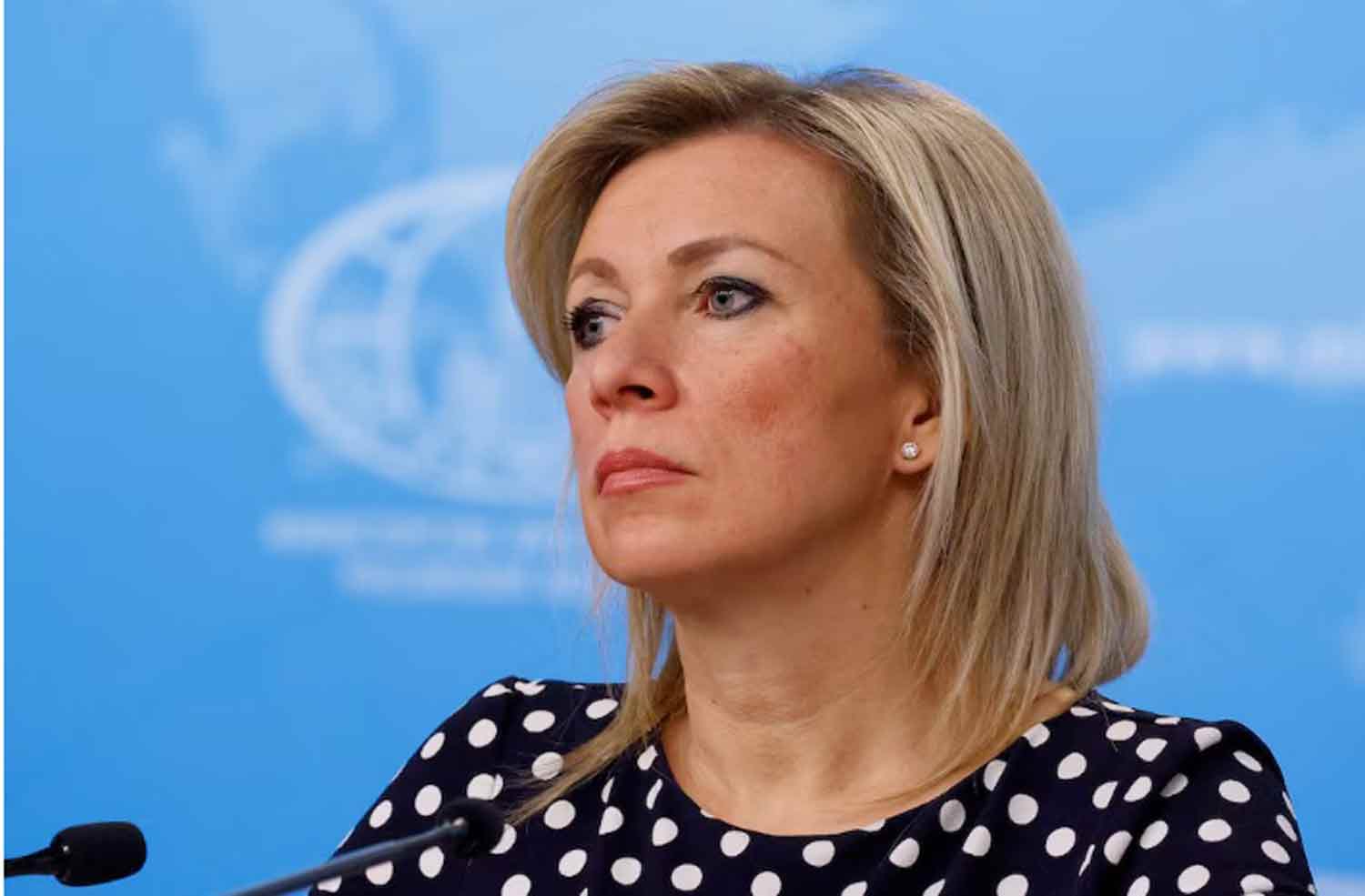
Spokeswoman of Russia's Foreign Ministry Maria Zakharova

Russia is closely monitoring the situation in South Korea with apprehension following the president’s brief declaration of martial law, although Foreign Ministry spokeswoman Maria Zakharova stated on Wednesday that there are no threats to Russian citizens in the country.

Since the onset of its conflict in Ukraine, Moscow has strengthened its relationship with North Korea, raising alarms among Western nations. On Wednesday, South Korean lawmakers introduced a bill to impeach President Yoon Suk Yeol after he declared martial law, only to retract it hours later, leading to a political crisis in the region, which is a key ally of the United States.

“We are observing with concern the unfortunate developments occurring in South Korea,” Zakharova remarked during a news briefing. She added, “The situation on the Korean peninsula is already complicated by the provocative actions of the United States and its allies.”

In June, Russian President Vladimir Putin and North Korean leader Kim Jong Un signed a treaty in Pyongyang that included a mutual defense agreement. The United States, South Korea, and Ukraine have accused North Korea of deploying over 10,000 troops to Russia’s Kursk region, where Russian forces are engaged in efforts to displace Ukrainian soldiers. Moscow has not confirmed or denied the presence of these troops.

What defines martial law in South Korea and the key events leading to Yoon’s announcement?

0
Lawmakers sit inside the hall at the National Assembly, after South Korean President Yoon Suk Yeol declared martial law, in Seoul, South Korea.

South Korean President Yoon Suk Yeol announced martial law on Tuesday, pledging to eliminate “shameless pro-North Korean anti-state forces” and restore order. Just hours later, the parliament, which was surrounded by demonstrators and law enforcement, voted to revoke the decree. Below is an overview of the relevant provisions in the Constitution and the Martial Law Act regarding martial law, historical instances of such declarations in South Korea, and the circumstances leading to Yoon’s late-night address.

LEGAL FRAMEWORK

According to South Korea’s Constitution, the president is authorized to declare martial law when deemed necessary to address a military threat or to ensure public safety and order through the mobilization of military forces. This declaration must be reviewed by the cabinet.

Additionally, the president is required to inform the National Assembly of the decision, and must comply if the Assembly requests the lifting of martial law through a majority vote. The martial law commander, appointed by the president based on the defense minister’s recommendation from among active-duty generals, holds the authority to manage arrests, search and seizure operations, control over speech and the press, and regulate assemblies.

The commander also has jurisdiction over all administrative and judicial matters.

HISTORICAL CONTEXT

Since the establishment of South Korea as a republic in 1948, there have been over a dozen instances of martial law declarations. Many of these were instigated by democratic uprisings, particularly during the military coups led by Park Chung-hee in 1961 and Chun Doo-hwan in 1980.

In 1980, a faction of military officers, led by Chun Doo-hwan, compelled then-president Choi Kyu-hah to declare martial law in response to demands from opposition groups, labor unions, and students advocating for the reinstatement of democratic governance.

YOON

Yoon, a seasoned prosecutor who won the presidency in May 2022 by a narrow margin of less than 1%, has faced significant unpopularity, with his approval ratings stagnating around 20% for several months. His party, the People Power Party (PPP), experienced a significant defeat in the parliamentary elections held in April, resulting in opposition parties gaining nearly two-thirds of the unicameral assembly’s seats.

Yoon has been under increasing scrutiny as the Democratic Party has consistently advanced legislation to appoint a special prosecutor to investigate alleged misconduct involving his wife, including claims of stock price manipulation prior to Yoon’s election. He has consistently vetoed these legislative efforts.

Recently, the Democratic Party successfully pushed through a revision of the government budget proposal in committee, cutting over 4 trillion won from the government’s request, and preparing it for a full house vote. This action has provoked ire from the presidential office, with a spokesperson labeling it “parliamentary tyranny.”

WHAT’S AHEAD?

The martial law command issued a six-point directive prohibiting all political activities, assemblies, and rallies, while mandating that all news media and publishing operations fall under its control. Additionally, the command has instructed all trainee doctors who resigned in protest against a government healthcare reform initiative to return to their positions.

Syrian armed forces and opposition fighters engage in combat to the north of Hama

0
People walk at Aleppo's ancient citadel in this picture from a drone, in Aleppo, Syria.

Intense airstrikes overnight pushed Syrian rebels back from the outskirts of Hama, a significant city whose capture would increase pressure on President Bashar al-Assad, according to both parties on Wednesday.

Over the past week, rebels have made rapid gains, capturing Syria‘s second-largest city, Aleppo, along with much of the surrounding area, coming within a few kilometers of Hama by Tuesday.

The swift nature of their offensive has raised alarms among Assad’s allies, with Iran indicating on Tuesday that it might consider deploying forces if requested, while Russia called for an immediate end to the “terrorist aggression” against Syria.

Iranian-backed Iraqi fighters have entered Syria to support Assad, whose government has initiated a new conscription effort, with checkpoints in Damascus and eastern Deir al-Zor registering young men for military service, according to local residents.

State media and the Syrian Observatory for Human Rights reported fierce clashes over Jabal Zain al-Abidin, a hill located 5 kilometers (3 miles) northeast of Hama, which overlooks a key route into the city.

Abu al-Qaqaa, a rebel commander in the region, stated, “We had to pull back due to heavy enemy airstrikes.” Another rebel source noted that the inability to secure Jabal Zain al-Abidin represented a setback in their advance toward Hama.

Militia groups backed by Iran have bolstered the government’s defenses in Hama, where army units have regrouped following their loss in Aleppo, according to sources from both the rebels and the army. Syrian state media reported the arrival of reinforcements on Tuesday.

Recent days have seen an escalation in Russian and government bombardments of the rebel-held enclave in northwest Syria, with airstrikes reportedly hitting residential neighborhoods and medical facilities in Aleppo and Idlib, according to accounts from residents and rescue workers.

Reuters was unable to obtain immediate comments from Syrian officials. The government in Damascus typically refrains from addressing specific claims but has previously asserted that it does not target civilians, suggesting that allegations against its military are part of a broader campaign to undermine Syria’s stability.

Residents who had returned to areas reclaimed by rebels after fleeing earlier government offensives are once again being displaced due to intense airstrikes, as reported by two individuals in the northwest.

The resurgence of conflict in Syria poses a significant risk of further destabilization in a region already affected by ongoing tensions in Gaza and Lebanon. Since the conflict began in 2011, which drew in various regional and global powers and empowered jihadist groups, the situation has led to the deaths of hundreds of thousands and the displacement of millions, both internally and as refugees abroad.

As of 2020, the country remains divided, with President Assad controlling the majority of territory, supported by Russian airstrikes and a coalition of Iran-backed militias, including Hezbollah from Lebanon. Meanwhile, rebels maintain a substantial enclave in the northwest, Turkish forces occupy a strip along the northern border, and a U.S.-backed, Kurdish-led coalition operates in the northeast.

The recent advances by rebels occurred while Russia’s attention was diverted to the conflict in Ukraine and Hezbollah faced significant losses in its confrontation with Israel in Lebanon.

What strategies could Biden use to undermine Trump’s Ukraine policy before leaving office?

0
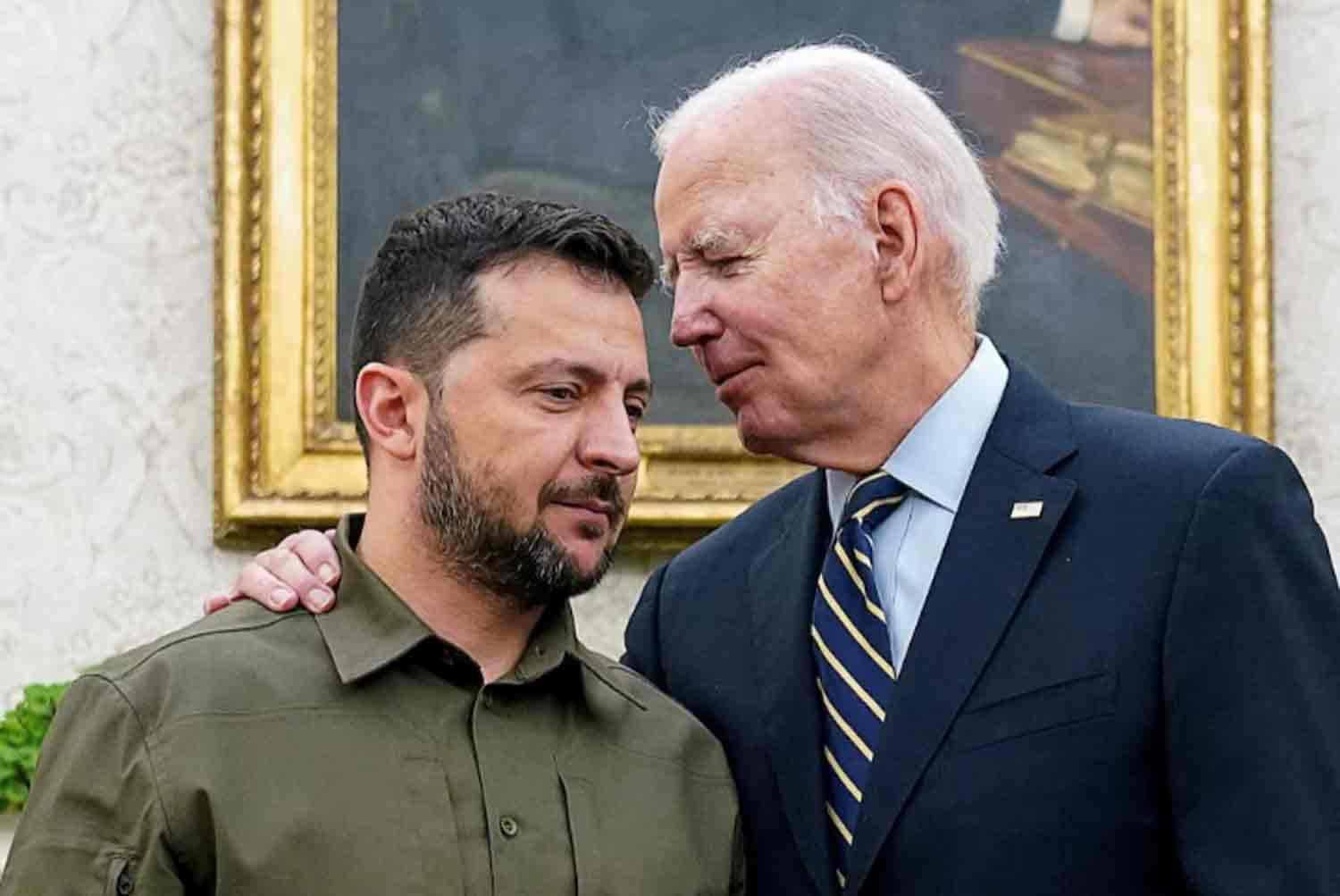
Ukrainian President Volodymyr Zelenskiy is embraced by U.S. President Joe Biden in the Oval Office of the White House in Washington.

US policy regarding Russia and Ukraine has consistently been a pivotal and contentious element of American diplomatic efforts. In 2016, while still a candidate for the presidency, Donald Trump openly advocated for the normalization of relations with Russia. However, these aspirations encountered significant resistance, particularly from the outgoing Barack Obama administration.

This historical backdrop highlights how current administrations can leverage transitional periods to reinforce their policies, thereby complicating the ability of their successors to implement changes. Now, as Trump asserts his goal to resolve the conflict in Ukraine “within 24 hours” upon his return to the White House, he confronts considerable challenges from Joe Biden’s administration, which can utilize the time remaining until January 2025 to further entrench its existing policies.

Obama, Trump, and Russia

Following Donald Trump’s victory in the November 2016 presidential election, the Obama administration undertook several measures that greatly hindered the new president’s efforts to improve relations with Russia. Throughout his campaign, Trump had stressed the importance of fostering closer ties with Moscow and reassessing America’s stringent foreign policy. However, the actions taken by Obama during the transition period, from November 2016 to Trump’s inauguration in January 2017, were designed to reinforce an anti-Russian stance, making any subsequent changes challenging. These actions established a “legacy” that posed both political and strategic difficulties for Trump to navigate, resulting in much of his rhetoric regarding rapprochement with Russia remaining unfulfilled.

A significant aspect of the strategy was the escalation of diplomatic tensions. In December 2016, the Obama administration implemented a new set of sanctions against Russia, citing accusations of cyberattacks targeting the US Democratic Party and interference in the electoral process. These sanctions involved freezing the assets of Russian entities and imposing restrictions on business interactions. Concurrently, 35 Russian diplomats were expelled from the United States, and two diplomatic facilities were shut down, which Washington claimed were utilized for espionage activities.

In addition to the sanctions, the Obama administration vigorously promoted the narrative of Russian interference in elections within the public sphere. High-ranking officials issued official statements, intelligence reports were released, and numerous media appearances contributed to portraying Russia as a threat to American democracy. A crucial part of this initiative was the submission of extensive documentation to Congress and intelligence agencies, which, according to Obama and his administration, substantiated claims of Russian interference. This narrative established the “Russian threat” as a dominant topic in political and public discussions, significantly limiting Trump’s ability to engage with the Kremlin. Any efforts by the incoming president to foster better relations could be perceived as jeopardizing national security or even as endorsing Moscow’s “hostile actions.”

During this time, Obama also enhanced support for Ukraine, providing additional financial and political assistance. This action reinforced a foreign policy strategy focused on countering Russia in Eastern Europe, symbolizing a commitment to a hardline stance that involved supporting adversaries of Moscow. Moreover, the Obama administration bolstered ties with NATO allies, underscoring a dedication to collective security. This created further obstacles to any potential policy shifts, as any departure from the hardline approach could be interpreted as a dilution of US commitments to its allies.

Significant focus was placed on exerting political pressure directly on Trump. The Obama administration either directly or indirectly facilitated investigations into potential links between Trump’s team and Russia. This topic received extensive media coverage, contributing to the portrayal of the new president as someone whose decisions could be swayed by foreign influences. Such an atmosphere rendered any attempts at improving relations with Moscow particularly perilous for Trump amid domestic political rivalries.

In summary, the actions taken by the Obama administration during the transition were calculated and designed to entrench a stringent anti-Russian stance. The introduction of new sanctions, diplomatic initiatives, bolstered support for Ukraine, and the promotion of the “Russian threat” narrative established significant obstacles to any potential policy changes. Even if Trump intended to reassess relations with Russia, he encountered considerable limitations on both foreign policy and domestic levels. The political, media, and institutional climate fostered by Obama effectively hindered the new president’s ability to promptly pursue his objectives for normalizing US-Russia relations. This situation illustrates how an outgoing administration can leverage the transition period to solidify its legacy and restrict the actions of its successor.

Biden’s strategies to counter Trump’s Ukraine policy

As we approach 2024, with Trump having secured the presidential election once more, his ambitions for swiftly de-escalating the conflict in Ukraine may encounter formidable opposition from the current administration. Biden has various strategies at his disposal to curtail Trump’s ability to realize his foreign policy goals.

The Biden administration has the opportunity to bolster military assistance to Ukraine by expediting the delivery of arms and establishing long-term contracts. Currently, Washington is supplying Kiev with a diverse array of weaponry, including sophisticated systems like air defense units and long-range missiles. By securing long-term agreements for these supplies, the U.S. can ensure ongoing military support for Ukraine, even in the event that Trump seeks to curtail it following his potential inauguration. A preliminary measure in this regard was the authorization for Ukrainian forces to utilize American weaponry for operations targeting Russian territory, particularly in the Kursk Region.

Additionally, financial assistance to Kiev could be enhanced through substantial aid packages. This strategy would allow the Ukrainian government to maintain its operations and military efforts, even if the incoming administration opts to scale back support. These financial allocations could be structured in such a way that their withdrawal would necessitate a complex approval process by Congress, thereby complicating any attempts by Trump to reduce aid.

Furthermore, a strategic approach could involve forging political agreements with key U.S. allies in Europe. Biden can enhance collaboration with NATO and EU nations, including establishing long-term commitments to support Ukraine. Such agreements would not only amplify EU engagement in the conflict but also exert additional pressure on Trump should he attempt to alter the current strategy. Abandoning these commitments could be viewed by allies as a threat to U.S. commitment to collective security.

One strategy available to the Biden administration is to strengthen the sanctions framework against Russia. Implementing further sanctions towards the end of Biden’s term could complicate their future removal, as this would necessitate a complicated process that includes congressional approval. Additionally, enacting new sanctions prior to Biden’s exit would reinforce the existing strategy of exerting pressure on Russia, making it politically perilous for Trump to abandon this approach.

Furthermore, the Biden administration could amplify its public messaging regarding the critical importance of supporting Ukraine for US national security. By utilizing such arguments in public discourse, especially through media and political initiatives, additional pressure could be placed on Trump. A withdrawal of support for Ukraine could be framed as a risk to US interests, complicating any potential shifts in policy.

Historical patterns of US administrative transitions indicate that outgoing administrations can have a substantial impact on the policies of their successors. Donald Trump faced this reality in 2016, and it is likely that a similar scenario will unfold in 2024. Joe Biden, wielding significant influence, can solidify the current US stance on Ukraine, making any abrupt policy changes after Trump’s inauguration more difficult. These measures could not only extend the conflict but also exacerbate internal political tensions within the United States.

Ukraine offers a second chance to deserters as troop numbers dwindle

0
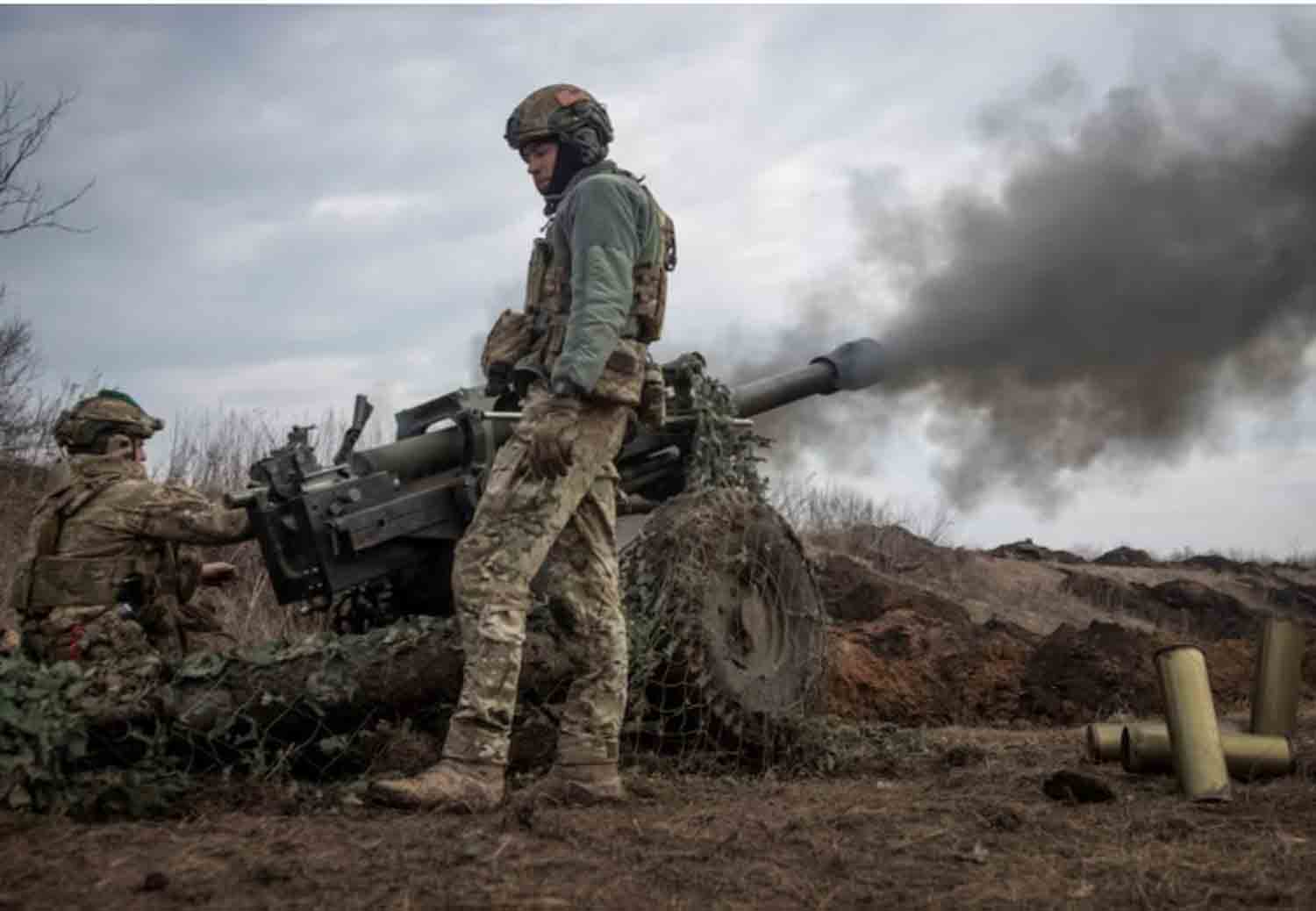
A serviceman of 24th Mechanized brigade named after King Danylo of the Ukrainian Armed Forces fires a 2s5 "Hyacinth-s" self-propelled howitzer towards Russian troops at a front line, amid Russia's attack on Ukraine, near the town of Chasiv Yar in Donetsk region, Ukraine.

As Ukraine‘s military faces challenges in securing sufficient infantry to counter Russia‘s significantly larger forces, certain units are offering a second chance to those who previously left their posts. Data from the prosecutor’s office indicates that nearly 95,000 criminal cases have been initiated since 2022 against soldiers classified as “absent without leave” (AWOL) and for the more severe offense of desertion in combat. The number of these cases has surged each year of the conflict, with almost two-thirds occurring in 2024 alone. With tens of thousands of troops either killed or injured, this attrition is a significant concern for Ukraine.

In response, some military units are replenishing their personnel by welcoming back soldiers who had been declared AWOL. The elite 47th Brigade of Ukraine recently made a public appeal on social media, inviting those who had left to return. “Our goal is to provide every soldier the chance to reintegrate and fulfill their potential,” the post stated. Within the first two days, the brigade reported receiving over a hundred applications. “We experienced an overwhelming response; the volume of applications has been so high that we are struggling to keep up with processing them,” remarked Viacheslav Smirnov, the recruitment head of the 47th Brigade, two weeks after the announcement.

Two military units that spoke with Reuters clarified that they are only accepting soldiers who went AWOL from their bases, not those who deserted during combat. The former is regarded as a lesser offense within the Ukrainian military. A recently enacted law effectively decriminalizes a soldier’s first instance of absence, facilitating their return to service.

THOUSANDS OF UKRAINIAN SOLDIERS REJOIN AFTER ABSCONDING

Colonel Oleksandr Hrynchuk, deputy head of Ukraine’s military police, informed reporters on Tuesday that 6,000 AWOL soldiers have rejoined the ranks in the past month, including 3,000 within just 72 hours following the law’s enactment.

Mykhailo Perets, an officer in the K-2 battalion of Ukraine’s 54th Brigade, reported that his unit has recruited over 30 individuals who had previously gone AWOL from other military divisions. He noted that the reasons for their absences vary significantly; some found the transition from civilian life to military service particularly challenging, while others, who had served as skilled drone pilots for one or two years, were reassigned to the front lines due to a shortage of infantry personnel.

Perets also mentioned that some of the recruits had been in combat for seven or eight years, having engaged with Russian-backed forces in eastern Ukraine prior to 2022, and had become fatigued to the point of fleeing.

Gil Barndollar, a non-resident fellow at the U.S.-based think tank Defense Priorities, suggested that the rise in unauthorized absences is likely a result of this exhaustion. Ukrainian military personnel have previously expressed that the lack of replacements for fallen soldiers creates an overwhelming burden on those who remain, leading to both physical and mental fatigue.

Barndollar further pointed out that the average age of the soldiers contributes to this issue. “An army composed of men, often in poor health and in their 40s, will inevitably experience fatigue and morale issues more quickly than a fit army of younger individuals in their 20s or 25s,” he stated.

In response to inquiries regarding the manpower challenges, President Zelenskiy argued that the primary issue lies in the lack of weaponry rather than personnel. He resisted U.S. calls to reduce the minimum draft age from 25 to 18, stating in a recent interview with Sky News that Ukraine’s allies have only been able to supply the necessary equipment for a quarter of the ten new brigades established over the past year.

Trump’s Ukraine strategy includes territorial concessions to Russia and eliminating Ukraine’s NATO membership option

0

Advisers to Donald Trump are proposing strategies, both publicly and privately, to resolve the Ukraine conflict, which would involve conceding significant portions of the country to Russia for the foreseeable future, as revealed by a Reuters analysis based on their statements and interviews with individuals close to the U.S. president-elect.

The proposals, put forth by three prominent advisers, including Trump’s designated Russia-Ukraine envoy, retired Army Lieutenant-General Keith Kellogg, share common elements, notably the removal of NATO membership for Ukraine from consideration.

Trump’s team aims to compel both Moscow and Kyiv to engage in negotiations through a combination of incentives and pressures, such as suspending military aid to Kyiv unless it agrees to discussions, while increasing support if Russian President Vladimir Putin remains uncooperative.

Throughout his election campaign, Trump consistently promised to resolve the nearly three-year conflict within 24 hours of his inauguration on January 20, yet he has not detailed how he intends to achieve this.

Experts and former national security officials express significant skepticism regarding Trump’s ability to deliver on such a promise due to the intricate nature of the conflict.

Nonetheless, the collective statements from his advisers hint at the possible framework of a peace plan under Trump. Ukrainian President Volodymyr Zelenskiy, grappling with manpower shortages and increasing territorial losses, has suggested a willingness to consider negotiations. While he remains committed to NATO membership, he acknowledged this week that Ukraine must seek diplomatic avenues to reclaim some of its occupied territories.

Analysts and former U.S. officials suggest that Trump may encounter reluctance from Putin to engage in discussions, as the Russian leader currently has the upper hand against Ukraine and may prefer to continue his territorial ambitions. Eugene Rumer, a former senior U.S. intelligence analyst on Russia now affiliated with the Carnegie Endowment for International Peace, noted that Putin is not in a rush. He indicated that the Russian president shows no inclination to relax his demands for a ceasefire and negotiations, which include Ukraine’s abandonment of its NATO aspirations and the surrender of four provinces that Putin claims as Russian territory but does not fully control—conditions that Kyiv has firmly rejected. Rumer believes that Putin is likely to wait, potentially seizing more territory while assessing any concessions Trump might offer to entice him into negotiations.

In May, Reuters reported that Putin was open to a ceasefire that would acknowledge the current front lines but was prepared to continue fighting if Kyiv and its Western allies did not respond favorably. Russia has already taken full control of Crimea, which it annexed from Ukraine in 2014, and has captured approximately 80% of the Donbas region, which includes Donetsk and Luhansk, along with over 70% of Zaporizhzhia and Kherson, as well as portions of Mykolaiv and Kharkiv.

MULTIPLE STRATEGIES

As of last week, Trump had not yet assembled a central working group to develop a comprehensive peace plan, according to four advisers who spoke on the condition of anonymity regarding internal discussions. Instead, various advisers have been sharing ideas among themselves in public settings and, in some instances, directly with Trump. Ultimately, the success of any peace agreement will likely hinge on direct personal interactions among Trump, Putin, and Zelenskiy, according to the advisers. Kremlin spokesman Dmitry Peskov remarked that it is “not possible to comment on individual statements without having an understanding of the overall plan.”

Karoline Leavitt, a spokesperson for Trump, emphasized that the former president has expressed his commitment to “do what is necessary to restore peace and rebuild American strength and deterrence on the world stage.” A representative for Trump did not provide an immediate response regarding whether the president-elect still intends to address the conflict within his first day in office. The Ukrainian government also did not respond promptly to a request for comment.

A former national security official from the Trump administration, who participated in the transition, mentioned three primary proposals: one from Kellogg, another from Vice President-elect JD Vance, and a third from Richard Grenell, the former acting director of national intelligence. Kellogg’s proposal, co-authored with Fred Fleitz, a former National Security Council member, advocates for freezing the current front lines and was presented to Trump earlier this year. Neither Kellogg nor Fleitz responded to requests for comment, and their plan was initially reported by Reuters.

According to this proposal, Trump would increase U.S. military support to Kyiv contingent upon the latter’s agreement to engage in peace negotiations. Concurrently, he would caution Moscow that U.S. assistance to Ukraine would escalate if Russia declined to negotiate. Additionally, NATO membership for Ukraine would be deferred. The proposal also includes offering U.S. security guarantees to Ukraine, which might involve enhancing weapon supplies following a peace agreement.

In a June interview with Times Radio, a British digital station, Sebastian Gorka, one of Trump’s prospective deputy national security advisers, stated that Trump had indicated he would compel Putin to enter negotiations by threatening unprecedented levels of military aid to Ukraine if Putin refused. When contacted by phone, Gorka dismissed Reuters as “fake news garbage” and chose not to provide further details.

Vance, a U.S. senator known for his opposition to aid for Ukraine, proposed a different approach in September. In a conversation with U.S. podcaster Shawn Ryan, he suggested that any agreement might involve a demilitarized zone along the current front lines, which would be “heavily fortified” to deter further Russian advances. His plan also includes denying NATO membership to Kyiv.

Vance’s representatives did not provide him for comment, and he has not shared further details on his proposal. Meanwhile, Grenell, who previously served as Trump’s ambassador to Germany, proposed the establishment of “autonomous zones” in eastern Ukraine during a Bloomberg roundtable in July, though he did not provide specifics. He also indicated that NATO membership for Ukraine may not align with U.S. interests.

Grenell has not responded to requests for comment and has yet to obtain a role in the new administration, although he remains influential with Trump on European matters, according to a senior Trump foreign policy adviser. This adviser noted that Grenell was among the few individuals present at a September meeting in New York with Trump and Zelenskiy.

POTENTIAL RESISTANCE

As analysts and former national security officials suggest, aspects of these proposals are likely to encounter resistance from Zelenskiy, who has incorporated a NATO invitation into his “Victory Plan,” as well as from European allies and certain U.S. lawmakers.

Last week, Ukraine’s foreign minister reached out to his NATO counterparts with a request for a membership invitation to be extended during the upcoming foreign ministers’ meeting on Tuesday. Several European allies have shown readiness to enhance their support for Ukraine, while U.S. President Joe Biden continues to supply arms.

This situation may diminish Trump’s ability to influence Kyiv’s negotiations. The Kellogg plan, which proposes increasing assistance to Ukraine contingent upon Putin’s willingness to negotiate, may encounter resistance in Congress, particularly from some of Trump’s staunch supporters who are against further military aid to the Eastern European country.

“I don’t think anyone has a viable strategy for resolution,” remarked Rumer, a former U.S. intelligence officer.

South Korean lawmakers are calling for President Yoon’s impeachment after he reversed his stance on martial law

0
South Korea's main opposition Democratic Party leader Lee Jae-myung looks on as people hold placards that read "Step down President Yoon Suk Yeol" and "Investigate his act of rebellion immediately", at a rally to condemn South Korean President's surprise declarations of the martial law last night and to call for his resignation, at the national assembly in Seoul, South Korea.

South Korean legislators on Wednesday initiated calls for the impeachment of President Yoon Suk Yeol following his declaration of martial law, which he retracted just hours later, leading to a significant political crisis in Asia’s fourth-largest economy.

The unexpected announcement late Tuesday sparked a confrontation with the parliament, which opposed his efforts to prohibit political activities and impose media censorship. Armed troops forcibly entered the National Assembly in Seoul during this turmoil.

A coalition of opposition lawmakers announced their intention to introduce an impeachment bill on Wednesday, aiming for a vote within 72 hours. Hwang Un-ha, a member of the coalition, stated to the press, “The parliament must prioritize the immediate suspension of the president’s duties to expedite the impeachment process.”

The leader of Yoon’s ruling People Power Party has called for the dismissal of Defence Minister Kim Yong-hyun and the resignation of the entire cabinet.

In a televised address late Tuesday, Yoon justified the martial law by claiming it was necessary to safeguard the nation from nuclear threats posed by North Korea and anti-state elements, although he did not specify any immediate dangers. The situation escalated as helmeted soldiers entered the parliament through broken windows, while military helicopters circled above. Parliamentary aides used fire extinguishers to repel the soldiers, and clashes erupted between protesters and police outside.

The military announced a ban on activities by parliament and political parties, asserting that media and publishers would fall under the jurisdiction of the martial law command. However, just hours after this declaration, South Korea’s parliament convened with 190 of its 300 members present and unanimously passed a motion demanding the lifting of martial law, including all 18 members from President Yoon’s party. Subsequently, the president revoked the declaration.

Outside the National Assembly, protesters celebrated, chanting “We won!” while one individual played a drum. Anticipation for further protests is high, as the Korean Confederation of Trade Unions, the largest union coalition in South Korea, plans to hold a rally in Seoul and has vowed to strike until President Yoon resigns.

The U.S. embassy has advised American citizens in South Korea to steer clear of protest areas, while major companies such as Naver Corp and LG Electronics have recommended that employees work from home.

Financial markets experienced turbulence, with South Korean stocks dropping approximately 2% and the won stabilizing after hitting a two-year low. Reports indicated possible intervention by South Korean authorities to halt the currency’s decline.

In response, Finance Minister Choi Sang-mok and Bank of Korea Governor Rhee Chang-yong held emergency meetings overnight, with the finance ministry pledging to support the markets if necessary. The government stated, “We will inject unlimited liquidity into stocks, bonds, short-term money markets, and the forex market until they are fully normalized.” The Bank of Korea announced it would initiate special repo operations starting Wednesday to ensure the smooth functioning of local financial institutions.

“Yoon resign or be ousted”

Residents of Seoul monitored the situation closely through television and smartphones, engaging in discussions online, yet life continued largely as normal on Wednesday.

“I find this situation deeply troubling, and I have significant concerns about the country’s future,” stated 39-year-old resident Kim Byeong-In in an interview with Reuters. The main opposition Democratic Party has urged President Yoon, who has been in office since 2022, to either resign or face impeachment following the declaration of martial law, the first in South Korea since 1980.

“Even if martial law is revoked, he cannot escape treason charges. It has become evident to the entire nation that President Yoon is incapable of governing effectively. He should resign,” remarked Park Chan-dae, a senior member of the Democratic Party, in a statement.

The National Assembly has the authority to impeach the president if more than two-thirds of lawmakers support the motion. A trial would then be conducted by the constitutional court, which can confirm the impeachment with a vote from six of the nine justices. Yoon’s party holds 108 seats in the 300-member legislature.

Should Yoon resign or be ousted, Prime Minister Han Duck-soo would assume leadership until a new election is conducted within 60 days. “South Korea as a nation narrowly avoided a crisis, but President Yoon may have undermined his own position,” commented Danny Russel, vice president of the Asia Society Policy Institute in the United States.

The situation in a nation that has maintained a democratic system since the 1980s, and is recognized as a U.S. ally and a significant Asian economy, has raised international concerns. U.S. Secretary of State Antony Blinken expressed his approval of President Yoon’s choice to revoke the martial law declaration. “We continue to expect political disagreements to be resolved peacefully and in accordance with the rule of law,” Blinken stated in a release.

South Korea is home to approximately 28,500 American troops, a remnant of the Korean War from 1950 to 1953. According to Yonhap news agency, scheduled defense discussions and joint military drills between South Korea and the United States have been postponed.

Additionally, Sweden’s prime minister has also delayed a visit to South Korea, as confirmed by a spokesperson. Yoon, a former prosecutor, narrowly won the closest presidential election in South Korean history in 2022, capitalizing on widespread dissatisfaction with economic policies, scandals, and gender issues. However, his popularity has waned, with approval ratings lingering around 20% for several months. His People Power Party faced a significant defeat in the parliamentary elections held in April this year, losing control of the unicameral assembly to opposition parties that secured nearly two-thirds of the seats.

Since the establishment of South Korea as a republic in 1948, martial law has been declared more than a dozen times. In 1980, a faction of military officers, led by Chun Doo-hwan, compelled then-President Choi Kyu-hah to declare martial law in an effort to suppress demands from the opposition, labor groups, and students for the restoration of democratic governance.

South Korea troops try to storm parliament after martial law declared

0
Soldiers advance to the main building of the National Assembly after South Korean President Yoon Suk Yeol declared martial law.

On Wednesday, troops were observed attempting to enter the South Korean parliament following President Yoon Suk Yeol’s unexpected declaration of martial law during a late-night television address that criticized domestic political adversaries and sent shockwaves across the nation.

Live broadcasts captured soldiers seemingly assigned to enforce martial law trying to access the assembly building, while parliamentary aides were seen using fire extinguishers in an effort to repel them.

In his address on Tuesday night, Yoon accused opposition parties of holding the parliamentary process hostage. He pledged to eliminate “shameless pro-North Korean anti-state forces” and asserted that he had no alternative but to implement martial law to protect constitutional order.

Following Yoon’s announcement, crowds began to gather outside the parliament, with some demonstrators chanting: “Withdraw emergency martial law!”

The military announced that parliamentary activities and political party functions would be prohibited, and that media outlets and publishers would fall under the jurisdiction of the martial law command. Yoon did not mention any specific threats from the nuclear-capable North, instead directing his focus toward his domestic political rivals. This marks the first declaration of martial law in South Korea since 1980.

Historically, South Korea has experienced a number of authoritarian regimes but has been recognized as a democracy since the 1980s.

The Korean won experienced a significant decline against the U.S. dollar, prompting a central bank official to indicate preparations for potential market stabilization measures. Finance Minister Choi Sang-mok has called for an emergency meeting with senior economic officials, according to a spokesperson’s text message.

Yoon’s predecessor, Moon Jae-in of the Democratic Party, expressed concerns about the state of democracy in a post on X, stating, “I hope that the National Assembly will act quickly to protect our democracy from crumbling.” He urged the public to unite in defense of democracy and to support the normal functioning of the National Assembly.

The White House spokesperson stated that the United States is in communication with the South Korean government and is closely observing the situation. Approximately 28,500 U.S. troops are deployed in South Korea to provide defense against North Korea. However, a representative from the U.S. military command did not respond to multiple phone inquiries.

Ukraine is testing new domestically made missiles, says President Zelenskiy

0
Ukraine's President Volodymyr Zelenskiy appears at a joint press conference

Ukraine has successfully tested new domestically produced missiles and is increasing its missile manufacturing capabilities, President Volodymyr Zelenskiy announced on Tuesday.

In a message shared via the Telegram app, Zelenskiy reported receiving updates from military officials regarding the test.

“We owe our gratitude to the Ukrainian missile developers. We are accelerating production,” he stated, though he did not disclose additional specifics.

In August, Zelenskiy mentioned that Ukraine had performed its inaugural test of a locally manufactured ballistic missile.

Amid a protracted 33-month conflict with a significantly larger and better-equipped Russia, Ukraine is enhancing its domestic production efforts to expedite weapon supplies and reduce reliance on Western assistance.

Iraq’s Prime Minister asserts that the country will actively engage in the situation in Syria

0
Iraqi Prime Minister Mohammed Shia al-Sudani

Iraq’s Prime Minister has asserted that the country will not remain passive regarding the situation in Syria, where he believes various groups and sects are suffering from ethnic cleansing. This statement was made during a phone conversation with Turkey‘s President, as reported by his office.

Prime Minister Mohammed Shia al-Sudani emphasized that Iraq is committed to taking all necessary measures to ensure the security of both Iraq and Syria. He expressed concerns that the current events in Syria serve the interests of Israel, which has been accused of targeting Syrian military positions, thereby enabling terrorist factions to gain control over more territory.

Recently, Sunni Muslim rebels opposing President Bashar al-Assad made significant gains by capturing the city of Aleppo, marking their most substantial progress in years. Iraq’s Shi’ite-led government maintains strong ties with Iran, a key ally of Assad, and Iraqi militia forces have previously supported Assad’s regime in the conflict.

According to two Iraqi security officials and a senior Syrian military source, numerous Iraqi Shi’ite militia fighters crossed the border on Sunday night to assist Assad’s forces against the advancing rebels. However, the leader of Iraq’s Popular Mobilisation Forces, which encompasses major Shi’ite militia groups aligned with Iran, stated that no affiliated group has entered Syria.

Syrian rebels have reported that their recent advances faced minimal opposition, partly due to the withdrawal of Hezbollah forces, a significant Iranian ally, which redirected its focus to confront Israel in Lebanon.

Israel has consistently targeted what it claims are Iranian-affiliated military sites in Syria and has intensified these operations over the past 14 months amid its ongoing conflicts with Hezbollah in Lebanon and Hamas in Gaza.

Italy is set to approve more military aid for Ukraine this month, sources say

0

Italy is in the process of finalizing a new military assistance package for Ukraine, according to two sources familiar with the situation, marking a continued commitment from Prime Minister Giorgia Meloni‘s right-wing administration to support Kyiv.

Since the onset of Russia’s invasion of Ukraine in February 2022, Italy has sanctioned nine aid packages for President Volodymyr Zelenskiy’s government, which include two Franco-Italian air defense systems known as SAMP/T.

The sources, who requested anonymity, indicated that the government is expected to approve a tenth package by the end of this month, although they did not disclose specific details. All previous shipments have been conducted under state confidentiality.

Since assuming office in late 2022, Meloni has consistently supported Kyiv and has pledged to continue backing Ukraine until the conflict concludes, particularly in light of uncertainties regarding the future U.S. stance with the incoming president, Donald Trump, taking office in January.

On Tuesday, NATO Secretary General Mark Rutte called on alliance members to enhance military support for Ukraine to bolster its position in potential peace talks with Russia.

During Italy’s presidency this year, the Group of Seven (G7) major democracies have consistently reaffirmed their support for Ukraine, denounced Russia’s aggressive actions, and committed to a $50 billion loan for Kyiv, which is backed by frozen Russian assets.

Latvia says NATO allies await Trump’s input before deciding on Ukraine’s invitation

0
Latvian Foreign Minister Baiba Braze speaks to reporters.

Several NATO member states are awaiting the inauguration of the new U.S. administration before deciding on Ukraine‘s request for an invitation to join the U.S.-led transatlantic alliance, as stated by Latvia‘s foreign minister on Tuesday.

Kyiv has called on NATO foreign ministers to extend an invitation during their meeting in Brussels this week; however, progress seems unlikely due to resistance from certain capitals and the ongoing transition in Washington.

President-elect Donald Trump has claimed he can resolve Russia’s conflict with Ukraine within a day, yet the specifics of his administration’s Ukraine policy remain ambiguous.

“In principle, we as political leaders have reached a consensus that Ukraine will eventually become a member,” Latvian Foreign Minister Baiba Braže told Reuters during the meeting.

“The key questions are the conditions and timing, and it is clear that the alliance must unify on this matter. Currently, all allies are waiting for the new U.S. administration to commence its work, which is a reality that is both acknowledged and unacknowledged.”

Braže, who previously held a senior position within NATO, emphasized that Ukraine’s experienced military would be a valuable addition to the alliance, and her country would support Ukraine’s membership if a decision were to be made.

“Some nations are hesitant about inviting a country engaged in conflict to join NATO,” the minister remarked, adding, “We are more adaptable.”

Macron extends a bold new gesture towards Trump

0

A strong sense of déjà vu is expected when French President Emmanuel Macron showers praise on Donald Trump during his visit to Paris this weekend.

During Trump’s tenure as the 45th president, few foreign leaders were as eager to win his favor as Macron. Notably, Macron’s extravagant treatment of Trump at a Bastille Day parade on the Champs-Élysées left such an impression that Trump returned home advocating for a similar military parade on July Fourth.

As Trump prepares to assume the role of the 47th president, Macron has outdone himself by inviting Trump to the highly anticipated unveiling of the newly restored Notre Dame Cathedral, five years after it was ravaged by fire.

By placing Trump at the forefront of this star-studded VIP event, which signifies his significant return to the international arena, it underscores the resurgence of influence for the president-elect just six weeks prior to the commencement of his second term.

Trump is not delaying his new foreign policy initiatives until January; he has already threatened a trade conflict with Canada and Mexico, demonstrating his authority when Canadian Prime Minister Justin Trudeau hurried to Florida to placate him last week. Additionally, he issued a stark warning on Monday, stating that there would be “ALL HELL TO PAY” in the Middle East if Hamas fails to release hostages in Gaza before Inauguration Day.

Trump’s prominent role in Paris will also serve as a striking contrast to Joe Biden’s increasingly troubled farewell. The president faced intense backlash on Monday, even from members of his own party, after he pardoned his son Hunter, undermining a fundamental principle of his administration—that all individuals are equal under the law.

Virginia Democratic Senator Tim Kaine remarked to CNN’s Manu Raju, “He didn’t have to explicitly tell the American public, ‘I will not do this,’ yet he did. When you make a promise, it’s essential to uphold it.” Meanwhile, Utah Republican Senator Mitt Romney expressed his disapproval, stating, “It was a dreadful decision that left me feeling heartbroken.”

The announcement of Trump’s trip to Paris coincided with President Biden’s arrival in Angola for an official visit, which is expected to be significantly more substantive than Trump’s excursion. Biden aims to emphasize the United States’ commitment to sub-Saharan Africa amid China’s investment-driven influence in the region. Unlike Biden, Trump did not visit Africa during his presidency and appeared more focused on disparaging the continent rather than offering assistance. Biden’s trip will also highlight one of the most effective U.S. global initiatives in recent decades—the extensive program combating HIV/AIDS in Africa, which faces an uncertain future should Trump return to the White House.

However, the president-elect’s more prominent visit to the City of Light will underscore his renewed appeal to foreign leaders, contrasting with Biden’s diminishing presence on the global stage.

Trump’s victory posed a significant challenge for global leaders.

Most importantly, Trump’s upcoming trip will underscore the challenge that every world leader is currently facing: how to engage with a new American president who is likely to adopt a more aggressive and unpredictable approach on the international front than during his previous tumultuous term, often favoring relationships with authoritarian leaders over traditional allies.

The president-elect is enjoying his resurgence in the international arena following the announcement of Macron’s invitation on Monday. “President Emmanuel Macron has done an exceptional job restoring Notre Dame to its former glory and beyond. It will be a truly memorable day for everyone!” Trump shared on his Truth Social platform.

This trip offers the president-elect everything he values most: an opportunity to capture the limelight, the admiration of being a distinguished guest, and the excitement of participating in a remarkable event likely to draw millions of viewers worldwide.

It also represents the kind of bold move for which Macron is recognized, although such initiatives can sometimes backfire. For instance, his earlier decision to call for snap parliamentary elections resulted in a significant political crisis in France.

Macron’s invitation is part of the ongoing competition among European nations to establish themselves as the primary link to Washington. He has consistently aimed to position France as the leading European power, particularly following the departure of former German Chancellor Angela Merkel, who was in Washington on Monday night promoting her memoirs alongside former President Barack Obama, who in 2016 urged her to safeguard the West from Trump.

Trump’s anticipated return has generated a similar sense of unease among Western nations, who fear he may abandon Ukraine to appease his ally, Russian President Vladimir Putin, especially with growing concerns that he might impose substantial tariffs on the European Union. There are also worries that Trump could weaken NATO during his second term, having previously stated on the campaign trail that he would inform Russia it could act “however it wants” towards alliance members that fail to meet defense spending requirements.

Macron appears to have gained an advantage over his competitors by leveraging symbolism and conducting a foreign visit prior to Trump’s return to office. In Germany, there is minimal competition, as Chancellor Olaf Scholz is likely to follow Biden into political obscurity after the collapse of his governing coalition, with elections scheduled for February. The new British Prime Minister, Keir Starmer, is in a stronger position but faces challenges due to Trump’s unpopularity within his Labour Party. Additionally, Britain’s influence in Europe has diminished following its departure from the EU, a move that resonated with Trump and foreshadowed his 2016 electoral success. In a significant foreign policy address on Monday night, Starmer dismissed the notion that the UK must choose between its alliances with the United States and Europe, a dilemma some analysts worry Trump may impose. He also referenced his dinner with Trump in September, just weeks before the US election, stating, “When President Trump graciously hosted me for dinner in Trump Tower, I told him that we will invest more deeply than ever in this transatlantic bond with our American friends in the years to come.”

Despite his unpopularity as he enters the latter part of his second term, Macron is not the influential leader he once was. His invitation to Trump carries a sense of irony, as the far-right National Rally Party, which aligns with Trump, poses a threat to Prime Minister Michel Barnier, potentially further destabilizing Macron’s presidency. There are increasing indications that Macron’s legacy may parallel Biden’s, as both leaders could be compelled to cede power to the very nationalist and populist movements they sought to oppose. Marine Le Pen, the far-right leader whose anti-immigrant stance mirrors Trump’s, may have a significant opportunity to navigate France’s two-round presidential election system and secure victory in 2027.

How the initial bromance took a turn for the worse

Macron’s bold new approach towards Trump is expected to elicit a wave of mutual admiration. However, based on past experiences, such goodwill may be short-lived.

Initially, the Macrons and the Trumps enjoyed a lavish dinner at the Michelin-starred Jules Verne restaurant in the Eiffel Tower, shared intimate moments at the Bastille Day parade, and exchanged kisses and hand-holding at the White House. During a meeting in the Oval Office in April 2018, Trump remarked, “We have to make him perfect, he is perfect,” while brushing what he claimed was dandruff off the French president’s shoulder. He also assured the French people that “Emmanuel will go down as one of your great presidents.”

Nonetheless, the camaraderie was fleeting, as Trump’s antagonism towards Europe soon became apparent. The relationship deteriorated significantly during a visit by the US president to France later that year. Trump reacted negatively to Macron’s advocacy for a European army—an ironic response to Trump’s repeated grievances about American taxpayers funding European defense. He deemed the proposal “very insulting,” ridiculed Macron’s “very low approval rating in France, 26%,” and expressed support for Macron’s nationalist opponents.

While Trump appears willing to attempt a renewed friendship, Macron—who, like Biden, positions himself as a defender of democracy and a counter to far-right nationalism—does not hold the title of Trump’s preferred European leader. That distinction goes to Hungarian Prime Minister Viktor Orbán, a regular visitor at Mar-a-Lago, whose strategies for undermining democracy, limiting press freedom, and politicizing the judiciary align more closely with Trump’s preferences. “Some people don’t like him because he’s too strong,” Trump stated at a rally in New Hampshire during his primary campaign in January. “It’s good to have a strong man at the head of a country.”

Both Macron and Trump value the significance of relationships with foreign leaders, suggesting a potential opportunity to revive their initial connection.

Trump is set to arrive in Paris shortly after appointing Charles Kushner, his daughter Ivanka’s father-in-law, as the new US ambassador to France. While some may view this choice as a slight to America’s longstanding diplomatic ties—given Kushner’s past conviction for tax evasion and witness tampering, followed by a pardon from Trump—the French have long mastered the art of diplomatic subtlety. In this context, Kushner’s selection could also be interpreted as a gesture of respect, as he is family to Trump and thus has his attention.

Additionally, Kushner’s appointment might provide Ivanka Trump and her husband Jared Kushner, who currently reside in Florida, with an opportunity to re-enter the upper echelons of the global diplomatic scene, a stark contrast to their previous life in Manhattan, where the Trump name has become less favorable among elite liberal circles.