Friday, June 5, 2026
Home Blog Page 13

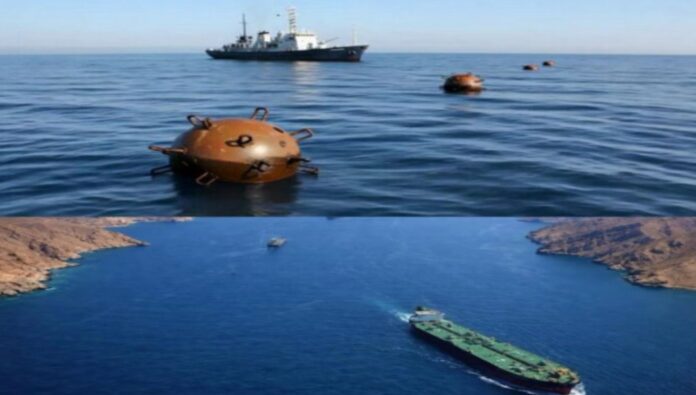
Strait of Hormuz Trap: How Iran’s Asymmetric Strategy Could Neutralize U.S. Naval Power

0
Hormuz Strait naval threat overview

The possibility of the United States Navy being drawn into a confined battlespace inside the Strait of Hormuz has raised serious concerns among defence planners. This narrow maritime chokepoint, one of the most critical energy transit routes in the world, presents a unique operational environment where asymmetric warfare could significantly undermine conventional naval superiority.

Why the Strait of Hormuz Matters

The Strait of Hormuz is not just a shipping lane—it is a strategic pressure point for the global economy. With a navigable width of roughly 21 miles, it forces vessels into predictable transit corridors, limiting manoeuvre space for large warships.

This geographic constraint creates ideal conditions for a defender employing asymmetric tactics. Instead of matching naval power ship-for-ship, a weaker force can exploit terrain, timing, and coordination to generate disproportionate effects.

Iran’s Maritime Denial Strategy

Iran’s evolving doctrine focuses on shaping the battlespace before conflict begins. The strategy is designed to funnel adversaries into a pre-prepared engagement zone—effectively a “kill box.”

Key elements include:

  • Coastal missile batteries with high-precision strike capability
  • Drone surveillance and swarm attacks for real-time targeting
  • Fast attack craft operating in coordinated swarm tactics
  • Mobile launch systems that relocate after firing

This layered approach allows Iran to attack from multiple domains—air, sea, and land—simultaneously.

The Geography Advantage

Unlike open ocean warfare, the confined waters of the Strait of Hormuz restrict naval flexibility. Large warships face several disadvantages:

  • Limited turning radius and escape routes
  • Predictable transit paths
  • Reduced reaction time against incoming threats
  • Increased vulnerability to saturation attacks

This compression of space increases target density, making it easier for attackers to overwhelm even advanced defence systems.

The “Kill Zone” Concept

Naval analysts describe the Strait as a potential “kill zone”—a space where multiple attack vectors converge on a single target.

In such an environment:

  • Missiles, drones, and swarm boats can strike simultaneously
  • Defensive systems are forced to divide attention
  • Command-and-control networks face overload
  • Even a single successful strike can have strategic consequences

Crucially, Iran does not need to defeat an entire fleet. Damaging just one major warship could disrupt global oil flows and trigger economic shockwaves.

Historical Warning: The 2009 Naval War College Study

A 2009 study by Colin Karl Boynton of the U.S. Naval War College predicted a scenario where Iran could deliberately provoke naval intervention by disrupting commercial shipping.

The objective would not be to halt trade permanently, but to:

  1. Force U.S. naval escorts into the strait
  2. Draw them into a pre-prepared engagement zone
  3. Launch coordinated asymmetric attacks

The study emphasized that the political and psychological impact of damaging a U.S. warship could outweigh the tactical loss itself.

Coalition Strategy: A Shift in U.S. Approach

Recent signals from Washington suggest increasing reluctance to conduct unilateral escort operations in the Gulf. Instead, the U.S. is pushing for coalition-based maritime security.

This shift reflects several strategic calculations:

  • Risk distribution across multiple allied navies
  • Deterrence through collective response
  • Reduced exposure of individual U.S. assets
However, coalition operations introduce challenges such as coordination, communication, and differing rules of engagement.

Technology Changing the Battlefield

Advances in modern warfare have made this scenario more realistic than ever:

  • Precision-guided missiles increase strike accuracy
  • Unmanned aerial systems (UAS) enable persistent surveillance
  • Drone swarms overwhelm defensive systems
  • Integrated attack networks synchronize multi-domain operations

These technologies amplify the effectiveness of asymmetric tactics, especially in confined environments.

Strategic Implications

The Strait of Hormuz represents a fundamental challenge to traditional naval doctrine. It highlights a shift in warfare where:

  • Geography can outweigh technological superiority
  • Smaller, cheaper systems can counter expensive platforms
  • Control of terrain determines the tempo of conflict

For military planners, the key question is no longer whether such a scenario is possible—but whether naval power can adapt to survive in it.

Conclusion

The Strait of Hormuz is more than a chokepoint—it is a strategic trap where asymmetric warfare, geography, and modern technology converge.

In this environment, even the most powerful navy in the world could face significant risks if drawn into a confined battlespace designed by its adversary.

US Deploys 8,000 Marines Toward Middle East as Boxer Strike Group Joins Iran War Build-Up

0

The United States military is rapidly reinforcing its presence in the Middle East, deploying thousands of Marines and sailors as tensions with Iran continue to escalate.

According to multiple officials, the Boxer Amphibious Ready Group (ARG) and the 11th Marine Expeditionary Unit (MEU) have been ordered to deploy ahead of schedule from the US West Coast, signaling a significant expansion of American military posture in the region.

Boxer Strike Group Heads Toward Middle East

The Boxer ARG includes three major amphibious warships:

  • USS Boxer (LHD-4) – amphibious assault ship
  • USS Portland – amphibious transport dock
  • USS Comstock – dock landing ship

Together, the group carries approximately:

  • 4,000 total personnel
  • 2,500 Marines

The force is equipped with:

  • F-35B stealth fighter jets
  • Missiles and advanced air الدفاع systems
  • Amphibious assault vehicles capable of launching ground operations

Officials say the deployment was accelerated after Marines and sailors cut short their leave following training certification.

Two Amphibious Strike Groups Converging

U.S. naval deployments to the Middle East

The Boxer ARG will join the USS Tripoli Amphibious Ready Group, which is already en route to the Middle East.

Both groups bring significant firepower, including:

  • Rolling Airframe Missiles (RAM)
  • Sea Sparrow missile systems
  • AV-8B Harrier jets
  • MV-22 Osprey tilt-rotor aircraft
  • Attack and transport helicopters (Viper, Venom, Seahawk, Stallion)

With two full ARGs deploying, the US will have six amphibious ships in the region, carrying up to:

  • 8,000 service members
  • 4,000–5,000 Marines

Strategic Shift: From Deterrence to Possible Offensive Operations?

The scale of the deployment is raising questions about potential US military objectives.

Analysts point to speculation that US forces could:

  • Target Iranian-controlled islands
  • Secure critical maritime routes
  • Support operations tied to energy infrastructure

The amphibious capability of these units suggests readiness for rapid ground assaults if required.

USS Ford Withdrawal Adds Urgency

The deployment comes after the USS Gerald R. Ford aircraft carrier was forced to leave the region for repairs following a fire onboard.

The absence of a carrier strike group has increased reliance on amphibious forces and Marine aviation assets to maintain operational pressure.

Indo-Pacific to Middle East: Strategic Transit

Recent imagery confirmed that the USS Boxer departed from near San Diego and is heading west under Operation Epic Fury.

Meanwhile:

  • The Tripoli ARG is transiting the Strait of Malacca
  • The USS San Diego will remain in the Pacific for maintenance
  • Japan-based USS Rushmore is expected to join forces in the Middle East

This coordinated movement reflects a multi-theater military shift, linking Indo-Pacific assets to Middle East operations.

Growing International Involvement

The military buildup is not limited to the United States.

According to officials:

  • The United Kingdom has deployed military planners to assist US Central Command
  • Discussions are underway about reopening the Strait of Hormuz
  • Japan may contribute assets, including mine detection systems

The issue is expected to be a key topic in ongoing high-level US-Japan discussions.

Strait of Hormuz: A Critical Flashpoint

Gulf conflict map: U.S. vs Iran

The deployment underscores the importance of the Strait of Hormuz, a vital maritime chokepoint for global energy supplies.

Ensuring safe passage through the strait has become a top priority as:

  • Shipping disruptions increase
  • Oil market volatility rises
  • Regional tensions intensify

Conclusion

The rapid deployment of US amphibious forces marks a significant escalation in the Iran conflict, expanding Washington’s military footprint and signaling readiness for a wider range of operations.

With thousands of Marines, advanced aircraft, and naval assets moving into position, the coming weeks could prove decisive in shaping the trajectory of the conflict.

Trump Meets Japan PM Amid Iran War, Signals $200B Pentagon Boost and Strait of Hormuz Focus

0
President Donald Trump and Japanese Prime Minister Sanae Takaichi met in the Oval Office

US President Donald Trump met Japanese Prime Minister Sanae Takaichi in the Oval Office as the United States approaches the third week of its escalating conflict with Iran, with discussions centered on security, energy markets, and military strategy.

The meeting highlighted growing global concern over the war’s economic and geopolitical impact—particularly the stability of the Strait of Hormuz, a critical route for nearly 20% of global oil shipments.

Trump Signals Massive Pentagon Spending Increase

One of the most significant takeaways from the meeting was Trump’s indication that he may request up to $200 billion in additional Pentagon funding.

The president described the potential increase as:

“A small price to pay”

Trump suggested the funding package could exceed the immediate needs of the Iran conflict, pointing toward a broader military expansion strategy.

Focus on Strait of Hormuz and Global Oil Supply

The leaders discussed ensuring safe passage through the Strait of Hormuz, a strategic chokepoint vital to global energy markets.

A joint statement from Japan and several European nations emphasized readiness to:

  • Protect shipping routes
  • Maintain stability in energy flows
  • Prevent further disruptions caused by the conflict

Despite ongoing tensions, Trump expressed surprise that oil prices had not spiked more sharply, even as US gasoline prices hit their highest levels since 2022.

Trump Praises Japan, Criticizes NATO

Trump praised Japan’s support for US military actions, contrasting it with what he described as insufficient backing from NATO allies.

“I’m very pleased with Japan… unlike NATO,” Trump said.

The comment underscores ongoing friction between Washington and European partners over the scope and direction of the conflict.

Confusion Over Israel’s Energy Strikes

Trump revealed he had instructed Israeli Prime Minister Benjamin Netanyahu to halt attacks on Iranian oil and gas infrastructure.

This comes amid conflicting reports regarding a strike on Iran’s South Pars gas field—the world’s largest natural gas reserve.

Trump stated the US had “no prior knowledge” of the attack, though sources have disputed that claim.

No Troop Deployment—For Now

Addressing reports that the US may deploy thousands of troops to the Middle East, Trump denied any immediate plans:

“I’m not putting troops… but if I were, I certainly wouldn’t tell you.”

The ambiguous statement leaves open the possibility of future escalation while maintaining strategic uncertainty.

Pentagon and Intelligence Briefings Highlight War Progress

Defense Secretary Pete Hegseth

  • Acknowledged US military casualties for the first time
  • Asserted the US is “on plan” in achieving its war objectives
  • Provided no clear timeline for the conflict’s end

Hegseth emphasized that preventing Iran from advancing toward nuclear capability remains a core objective.

Director of National Intelligence Tulsi Gabbard

Gabbard’s remarks introduced nuance into the administration’s narrative:

  • Confirmed Iran’s nuclear capabilities were heavily damaged in previous US strikes
  • Warned that Iran still intends to rebuild its nuclear infrastructure
  • Highlighted differences between US and Israeli war objectives

She also noted uncertainty over whether Israel would support a negotiated settlement with Iran.

Strategic Implications

The meeting reflects several emerging dynamics:

  • Growing US military commitment and spending
  • Increased importance of Indo-Pacific allies like Japan
  • Rising tensions between US and European partners
  • Continued uncertainty over escalation, including troop deployment

Conclusion

As the Iran war enters its third week, the Trump administration is balancing military escalation, alliance management, and global economic pressures.

With potential increases in defense spending, ongoing air operations, and heightened tensions in critical النفط corridors, the conflict is shaping into a broader geopolitical confrontation with global consequences.

US Fast-Tracks $16B Arms Sales to UAE, Kuwait and Jordan Amid Rising Iran Threat

0

The United States has approved billions of dollars in emergency arms sales to the United Arab Emirates, Kuwait, and Jordan, bypassing Congress in a move aimed at strengthening regional defenses against escalating Iranian retaliation.

The decision comes as Gulf allies face increasing threats following US and Israeli military operations targeting Iran.

Emergency Powers Used to Bypass Congress

According to official notices from the US State Department, the administration invoked emergency authority to waive Congressional review requirements, citing urgent security concerns.

“The Secretary of State has determined that an emergency exists requiring immediate sale,” the notice stated.

This mechanism allows the rapid transfer of critical defense systems without the usual legislative delay.

Layered air defense system diagram

$8.4 Billion Package for UAE

The largest portion of the deal includes approximately $8.4 billion in arms sales to the UAE, featuring:

  • Advanced Medium-Range Air-to-Air Missiles (AMRAAMs)
  • F-16 fighter jet munitions
  • Counter-drone systems targeting low, slow, small UAVs
  • Long-range discrimination radar integrated with THAAD

These systems are designed to enhance the UAE’s ability to counter missile and drone threats—key components of Iran’s current strategy.

$8 Billion Air Defense Boost for Kuwait

Kuwait is set to receive $8 billion worth of Lower Tier Air and Missile Defense Sensor Radars, significantly upgrading its detection and interception capabilities.

The systems are expected to improve early warning and tracking of incoming threats, particularly ballistic missiles and drones.

Support Package for Jordan

Jordan will receive a smaller but critical $70.5 million support package, including:

  • Aircraft spare parts
  • Maintenance and repair services
  • Operational support equipment

This assistance aims to ensure the continued readiness of Jordan’s air fleet amid regional instability.

Response to Iranian Retaliation

Iran has already targeted US-linked facilities across the Gulf, including locations in:

  • UAE
  • Kuwait
  • Jordan
  • Other regional states

The expedited arms sales reflect growing urgency in Washington to reinforce allied defenses as tensions continue to rise.

gulf air war map

Part of a Broader Military Support Strategy

This move follows a similar emergency decision earlier in March, when the US approved the immediate sale of 12,000 bombs to Israel without Congressional review.

Together, these actions highlight a broader US strategy to:

  • Rapidly arm regional allies
  • Strengthen integrated air and missile defense
  • Counter Iran’s expanding drone and missile campaign

Strategic Implications

The fast-tracked arms deals signal several key trends:

  • Increasing militarization of the Gulf region
  • Deepening US security commitments to allies
  • Escalating confrontation with Iran

However, questions remain about how quickly these systems can be delivered and deployed effectively.

THAAD vs Shahed-136 — Exact System Comparison

Feature Shahed-136 (Iran) THAAD System (US / Gulf)
Type Loitering attack drone (kamikaze UAV) Anti-ballistic missile defense system
Cost per unit $20,000 – $50,000 $12M – $15M per interceptor
 Length ~3.5 m (est.) 6.17 m missile
 Weight Light UAV ~900 kg interceptor
 Speed ~185 km/h ~Mach 8 (≈ 2,800 m/s)
 Range 1,000 – 2,500 km ~200 km intercept range
 Guidance GPS / INS Infrared hit-to-kill seeker
 Warhead 36–50 kg explosive Kinetic (no warhead, direct impact)
 Role Strike ground targets (bases, oil sites) Intercept ballistic missiles & threats
 Strategy Swarm saturation attacks High-value precision interception

Conclusion

As Iran intensifies its regional operations, the United States is accelerating efforts to reinforce its allies with advanced defense systems.

By bypassing Congress, Washington has prioritized speed over procedure—underscoring the urgency of the current security environment in the Middle East.

US F-35 Makes Emergency Landing After Suspected Iranian Strike, Pentagon Launches Investigation

0
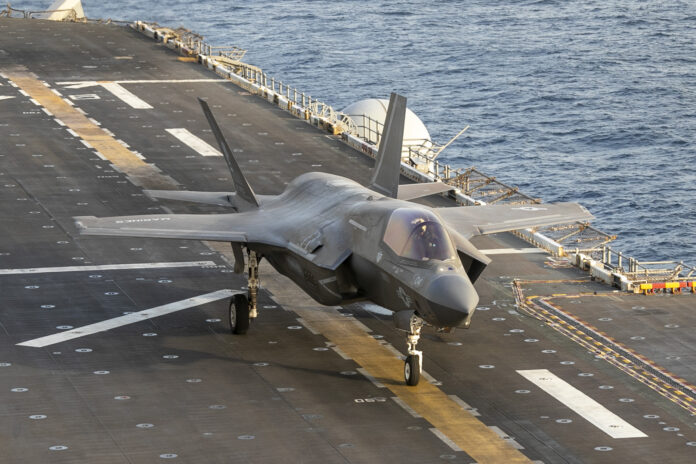
F-35 Lightning II stealth strike fighter jet

A United States F-35 stealth fighter jet was forced to make an emergency landing at a US air base in the Middle East after being struck by what is believed to be Iranian fire, according to two sources familiar with the incident.

The development marks a potentially significant escalation in the ongoing conflict between the United States, Israel, and Iran.

Pentagon Confirms Incident, Investigation Underway

US Central Command confirmed that the fifth-generation fighter aircraft was operating over Iranian territory when the incident occurred.

Capt. Tim Hawkins, a spokesperson for CENTCOM, stated:

“The aircraft was flying a combat mission over Iran when it was forced to make an emergency landing. The aircraft landed safely, and the pilot is in stable condition. This incident is under investigation.”

Officials have not yet confirmed the exact cause of the damage, but early indications suggest the aircraft may have been hit by Iranian air defense systems.

First Reported Hit on a US F-35

If confirmed, this would be the first known instance of Iran successfully striking a US F-35 during the current conflict, which began in late February.

The F-35, a cornerstone of US and Israeli airpower, is considered one of the most advanced stealth aircraft in the world, with a unit cost exceeding $100 million.

Both the United States and Israel have been heavily deploying F-35s in ongoing operations against Iranian targets.

Conflicting Narratives: US vs Iran

The incident comes as senior US officials continue to project confidence in the broader military campaign.

US Defense Secretary Pete Hegseth stated earlier that:

  • The US is “winning decisively”
  • Iran’s air defense systems have been “flattened”

However, Iranian sources have presented a sharply different narrative.

Iran’s Islamic Revolutionary Guard Corps (IRGC) claims it:

  • Successfully tracked the F-35 over central Iran
  • Locked onto the aircraft using air defense systems
  • Hit and severely damaged the jet

Iranian state media has also released footage allegedly showing the interception, though its authenticity has not been independently verified.

Strategic Implications

The reported incident raises serious questions about:

  • The survivability of stealth aircraft in contested airspace
  • The effectiveness of Iranian air defense systems
  • The potential risks of further escalation

If Iran’s claims are substantiated, it could signal a shift in the air الحرب dynamic, challenging assumptions about US air superiority in the region.

What Happens Next?

The Pentagon’s ongoing investigation will be critical in determining:

  • Whether the aircraft was indeed hit by Iranian fire
  • What system may have been used
  • The extent of the damage sustained

Military analysts say the outcome could influence future operational planning and escalation thresholds in the conflict.

This is a developing story and will be updated with more information as it becomes available.

Iran Signals Long War Strategy Against US & Israel Amid Escalation, Aims to Reshape Middle East Power Balance

0
Supreme leader of Iran Mojtaba Khamenei

Even as Iran faces one of the most serious threats to its regime in decades, Tehran is signaling a clear willingness to prolong its conflict with the United States and Israel—aiming not just for survival, but for a fundamental reshaping of the regional order.

Heavy Losses but Defiant Posture

In recent weeks, near-daily US-Israeli strikes have inflicted severe damage on Iran’s leadership and military command structure. Entire tiers of senior officials have reportedly been eliminated, while critical infrastructure has been degraded.

At home, the Iranian population is grappling with worsening economic conditions, wartime shortages, and increasing militarization. Years of sanctions and internal mismanagement have already strained society, and the conflict has only intensified these pressures.

Yet despite these setbacks—and even amid speculation of potential regime collapse—Iran’s surviving leadership has adopted an increasingly defiant and escalatory tone.

Refusal to Surrender, Push for New Regional Order

Rejecting calls from US President Donald Trump for “total surrender,” Iranian officials are instead portraying the country as resilient and strategically positioned.

Senior leaders have outlined a maximalist vision for any future peace agreement, including:

  • A new regional “status quo”
  • War reparations
  • A shift in Gulf Arab alliances away from the United States

Iranian parliamentary speaker Mohammad Bagher Ghalibaf emphasized that any ceasefire must prevent the enemy from regrouping militarily.

“We will continue fighting until the enemy truly regrets its aggression,” he said.

Strait of Hormuz: A Strategic Pressure Point

A central pillar of Iran’s strategy is its control over the Strait of Hormuz, one of the world’s most critical النفط shipping routes.

Iranian officials have suggested:

  • Establishing a new maritime protocol aligned with Tehran’s interests
  • Imposing conditions on safe passage
  • Potentially charging tolls or demanding economic concessions

Analysts warn that Tehran is using energy markets as leverage, disrupting global oil flows to increase pressure on the US and its allies.

Asymmetrical Warfare: Iran’s Core Strategy

Despite suffering significant conventional losses, experts argue that Iran is not seeking a traditional military victory.

Instead, it is relying on asymmetrical warfare, aiming to:

  • Increase the economic cost of war
  • Disrupt global trade and النفط markets
  • Strain alliances between the US and Gulf الدول

“Iran doesn’t need to win militarily,” analysts note. “It only needs to make the war too costly to continue.”

Regional Escalation and Gulf Tensions

Iran’s retaliatory strikes have extended beyond US targets, hitting infrastructure across:

  • UAE
  • Saudi Arabia
  • Qatar
  • Bahrain
  • Kuwait
  • Oman
  • Iraq

These attacks—targeting airports, energy facilities, and civilian structures—have raised alarm across the Gulf.

However, rather than weakening US alliances, the escalation appears to be pushing Gulf states closer to Washington and even toward deeper ties with Israel.

UAE officials have reaffirmed their long-standing strategic partnership with the United States, signaling that Iran’s pressure tactics may be backfiring diplomatically.

A New Generation of IRGC Leadership

Following heavy losses among senior commanders, a new generation of leaders within Iran’s Revolutionary Guard Corps (IRGC) has emerged.

This cohort is shaped by:

  • Experience in Iraq and Syria
  • Exposure to regional proxy warfare
  • A higher tolerance for risk and escalation

Their rise suggests Iran’s future military strategy may become even more aggressive and decentralized.

The Endgame: Survival Through Pressure

Ultimately, Iran’s strategy appears less about outright victory and more about forcing a negotiated outcome on its own terms.

By linking its stability to that of the broader Middle East—and by threatening global energy flows—Iran is attempting to compel its adversaries toward accommodation.

“The goal is not escalation for its own sake,” analysts say. “It is escalation as leverage.”

Uncertain Outcome, High Stakes

Whether Iran’s strategy will succeed remains unclear.

While Tehran has demonstrated its ability to disrupt the region, most Gulf states have resisted entering the conflict directly and continue strengthening ties with the US.

For now, the war remains a high-stakes contest of endurance, economic pressure, and geopolitical maneuvering—one that could redefine the balance of power in the Middle East for years to come.

Iranian Strikes Expose Limits of U.S. Base Defenses as Drone Threat Expands Across Gulf

0
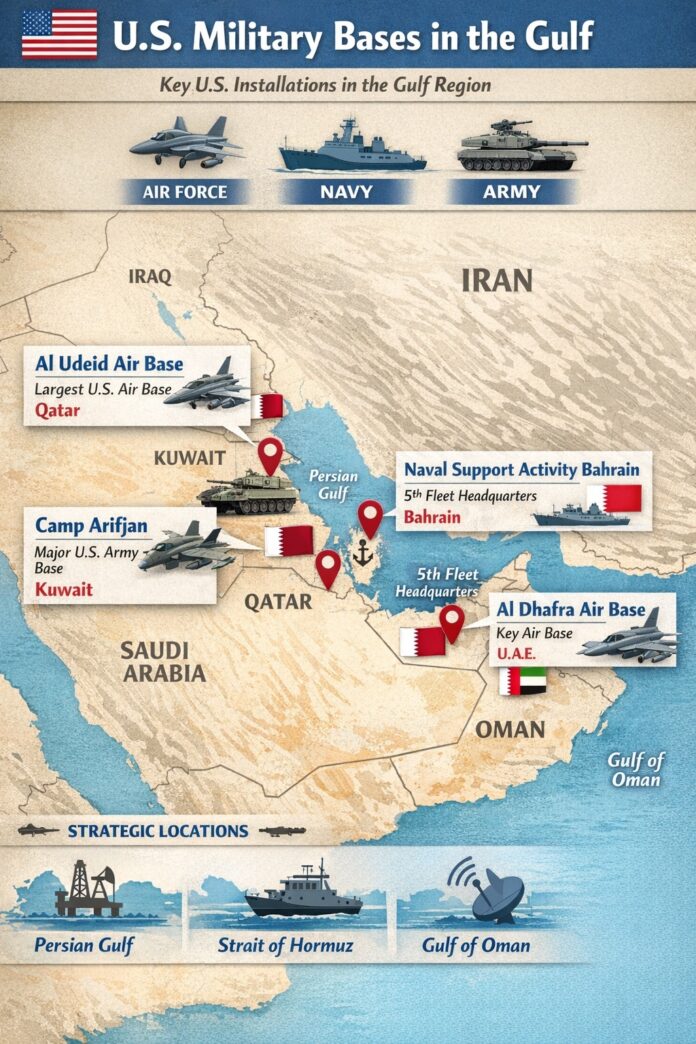
U.S. Bases in the Middle East

The current phase of the conflict is revealing a critical stress point in modern military operations: the sustainability of air defense under continuous attack.

Iranian missile and drone strikes have increased pressure on U.S. and allied bases across the Gulf, raising questions about how long existing defensive systems can maintain effective coverage under high-intensity conditions.

The Sustainability Problem in Air Defense

Air-defense systems are designed to intercept incoming threats—but they are not unlimited.

Key constraints include:

  • Finite interceptor stockpiles
  • High cost per interception
  • Continuous operational demand

In high-tempo conflict scenarios, even advanced systems can face saturation pressure, where the volume of incoming threats begins to strain defensive capacity.

The Rise of Persistent Drone Threats

One of the most notable developments is the increasing role of drones.

  • Low-cost, long-range drones can be launched in large numbers
  • They are difficult to detect, especially at low altitude
  • They can be used repeatedly to probe defenses

This creates a persistent challenge:

  • Defenders must intercept every incoming threat
  • Attackers only need some to get through

From Interception to Saturation

The shift in dynamics reflects a broader trend in modern warfare:

  • Early phases focus on interception and control
  • Sustained attacks shift toward overwhelming defenses over time

Even if defenses remain operational, they can become:

  • Stretched across multiple locations
  • Dependent on limited interceptor supplies
  • Increasingly reactive rather than proactive

Geographic Expansion of Threat

The pressure is not limited to a single location.

Drone activity has expanded across multiple Gulf states, indicating:

  • A widening operational footprint
  • Increased reach of attack platforms
  • Greater strain on regional defense coordination

This multi-theater pressure complicates defensive planning and resource allocation.

The Cost Imbalance

A key factor driving this dynamic is economic asymmetry.

  • Interceptors can cost hundreds of thousands to millions of dollars
  • Drones can be produced and deployed at a fraction of that cost

This creates a strategic imbalance:

Low-cost attacks vs high-cost defense

Over time, this favors the side capable of sustaining repeated, inexpensive strikes.

Shahed Kamikaze drone

Cost Comparison: Real Systems

Offensive Systems (Drones)

Shahed-136 (Iran)

  • Type: Loitering munition (kamikaze drone)

  • Estimated cost: $20,000 – $50,000

  • Range: ~1,000–2,000 km

  • Strategy: Mass launch (swarm attacks)

Defensive Systems (Interceptors)

Patriot PAC-3

  • Cost per interceptor: ~$3–4 million

  • Role: Ballistic & cruise missile defense

Iron Dome (Tamir interceptor)

  • Cost per interceptor: ~$40,000 – $100,000

  • Role: Short-range rocket/drone defense

THAAD

  • Cost per interceptor: ~$8–12 million

  • Role: High-altitude ballistic missile defense

Cost Exchange Reality

System Cost
Shahed-136 Drone $20K – $50K
Iron Dome Interceptor $40K – $100K
Patriot PAC-3 $3M – $4M
THAAD Interceptor $8M – $12M

Cost Imbalance

Destroying:

  • $30K drone with:

    • $100K interceptor = 3x cost

    • $3M interceptor = 100x cost

    • $10M interceptor = 300x cost

Are Defenses Designed for Short Conflicts?

Modern base defense systems are highly capable—but they are often optimized for:

  • Short-duration, high-intensity engagements
  • Specific threat scenarios
  • Layered but finite coverage

Sustained, multi-day or multi-week attacks introduce a different challenge:

  • Continuous resource consumption
  • Maintenance and fatigue factors
  • Logistical resupply requirements

The Role of Adaptation

As pressure increases, defenders are likely to adapt by:

  • Deploying additional systems
  • Increasing reliance on airborne surveillance
  • Adjusting interception priorities
  • Integrating electronic warfare and jamming

However, these adaptations also come with limits.

Strategic Implications

The evolving situation highlights several key trends:

1. Persistence Over Precision

Repeated, low-cost attacks can generate cumulative effects over time.

2. System Strain Without Collapse

Defenses may not fail completely but can become less effective under pressure.

3. Multi-Domain Pressure

Air, missile, and drone threats combine to stretch defensive networks.

Uncertainty and Escalation Risk

As the conflict continues, uncertainty becomes a defining factor.

  • The true state of defensive capacity is not fully visible
  • Both sides operate with incomplete information
  • Miscalculation risks increase under sustained pressure

Conclusion

The current phase of the conflict underscores a fundamental reality of modern warfare:

Air defense is not just about capability—it is about endurance.

While U.S. and allied systems remain among the most advanced in the world, sustained drone and missile pressure is testing their limits in ways that traditional planning may not have fully anticipated.

As the situation evolves, the balance between offense, defense, and sustainability will play a decisive role in shaping the outcome.

Targeting the Eyes of War: How Strikes on U.S. Radar Systems Are Reshaping Middle East Air Defense

0
US-operated early warning radar system stationed in Qatar

The ongoing conflict in the Middle East is revealing a critical shift in modern warfare: the prioritization of sensors over shooters.

Independent analysis of commercial satellite imagery and verified video evidence indicates that U.S. and allied radar and missile-defense installations have been struck multiple times since the opening phase of the war.

Rather than focusing on aircraft or runways, the pattern of strikes suggests a deliberate campaign to degrade early-warning systems—the foundation of any modern air-defense network.

Why Radar Systems Are the Primary Target

Air- and missile-defense systems depend on a layered structure:

  • Detection (radar and sensors)
  • Tracking (data processing and targeting)
  • Interception (missiles and defense systems)

By targeting radar installations, attackers aim to disrupt the first and most critical layer: detection.

Without reliable sensor data:

  • Reaction times shrink
  • Interceptors become less effective
  • Defense networks operate with incomplete information

Evidence from Satellite and Open-Source Analysis

Commercial satellite imagery from multiple providers has confirmed:

  • More than two dozen strike locations across several bases
  • Repeated targeting of radar domes, communication arrays, and sensor infrastructure
  • Damage patterns consistent with precision drone and missile strikes

Open-source video footage has further validated impacts at key installations, reinforcing the credibility of the findings.

The use of independent verification is significant, as it reduces reliance on official statements and provides observable evidence for analysts.

Geographic Spread: A Regional Network Under Pressure

The strikes were not isolated to a single country.

Confirmed or suspected impacts span multiple locations, including:

  • Saudi Arabia
  • United Arab Emirates
  • Jordan
  • Kuwait
  • Qatar
  • Bahrain

This distribution indicates that the campaign is targeting the entire regional detection network, rather than individual national systems.

High-Value Targets: AN/TPY-2 and AN/FPS-132

Among the systems reportedly affected are some of the most advanced radar platforms in operation:

  • AN/TPY-2: Key component of missile defense systems
  • AN/FPS-132: Large phased-array radar for long-range detection

These systems are:

  • Extremely expensive (hundreds of millions per unit)
  • Technologically complex
  • Critical for early warning and tracking

Even partial damage can significantly reduce their effectiveness.

The Vulnerability of Fixed Sensors

Radar installations face a structural disadvantage:

  • They must remain stationary to function
  • Their locations are often known and observable
  • They cannot be easily relocated during conflict

This makes them ideal targets for:

  • Long-range drones
  • Precision-guided munitions
  • Pre-planned strike operations

The Role of Low-Cost Drones

A notable aspect of the campaign is the use of relatively inexpensive systems.

  • Long-range drones, including variants of the Shahed family, are assessed to have been used
  • These platforms can strike fixed targets repeatedly
  • They impose minimal cost compared to the value of the systems they target

This creates an asymmetric dynamic:

Low-cost weapons vs high-value infrastructure

Operational Impact: Degrading, Not Destroying

The strategy does not require total destruction of radar systems.

Instead, even limited damage can:

  • Reduce tracking accuracy
  • Interrupt power or communications
  • Force maintenance downtime

This results in partial blindness rather than total collapse—often enough to achieve operational advantage.

The “Cat-and-Mouse” Dynamic

Experts describe the situation as an evolving cycle:

  • Attackers target sensors to create gaps
  • Defenders attempt to restore coverage through redundancy
  • Additional assets (such as airborne radar) are deployed to compensate

This dynamic reflects a broader trend in modern warfare, where:

Information and detection are as critical as firepower.

Strategic Consequences

The degradation of radar networks has several implications:

1. Reduced Reaction Time

Shorter warning windows increase the risk of successful missile or drone strikes.

2. Increased Operational Pressure

Command centers must operate with less reliable data.

3. Greater Reliance on Backup Systems

Airborne and mobile sensors become more important but also more strained.

4. Regional Impact

Because the network is interconnected, damage in one area affects the entire system.

Limits of Visibility and Ongoing Uncertainty

Despite the available evidence, significant uncertainty remains:

  • Some satellite imagery is delayed or low resolution
  • Governments have limited public disclosures
  • The full extent of damage is unclear

This uncertainty itself becomes a factor, as both sides operate without complete information.

Strategic Insight: The Sensor Layer Is the Weak Link

The campaign highlights a fundamental reality:

Modern defense systems are only as strong as their sensors.

  • Interceptors depend on accurate detection
  • Networks rely on continuous data flow
  • Disruption at the sensor level affects the entire system

Conclusion

The pattern of strikes across the Middle East indicates a deliberate shift toward sensor warfare, where the goal is not immediate destruction but cumulative degradation of defensive capability.

By targeting radar systems—the “eyes” of the network—attackers can create operational advantages that extend far beyond individual strikes.

As the conflict continues, the ability to maintain or restore situational awareness may prove as decisive as the ability to launch or intercept missiles.

Drone Policy Shift: U.S. Approves Select Models Amid Ban on Chinese Tech

0
DJI brand signage is displayed in New York.

The United States is refining its drone policy by allowing limited exemptions for select foreign-made unmanned aerial systems (UAVs), even as it expands restrictions targeting Chinese manufacturers.

The Federal Communications Commission (FCC) has approved imports of four drone models and related components after determining they do not pose national security risks.

Which Drones Were Approved?

The exemptions apply to the following systems:

  • SiFly Aviation Q12
  • Mobilicom SkyHopper Series
  • ScoutDI Scout 137
  • Verge X1

These models passed security assessments conducted in coordination with the Pentagon, which concluded they do not present significant risks.

Notably, none of the approved systems originate from Chinese manufacturers.

A Targeted Approach to National Security

The decision reflects a more nuanced U.S. strategy.

Rather than imposing a blanket ban on all foreign drones, policymakers are:

  • Restricting high-risk suppliers
  • Allowing vetted alternatives
  • Encouraging domestic or allied supply chains

This approach aims to reduce dependence on potentially vulnerable technologies while maintaining access to essential drone capabilities.

The Broader Crackdown on Chinese Drones

The exemptions come alongside stricter measures against Chinese drone makers, particularly industry leader DJI.

Key developments include:

  • Ban on imports of new models and components from certain companies
  • Legal challenges from affected manufacturers
  • Continued restrictions on future product approvals

Chinese firms currently dominate the U.S. commercial drone market, with DJI alone accounting for a significant share.

Balancing Security and Market Stability

U.S. regulators appear to be pursuing a dual objective:

1. Protect National Security

  • Prevent potential data and surveillance risks
  • Reduce reliance on foreign adversary technology

2. Avoid Market Disruption

  • Allow continued use of existing drones
  • Maintain access for hobbyists and commercial users
  • Provide time for transition to alternative suppliers

The FCC has also set a timeline, allowing certain exemptions through 2026, signaling a phased approach rather than immediate disruption.

Industrial Policy and Supply Chain Shift

The policy also reflects a broader effort to reshape the drone supply chain.

  • Companies like SiFly have emphasized onshoring plans
  • U.S. authorities are encouraging domestic production
  • Allied-country manufacturers may gain market share

This aligns with wider trends in technology policy, where supply chain security is increasingly prioritized.

Legal and Competitive Implications

The restrictions have already triggered legal pushback.

Major drone manufacturers have challenged the FCC’s decisions, arguing that:

  • The rules limit competition
  • Consumers lose access to advanced technologies
  • Market dynamics are being reshaped by policy rather than performance

The outcome of these legal challenges could influence the future direction of U.S. drone regulation.

Strategic Context: Technology and Geopolitics

The drone policy shift is part of a broader U.S.–China technology competition.

Key themes include:

  • Control over emerging technologies
  • Data security concerns
  • Industrial self-reliance

Drones, as dual-use technologies with both civilian and military applications, sit at the intersection of these issues.

Global Drone Market Share (Estimated)

Market Leaders

Company / Category Estimated Share
DJI (China) ~70% – 80%
Autel Robotics (China) ~5% – 10%
Skydio (USA) ~2% – 5%
Parrot / Delair (Europe) ~2% – 5%
Others (Global) ~10% – 15%

DJI alone dominates the market with around 70%+ global share, making it the clear industry leader.

Conclusion

The FCC’s decision to exempt select foreign drones while maintaining broader restrictions highlights a calibrated strategy:

  • Selective openness for low-risk technologies
  • Targeted restrictions on high-risk suppliers
  • Long-term transition toward secure supply chains

This approach reflects a growing recognition that in modern technology competition, policy decisions are as important as innovation itself.

France Libre: Europe’s Largest Warship Signals Shift Toward Strategic Autonomy

0
new French aircraft carrier France Libre

France’s decision to name its next-generation nuclear aircraft carrier “France Libre” (Free France) reflects more than symbolism—it signals a strategic shift toward greater European defense independence.

Announced by President Emmanuel Macron, the vessel will replace France’s current flagship, the Charles de Gaulle, and is central to a €10.2 billion modernization program aimed at reinforcing both national and regional military capabilities.

A Symbol Rooted in History

The name France Libre carries deep historical significance.

It references the Free France movement of World War II, symbolizing resistance, sovereignty, and national resilience. By choosing this name, Paris is linking its future military posture to a legacy of strategic independence.

A Cornerstone of Nuclear Deterrence

The new carrier will play a critical role in France’s nuclear deterrent.

France remains:

  • The only nuclear power in the European Union
  • One of the few countries globally operating aircraft carriers
  • The only nation besides the United States with a nuclear-powered carrier

Nuclear propulsion provides key advantages:

  • Extended deployment without refueling
  • Greater operational endurance
  • Enhanced strategic reach

Technical Overview of “France Libre”

The future carrier is expected to be the largest warship ever built in Europe.

Key Features:

  • Length: Approximately 310 meters
  • Propulsion: Two nuclear reactors
  • Air Wing:
    • Fighter jets (next-generation aircraft expected)
    • Advanced drones and unmanned systems

The integration of drone technology reflects the evolving nature of naval warfare, where manned and unmanned systems operate together.

Timeline and Transition

The program follows a long-term transition plan:

  • Construction underway at Naval Group facilities
  • Sea trials expected by 2036
  • Full operational capability by 2038
  • Replacement of Charles de Gaulle, which entered service in 2001

This ensures continuity in France’s carrier-based capabilities.

Europe’s Limited Carrier Capability

Despite the scale of the project, Europe’s overall carrier capacity remains limited compared to other major powers.

  • United States: 11 aircraft carriers
  • China: 3 carriers (and expanding)
  • France: 1 nuclear carrier (future replacement planned)

This gap underscores the importance of the France Libre project for Europe’s strategic positioning.

Strategic Context: Pressure for Burden Sharing

The announcement comes amid increasing calls for NATO allies to take greater responsibility for their own defense.

Recent geopolitical developments have reinforced several trends:

  • Reduced reliance on U.S. military guarantees
  • Growing emphasis on European strategic autonomy
  • Expansion of naval capabilities to secure global trade routes

France’s investment in a nuclear-powered carrier aligns with these broader shifts.

The Maritime Domain as a Future Battleground

French leadership has emphasized that oceans are becoming central to modern conflict.

Key trends include:

  • Increased competition over maritime chokepoints
  • Expansion of naval power projection
  • Integration of advanced technologies, including drones

Aircraft carriers remain critical platforms in this environment, enabling:

  • Air superiority at sea
  • Rapid response to crises
  • Long-range power projection

Strategic Implications

The France Libre program highlights several important dynamics:

1. European Defense Autonomy

France is positioning itself as a leader in independent European military capability.

2. Long-Term Power Projection

Nuclear-powered carriers enable sustained global presence without logistical constraints.

3. Technological Evolution

Integration of unmanned systems signals a shift toward hybrid naval warfare.

Conclusion

The announcement of the France Libre aircraft carrier represents more than a fleet upgrade—it is a strategic statement about Europe’s future role in global security.

As geopolitical tensions rise and alliances evolve, France’s investment in advanced naval power underscores a broader reality:

Control of the seas remains central to military influence, and Europe is preparing to play a more independent role in that domain.

France Libre vs Charles de Gaulle

Feature 🇫🇷 France Libre (PANG) 🇫🇷 Charles de Gaulle
Status Under development Active (since 2001)
Length ~310 meters ~261 meters
Displacement ~75,000 tons (est.) ~42,000 tons
Propulsion 2 nuclear reactors (next-gen) 2 nuclear reactors
Air Wing Next-gen fighters + drones Rafale M, E-2C Hawkeye
Technology AI systems, unmanned integration Conventional carrier ops
Operational Date ~2038 2001–2038 (planned retirement)


Boots on the Ground? U.S. Explores Risky Troop Deployment Scenarios in Iran

0

The discussion within Washington about deploying U.S. ground forces to the Middle East—and potentially into Iran itself—signals a shift from a primarily air and naval campaign toward broader strategic options.

While no final decision has been made, the mere consideration of “boots on the ground” reflects the growing complexity of the conflict and the limitations of current military approaches.

From Containment to Control

So far, U.S. operations have focused on:

  • Airstrikes targeting missile and drone infrastructure
  • Naval operations against Iranian maritime assets
  • Efforts to degrade Iran’s military capabilities

However, these measures have not fully achieved key strategic objectives—particularly:

  • Securing uninterrupted shipping through the Strait of Hormuz
  • Neutralizing Iran’s ability to project maritime disruption
  • Controlling escalation dynamics

This gap between tactical success and strategic outcome is driving discussions about expanding the mission.

The Strait of Hormuz Problem

At the center of the debate is the Strait of Hormuz, one of the world’s most critical energy chokepoints.

Securing it is not as simple as naval patrols.

Even if U.S. forces dominate the waterway itself:

  • Iran can disrupt shipping from coastal areas
  • Missiles, drones, and mines extend the threat zone beyond the strait
  • Selective access control can continue without full closure

This raises the possibility that securing the Strait may require control of adjacent land-based systems—a task that could involve ground forces.

Kharg Island: The Strategic Center of Gravity

One of the most discussed targets is Kharg Island, which handles the majority of Iran’s oil exports.

From a strategic perspective, controlling the island offers two options:

  • Disrupt Iran’s economy by blocking exports
  • Use it as leverage without destroying critical infrastructure

However, such an operation would be highly risky:

  • The island is within range of Iranian missiles and drones
  • Maintaining control would require sustained military presence
  • Any deployment could escalate into a broader ground conflict

The Nuclear Dimension

Another option under consideration involves securing Iran’s highly enriched uranium stockpiles.

This objective is significantly more complex:

  • Facilities are dispersed and hardened
  • Many are located underground
  • Operations would require specialized forces and intelligence

Even limited missions would carry high operational and political risks.

Military Capability vs Political Constraints

While the U.S. military has the capability to execute such operations, the political environment presents constraints.

  • Public support for a prolonged conflict is limited
  • Previous commitments to avoid new Middle East wars remain relevant
  • Casualties, even at current levels, are already a factor

This creates a tension between military feasibility and political sustainability.

Force Posture and Operational Trade-Offs

The potential deployment of additional troops must also be viewed in the context of broader force posture.

  • Amphibious units and Marine Expeditionary Units are already moving into the region
  • Carrier strike group availability is fluctuating due to maintenance cycles
  • Existing troop levels in the region remain significant

Reinforcements would expand operational flexibility but also increase exposure and logistical demands.

Strategic Uncertainty and Mixed Signals

U.S. policy signals remain mixed.

On one hand:

  • Objectives include degrading Iran’s military and preventing nuclear capability

On the other:

  • There is hesitation about committing to deeper involvement
  • Calls for allied participation have met limited response
  • Discussions include both escalation and potential disengagement

This reflects a broader uncertainty about end-state objectives.

The Core Dilemma

The current situation highlights a fundamental strategic dilemma:

  • Air and naval power can degrade capabilities
  • But may not achieve control over key objectives

Ground forces could:

  • Expand operational reach
  • Enable control over critical infrastructure
  • Increase pressure on Iran

But they also:

  • Raise the risk of escalation
  • Require long-term commitment
  • Introduce political and military costs

Toward a Decision Point

The discussion of troop deployment does not mean it is imminent—but it indicates that existing strategies may be insufficient on their own.

Washington is effectively evaluating whether:

  • To continue with a limited campaign
  • Or transition toward a more decisive—but riskier—approach

Conclusion

The consideration of U.S. ground forces in Iran marks a critical inflection point in the conflict.

It reflects the limits of current military tools in achieving strategic outcomes and underscores the complexity of securing objectives like the Strait of Hormuz, Kharg Island, and nuclear assets.

Ultimately, the decision will hinge not just on military capability—but on how much risk the United States is willing to accept in pursuit of a durable outcome.

Worst-Case Scenario: WHO Prepares for Nuclear Incident Amid Iran–Israel War

0
The World Health Organization (WHO) is preparing for a nuclear catastrophe, a potential “worst-case scenario” for the Middle East, if the ongoing conflict between Iran, Israel, and the United States escalates further.

The escalating conflict involving Iran, Israel, and the United States has introduced a new and far more dangerous dimension: the risk of a nuclear-related catastrophe.

According to officials from the World Health Organization (WHO), preparations are underway for what is being described as a “worst-case scenario”—a potential nuclear incident triggered by strikes on Iran’s nuclear infrastructure.

What Is the “Worst-Case Scenario”?

Health officials emphasize that the concern is not limited to nuclear weapons.

The primary risk is a large-scale radioactive release resulting from damage to nuclear facilities such as:

  • Natanz
  • Fordow
  • Isfahan
  • Bushehr

Even conventional strikes on these sites could release radioactive materials into the environment, creating a crisis similar in nature—though not necessarily scale—to past nuclear accidents.

WHO’s Growing Concern

WHO regional leadership has confirmed that teams are actively monitoring the situation and preparing for multiple scenarios.

Officials warn that:

  • The consequences of a nuclear incident would be long-lasting and widespread
  • Preparedness can mitigate response—but cannot prevent the damage itself
  • The impact would extend beyond national borders

The organization is preparing for a “broader” nuclear emergency, including both accidental release and deliberate escalation.

Immediate Human Impact

If a radioactive release were to occur, the effects would be immediate and severe, particularly near affected sites.

Potential consequences include:

  • Acute radiation sickness
  • Severe burns and injuries
  • Immediate fatalities in high-exposure zones

Healthcare systems in affected areas could be rapidly overwhelmed.

Long-Term Health Effects

The longer-term consequences could persist for decades.

These may include:

  • Increased rates of cancer, particularly thyroid cancer
  • Genetic damage affecting future generations
  • Chronic health conditions linked to radiation exposure
  • Psychological trauma and long-term mental health issues

Historical precedents suggest that such effects can continue for generations.

Environmental Fallout Across the Region

Radioactive contamination would not remain confined to one location.

  • Winds could carry fallout across borders
  • Water sources could become contaminated
  • Agricultural land could be rendered unusable

Neighboring regions—including Iraq and Gulf states—could face:

  • Air and water pollution
  • Food supply disruptions
  • Long-term environmental degradation

Economic and Regional Consequences

Beyond health and environmental impacts, the broader consequences could be severe.

  • Mass evacuations from affected zones
  • Disruption to oil production and shipping
  • Refugee flows across borders
  • Regional economic instability

Given the Middle East’s central role in global energy markets, the impact could extend worldwide.

No Radiation Release Detected — Yet

Despite the heightened concern, officials have confirmed that no radioactive release has been detected so far.

Current efforts remain focused on:

  • Monitoring potential threats
  • Preparing emergency response frameworks
  • Coordinating international health readiness

Strategic Reality: A Low-Probability, High-Impact Risk

The possibility of a nuclear incident remains uncertain, but its potential impact is so severe that it cannot be ignored.

This creates a classic low-probability, high-impact scenario, where:

  • The likelihood may be limited
  • But the consequences would be catastrophic

Conclusion

The WHO’s warning underscores a critical escalation risk in the ongoing conflict.

While current military operations are focused on conventional targets, the presence of nuclear infrastructure introduces a layer of risk that could transform a regional war into a long-term global crisis.

In such scenarios, prevention becomes far more important than response—because once a nuclear incident occurs, the damage cannot be undone.

$10–30 Billion in Weeks: U.S.–Israel Munitions Burn Rate Exposes Industrial Limits in Modern War

0
Ukrainian service members walk next to a launcher of a Patriot air defence system, amid Russia's attack on Ukraine, in an undisclosed location, Ukraine.

The first days of the U.S.–Israel conflict reveal a critical reality often overlooked in discussions of modern warfare: firepower is not unlimited.

According to a detailed ledger analysis by the Payne Institute, more than 5,000 munitions were expended in just the first 96 hours, with costs estimated between $10–16 billion during that period alone.

This level of consumption is not just a statistic—it is a warning signal about the sustainability of high-intensity warfare.

Rapid Consumption, Limited Replacement

The pace of expenditure has raised serious concerns about stockpile depletion.

Key findings suggest:

  • Up to one-third of certain critical munitions were used within four days
  • Continued operations could push total spending to $22–30 billion within weeks
  • Both offensive weapons and defensive interceptors are being consumed at high rates

Even with a reduction in incoming attacks, the burn rate remains structurally high due to the need for continuous defensive coverage.

Air Defense Systems Under Pressure

One of the most concerning aspects is the strain on missile defense systems.

Estimates indicate:

  • Arrow interceptor stocks are approaching critical levels
  • Other air-defense systems are also facing rapid depletion
  • Interceptors are being used in large numbers to counter missiles and drones

In missile-heavy conflicts, defense can often be more expensive than offense, further accelerating consumption.

Precision Weapons Also Running Low

The issue is not limited to defensive systems.

Stocks of precision-guided munitions (PGMs) are also declining rapidly, raising concerns about the ability to sustain accurate strike operations over time.

These weapons are essential for:

  • Targeting hardened or strategic infrastructure
  • Minimizing collateral damage
  • Maintaining operational effectiveness

The Industrial Resilience Gap

The deeper issue lies not in the battlefield, but in the industrial base.

Modern weapons production depends on complex supply chains involving:

  • Rare earth minerals
  • Specialized electronic components
  • Explosive materials
  • Advanced manufacturing facilities

These systems cannot be rapidly scaled.

Even with increased funding, production is constrained by:

  • Limited factory capacity
  • Long manufacturing timelines
  • Dependence on global supply chains

Lessons From Previous Conflicts

This challenge is not new.

Similar issues emerged during the Ukraine war (2023–2024), when Western countries struggled to maintain ammunition supplies while supporting sustained operations.

Even before the current conflict, the United States had already begun adjusting its arms distribution due to supply limitations.

Not Just an American Problem

The supply constraint extends across the broader Western alliance.

Key challenges include:

  • Limited control over critical supply chains
  • Dependence on external sources for raw materials
  • Insufficient capacity for prolonged high-intensity conflict

This means that shortages are not isolated—they are systemic.

A War of Stockpiles, Not Production

One of the most important strategic insights emerging from this conflict is:

In high-intensity war, initial stockpiles matter more than production capacity.

  • Weapons used early cannot be quickly replaced
  • Production cycles lag behind consumption
  • Both sides face constraints, regardless of planning

Even Iran’s underground production systems are unlikely to keep pace with sustained usage.

Toward a Stalemate?

The convergence of factors—high consumption, slow production, and supply chain constraints—points toward a potential equilibrium.

  • Neither side can sustain unlimited escalation
  • Military momentum slows as stockpiles decline
  • Economic and political pressures increase

This dynamic increases the likelihood of:

A prolonged stalemate
Eventual negotiation under pressure

Strategic Takeaway

The conflict highlights a fundamental shift in how wars are fought and sustained:

  • Advanced weapons provide early advantages
  • But industrial capacity determines long-term outcomes

Modern warfare is no longer just about technology—it is about logistics, production, and sustainability.

Conclusion

The rapid expenditure of billions of dollars in munitions within days underscores a critical limitation of modern military power.

Even the most advanced armies cannot escape the constraints of industrial production and supply chains.

As the conflict continues, the balance may not be decided solely on the battlefield—but in factories, logistics networks, and the ability to sustain the fight over time.

From Ground Radars to Airborne Eyes: U.S. Reinforces Detection Network After Iranian Strikes

0
E-2D Hawkeye airborne radar aircraft

The reported deployment of multiple E-2D Hawkeye airborne early-warning aircraft to the Middle East reflects a critical shift in U.S. defensive strategy: a move from reliance on fixed radar systems to mobile, airborne surveillance.

This adjustment comes after recent strikes damaged key ground-based radar installations that form the backbone of the region’s integrated air-defense network.

The Core Problem: Degraded Sensor Network

Modern air defense systems depend not only on interceptors, but on the sensor layer—the radars that detect incoming threats and provide targeting data.

Recent developments suggest that this layer has been partially degraded:

  • Damage to high-value radar systems across multiple Gulf locations
  • Disruption of early-warning capability for ballistic and cruise missile detection
  • Reduced ability to maintain a continuous recognized air picture

Imagery analysis indicates that several radar sites, including those associated with advanced missile-defense systems, were specifically targeted rather than launchers themselves.

Why Airborne Radar Is Being Prioritized

The deployment of E-2D Hawkeye aircraft signals an operational pivot toward mobile detection systems.

Unlike fixed radars:

  • Airborne platforms can be repositioned rapidly
  • They are harder to target and destroy
  • They provide flexible coverage across large areas

This makes them ideal for restoring overlapping sensor coverage when ground systems are damaged or offline.

What the E-2D Hawkeye Brings

Image

The E-2D Hawkeye is one of the most advanced airborne early-warning and battle-management platforms in U.S. service.

Key Capabilities:

  • Long-range detection of aircraft, drones, and cruise missiles
  • Simultaneous tracking of multiple targets
  • Real-time coordination between fighters and missile-defense systems
  • Extended radar horizon due to high-altitude operation

By flying at altitude, the aircraft can detect threats earlier than ground radars, especially low-flying drones or cruise missiles that exploit terrain and curvature of the earth.

The Impact of Radar Losses

Damage to systems such as long-range tracking radars has significant consequences:

  • Reduced reaction time for interceptors
  • Increased risk of saturation attacks overwhelming defenses
  • Gaps in coverage that adversaries can exploit

Even partial degradation can weaken the entire network, as modern air defense relies on integrated data sharing across multiple systems.

A Shift in Warfare: Targeting Sensors First

The pattern of strikes suggests a deliberate strategy:

Disable detection → Then exploit the gap

Rather than focusing solely on destroying launchers or aircraft, attackers are increasingly targeting:

  • Radar installations
  • Sensor nodes
  • Command-and-control links

This approach reduces the defender’s ability to see incoming threats, making even low-cost weapons more effective.

Why Ground Systems Can’t Be Quickly Replaced

Replacing damaged radar systems is not immediate:

  • Large fixed radars require complex logistics
  • Installation takes time and secure conditions
  • Sites are geographically fixed and vulnerable

In contrast, airborne systems can be deployed quickly and provide immediate, though temporary, coverage.

Implications for Regional Security

The deployment of multiple Hawkeye aircraft suggests that U.S. planners expect:

  • Continued pressure on regional bases
  • Further attempts to degrade air-defense networks
  • Sustained need for high-tempo surveillance operations

It also indicates that maintaining sensor redundancy has become a top priority.

Limits of the Airborne Solution

While airborne radar provides flexibility, it is not a complete replacement for ground-based systems:

  • Requires continuous sorties for coverage
  • Increases operational strain on crews and aircraft
  • Cannot fully match the range and persistence of large fixed radars

This means the current approach is likely a temporary adaptation rather than a permanent solution.

Strategic Insight: The Sensor Layer Is Decisive

The situation highlights a key principle of modern warfare:

Air defense is only as strong as its ability to detect threats.

  • Interceptors depend on accurate and timely data
  • Even advanced systems fail without early warning
  • Sensor degradation can shift the balance of power

Conclusion

The deployment of E-2D Hawkeye aircraft underscores a critical transition in the conflict: from static defense based on fixed infrastructure to a more dynamic, mobile surveillance model.

It reflects both the vulnerability of traditional radar networks and the growing importance of maintaining continuous situational awareness in a high-threat environment.

As the conflict evolves, the battle for the skies may increasingly depend not on who has the most missiles—but on who can see first.

E-2D Hawkeye vs Ground Radar Coverage

Factor E-2D Hawkeye Ground Radar
Position Airborne (high altitude) Fixed (surface)
Coverage Wide, flexible Fixed, location-bound
Low-altitude detection Strong Limited
Survivability Mobile, harder to target Vulnerable to strikes
Persistence Limited by flight time Continuous (if intact)


USS Gerald R. Ford Deployment Extension Signals Prolonged Instability in Hormuz Crisis

0

The extension of the USS Gerald R. Ford carrier strike group to an approximately 11-month deployment is not just a military decision—it is a strategic signal.

Carrier deployments are among the most resource-intensive instruments of U.S. power projection. Extending one to nearly a year indicates that Washington is planning for sustained instability, not a short-duration conflict.

This decision reveals more about expectations of the war’s trajectory than any official statement.

A Timeline Signal, Not Just a Deployment

The key insight is not the extension itself, but what it implies.

Military planners do not extend high-value naval assets for conflicts expected to resolve within weeks. Instead, such decisions reflect:

  • Anticipation of prolonged operational requirements
  • Persistent regional instability
  • Continued need for deterrence and force presence

The timeline—stretching into late April or May—suggests that U.S. planners expect disruption to continue through the spring.

Market Assumptions vs Military Planning

There is a widening gap between market expectations and military reality.

Many economic models have assumed:

  • A 30–45 day disruption window
  • Rapid normalization following peak conflict
  • Short-lived impact on shipping and energy flows

However, the carrier extension implies planning assumptions closer to:

  • 90 days or more of instability
  • Continued operational risk in key maritime corridors
  • Delayed normalization of shipping and insurance markets

Markets price outcomes. Militaries plan for risks.
Right now, those two timelines are diverging.

The Strait of Hormuz: Persistent Disruption Without Closure

The Strait of Hormuz remains operational—but not open in the conventional sense.

Current conditions reflect a selective access system:

  • Approved vessels transit under controlled conditions
  • Non-cleared commercial traffic is significantly reduced
  • Insurance constraints limit broader shipping participation

This creates a form of functional disruption without total closure, which is sufficient to impact global trade flows.

Insurance, Not Warfare, Drives the Bottleneck

The most critical constraint is no longer purely military—it is financial.

  • War-risk insurance premiums have surged
  • Coverage availability remains limited
  • Reinsurance mechanisms show minimal utilization

Shipping markets do not require active conflict to remain disrupted.
They require uncertainty and unresolved risk.

As long as risk persists, normalization cannot begin.

The Fertilizer Clock: A Critical Overlooked Factor

The timing of the deployment extension intersects with a less visible but highly consequential variable: the global agricultural calendar.

Key timelines include:

  • North America planting season (April)
  • South Asia crop preparation (May)
  • Southern Hemisphere cycles (June)

Fertilizer shipments—particularly urea, ammonia, and sulfur—must move within narrow windows.

Disruption during these periods can lead to:

  • Reduced crop yields
  • Higher food prices
  • Increased global food insecurity

Unlike energy markets, agricultural timelines are biologically fixed and non-negotiable.

The Role of Naval Presence

The USS Gerald R. Ford is not directly responsible for maritime disruption.

However, its extended presence indicates:

  • Continued strategic importance of the region
  • Anticipation of sustained operational challenges
  • Limited expectation of near-term stabilization

In effect, the deployment reflects an acknowledgment that the situation is not yet controllable.

Why the Timeline Matters More Than the Outcome

The extension does not confirm how long the conflict will last.

It confirms something more important:

Planning assumptions are based on continued instability.

For markets and supply chains, this distinction is critical:

  • Stability must be sustained before normalization begins
  • Insurance markets require extended periods without incident
  • Supply chains depend on predictable transit conditions

Even if hostilities decrease, the recovery timeline can lag significantly.

Strategic Implication: A System Under Prolonged Stress

The convergence of factors—military planning, maritime risk, and agricultural timelines—suggests a system under sustained pressure.

  • Military operations continue
  • Maritime routes remain constrained
  • Economic effects are compounding

This creates a feedback loop where:

Risk prolongs disruption, and disruption reinforces risk.

Conclusion

The USS Gerald R. Ford deployment extension is more than a logistical adjustment—it is a strategic indicator of how the United States views the trajectory of the current crisis.

It signals that instability in the Strait of Hormuz may persist through a critical global economic window, with implications extending far beyond the battlefield.

In modern conflicts, timelines matter as much as outcomes.

And right now, the timeline suggests that disruption—not resolution—is the baseline scenario.

USS Tripoli Spotted Near Singapore as It Continues Transit to Middle East

0
USS Tripoli

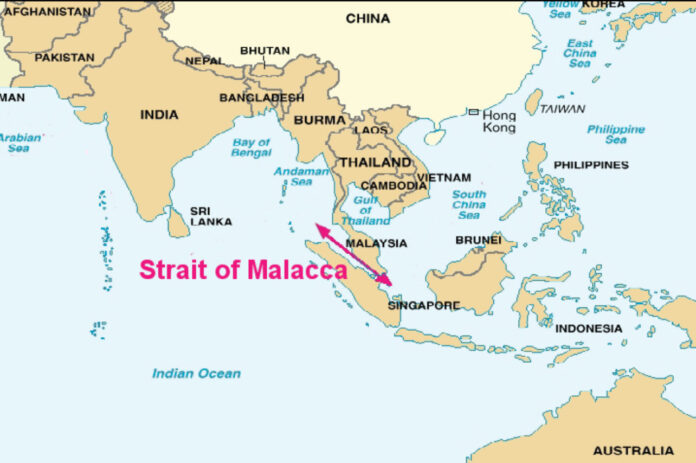
A U.S. Navy amphibious assault ship has reached a key waypoint in its journey toward the Middle East, with maritime tracking data showing the USS Tripoli approaching the Malacca Strait near Singapore.

The development marks a significant update in the vessel’s transit, placing it at one of the world’s most strategically important maritime chokepoints.

Latest Position Near Singapore

According to AIS tracking data, the USS Tripoli was observed Tuesday morning near the southwestern edge of the South China Sea, moving toward the Malacca Strait.

The strait serves as a critical gateway between the Pacific and Indian Oceans, making it a standard but strategically important route for naval deployments heading west.

U.S. Navy vessels typically limit the use of AIS tracking systems, but signals are sometimes activated in congested waterways like Singapore to ensure navigational safety.

Key Transit Point in Global Maritime Routes

The Malacca Strait is one of the busiest shipping lanes in the world, handling a significant portion of global trade and energy shipments.

For naval forces, passing through this corridor signals:

  • Entry into the Indian Ocean
  • Transition from Indo-Pacific to Middle East theatre
  • Progress toward operational deployment zones

The USS Tripoli’s presence in this area confirms it has completed a major portion of its transit from East Asia.

Deployment Context Remains Unchanged

While the ship’s movement is notable, the broader context of its deployment remains consistent.

The USS Tripoli is believed to be carrying elements of the 31st Marine Expeditionary Unit, which had already been ordered to deploy toward the Middle East.

However, the current update is focused on location tracking, not a new deployment decision.

Capabilities of USS Tripoli

The USS Tripoli is a large amphibious assault ship capable of functioning as a light aircraft carrier.

Key capabilities include:

  • F-35B stealth fighter operations
  • MV-22 Osprey tilt-rotor aircraft
  • Amphibious landing operations
  • Rapid troop deployment

These features make it a flexible platform for a wide range of missions once it reaches its destination.

What Comes Next?

After transiting the Malacca Strait, the USS Tripoli is expected to:

  • Enter the Indian Ocean
  • Continue westward toward the Middle East
  • Potentially integrate into regional naval operations

The exact destination and mission remain undisclosed.

Strategic Significance

While not a new deployment, the ship’s current location is an important indicator of operational timing.

Its movement suggests:

  • The deployment is progressing on schedule
  • U.S. forces are moving closer to the Middle East theatre
  • Additional naval activity may follow along similar routes

Tracking such movements provides insight into broader military positioning during periods of heightened tension.

Conclusion

The USS Tripoli’s approach to the Malacca Strait represents a key milestone in its transit from East Asia toward the Middle East.

Although the deployment itself was previously known, the ship’s current location offers a clearer picture of the timeline and trajectory of U.S. naval movements.

As it enters the Indian Ocean, attention will shift to its next reported position and eventual operational role in the region.

Israel Claims Killing of Iran Security Chief and Basij Commander as War Enters Third Week

0
Ali Larijani and Basij Commander Gholamreza Soleimani

Israel’s defence minister said the Israeli military has killed two senior Iranian figures in overnight airstrikes, marking a significant escalation as the conflict between Iran and Israel enters its third week.

According to Defence Minister Israel Katz, Iran’s security chief Ali Larijani and Gholamreza Soleimani, the commander of the Basij militia, were killed in targeted strikes.

Israeli Claims and Iranian Response

Katz said he had been informed by the military that Larijani was killed in the operation.

However, Iranian authorities have not confirmed the claim. State media instead released a handwritten note attributed to Larijani commemorating Iranian sailors killed in a recent U.S. strike.

If confirmed, Larijani would be among the most senior Iranian figures killed since the assassination of Supreme Leader Ayatollah Ali Khamenei at the start of the conflict on February 28.

Basij Commander Also Targeted

Israel also claimed the killing of Gholamreza Soleimani, head of Iran’s Basij militia.

The Basij is a paramilitary force under the control of the Islamic Revolutionary Guard Corps (IRGC), often used for:

  • Internal security operations
  • Crowd control and suppression of protests
  • Support roles in military activities

Israeli Prime Minister Benjamin Netanyahu’s office said the strikes were part of a broader strategy targeting senior Iranian leadership.

War Enters Third Week With No Signs of De-escalation

The ongoing conflict between Iran and Israel has now entered its third week, with violence continuing on multiple fronts.

Key developments include:

  • More than 2,000 people reported killed
  • Continued Israeli airstrikes across Tehran
  • Iranian missile attacks on Israeli territory
  • Ongoing strikes on Hezbollah-linked targets in Beirut

Israeli officials have indicated that military planners have prepared for at least three more weeks of operations.

Strait of Hormuz Crisis Drives Global Oil Prices

The conflict has also triggered a major disruption in global energy markets.

The Strait of Hormuz, through which roughly 20% of global oil and liquefied natural gas flows, remains largely restricted.

Efforts by the United States to form a coalition to reopen the waterway have faced resistance from allies, increasing uncertainty in global energy supply.

As a result, oil prices have surged, adding pressure to global markets already affected by geopolitical instability.

Iran Maintains Strike Capability

Despite sustained airstrikes by U.S. and Israeli forces, Iran continues to demonstrate its ability to launch long-range missile attacks.

Overnight missile launches targeting Israel highlight that:

  • Iran retains operational strike capabilities
  • Its missile infrastructure has not been fully neutralized
  • The conflict is likely to continue in a prolonged and unpredictable manner

Expanding Scope of the Conflict

Israeli military operations are not limited to Iran alone.

Recent strikes have also targeted:

  • Infrastructure in Tehran
  • Hezbollah-linked sites in Beirut

This suggests the conflict is expanding into a broader regional confrontation involving multiple actors.

Strategic Outlook

The reported targeting of senior Iranian officials signals a shift toward decapitation strategies, aimed at weakening command structures.

However, continued missile attacks from Iran indicate that:

  • Leadership losses may not immediately degrade operational capacity
  • Decentralized structures could sustain ongoing military actions

With no clear path to de-escalation and key maritime routes disrupted, the conflict is increasingly shaping both regional security dynamics and global energy markets.

Timeline of Key Assassinations & Strikes

📅 February 28 (Day 1 of War)

  • Start of U.S.–Israeli coordinated air campaign
  • Iran’s Supreme Leader reportedly killed in initial strikes
  • Major command-and-control infrastructure targeted

📅 Days 1–3

  • Rapid AI-assisted targeting of high-value military and leadership nodes
  • Senior IRGC-linked officials and command centers hit
  • Iran begins shifting to decentralized command (Mosaic Doctrine)

📅 Days 4–10

  • Continued strikes on:
    • Military bases
    • Missile launch sites
    • Intelligence infrastructure
  • Iranian leadership structure increasingly fragmented but not collapsed

📅 Day 13

  • Reports indicate 15,000+ targets struck
  • Iranian missile capability degraded significantly
  • However, asymmetric operations intensify (drones, mines, swarm tactics)

📅 Mid-War Escalation (Week 2)

  • Targeted assassinations of regional commanders and security officials
  • Expansion of strikes beyond Iran:
    • Hezbollah-linked targets in Lebanon
    • Proxy networks disrupted

📅 Week 3 (Recent Developments)

  • Israel claims killing of:
    • Iran’s security chief (Ali Larijani – unconfirmed)
    • Basij commander Gholamreza Soleimani
  • Continued strikes on:
    • Tehran infrastructure
    • Military coordination networks

Strategic Pattern

Phase 1: Decapitation Strategy

  • Target top leadership
  • Destroy centralized command

Phase 2: Infrastructure Destruction

  • Missile systems
  • Military bases
  • Intelligence networks

Phase 3: Persistent Targeting

  • Mid-level commanders
  • Proxy networks
  • Logistics chains

Key Insight

Assassinations achieved tactical disruption — but not strategic collapse

  • Leadership targeted rapidly
  • Command structure damaged
  • BUT decentralized system allowed:
    • Continued missile launches
    • Ongoing asymmetric warfare
    • Sustained regional operations

Final Takeaway

Modern wars are no longer decided by leadership elimination alone

Even after high-level assassinations:

  • Decentralized networks continue fighting
  • Low-cost systems (drones, mines) sustain pressure
  • Strategic objectives (like reopening Hormuz) remain unresolved

Sejjil Missile Explained: Why Iran’s ‘Dancing Missile’ Is a Major Threat

0
Iran's Sejjil Missile

Iran’s deployment of the Sejjil medium-range ballistic missile (MRBM) during recent military operations has drawn renewed attention to one of the most advanced systems in its arsenal.

Nicknamed the “dancing missile” due to its unpredictable flight behavior, the Sejjil is designed to penetrate modern multi-layered air defense networks, posing a significant challenge to systems used by the United States and Israel.

What Is the Sejjil Missile?

Image

The Sejjil is a two-stage, solid-fuel medium-range ballistic missile developed by Iran.

It was reportedly used during the 54th wave of “Operation True Promise 4,” targeting positions associated with U.S. and Israeli forces.

Key Specifications

  • Range: Approximately 2,000 km
  • Warhead: 500–1,000 kg
  • Launch Platform: Road-mobile transporter systems

This range allows Iran to strike targets across the Middle East, including anywhere in Israel, without leaving its own territory.

Why It’s Called the “Dancing Missile”

The Sejjil’s nickname comes from its maneuvering and unpredictable trajectory, particularly during the terminal phase of flight.

This behavior complicates interception by missile defense systems, which rely on predicting a target’s path.

By altering its flight profile, the missile can reduce the effectiveness of interceptors designed to engage more predictable ballistic trajectories.

The Key Advantage: Solid-Fuel Technology

One of the most important features of the Sejjil is its solid-fuel propulsion system.

Unlike older liquid-fuel missiles, solid-fuel systems offer several advantages:

  • Rapid launch capability (no fueling delay)
  • Reduced vulnerability to pre-emptive strikes
  • Higher survivability for launch units
  • Greater operational flexibility

This allows the missile to be launched within seconds, making it much harder for surveillance systems to detect and neutralize before firing.

Evolution of the Sejjil Missile Family

Sejjil-1 (2008)

  • First generation of Iran’s solid-fuel MRBM program
  • Marked a major technological milestone

Sejjil-2

  • Improved guidance systems (GPS + inertial navigation)
  • Estimated accuracy within 50 meters
  • Higher re-entry speed, increasing interception difficulty
  • Widely believed to be the main operational variant

Sejjil-3 (Under Development)

  • Reported three-stage design
  • Potential range up to 4,000 km
  • Could extend Iran’s strike reach beyond the Middle East

Designed for Saturation Attacks

The Sejjil missile family is optimized for high-volume, rapid-launch operations.

By combining:

  • Solid-fuel propulsion
  • Mobile launch platforms
  • Fast launch cycles

Iran can potentially fire multiple missiles in quick succession, overwhelming air defense systems through saturation tactics.

Implications for Missile Defense

Image

Systems such as Israel’s multi-layered air defense network—including long-range interceptors and short-range systems—are designed to counter a variety of threats.

However, missiles like Sejjil introduce new challenges:

  • Reduced reaction time due to rapid launch
  • Difficulty tracking maneuvering targets
  • Increased pressure from multiple simultaneous launches

This makes interception more complex, especially in large-scale attack scenarios.

Strategic Significance

The deployment of the Sejjil highlights a broader trend in modern missile warfare:

  • Shift toward solid-fuel, mobile systems
  • Emphasis on speed and survivability
  • Use of saturation tactics to defeat advanced defenses

For regional security dynamics, this means that missile defense systems must continuously adapt to increasingly sophisticated threats.

Conclusion

Iran’s Sejjil missile represents a significant step forward in its ballistic missile capabilities.

While not invulnerable, its combination of mobility, rapid launch capability, and maneuvering trajectory makes it a formidable system in modern warfare.

As missile technology evolves, the balance between offensive strike systems and defensive interceptors will remain a central factor shaping conflicts in the Middle East and beyond.

Sejjil Missile vs Israeli Air Defense Systems

Core Comparison

Feature Sejjil MRBM (Iran) Israeli Air Defense Systems
Type Medium-Range Ballistic Missile Multi-layered missile defense
Role Offensive strike weapon Defensive interception systems
Range ~2,000 km Layered (short to long range)
Launch Road-mobile, rapid launch Fixed + mobile launch batteries
Fuel Solid fuel (instant launch) Interceptor missiles

Flight vs Interception

Sejjil Missile Path

  • Boost phase (rapid launch)
  • Mid-course ballistic trajectory
  • Terminal phase with maneuvering (“dancing”)

Israeli Defense Layers

1️⃣ Arrow-3 (Outer Layer)

  • Intercepts missiles in space (exo-atmospheric)
  • Targets long-range ballistic threats

2️⃣ David’s Sling (Middle Layer)

  • Engages medium-range threats
  • Designed for maneuvering missiles

3️⃣ Iron Dome (Inner Layer)

  • Handles short-range rockets and drones
  • Last line of defense

Key Performance Factors

Factor Sejjil Advantage Defense Advantage
Speed High re-entry speed (Mach 3–5+) Advanced radar tracking
Launch Time Seconds (solid fuel) Constant readiness
Mobility Highly mobile launchers Networked defense grid
Accuracy ~50m (Sejjil-2) Precision interceptors
Saturation Multiple launches overwhelm defenses Layered interception


Pakistan Expands Underwater Drone Program as Maritime Warfare Shifts Below the Surface

0
Pakistan-Naval-Drones

The ongoing Iran conflict has reinforced a key lesson in modern warfare: the most dangerous threats are often the least visible.

As naval battles increasingly shift toward stealth, autonomy, and unmanned systems, Pakistan is accelerating its investment in underwater and surface drones to protect its ports, shipping lanes, and maritime infrastructure.

This growing focus reflects a broader transformation in naval strategy, where unmanned platforms are becoming critical force multipliers.

Focus on Unmanned Maritime Systems

Pakistan’s naval modernization effort includes a mix of:

  • Unmanned Surface Vessels (USVs)
  • Autonomous Underwater Vehicles (AUVs)
  • Aerial drones integrated into maritime operations

These systems are designed to operate across multiple domains, providing surveillance, strike capability, and defensive coverage.

Muhassir USV: Semi-Submersible Recon and Strike Platform

One of the key developments is the Muhassir, a locally developed unmanned surface vessel.

Key features:

  • Length: approximately 10 meters
  • Weight: 7.3 tons
  • Speed: up to 40 knots
  • Range: over 400 nautical miles

The platform is designed primarily for reconnaissance but can also be armed with:

  • A 12.7mm machine gun
  • Explosive payloads for strike missions

Its semi-submersible design enhances survivability by reducing its radar and visual signature.

Corsair USV: Kamikaze Drone for Naval Warfare

Pakistan is also exploring more aggressive unmanned systems through private-sector collaboration.

The Corsair USV is a smaller, fast attack drone designed for offensive operations.

Key features:

  • Length: approximately 4 meters
  • Speed: up to 30 knots
  • Range: around 100 nautical miles
  • Payload: up to 50 kg

This system is intended for suicide missions targeting:

  • Warships
  • Port infrastructure
  • High-value maritime assets

Israr AUV: Underwater Surveillance and Mapping

Beneath the surface, Pakistan is developing the Israr Autonomous Underwater Vehicle (AUV).

Key capabilities:

  • Length: approximately 3 meters
  • Dive depth: up to 300 meters
  • Endurance: around 4 hours

The Israr is designed for:

  • Intelligence, Surveillance, and Reconnaissance (ISR)
  • Seabed mapping
  • Port security monitoring

Such systems are particularly valuable in detecting underwater threats such as mines or hostile submarines.

Force Multipliers: Expanding Naval Drone Ecosystem

Pakistan’s drone strategy is not limited to maritime platforms alone. It is supported by additional systems that enhance overall capability.

Mudmair Loitering Munition

  • Acts as a precision strike drone
  • Successfully tested in January 2026 against surface targets
  • Provides long-range strike capability

Shahpar III (MALE UAV – Naval Variant)

  • Equipped for maritime patrol and anti-submarine warfare
  • Can carry:
    • Lightweight torpedoes
    • Sonobuoys
    • Radar systems

This integration of aerial and maritime drones creates a multi-layered unmanned warfare network.

Strategic Implications

Pakistan’s investment in unmanned naval systems reflects several strategic priorities:

  • Protecting critical ports and shipping routes
  • Countering asymmetric maritime threats
  • Enhancing surveillance across coastal and offshore zones
  • Reducing reliance on large, vulnerable naval platforms

As demonstrated in recent conflicts, low-cost unmanned systems can pose serious challenges to traditional naval forces.

The Future of Naval Warfare

The expansion of Pakistan’s underwater drone program highlights a broader shift in global military trends.

Modern naval warfare is increasingly defined by:

  • Stealth over visibility
  • Autonomy over manpower
  • Distributed systems over centralized fleets

In this evolving environment, underwater drones and unmanned vessels are likely to play a decisive role in shaping future maritime security.


Pakistan Naval Drone Comparison

Feature Muhassir (USV) Corsair (USV) Israr (AUV)
Type Unmanned Surface Vessel (Semi-submersible) Unmanned Surface Vessel (Kamikaze) Autonomous Underwater Vehicle
Role Reconnaissance + Strike Offensive attack (suicide drone) Surveillance & underwater monitoring
Length ~10 meters ~4 meters ~3 meters
Weight ~7.3 tons Not specified (lightweight) Not specified
Speed Up to 40 knots Up to 30 knots Slow underwater movement
Range 400+ nautical miles ~100 nautical miles Limited (endurance-based)
Endurance Long-range missions Short attack missions ~4 hours underwater
Dive Capability Semi-submersible Surface only Up to 300 meters depth
Payload 12.7mm gun / explosives ~50 kg explosive payload Sensors (ISR equipment)
Primary Targets Ships, surveillance zones Warships, ports Seabed, ports, underwater threats
Key Strength Stealth + long range Low-cost high-impact attack Stealth underwater surveillance

Key Differences (Simple Breakdown)

Muhassir

  • Multi-role drone (surveillance + attack)
  • Long range and higher survivability
  • Semi-submersible design for stealth

Corsair

  • Designed purely for kamikaze attacks
  • Cheap, fast, and expendable
  • Effective against ships and port infrastructure

Israr

  • Fully underwater drone
  • Focus on ISR, seabed mapping, and port security
  • Difficult to detect due to underwater operation

Strategic Insight

Together, these systems create a layered unmanned naval capability:

  • Muhassir → Long-range patrol & strike layer
  • Corsair → Close-range attack layer
  • Israr → Underwater surveillance layer

This combination allows Pakistan to operate across:

Surface + Subsurface + Coastal Zones

$16 Billion AI War vs $10,000 Drones: The New Reality of Modern Conflict

0
The main coordination center for U.S. strikes operates from CENTCOM headquarters in Tampa, Florida.

Seventeen days after the United States and Israel launched what has been described as one of the most advanced AI-integrated military campaigns in history, the strategic outcome remains deeply contested.

Despite rapid battlefield successes—enabled by artificial intelligence systems capable of identifying and striking thousands of targets—the Strait of Hormuz remains effectively disrupted, continuing to choke global energy flows.

This contrast highlights a growing gap between high-tech military dominance and real-world strategic outcomes.

AI-Driven Warfare Achieved Tactical Success

Image

According to available assessments, the campaign demonstrated unprecedented integration of artificial intelligence in modern warfare.

AI systems reportedly:

  • Identified over 1,000 targets within the first 24 hours
  • Enabled real-time fusion of satellite, drone, radar, and signals intelligence
  • Supported strikes on 15,000 targets within 13 days
  • Severely degraded Iran’s missile capabilities by an estimated 90–95%

Command structures were disrupted, and key leadership targets were eliminated, suggesting a highly effective execution of conventional military objectives.

From a tactical perspective, the campaign achieved what planners intended: rapid dominance through precision and speed.

Strategic Failure: Strait of Hormuz Still Disrupted

However, the core strategic objective—securing the Strait of Hormuz—remains unmet.

The waterway, only about 21 miles wide, continues to face disruption from:

  • Naval mines
  • Low-cost drones
  • Small fast-attack boats
  • Decentralized Iranian command structures

This demonstrates that even the most advanced AI systems cannot easily overcome asymmetric maritime warfare in confined geography.

Iran’s Mosaic Doctrine: Decentralized Warfare

Image

Rather than relying on centralized command, Iran activated what analysts describe as a “Mosaic Doctrine.”

Key features include:

  • 31 provincial commands with pre-delegated authority
  • No need for central leadership approval
  • Independent execution of attacks across multiple domains

This decentralization allows operations to continue even after leadership disruption, making it extremely difficult to fully neutralize the threat.

Economic Warfare: Insurance Collapse and Oil Shock

While AI targeted military infrastructure, the real impact of the conflict has been economic.

Key developments include:

  • War-risk insurance premiums rising from 0.25% to 5%
  • Major insurers suspending coverage for vessels
  • Fuel prices surging globally
  • Shipping traffic sharply reduced

In effect, the Strait of Hormuz has been disrupted not only physically but also financially.

Even without total closure, the cost of risk alone has halted commercial shipping.

Global Supply Chain Impact

The disruption has triggered cascading effects across global supply chains:

  • One-third of seaborne fertilizer trade affected
  • Industrial production declines in multiple countries
  • Rising costs of fuel, chemicals, and pharmaceuticals
  • Increased pressure on global inflation

Critical industries dependent on petrochemical supply chains—including agriculture, energy, and medicine—are now under strain.

Digital vs Physical Power: A Strategic Lesson

The conflict underscores a fundamental reality often overlooked in discussions about AI and modern warfare:

The digital layer depends on the physical layer.

Despite:

  • Advanced AI targeting systems
  • Real-time battlefield analytics
  • Precision strike capabilities

The inability to secure a narrow maritime chokepoint demonstrates that physical geography and low-cost asymmetric tools can still dominate outcomes.

Cyber and Financial Dimensions

Another notable aspect of the conflict is the resilience of Iran’s financial and digital infrastructure.

Reports indicate:

  • Billions processed through alternative financial channels
  • Continued funding of operations despite military losses
  • Targeting of digital infrastructure in the region

This suggests that future conflicts will increasingly involve hybrid warfare across military, financial, and digital domains.

The New Reality of Warfare

Six months ago, many analysts believed artificial intelligence would reduce costs and increase efficiency across economies and military operations.

Instead, the Strait of Hormuz crisis demonstrates the opposite:

  • A single chokepoint can override technological advantage
  • Low-cost weapons can counter high-end systems
  • Economic disruption can outweigh battlefield success

Conclusion: When Technology Meets Geography

The ongoing crisis illustrates a critical shift in modern warfare.

Even the most advanced AI-driven military campaign cannot guarantee strategic success if:

  • The enemy employs decentralized tactics
  • Geography favors defensive operations
  • Economic systems amplify disruption

As global powers continue to invest in artificial intelligence, the Strait of Hormuz stands as a reminder that control of physical chokepoints remains one of the most decisive factors in global power dynamics.


AI Warfare vs Asymmetric Warfare

Core Concept

Category AI Warfare Asymmetric Warfare
Definition High-tech, data-driven warfare using AI systems Low-cost, unconventional tactics to exploit weaknesses
Objective Rapid dominance through precision and speed Prolong conflict and increase cost for stronger opponent

Technology vs Simplicity

Factor AI Warfare Asymmetric Warfare
Systems Used AI targeting, satellites, data fusion platforms Drones, mines, small boats, guerrilla tactics
Cost Extremely high (billions of dollars) Low cost (thousands to millions)
Complexity Highly complex, tech-dependent Simple, flexible, adaptable

Battlefield Performance

Factor AI Warfare Asymmetric Warfare
Speed Very fast target identification & strikes Slower but persistent pressure
Accuracy High precision strikes Not always precise but disruptive
Flexibility Depends on systems & data Highly flexible, decentralized
Survivability Vulnerable if systems disrupted Hard to eliminate completely

Strategic Impact

Factor AI Warfare Asymmetric Warfare
Short-Term Results Rapid military success Limited immediate damage
Long-Term Impact May struggle with control & stability Can sustain disruption for long periods
Dependency Relies on digital & communication systems Can operate with minimal infrastructure

Example: Strait of Hormuz Scenario

AI Warfare Side

  • Thousands of targets identified quickly
  • Precision strikes degrade military assets
  • Command structure disrupted

Asymmetric Warfare Side

  • Naval mines block shipping lanes
  • Low-cost drones harass vessels
  • Swarm boats create constant threat
  • Decentralized command keeps operations running

Key Insight

AI wins battles — Asymmetric warfare shapes outcomes

  • AI systems dominate precision and speed
  • Asymmetric tactics dominate resilience and disruption

Strategic Takeaway

Modern conflict is no longer one-dimensional:

High-Tech Power + Low-Cost Disruption = New Warfare Reality

Even the most advanced military systems can be challenged by:

  • Geography (chokepoints like Hormuz)
  • Decentralized command structures
  • Economic and psychological pressure