A new geopolitical rupture may be emerging in the Middle East after reports that Iran has suspended indirect exchanges and message transfers with the United States through mediator Pakistan, citing ongoing Israeli military operations in Lebanon.
According to Iran’s IRGC-affiliated Tasnim News Agency, Tehran’s negotiating team has paused communication channels with Washington, arguing that Lebanon had been treated as a precondition for any ceasefire arrangement and that Israeli military actions had effectively violated that understanding.
نفت ۶ درصد گران شد
درپی اعلام ایران مبنی بر توقف تبادل پیام با امریکا، قیمت نفت صعودی شد و با ۶ درصد افزایش در استانه ۹۷ دلار قرار گرفت pic.twitter.com/bu0WaamixF
— خبرگزاری تسنیم (@Tasnimnews_Fa) June 1, 2026
If sustained, the move risks disrupting cautious diplomatic momentum that had emerged only days earlier, when reports suggested a tentative U.S.-Iran understanding aimed at extending a ceasefire framework and opening a pathway toward nuclear negotiations.
But beyond the immediate diplomatic fallout, the development highlights a broader strategic reality: Tehran appears unwilling to separate Lebanon from wider regional diplomacy, and Washington may have underestimated just how central that position remains in Iranian strategic thinking.
Why Lebanon Matters So Much to Iran
For many Western policymakers, Lebanon is often treated as a secondary regional theater compared to Iran’s nuclear program or Gulf maritime security. Tehran does not appear to see it that way.
From Iran’s perspective, Lebanon — particularly Hezbollah’s position there — forms a cornerstone of its regional deterrence architecture. Hezbollah is not simply another allied militia in Tehran’s network; it represents one of Iran’s most strategically valuable assets in balancing Israeli military power.
This makes Lebanon both a strategic and ideological issue for Tehran.
Strategically, Hezbollah provides Iran with forward deterrence against Israel, helping project influence beyond Iran’s borders while creating a security buffer against direct confrontation.
Ideologically, Iran’s domestic political base increasingly expects leadership to demonstrate meaningful support for Lebanon rather than merely rhetorical solidarity. Accepting a diplomatic arrangement while Israeli military operations continue in Lebanon could carry political costs inside Iran, particularly among constituencies that view Hezbollah as central to the Islamic Republic’s regional identity.
In practical terms, this means Tehran may view concessions over Lebanon not as tactical flexibility but as a direct challenge to its broader regional posture.
Did Washington Miscalculate Tehran’s Red Lines?
The latest breakdown also raises difficult questions for Washington and, potentially, Israel.
A recurring assumption in Western policy circles has been that sustained military, economic, and diplomatic pressure would eventually push Iran toward compromise — particularly given sanctions pressure and economic constraints.
However, recent developments suggest Tehran may not see itself as the actor under overwhelming pressure.
Iranian policymakers increasingly appear convinced that instability in the region imposes costs not only on Iran but also on the United States, Israel, Gulf economies, and global energy markets.
This perception gives Tehran negotiating confidence.
Rather than pursuing an agreement at any cost, Iran appears prepared to delay or suspend talks if core strategic interests — especially those linked to Lebanon and Hezbollah — are perceived to be threatened.
That distinction matters because it suggests current diplomatic friction may not simply be a negotiating tactic but a reflection of genuine strategic priorities.
The Strait of Hormuz Threat Returns
Perhaps the most serious implication of the reported diplomatic pause is renewed signaling around maritime escalation.
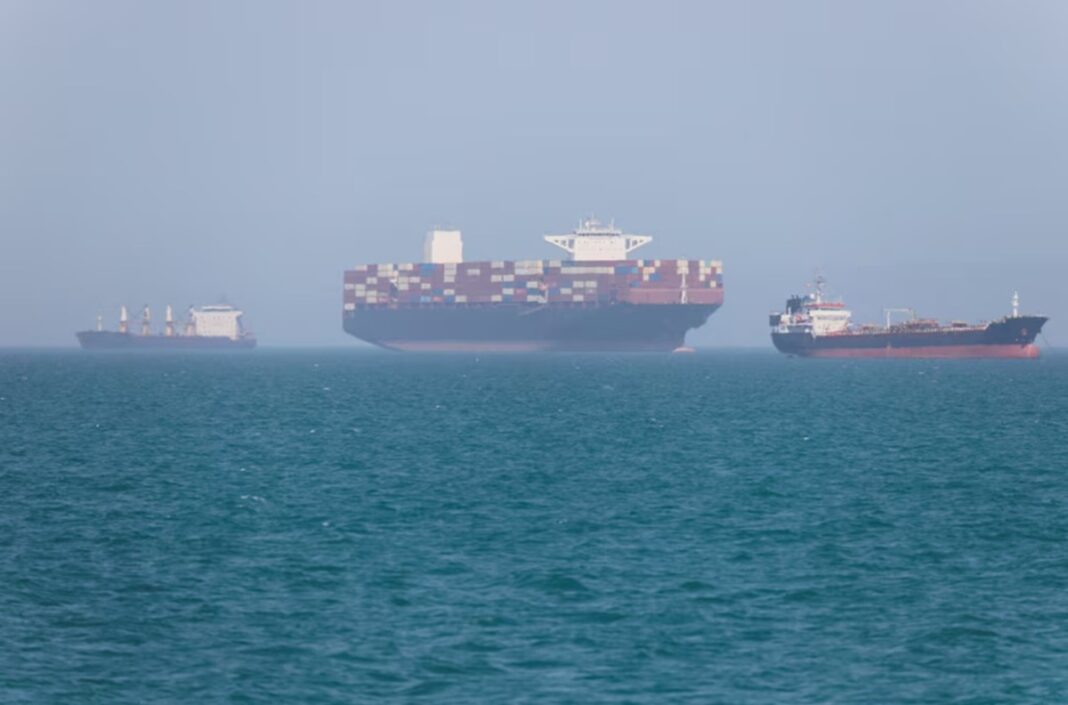
Tasnim’s reporting has revived warnings about a possible full closure of the Strait of Hormuz, one of the world’s most strategically important energy chokepoints, through which a significant percentage of global oil shipments transit.
While no confirmed operational move has occurred, even renewed threats surrounding Hormuz carry consequences.
Energy markets remain highly sensitive to instability in the Gulf, and previous Iranian signaling around the strait has often translated into spikes in shipping insurance costs, increased naval deployments, and elevated geopolitical tensions.
Notably, these warnings come after a period of relative easing in maritime disruptions, suggesting Tehran may once again be using maritime leverage as part of broader regional pressure.
Could the Bab al-Mandab Front Reignite?
The escalation scenario does not stop at Hormuz.
Iranian-linked reporting has also revived discussion surrounding possible “activation” of the Bab al-Mandab front — the critical maritime corridor linking the Red Sea to the Gulf of Aden.
This raises renewed attention toward the Houthis in Yemen and their relationship with Tehran.
However, it is important to avoid simplistic assumptions that Iran can directly dictate Houthi behavior.
The Iran-Houthi relationship does not function as a traditional patron-client model in which orders are automatically followed. The Houthis maintain their own decision-making structures and strategic calculations.
That said, ideological and operational links between Hezbollah and the Houthis remain deep. Escalation involving Hezbollah or Lebanon could plausibly increase the likelihood of Houthi responses targeting Israel, maritime routes, or both.
In that sense, Lebanon, Hormuz, and Bab al-Mandab are increasingly interconnected theaters rather than isolated crises.
Why the Risk of Escalation Is Growing
The longer Washington and Tehran fail to secure a broader understanding, the more opportunities emerge for regional spoilers and unintended escalation.
The status quo has never been particularly stable. Instead, it has functioned as a fragile holding pattern vulnerable to shocks — whether in Lebanon, maritime chokepoints, or broader Israel-Iran tensions.
Absent a diplomatic breakthrough, regional escalation risks becoming increasingly difficult to contain.
History shows that once multiple fronts begin interacting — Lebanon, Gulf shipping lanes, Red Sea routes, and proxy networks — escalation often develops faster than policymakers initially anticipate.
This is particularly concerning because controlling the pace and scope of escalation becomes harder once military signaling turns into operational responses.
Washington Faces a Difficult Choice
The latest developments place the United States in a difficult position.
Washington can attempt to pursue a broader diplomatic framework that incorporates de-escalation in Lebanon alongside nuclear and regional security concerns.
Alternatively, it can continue compartmentalizing the crises, treating Lebanon as separate from wider negotiations with Tehran.
The challenge is that Tehran increasingly appears unwilling to accept such compartmentalization.
If Iran’s position holds, any sustainable diplomatic breakthrough may require addressing Lebanon alongside maritime security, sanctions, and nuclear concerns rather than separately.
The broader warning signs have been visible for some time.
Without an agreement that addresses minimum strategic requirements on all sides, the current trajectory appears more likely to produce greater regional instability than lasting de-escalation.
For now, the diplomatic ball remains in Washington’s court — but time may be running short before events on the ground begin dictating the next phase of the crisis instead of diplomacy.