Friday, June 5, 2026
Home Blog Page 8

Saudi, Qatar and UAE Look Beyond US for Air Defense Against Iranian Drones

0
Shahed Kamikaze drone

Saudi Arabia, Qatar, and the United Arab Emirates are increasingly turning to South Korea, the United Kingdom, and Ukraine to rapidly replenish air defense systems depleted by repeated Iranian drone and missile attacks.

The shift marks a significant strategic change for some of Washington’s biggest defense customers, reflecting growing concerns over delivery delays, rising drone threats, and the need for lower-cost intercept solutions.

Recent reporting indicates Gulf states are actively exploring:

  • South Korean missile-defense systems
  • British low-cost anti-drone technologies
  • Ukrainian interceptor drones
  • electronic warfare and jamming platforms

This diversification comes as traditional U.S.-supplied systems such as MIM-104 Patriot and THAAD face heavy operational use and longer replenishment timelines.

Iranian Drone Attacks Expose Cost Problem

The main driver behind this shift is the economics of modern drone warfare.

Iranian systems, particularly Shahed-style one-way attack drones, can cost only a fraction of the missiles used to intercept them.

By contrast, interceptors such as Patriot missiles can cost millions of dollars each.

This imbalance has forced Gulf militaries to rethink their air defense architecture.

A Reuters report notes that Gulf states are now showing strong interest in low-cost interceptor drones developed with Ukrainian expertise, including systems priced in the low thousands of dollars rather than millions.

This cost equation has become especially important after repeated Iranian strikes across the region in 2026.

Why South Korea Is Emerging as a Key Supplier

South Korea has rapidly emerged as one of the world’s fastest-growing defense exporters.

Gulf states are reportedly considering South Korean systems such as:

  • medium-range SAM systems
  • counter-UAV radars
  • integrated air defense networks
  • mobile missile launchers

South Korea’s defense industry is attractive because it offers:

  • faster production cycles
  • competitive pricing
  • proven export track record
  • reduced political delivery constraints

This mirrors broader global trends, where countries in Europe, the Middle East, and Asia are increasingly buying South Korean defense systems.

Ukraine’s Drone Warfare Expertise in High Demand

One of the most notable developments is the Gulf’s increasing interest in Ukrainian counter-drone technology and operational expertise.

Ukraine has developed extensive real-world experience in intercepting Iranian-designed drones on the battlefield.

Recent reports indicate Ukrainian teams have already assisted Gulf states in improving air defense against Iranian drone attacks.

This includes:

  • interceptor drone technology
  • detection software
  • layered UAV defense tactics
  • operator training

Image

Ukraine’s appeal lies not only in hardware but in combat-tested doctrine against the exact type of Iranian drones threatening Gulf infrastructure.

UK Firms Offer Low-Cost Drone Defense Solutions

The United Kingdom is also emerging as an alternative supplier, particularly in:

  • signal jamming
  • electronic warfare
  • anti-drone radar
  • low-cost missile systems

British firms and defense startups are reportedly in discussions with Gulf buyers to provide rapid-response drone defense solutions.

This reflects a broader Gulf strategy of building multi-layered, diversified procurement channels rather than relying on a single supplier.

Strategic Shift Beyond Washington

The broader significance of this development is geopolitical.

For decades, Saudi Arabia, Qatar, and the UAE have relied heavily on U.S. weapons systems.

The new procurement shift does not necessarily signal a break with Washington, but it does indicate a recalibration of trust in supply speed and strategic dependence.

Gulf capitals increasingly appear focused on:

  • faster delivery timelines
  • cost-efficient interception
  • diversified defense partners
  • local production opportunities

This may reshape regional defense markets over the coming years.

US Aircraft Wreckage in Iran Could Trigger Strategic Intelligence Crisis

0
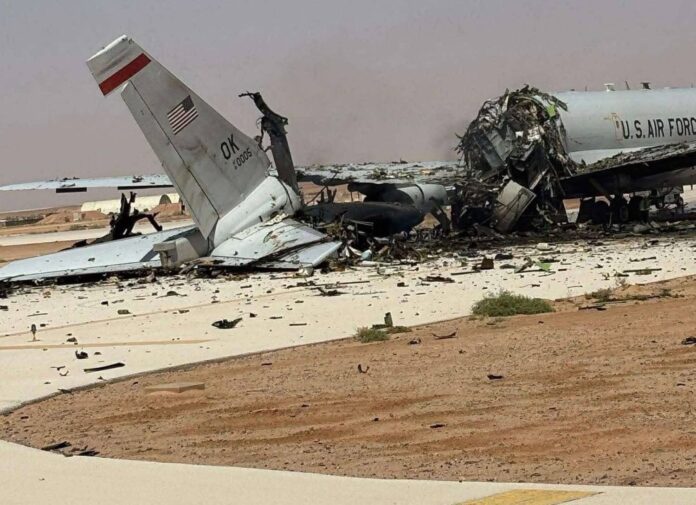
USAF C-130

Iran’s claim that it has recovered a critical component from one of America’s most advanced aircraft self-protection systems has transformed the wreckage of a failed rescue mission near Isfahan into what could become a major strategic intelligence crisis.

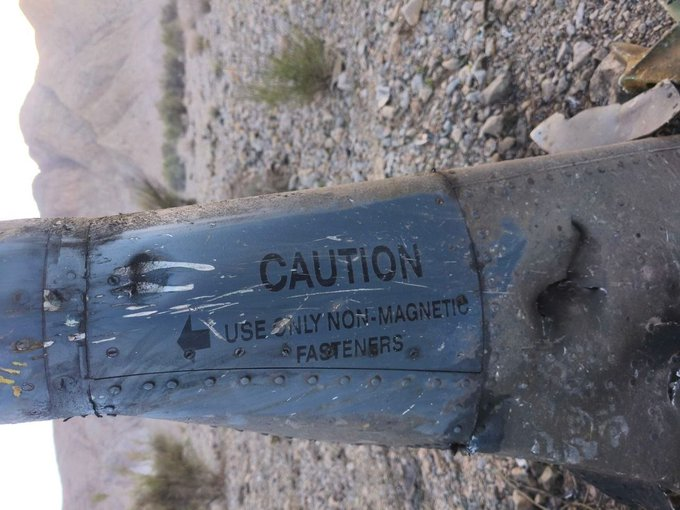
According to Iranian media, the recovered scorched spherical device may be the Guardian Laser Transmitter Assembly from the AN/AAQ-24(V) Large Aircraft Infrared Countermeasures (LAIRCM) suite, a highly classified system built by Northrop Grumman.

If confirmed, the incident could expose sensitive U.S. countermeasure technology to Iran, Russia, and China, potentially reshaping the balance between missile technology and aircraft survivability systems.

Image

What Happened Near Isfahan?

The reported recovery follows a failed U.S. special operations extraction mission in southern Isfahan province.

Iranian officials claim that during the operation:

  • at least two U.S. C-130 variants were destroyed
  • two Black Hawk helicopters were also lost
  • aircraft may have included MC-130J Commando II or HC-130J Combat King II

Washington has acknowledged that American aircraft were destroyed on the ground after becoming stranded due to mechanical problems.

However, U.S. officials insist the destruction was intentional to deny sensitive equipment from falling into hostile hands.

Despite this, even partially burned hardware could still provide valuable intelligence.

Why the LAIRCM System Matters

The AN/AAQ-24(V) LAIRCM system is one of the most advanced Western aircraft survivability technologies.

It is specifically designed to protect large aircraft against:

  • heat-seeking missiles
  • MANPADS such as FIM-92 Stinger
  • 9K38 Igla variants
  • modern imaging infrared seekers

Unlike conventional flare dispensers, LAIRCM uses a directional infrared countermeasure laser.

Once missile warning sensors detect an incoming threat, the external turret slews toward the missile and fires a precisely coded multi-band infrared laser waveform designed to blind or confuse the seeker.

Because the Guardian turret contains optics, laser source, stabilization hardware, and targeting logic, it is considered the most intelligence-sensitive part of the system.

Potential Intelligence Windfall for Russia and China

If Iran has genuinely recovered even a partially intact Guardian Laser Transmitter Assembly, it could become an intelligence prize of exceptional value.

Even damaged hardware may reveal:

  • laser wavelengths
  • optical coatings
  • cooling systems
  • tracking logic
  • modulation waveforms
  • seeker disruption methods

This information could allow rival engineers to design missile seekers specifically intended to resist or exploit Western infrared countermeasures.

For Russia and China, access to such technology could accelerate development of next-generation infrared-guided missiles.

Image

Strategic Impact on US Aircraft Survivability

The implications go far beyond a single wrecked aircraft.

LAIRCM protects multiple U.S. platforms, including:

  • Boeing C-17 Globemaster III
  • Boeing KC-46 Pegasus
  • Lockheed Martin C-130J Super Hercules variants
  • special operations aircraft

These aircraft cannot rely on speed or maneuverability like fighter jets.

Their survivability in contested airspace depends heavily on systems like LAIRCM.

If adversaries learn how the system disrupts missile seekers, the U.S. may need to:

  • modify software
  • introduce new laser waveforms
  • replace external turrets
  • upgrade large fleet segments

According to your draft’s estimate, an urgent fleet-wide modification program could exceed $2 billion.

Intelligence Battlefield Beyond the Crash Site

Even if the recovered object is later proven not to be genuine, the Isfahan incident already highlights a major reality of modern warfare:

wreckage itself has become an intelligence battlefield.

Destroyed aircraft, abandoned electronics, and battlefield fragments can yield critical insights long after combat operations end.

This makes technology denial and destruction protocols as strategically important as the mission itself.

New Russian Air Defense System Using R-77-1 Missiles Seen Near Ukraine Border

0
R-77 AA-12 Adder Vympel Russia Missile

A launcher from a newly configured Russian air defense system armed with medium-range R-77-1 air-to-air missiles has been spotted in the city of Oryol, highlighting Moscow’s continued efforts to strengthen homeland air defense against long-range Ukrainian strikes.

The images, first published by the Russian Telegram channel Voenny Osvedomitel, show a launcher carrying four R-77-1 missiles mounted on aircraft pylons attached to a guide rail, suggesting a ground-based adaptation of the well-known air-to-air weapon.

Image

The launcher’s layout visually resembles the NASAMS, the Norwegian-American surface-to-air missile system that uses AIM-9 Sidewinder and AIM-120 AMRAAM missiles.

Soviet-Era Concept Returns to the Battlefield

The idea of using R-77 missiles from ground-based launchers is not new.

Research into the concept dates back to the 1980s during the Soviet Union, when engineers explored integrating the missile into ground air defense and anti-aircraft artillery systems.

At the time, concepts reportedly included launchers based on:

  • Kvadrat-type surface-to-air missile systems
  • modified launch rails
  • systems built around the AZP-57 gun from the S-60 air defense system

This latest sighting suggests that Russia has now moved from concept and testing toward at least limited operational deployment.

Performance and Engagement Range

According to Vympel, the missile’s manufacturer, earlier ground-based versions of the R-77 had an engagement envelope of:

  • 1.2 km to 12 km range
  • 20 meters to 9 km altitude
  • course parameter up to 8 km

These figures were based on early R-77 variants, which had an air-launched range of around 80 km.

The modern R-77-1 is widely reported to have an air-launched range of up to 110 km, suggesting that its ground-launched performance may also have improved significantly.

Image

Tested in 2024, Now Possibly Operational

Russia reportedly resumed work on a ground-based R-77-1 air defense system after the start of the full-scale war in Ukraine.

In 2024, a similar system was tested at the Kapustin Yar range, though it featured a different launcher design.

The appearance of the launcher near Oryol — approximately 160 km from the Ukrainian border — strongly suggests the system may now be in limited operational service.

This deployment is particularly notable given repeated Ukrainian drone and missile strikes on Oryol during autumn and winter 2025–2026.

Response to Air Defense Missile Shortages

The system is likely intended to compensate for Russia’s growing shortage of conventional surface-to-air missiles and dedicated air defense systems.

Ukrainian forces have increasingly targeted:

  • radar sites
  • SAM batteries
  • logistics depots
  • missile stockpiles

As a result, Moscow appears to be adapting available missile stocks for homeland defense roles.

The move may also reflect strain on Russia’s air-to-air missile inventory.

Reports indicate Russian aviation has faced shortages of R-77-1 missiles, forcing greater use of older Soviet-era R-27 missiles for:

  • UAV interception missions
  • rear-area defense
  • escort operations near the front line

This suggests the new system could be part of a broader effort to maximize missile inventory flexibility across air and ground roles.

Strategic Implications

The deployment near Oryol points to Russia’s growing concern over deep-strike drone operations inside its territory.

By converting air-to-air missiles into ground-launched interceptors, Moscow may be seeking a faster and cheaper solution to defend cities, military bases, and logistics hubs.

The system could become particularly useful against:

  • long-range UAVs
  • cruise missiles
  • low-flying aerial threats

However, its actual battlefield effectiveness remains unclear.

Trump Orders Naval Blockade of Iran After Hormuz Talks Collapse, Raising Risk of Wider Gulf War

0
Iranian tankers, including shadow fleet vessels loading at Kharg Island

After the collapse of the latest negotiations in Islamabad, President Trump announced a dramatic escalation in the Gulf crisis, ordering the United States Navy to begin the process of blockading vessels entering or leaving the Strait of Hormuz.

In a strongly worded public statement, Trump declared:

“Effective immediately, the United States Navy, the Finest in the World, will begin the process of BLOCKADING any and all Ships trying to enter, or leave, the Strait of Hormuz.”

He further ordered the interdiction of vessels that paid tolls to Iran, confirmed the destruction of Iranian sea mines, and warned that any Iranian forces opening fire would be, in his words, “blown to hell.”

The move marks a major escalation in the already fragile US-Iran confrontation and raises the possibility of a wider military conflict across the Gulf region.

Strait of Hormuz Tensions Threaten Global Oil Markets

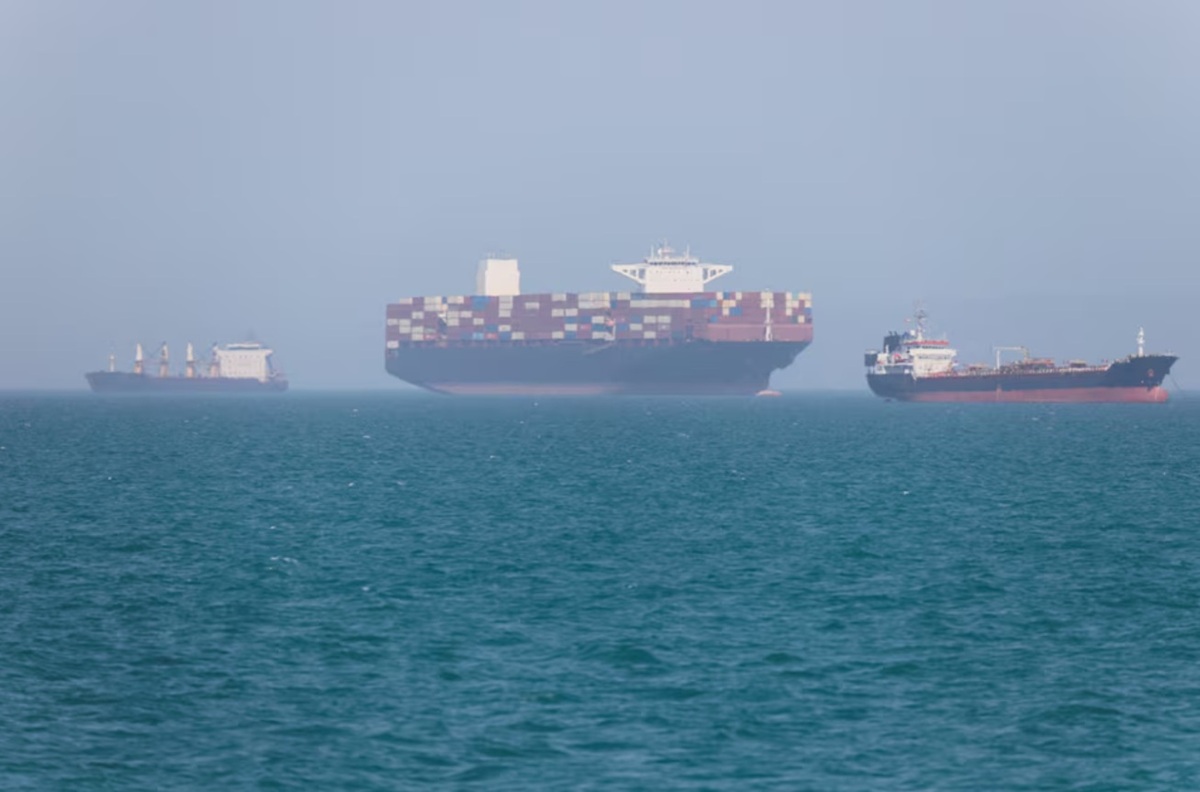
The Strait of Hormuz remains one of the world’s most important maritime chokepoints, carrying roughly one-fifth of global oil shipments.

Image

Any disruption in the waterway is likely to trigger an immediate rise in:

  • global crude oil prices
  • LNG shipping costs
  • marine insurance premiums
  • Asian energy import expenses

Asian economies, particularly those heavily dependent on Gulf energy supplies, would face significant second- and third-order economic shocks if shipping through Hormuz is interrupted.

Iran Unlikely to Back Down

Strategic assessments suggest that Tehran is unlikely to retreat under direct military pressure.

Instead, Iran may seek to test U.S. resolve by targeting American naval assets, commercial tankers, or regional energy infrastructure.

Potential flashpoints include:

  • attacks on US warships in the Gulf
  • disruption of tanker traffic
  • strikes on Gulf oil facilities
  • action near the Bab el-Mandeb Strait
  • pipeline attacks designed to bypass Hormuz

Iran may also attempt to continue exports through alternative routes such as the Jask terminal, while broadening retaliation under what analysts describe as an “oil for oil, power for power” doctrine.

Strategic Deadlock Between Washington and Tehran

The deeper issue now appears to be a growing strategic deadlock.

Washington seems to have entered the Islamabad talks assuming sustained military pressure had weakened Tehran enough to force concessions on:

  • uranium enrichment
  • freedom of navigation
  • maritime security

However, Iran’s perception appears fundamentally different.

From Tehran’s perspective, it has:

  • absorbed military strikes
  • preserved regime resilience
  • demonstrated retaliatory capability
  • avoided appearing weakened

This divergence in strategic perception now lies at the center of the diplomatic breakdown.

Image

Washington Faces Difficult Choices

The options now facing the United States remain deeply problematic.

1. Return to Negotiations

Renewed diplomacy risks reproducing the same deadlock, with neither side willing to compromise on core demands.

2. End the Confrontation Without a Deal

A de-escalation without visible gains may be perceived as weakness and could undermine U.S. deterrence.

3. Military Escalation

Further escalation carries the highest risks.

Large-scale strikes on Iranian infrastructure may impose costs, but they are unlikely to produce decisive strategic outcomes.

Instead, they risk triggering:

  • retaliation against US assets
  • Israeli targets
  • Gulf allies
  • broader energy market disruption

In short, escalation may restore tactical leverage but not necessarily deliver a strategic breakthrough.

Political Constraints Increase Pressure on Washington

Washington also faces growing political and strategic time pressure.

Key upcoming events may limit appetite for a prolonged conflict:

  • major diplomatic engagements with China
  • the approaching Soccer World Cup
  • looming midterm elections
  • rising economic concerns linked to oil prices

A ground invasion or prolonged military campaign would require months of preparation and carry significant political risk.

These constraints leave the United States in what increasingly looks like a strategic entanglement rather than a tactical confrontation.

Image

No Clear Winner in a Hormuz Conflict

At this stage, the crisis appears to be moving toward a lose-lose scenario.

While Iran would likely absorb significant economic and military damage, Gulf states, energy markets, and the global economy would also suffer severe consequences.

There is no clear winner — only varying degrees of loss.

USS Frank E. Peterson and USS Michael Murphy Lead Hormuz Mine Clearance Mission

0
USS Frank E. Peterson

U.S. Central Command (United States Central Command) announced on April 11 that American forces have begun setting conditions for mine clearance operations in the Strait of Hormuz, marking a major step toward restoring safe maritime traffic through one of the world’s most strategically important waterways.

According to the official CENTCOM press release, two U.S. Navy guided-missile destroyers — USS Frank E. Petersen Jr. (DDG-121) and USS Michael Murphy (DDG-112) — transited the Strait of Hormuz and conducted operations in the Arabian Gulf as part of a broader mission to ensure the waterway is fully cleared of sea mines previously laid by Iran’s Islamic Revolutionary Guard Corps.

US Navy Establishing a New Safe Passage

CENTCOM Commander Admiral Brad Cooper said the operation has already entered its first phase.

“Today, we began the process of establishing a new passage and we will share this safe pathway with the maritime industry soon to encourage the free flow of commerce.”

The statement underscores Washington’s priority of reopening the Strait of Hormuz, a vital international sea lane that supports both regional stability and global economic prosperity.

Why the Strait of Hormuz Matters

The Strait of Hormuz is one of the world’s most critical maritime chokepoints, carrying nearly 20% of global oil shipments and a significant share of liquefied natural gas exports.

Any disruption in this narrow sea corridor has an immediate impact on:

  • global oil prices
  • tanker insurance rates
  • Gulf energy exports
  • international supply chains

The latest operation follows weeks of disruption caused by Iranian mine-laying and attacks on commercial shipping.

Additional Forces and Underwater Drones to Join Mission

CENTCOM also confirmed that additional U.S. assets, including underwater drones and mine-countermeasure systems, will join the clearance effort in the coming days.

This indicates a broader and more technologically advanced mine-clearing mission that may include:

  • unmanned underwater vehicles (UUVs)
  • sonar detection systems
  • helicopter-based surveillance
  • explosive ordnance disposal teams

The use of underwater drones is particularly significant, as it allows U.S. forces to detect and neutralize mines while reducing risk to manned vessels.

Strategic and Economic Implications

The move is likely to reassure international shipping companies and oil markets, which have been closely watching developments in the Gulf.

Restoring a secure maritime corridor through Hormuz is seen as essential for stabilizing global energy flows, particularly for exports from Saudi Arabia, the UAE, Iraq, and Qatar.

The mission also signals continued U.S. military commitment to protecting freedom of navigation in the region.

Iran Struggles to Clear Its Own Mines in Strait of Hormuz as Ceasefire Talks Continue

0
Iran laid sea mines in Strait of Hormuz

Iran is facing a major strategic setback in the Strait of Hormuz, as it is reportedly unable to fully reopen the critical shipping route because it cannot locate all the sea mines it laid during the conflict, according to senior U.S. officials cited by The New York Times.

The crisis has now become a major obstacle in the ongoing ceasefire and peace negotiations taking place in Pakistan, where Iranian and U.S. delegations are discussing terms to stabilize the region. Recent reporting also indicates that U.S. forces have begun mine-clearing operations in the waterway.

How Iran’s Mining Strategy Backfired

According to the report, the Islamic Revolutionary Guard Corps (IRGC) began chaotically mining the strait using small boats immediately after the start of U.S. and Israeli military operations against Iran in March 2026.

Senior U.S. officials believe the mines were deployed without properly recording their exact coordinates. As a result, Tehran now faces serious difficulties in locating them.

Ocean currents may also have shifted some of the mines, while others may have been placed in unstable positions that allowed them to drift from their original locations.

This has created a dangerous situation where even Iran itself cannot safely restore full maritime traffic through one of the world’s most important trade chokepoints.

Strait of Hormuz Remains Critical for Global Oil Markets

The Strait of Hormuz remains one of the most important maritime chokepoints in the world, with nearly 20% of global oil supplies passing through it every day.

Any prolonged disruption in this narrow waterway directly affects:

  • global crude oil prices
  • LNG shipments
  • Gulf energy exports
  • international shipping insurance costs

During the conflict, Iran used mine-laying as a pressure tactic against the United States and its allies.

However, this strategy now appears to have backfired on Tehran, as the mines are also preventing Iran from quickly meeting U.S. demands to restore navigation.

Currently, only limited “safe corridors” designated by Iran are open, but these routes remain insufficient for restoring normal commercial shipping.

Limited Mine-Clearing Capabilities on Both Sides

One of the biggest challenges is the severe shortage of specialized minesweeping assets in the region.

Despite possessing an estimated 2,000 to 6,000 naval mines, Iran reportedly lacks modern mine countermeasure systems.

The country primarily relies on:

  • small IRGC boats
  • limited Ghadir-class submarine capabilities
  • basic naval surveillance assets

However, it has very limited capacity to detect and neutralize mines effectively, especially when their exact locations are unknown.

Even U.S. officials acknowledge that the United States also faces challenges in rapid mine-clearing operations in the Gulf.

US Navy Faces Its Own Operational Challenges

The situation is further complicated by recent changes in the U.S. Navy’s mine warfare fleet.

In September 2025, the U.S. Navy decommissioned its last four Avenger-class minesweepers previously based in Bahrain, ending decades of dedicated mine-clearing presence in the Persian Gulf.

These vessels were replaced by Independence-class Littoral Combat Ships (LCS) equipped with the Mine Countermeasures Mission Package.

The package includes:

  • unmanned surface vessels
  • underwater drones
  • sonar systems
  • MH-60S helicopters

While technologically advanced, these systems have not yet been fully tested in major combat conditions, raising concerns over how quickly the strait can be cleared.

At the start of the conflict, some of these vessels were also deployed outside the immediate Gulf region, including areas near Singapore, Malaysia, and the Indian Ocean.

Clearing Hormuz Could Take Weeks or Months

Security and naval experts now forecast that clearing the Strait of Hormuz may take weeks or even months.

Modern mine warfare heavily favors the side laying the mines because deployment is significantly faster and cheaper than removal.

The combination of:

  • limited minesweepers
  • untested unmanned systems
  • drifting mines
  • continued military risks

means a full restoration of shipping could face prolonged delays.

This issue has now become a central element in the Pakistan-hosted ceasefire talks, where Iranian Foreign Minister Abbas Araghchi has reportedly raised the “technical limitations” surrounding the reopening of the strait.

US-Iran Talks in Islamabad Enter Technical Phase as Trilateral Meeting With Pakistan Marks Major Breakthrough

0
Iran’s 2nd Meeting with Pakistani Army Chief

Direct negotiations between the United States, Pakistan, and Iran have entered a new phase in Islamabad, with officials confirming a rare trilateral face-to-face meeting that has now moved beyond political signaling into technical-level bargaining.

According to a senior White House official, the talks mark one of the most significant diplomatic breakthroughs between Washington and Tehran in recent years, with experts from both sides now working through specific issues related to a long-term ceasefire framework.

The shift into technical discussions suggests that negotiations are no longer limited to broad principles and may now be focusing on implementation details.

Direct Talks Break Major Diplomatic Barrier

The meeting is being widely viewed as a major psychological breakthrough.

For years, direct face-to-face diplomacy between U.S. and Iranian senior leadership has remained rare and politically sensitive.

Today’s talks, however, brought senior delegations together in the same room for approximately two hours, according to Pakistani sources.

The reported participants included:

Core US Delegation

  • JD Vance
  • Steve Witkoff
  • Jared Kushner

Iranian Delegation

  • Mohammad Bagher Ghalibaf
  • Abbas Araghchi

Pakistani sources also indicated that the Pakistan Army Chief was present, underlining Islamabad’s role as a key diplomatic facilitator.

Talks Move Into Technical Negotiations

Iranian media, including Tasnim News Agency, reported that the discussions have now moved into technical negotiations on specific issues.

This suggests a significant evolution from symbolic diplomacy to actual bargaining.

Experts from both sides are now reportedly reviewing detailed frameworks.

A one-day extension of the talks remains possible, although no final decision has yet been announced.

This development strongly indicates that negotiators may be working toward a structured formula for sustaining the ceasefire.

Strait of Hormuz and Uranium Monitoring at Core of Talks

The most likely technical issues under discussion include:

  • reopening and security of the Strait of Hormuz
  • monitoring of enriched uranium stockpiles in Isfahan
  • military de-escalation mechanisms
  • phased sanctions relief

The Strait of Hormuz remains central to global markets, carrying approximately 20% of the world’s oil supply.

This makes its reopening and maritime security arrangements one of the most urgent issues on the table.

President Donald Trump also stated that the U.S. is beginning the process of “clearing out the Strait of Hormuz.”

While details remain unclear, the statement suggests continued American military involvement in ensuring freedom of navigation.

Ceasefire Could Lead to Partial Economic Reintegration

If talks progress toward a deal, Iran may be positioned for partial reintegration into the global financial system.

Potential outcomes being discussed in diplomatic circles include:

  • partial return to SWIFT
  • restoration of exports to Europe and Asia
  • removal of roughly 60–70% of economic sanctions
  • limited financial normalization

Such steps would likely be phased and linked to compliance benchmarks.

This would stop short of full sanctions removal but still represent a major economic shift.

China Could Play Major Reconstruction Role

Another key post-agreement dimension may involve China.

If a durable ceasefire framework emerges, Beijing is widely expected to take a leading role in infrastructure investment and economic reconstruction inside Iran.

This would align with China’s long-term strategic interest in Iranian energy and regional connectivity.

Long-Term Military Freeze More Likely Than Full Resolution

The most realistic near-term outcome may not be a full final settlement, but rather a managed freeze.

That would likely involve:

  • ceasefire continuation
  • uranium monitoring
  • sanctions easing
  • military rebuilding restrictions

Iran would still be expected to quietly restore military capacity over the medium term.

Some strategic assessments estimate a 3–4 year timeline for return to pre-war capability.

This makes the current talks less about permanent resolution and more about stabilizing a fragile regional balance.

Why the US 15-Point Plan and Iran’s 10-Point Proposal May Be Impossible to Bridge

0
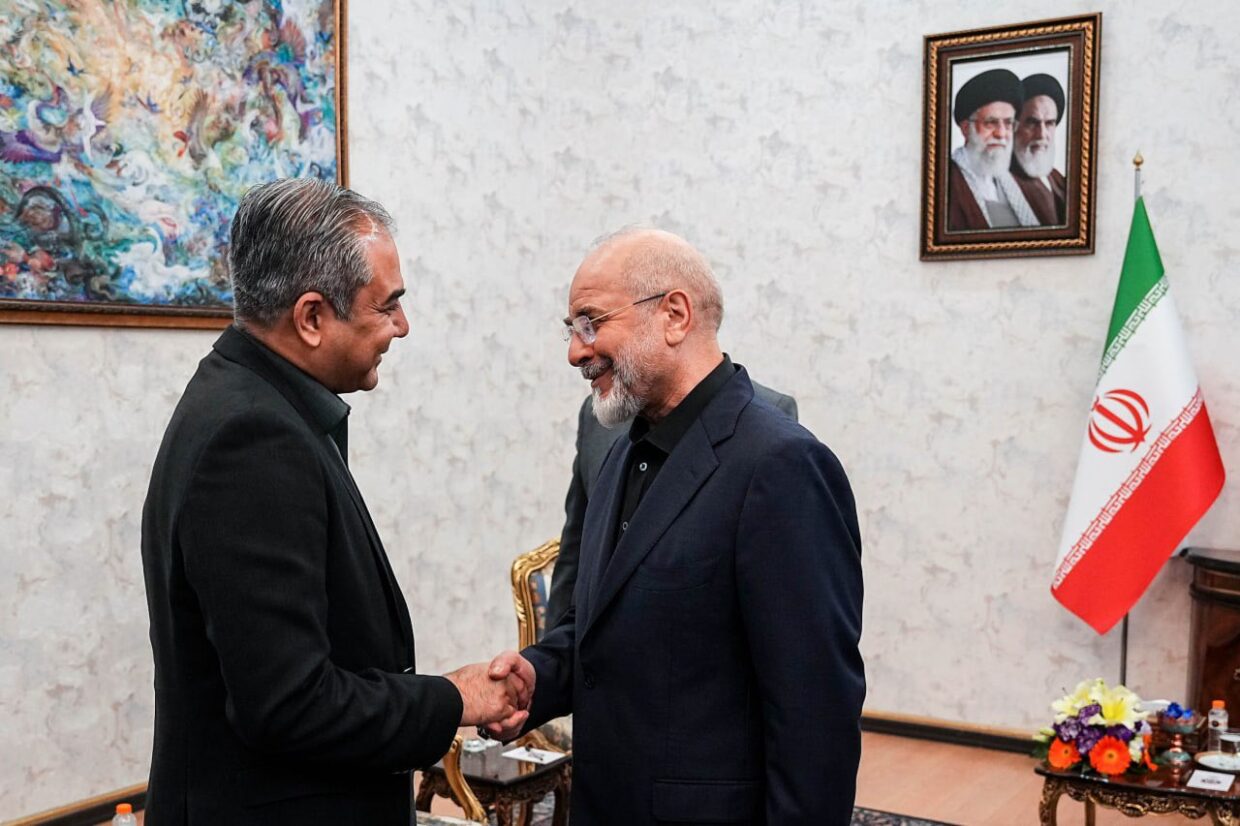
Pakistani Prime Minister Shehbaz Sharif meets with Iranian Parliament Speaker Mohammad Bagher Ghalibaf in Islamabad, Pakistan, April 11, 2026. Pakistan's Prime Minister Office

Efforts to turn the fragile ceasefire between the United States and Iran into a broader diplomatic settlement are facing serious obstacles, with both sides still locked into demands that analysts describe as fundamentally difficult to reconcile.

According to defense analyst Michael Clarke, speaking to Sky News, the American 15-point framework and Iran’s 10-point proposal remain so far apart that a breakthrough in the near term appears unlikely.

The most realistic outcome, he suggested, may be another round of talks next week while the ceasefire continues in a fragile and uncertain state.

Maximalist Demands Continue to Block Progress

At the heart of the deadlock is a basic diplomatic problem: both sides are negotiating from maximalist positions.

Washington is pressing for broad restrictions tied to Iran’s military and nuclear capabilities.

Tehran, meanwhile, continues to insist on maintaining what it considers core sovereign rights and strategic leverage.

This has left the talks in a position where each side is effectively speaking past the other.

For now, the most likely diplomatic outcome may be a temporary extension of talks rather than a final agreement.

Nuclear Program Remains the Biggest Obstacle

One of the clearest showstoppers remains Iran’s nuclear program.

Tehran has repeatedly signaled that it will not abandon its civilian nuclear infrastructure or surrender control over its stockpile of highly enriched uranium.

Uranium enrichment

This issue remains central to any future settlement.

For Washington, any agreement must be framed in a way that can credibly claim Iran will not acquire a nuclear weapon.

For Tehran, preserving the principle of sovereign enrichment remains a red line.

That gap continues to make a comprehensive agreement extremely difficult.

Strait of Hormuz and US Military Presence Remain Red Lines

Another major sticking point is the Strait of Hormuz.

Iran is unlikely to give up its strategic leverage over the strait, which remains one of the most important energy chokepoints in the world.

At the same time, Washington is highly unlikely to accept any arrangement that restricts its military posture in the Gulf.

This includes continued operation of U.S. regional bases and troop deployments.

Both sides therefore remain entrenched on one of the conflict’s most strategically important issues.

Ballistic Missile Demands Also Remain Unresolved

The question of missile capability is another major source of friction.

The United States has continued to press Iran over the range and future development of its ballistic missile systems.

Tehran, however, has consistently treated its missile arsenal as an essential deterrent and a non-negotiable component of national defense.

This makes any compromise highly unlikely in the near term.

Lebanon Could Become the Biggest Spoiler

Even if negotiators manage to reach a vague or politically convenient formula, regional conflict dynamics could still derail progress.

The most immediate spoiler appears to be Lebanon.

With Israel signaling that the current ceasefire framework does not necessarily apply to the Lebanese front, a secondary conflict is now developing within the broader war environment.

That emerging front could quickly undermine any diplomatic gains made in the next few weeks.

Israel

This secondary war may become the single greatest threat to sustaining the broader ceasefire.

Best Case May Be Delay, Not Resolution

For now, the most realistic diplomatic scenario may be postponement rather than resolution.

A temporary political formula that allows both sides to claim limited success could emerge.

But without movement on nuclear policy, Hormuz, missile capability, and Lebanon, any deal is likely to remain fragile.

The ceasefire may survive.

A durable peace remains far more uncertain.

Pakistan Deploys Fighter Jets to Saudi Arabia in Major Deterrence Signal Amid Iran Tensions

0

Saudi Arabia has formally announced the arrival of a Pakistani military air contingent at King Abdulaziz Air Base in Dhahran, marking one of the most significant operational moves under the Strategic Mutual Defense Agreement signed between Riyadh and Pakistan in September 2025.

According to the Saudi Ministry of Defense, the deployed force includes fighter and support aircraft from the Pakistan Air Force, with the stated aim of strengthening joint operational readiness, enhancing military coordination, and supporting regional stability.

The timing of the deployment has immediately elevated its geopolitical significance, particularly as diplomatic talks involving the United States and Iran continue in Islamabad.

Pakistani Air Assets Arrive in Eastern Saudi Arabia

The Saudi statement confirmed that the force arrived at King Abdulaziz Air Base, a strategically critical installation in the kingdom’s Eastern Province.

Open-source observations over the last 24 hours indicate the landing of:

  • Lockheed C-130 Hercules C-130H transport aircraft
  • Ilyushin Il-78 Il-78MP aerial refueling tankers

The presence of transport and tanker aircraft strongly suggests that the deployment includes not only fighter jets but also sustainment and refueling capability, pointing toward an operational rather than symbolic force package.

This gives the contingent extended endurance and rapid-response flexibility across the Gulf theater.

Defense Pact Now Moves Into Operational Phase

The deployment appears to be the clearest sign yet that the Strategic Mutual Defense Agreement signed on 17 September 2025 has moved into its operational phase.

Under the terms publicly described at the time, an attack on either state is treated as an attack on both.

That clause makes this development particularly significant in the current regional environment.

The arrival of Pakistani military assets in eastern Saudi Arabia sends a visible signal that Riyadh now has an activated mutual defense layer involving one of the region’s most capable air forces.


Timing Points to Strong Deterrence Signal Toward Iran

The deployment’s timing strongly suggests a deterrence message aimed at Iran.

This comes after recent reports of attacks on Saudi energy infrastructure, including concerns surrounding the kingdom’s East-West pipeline network following the ceasefire.

Dhahran’s location near the Gulf and within operational reach of key maritime and energy infrastructure further amplifies the signal.

Military analysts are likely to interpret the move as an effort to discourage any Iranian retaliation or spillover strike into Saudi territory.

This is especially relevant as separate reports indicate possible Chinese military support shipments to Iran, further increasing regional uncertainty.

Pakistan and Saudi Military Ties Are Deep and Longstanding

While the move is significant, it is not without precedent.

Pakistan and Saudi Arabia have long maintained close military cooperation, with Pakistani personnel historically involved in training, advisory, and defense support roles inside the kingdom.

Pakistani officers and defense specialists have for years worked closely with Saudi military institutions.

This means the latest deployment is less a new alliance and more an intensification of an already deeply integrated security relationship.

That longstanding familiarity may enable faster joint operational coordination than would normally be possible between partner states.

Talks in Islamabad Remain Critical

The deployment comes as diplomatic negotiations continue in Islamabad involving the United States and Iran.

This creates a highly sensitive balance:

  • military deterrence increases in the Gulf
  • Chinese-Iran arms concerns continue
  • blocked assets remain disputed
  • ceasefire terms remain fragile

Against this backdrop, the Islamabad talks increasingly appear to be the most important diplomatic channel for preventing a broader regional war.

The coming days may determine whether the region moves toward stabilization or renewed escalation.

Why This Matters Globally

This development goes beyond Saudi-Pakistan bilateral defense ties.

It directly affects:

  • Gulf energy security
  • Strait of Hormuz stability
  • U.S.-Iran diplomacy
  • China-Iran strategic calculations

With global oil markets already highly sensitive, any further military signaling in eastern Saudi Arabia will be closely watched by international markets and allied governments.

The operationalization of the pact is now one of the most consequential regional security developments of the week.

Iran War Fallout Reshapes Ukraine Talks as U.S. Leverage Over Russia Comes Under Pressure

0
U.S. President Donald Trump meets with Ukrainian President Volodymyr Zelenskiy at the White House in Washington, D.C., U.S.

The fallout from the Iran conflict is increasingly reshaping the diplomatic and military balance around the war in Ukraine, raising concerns among allies that Washington’s focus, resources, and leverage over Russia are being eroded at a critical moment.

As ceasefire diplomacy with Iran unfolds, the overlap between Middle East escalation and Ukraine negotiations is becoming harder to ignore.

U.S. diplomatic attention that had been expected to focus on Kyiv was instead redirected toward Islamabad, where talks related to Iran were taking place the same weekend senior envoys had been expected in Ukraine.

This shift is raising broader questions about Washington’s ability to manage simultaneous crises.

Patriot Missile Stocks and Ukraine’s Air Defense Challenge

One of the most immediate consequences appears to be on air-defense resources.

The United States expended more than 800 Patriot missiles in the Middle East in just three days, a number exceeding what Ukraine has reportedly received during the entire war.

With annual production estimated at roughly 600 interceptors per year, the pace of expenditure has intensified concerns over supply constraints.

Washington has since suspended some Patriot export sales globally due to production limitations.

For Ukraine, this has direct implications for defending critical infrastructure against continued missile and drone attacks.

Sanctions Relief and Russia’s War Economy

There are concerns that U.S. sanctions policy may be indirectly strengthening Moscow’s financial position.

A rollback in certain Russian oil restrictions coincided with a sharp rise in crude prices during the Iran crisis, creating a more favorable environment for Russian energy exports.

President Volodymyr Zelenskyy reportedly warned that such easing could provide Russia with billions of additional dollars for its war effort.

This development risks weakening Ukraine’s position at the negotiating table while simultaneously strengthening Russia’s fiscal resilience.

Ukraine’s Battlefield Performance Continues

Despite diplomatic and logistical pressures, Ukraine’s military capabilities continue to evolve.

Ukrainian forces claim:

  • recaptured more than 480 square kilometers in the southeast
  • improved ballistic missile interception rates
  • expanded long-range drone strikes inside Russia
  • degraded Russian oil infrastructure

Ukrainian strikes may have disrupted around 40% of Russia’s oil export capacity, one of the most significant energy disruptions Moscow has faced during the war.

This has strengthened Kyiv’s technological and strategic credibility.

Allies Concerned About U.S. Strategic Focus

European officials increasingly concerned that Washington’s global posture is becoming fragmented.

The overlap between Iran diplomacy, Ukraine peace efforts, sanctions policy, and Indo-Pacific considerations is generating fears that U.S. leverage is being diluted across multiple theaters.

For European allies, the concern is not only military resources but diplomatic consistency.

If Washington is seen as reducing pressure on Russia while redirecting critical defense assets elsewhere, it could alter alliance calculations.

Global Domino Effect

The broader theme emerging is interconnected strategic risk.

The Iran conflict, Ukraine negotiations, oil markets, and global deterrence are increasingly linked.

A shift in one theater now directly affects the others.

This creates what diplomats increasingly describe as a domino effect in global security architecture, where actions in the Middle East can rapidly alter the balance in Eastern Europe and beyond.

That dynamic is likely to remain central to international diplomacy in the coming weeks.

US Intelligence Warns China May Arm Iran as Washington Expands Military Build-Up During Islamabad Talks

0
USS George H.W. Bush

The United States is pursuing an increasingly visible dual-track strategy toward Iran, combining diplomatic negotiations in Islamabad with a major military reinforcement across the Middle East, even as intelligence reports suggest China may be preparing to transfer new air-defense systems to Iran.

The approach underscores Washington’s effort to preserve diplomatic leverage while simultaneously preparing for the possibility of renewed escalation if the fragile ceasefire collapses.

At the center of the intelligence concern are reported preparations for MANPADS shipments — shoulder-fired air-defense missiles that could significantly threaten low-flying U.S. aircraft in the region.

China-Iran Air Defense Concerns Raise Stakes

According to U.S. intelligence assessments, Beijing may be preparing to route air-defense systems to Iran through third countries in an effort to conceal the shipments’ true origin.

If confirmed, this would represent a serious escalation.

Such systems pose a major asymmetric threat to:

  • fighter aircraft
  • ISR platforms
  • helicopters
  • low-altitude strike missions

This concern comes at a particularly sensitive moment, with President Donald Trump expected to meet Xi Jinping in Beijing next month.

At the same time, Beijing continues to publicly deny any military support to Tehran.

Islamabad Talks Continue as Military Pressure Rises

While diplomatic talks continue in Islamabad, Washington is simultaneously intensifying its military posture across the region.

This two-track strategy appears designed to combine negotiation with visible coercive pressure.

The military buildup now includes:

  • additional fighter aircraft deployed into CENTCOM
  • up to 2,000 troops from the 82nd Airborne Division expected within days
  • thousands of sailors and Marines en route
  • expanded airlift and surveillance operations

82nd Airborne Division

The reinforcement signals that Washington is keeping significant strike and rapid-reaction options available.

Carrier Strike Groups Moving Into Position

Large U.S. naval formations remain active across multiple theaters connected to the crisis.

Current and inbound deployments include:

  • USS Gerald R. Ford Carrier Strike Group in the Eastern Mediterranean
  • USS Abraham Lincoln Carrier Strike Group in the northern Arabian Sea
  • USS Tripoli Amphibious Ready Group in the northern Arabian Sea
  • USS George H. W. Bush Carrier Strike Group moving across the Atlantic
  • USS Boxer Amphibious Ready Group heading toward the Middle East

The arrival of the Bush and Boxer groups is expected to take more than a week, but their movement significantly strengthens U.S. regional force posture.

Air Activity Over Gulf Remains Intense

U.S. air operations over the Persian Gulf remain at a high tempo.

In the past 24 hours alone, activity reportedly included:

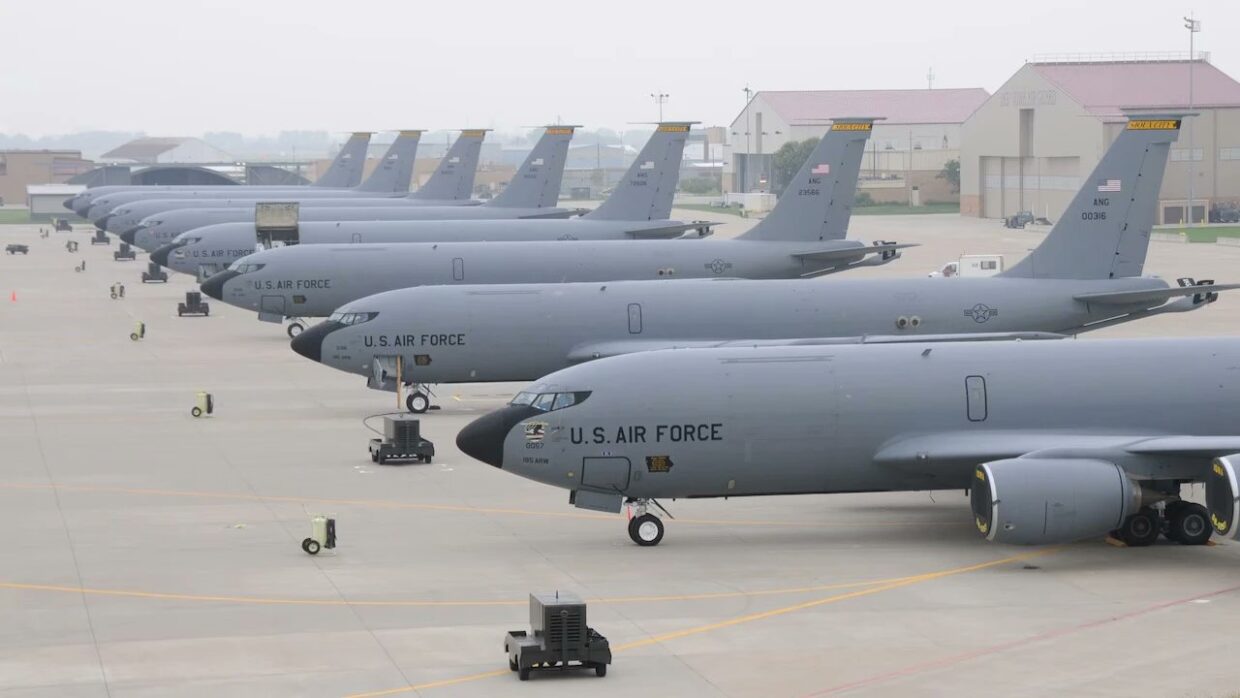
  • at least 9 KC-135 and KC-46 aerial refueling tankers
  • at least 1 E-3B AWACS
  • multiple reconnaissance flights

Boeing KC-135 Stratotanker
Boeing KC-46 Pegasus
Boeing E-3 Sentry

This level of tanker support strongly suggests sustained fighter and ISR activity across Iraq, the Persian Gulf, and surrounding airspace.

Strategic Airlift and Recon Flights Continue

The U.S. is also maintaining a high operational tempo through strategic airlift.

At least 20 C-17A Globemaster III flights reportedly moved equipment from the U.S. and Europe to:

  • Israel
  • Camp Lemonnier
  • Incirlik Air Base

Boeing C-17 Globemaster III

Reconnaissance missions remain equally active.

At least 7 ISR sorties involving:

  • Boeing P-8 Poseidon
  • Northrop Grumman MQ-4C Triton
  • Boeing RC-135 Rivet Joint

have been reported across the Eastern Mediterranean, Gulf of Aden, and especially the Strait of Hormuz.

Two MQ-4C sorties reportedly launched from Sigonella Air Base toward Hormuz.

Strategic Message Is Clear

The message from Washington is increasingly clear:

talks continue, but military readiness is accelerating.

The United States appears determined to keep diplomatic channels open while ensuring overwhelming force remains available if negotiations fail.

That dual-track posture is likely intended both to pressure Tehran and to shape Beijing’s calculations regarding any military support to Iran.

The coming days — particularly developments in Islamabad and the arrival of new U.S. formations — may prove decisive.

India’s F-35 Option Remains Politically Distant as Sovereignty and Tech Transfer Concerns Persist

0
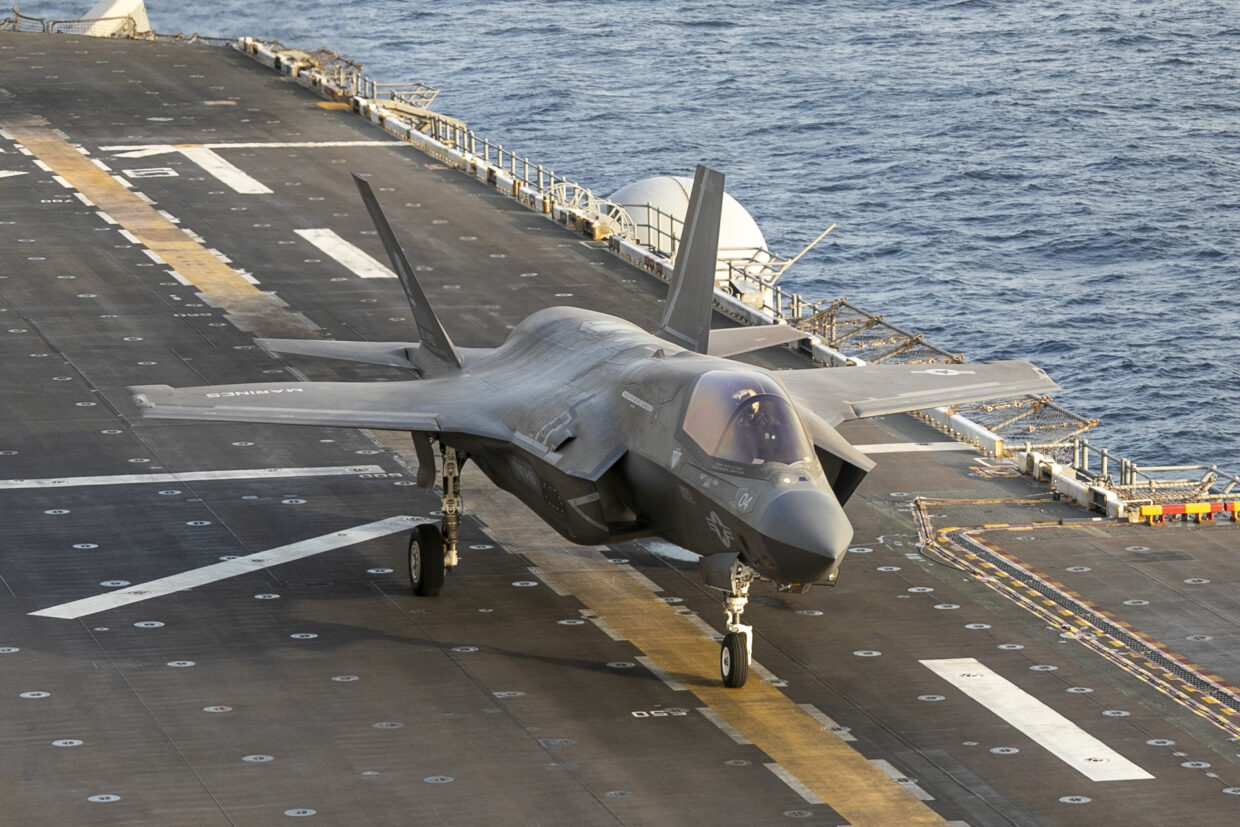
F-35 Lightning II stealth strike fighter jet

The possibility of India acquiring the Lockheed Martin F-35 Lightning II has once again entered the geopolitical spotlight, but the latest signals from Lockheed Martin suggest that no active engagement currently exists with New Delhi.

The aerospace giant has indicated that any discussion involving the F-35 must proceed strictly through government-to-government channels under the U.S. Foreign Military Sales (FMS) framework, effectively confirming that there are no ongoing corporate-level briefings, technical presentations, or negotiations with India at this stage.

That position underscores a broader reality: while the F-35 remains strategically attractive, major political, technological, and sovereignty-related barriers continue to keep it out of India’s near-term procurement plans.
No Active F-35 Talks With India

Lockheed Martin’s carefully worded response has not closed the door on a future sale, but it does make clear that no direct company-level dialogue currently exists.

Any potential acquisition would first require India to submit a formal Letter of Request to the U.S. government.

Only after review by the Pentagon, State Department, and Congress could the process move forward.

Until then, the F-35 remains more a diplomatic talking point than an active program.

This comes despite earlier remarks from Donald Trump about potentially “paving the way” for future F-35 sales to India.

So far, no concrete follow-up appears to have emerged.

India’s Strategic Autonomy Remains the Main Obstacle

The biggest barrier is not capability.

It is sovereignty.

India’s defense policy increasingly prioritizes Aatmanirbhar Bharat, the country’s self-reliance doctrine aimed at reducing long-term dependence on foreign military platforms.

For New Delhi, the F-35 raises immediate concerns because it comes with tight U.S. control over:
  • mission software
  • stealth maintenance systems
  • logistics networks
  • upgrade pathways
  • diagnostics and support infrastructure

The aircraft’s ODIN and ALIS digital support ecosystems are particularly sensitive because they create ongoing software dependence on Washington.

For India, which has historically sought operational independence, that level of foreign control remains politically difficult.

Why Source Code and Mission Data Matter

Indian planners have repeatedly emphasized that access to mission software and electronic warfare libraries is now nearly as important as aircraft performance itself.

The F-35’s mission data files determine how the aircraft:

  • identifies radar signatures
  • prioritizes threats
  • integrates intelligence
  • configures combat response

Even some close U.S. allies receive only limited access.

Full source-code sovereignty remains highly restricted.

That directly conflicts with India’s long-term defense-industrial ambitions.

AMCA Still Remains India’s Priority

Rather than importing a fifth-generation fighter under restrictive terms, India continues to focus on its indigenous Advanced Medium Combat Aircraft (AMCA).

The AMCA is not merely an aircraft program.

It is central to India’s broader effort to build domestic capability across:

  • engines
  • sensors
  • weapons
  • mission software
  • aerospace manufacturing

Alongside this, India is also expanding its Dassault Rafale fleet, upgrading Sukhoi Su-30MKI aircraft, and accelerating HAL Tejas Mk-1A deliveries.

This layered strategy gives New Delhi flexibility while preserving industrial control.

Cost Is Another Major Factor

The financial burden is also significant.

The F-35’s estimated operating cost remains around $36,000 per flight hour, making it one of the most expensive combat aircraft to sustain.

Over decades, even a modest fleet could generate lifecycle costs exceeding $30 billion.

That would compete directly with India’s domestic fighter, missile, and naval modernization programs.

For Indian planners, this makes the aircraft difficult to justify against long-term self-reliance goals.

Indo-Pacific Tensions Keep the Question Alive

Despite the obstacles, the F-35 question will likely remain alive because of worsening Indo-Pacific security pressures.

China’s expanding airpower and Pakistan’s fighter modernization continue to shape India’s force-planning decisions.

If regional military pressure intensifies significantly, Washington may again explore ways to support India.

However, that support may be more likely to come through engines, sensors, weapons integration, and collaborative development rather than a direct F-35 sale.

For now, the gap between America’s most tightly controlled fighter and India’s pursuit of strategic autonomy remains unresolved.

U.S. Loses 24 MQ-9 Reaper Drones in Six Weeks as Iran’s Air Defenses Challenge Drone Dominance

0
MQ-9-Sea-Guardian.jpg

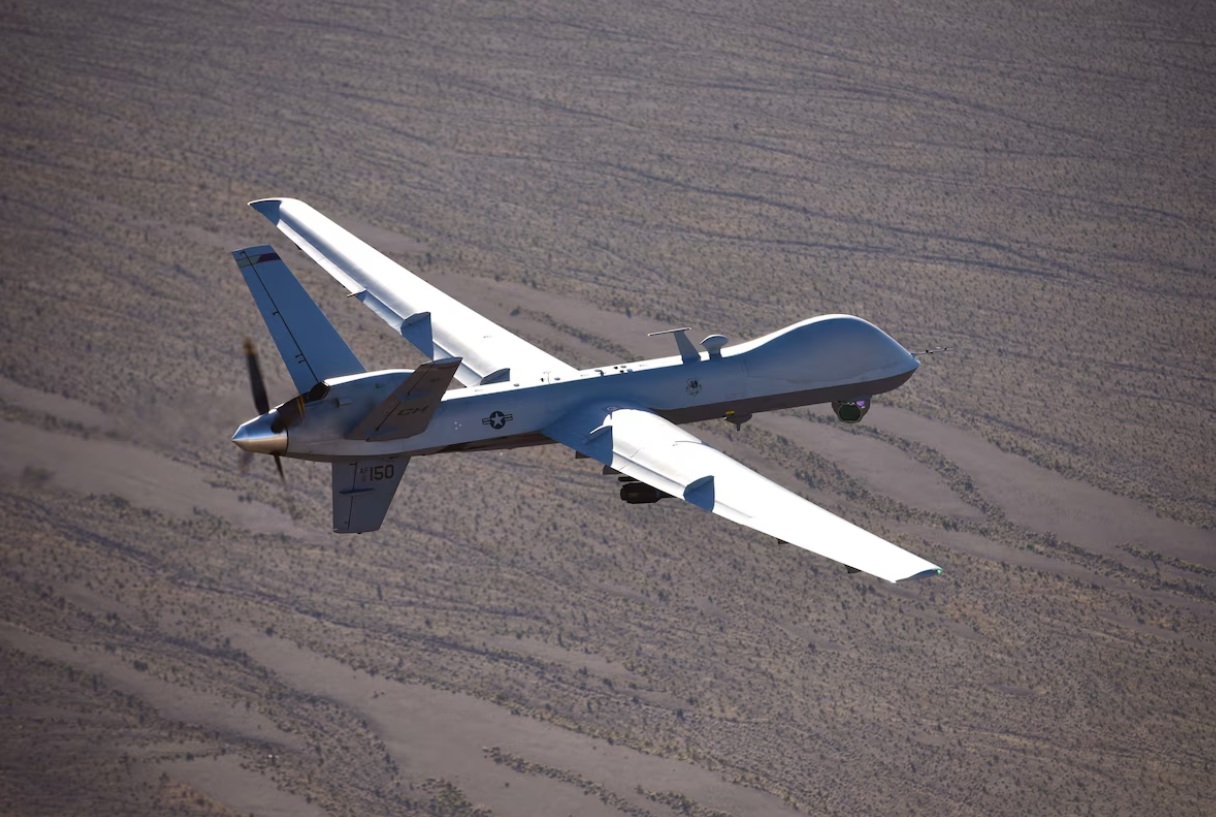
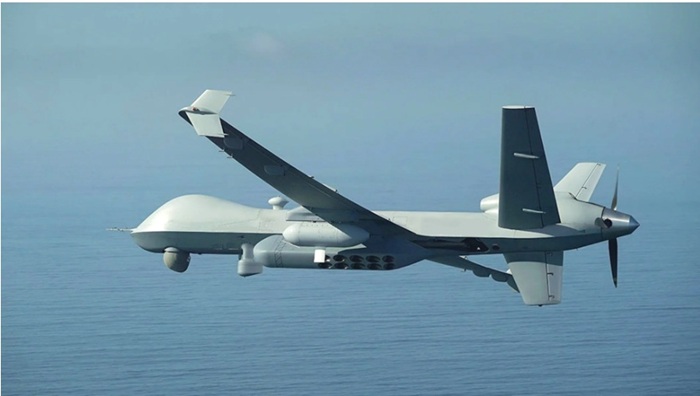
The United States has reportedly lost 24 MQ-9 Reaper drones in just six weeks, marking one of the most severe attrition events in the history of modern unmanned warfare and raising urgent questions about the survivability of legacy surveillance drones in contested airspace.

With an estimated unit cost of $30 million per aircraft, the confirmed losses amount to roughly $720 million, excluding the cost of satellite bandwidth, ground control infrastructure, munitions, contractor support, and operational personnel.

The scale of the losses suggests that Iran’s layered air-defense network is imposing significant costs on U.S. intelligence, surveillance, and reconnaissance operations.

Iran’s Air Defenses Are Reshaping the Battlefield

The MQ-9 Reaper has long been the backbone of America’s ISR architecture across the Middle East, North Africa, and Central Asia.

General Atomics MQ-9 Reaper

Originally designed for permissive environments such as Iraq, Afghanistan, Syria, and Somalia, the platform excelled against insurgent groups lacking advanced radar and missile systems.

Iran presents a fundamentally different challenge.

According to the report, Tehran’s defensive network includes:

  • Bavar-373
  • Khordad missile system
  • mobile medium-range interceptors
  • passive sensor networks
  • electronic warfare units

This layered anti-access and area-denial architecture has reportedly evolved into a functioning shield capable of tracking and engaging slow, predictable, and non-stealthy aerial targets.

Why the MQ-9 Is Vulnerable

The losses highlight structural vulnerabilities in the Reaper’s design when facing peer-level air defenses.

Unlike stealth aircraft, the MQ-9 has:

  • a relatively large radar signature
  • limited maneuverability
  • predictable loitering patterns
  • heavy reliance on satellite communications

These characteristics make it especially vulnerable to modern missile envelopes and electronic attack.

Several analysts believe some of the losses may have involved a combination of jamming, data-link interference, and missile engagement, rather than purely kinetic shootdowns.

This matters because it suggests that Iran’s defenses are integrating radar, electronic warfare, and mobile launch systems into a more sophisticated operational network.

A Major Hit to America’s Drone Fleet

The U.S. military is estimated to operate around 300 MQ-9 Reapers, meaning the reported loss of 24 aircraft represents roughly 8% of the total fleet in a single conflict.

That is a significant proportional reduction.

Replacing those aircraft will place added pressure on General Atomics, particularly as defense manufacturers continue to face supply-chain constraints.

The losses also carry global implications.

MQ-9 fleets remain heavily tasked across:

  • the Red Sea
  • Indo-Pacific
  • Eastern Europe
  • counterterrorism missions
  • maritime surveillance

Any diversion of replacement airframes toward the Iran theater could affect U.S. operations elsewhere.

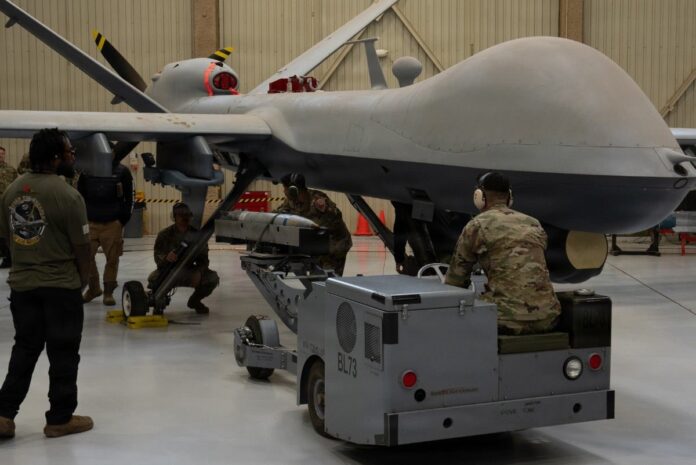
Over the past week or so, U.S. MQ-9 Reaper drones have been spotted carrying increasingly greater numbers of AGM-114 Hellfire missiles on sorties from Puerto Rico.

Strategic and Psychological Impact

The damage is not only financial.

Each lost Reaper reduces surveillance density over critical targets such as missile launchers, logistics corridors, and force movements.

That creates intelligence gaps precisely when battlefield conditions are most volatile.

At the same time, repeated interceptions strengthen Iran’s deterrence narrative by demonstrating that even technologically superior forces can be made to pay substantial costs.

This psychological effect can influence both military planning and diplomatic calculations.

Wider Lessons for Future Wars

The broader lesson extends far beyond the Middle East.

Military planners in NATO and the Indo-Pacific are likely studying these losses closely.

Potential adversaries such as China, Russia, and North Korea field even denser integrated air-defense systems with longer detection ranges and more advanced electronic warfare capabilities.

This is likely to accelerate investment in:

  • stealthier drones
  • collaborative swarming systems
  • stand-off ISR platforms
  • AI-enabled autonomous operations

The reported destruction of 24 Reapers may ultimately be remembered as a turning point — the moment when the assumption of uncontested drone dominance began to collapse.

Zelensky Warns Europe Must Rethink Security if U.S. Withdraws From NATO

0
Ukraine's President Volodymyr Zelenskiy gives a press conference in Kyiv, Ukraine, on February 19, 2025, amid the Russian attack on Ukraine.

Ukrainian President Volodymyr Zelenskyy has warned that any U.S. withdrawal from NATO would force Europe to fundamentally redesign its security architecture, arguing that the continent cannot rely on its current structure alone to deter Russia.

Speaking on The Rest Is Politics podcast, Zelensky said Europe’s future security would need to rest on a broader coalition that includes the United Kingdom, Ukraine, Türkiye, and Norway, alongside the European Union.

His remarks come amid renewed debate over the long-term American role in NATO and growing concern across Europe about Russian military expansion.

Europe Cannot Depend on Current Structure Alone

Zelensky said that if Washington were to withdraw from NATO, European security could no longer depend solely on the EU in its present form.

According to him, Europe would need to expand both politically and militarily.

He specifically named:

  • United Kingdom
  • Ukraine
  • Türkiye
  • Norway

as four key states that together could provide the military weight needed to counter Russia.

Zelensky argued that the combined armed forces of the UK, Ukraine, and Türkiye would be stronger than Russia’s military, particularly when combined with European economic capacity.

His central message was clear:

security must come before economic considerations.

Security First, Economy Second

Zelensky emphasized that Europe must reverse its current priorities.

“Security comes first, economy second,” he argued, warning that economic integration without hard military guarantees leaves Europe exposed.

This warning was directly linked to concerns over Russia’s long-term force expansion plans.

He pointed to projections that Russia could expand its military to 2.5 million personnel by 2030, which would significantly alter the balance of power across Europe.

For that reason, he said, Europe must focus first on preserving strategic independence.

NATO Debate Revives Questions Over Europe’s Defense

The comments also reflect wider anxiety about future U.S. commitment to NATO.

Discussions around possible American force reductions or broader alliance restructuring have intensified in recent months.

For Kyiv, the issue carries particular historical weight.

Zelensky used the interview to revisit the Budapest Memorandum, under which Ukraine gave up its nuclear weapons in exchange for security assurances.

He described that decision as a major strategic mistake.

According to Zelensky, NATO membership should have been the minimum guarantee provided in exchange for surrendering the world’s third-largest nuclear arsenal.

Instead, he said, Ukraine received no meaningful security umbrella.

Russia’s Long-Term Objective Remains Clear

Zelensky also argued that Russian President Vladimir Putin has not abandoned broader ambitions in Ukraine.

While he said Putin likely understands that full occupation of Ukraine is unrealistic, he warned that Moscow may be seeking a pause that can later be converted into renewed offensive action.

In particular, Zelensky highlighted the strategic importance of Donbas, describing it as critical to Ukraine’s industrial base and defensive depth.

He warned that any forced withdrawal from Donbas could fracture national unity and create conditions for a future Russian “blitzkrieg.”

Why NATO Withdrawal Matters Beyond Ukraine

The broader significance of Zelensky’s remarks lies in what they signal for Europe as a whole.

A U.S. withdrawal from NATO would not only affect Ukraine.

It would force the entire continent to reconsider how to secure:

  • land borders
  • maritime routes
  • airspace defense
  • military mobilization

This is why Zelensky framed the issue not simply as a Ukrainian concern, but as a European one.

Without a credible transatlantic deterrent, Europe would need to build a new strategic center of gravity.

Pakistan Unveils Mudamir-LR Maritime Strike Drone to Boost Arabian Sea Sea-Denial Capability

0
Pakistan’s new Mudamir-LL loitering munition

Pakistan has introduced the Mudamir-LR, a new long-range maritime strike drone designed to target naval assets and coastal infrastructure across the Arabian Sea, marking a significant step in Islamabad’s push toward low-cost, AI-guided autonomous weapons.

The system, developed by Sysverve Aerospace, is designed for sea-denial missions, giving the Pakistan Navy an affordable strike layer capable of operating in contested maritime environments where electronic warfare and GPS disruption are expected.

Its unveiling comes amid a rapidly intensifying drone competition in South Asia, as regional powers accelerate investment in loitering munitions, unmanned maritime strike systems, and AI-enabled navigation.

Built for Long-Range Naval Strike Operations

The Mudamir-LR is a one-way attack drone optimized for maritime strike roles.

According to available specifications, the platform features:

  • delta-wing configuration
  • blended fuselage
  • rear pusher propeller
  • vertical tail surfaces
  • estimated length of 3.5 meters
  • wingspan of approximately 2.5 meters
  • operational range exceeding 600 kilometers

The most significant feature is its AI-based navigation system designed for GPS-denied and GNSS-jammed environments.

Global Navigation Satellite System

This capability is particularly important in maritime conflict zones, where signal jamming, spoofing, and degraded satellite reception are increasingly common.

Designed for Sea Denial in the Arabian Sea

The drone’s strategic purpose is clear: sea denial and saturation strike operations.

Rather than serving as a traditional anti-ship missile replacement, the Mudamir-LR appears designed as an attritable strike layer that can harass naval movements, attack patrol vessels, target radar nodes, and pressure logistics routes.

Weapons in this class are especially effective because they create an unfavorable cost-exchange ratio.

Defenders are often forced to expend expensive interceptors and significant radar resources against comparatively low-cost incoming drones.

Used in swarms or in combination with missiles and decoys, such systems can overwhelm shipboard air-defense timelines.

This makes the Mudamir-LR particularly relevant in the narrow and highly contested waters of the Arabian Sea.

Comparisons With Shahed and LUCAS Drones

The Mudamir-LR’s geometry has drawn immediate comparisons with the Shahed-136.

Like the Shahed family, it uses a delta-wing layout and rear pusher-prop configuration.

However, its mission profile appears more regionally focused.

While the Shahed-136 is associated with ranges of more than 2,000 kilometers, the Mudamir-LR appears optimized for shorter-range, maritime-focused missions within Pakistan’s coastal battlespace.

Analysts also compare it to the U.S. LUCAS FLM-136, which occupies a similar doctrinal space as a mass-producible expendable strike platform.

This reflects a wider global shift toward precision mass and low-cost autonomous warfare systems.

January Naval Testing Suggests Operational Integration

The drone’s significance extends beyond its unveiling.

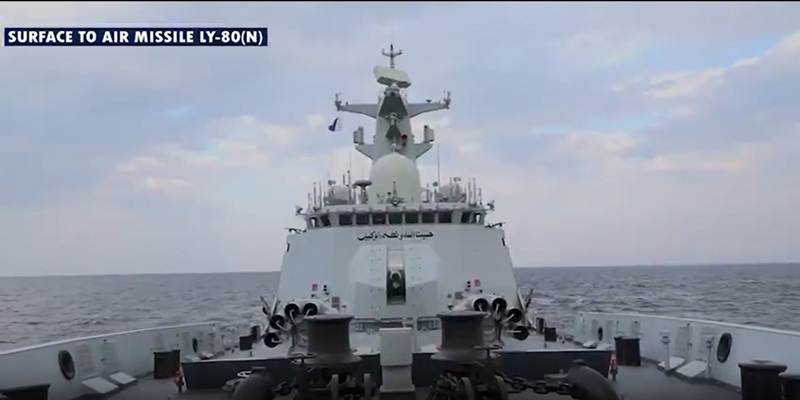
Pakistan Navy exercises in January reportedly included loitering munition strikes against surface targets alongside air-defense drills involving the LY-80(N).

This suggests the Mudamir-LR is not merely a display item but part of an emerging operational concept integrating:

  • naval ISR
  • coastal sensors
  • drone strike layers
  • air defense validation

Such integration points toward a broader layered unmanned kill chain.

Strategic Message to Regional Rivals

The timing is strategically significant.

India has recently expanded its own unmanned systems roadmap, accelerating the regional drone competition.

For Pakistan, a low-cost indigenous strike drone offers a practical way to challenge a larger naval force without matching platform-for-platform.

This is especially important given wartime concerns over imported weapons flows and supply-chain disruptions.

Domestic production of attritable strike drones reduces that vulnerability and strengthens deterrence.

Why It Matters

If produced in meaningful numbers, the Mudamir-LR could become one of the most consequential additions to Pakistan’s maritime strike architecture.

Networked with platforms such as the Shahpar-III, it could support a distributed strike system from surveillance to terminal attack.

It may not fundamentally alter the naval balance in the Arabian Sea.

But it can make that balance significantly more dangerous, distributed, and expensive for any adversary to manage.

Iran Enters Islamabad Talks From Position of Strength as Military Pressure Fails to Shift Tehran’s Strategy

0
US Vice President JD Vance and Iranian Parliament Speaker Mohammad Bagher Ghalibaf

As negotiations move toward Islamabad, Iran appears to be entering talks from what it perceives as a position of strategic resilience, with recent military pressure failing to produce a substantive shift in Tehran’s core negotiating posture.

Despite the intensity of the recent campaign, Iranian decision-makers continue to signal that there will be no major concessions on regional influence, proxy support, or conventional military capability.

Instead, Tehran’s approach suggests a belief that time, leverage, and calibrated escalation remain on its side.

Tehran’s Core Position Remains Unchanged

By any conventional measure, the military campaign was designed to alter Iran’s strategic calculus.

So far, it has not.

Rather than weakening Tehran’s long-standing approach, the conflict appears to have reinforced its core doctrine of strategic depth through regional partnerships and controlled escalation.

At the center of that doctrine is Iran’s commitment to what it calls the “Axis of Resistance.”

For Tehran, support for Hezbollah and other regional partners is not merely ideological positioning but a core national security mechanism intended to prevent isolation during crises.

That logic appears to have hardened rather than softened under pressure.

Limited Nuclear Flexibility Possible

While Iran is unlikely to concede on its regional posture, it may demonstrate limited flexibility on the nuclear file.

Officials and analysts increasingly suggest that Tehran could consider measures involving the dilution of enriched uranium inside Iran, provided any arrangement includes broad sanctions relief and explicit recognition of its right to enrichment.

Such a position remains consistent with the long-established framework set by Supreme Leader Ali Khamenei, who has repeatedly emphasized sovereignty over the nuclear program.

For Washington, this creates a difficult strategic choice:

accept a deal broadly similar to what was achievable before escalation, or risk renewed confrontation.

Hezbollah and Lebanon Central to Tehran’s Strategy

Iran’s immediate regional concern remains Lebanon.

Tehran continues to view Hezbollah as a foundational element of its security architecture and is reportedly pushing to ensure that the group is incorporated into any broader ceasefire or diplomatic framework.

This dual-track strategy has become increasingly clear.

On one side, Iran seeks diplomatic inclusion for Hezbollah.

On the other, it continues measured offensive signaling to preserve leverage.

This is not contradiction.

It is deliberate strategy.

Strait of Hormuz Used as Strategic Leverage

One of Iran’s most important pressure points remains the Strait of Hormuz.

By regulating maritime traffic and signaling its ability to influence one of the world’s most critical energy routes, Tehran is reminding negotiators that diplomatic failure carries global consequences.

With nearly 20% of global oil and LNG flows passing through Hormuz, even limited disruption has immediate international economic implications.

This transforms the regional crisis into a global energy security issue.

For Tehran, that is a major bargaining tool.

Washington Faces a Difficult Strategic Decision

For the United States, the negotiations present a sharpened dilemma.

Military pressure has not fundamentally altered Iran’s negotiating position.

Tehran is not behaving like a state under strategic duress.

Instead, it is acting like a state that believes it retains leverage.

That leaves Washington facing two difficult options:

  • accept a compromise similar to pre-war diplomatic terms
  • reject the arrangement and risk renewed escalation

Neither path is politically or strategically attractive.

But delaying the decision may be even more dangerous.

Iran Believes Its Hand Is Strong

Perhaps the most significant factor heading into Islamabad is perception.

Iran appears to believe that it emerged from the campaign with its strategic framework intact.

Its regional proxies remain relevant.

Its nuclear leverage remains negotiable.

Its ability to pressure maritime routes remains credible.

That perception alone could shorten talks if Washington expects dramatic concessions.

The central reality remains this:

military pressure has not fundamentally changed Tehran’s position.

Instead, Iran is negotiating as a state that believes controlled risk and strategic patience continue to work in its favor.

White House Considers Moving U.S. Troops From Germany and Spain to Eastern Europe

0
U.S. President Donald Trump meets NATO Secretary General Mark Rutte, in the Oval Office at the White House in Washington, D.C., U.S.

The White House is considering a plan to redeploy U.S. troops within Europe, potentially penalizing NATO allies that Washington believes failed to support American and Israeli military operations during the Iran war.

According to reports citing administration officials, one proposal under discussion would move U.S. forces out of countries viewed as less supportive — with Germany and Spain among the locations under review — and shift troops toward allies that actively backed Washington’s regional security objectives.

The plan remains in the early stages but has reportedly gained support among senior officials, highlighting growing tensions between the Trump administration and parts of the NATO alliance.

Eastern Europe Could See Increased U.S. Military Presence

Officials familiar with the discussions say the United States may increase its military footprint in Poland, Romania, Lithuania, and Greece, countries viewed in Washington as more reliable allies during the Iran conflict.

These states have played an increasingly important role in NATO’s eastern defense posture, particularly as the alliance seeks to deter Russian military activity.

At present, around 84,000 U.S. troops are stationed across Europe, with forces distributed among major bases in Germany, Italy, Spain, Poland, and other NATO countries.

A redeployment toward Eastern Europe would not amount to a withdrawal from NATO, but it would represent a significant strategic realignment.

Getting “Runway Ready” at Ramstein Air Base

Trump’s NATO Frustration Intensifies

President Donald Trump has repeatedly criticized NATO allies over what he described as insufficient support during the Iran war and efforts to secure the Strait of Hormuz.

In March, Trump warned that NATO could face a “very bad future” if European and Asian allies failed to help ensure maritime security in the Gulf.

He argued that many U.S. allies depend far more heavily on Gulf energy supplies than the United States itself and should therefore take a more active role in securing shipping routes.

Those remarks deepened concerns in European capitals about Washington’s long-term commitment to the alliance.

Base Closures in Europe Also Under Discussion

In addition to troop movements, administration officials are reportedly discussing the possible closure of at least one U.S. base in Europe.

Locations in Spain or Germany have been mentioned in reports as possible candidates.

Germany currently hosts several key American military installations, including Ramstein Air Base, one of the most important U.S. air and logistics hubs outside the United States.

Any reduction there would carry major strategic and political implications for NATO’s European posture.

Strategic Signal to Allies and Adversaries

The proposed troop shift is being closely watched not only in Europe but also in Moscow.

A stronger U.S. presence in Eastern Europe — particularly near NATO’s eastern flank — could be interpreted as an additional deterrent signal toward Russia.

At the same time, reducing forces in Western Europe may deepen alliance debates over burden sharing, strategic autonomy, and Washington’s reliability as a security guarantor.

For now, officials stress that the discussions remain preliminary.

But the proposal underscores how the Iran war continues to reshape broader U.S. alliance politics well beyond the Middle East.

US Navy MQ-4C Triton Declares Emergency Over Persian Gulf After Sudden 40,000-Foot Descent

0
U.S. MQ-4C Triton unmanned aerial vehicle has begun active reconnaissance flights near Cuba

A U.S. Navy Northrop Grumman MQ-4C Triton unmanned aircraft appears to have declared an in-flight emergency over the Persian Gulf after rapidly losing altitude during a surveillance mission north of Bahrain.

According to open-source flight tracking data, the aircraft — serial 169804 — transmitted a 7700 squawk code, the internationally recognized signal for a general emergency. The drone was tracked descending from approximately 52,000 feet to around 12,750 feet within minutes, raising immediate questions about a possible technical malfunction or operational incident.

Its flight track later disappeared over the Gulf, although it remains unclear whether this indicates a loss of the aircraft itself or merely a break in publicly available tracking data.

Emergency Signal Raises Questions Over Drone Status

Flight tracking platforms showed the Triton flying a typical high-altitude intelligence, surveillance and reconnaissance (ISR) profile before the abrupt descent.

The 7700 emergency squawk is commonly used for onboard system failures, navigation issues, or other serious flight-related problems.

A rapid loss of nearly 40,000 feet of altitude in a short period is highly unusual for a high-altitude long-endurance platform of this type and suggests either a serious technical issue or an intentional emergency descent procedure.

At the time of the incident, the aircraft was operating north of Bahrain, within one of the most strategically sensitive maritime zones in the world.

What Is the MQ-4C Triton?

The MQ-4C Triton is one of the U.S. Navy’s most advanced unmanned surveillance aircraft.

Developed by Northrop Grumman, the drone is derived from the RQ-4 Global Hawk family and is specifically optimized for persistent maritime surveillance.

It is designed to operate at altitudes above 50,000 feet for more than 24 hours, providing real-time ISR coverage across vast oceanic areas.

The aircraft routinely works alongside the Boeing P-8A Poseidon to monitor shipping routes, naval movements, and regional military activity.

Its advanced sensor suite includes:

  • 360-degree maritime radar
  • electro-optical and infrared sensors
  • ship tracking systems
  • long-range communications relay

Persian Gulf Mission Carries Strategic Weight

The incident occurred in the Persian Gulf, an area that remains central to U.S. regional surveillance operations.

The Triton has been extensively deployed across the U.S. Central Command area of responsibility, particularly around the Strait of Hormuz and surrounding waters.

These missions are critical for tracking commercial shipping, naval deployments, and potential regional threats.

Recent open-source reports indicate that several Triton airframes previously based in the UAE had been repositioned to Naval Air Station Sigonella earlier this year, from where they continue conducting long-range ISR missions into the Gulf.

Cause of Emergency Still Unclear

At this stage, there is no official statement from the U.S. Navy regarding the cause of the emergency.

Possible scenarios include:

  • onboard systems malfunction
  • engine or flight control issue
  • communications failure
  • emergency descent due to weather or airspace deconfliction
  • loss of public ADS-B tracking feed

Because the aircraft’s track ended over the Gulf, questions remain over whether the drone safely recovered, diverted, or suffered a more serious incident.

Until official confirmation emerges, the status of serial 169804 remains uncertain.

Indian Air Force An-32 Near Pakistan Border Triggers Air Defence Alert Amid Jamming Fears

0
Indian Air Force AN-32 Aircraft

An Indian Air Force Antonov An-32 transport aircraft flew to within two to three miles of Pakistan’s international border on April 6, prompting immediate Pakistani air-defence warnings and a rapid combat air patrol response in an incident that has intensified concerns over possible electronic warfare activity along the frontier.

The aircraft, identified as KA2732, reportedly approached Pakistani airspace at approximately 17:25 Indian Standard Time, flying at around 16,025 feet before making a sharp tactical turn back toward Indian territory.

While initial reports described the platform as a jet, subsequent analysis and flight-tracking data identified it as an Antonov An-32, a twin-turboprop transport aircraft primarily used for tactical logistics missions.

The incident has drawn strategic attention because several Pakistani defence observers alleged the aircraft may have been involved in GNSS and ADS-B jamming operations, although no official technical evidence has yet confirmed those claims.

Pakistan Air Force Responds With Rapid Interception Posture

According to defence observers, Pakistani radar operators tracked the aircraft continuously as it approached the western frontier at approximately 245 knots, maintaining an altitude above 16,000 feet.

Pakistani controllers reportedly issued immediate radio warnings, followed by the diversion of Pakistan Air Force combat air patrol aircraft toward the sector.

This rapid response reflected Islamabad’s continued high-alert defensive posture, even in the absence of any declared cross-border military exercise.

The sharp turn executed by the Indian aircraft has fueled speculation that the approach may have followed a pre-planned tactical flight profile rather than a routine navigational correction.

Jamming Claims Remain Unverified

The most sensitive aspect of the incident is the allegation that the An-32 may have been configured for electronic warfare.

Pakistani social media and defence circles quickly circulated claims that KA2732 was equipped for active GNSS and ADS-B jamming missions.

Global Navigation Satellite System

GNSS jamming can disrupt navigation signals used by aircraft, drones, missiles, and ground-based systems, affecting frequencies associated with GPS, GLONASS, Galileo, and BeiDou.

Similarly, ADS-B jamming could interfere with aircraft tracking datalinks, potentially generating false tracks or obscuring genuine movements.

However, no photographs, emissions data, infrared imagery, or visible external jamming pods have emerged to substantiate the claim.

As a result, the assertion remains a plausible but unverified assessment rather than a confirmed operational fact.

Why the Incident Matters Strategically

The incident’s significance lies less in the aircraft itself and more in what it may reveal about the evolving nature of the India-Pakistan military rivalry.

Pakistani analysts believe the flight may have been intended to probe radar detection thresholds, command procedures, and scramble timelines.

Such intelligence would be militarily valuable for future surveillance, strike planning, or electronic warfare operations.

Pakistan has invested heavily in a layered air-defence network that reportedly includes:

  • HQ-9BE
  • LY-80
  • HQ-16FE

These systems are supported by long-range radar coverage reportedly capable of detecting aircraft at distances exceeding 500 kilometres.

A close-border flight without actual airspace violation may therefore have been designed to test when Pakistani tracking procedures are activated and how quickly interceptors are scrambled.

India’s Broader Electronic Warfare Push

The incident comes amid a broader Indian effort to strengthen its electronic warfare capabilities.

Recent navigation warnings issued by India for GNSS resilience trials near the Bay of Bengal and the Andaman and Nicobar region indicate active experimentation with signal disruption and navigation resilience technologies.

India has also been modernizing radar-warning receivers, self-protection jammers, and airborne intelligence platforms.

Against this backdrop, the possibility of using a legacy transport aircraft as a low-cost experimental jamming platform is strategically conceivable, even if unconfirmed.

South Asia’s Electromagnetic Battlespace Becoming More Volatile

The April 6 encounter underscores a larger regional trend: electronic warfare is becoming one of the most destabilizing dimensions of the India-Pakistan rivalry.

Unlike conventional air combat, signal disruption and electromagnetic probing can create ambiguity, shorten decision timelines, and increase the risk of miscalculation.

Even a brief loss of navigation, radar, or communications data near the frontier could be interpreted as the opening stage of a wider military escalation.

That makes incidents like this strategically significant even in the absence of direct airspace violations.

Ceasefire Holds, but Tehran’s Defiance Raises Questions Over U.S. War Goals

0
chairman of Joint Chiefs Gen. Dan Caine

The Pentagon has claimed that the United States inflicted sweeping damage on Iran’s military during its 38-day campaign, declaring the country’s armed forces “combat ineffective for years to come” as a fragile ceasefire takes hold.

Speaking at the Pentagon, U.S. Defense Secretary Pete Hegseth and Chairman of the Joint Chiefs Gen. Dan Caine outlined what they described as the battlefield results of Operation Epic Fury.

According to the Pentagon, U.S. forces conducted more than 800 strikes in the final hours before the ceasefire, targeting air defenses, missile storage facilities, drone infrastructure and naval assets.

Officials said the campaign destroyed:

  • 80% of Iran’s air-defense systems
  • 800 one-way attack drone storage facilities
  • 450 ballistic missile storage facilities
  • 150 naval vessels
  • half of IRGC small attack boats

Hegseth described the campaign as a “historic and overwhelming victory,” saying the U.S. had dismantled one of the world’s largest militaries using less than 10% of total American combat power.

Ceasefire Holds, But U.S. Forces Remain in Region

Despite the pause in fighting, Washington signaled that U.S. military forces will remain deployed across the Middle East.

Hegseth said American forces would be “hanging around” for the duration of the armistice, underscoring that the ceasefire remains provisional rather than a full peace agreement.

Strait of Hormuz continues to be a critical concern, as Iran retained the ability to influence shipping routes throughout the conflict.

This strategic leverage has contributed to volatility in global oil markets.

Pentagon Focuses on Damage Metrics, Not Remaining Capability

While the Pentagon’s numbers are striking, military analysts are likely to focus on what remains unknown.

The figures describe outputs — facilities struck and percentages degraded — rather than outcomes.

Critical operational questions remain unanswered:

  • How many launchers survived?
  • How many missiles remain deployable?
  • What drone production capacity is still active?
  • Which air-defense systems remain operational?
  • At what altitude and in which sectors is Iranian airspace still contested?

For example, the Pentagon did not disclose the denominator behind the 450 missile facilities hit.

Without knowing Iran’s original total stockpile and dispersal network, it is difficult to assess the real strategic effect.

The same applies to drone infrastructure.

Iran has historically relied on dispersed production lines and commercially available components, allowing relatively rapid reconstitution of drone manufacturing.

Iran Still Demonstrated Operational Resilience

Despite the Pentagon’s claims, Tehran continued launching sustained attacks during the conflict.

According to the same assessment, Iran maintained an average of up to 120 drone and missile attacks per day across the region.

This suggests that while infrastructure may have been damaged, Iran’s decentralized command structure remained functional.

The country’s military doctrine is built specifically to survive leadership decapitation and infrastructure strikes through dispersed control and mobile assets.

That raises important questions about whether the U.S. campaign achieved long-term strategic degradation.

Hormuz and Naval Threat Still Matter

The Pentagon also claimed severe damage to Iran’s naval capabilities, including the destruction of half of the Islamic Revolutionary Guard Corps’ small attack boats.

Yet even residual numbers can remain strategically significant in the narrow waters of the Strait of Hormuz.

Iran’s well-known swarm tactics do not require a large fleet to threaten commercial shipping.

Even a reduced force can still pose substantial risks to tanker traffic and regional maritime security.

Similarly, claims that 95% of naval mines were destroyed still leave open the possibility of hundreds of remaining mines, enough to disrupt one of the world’s most important energy chokepoints.

Uranium Stockpile Remains a Major Flashpoint

One of the most significant unresolved issues remains Iran’s enriched uranium stockpile.

Hegseth said Washington expects Tehran to surrender it voluntarily but warned that the United States reserves the option to seize it by force if necessary.

This issue is likely to dominate any future negotiations and will remain central to the durability of the ceasefire.

Human Cost of the Conflict

The Pentagon said 13 American service members were killed and more than 365 were wounded during the 38-day conflict.

Those figures underscore the scale of the war even as both sides now signal interest in a diplomatic off-ramp.