Friday, June 5, 2026
Home Blog Page 9

Trump’s Dual Iran Posts Signal High-Stakes China Pressure Strategy Ahead of Mid-May Talks

0
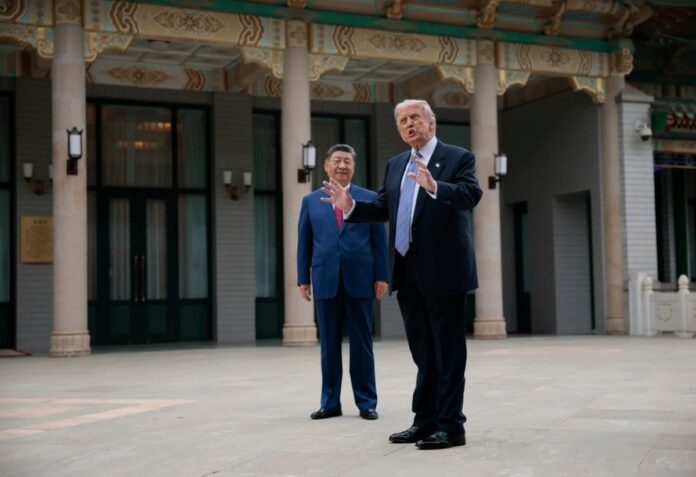
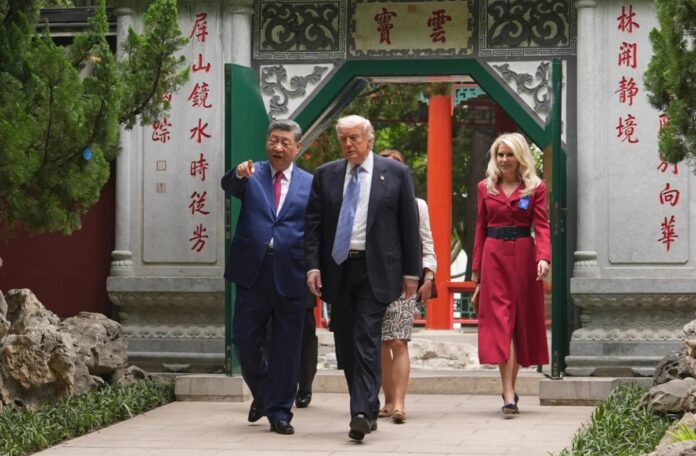
Donald Trump meets with Chinese President Xi Jinping

Two back-to-back social media messages from Donald Trump may offer the clearest view yet into an emerging U.S. strategy linking the Iran ceasefire track with economic pressure on China.

Read separately, the posts appear to address different issues.

Read together, they suggest a broader negotiation architecture that combines diplomatic incentives for Iran with economic coercion aimed at Beijing.

The first message outlines what appears to be a framework for de-escalation with Iran — including references to no uranium enrichment, sanctions and tariff relief, and progress on multiple negotiating points.

The second message threatens a 50% tariff on any country supplying military weapons to Iran, effective immediately and without exemptions.

Taken together, the two posts appear to form a classic carrot-and-stick strategy.

The Carrot for Iran, the Stick for China

The first post functions as the diplomatic incentive.

It signals possible relief measures for Tehran in exchange for limits on its nuclear and military capabilities.

The second post, however, is widely interpretable as pressure on Beijing.

Trump did not explicitly mention China.

He may not need to.

Among Iran’s external partners, China is the only major economy for which a sweeping 50% tariff would carry major consequences for bilateral trade.

U.S.-China annual trade remains above $500 billion, making Beijing uniquely exposed to such a measure.

By contrast, trade with Russia and North Korea remains too limited to produce comparable leverage.

This makes the tariff threat less about Tehran itself and more about China’s strategic relationship with Iran.

Missile Supply Chain Concerns Intensify Pressure

At the center of the pressure campaign is the alleged transfer of military-grade chemicals.

Reports cited in your draft point to Iranian-flagged vessels departing Gaolan Port in Zhuhai carrying sodium perchlorate, a critical oxidizer precursor used in solid rocket propellant.

Sodium perchlorate

This compound is strategically significant because it can be used in the production of ballistic missiles.

The shipments were sufficient to help rebuild a substantial portion of Iran’s missile stockpile.

That transforms the tariff threat into a strategic signal aimed at Beijing’s role in the broader regional conflict.

Mid-May Talks Could Become Decisive

The timing of the posts also appears linked to upcoming negotiations.

The mid-May summit as a potential inflection point, where U.S. negotiators may seek movement on:

  • Iran ceasefire terms
  • nuclear restrictions
  • proxy activity
  • sanctions relief
  • China trade concessions

This creates a three-direction pressure architecture:

  1. crude oil waiver expiration
  2. tariff threat over military supplies
  3. rare earth and trade leverage

The reference to Treasury waivers on Iranian crude exports to China further raises the stakes.

If these waivers are allowed to expire, Chinese refiners and shipping networks could face secondary sanctions.

That would significantly increase economic pressure on Beijing.

Beijing Faces Strategic Cost Calculation

The central strategic question for Xi Jinping is whether continued support for Iran carries greater economic cost than accommodation with Washington.

This is less a demand to sever ties with Tehran and more a repricing of the relationship.

Washington appears to be putting a price on China’s Iran policy.

The proposed cost: 50% of all goods sold into the U.S. market.

That is a major escalation in economic signaling.

Why This Matters Beyond Iran

The broader significance lies in how multiple supply chains intersect.

Energy molecules, missile propellants, semiconductors, magnets, and rare earth processing all now sit inside the same geopolitical framework.

Rare earth elements

This means the negotiations are no longer only about Iran.

They are about global trade architecture, strategic materials, and market access.

In that sense, the dual posts may represent the opening phase of a much larger U.S.-China bargaining process.

Iran Ceasefire Raises Hard Questions as Nuclear Stockpile and Strait of Hormuz Risks Remain

0
Military personnel stand guard at a nuclear facility in the Zardanjan area of Isfahan, Iran.

The emerging ceasefire with Iran may mark the beginning of the end of active fighting, but the strategic picture remains deeply uncertain.

With key details still missing and deep mistrust between the parties, any declaration of peace must be treated with caution. At this stage, the ceasefire appears less like a final settlement and more like a pause in hostilities amid unresolved strategic issues.

Until all terms are fully implemented, there is effectively no durable ceasefire.

Key Ceasefire Terms Still Unknown

One of the most troubling aspects of the current situation is the lack of clarity.

Critical questions remain unanswered, particularly regarding what assurances may have been offered to Tehran.

If Iran has in fact secured guarantees linked to the “ten principles” reportedly referenced by Donald Trump, that would represent far more than a symbolic concession.

Such an outcome would amount to a strategic gain for Tehran, reinforcing its diplomatic narrative and strengthening its negotiating position.

In conflicts of this scale, perception often shapes reality.

Even if the terms are ambiguous, Iran is likely to present the ceasefire domestically and internationally as a political success.

Iran’s Nuclear Stockpile Remains Intact

Any serious assessment must begin with one unavoidable fact:

Iran still retains a significant stockpile of enriched uranium.

Reports indicate that Tehran continues to hold approximately 440 kilograms of uranium enriched to 60%, a level that remains a major international concern and leaves the nuclear question unresolved.

Uranium enrichment

This means the core strategic objective of reducing Iran’s nuclear leverage may not have been achieved.

If the end state of the conflict leaves Iran’s nuclear capabilities fundamentally intact, then the post-war environment could be worse than before the fighting began.

Strait of Hormuz Became the Central Priority

The negotiations also appear to have centered heavily on the Strait of Hormuz, one of the world’s most important energy corridors.

Keeping Hormuz open became the dominant objective, even though the waterway had not been fully closed at the outset of the conflict.

This raises difficult strategic questions.

If the primary outcome of the war is a “controlled reopening” of a chokepoint that was never completely shut, critics are likely to question whether the campaign delivered any meaningful strategic gain.

Given that nearly 20% of global oil and LNG flows transit through Hormuz, the waterway’s stability remains central to global markets.

But making it the central negotiating objective also highlights what many analysts may view as flawed strategic planning from the beginning.

Regime Still in Power, Missile Capability Survives

The conflict was widely framed around sweeping objectives:

  • weakening or changing the Iranian regime
  • degrading missile capabilities
  • rolling back nuclear capacity
  • securing Hormuz

Yet the current reality appears more complex.

The regime remains firmly in place.

Its missile infrastructure may be damaged, but it is still operational.

Its nuclear leverage remains significant.

Against that backdrop, the strategic outcome remains difficult to characterize as a clear victory.

Tactical Gains Without Strategic Outcome

Military campaigns are not judged solely by tactical or operational success.

Precision strikes and battlefield achievements mean little if they fail to produce a coherent strategic end state.

This is the central question now confronting policymakers:

What was the point of the war if its core objectives remain unmet?

If negotiations — including reported diplomatic activity involving Pakistan and talks in Islamabad — do not produce a stronger outcome on the nuclear file, then the war risks being remembered as a campaign that increased instability without resolving the underlying threat.

The Real Test Is Yet to Come

The ceasefire may reduce immediate violence, but it does not yet constitute resolution.

The true test will be whether follow-on negotiations can deliver enforceable outcomes on Iran’s nuclear program, missile capability, and regional de-escalation.

Without that, the conflict may simply be entering a new phase in which diplomacy and coercion continue in parallel.

The war may be paused.

Its strategic consequences are only beginning to emerge.

Trump’s Iran War Ends in Strategic Failure, Strengthening Tehran and Weakening U.S. Influence

0
U.S. President-elect Donald Trump attends a wreath laying ceremony at Arlington National Cemetery ahead of the presidential inauguration in Arlington, Virginia, U.S.

The suspension of hostilities against Iran has exposed what increasingly looks like a strategic failure for former U.S. President Donald Trump, raising difficult questions about what the conflict actually achieved.

Rather than delivering its stated objectives, the war appears to have strengthened Iran’s regional position, damaged U.S. credibility, and increased geopolitical instability across the Middle East.

Far from reshaping Tehran, the conflict may have produced the opposite effect.

Regime Change Failed, Iran’s Leadership Consolidated Power

The war’s central strategic objective — implicit or explicit — was widely seen as weakening the Iranian state and increasing pressure for regime change.

Instead, the conflict appears to have consolidated the authority of Iran’s ruling system, giving renewed political legitimacy to a government that had previously faced internal pressure.

External military pressure often produces a rally-around-the-flag effect, and in this case, the strikes appear to have strengthened Tehran’s domestic narrative of resistance.

Rather than destabilizing Iran, the war may have extended the life of the regime.

Strait of Hormuz: From Open Waterway to Iranian Leverage

Before the conflict, the Strait of Hormuz remained open to global shipping.

Now, the post-war arrangement has shifted toward what can be described as regulated passage under Iranian coordination.

This marks a significant strategic reversal.

What was initially framed as a demand for unconditional freedom of navigation has instead evolved into a tacit recognition of Tehran’s influence over one of the world’s most critical energy chokepoints.

With nearly one-fifth of global oil and LNG flows moving through Hormuz, any form of managed transit gives Iran significant strategic leverage over global energy markets.

Economic Shockwaves Across Global Energy Markets

The economic consequences of the war are likely to outlast the military phase.

Damage to energy infrastructure across the Gulf and Iran has introduced long-term volatility into oil and gas supply chains, with ripple effects extending far beyond the region.

For global markets, this conflict may become one of the most economically disruptive wars in recent decades, particularly for energy-importing economies already facing inflationary pressure.

The Gulf states, in particular, are left dealing with both physical infrastructure damage and investor uncertainty.

America’s International Isolation Deepened

The war also exposed a lack of broad international support.

Public friction between Trump and key allies — including NATO partners as well as countries such as Australia, Japan, and South Korea — underscored the absence of a unified coalition.

This diplomatic isolation weakened Washington’s global standing and raised further questions over the legal and strategic foundations of the war.

The result is not simply reputational damage for one administration, but a broader erosion of U.S. strategic credibility.

Domestic Political Fallout Ahead of Midterms

The political costs at home may prove equally significant.

The conflict appears to have fractured Trump’s domestic support base, particularly among constituencies skeptical of prolonged foreign military entanglements.

At a critical moment ahead of midterm political battles, this division could reshape domestic political calculations and campaign narratives.

For critics, the war has left behind high costs, limited gains, and no clear strategic victory.

Israel and the Next Phase of the Conflict

Israel, meanwhile, enters a more ambiguous phase.

Having driven escalation, it now finds itself tied to a diplomatic and strategic process that it does not fully control.

Its longer-term objectives — including deeper degradation of Iran’s military capability or political transformation in Tehran — now sit uneasily alongside an emerging negotiation track.

Iran, by contrast, has demonstrated a degree of strategic resilience.

It absorbed strikes, responded militarily, and then repositioned itself as a negotiating actor without conceding core positions.

This shift has allowed Tehran to move from being the primary target of military pressure to an actor shaping the terms of de-escalation.

Pakistan’s Diplomatic Role in the Emerging Settlement

Pakistan has emerged as an important diplomatic conduit in this phase.

Its role has not been that of a classic mediator, but rather as a channel for communication, de-escalation messaging, and diplomatic timing.

By helping maintain lines of contact and soften deadlines, Islamabad has contributed to creating a narrow political opening.

This does not amount to full conflict resolution.

Rather, it marks a transition from direct confrontation to parallel coercion and negotiation.

The war, in effect, has not fully ended.

It has entered a new phase where diplomacy and strategic pressure now operate simultaneously.

U.S. Navy Seeks 405 Patriot MSE Missiles in 2027 Budget to Counter China’s Ballistic Threats

0
MSE anti-aircraft missiles

The U.S. Navy has proposed a major expansion of its shipborne missile defense capabilities, requesting $1.7 billion in its 2027 budget to procure 405 PAC-3 MSE anti-aircraft missiles, signaling a major shift in naval air and missile defense strategy.

The proposed purchase values each missile at approximately $4.19 million and reflects Washington’s growing focus on countering advanced missile threats, particularly from China’s anti-ship ballistic missile arsenal.

Although the U.S. Navy does not traditionally operate Patriot systems, the missiles are expected to be integrated into Arleigh Burke-class guided-missile destroyers through upgrades to the Mk 41 Vertical Launch System (VLS) and the Aegis combat system.

Image


Patriot PAC-3 MSE Integration With Navy Destroyers

The Navy’s move follows more than three years of development work by Lockheed Martin to adapt the PAC-3 MSE interceptor for naval use.

In a major breakthrough in May 2024, Lockheed Martin successfully launched a PAC-3 MSE missile from an MK-70 containerized launcher using the Virtualized Aegis Weapon System, intercepting a live cruise missile target during testing at White Sands Missile Range.

This was the first demonstration that Patriot-class interceptors could work with naval combat architecture, opening the path for deployment aboard destroyers equipped with the SPY-1 radar and Mk 41 launch cells.

Image

The goal is to give the Navy a more affordable and scalable option for intercepting ballistic and cruise missile threats at sea.

Why the Navy Is Moving Beyond the SM-6

Currently, the Navy relies heavily on the SM-6 missile for long-range air and missile defense.

The SM-6 remains one of the most versatile interceptors in the U.S. arsenal, capable of:

  • intercepting ballistic missiles
  • shooting down aircraft and cruise missiles
  • striking surface ships
  • engaging land targets

However, production constraints have become a major concern.

Industry projections suggest SM-6 production may rise to only around 500 missiles annually, compared with projected PAC-3 MSE output of up to 2,000 missiles per year within seven years.

This production imbalance is a key reason the Navy is expanding into PAC-3 MSE integration.

China Threat Driving U.S. Naval Missile Expansion

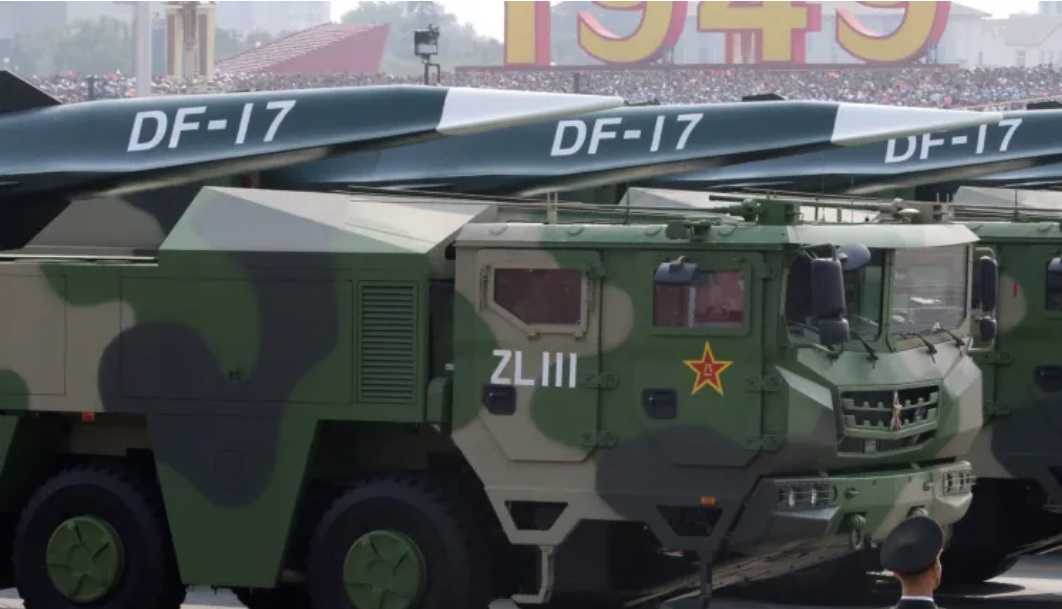
The strategic driver behind this move is China’s growing anti-ship missile capability, especially the DF-21D “carrier killer” ballistic missile and emerging hypersonic anti-ship weapons.

Beijing has continued testing long-range precision strike systems designed to target U.S. naval assets in the Indo-Pacific.

The threat is particularly significant for aircraft carriers and destroyer groups operating near Taiwan and the South China Sea.

Image

The Navy’s proposed PAC-3 MSE procurement suggests the Pentagon is prioritizing layered ship defense against Chinese anti-ship ballistic missiles.

Impact on Global Patriot Missile Exports

The budget request could also affect U.S. arms exports.

At the same time the Navy is requesting 405 missiles, the U.S. Army has reportedly allocated 2,798 PAC-3 MSE interceptors to replenish its own stockpiles.

This means Washington may have fewer Patriot missiles available for foreign military sales, particularly for allies in Europe, the Middle East, and Asia that are already seeking additional air defense systems.

That development could have major implications for countries relying on U.S. missile defense exports amid rising regional tensions.

Russia Shared Satellite Intelligence With Iran for Strikes on U.S. Bases in Middle East, Ukrainian Report Says

0
The wreckage of a US Air Force E-3 Sentry airborne warning and control aircraft sits on the tarmac at an air base in Saudi Arabia during Iran war.

A Ukrainian intelligence assessment has alleged that Russia conducted extensive satellite surveillance of military facilities and critical infrastructure across the Middle East and shared the imagery with Iran to support strikes on U.S. and allied targets.

According to the report reviewed by Reuters, Russian satellites carried out at least 24 detailed imagery surveys between March 21 and March 31, covering 46 strategic objects across 11 countries, including U.S. military bases, airports, and oil facilities.

The assessment describes what it calls the clearest evidence yet of secret Russian support for Iran since the escalation that followed the U.S. and Israeli assault launched on February 28.

Security sources cited in the report said intelligence also pointed to intense Russian satellite activity across the region, with imagery allegedly being passed to Tehran.

Key Military Sites Surveyed Across Gulf and Middle East

The intelligence assessment claims that Russian satellite passes focused heavily on strategic Gulf military assets.

Among the most notable locations was King Khalid Military City near Hafar Al-Batin in Saudi Arabia, where five separate surveys were reportedly conducted. The objective appeared to be locating components of the U.S.-made THAAD air defense system.

Other countries reportedly surveyed included:

  • Saudi Arabia
  • Türkiye
  • Jordan
  • Kuwait
  • United Arab Emirates
  • Israel
  • Qatar
  • Iraq
  • Bahrain
  • Diego Garcia

The report also highlights growing Russian surveillance activity over the Strait of Hormuz, one of the world’s most critical energy chokepoints through which nearly 20% of global oil and LNG flows pass.

This development comes amid heightened tensions in the Gulf, where Iran has maintained what the report describes as a de facto blockade for vessels considered hostile.

Prince Sultan Air Base Strike Raises Concerns

One of the most significant claims in the assessment concerns Prince Sultan Air Base in Saudi Arabia.

The report states that a Russian satellite captured imagery of the air base just days before Iran’s March 27 strike, which allegedly damaged a sophisticated U.S. E-3 Sentry AWACS aircraft.

It further claims that another Russian satellite passed over the same site on March 28 to assess the strike’s impact.

If confirmed, the timing could suggest direct intelligence support in target selection and battle damage assessment.

Cyber Cooperation Between Russia and Iran Expands

Beyond satellite intelligence, the Ukrainian assessment alleges growing cooperation in cyber warfare.

It claims that Russian and Iranian hacker groups have coordinated operations through Telegram, focusing on critical infrastructure and telecommunications networks across the Gulf and Israel.

Groups named in the report include:

  • Z-Pentest Alliance
  • NoName057(16)
  • DDoSia Project
  • Handala Hack

The report says these groups coordinated warnings and access leaks targeting Israeli energy infrastructure and communication systems.

It also suggests Iranian hackers may be adopting techniques associated with Russian military intelligence cyber units.

Russia-Iran Strategic Partnership Deepens

The allegations come against the backdrop of rapidly expanding Moscow-Tehran military ties since Russia’s 2022 invasion of Ukraine.

Western governments have long accused Iran of supplying Shahed drones to Russia for strikes in Ukraine. Iran has denied the allegations.

The relationship was formalized further with the Treaty on Comprehensive Strategic Partnership, signed by Russian President Vladimir Putin and Iranian President Masoud Pezeshkian.

The treaty explicitly includes intelligence and security cooperation provisions, including the exchange of operational information and experience.

Strategic Implications for U.S. and Gulf Security

If independently verified, the intelligence assessment could have major implications for regional security, particularly for U.S. military deployments in the Gulf.

The alleged coordination between Russia and Iran in both space-based surveillance and cyber operations signals a more sophisticated level of military partnership, potentially reshaping the security environment across the Middle East.

China’s 40-Day Airspace Restriction Near Yellow and East China Seas Raises Military Readiness Concerns

0

China has quietly imposed one of the longest unexplained offshore airspace restrictions in recent memory, reserving enormous sections of airspace near the Yellow Sea and East China Sea for forty consecutive days, intensifying concern across military planning circles in Japan, South Korea, and the United States.

According to a Wall Street Journal-cited report in the draft, the restricted zones run from March 27 until May 6 and cover an area larger than Taiwan’s main island.

Image

Because the airspace extends from the surface to unlimited altitude, analysts increasingly believe Beijing may be preparing a sustained operational posture rather than a symbolic military demonstration.

No Declared Exercise, No Explanation

Chinese authorities issued Notices to Air Missions (NOTAMs) north and south of Shanghai, yet did not announce:

  • live-fire drills
  • missile tests
  • hazardous activity
  • military exercises

This absence of explanation is one of the most striking aspects of the move.


Analysts cited in the draft describe the combination of:

  • unlimited altitude
  • 40-day duration
  • no declared exercise

as highly unusual, suggesting this may reflect a sustained readiness posture.

Pressure on Japan and South Korea Approaches

The geography of the restricted zones is strategically significant.

The northern section faces South Korea, where US and South Korean forces operate major airbases.

The southern section extends into the East China Sea, opposite Japan’s southwestern island chain and near Okinawa.

Image

This positioning suggests the move is less directly tied to Taiwan and more focused on regional approaches vital to allied intervention planning.Analysts See Possible PLA Combat Rehearsal

Several analysts referenced in the draft believe the reserved airspace could allow the People’s Liberation Army (PLA) to rehearse:

  • fighter combat maneuvers
  • integrated command-and-control
  • simulated allied intervention scenarios
  • electronic warfare
  • aerial refueling
  • airborne early warning missions

Image

The unrestricted vertical dimension of the airspace means the PLA could theoretically operate:

  • fighters
  • bombers
  • surveillance aircraft
  • electronic warfare platforms

simultaneously within a controlled battlespace.

A Shift Toward Quiet Strategic Signaling

One of the most important interpretations in the draft is that Beijing may be shifting toward quieter, irregular signaling rather than highly publicized Taiwan Strait drills.

Previous similar restrictions along the eastern coastline reportedly lasted only three days and were openly linked to military exercises.

This time, the 40-day unexplained window marks a sharp departure.

Rather than overt escalation, the lack of explanation may itself be the strategic message.

By forcing neighboring governments to speculate, Beijing gains:

  • psychological leverage
  • operational flexibility
  • plausible deniability

Growing Costs for Allied Readiness

The draft also highlights the financial implications.

Because Japan, South Korea, and the US cannot easily distinguish routine training from operational preparation, they may be forced to maintain elevated readiness for the full 40-day period.

This includes:

  • surveillance sorties
  • interceptor patrols
  • maritime reconnaissance
  • fighter scrambles

Image

The report notes that sustained monitoring costs could exceed US$50 million, significantly increasing the burden on allied forces.

Strategic Message Beyond Taiwan

Although there is currently no evidence of imminent escalation, the scale, duration, and secrecy of the restriction suggest an important shift in how China projects power across East Asia.

Rather than focusing exclusively on Taiwan-related exercises, Beijing appears increasingly willing to expand military control incrementally across the Yellow Sea and East China Sea approaches.

This forces allied governments to plan for the possibility that any future regional crisis could rapidly expand beyond a Taiwan scenario into wider Northeast Asia.

Pakistan Pushes ‘Islamabad Accord’ to Halt US-Iran War and Reopen Strait of Hormuz

0
Steve Witkoff and Abbas Araghchi

A Pakistan-mediated framework to halt the US-Iran war has emerged as a time-sensitive diplomatic push, linking an immediate ceasefire to the reopening of the Strait of Hormuz and a phased path toward a broader political settlement.

According to discussions held overnight and reviewed on Monday, the proposal outlines a two-tier structure:

  • an immediate ceasefire, potentially taking effect on Monday
  • a comprehensive agreement within 15–20 days

Image


The compressed timeline underlines the urgency of the diplomatic effort as the conflict continues to pressure global energy markets.

Immediate Ceasefire Followed by Broader Settlement

The first phase of the proposal would reportedly be formalized through a memorandum of understanding, finalized electronically.

Pakistan is expected to act as the sole communication channel between the parties during this initial stage.

A source familiar with the discussions said:

“All elements need to be agreed today.”

This highlights the narrow diplomatic window currently in play.

A separate Axios report has also cited discussions around a 45-day ceasefire window as part of a broader phased agreement.

Pakistan Army Chief in Continuous Contact With Key Players

A central role is reportedly being played by Pakistan’s army chief, Field Marshal Asim Munir.

According to the draft, Munir has been in continuous contact “all night long” with:

  • JD Vance, US Vice President
  • Steve Witkoff, US envoy
  • Abbas Araghchi, Iranian Foreign Minister

This indicates that Islamabad is positioning itself as a critical diplomatic bridge at a pivotal moment in the war.

Broader Mediation Effort Includes Türkiye, Egypt and China

The ceasefire effort is not limited to Pakistan alone.

The draft notes that mediators including:

  • Türkiye
  • Egypt
  • China

have also transmitted proposals to Tehran.

China is reportedly backing key elements of the ceasefire push, reinforcing Beijing’s broader effort to present itself as a stabilizing actor in the region.

Tehran Reviewing Proposal But Rejects Pressure

According to Reuters, an Iranian official has confirmed that Tehran has received Pakistan’s proposal and is reviewing it.

However, the official also stated that Iran will not accept deadlines or decisions made under pressure.

A major sticking point remains the Strait of Hormuz.

Iran has reportedly made clear that it will not agree to reopen the waterway in exchange for only a temporary ceasefire.

This suggests that Tehran is seeking stronger guarantees and a broader political framework.

Strait of Hormuz at Center of Deal

A central component of the proposal is the reopening of the Strait of Hormuz, one of the most important oil transit corridors in the world.

Any disruption to this route directly affects global crude flows and has already increased volatility across international energy markets.

Traders and governments are closely watching whether the diplomatic framework can secure renewed shipping access.

“Islamabad Accord” Could Include Nuclear and Sanctions Terms

The draft suggests that the final framework, tentatively called the “Islamabad Accord,” would go beyond a ceasefire.

Expected elements include:

  • Iranian commitments not to pursue nuclear weapons
  • sanctions relief
  • release of frozen assets
  • guarantees against future attacks by the US and Israel

Final in-person talks are reportedly planned in Islamabad.

Outcome Hinges on Tehran’s Response

The immediate outcome now depends on whether Tehran formally engages with the proposed framework.

As diplomatic channels narrow and energy market pressures intensify, the coming hours may prove decisive.

For now, the proposal represents one of the most serious diplomatic efforts yet to halt the conflict.

Trump’s $1.5 Trillion Defense Budget Plan Drives Record Pentagon, Space Force and Navy Spending

0
F-47 NGAD Fighter

The Trump administration has unveiled a record $1.5 trillion defense spending plan for fiscal year 2027, marking the first time the Pentagon’s total projected budget has crossed the $1 trillion base-budget threshold.

According to figures released by the Office of Management and Budget (OMB), the administration is seeking $1.15 trillion in the base defense budget, alongside an additional $350 billion through a forthcoming reconciliation bill, bringing the total to $1.5 trillion.

Image

However, projections suggest that the figure may fall to $1.28 trillion in 2028 and rise only modestly to $1.35 trillion by 2031 if future reconciliation funding is not approved.

This raises the possibility that FY27 may represent a one-year surge rather than a sustained spending trajectory.

Navy Receives Largest Share of New Spending

The United States Navy and United States Marine Corps are set to receive the largest share of planned spending.

The Department of the Navy is allocated $150 billion, including:

  • $126 billion in base budget funding
  • $24 billion from reconciliation

A major driver is shipbuilding.

The Navy is requesting $65.8 billion for shipbuilding alone, a steep increase from $27.2 billion in FY26.

Image

Aircraft procurement also rises sharply to $34.4 billion, while weapons procurement is set at $22.6 billion.

The Navy is additionally seeking $140 million for the next-generation F/A-XX fighter program.

Space Force Sees Massive 77% Increase

One of the biggest winners in the FY27 plan is the United States Space Force, which is slated for a dramatic 77% budget increase.

The service’s top-line request reaches $71.2 billion, up from $40 billion in FY26.

Image

Much of the increase is driven by research and development.

The Space Force’s RDT&E budget nearly doubles, reaching $40.7 billion, with key programs including:

  • Space-Based Moving Target Indicator
  • Space-Based Air Moving Target Indicator
  • Proliferated Low Earth Orbit SATCOM

Personnel numbers are also set to rise from 10,657 to 13,200 active personnel.

Air Force Expands F-47 and Drone Programs

The United States Air Force also receives a major funding boost.

Its research and development account is set at $74.2 billion, up from approximately $57 billion in FY26.

A key beneficiary is the F-47 stealth fighter, with a request of roughly $5 billion, ahead of a planned first flight in 2028.

Image

The budget also includes:

  • nearly $1 billion for Collaborative Combat Aircraft (CCA) drone wingmen
  • $403 million for the Hypersonic Attack Cruise Missile
  • $11.4 billion for missile procurement

This signals a major push toward next-generation airpower and autonomous systems.

Golden Dome Missile Shield and Force Expansion

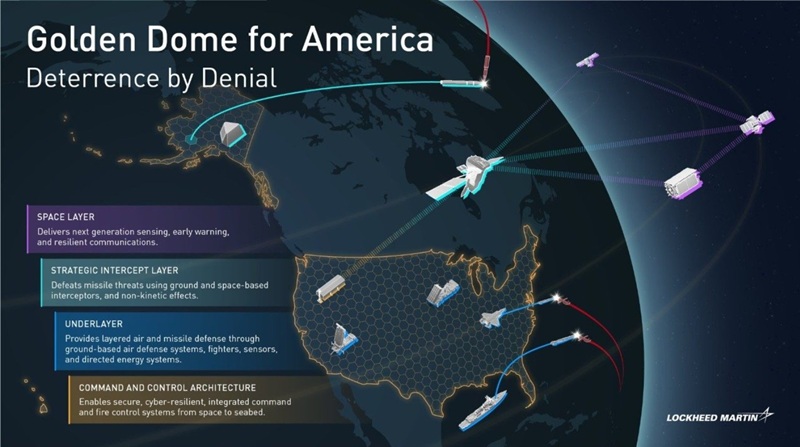
The proposed Golden Dome missile shield would receive $17.5 billion, though most of that depends on reconciliation funding.

Only $400 million is currently included in the base request.

The Pentagon also plans to increase active-duty force levels from 1,321,916 to 1,342,900, adding more than 20,000 personnel next year.

Army Focuses on Missiles and Armored Vehicles

The United States Army is requesting $54.7 billion in procurement funding.

One of the most striking increases comes in missile procurement, which jumps from just over $7 billion to $37 billion.

Image

Key systems include:

  • Precision Strike Missile
  • THAAD
  • HIMARS
  • PAC-3 Missile Segment Enhancer
  • Typhoon Mid Range Capability

Meanwhile, manned aviation procurement sees sharp cuts, including Apache, Black Hawk, and Chinook programs.

Iran Downs A-10 and F-15 as Claims of Total Air Superiority Face Questions

0
U.S. A-10 Warthog

A Fairchild Republic A-10 Thunderbolt II was reportedly struck by Iranian fire yesterday, forcing the pilot to eject, according to a US official familiar with the matter.

Iran’s Tasnim News Agency reported that Iranian air defenses shot down a US Air Force A-10 on April 3, 2026, describing it as the sixth confirmed shootdown of the iconic “Warthog” since the aircraft entered service in the late 1970s.

Iranian state-linked sources said the aircraft was engaged over southern waters near the Strait of Hormuz, with the jet crashing into the Persian Gulf.

US officials later confirmed that two rescue helicopters involved in a separate search-and-rescue effort for an earlier downed McDonnell Douglas F-15E Strike Eagle were also struck by Iranian fire.

A-10 Hit During Combat Rescue Mission

According to CBS News, citing two US officials, an A-10C Warthog took fire and was severely damaged while supporting a combat search-and-rescue mission for the crew of an F-15E shot down earlier over Iran.

The pilot reportedly managed to exit Iranian airspace before ejecting over the Persian Gulf, where he was successfully recovered by the United States Air Force.

Reported incidents on Friday include:

  • F-15E shot down over Iran; one crew member rescued, search ongoing for the second
  • A-10 Warthog crashed after taking fire over the Persian Gulf; pilot rescued
  • Two Black Hawk helicopters hit during SAR mission; all crews reported safe

Air Superiority Claims Face Hard Questions

Five weeks into the war, Washington and Israel continue to claim overwhelming air superiority over Iran.

But the latest shootdowns present a far more complicated reality.

An F-15 strike fighter and an A-10 have both been lost, while two Sikorsky UH-60 Black Hawk helicopters were hit during rescue operations.

These incidents strongly suggest that Iranian air defenses remain operational despite weeks of sustained strikes on:

  • radars
  • surface-to-air missile batteries
  • command nodes
  • communication networks

Hostile airspace clearly still exists over parts of Iran.

Iran Shifts to Air Defense Guerrilla Warfare

The emerging picture suggests Iran has shifted toward what can best be described as air defense guerrilla warfare.

This includes:

  • mobile launchers
  • pop-up radars
  • improvised sensor sites
  • shoot-and-scoot missile teams

These systems appear briefly, fire, and disappear before counterstrikes arrive.

Such tactics complicate suppression efforts, especially as US aircraft are forced to fly lower and slower to identify missed air-defense elements.

Highly mobile systems such as Khordad and Majid launchers, combined with shoulder-fired missile teams, make the battlespace deeply unpredictable.

Decentralized Air Defense Network Still Fighting

A major factor appears to be Iran’s decentralized air-defense structure.

Even if central command nodes are degraded, many provinces can reportedly continue operating semi-autonomous defense sectors.

This means the air-defense network does not collapse simply because headquarters-level nodes are hit.

The shootdown of both an F-15 and an A-10 is a significant indicator that suppression of enemy air defenses remains incomplete.

CSAR Operations Show Extreme Risk and Coordination

The combat search-and-rescue (CSAR) mission itself has become one of the most remarkable parts of the unfolding story.

Despite two Black Hawks taking hits, rescue teams reportedly succeeded in recovering almost all pilots from the incidents.

That is an extraordinary display of aviation courage and coordination under hostile fire.

Air Domination Far From Total

Taken together, the pattern suggests that Iran may not be able to fully deny coalition air operations, but it can still seriously contest the skies.

That is fundamentally different from sweeping claims of total air domination.

Losing two frontline aircraft five weeks into a conflict after thousands of sorties is not unprecedented.

But successful engagements against an F-15 and an A-10 underline an uncomfortable reality:

air domination over Iran is far from total.

US Launches Rescue Operation in Southern Iran After Reports of Downed F-15E Strike Eagle

1

The United States Air Force has reportedly deployed multiple Sikorsky MH-60G Pave Hawk combat search and rescue helicopters to southern Iran, as a major recovery mission appears to be underway following reports of a downed McDonnell Douglas F-15E Strike Eagle.

According to circulating reports, US Air Force helicopters and fixed-wing aircraft have been seen operating over Chaharmahal and Bakhtiari Province and nearby Kohgiluyeh and Boyer-Ahmad Province in southern Iran.

The reported mission is believed to be focused on locating and extracting the crew of an F-15E that allegedly crashed earlier in the day.

At the time of publication, these reports remain unconfirmed by official US or Iranian authorities.

MH-60G and HC-130J Aircraft Reportedly Spotted

A MH-60G Pave Hawk Combat Search and Rescue (CSAR) helicopter was reportedly spotted this morning over the Kohgiluyeh and Boyer-Ahmad area.

In addition, video footage reportedly filmed by residents appears to show a Lockheed Martin HC-130J Combat King II flying low over southern Iran.

The HC-130J is a dedicated combat rescue support aircraft commonly used in personnel recovery missions.

Its reported presence strongly suggests that combat search and rescue operations may be underway.

Additional reports indicate that Lockheed Martin F-35 Lightning II fighters and General Atomics MQ-9 Reaper drones have also been seen operating in the area, possibly providing air cover and ISR support.

Search Focused on Southern Iran Provinces

The search is reportedly concentrated across:

  • Chaharmahal and Bakhtiari
  • Kohgiluyeh and Boyer-Ahmad
  • southwest Iran operational corridors

These regions are now reportedly being searched intensively as the recovery effort continues.

The terrain in these provinces is mountainous and difficult, which could complicate both aerial surveillance and ground extraction.

“Black Hawk Down” Reports Still Unconfirmed

Separate and highly fragmented reports are now circulating on Iraqi channels claiming that a Sikorsky UH-60 Black Hawk helicopter may also have been shot down.

Video footage reportedly shows a smoke plume allegedly linked to a downed helicopter.

However, these claims remain unconfirmed and highly murky.

No official evidence has yet been presented to verify whether the aircraft was indeed a Black Hawk or whether it was brought down by Iranian air defenses.

Because details remain fragmented, these reports should be treated with caution.

Reports of Captured F-15E Crew

State-linked Iranian media has reportedly claimed that the pilot and weapons systems officer of the downed F-15E have already been captured.

These claims have not been independently verified.

However, reports indicate that residents in southern Iran have found what appears to be a McDonnell-Douglas ACES II ejection seat, which is used by the F-15E Strike Eagle.

If authentic, this would lend some support to reports that the aircraft crashed and that at least one crew member may have ejected.

The current status and whereabouts of the pilot and weapons officer remain unknown.

There are unconfirmed claims that one or both may have been captured by the Islamic Revolutionary Guard Corps (IRGC).

Situation Still Developing

At this stage, the situation remains fluid.

Key points — including the F-15E crash, the rescue mission, helicopter loss reports, and any captured crew — remain unverified.

The story is likely to evolve rapidly as more official information emerges.

Iran Shoots Down Wing Loong II Drone Near Shiraz, Raising Questions Over Gulf Role in War

1
Iran shoots down Chinese-made Wing Loong II drone near Shiraz

Iran appears to have shot down a CAIG Wing Loong II drone in the southern region of Shiraz, triggering fresh questions among open-source intelligence analysts about whether Gulf states such as Saudi Arabia or the United Arab Emirates may have joined offensive operations against Tehran.

According to reports, images of the destroyed drone were first shared by Tasnim News Agency, which initially identified the aircraft as an American General Atomics MQ-9 Reaper.

Image

However, multiple open-source intelligence analysts later suggested that the wreckage more closely matches a Chinese Wing Loong II drone, a platform often compared to the MQ-9 Reaper.

The identification has not been independently verified at the time of publication.

OSINT Analysts Point to Chinese Drone Platform

The Wing Loong II is a Chinese-made medium-altitude long-endurance combat drone widely used by several countries in the Middle East.

While United States and Israel are not known to operate this platform, both Saudi Arabia and the UAE are known to have it in their arsenals.

Image

This has led analysts to raise questions over whether one of the Gulf states may have been involved in operations linked to the conflict with Iran.

The report notes that Middle East Eye could not independently confirm the OSINT assessment, though the identification was later echoed by Tehran Times.

Iran’s Own Chinese Drone Supplies Different

Earlier reports had indicated that Iran had received drones from China shortly before the US-Israeli attack on 28 February.

However, according to regional intelligence sources cited in the draft, those deliveries reportedly involved kamikaze drones, not reusable combat drones such as the Wing Loong II.

This distinction is strategically important.

The Wing Loong II is a reusable strike and surveillance platform, while kamikaze drones are designed for one-way missions.

Defense analyst Nicole Grajewski, author of Russia and Iran: Partners in Defiance from Syria to Ukraine, is cited as saying that Iran does not possess the Wing Loong drone in its arsenal.

This strengthens speculation that the aircraft may have originated from an external operator.

Focus Turns to Saudi Arabia and UAE

Because neither the US nor Israel is known to field Wing Loong II drones, attention has shifted toward Gulf states.

Both Saudi Arabia and the UAE have previously operated the platform.

Image

If either country was operating the drone over Iranian territory, it would signal a major escalation in their support for offensive operations.

This comes at a time when both states are reportedly under pressure from the Donald Trump administration to support broader regional military action.

Saudi Balancing Act Under Pressure

The draft notes that Saudi Arabia has been trying to carefully balance its position.

While the kingdom opposed the US-Israeli war on Iran, reports suggest it granted Washington expanded access to its airspace and King Fahd Air Base.

This reflects Riyadh’s difficult balancing act between avoiding direct entanglement and maintaining ties with its principal security partner.

The political tension reportedly intensified after Trump’s remarks about Crown Prince Mohammed bin Salman, which were said to have angered officials in Riyadh.

UAE Takes Harder Line on Iran

The UAE is described as taking a more openly assertive posture toward Iran.

According to the draft, Abu Dhabi has lobbied the United Nations to authorize the use of force to regain control of the Strait of Hormuz.

If the drone was indeed operated by the UAE, it would align with a more aggressive regional posture.

Image

At present, however, no official confirmation has been provided by Saudi Arabia, the UAE, Iran, or Western defense authorities.

Iran Claims Second US F-35 Shootdown, But Wreckage Photos Appear to Show an F-15

0

Iran’s reported F-35 shootdown claim has surfaced amid heightened regional tensions, with Tehran asserting that its air defenses downed a US stealth fighter in central Iranian airspace.

According to Iranian state-linked media and statements attributed to the Islamic Revolutionary Guard Corps (IRGC), the aircraft was engaged and destroyed during what it described as an intrusion into national airspace.

The claim, if true, would mark what Iran describes as a second incident involving a US F-35 fighter jet.

However, United States Central Command (CENTCOM) has not issued any confirmation or response at the time of publication, leaving the claim unverified.

Limited Details and No Independent Confirmation

Details surrounding the alleged incident remain sparse.

Iranian outlets report that the aircraft was struck in midair, with no confirmed information on the pilot’s fate.

Some reports suggest a possible onboard explosion prevented ejection, though no supporting evidence has been publicly presented.

At the time of writing, there has been:

  • no confirmation from Western defense officials
  • no satellite imagery verification
  • no ISR data release
  • no open-source intelligence confirmation

In previous incidents involving high-end military platforms, confirmation has typically depended on multiple layers of evidence, including wreckage imagery, radar tracks, or official acknowledgment.

At present, none of these have been independently established.

Wreckage Photos Raise Serious Questions

A key issue in the Iranian claim is the imagery released by state-linked outlets.

The series of photos shows only small pieces of aircraft wreckage, with the largest fragment roughly the height of a person.

However, the images do not appear consistent with an Lockheed Martin F-35 Lightning II stealth fighter.

Instead, the wreckage photos appear to resemble parts of a McDonnell Douglas F-15 Eagle jet.

According to the visible markings:

  • a partial “US Air Forces in Europe” logo can be seen
  • red-and-white tail striping is visible
  • metal fragments include warning stencils

One visible section bearing the words “CAUTION USE ONLY NON-MAGNETIC FASTENERS” appears to match the rear fuselage area of an F-15.

Markings Suggest RAF Lakenheath F-15

The tail flash stripe markings in the released photos appear consistent with aircraft from the 48th Fighter Wing, which is based at RAF Lakenheath.

This has led analysts and observers to question whether the imagery may have been misidentified.

If the photos are indeed from an F-15, this would significantly undermine Tehran’s claim of downing an F-35 stealth aircraft.

Press TV and IRGC Statements

Multiple Iranian state media outlets, including Press TV, published the images alongside an IRGC statement claiming Iranian forces had shot down an F-35 in central Iran.

The report stated:

“Due to the complete disintegration of the aircraft, the fate of the pilot remains unknown.”

At present, this claim remains unverified and contested by the visual evidence released so far.

Why Verification Matters

Claims involving advanced stealth aircraft such as the F-35 carry major strategic implications.

A confirmed shootdown would represent a highly significant development in regional air defense capabilities.

But without:

  • independent imagery
  • satellite confirmation
  • US acknowledgment
  • credible OSINT analysis

the report must be treated with caution.

For now, the available evidence appears more consistent with F-15 wreckage than an F-35 stealth platform.

Why a Hasty Trump Exit From Iran May Not End the War: Four Key Risks

0
3rd Khordad air defence system, Iran

US President Donald Trump is signaling that he may walk away from the Iran war, potentially stepping out unilaterally without toppling the Islamic Republic, reopening the Strait of Hormuz, or securing a deal with Iran to halt attacks on the United States and its allies.

In a primetime address to the nation on Wednesday, Trump said that the administration’s “core strategic objectives are nearing completion,” pointing to damage inflicted on Iran’s missile program, navy, army and regional proxies.

Image

The president also claimed that the “hard part is done,” expressing optimism that a US withdrawal would ease the economic pain caused by Iranian attacks on Gulf shipping and energy infrastructure.

Yet Tehran is showing no signs of backing down.

Iran Says It Will Decide When the War Ends

Iran has insisted that it will determine when the war ends and has rejected any external deadlines.

According to Foreign Minister Abbas Araghchi, Tehran is prepared to continue fighting for “at least six months.”

This sharply contrasts with Trump’s assertion that his primary objective — preventing Iran from developing a nuclear weapon — “has been attained.”

However more than 400 kilograms of highly enriched uranium remain unaccounted for, raising serious doubts over whether the nuclear threat has in fact been neutralized.

Risk of a More Hardline Iran

Rather than weakening Tehran strategically, an early US exit may leave behind a significantly more hardline regime.

With former supreme leader Ali Khamenei reportedly killed by Israel, hardliners are now pressing for full weaponization of Iran’s nuclear program.

This could push Iran from threshold status toward an active bomb program.

The Islamic Revolutionary Guard Corps is also expected to tighten its grip on power, undermining civilian leadership and intensifying domestic crackdowns.

Image

This outcome could leave Washington having failed to achieve regime change while empowering more radical elements.

Hormuz Exit Could Hand Iran Strategic Victory

Perhaps the most significant consequence of a hasty exit concerns the Strait of Hormuz.

Trump has argued that the strait would “just open up naturally” after a US withdrawal and that gas prices would “come tumbling down.”

But global energy markets do not function that way.

Oil prices are set on global benchmarks, and any continued supply shock would still drive US gasoline prices higher regardless of America’s direct imports from the region.

Image

Exiting without a formal agreement to reopen the strait would effectively hand Iran a strategic win, allowing it to impose de facto sovereignty over one of the world’s most critical shipping lanes.

The reported vetting of ships and tolls of up to $2 million per vessel could become normalized, creating a new revenue stream for Tehran.

Gulf States Could Be Left Exposed

There are deep concerns among Gulf Arab states.

Iran has broken two major taboos during the conflict:

  • launching direct attacks on Gulf territory
  • effectively closing Hormuz to their exports

For states such as Qatar, Saudi Arabia, and the United Arab Emirates, these moves are viewed as existential threats.

A rapid US exit could leave them vulnerable to renewed strikes and Iranian leverage over future oil exports.

This also raises questions about Washington’s security guarantees after Trump previously assured Gulf partners that “we’re going to protect you.”

Israel and Lebanon Front Remain Unresolved

A US exit would also leave key fronts unresolved.

Israel may view an American withdrawal with the Islamic Republic still intact as unfinished business.

Even if Israeli strikes pause, Tehran is likely to seek guarantees against future attacks.

At the same time, fighting linked to Hezbollah in Lebanon remains active, with no sign that a US exit alone would resolve that front.

AI Weapons, Surveillance and Command Systems Spread Across Middle East Militaries

0
Israeli drone manufacturer Aero-Sentinel Drone

Artificial intelligence is becoming a central pillar of military operations across the Middle East, according to a new report by the The International Institute for Strategic Studies (IISS), which maps the growing spread of AI-powered command systems, surveillance networks, and battlefield technologies across the region.

The report, “The Proliferation of AI-Enabled Military Technology in the Middle East,” highlights how regional militaries are increasingly integrating AI into command and control, intelligence gathering, weapons systems, and logistics.

Image

According to the IISS visual mapping, the report focuses on the architecture of AI-enabled military systems, showing how command, surveillance, targeting and logistics technologies are increasingly interconnected across the regional battlespace.

Israel’s AI Military Ecosystem Mapped

One of the most detailed parts of the IISS report is the mapping of selected Israeli AI networks.

The chart identifies multiple AI-enabled systems reportedly linked to military use, including:

  • Lavender
  • Where’s Daddy
  • The Gospel (Habsora)
  • Fire Weaver
  • Blue Wolf
  • Red Wolf
  • White Wolf
  • Pillar of Fire

Image

These systems span several operational domains:

  • command, control and communications
  • intelligence, surveillance and reconnaissance
  • weapons platforms
  • logistics

The report’s network diagram also links these systems to major enabling technologies from global firms.

Big Tech’s Role in Military AI Infrastructure

The IISS report points to the growing involvement of major technology companies in enabling military AI ecosystems.

The report references infrastructure and software links involving:

  • Microsoft
  • Google
  • Amazon
  • Palantir Technologies
  • OpenAI
  • Oracle Corporation
  • Cisco
  • **Dell Technologies

Cloud platforms such as Azure, AWS Cloud, and Gemini / Vertex infrastructure are shown as enabling layers for selected systems.

This underscores how modern military AI increasingly depends on civilian cloud and data architecture.

AI Warfare Beyond Israel

The report also shows that AI-enabled military technologies are not limited to Israel.

Regional deployments and testing are mapped across several countries, showing how AI warfare capabilities are spreading throughout the Middle East.

Image

These technologies include:

  • AI-assisted ISR
  • autonomous surveillance
  • predictive targeting
  • battlefield communications
  • logistics optimization

This reflects a broader shift in regional defense strategy, where AI is moving from support roles into frontline military operations.

Corporate Governance and Military AI Ethics

The report focuses on the governance policies of major technology firms involved in AI-enabled military systems.

The IISS compares company policies on:

  • weapons restrictions
  • surveillance use
  • human-in-the-loop requirements
  • international humanitarian law
  • national security exemptions

This governance framework is particularly significant as military use of commercial AI tools continues to expand.

According to the report notes, Google and OpenAI removed previous prohibitions on military use in 2025 and 2024 respectively.

This policy shift has major implications for the future of defense technology and AI warfare.

The Future of Warfare in the Middle East

The IISS report suggests that AI-enabled military technology is now becoming deeply embedded in regional conflict environments.

From facial recognition and battlefield analytics to cloud-based targeting systems, AI is increasingly shaping:

  • intelligence cycles
  • targeting decisions
  • surveillance operations
  • combat support

This marks a significant transformation in how military power is projected across the Middle East.

Trump’s Iran Address Raises More Questions Than Answers on War Endgame

0
President-elect Donald Trump speaks at Turning Point USA's AmericaFest in Phoenix, Arizona, U.S.

Donald Trump faced a high bar Wednesday night in his national address on Iran, appearing before a country that has not only lost confidence in his presidency, according to the latest polls, but has also soured on his new war and grown deeply worried about its economic consequences.

Millions across the Middle East and around the world are now asking the same questions: when will the war end, how will it end, and what happens next?

At the center of those concerns is the continuing closure of the Strait of Hormuz, a critical global energy chokepoint whose disruption is fueling fears of a worldwide recession.

Image

A More Measured Case for War — But Too Late?

In the 20-minute speech from the Cross Hall of the White House, Trump delivered what was arguably his most coherent and temperate explanation yet for why he launched military action.

He argued that he could not allow what he called the “terrorists” in the Iranian regime to obtain a nuclear weapon after decades of threats against the U nited States.

The president also pointed to the collapse of diplomacy and Tehran’s internal repression, leaning heavily into one of his core political strengths: the projection of force and resolve.

Yet those arguments may have carried more weight a month earlier, when the offensive began.

Weeks of contradictory messaging and shifting war aims may now blunt the impact of a more clearly articulated justification.

No Clear Exit Strategy

The most striking omission from Trump’s address was the absence of a clear endgame.

Many observers had expected the president to use the speech to outline a path toward de-escalation.

Instead, he signaled the possibility of further military escalation.

Trump warned that over the next “two to three weeks” the United States would “bring them back to the stone ages.”

He also threatened strikes on:

  • Iranian electrical plants
  • oil infrastructure
  • additional strategic targets

if Tehran refused a peace deal.

That language is unlikely to reassure Americans already worried about the direction of the conflict or global investors unsettled by the energy crisis.

At no point did the president present a realistic exit strategy, short of complete Iranian capitulation.

Strait of Hormuz Remains the Global Economic Risk

One of the most consequential parts of the speech concerned the Strait of Hormuz.

Trump suggested that the waterway would “open up naturally” because Iran ultimately needs to sell oil.

That assertion may do little to calm markets.

The strait remains under effective Iranian pressure through missiles and drones, and even the United States Navy has yet to fully restore safe commercial passage.

Image

As long as the blockade continues, the world economy remains vulnerable to Tehran’s leverage.

This is especially significant as oil prices continue to rise and American gasoline prices remain above $4 per gallon.

Political Fallout Deepens

The speech also comes at a politically dangerous moment for Trump.

According to the latest CNN/SSRS poll, his approval rating stands at 35%, while only 34% of Americans approve of military action in Iran.

Even more striking, 68% oppose sending ground troops, a possibility the president did not rule out.

The economic damage is also weighing heavily on public opinion.

Trump’s approval on the economy has dropped to 31%, with roughly two-thirds of Americans saying his policies are worsening conditions.

For a second-term president heading toward difficult midterm elections, these numbers are deeply troubling.

More Anxiety Than Reassurance

Trump’s assurances that gasoline prices would soon fall and stock markets would rebound sounded more hopeful than strategic.

Without a clearly defined military or diplomatic path forward, it remains difficult to conclude that the president knows when the war will end — or what the global order will look like once it does.

For now, the speech appears to have done little to ease anxiety over either the conflict itself or the economic shockwaves it continues to generate.

Can China Stop the Iran War? Beijing’s Peace Push Faces Tough Test

0
Chinese President Xi Jinping looks on on the day he lays a wreath at the Ho Chi Minh Mausoleum during his visit to Hanoi, Vietnam.

As the Iran war enters a critical phase, China is increasingly positioning itself as a diplomatic broker, backing a joint peace initiative with Pakistan aimed at securing a ceasefire and reopening the Strait of Hormuz.

The central question now is whether Beijing’s diplomacy can move from rhetoric to results.

China and Pakistan this week jointly called for an immediate ceasefire, peace talks, and the restoration of normal navigation through Hormuz, one of the world’s most critical oil shipping routes.

Image

For Beijing, this is not just diplomacy — it is a strategic test of whether China can emerge as a credible peacemaker in one of the world’s most dangerous conflicts.

Why China Wants Peace in the Iran War

China’s motivation is rooted in both geopolitics and economics.

As one of the world’s largest energy importers, Beijing has a major stake in keeping Gulf oil flowing.

The war has already disrupted shipping through Hormuz, raising fears of an energy shock that could hit Chinese industry and exports. Recent reports show even Chinese-linked ships have faced disruption despite Iranian assurances.

Image

Beijing also has deep trade ties with both Iran and Gulf states, making regional stability critical to its economic interests.

Analysts say China’s diplomacy is partly about preventing oil prices from surging further and damaging growth.

What China’s Peace Plan Looks Like

The China-Pakistan initiative centers on a five-point framework that includes:

  • immediate ceasefire
  • urgent peace talks
  • protection of civilian infrastructure
  • reopening Hormuz
  • respect for sovereignty

The diplomatic push is designed to create what Beijing calls a “window for talks” between Washington and Tehran.

This also helps Xi Jinping project China as a stabilizing global power in contrast to Washington’s military-first approach.

But Will It Actually Work?

This is where the challenge begins.

China has influence, but its leverage is limited.

Unlike the United States, Beijing has no major military footprint in the Gulf and cannot enforce maritime security on the ground.

Its influence comes from trade, diplomacy, and energy ties rather than hard power.

That means China’s success depends on whether both Washington and Tehran are willing to engage.

So far, that remains uncertain.

Some analysts note that China’s earlier peace efforts — including its Ukraine framework — struggled to translate diplomatic proposals into concrete outcomes.

The Real Test: Can China Deliver Results?

The real measure of success will be whether China can help reopen Hormuz and create a credible ceasefire pathway.

If Beijing succeeds, it would significantly strengthen its image as a global mediator and reshape Middle East diplomacy.

If it fails, critics may see the effort as another symbolic peace proposal without enforcement power.

For now, China is clearly trying to play peacemaker.

Whether it works depends less on Beijing’s intentions and more on whether the warring sides see diplomacy as preferable to escalation.

That answer may come in the coming days.

NATO Rift Deepens as Trump Weighs Exit and Starmer Calls Hormuz Summit

0
British Prime Minister Keir Starmer

US President Donald Trump has said he is strongly considering pulling the United States out of NATO, sharply escalating tensions with European allies as the war-related crisis in the Strait of Hormuz continues to disrupt global energy markets.

At the same time, UK Prime Minister Keir Starmer announced that Britain will host an emergency meeting of around 35 countries to discuss diplomatic and political steps needed to reopen the vital shipping route.

The twin developments underline a widening transatlantic divide over the Iran conflict and maritime security in the Gulf.

Trump Calls NATO a “Paper Tiger”

According to multiple reports published today, Trump criticized NATO allies for refusing to support US-led military efforts related to Iran and the reopening of Hormuz.

He reportedly described the alliance as a “paper tiger” and said a US withdrawal is now under serious consideration.

The remarks come after several NATO countries declined to join direct military operations in the Gulf, preferring diplomacy over escalation.

This has revived long-standing concerns about the future of NATO and Washington’s commitment to collective defense.

UK Leads Diplomatic Push on Hormuz

Starmer, however, moved to calm the diplomatic crisis by reaffirming Britain’s full commitment to NATO.

He called it “the single most effective military alliance the world has ever seen.” (euronews)

At the same press conference, he confirmed that the UK will convene talks involving about 35 countries to address the Strait of Hormuz blockade.

The summit will focus on:

  • restoring freedom of navigation
  • securing trapped commercial vessels
  • resuming oil and LNG shipments
  • planning post-conflict maritime security

Starmer also said military planners will later meet to discuss how the strait can be made safe once fighting ends.

Hormuz Crisis Raises Global Oil Market Fears

The Strait of Hormuz carries roughly 20% of global oil trade, making the current disruption one of the most serious risks to global energy supply.

Image

With tanker traffic sharply reduced and multiple shipping firms pausing operations, markets remain highly sensitive to any diplomatic breakthrough.

Brent crude has already surged amid fears of prolonged closure.

NATO and Europe at a Turning Point

The latest remarks could mark a pivotal moment in Western security politics.

While Trump’s comments have reignited uncertainty over NATO’s future, Starmer’s Hormuz initiative positions the UK as a leading diplomatic actor in managing the crisis.

The immediate question now is whether diplomacy can reopen the strait before energy markets face further shocks.

Europe’s Space Defense Gap Exposed: IISS Warns of Critical US Dependence

0
Advancing European Military Capacity in Space

Europe is rapidly expanding its military space capabilities as security concerns over Russia and shifting US strategic priorities force governments to rethink long-term defense autonomy, according to a new report by the International Institute for Strategic Studies (IISS).

The March 2026 research paper, “Advancing European Military Capacity in Space,” outlines how European governments are investing heavily in satellite communications, intelligence systems, missile early warning, launch infrastructure, and space surveillance.

However, the report warns that despite major spending commitments, Europe remains deeply dependent on the United States for critical military space functions.

Russia-Ukraine War Driving Europe’s Space Defense Push

According to the IISS, Russia’s war against Ukraine has fundamentally changed Europe’s strategic outlook in space.

The study notes that any future conflict involving NATO allies would unfold in a contested space environment, where satellites for communications, navigation, intelligence, and missile warning could become priority targets.

Image

The report specifically highlights Russia’s operational counterspace capabilities, including:

  • anti-satellite missile systems
  • electronic jamming
  • cyber operations
  • orbital proximity missions
  • GPS spoofing

These threats have pushed Europe to prioritize sovereign military space assets.

Europe Has Already Committed More Than $100 Billion

The IISS estimates that currently announced European investments already exceed $109 billion.

Major spending includes:

  • Germany: €35 billion by 2030
  • France: €10.2 billion
  • EU IRIS² constellation: €10.6 billion
  • ESA resilience program: €1.2 billion

This includes major programs in:

  • secure satellite communications
  • ISR satellites
  • launch systems
  • missile early warning
  • space situational awareness

Yet the report warns these investments remain strategically fragmented.

Europe, it says, is still building “an aggregation of national systems rather than an integrated operational architecture.”

Image

Europe Still Depends on US for Critical Space Warfare Systems

The most serious concern identified by the IISS is Europe’s reliance on the United States for high-end military space enablers.

These include:

  • launch capacity
  • space-based ISR
  • missile early warning
  • satellite surveillance
  • deep space tracking

Image

The report states that the most acute dependencies lie in:

Missile Early Warning

Europe still relies heavily on US systems such as SBIRS for ballistic missile launch detection.

Intelligence and Surveillance

Persistent theater-level ISR remains dominated by US capabilities.

Launch Infrastructure

Europe still faces limitations in medium and heavy launch cadence compared with the United States and SpaceX.

Europe Needs $25 Billion More for Space Autonomy

One of the strongest findings in the IISS report is the projected cost of autonomy.

The institute estimates:

  • $10 billion additional spending for burden-sharing capability
  • $25 billion minimum for autonomous operational capability

This figure excludes:

  • personnel
  • cyber resilience
  • training
  • hardened ground systems
  • infrastructure overheads

The report warns that even with aggressive investment, full autonomy may not be achievable before 2040.

Image

Strategic Shift After US Policy Changes

The study also links Europe’s urgency to changing US defense priorities.

Washington is increasingly shifting strategic focus toward:

  • homeland defense
  • Indo-Pacific competition
  • China

As a result, European allies are being pushed to assume greater responsibility for their own defense.

This includes the space domain, where satellites now play a central role in:

  • command and control
  • battlefield intelligence
  • precision targeting
  • missile defense
  • logistics coordination

Europe’s Future Warfare Will Depend on Space

The IISS report makes clear that future warfare in Europe will not only be fought on land, sea, and air.

It will also be fought in orbit.

From satellite communications to missile launch detection and anti-jamming navigation systems, military space assets are now central to deterrence and warfighting.

The report concludes that Europe must move beyond fragmented national programs and develop a coherent integrated space defense architecture.

Without that, additional satellites alone will not translate into operational strength.

Drone Warfare Era Begins: US, Europe, China and Türkiye Rush New UAV Systems

0
Airbus test-flown a new UAV interceptor, the Do-DT25

The wars in Ukraine and Iran have transformed drone warfare from a supporting battlefield tool into one of the defining pillars of modern military strategy, prompting a rapid global arms race in unmanned aerial systems, loitering munitions, and autonomous logistics platforms.

What first emerged prominently during the Ukraine conflict has now been reinforced by the Iran war, where long-range one-way attack drones, low-cost precision strikes, and autonomous air defense layers have demonstrated that the future battlefield is increasingly unmanned, cheaper, and faster.

From Europe to Asia and the United States, major military powers are now moving aggressively to mass-produce both offensive and defensive drone systems.

Germany Expands Anti-Drone Shield with Skynex and Skyranger

Germany is accelerating production of its Skynex and Skyranger gun-based air defense systems as Europe strengthens its short-range anti-drone defenses.

Image

The move comes as Shahed-style drone attacks continue to reshape military planning across Europe, with lessons drawn directly from the battlefield experience in Ukraine.

These systems are specifically designed for the short-range counter-UAV layer, targeting loitering munitions, swarm drones, and low-flying threats that conventional missile defense systems often struggle to engage cost-effectively.

This reflects a broader military shift: using guns and short-range interceptors to destroy low-cost drones instead of expending expensive surface-to-air missiles.

Airbus Tests New UAV Interceptor Drone

In a major development, Airbus has successfully test-flown a new UAV interceptor, the Do-DT25, at a military range in northern Germany.

Image

The interceptor is armed with four Frankenburg Mark 1 missiles, each capable of engaging targets within a 1.5–2 km range.

The drone has been specifically built to hunt and destroy large loitering munitions such as Shahed-type drones, signaling the emergence of a new autonomous air defense layer.

This development is particularly significant because it moves beyond static air defense systems toward mobile, autonomous aerial interceptors, capable of pursuing and neutralizing drone threats in real time.

Türkiye Unveils New Shahed-Style Kamikaze Drone

Türkiye has unveiled its new indigenous kamikaze drone, the Sky Dagger, whose design visually resembles the Shahed-136.

Image

The development highlights Ankara’s increasing investment in low-cost, long-range precision strike systems, joining the expanding global race in loitering munitions.

The strategic significance is clear: countries are increasingly favoring mass-producible expendable strike drones capable of saturating enemy air defenses.

This mirrors the battlefield lessons from both Ukraine and Iran, where drone swarms and low-cost one-way attack systems have repeatedly challenged traditional military doctrine.

China Pushes Heavy-Lift Autonomous Logistics Drones

China has expanded its drone warfare and logistics capabilities with several new heavy-lift autonomous systems.

Changying-8 Heavy Cargo Drone

The newly tested Changying-8 can reportedly carry 3.5 tons of payload, with a range of up to 3,000 km and a maximum takeoff weight of 7 tons.

Image

This places it in a category comparable to light tactical transport roles.

600 kg Heavy-Lift Drone

China has also unveiled a 600 kg heavy-lift drone optimized for stable operations in severe weather.

500 kg Unmanned Transport Vehicle

Another newly introduced system can transport up to 500 kilograms, enhancing battlefield resupply and autonomous logistics.

These developments show that the drone race is no longer focused only on strike roles.

The next frontier is unmanned logistics, battlefield resupply, and remote autonomous transport, where drones reduce human exposure and accelerate operations.

US Moves to Mass Produce LUCAS Kamikaze Drones

The United States is also moving toward mass production of LUCAS kamikaze drones, reportedly inspired by the combat effectiveness of the Shahed-136.

Image

The strategic aim is to replace $1 million cruise missiles with significantly cheaper one-drone-one-strike systems.

This cost-efficiency model is now becoming central to modern warfare economics.

Instead of deploying expensive precision missiles, militaries are increasingly favoring expendable drones that can achieve similar tactical effects at a fraction of the cost.

Ukraine and Iran Wars Proved the Future of Warfare

The Ukraine war first demonstrated how drones could dominate reconnaissance, artillery correction, precision strikes, and swarm attacks.

The Iran conflict further reinforced this reality by highlighting the strategic impact of long-range loitering munitions and saturation attacks.

Together, both wars have effectively proven that future conflict will revolve around:

  • cheap strike drones
  • autonomous interceptors
  • anti-drone gun systems
  • heavy-lift logistics UAVs
  • swarm warfare
  • AI-assisted targeting

The battlefield is becoming smaller, faster, and increasingly autonomous.

Drone warfare is no longer the future.

It is already here.

Trump’s Iran Endgame Raises Fears Over Hormuz, Oil Shock and NATO Rift

1
U.S. President-elect Donald Trump attends a wreath laying ceremony at Arlington National Cemetery ahead of the presidential inauguration in Arlington, Virginia, U.S.

US President Donald Trump is signaling that Washington may be preparing to step back from the conflict with Iran, even as the Strait of Hormuz remains disrupted and global oil markets face growing uncertainty.

According to the draft, Trump has been telling US allies that they may have to deal with the consequences of the conflict on their own.

In a post on Truth Social, he wrote:

“Go get your own oil.”

The remark came amid growing signs that the administration may declare the mission complete without first restoring full freedom of navigation through one of the world’s most important energy routes.


Hormuz Remains the Core Strategic Issue

The Strait of Hormuz is one of the most critical shipping lanes in the world, through which a large share of global oil and LNG supplies traditionally transit.

If the conflict ends with Iran retaining effective control over the chokepoint, analysts say it would represent a significant strategic outcome for Tehran.

Image

The draft notes that Iran could potentially use this position to:

  • impose transit tolls
  • leverage global energy prices
  • rebuild damaged military and missile capabilities

Such a development would have immediate implications for global markets.

Economic Fallout Could Hit Global Markets

Even though the United States is one of the world’s largest oil producers, the report emphasizes that American consumers are still exposed to global oil pricing.

Because oil is traded globally, any supply disruption in Hormuz can raise prices worldwide.

This increases the risk of:

  • inflation
  • energy shortages
  • economic slowdown
  • possible global recession

The economic consequences could become politically significant ahead of upcoming US midterm elections.

Pressure on NATO and European Allies

The draft also highlights growing strain within the transatlantic alliance.

According to the report, Marco Rubio described the response of US allies as “very disappointing.”

This has fueled concerns in Europe that Washington’s security commitments may increasingly become conditional.

Some allies reportedly declined to fully support US offensive operations.

Examples mentioned include:

  • the UK initially withholding base access
  • Spain taking a more distant position

This is adding pressure on European governments to accelerate military investment and reduce reliance on US security guarantees.

Europe Faces Direct Economic Risks

Even if European countries remain outside the fighting, the draft argues they cannot avoid the consequences.

Potential risks include:

  • rising fuel prices
  • inflationary pressure
  • supply chain disruption
  • refugee flows if instability worsens in Iran

Several fragile European economies could face serious political fallout if energy prices continue to rise.

No Clear Military Solution

The draft notes that even major NATO powers lack the capacity to independently reopen the Strait without US support.

While some countries have niche capabilities such as minesweeping and escort missions, analysts question whether this would be sufficient in a high-threat environment involving Iranian drones and missiles.

Even the US Navy is described as facing major operational risks in the area.

This leaves no obvious military off-ramp for either side.

Trump’s Messaging May Still Be Tactical

The article also cautions that Trump’s public statements may be part of a negotiating strategy.

The draft notes that his rhetoric often serves as pressure on allies and adversaries alike.

This includes previous threats to strike Iranian infrastructure if peace terms are not accepted.

As a result, some analysts believe the public messaging may still be aimed at forcing diplomatic movement rather than signaling a final withdrawal.