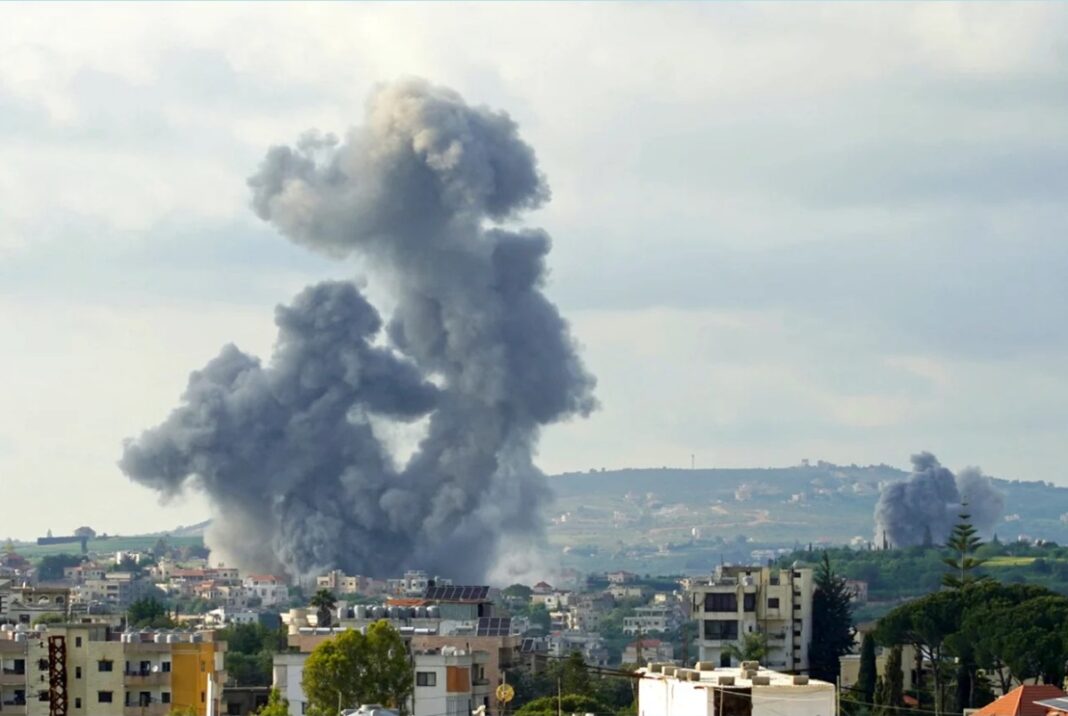

The recent military exchange between Iran and Israel may have lasted only briefly, but its strategic consequences could extend far beyond the immediate battlefield.
What initially appeared to be a contained escalation following Israeli strikes on Beirut’s southern suburbs may instead represent the emergence of a new regional deterrence equation — one that increasingly links Lebanon’s security directly to Iranian military calculations and raises fresh questions about the future of US-Iran diplomacy.
While Tehran has since announced a suspension of military operations after what it described as a “painful response” to Israeli actions in Lebanon, the broader implications of the confrontation continue to reverberate across the Middle East.
At the centre of the shift lies an increasingly important question: Has Iran fundamentally changed the rules governing confrontation with Israel?
Iran’s Surprise Intervention Changed the Equation
According to the emerging regional narrative, Tehran’s direct response to Israeli operations targeting Beirut’s southern suburbs appears to have caught Israel and its allies off guard.
Had Israeli planners expected immediate Iranian intervention, some regional analysts argue, Tel Aviv may have approached the escalation differently.
Instead, Iran’s intervention appears to have introduced a new deterrence framework: attacks targeting Hezbollah strongholds in Lebanon could increasingly carry the risk of direct Iranian military retaliation against Israel.
That distinction matters.
For years, conflict dynamics between Israel and Hezbollah largely remained geographically contained within Lebanon and its border regions.
The latest escalation suggests Tehran may now seek to formalise a different equation — one in which attacks on Hezbollah-linked infrastructure trigger wider regional responses.
If this framework solidifies, future Israeli calculations regarding Lebanon could become considerably more complicated.
Lebanon Is No Longer a Separate File
One of the clearest outcomes of the latest confrontation is the apparent collapse of efforts to separate Lebanon from broader negotiations involving Iran.
The United States, Israel, and Lebanese authorities have reportedly sought to handle Lebanese security arrangements independently from wider diplomacy between Washington and Tehran.
Iran appears increasingly unwilling to accept that separation.
For Tehran, Hezbollah remains central to its broader “Axis of Resistance” strategy — a regional network linking armed groups and allied actors across Lebanon, Iraq, Syria, and Yemen.
This means developments in Lebanon increasingly carry regional implications.
Rather than viewing Hezbollah as a local actor, Tehran treats Lebanon as part of a wider strategic deterrence architecture.
As a result, pressure on Hezbollah increasingly becomes pressure on Iran itself.
Israel’s Dilemma: Deterrence or Escalation?
From an Israeli perspective, the latest exchange appears to have produced mixed results.
Rather than transforming the confrontation into a strategic opportunity, Israel’s immediate objective appeared focused on limiting escalation and mitigating the impact of Iran’s newly imposed deterrence equation.
Regional observers increasingly debate whether Israel succeeded.
Several Israeli analysts and security commentators have reportedly acknowledged concerns that a new reality may now be taking hold — one in which future strikes on Lebanon carry heightened escalation risks.
That does not mean Israel accepts the new equation.
Far from it.
Israeli planners are likely to continue exploring ways to reduce Tehran’s influence, weaken Hezbollah’s operational capacity, and avoid allowing deterrence dynamics to constrain future military freedom.
The confrontation remains unresolved.
Did the Conflict Reveal Limits of Israeli and US Pressure?
The recent escalation also appears to reinforce a broader Iranian narrative: that military pressure failed to significantly weaken Tehran’s strategic capabilities.
From Tehran’s perspective, recent events demonstrated two things.
First, Iran retains the capacity and willingness to directly project force when core interests are threatened.
Second, military confrontation may have increased rather than reduced Iran’s readiness to employ force in support of regional allies.
This perception matters politically and strategically.
Even if external observers debate the effectiveness of Iran’s military actions, what shapes future behaviour is Tehran’s own assessment of the confrontation.
At present, Iranian leadership increasingly appears convinced that resilience and calibrated escalation have strengthened rather than weakened deterrence.
The Rise of an ‘Axis Security Belt’
One of the most important developments may involve growing discussion around regional coordination among Iran-aligned actors.
General Ismail Qaani, commander of the Quds Force of the Islamic Revolutionary Guard Corps, recently described what he called a future “security belt for the resistance” stretching from the Strait of Hormuz to the Bab al-Mandab and from the Persian Gulf to the Red Sea.
Qaani suggested that Yemen’s intervention reflected the strategic logic of the “Axis of Resistance,” where attacks against one partner increasingly invite broader regional involvement.
“The timely and decisive action taken by heroic Yemen demonstrates the wisdom of the resistance front,” he reportedly said.
If translated into operational reality, such thinking could substantially widen future confrontation scenarios involving Israel, Gulf shipping corridors, and regional military infrastructure.
Washington’s Difficult Balancing Act
The latest escalation also exposed an increasingly difficult American position.
Washington appears caught between competing priorities.
On one side lies the objective of preventing a wider regional war that could derail diplomatic engagement with Tehran and threaten global energy stability.
On the other sits pressure to maintain Israel’s deterrence posture and avoid perceptions of strategic weakness.
This balancing act may partly explain why US support for Israeli retaliation appears increasingly calibrated — firm enough to preserve deterrence credibility, but constrained enough to avoid dragging American forces directly into war.
The challenge is that this balancing strategy becomes harder to sustain as regional escalation cycles intensify.
What Happens Next?
The emergence of a new deterrence equation does not mean Iran has won the confrontation — or that Israel will simply adapt to new limits.
The conflict remains active, competitive, and highly fluid.
Tehran appears determined to institutionalise the idea that attacks on Hezbollah or Iranian interests will carry broader consequences.
Israel and its partners are equally likely to seek ways to limit or undermine that reality.
The coming months may therefore centre less on immediate war and more on competing efforts to shape the rules of future confrontation.
For now, one reality is becoming increasingly difficult to ignore: the Israel-Lebanon file may no longer be separable from Iran’s broader regional strategy.
And that shift could redefine Middle Eastern deterrence for years to come.