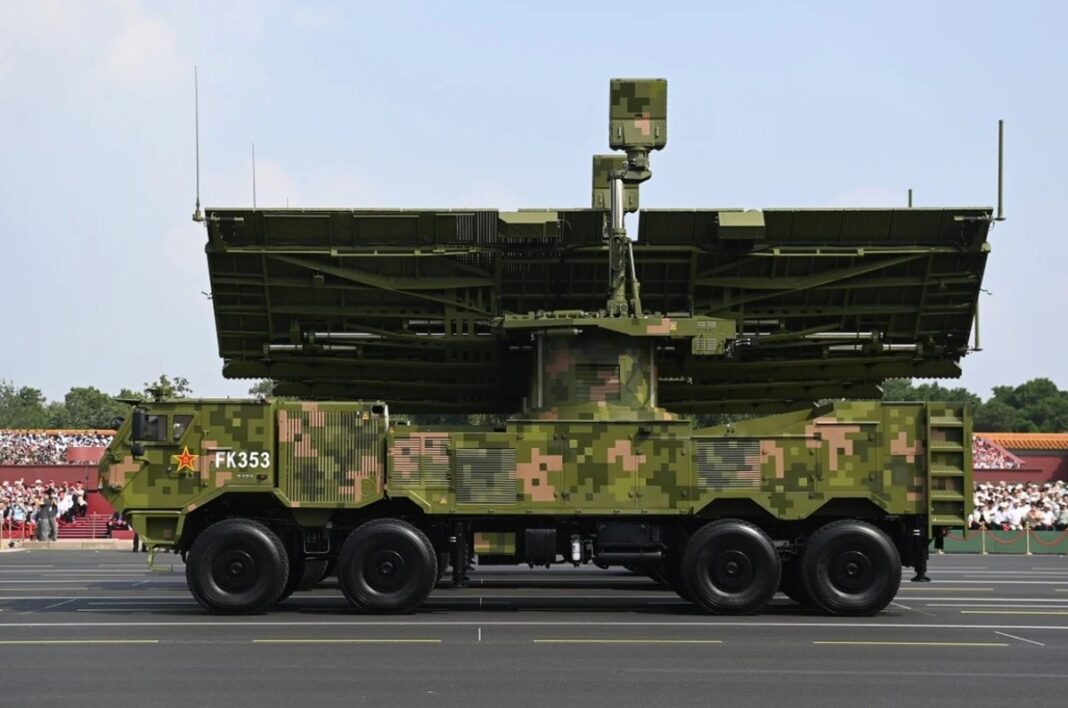
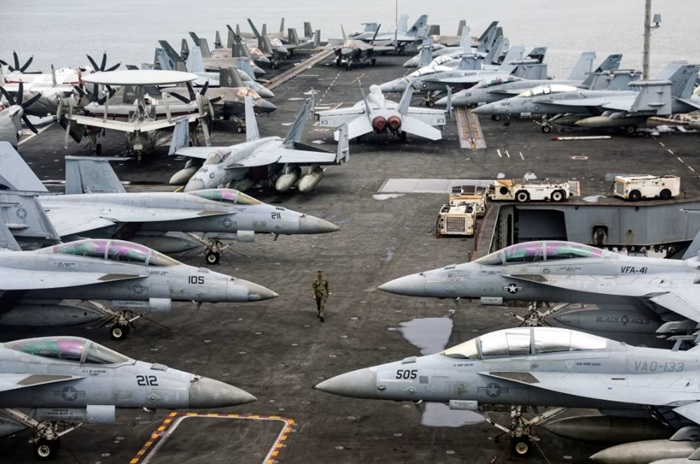
Recent reports claiming that a Chinese spy ship was actively shadowing the USS Abraham Lincoln Carrier Strike Group have sparked widespread debate across defense circles and social media. While many viral posts exaggerate or recycle older images, the broader strategic issue is very real: China is steadily expanding its ability to monitor U.S. naval operations far beyond the Indo-Pacific and into the Middle East.
The real story is not whether a single Chinese vessel followed one American aircraft carrier. It is the emergence of an integrated intelligence architecture combining research ships, signals intelligence (SIGINT) vessels, satellites, commercial imagery, and open-source maritime tracking to build a persistent picture of U.S. military activity.
For naval strategists, this represents a fundamental shift in maritime competition.
The Viral Claims: What Is Confirmed?
Several reports suggested that a Chinese “spy ship” closely tailed the USS Abraham Lincoln during its deployment in the Arabian Sea.
Available open-source tracking data indicates that Chinese dual-use maritime platforms operated in strategically relevant areas of the Arabian Sea during periods when the carrier strike group was also deployed. However, there is no publicly verified evidence that a Chinese vessel conducted aggressive close-range shadowing or unsafe maneuvering against the carrier.
🚨 BREAKING: China’s spy ship is tailing the USS Abraham Lincoln near Iran, with Beijing using ships and satellites to closely track U.S. military moves across the Middle East.
Do you back Trump helping Iranians topple Khamenei’s regime and freeing Iran?
A. Yes
B. No pic.twitter.com/E37s56lmMS— THE INTEL PATRIOT 🇺🇸 (@DeIntelpatriot) July 11, 2026
Instead, analysts point to a more sophisticated reality: China no longer needs to sail directly alongside a U.S. carrier to collect valuable intelligence.
China’s Intelligence Network Goes Beyond One Ship
Modern intelligence gathering relies on multiple overlapping collection platforms, many of which appear civilian but have significant military value.
According to defense analysts, China’s surveillance architecture increasingly includes:
- Dual-use oceanographic research vessels
- Signals intelligence (SIGINT) ships
- Commercial satellite constellations
- Military reconnaissance satellites
- Open-source Automatic Identification System (AIS) data
- Commercial maritime imagery
- Cyber and electronic intelligence
When fused together, these sources can generate an increasingly detailed picture of naval deployments without requiring a dedicated military confrontation.
The Role of the Dayang Yihao
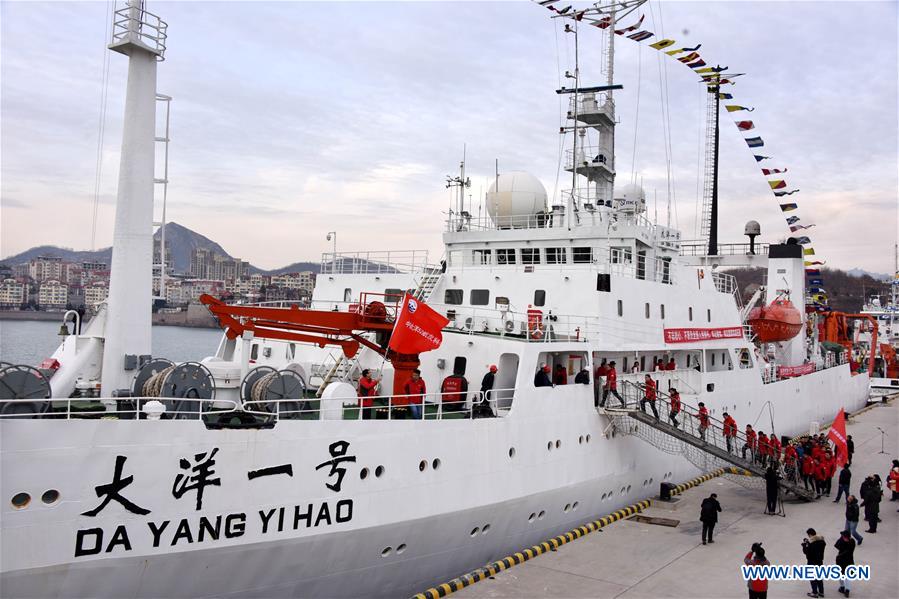
One vessel frequently mentioned in recent reports is the Dayang Yihao, officially described as an oceanographic research ship.
The vessel reportedly operated in the Arabian Sea during the same period as sustained U.S. carrier operations.
Its equipment includes:
- Hydrographic survey systems
- Seabed mapping technology
- Marine acoustic sensors
- Advanced communications equipment
Although these systems support legitimate scientific research, they also possess clear dual-use applications.
The same sonar and acoustic sensors used for oceanography can help collect underwater sound signatures produced by naval vessels.
Likewise, hydrographic surveys can improve submarine operations by mapping seabed conditions and underwater terrain.
Importantly, open-source evidence does not demonstrate that the vessel directly confronted U.S. forces. Its significance lies in the long-term collection of operational data rather than dramatic close encounters.
Liaowang-1: China’s Advanced Intelligence Ship

Another platform drawing attention is Liaowang-1, one of China’s most capable maritime intelligence vessels.
Displacing roughly 30,000 tons, the ship carries numerous large radomes and antenna arrays capable of monitoring:
- Radar emissions
- Satellite communications
- Missile telemetry
- Electronic warfare activity
- Aircraft operations
Reports placed the vessel near the Gulf of Oman during periods of regional tension, reportedly accompanied by modern PLA Navy destroyers.
Chinese spy ship tracking US warship?
US and Chinese vessels sailing in the Arabian Sea
Research Vessel Dayang Yihao operates near USS Abraham Lincoln @ShivanChanana and @BislaDiksha bring you more details pic.twitter.com/nZwvmMYx03
— WION (@WIONews) February 4, 2026
Although China officially describes Liaowang-class ships as space support and missile-tracking vessels, defense analysts note that their sophisticated sensors also provide extensive electronic intelligence (ELINT) and signals intelligence (SIGINT) capabilities.
Why Aircraft Carriers Are Intelligence Gold Mines
A deployed carrier strike group constantly generates valuable electronic information.
Analysts seek to monitor:
- Radar operating frequencies
- Communications networks
- Aircraft launch cycles
- Escort formations
- Electronic warfare systems
- Navigation patterns
- Logistics operations
The longer a carrier remains deployed, the more opportunities exist to build detailed databases of its operating routines.
The USS Abraham Lincoln, which reportedly spent more than 200 consecutive days deployed, provided extended opportunities for observation.
Every replenishment operation, flight cycle, and maneuver potentially contributes additional data for long-term intelligence analysis.
Satellites Are Changing Naval Intelligence

Surface ships represent only one layer of China’s surveillance architecture.
Beijing has rapidly expanded its Jilin-1 commercial Earth observation constellation, capable of providing increasingly frequent high-resolution imagery of military facilities, naval deployments, and logistics infrastructure.
Commercial imagery has become a powerful intelligence tool because it is widely accessible.
Military analysts, governments, journalists, and even private organizations can now observe many activities that once required classified reconnaissance satellites.
Combined with China’s military space assets and BeiDou navigation system, orbital surveillance increasingly complements maritime intelligence collection.
The Intelligence Fusion Challenge
The most significant development is not any individual surveillance platform.
It is the fusion of multiple intelligence sources.
Modern military intelligence increasingly combines:
- Satellite imagery
- Electronic intercepts
- Maritime tracking
- Acoustic data
- Commercial geospatial information
- Open-source intelligence
- Cyber collection
Together these sources create what military planners call a multi-domain intelligence picture.
Such integration reduces uncertainty and shortens the time required to identify, track, and analyze high-value military assets.
Why This Matters for Iran
Several defense reports suggest that information collected through third-party surveillance may indirectly benefit Iran.
Although governments rarely disclose intelligence-sharing arrangements publicly, analysts note that any improvement in maritime awareness could help Iranian planners better understand:
- Carrier operating patterns
- Flight activity
- Escort formations
- Logistics routes
- Defensive procedures
Such information could improve operational planning during future regional crises.
The user-provided report also discusses claims that Russia supplied location data concerning U.S. military assets to Iran during periods of heightened tension. These claims remain publicly disputed and have not been independently verified.
Operational Security Is Becoming More Difficult
One of the most important consequences of persistent surveillance is the gradual erosion of traditional operational secrecy.
Historically, carrier strike groups relied heavily on:
- Mobility
- Radio silence
- Emission control
- Unpredictable routing
Today, those advantages are increasingly challenged by:
- Commercial satellite constellations
- Space-based sensors
- Maritime tracking
- Artificial intelligence
- Persistent electronic surveillance
Military commanders must therefore employ more sophisticated operational security measures than ever before.
The Future Battlefield Is Transparent
Modern warfare is entering what many analysts describe as an era of persistent transparency.
Rather than attempting to destroy enemy forces immediately, competitors increasingly seek to observe them continuously.
The objective is to understand:
- Daily routines
- Electronic signatures
- Logistics patterns
- Deployment cycles
- Operational behavior
This accumulated knowledge may prove invaluable during future crises.
Strategic Implications
China’s expanding surveillance capabilities carry several important implications.
1. Intelligence Is Becoming a Strategic Weapon
The ability to collect and process information quickly may become as important as deploying missiles or warships.
2. Carrier Operations Face New Challenges
Aircraft carriers remain among the world’s most powerful military assets, but maintaining operational secrecy is becoming increasingly difficult.
3. Commercial Technology Is Changing Military Competition
Commercial satellites, open-source tracking, and civilian research vessels are narrowing the gap between classified intelligence and publicly available information.
4. Multi-Domain Surveillance Is the Future
Future intelligence operations will increasingly integrate maritime, air, space, cyber, and electromagnetic collection into a single operational picture.
Outlook
The debate over whether a Chinese “spy ship” directly tracked the USS Abraham Lincoln risks overlooking the broader transformation taking place.
The real strategic shift is the emergence of an increasingly sophisticated Chinese intelligence ecosystem that combines dual-use research vessels, advanced SIGINT platforms, satellite constellations, commercial imagery, and open-source data to monitor military activity across vast geographic regions.
Even without dramatic confrontations at sea, this persistent surveillance steadily erodes the operational advantages traditionally enjoyed by carrier strike groups and complicates naval planning in contested waters.
For the United States and its allies, preserving maritime superiority will increasingly depend not only on the size and firepower of their fleets but also on their ability to operate, maneuver, and fight inside an environment where almost every movement can be observed, recorded, and analyzed in real time.