
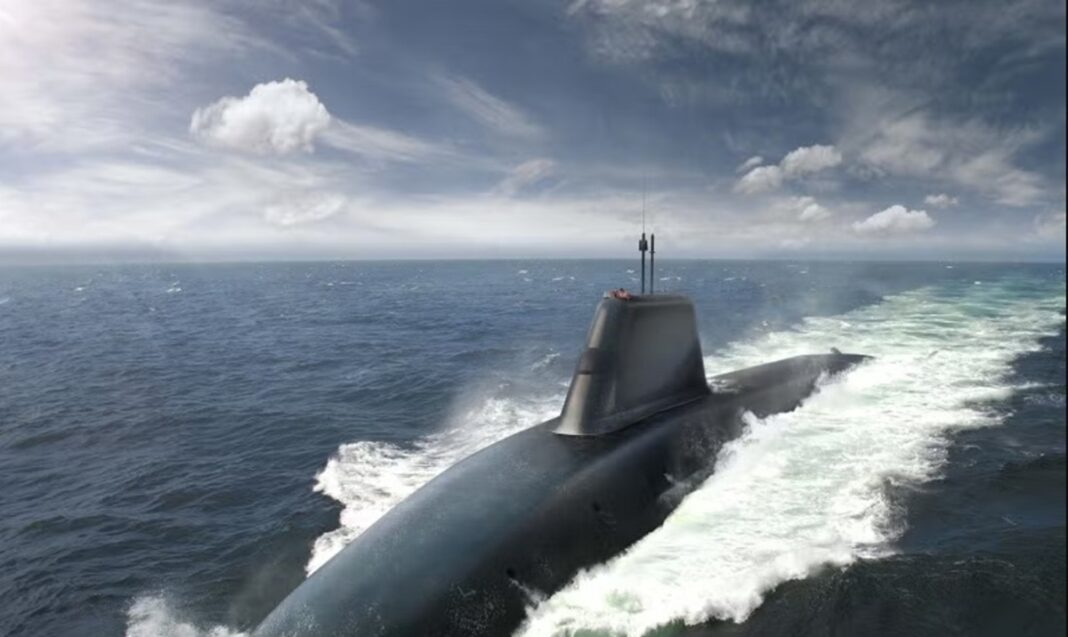
The United Kingdom has announced one of the largest investments in its strategic nuclear forces in decades, unveiling a defence plan that will allocate more than £63 billion over the next four years to modernise Britain’s nuclear deterrent, strengthen the Royal Navy’s submarine fleet and restore the Royal Air Force’s role in NATO’s airborne nuclear mission.
The investment, outlined in the government’s newly released Defence Investment Plan, covers the construction of the Dreadnought-class ballistic missile submarines, development of the SSN-AUKUS nuclear-powered attack submarines, a new sovereign nuclear warhead programme, major upgrades to Britain’s submarine infrastructure and the acquisition of 12 F-35A Lightning II fighters capable of supporting NATO’s nuclear-sharing mission.
The announcement represents one of the most significant shifts in British defence policy since the end of the Cold War and reflects growing concern over an increasingly unstable global security environment marked by renewed great-power competition, Russia’s military posture in Europe, and rising strategic challenges in the Indo-Pacific.
A Record Investment in Britain’s Nuclear Deterrent
According to the Defence Investment Plan, the UK will spend more than £63 billion on its Defence Nuclear Enterprise over the next four years—around £20 billion more than was allocated during the previous four-year funding cycle.
The government says the additional investment is intended to preserve the credibility of Britain’s independent nuclear deterrent well into the second half of the century while ensuring that the country’s strategic forces remain technologically advanced and fully interoperable with NATO.
At the centre of the programme is the government’s commitment to maintaining the UK’s long-standing Continuous At-Sea Deterrent (CASD), under which at least one British ballistic missile submarine remains on patrol at all times.
This policy has been in place since 1969 and remains the cornerstone of Britain’s nuclear strategy.
Dreadnought-Class Submarines Will Replace Vanguard Fleet
A substantial portion of the new funding will support construction of the Dreadnought-class submarines, which will eventually replace the Royal Navy’s ageing Vanguard-class fleet.
The United Kingdom plans to build four Dreadnought submarines at BAE Systems’ shipyard in Barrow-in-Furness, ensuring uninterrupted operation of the country’s sea-based nuclear deterrent.
Each submarine will carry the Trident II D5 submarine-launched ballistic missile, the same missile used by the United States under longstanding UK-US nuclear cooperation agreements.
However, while Britain shares the missile system with Washington, the country’s nuclear warheads remain under sovereign British control.
The Dreadnought programme is expected to serve as the backbone of Britain’s strategic deterrent for decades, providing greater stealth, improved survivability and enhanced operational endurance compared with the Vanguard boats they replace.
New Sovereign Nuclear Warhead Programme
Beyond new submarines, the government confirmed continued investment in developing a replacement sovereign nuclear warhead.
Although official details remain classified, the programme aims to ensure the long-term credibility and safety of Britain’s nuclear arsenal while maintaining compatibility with the Trident missile system.
The replacement warhead is being developed alongside the United States’ W93 warhead programme, reflecting the deep technical cooperation that continues to underpin the UK-US strategic partnership.
British officials argue that maintaining a sovereign warhead capability remains essential to preserving the country’s independent nuclear decision-making authority.
F-35A Fighters Restore Britain’s Airborne Nuclear Role
Perhaps the most politically significant announcement is Britain’s decision to purchase 12 F-35A Lightning II conventional take-off and landing fighters.
Unlike the F-35B currently operated by the Royal Air Force and Royal Navy, the F-35A is certified to carry the B61-12 tactical nuclear bomb, allowing Britain to participate directly in NATO’s airborne nuclear mission.
This marks the first time in decades that the Royal Air Force will contribute aircraft capable of supporting NATO’s nuclear-sharing arrangements.
The move significantly strengthens NATO’s flexible deterrence options by adding another allied platform capable of delivering tactical nuclear weapons if required.
For Britain, it also represents an important expansion of deterrence beyond the traditional submarine-based force.
Strengthening NATO’s Nuclear Posture
The decision comes at a time when NATO is placing renewed emphasis on nuclear deterrence amid deteriorating relations with Russia.
Several European NATO members—including Germany, Italy, Belgium, the Netherlands and Türkiye—already operate dual-capable aircraft assigned to the Alliance’s nuclear-sharing mission.
Britain’s return to that role reinforces Alliance burden-sharing while demonstrating London’s continued commitment to collective defence.
Although operational control of NATO nuclear weapons remains subject to strict alliance procedures, the additional F-35A fleet enhances the flexibility and survivability of NATO’s overall deterrence posture.
SSN-AUKUS Expands Britain’s Undersea Capability
The investment plan also confirms continued funding for the SSN-AUKUS programme, the next generation of nuclear-powered attack submarines being developed jointly by the United Kingdom, the United States and Australia under the AUKUS security partnership.
Unlike the Dreadnought class, SSN-AUKUS boats will not carry nuclear weapons.
Instead, they will focus on:
- Intelligence gathering
- Anti-submarine warfare
- Long-range strike missions
- Protection of carrier groups
- Indo-Pacific deployments
The programme represents one of the most ambitious defence-industrial collaborations among the three AUKUS partners and is expected to shape allied submarine capability well into the 2050s.
Project Royal Oak Modernises Britain’s Naval Infrastructure
Modern submarines require modern infrastructure.
To support the expanding fleet, the government has committed around £26 billion over the next decade through Project Royal Oak, a comprehensive programme designed to upgrade the naval bases and dockyard facilities that sustain Britain’s submarine force.
The investment will modernise:
- Nuclear submarine maintenance facilities
- Dockyard infrastructure
- Logistics systems
- Weapons handling facilities
- Operational support bases
These improvements are intended to ensure that Britain’s submarine fleet remains operationally resilient while supporting higher readiness levels during periods of increased strategic competition.
Why the Investment Matters
The scale of the investment reflects a dramatically different global security environment from that which existed a decade ago.
British defence planners increasingly point to several converging challenges:
- Russia’s continued military modernisation
- Growing nuclear competition among major powers
- China’s expanding naval capabilities
- Increasing strategic importance of the Indo-Pacific
- Rapid advances in missile technology and undersea warfare
In response, London is seeking to strengthen both its independent deterrent and its contribution to NATO’s collective security architecture.
Economic and Industrial Impact
The programme is also expected to generate substantial economic benefits.
Thousands of highly skilled jobs will be supported across Britain’s defence-industrial base, particularly in:
- Barrow-in-Furness
- Derby
- Faslane
- Devonport
- Defence manufacturing facilities throughout the UK
The government has repeatedly described the programme as a “national endeavour”, arguing that investment in defence simultaneously strengthens national security, technological innovation and long-term industrial capacity.
Strategic Implications
The Defence Investment Plan sends a clear strategic message.
Rather than reducing reliance on nuclear deterrence, Britain is investing heavily to ensure that its strategic forces remain credible for decades to come.
The combination of Dreadnought submarines, a new sovereign warhead, SSN-AUKUS attack submarines, upgraded naval infrastructure and F-35A nuclear-capable aircraft represents a comprehensive modernisation of every major component of the UK’s nuclear enterprise.
For NATO allies, the announcement reinforces Britain’s role as one of the Alliance’s principal nuclear powers.
For potential adversaries, it demonstrates London’s determination to maintain a credible deterrent in an increasingly uncertain security environment.
Final Assessment
Britain’s £63 billion investment marks one of the most ambitious defence modernisation programmes in modern British history.
By simultaneously renewing its submarine fleet, developing a next-generation nuclear warhead, strengthening naval infrastructure and returning the Royal Air Force to NATO’s airborne nuclear mission, the UK is building a more flexible and resilient strategic deterrent capable of meeting the challenges of the coming decades.
As geopolitical competition intensifies across Europe and the Indo-Pacific, the Defence Investment Plan underscores that nuclear deterrence remains central to Britain’s national security strategy—and a cornerstone of NATO’s collective defence posture.