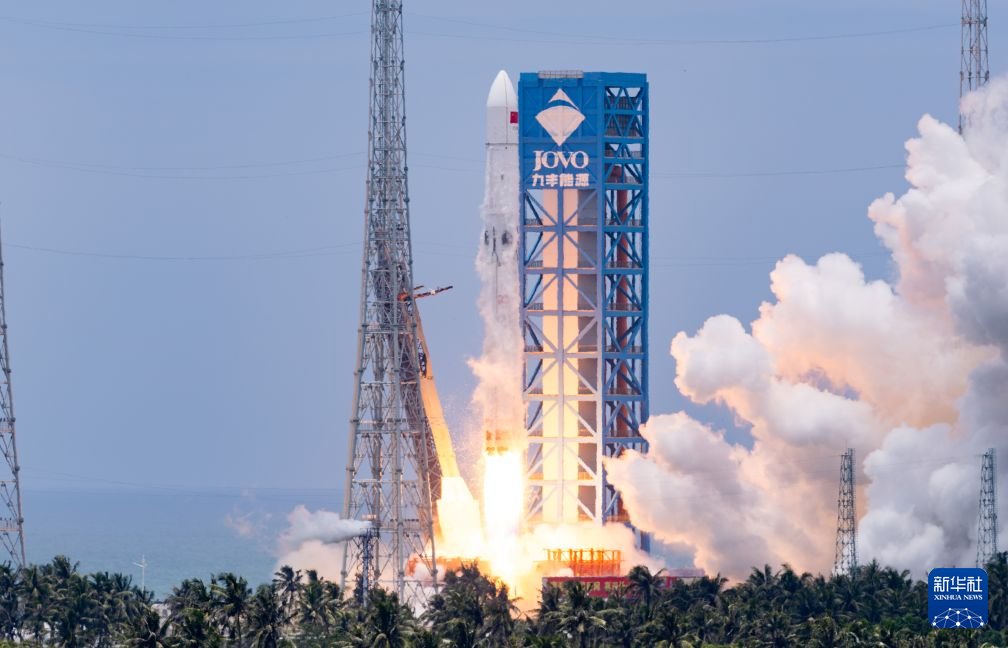
China has achieved a significant milestone in its rapidly expanding space program by successfully recovering the first-stage booster of its Long March 10B rocket, a breakthrough that moves Beijing closer to mastering reusable launch technology long dominated by U.S. companies such as SpaceX.
The test, conducted from Hainan Island in southern China, marks one of the country’s most important advances in space launch capability. Beyond its commercial significance, the achievement strengthens China’s long-term ambitions in lunar exploration, satellite deployment, and military space operations as competition between major space powers intensifies.
A historic day in China’s space program!
China’s Long March-10B has successfully completed its maiden flight—and recovered its first stage via a sea-based net. This marks the country’s first-ever controlled rocket recovery. A major leap toward reusable launch capabilities.… pic.twitter.com/FWuQXLltaD
— Mao Ning 毛宁 (@SpoxCHN_MaoNing) July 10, 2026
Historic Landing of the Long March 10B Booster
According to Chinese state broadcaster CCTV, the Long March 10B lifted off successfully before separating its first stage approximately six minutes into flight.
The booster then performed a controlled descent and executed a vertical landing on a floating recovery platform at sea, becoming the first successful recovery of a Long March orbital-class rocket booster.
Video released by Chinese state media showed the booster descending under engine power before touching down upright on the recovery vessel, closely resembling the recovery technique pioneered by SpaceX’s Falcon 9 rockets.
The mission also successfully placed a satellite into orbit, demonstrating that booster recovery did not affect mission performance.
Why Reusable Rockets Matter
Reusable launch vehicles have transformed the economics of spaceflight.
Traditionally, rocket stages were discarded after every launch, making each mission extremely expensive. Recovering and reusing first-stage boosters dramatically lowers launch costs, shortens production cycles, and enables much higher launch frequencies.
SpaceX has demonstrated this advantage over the past decade by routinely flying previously used Falcon 9 boosters, reducing launch costs while dramatically increasing the number of annual missions.
China is now attempting to replicate that model.
According to the China Aerospace Science and Technology Corporation (CASC), the successful landing represents:
“A historic breakthrough in China’s reusable rocket technology and a solid foundation for accelerating improvements in China’s space access capabilities.”
China Closes the Technology Gap with SpaceX
The successful landing highlights how rapidly China is narrowing the technological gap with the United States.
SpaceX first successfully landed a Falcon 9 booster in December 2015 and has since completed hundreds of booster recoveries, making reusable rockets the global industry standard. Many Falcon boosters have flown more than 20 missions, demonstrating the operational and financial advantages of rapid reuse.
Meanwhile, Blue Origin, founded by Jeff Bezos, successfully landed the first stage of its New Glenn heavy-lift rocket during its inaugural orbital mission in late 2025, adding another major player to the reusable launch market.
China has been several years behind both companies, but Friday’s achievement suggests Beijing is accelerating its efforts to develop comparable capabilities.
Although Chinese reusable technology is still in its early stages, successful booster recovery is widely regarded as one of the most technically challenging milestones in modern rocketry.
A Critical Step Toward China’s Moon Mission
The Long March 10 family is central to China’s ambitious human lunar exploration program.
The rocket is expected to launch future crewed missions to the Moon under China’s target of landing astronauts on the lunar surface before 2030. It will also support the deployment of lunar landers, cargo spacecraft, and infrastructure for the proposed International Lunar Research Station (ILRS)—a joint project led by China and Russia that aims to establish a permanent robotic and eventually human presence on the Moon.
Reusable technology could significantly reduce the cost of maintaining sustained lunar operations while allowing more frequent missions.
The achievement also supports China’s broader goal of becoming what President Xi Jinping has described as a “world-leading aerospace power.”
Space Competition Is Increasingly Strategic
The significance of reusable rockets extends well beyond commercial launch services.
Modern military operations rely heavily on space-based capabilities, including:
- Intelligence gathering
- Reconnaissance
- Secure communications
- Navigation
- Missile warning
- Precision targeting
- Earth observation
A nation capable of launching satellites rapidly and inexpensively gains a substantial strategic advantage during both peacetime and conflict.
Military analysts note that reusable rockets could eventually allow China to replace damaged satellites much faster during a crisis while expanding large constellations supporting the People’s Liberation Army (PLA).
The same technology also enhances resilience against anti-satellite threats by enabling quicker replenishment of orbital assets.
China’s Commercial Space Sector Is Expanding Rapidly
China’s reusable rocket success also reflects the rapid growth of its commercial space industry.
Over the past five years, Beijing has encouraged private aerospace companies to compete alongside state-owned enterprises in developing reusable launch systems.
Companies including LandSpace, iSpace, Galactic Energy, Deep Blue Aerospace, Space Pioneer, CAS Space, and Orienspace have all been working on reusable rocket programs similar to those developed in the United States.
Several Chinese firms have already demonstrated vertical takeoff and landing technologies during suborbital tests, although many have also experienced high-profile failures.
The intense competition has accelerated technological innovation while strengthening China’s overall launch ecosystem.
Challenges Still Remain
Despite Friday’s success, China still faces considerable challenges before reusable rockets become routine.
Unlike SpaceX, which has accumulated years of operational experience and completed hundreds of successful landings, China’s engineers must now demonstrate:
- Booster refurbishment and rapid turnaround
- Multiple successful recovery missions
- Reliable reuse over repeated flights
- Cost savings compared with expendable rockets
- Operational safety at commercial launch frequencies
Achieving these milestones will determine whether China’s reusable launch program becomes commercially competitive on the global market.
Strategic Implications for the Global Space Race
The successful Long March 10B recovery reflects a broader transformation in global space competition.
The United States currently leads in reusable launch technology through companies such as SpaceX and Blue Origin, while Europe, Japan, India, and China are investing heavily to close the gap.
For China, reusable launch capability is not simply about lowering costs—it is about securing technological independence, expanding military space capabilities, supporting future lunar exploration, and competing for a greater share of the rapidly growing global launch market.
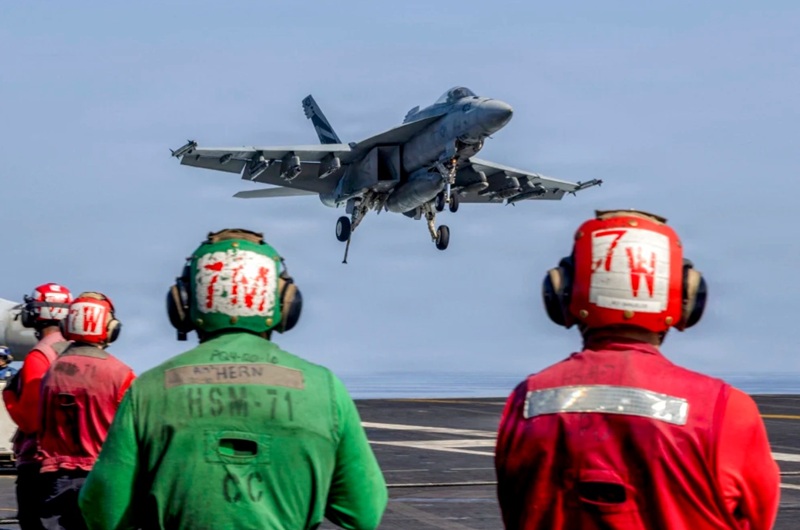
As geopolitical competition increasingly extends into orbit, space launch systems are becoming as strategically important as naval fleets and advanced fighter aircraft.
Outlook
China’s successful recovery of the Long March 10B first-stage booster marks one of the country’s most important achievements in modern spaceflight. While Beijing still trails SpaceX in operational experience, the test demonstrates that China’s reusable rocket program is progressing rapidly.
If future launches confirm the booster can be refurbished and flown repeatedly, China could significantly reduce launch costs, expand satellite deployment, strengthen military space capabilities, and accelerate its crewed lunar program.
The achievement also underscores that the next phase of the global space race will be defined not only by who reaches orbit first, but by who can do so more frequently, more affordably, and more sustainably.