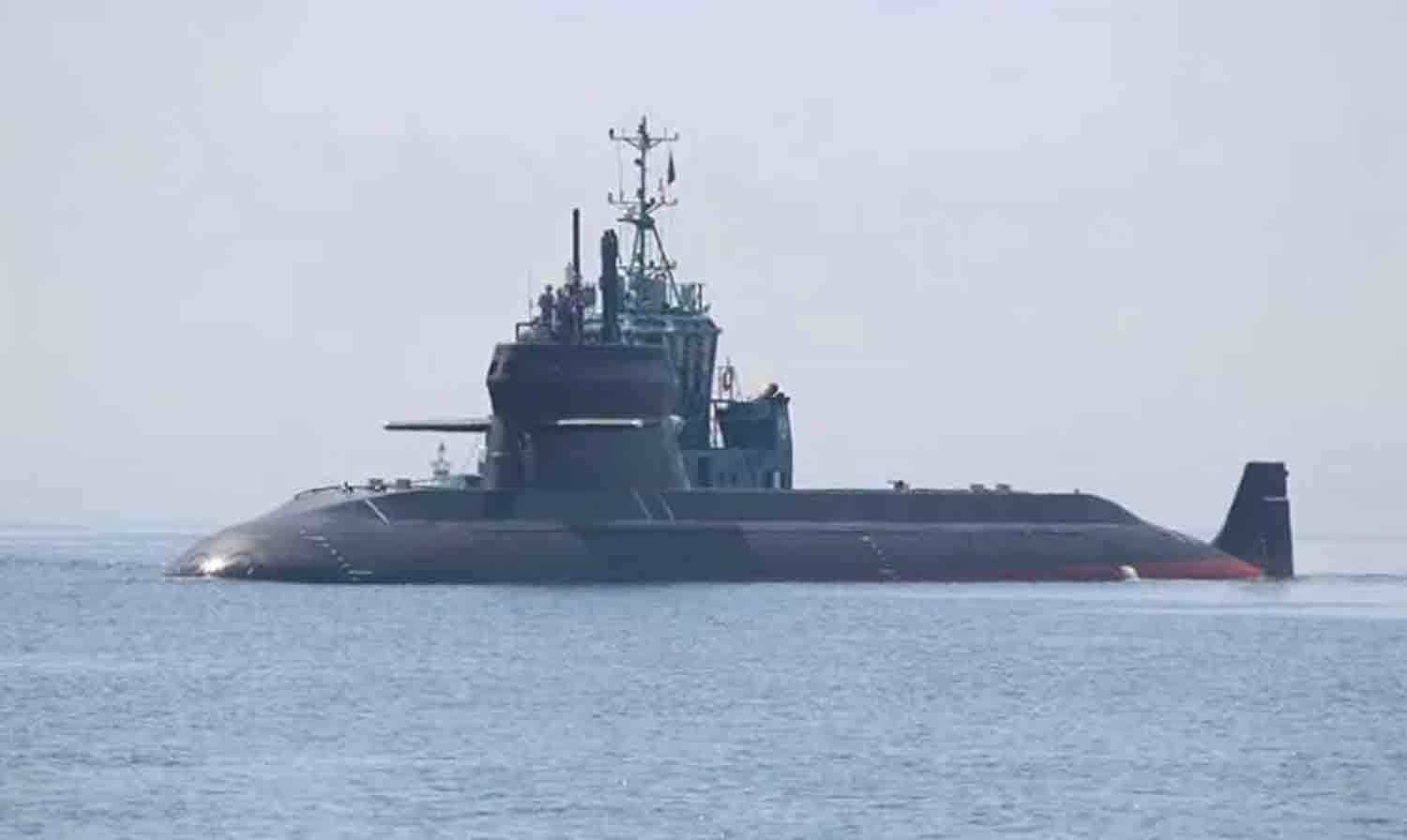
Recent reports alleging that Pakistan quietly sought a Chinese-backed sea-based nuclear second-strike capability have generated significant debate across defense and strategic circles.
But the discussion risks overlooking a key reality:
Pakistan already maintains an operational pathway toward a credible sea-based second-strike capability.
Through:
Babur-3
Pakistan has already demonstrated a maritime nuclear delivery concept designed specifically to strengthen deterrence and survivability.
That does not mean Pakistan possesses the same kind of nuclear-powered ballistic missile submarine force fielded by larger nuclear powers.
But it does mean the broader discussion requires:
Far more strategic nuance than many headlines suggest.
The core issue is not whether Pakistan has any second-strike capability.
The real debate concerns:
What type of second-strike capability Pakistan seeks to maintain and how survivable it is under wartime conditions.
Pakistan’s Existing Sea-Based Nuclear Capability
At the center of Pakistan’s deterrence architecture lies:
Babur-3
the naval version of Pakistan’s successful:
Babur cruise missile family
designed for launch from submarines.
Pakistan publicly tested the missile in:
2017
describing it as part of efforts to complete:
A credible nuclear triad
consisting of:
- Land-based systems
- Air-delivered systems
- Maritime deterrence.
According to Pakistan’s strategic doctrine:
The Babur-III was specifically developed to ensure:
Second-strike survivability
meaning:
Pakistan retains retaliatory capability even under worst-case scenarios.
That distinction matters enormously in deterrence theory.
Because survivability —
not merely warhead numbers —
ultimately shapes strategic stability.
What Is Second-Strike Capability?
Many discussions surrounding deterrence confuse:
Nuclear possession
with
Nuclear survivability
A second-strike capability means:
The ability to retaliate even after absorbing a first strike
making adversaries less likely to gamble on pre-emptive attacks.
Traditionally:
Sea-based systems are considered among the most survivable forms of deterrence because:
Submarines are difficult to detect and target.
This creates uncertainty for adversaries.
And uncertainty:
Strengthens deterrence.
Pakistan’s maritime approach appears designed around this logic.
Babur-III and the Agosta-Class Submarines
Pakistan’s:
Agosta 90B submarine
fleet is widely viewed as the current platform associated with Pakistan’s submarine-launched cruise missile capability.
Unlike ballistic missile submarines used by larger nuclear powers,
Pakistan’s approach focuses on:
Cruise missile deployment from conventional submarines
This creates:
✔ Operational flexibility
✔ Lower acquisition costs
✔ Stealth advantages in regional waters
particularly in the:
Arabian Sea.
While conventional submarines differ from nuclear-powered ballistic missile submarines in endurance and patrol duration,
they still contribute meaningfully to:
Deterrence credibility.
The Babur Missile Family: One of Pakistan’s Key Strategic Assets
Pakistan’s:
Babur missile family
has evolved into one of the country’s most important precision-strike programs.
The system includes:
- Land-based variants
- Naval variants
- Air-launched concepts
designed to improve:
Precision, survivability and deterrence.
The missile family has become increasingly central to Pakistan’s military planning.
Recent reporting surrounding:
Fatah-4 Ground Launched Cruise Missile (GLCM)
suggests some technological inspiration from the broader Babur ecosystem may also shape newer missile developments.
The successful recent testing of:
Fatah-4
signals Pakistan’s continuing focus on:
Long-range precision strike capability
across multiple domains.
Hangor-Class Submarines Could Significantly Strengthen Pakistan’s Deterrence
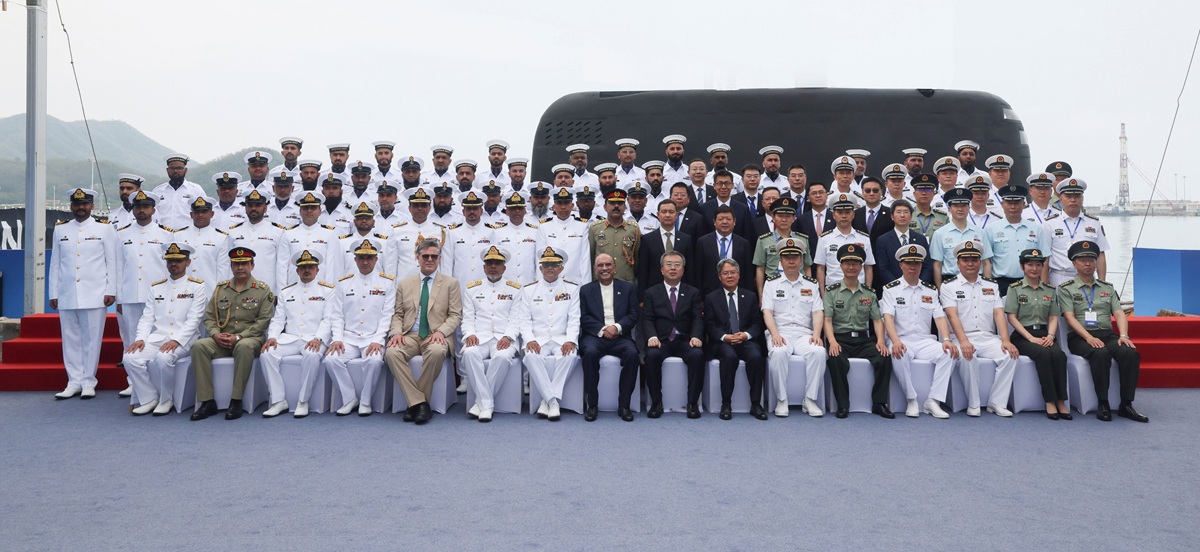
Pakistan’s future:
Hangor-class submarine
fleet could represent a major enhancement in underwater survivability.
The submarines are expected to feature:
Air Independent Propulsion (AIP)
allowing them to:
Remain submerged far longer than conventional diesel-electric submarines.
That improvement matters.
Because:
Longer underwater endurance means:
✔ Greater stealth
✔ Higher survivability
✔ Better deterrent patrol potential
The submarines are expected to strengthen Pakistan Navy capability against:
- Surface threats
- Subsurface threats
- Maritime security challenges
while potentially enhancing:
Sea-based deterrence posture.
If integrated with:
Babur-III
the combination could provide:
A more survivable retaliatory option
in crisis conditions.
So Why Did Reports About Chinese Help Gain Attention?
The earlier reports focused on speculation that Pakistan may have explored:
A more advanced sea-based deterrent architecture
possibly involving technologies associated with:
- Nuclear submarine operations
- Expanded survivability
- More persistent second-strike capability.
However:
Those claims remain:
Unverified
and no public evidence confirms:
- A Chinese transfer request
- Formal negotiations
- Any agreement involving highly sensitive nuclear technology.
More importantly:
The framing sometimes overlooked the reality that:
Pakistan is not starting from zero.
Pakistan already possesses:
An existing sea-based deterrence framework
through Babur-III and submarine integration.
The strategic question is therefore:
Not whether Pakistan has a maritime deterrent —
but:
How survivable and scalable it becomes over time.
India’s Existing Sea-Based Nuclear Posture Still Matters
Regional deterrence calculations also involve:
India
which already maintains a sea-based deterrent through:
INS Arihant
and related nuclear submarine programs.
This creates:
An evolving deterrence dynamic
where survivability at sea increasingly shapes:
- Escalation management
- Crisis stability
- Strategic calculations
across South Asia.
In that context:
Pakistan’s continued investment in maritime deterrence appears consistent with:
Broader regional strategic trends.
Conclusion: Pakistan’s Sea-Based Deterrence Debate Needs More Precision
The debate over Pakistan’s second-strike capability often becomes oversimplified.
The reality is more nuanced.
Pakistan already fields:
A functioning sea-based deterrence pathway
through:
Babur-III submarine-launched cruise missiles
supported by existing submarine capability.
Future platforms such as:
Hangor-class submarines
could significantly improve:
Stealth, survivability and deterrence credibility
over time.
That does not automatically place Pakistan in the same category as major nuclear submarine powers.
But it does mean one important point should not be ignored:
Pakistan’s maritime nuclear deterrence architecture already exists — and continues to evolve.