


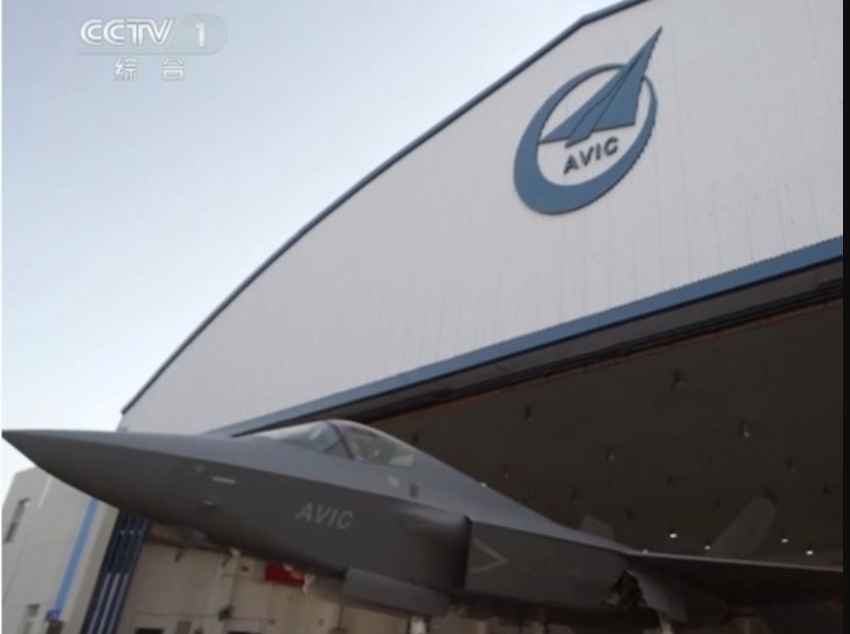
A year after a major India–Pakistan air confrontation, the Pakistan Air Force (PAF) has unveiled an ambitious modernization roadmap that could significantly reshape South Asia’s airpower balance.
At the center of this shift is Pakistan’s confirmation of an initial agreement to acquire the Chinese J-35 fifth-generation stealth fighter, alongside additional J-10C fighters and major upgrades to the JF-17 fleet.
The announcement marks Pakistan’s most decisive step yet toward stealth-enabled, next-generation air warfare.
A J-35 stealth fighter jet bearing the number “0001” was spotted taxiing out of a hangar in a recent CCTV News program. A Chinese military affairs expert was quoted as saying in the CCTV report on Friday that signs in the footage suggests this particular J-35 could be an export… pic.twitter.com/sNSpNLsoKi
— Global Times (@globaltimesnews) May 8, 2026
What Is the J-35 and Why It Matters

The J-35 (also associated with the FC-31 program) is China’s emerging fifth-generation stealth fighter designed for:
- Low radar observability
- Advanced sensor fusion
- Network-centric operations
- Multi-role strike capability
If inducted, the J-35 would give Pakistan:
➡️ Its first operational stealth platform
➡️ A qualitative leap over 4.5-generation fighters
➡️ Enhanced survivability in contested airspace
Analysts widely assess that even a limited number of J-35s could significantly shift operational dynamics in the region.
PAF Modernization: Beyond Just One Aircraft
The J-35 acquisition is part of a broader modernization effort that includes:
- Additional Chengdu J-10C multirole fighters
- Upgraded JF-17 Thunder variants
- Development of long-range precision weapons (LRPW)
- Exploration of hypersonic technologies
This layered approach reflects a strategy focused on:
- Multi-domain integration
- Network-centric warfare
- Long-range strike capability
Rather than relying on a single platform, Pakistan is building a comprehensive air combat ecosystem.
Missile Integration: Extending Reach and Lethality
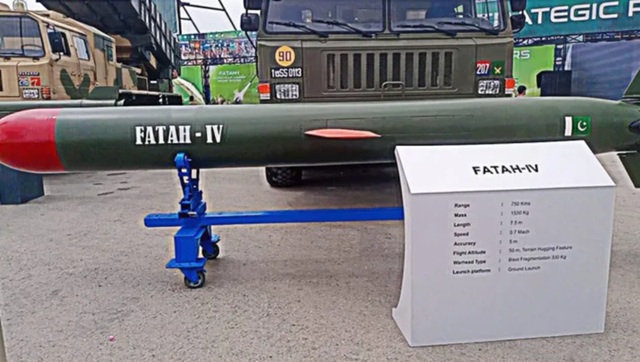
The modernization push is closely tied to Pakistan’s expanding missile capabilities:
- Fatah-4 cruise missile (~750 km range)
- Fatah-2 upgraded system (~400 km range)
- Babur-3 submarine-launched cruise missile (120 km)
These systems enable:
- Deep strike capability
- Maritime deterrence
- Integration with future air platforms
Together, they form a multi-layered strike architecture.
India vs Pakistan: The Airpower Equation Shifts
India currently holds a numerical advantage with its fleet of:
- Rafale fighters
- Su-30MKI aircraft
- Other 4.5-generation platforms
However, India has yet to operationalize a fifth-generation fighter.
What Changes if Pakistan Gets J-35:
- India’s numerical advantage becomes less decisive
- Air defence becomes more complex due to stealth threats
- Detection requires greater reliance on airborne systems
Even a few squadrons of stealth fighters could:
- Force India to commit more aircraft for defensive roles
- Reduce offensive flexibility
- Increase operational costs
China Factor: Deepening Strategic Integration
The J-35 deal highlights the deepening China–Pakistan defence partnership.
Beijing has reportedly offered:
- J-35 stealth fighters
- KJ-500 airborne early warning aircraft
- HQ-19 missile defence systems
This reflects:
- Technology transfer and interoperability
- Strategic alignment against regional threats
- Expansion of joint defence capabilities
Regional Implications: Toward an Arms Race?
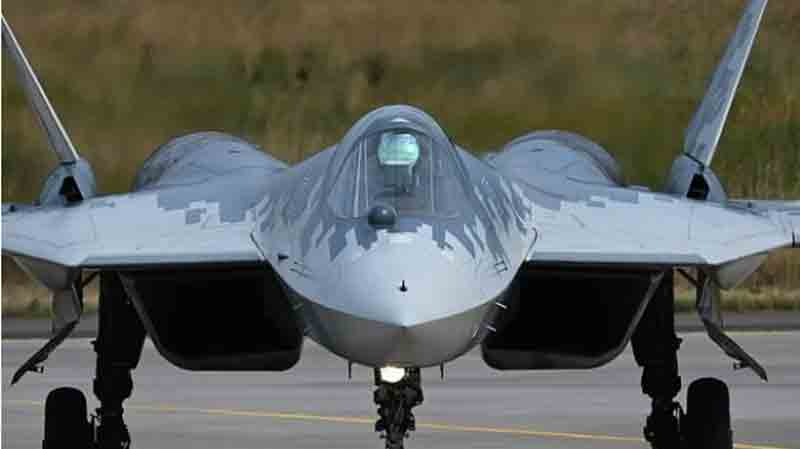
The introduction of stealth fighters into South Asia could trigger:
- Accelerated Indian investment in AMCA stealth fighter program
- Possible procurement of Su-57 or other advanced platforms
- Increased focus on air defence and electronic warfare systems
Analysts warn this could lead to a more intense regional arms competition, particularly as both sides pursue technological superiority.
Balancing Act: Risks and Constraints
Despite its advantages, Pakistan’s strategy carries risks:
- Dependence on Chinese technology
- Potential geopolitical pressure from the U.S.
- Limited production and sustainment capacity
At the same time, Pakistan continues to:
- Upgrade its F-16 fleet (extended to 2040)
- Maintain a mixed Western–Chinese inventory
This reflects a balancing strategy rather than full alignment.
Conclusion: A Turning Point in South Asian Airpower
The PAF’s move toward acquiring the J-35 is more than a procurement decision — it is a strategic shift toward fifth-generation warfare.
The key takeaway:
Airpower in South Asia is moving from quantity to quality
With stealth, network integration, and precision strike capabilities becoming central, the region is entering a new phase of military competition.
While the balance of power is not overturned overnight, one thing is clear:
The introduction of stealth fighters will redefine how future conflicts in South Asia are fought — and deterred.


Hi to every body, it’s my first pay a visit of this web site; this blog contains amazing and actually excellent material in favor of visitors.
Undeniably believe that which you said. Your favorite reason seemed to be on the web
the easiest thing to be aware of. I say to you, I definitely get irked while people
think about worries that they plainly don’t know
about. You managed to hit the nail upon the top and defined out the whole thing without having side effect , people can take a
signal. Will likely be back to get more. Thanks