A newly updated Congressional Research Service (CRS) report has provided the clearest picture yet of the scale of U.S. aviation losses during Operation Epic Fury, the ongoing military campaign against Iran.
According to the report, the United States has suffered:
42 fixed-wing, rotary-wing, and uncrewed aircraft lost or damaged
since combat operations began on:
February 28, 2026
when Washington, in coordination with Israel, launched strikes against Iran.
The figure includes:
- Fighter jets
- Refueling aircraft
- Helicopters
- Special operations aircraft
- High-value surveillance platforms
- Drones
The numbers are significant not simply because of cost —
but because they may reveal:
A far more contested battlefield than many expected.
The findings also raise growing questions about:
How survivable American airpower remains against modern integrated air-defense threats.

What Is Operation Epic Fury?
The CRS report describes:
Operation Epic Fury (OEF)
as the coordinated U.S.-Israeli military campaign launched against Iran involving:
- Air operations
- Missile strikes
- Maritime combat
- Regional force deployments.
While fighting slowed during an April ceasefire, operations later resumed in limited form.
Importantly:
The:
Department of Defense has not publicly released a full official damage assessment
meaning the CRS report offers one of the most comprehensive public accounting efforts so far.
During congressional testimony on May 12, 2026, Acting Pentagon Comptroller Jules W. Hurst III reportedly stated:
The cost of military operations in Iran has now risen to $29 billion
with much of the increase linked to:
Repair or replacement of equipment.
Breakdown: What Aircraft Did the US Lose?
The reported losses span some of America’s most important aviation assets.
4 F-15E Strike Eagles Lost
The CRS report says:
- Three F-15Es were destroyed by friendly fire over Kuwait on March 2
- One additional F-15E was shot down during combat operations over Iran on April 5.
In all cases:
Pilots reportedly ejected safely and were recovered.
The loss of even one:
F-15E Strike Eagle
is operationally meaningful.
The aircraft remains one of America’s premier long-range strike platforms.
1 F-35A Damaged
The report cites news reporting indicating:
One F-35A Lightning II
was damaged by Iranian ground fire during combat operations in March.
While not destroyed:
The incident matters strategically.
Because the:
F-35 Lightning II
is widely considered one of the world’s most survivable combat aircraft.
Damage to a stealth fighter suggests:
Iranian defenses may have been more effective than publicly acknowledged.
1 A-10 Warthog Destroyed
According to the report:
An:
A-10 Thunderbolt II
was struck by enemy fire on:
April 3
before crashing during search-and-rescue operations.
The pilot survived.
Still:
The incident highlights the growing vulnerability of low-altitude close-air-support aircraft in contested airspace.
Tankers Also Took Heavy Damage
Perhaps surprisingly:
Support aircraft suffered major losses too.
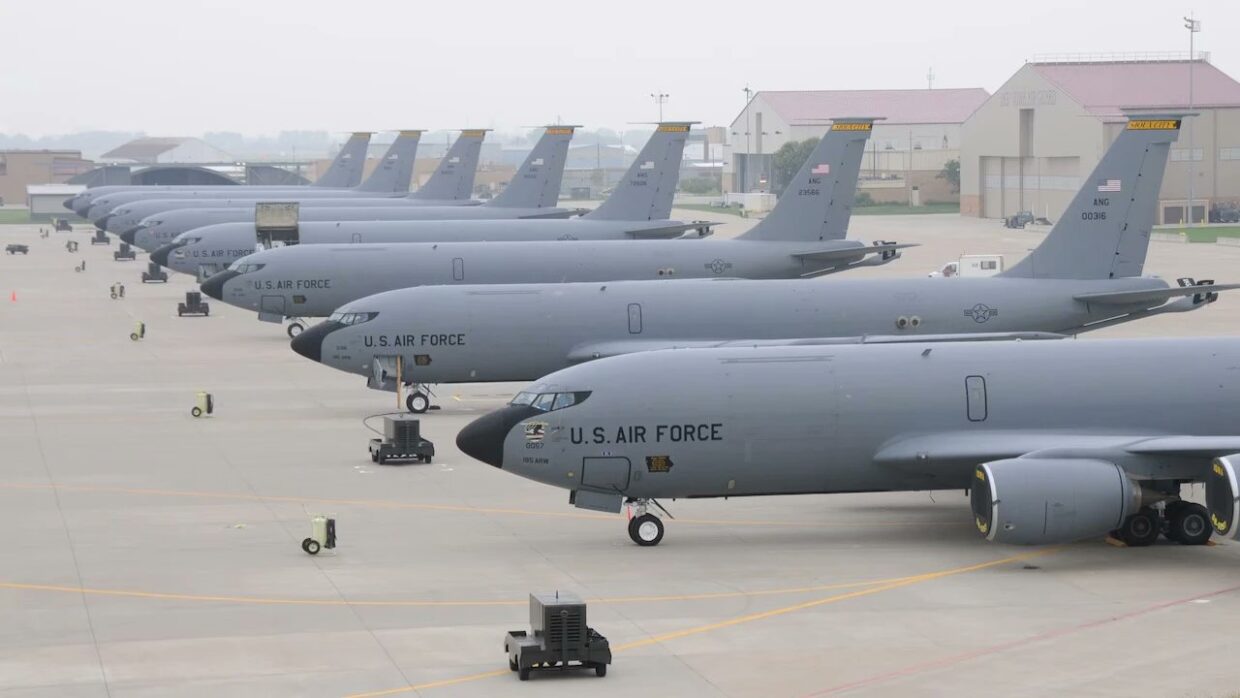
7 KC-135 Stratotankers Affected
The report notes:
- One crashed in Iraq, killing all six crew members
- Five were damaged on the ground at Prince Sultan Air Base during Iranian missile and drone attacks.
That matters enormously.
Because:
KC-135 Stratotanker
forms the backbone of long-range U.S. air operations.
Without tankers:
American fighters lose range, persistence, and flexibility.
High-Value Surveillance Aircraft Were Hit Too
The CRS report also confirms damage to:
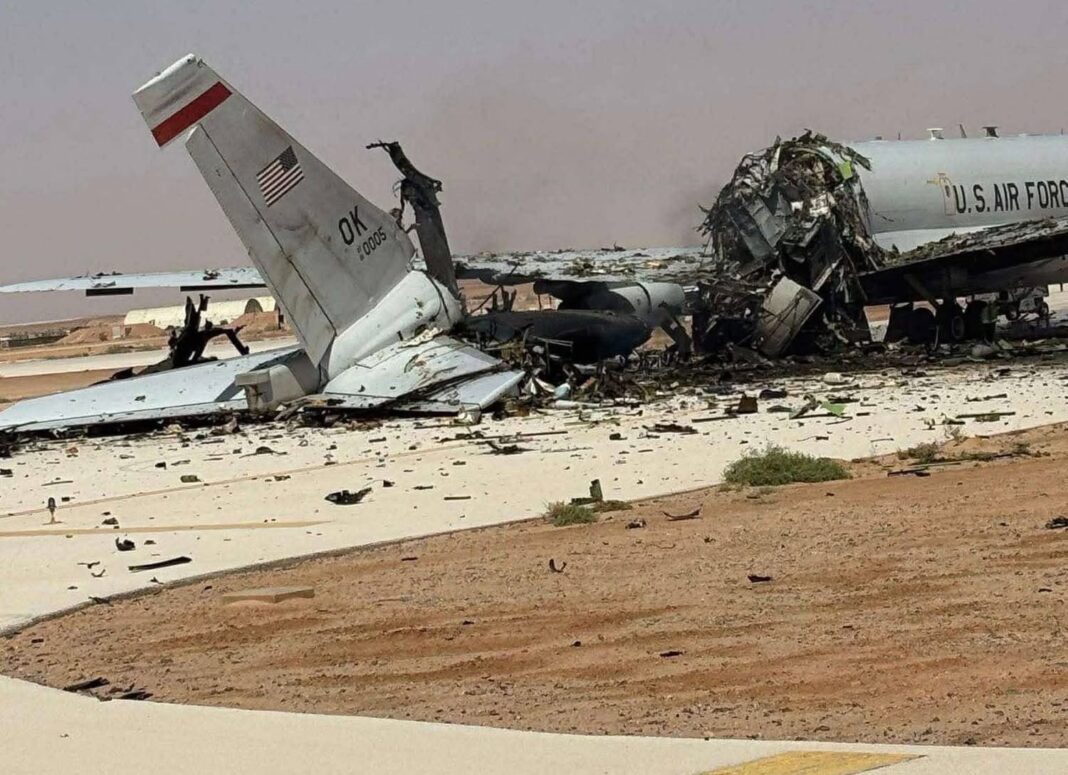
1 E-3 Sentry AWACS
during missile and drone attacks in Saudi Arabia.
The:
Boeing E-3 Sentry
is one of America’s most valuable airborne command-and-control assets.
The aircraft was reportedly parked:
On an unprotected taxiway
when struck.
This raises uncomfortable questions about:
Base protection and operational readiness.
Special Operations Aircraft Were Destroyed Inside Iran
The report reveals:
2 MC-130J Commando II aircraft
supporting rescue operations for a downed F-15E were:
Intentionally destroyed on the ground inside Iran
after crews became unable to depart.
Additionally:
1 HH-60W Jolly Green II rescue helicopter
was damaged by small-arms fire during rescue missions.
These incidents show:
Search-and-rescue operations themselves increasingly became:
Combat missions.
The Biggest Losses: MQ-9 Reaper Drones
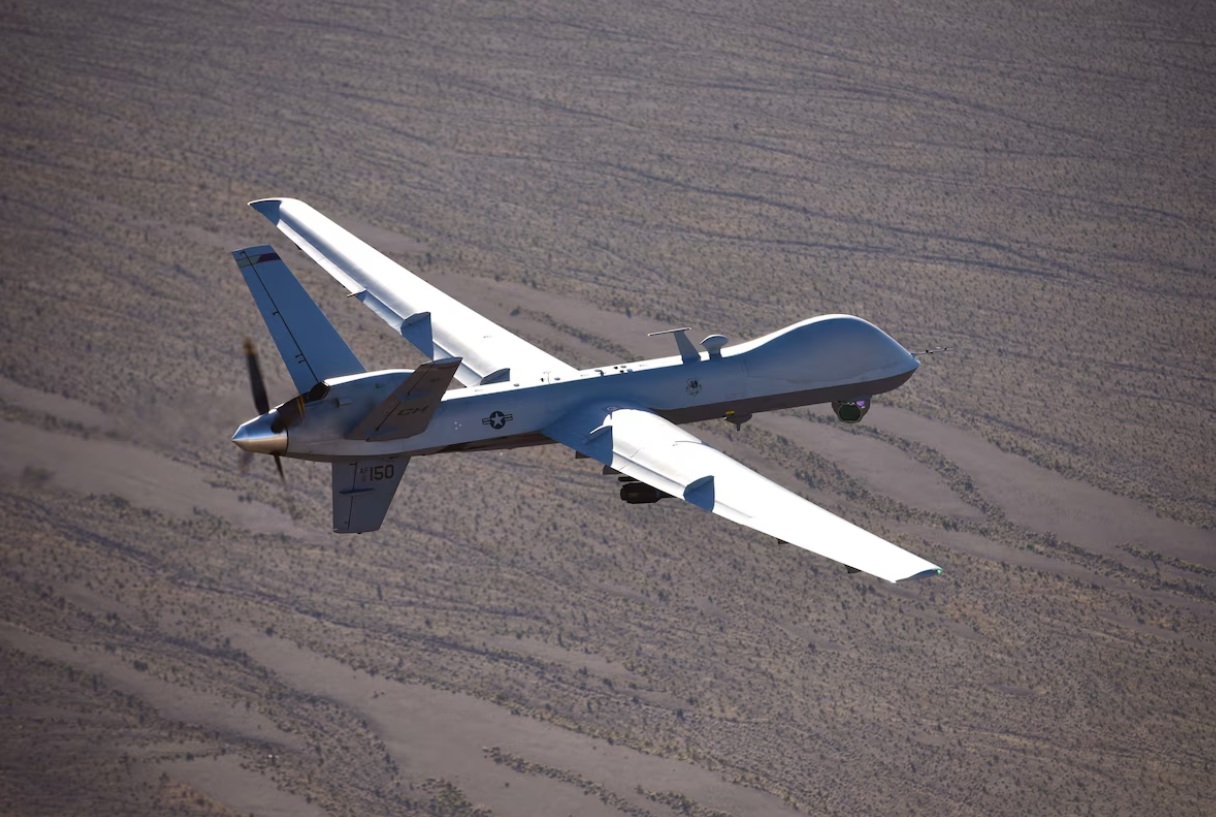
The single largest category of losses involved drones.
According to CRS:
24 MQ-9 Reaper drones were lost
during the campaign.
The:
MQ-9 Reaper
has long been central to:
- ISR missions
- Counterterrorism strikes
- Precision targeting
But the losses suggest something important:
Traditional drone operations may be increasingly vulnerable in peer-level air-defense environments.
This helps explain why the U.S. recently integrated:
GBU-39B stand-off glide bombs
onto MQ-9s —
allowing strikes from safer distances.
What Do These Losses Say About Iran’s Air Defenses?
The report may reveal something strategically important:
Iran proved harder to suppress than many expected.
Despite heavy American airpower:
Iranian systems still managed to:
✔ Damage stealth aircraft
✔ Down drones
✔ Strike regional airbases
✔ Threaten tanker fleets
✔ Disrupt air operations.
This does not mean Iran defeated American airpower.
Far from it.
But it does suggest:
Contested airspace is becoming more dangerous even for advanced militaries.
Congress Now Faces Difficult Questions
According to CRS, lawmakers may increasingly ask:
Can America replace losses fast enough?
Questions include:
- Industrial base limitations
- Aircraft production timelines
- Supply chain bottlenecks
- Readiness impacts
- Operational risk in future conflicts.
This matters especially for:
High-demand assets like:
- AWACS aircraft
- Tankers
- Special operations platforms
many of which are:
Expensive and limited in number
Conclusion: A Warning About Future Wars
The loss or damage of:
42 U.S. aircraft
during Operation Epic Fury may ultimately become more than a wartime statistic.
It offers a glimpse into:
What future high-intensity conflict could actually look like
where:
- Drones are no longer survivable by default
- Airbases are vulnerable
- Support aircraft become targets
- Stealth no longer guarantees immunity
For Washington:
The biggest lesson may be simple:
Modern airpower remains dominant — but no longer invulnerable.
And future wars against sophisticated adversaries may prove:
Far costlier than many anticipated.