Friday, June 5, 2026
Home Blog Page 155

India introduced new ballistic missile submarine. Can it compete with China?

0

India recently added its second nuclear-capable ballistic missile submarine to its naval fleet, a development that the government claims enhances its nuclear deterrent in light of concerns regarding both China and Pakistan. However, India is still striving to keep pace with China, which is expanding its naval, land, and air capabilities amid ongoing tensions along their shared border.

The newly commissioned nuclear-powered submarine, INS Arighaat—meaning “Destroyer of the Enemy” in Sanskrit—was introduced during a ceremony on August 29 at the Visakhapatnam naval base, the center of India’s Eastern Naval Command located on the Bay of Bengal coast. Indian Defense Minister Rajnath Singh stated that this submarine will contribute to establishing a strategic balance in the region.

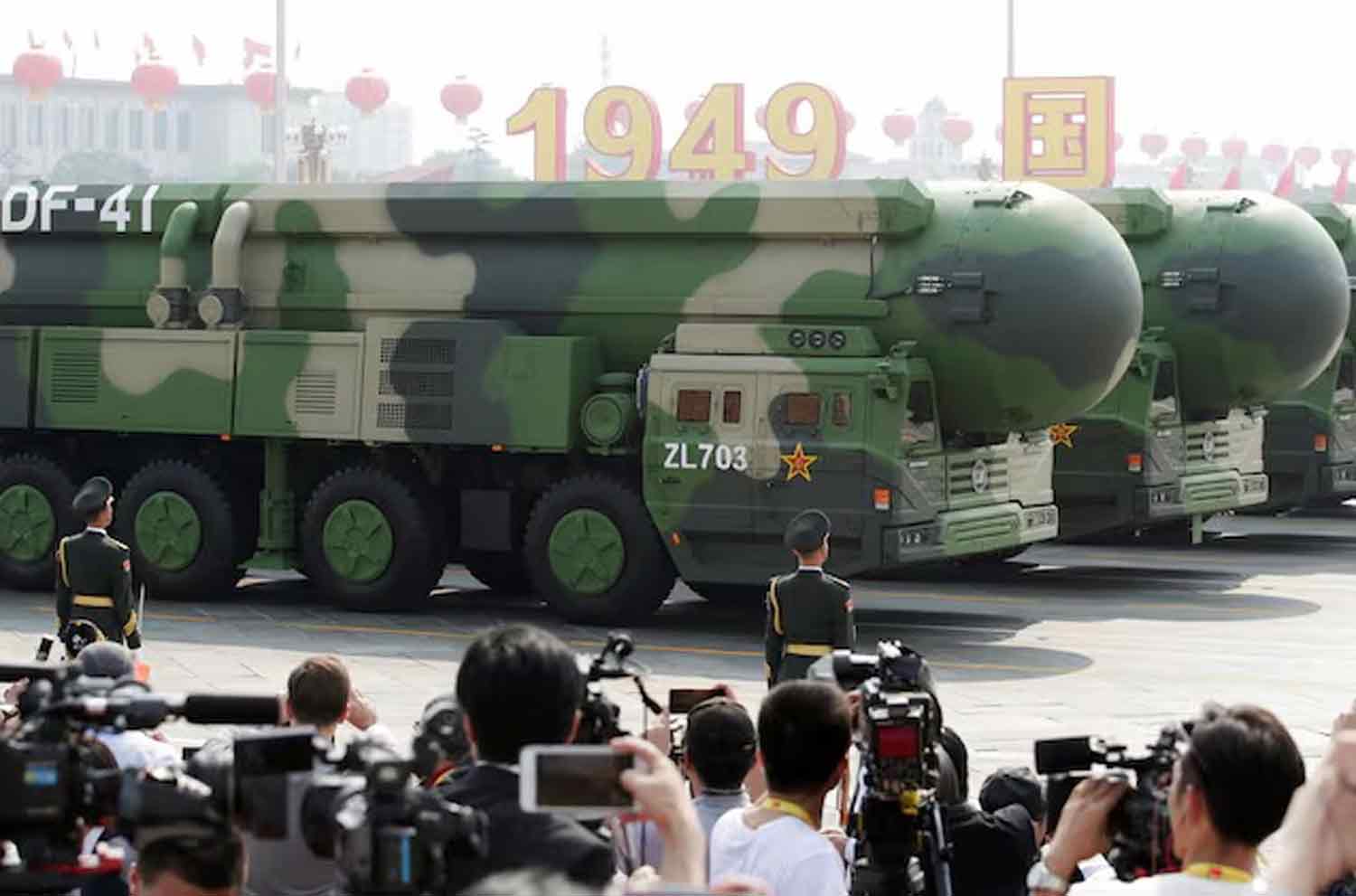
Currently, this balance favors China, which boasts the largest navy in the world, including six operational Jin-class nuclear-powered ballistic submarines that surpass India’s two submarines—Arighaat and its predecessor, INS Arihant—in terms of firepower. The Chinese submarines are capable of carrying up to twelve ballistic missiles with ranges exceeding 8,000 kilometers (4,970 miles) and can accommodate multiple nuclear warheads, as reported by the Missile Defense Advocacy Alliance, a non-profit organization focused on missile defense development for the U.S. and its allies.

Both Arighaat and Arihant measure 366 feet in length and have a displacement of 6,000 tons, according to an analysis by the open-source intelligence agency Janes. They are equipped with K-15 Sagarika ballistic missiles that can be launched from four vertical launch tubes. However, the range of the nuclear-capable K-15 is estimated to be only about 750 kilometers (466 miles), which restricts the potential targets that can be engaged from the Indian Ocean.

Analyst Carl Schuster, a former director of operations, noted that the INS Arihant-class submarines can barely reach Chinese targets along the eastern Sino-Indian border from the shallow coastal waters of the northern Bay of Bengal, posing significant operational challenges.

India’s focus on its naval development extends beyond China, as noted by Abhijit Singh, a senior fellow at the Observer Research Foundation in Mumbai. Singh highlighted in an op-ed for the Hindustan Times that the primary motivation behind India’s enhancement of its second-strike capabilities is the notable expansion of both the Pakistani and Chinese navies in the Indian Ocean. He pointed out that Pakistan is in the process of acquiring eight Type 039B attack submarines designed by China, as part of its fleet modernization efforts. Singh emphasized that “Pakistan continues to reduce the maritime power gap with India.”

The longstanding tensions between India and Pakistan over the contested and heavily militarized Kashmir region, which both nations claim entirely, have resulted in three wars. The Line of Control serves as a de facto border between New Delhi and Islamabad. China plays a crucial role as one of Pakistan’s key international supporters and a significant investor in the country.

In April, India proudly announced its entry into the MIRV club, which includes the US, UK, France, Russia, and China, following a successful test of the domestically developed Agni-V intercontinental ballistic missile. While Pakistan has claimed to possess MIRV technology, experts remain skeptical about the validity of this assertion.

Adversaries must treat such claims as credible to avoid being caught off guard in the event of a conflict. Korda concludes, “These systems are optimal for first-strike scenarios, yet they are also the primary targets in any retaliatory strike.”

The Polish minister, during a visit to Kyiv, advocates for the cessation of benefits provided to Ukrainian men residing in Europe

0

Poland’s Foreign Minister has suggested that European governments should discontinue welfare benefits for Ukrainian men of military age residing in their countries. He argued that this action would assist Ukraine in mobilizing additional troops to combat Russian forces.

Following discussions in Kyiv with his Ukrainian counterpart, Radoslaw Sikorski stated that terminating social benefits for Ukrainian male refugees would also positively impact the financial situation of host countries in Western Europe. As of July this year, over 4.1 million Ukrainians held temporary protection status in European Union nations, with approximately 22% being adult males, according to Eurostat data.

Sikorski emphasized at an international leaders’ conference in Kyiv, “Cease the social security payments for individuals eligible for the Ukrainian draft. There should be no financial incentives for evading the draft in Ukraine.” He further asserted, “It is not a human right to receive payments to avoid military service in defense of one’s country. We do not practice this in Poland.”

Ukrainian Foreign Minister Andrii Sybiha expressed his support for Sikorski’s proposal, stating, “It is indeed time to consider the European Union developing initiatives to facilitate the return of Ukrainians to their homeland. Appropriate conditions must be established for this, and I endorse Minister Sikorski’s idea.”

As the conflict with Russia continues for nearly 31 months, and with Russian forces gradually advancing in eastern Ukraine, Kyiv requires additional soldiers to sustain its defense, rotate fatigued troops, and compensate for losses.

Russia currently holds a considerable advantage in personnel and weaponry on the battlefield. Earlier this year, Ukraine enacted new legislation and introduced measures to expedite military mobilization, including reducing the call-up age for combat duty from 27 to 25.

Under this new law, Ukrainian men living abroad are required to update their military draft information online and are encouraged to return to Ukraine to participate in the fight. Ukraine has also imposed martial law.

British Prime Minister urged to permit Ukraine to utilize long-range missiles, Sunday Times

0

Former British Labour Prime Minister Keir Starmer has received calls from former defense secretaries and a past prime minister to permit Ukraine to deploy long-range missiles within Russian territory, even in the absence of U.S. support, as reported by the Sunday Times on Saturday.

The appeal was made by five former Conservative defense secretaries—Grant Shapps, Ben Wallace, Gavin Williamson, Penny Mordaunt, and Liam Fox—along with ex-Prime Minister Boris Johnson. They cautioned Starmer that “any further delay will embolden President Putin,” according to the Sunday Times.

Ukrainian President Volodymyr Zelenskiy has been urging allies for several months to allow Ukraine to utilize Western missiles, including long-range U.S. ATACMS and British Storm Shadows, to diminish Moscow’s capacity to conduct attacks.

Starmer and U.S. President Joe Biden discussed the issue in Washington on Friday regarding the potential for Kyiv to use long-range missiles against Russian targets, but no decision was reached.

Some U.S. officials remain skeptical that permitting such missile use would significantly impact Kyiv’s efforts against Russian forces.

President Vladimir Putin has warned that allowing Ukraine to strike with Western-made long-range missiles would mean the West is directly engaging in combat with Russia.

The ammunition that Russia receives from North Korea is a big problem for our forces, the intelligence chief of Ukraine

0

The head of Ukraine’s military intelligence, Kyrylo Budanov, stated on Saturday that Russia’s heightened production of guided bombs, along with artillery ammunition supplied by North Korea, poses significant challenges for Ukrainian forces on the battlefield.

Budanov emphasized that the military assistance from North Korea is the most concerning aspect compared to support from Russia’s other allies. He noted, “They provide substantial quantities of artillery ammunition, which is vital for Russia,” highlighting the increase in hostilities on the front lines following these deliveries.

Both Ukraine and the United States, along with independent analysts, assert that North Korean leader Kim Jong Un is aiding Russia in its conflict with Ukraine by supplying missiles and ammunition in exchange for economic and military support from Moscow.

Budanov remarked that the surge in guided bomb production by Russia represents a “major issue for the frontline” during the Yalta European Strategy conference organized by the Victor Pinchuk Foundation in Kyiv. As the conflict enters its 30th month, Ukrainian forces are stretched thin, striving to halt the Russian advance toward critical eastern towns, while also conducting operations in the western Russian region of Kursk.

The increased production of Iskander-type missiles has led to a “massive use” of weaponry against Ukraine, according to Budanov. This year’s attacks on Ukraine’s essential infrastructure have inflicted considerable damage on the power grid, resulting in widespread power outages.

President Volodymyr Zelenskiy has reiterated calls for enhanced air defense support from Ukraine’s allies. Budanov also indicated that Russian internal assessments suggest Moscow will encounter a recruitment challenge by mid-next year.

“During this period (summer 2025), they will face a choice: either declare mobilization or find a way to lessen the intensity of hostilities, which could ultimately be critical for them,” Budanov stated.

Iran’s president will attend the BRICS summit in Russia

0

Iran’s President Masoud Pezeshkian is scheduled to participate in the forthcoming BRICS summit in Russia, as reported by Tehran’s ambassador in Moscow on Sunday.

This announcement comes amid escalating tensions with Western nations regarding military collaboration between Iran and Russia. U.S. Secretary of State Antony Blinken stated on Tuesday that Russia has acquired ballistic missiles from Iran, which are expected to be deployed in Ukraine within a matter of weeks. He emphasized that the partnership between Moscow and Tehran poses a threat to broader European security.

In response, the United States, along with Germany, Britain, and France, announced new sanctions against Iran on Tuesday, targeting its national airline, Iran Air. Iran’s Foreign Minister Abbas Araqchi asserted on Wednesday that Tehran has not supplied any ballistic missiles to Russia, arguing that the sanctions imposed by the U.S. and the three European nations are not a viable solution.

Iran’s ambassador in Russia, Kazem Jalali, confirmed on Sunday that Pezeshkian will attend the BRICS summit, which is set to take place in Kazan, Russia, from October 22 to 24.

Jalali also mentioned that Pezeshkian is expected to meet with Russian President Vladimir Putin during the event, where Iran and Russia plan to finalize a comprehensive bilateral cooperation agreement.

Yemen’s Houthis launch missile attacks into Israel for the first time

0

Prime Minister Benjamin Netanyahu announced that Israel would impose a “heavy price” on the Iran-aligned Houthis controlling northern Yemen, following their missile strike that reached central Israel for the first time on Sunday.

Houthi military spokesperson Yahya Sarea reported that the group launched a new hypersonic ballistic missile, which traveled 2,040 km (1,270 miles) in just 11.5 minutes. Initially, the Israeli military stated that the missile had landed in an open area, but later assessments suggested it likely fragmented in the air, with debris from interceptors landing in fields and near a railway station, causing no reported injuries.

Air raid sirens were activated in Tel Aviv and central Israel shortly before the missile’s impact at approximately 6:35 a.m. local time (0335 GMT), prompting residents to seek shelter amid loud explosions. Smoke was observed rising from an open field in central Israel.

During a weekly cabinet meeting, Netanyahu emphasized that the Houthis should have anticipated a “heavy price” for their attacks on Israel, inviting them to recall the Israeli airstrike on Hodeida port in July, which was a response to a Houthi drone that struck Tel Aviv. The Houthis have consistently launched missiles and drones at Israel, claiming to show solidarity with the Palestinians since the onset of the Gaza conflict following a Hamas attack on October 7.

The drone strike in July resulted in one fatality and four injuries, while Israeli retaliatory airstrikes on Houthi military positions near Hodeidah resulted in six deaths and 80 injuries. Previously, Houthi missiles had not penetrated deeply into Israeli airspace, with the only recorded incident being a missile that landed in an open area near Eilat in March.

Sarea warned that more strikes should be anticipated as the first anniversary of the October 7 operation approaches, including responses to aggression in Hodeidah. Nasruddin Amer, the deputy head of the Houthi media office, also commented on the situation.

Russian TV is involved in overseas intelligence operations, US Secretary of State alleges

0

U.S. Secretary of State Antony Blinken stated on Friday that nations should regard the operations of the Russian state broadcaster RT as akin to covert intelligence activities, as he announced new sanctions targeting alleged Russian influence campaigns abroad.

Last week, the United States charged two RT employees with money laundering and imposed sanctions on Editor-in-Chief Margarita Simonyan, citing a scheme to engage an American firm for producing online content aimed at influencing the 2024 U.S. elections. Blinken informed reporters at the State Department that Russian media organizations are effectively operating as an extension of Russia’s intelligence services.

He noted that RT has evolved from a traditional media outlet to one that possesses cyber capabilities and engages in covert information and influence operations internationally, referencing new intelligence, much of which he claimed was provided by RT personnel. “Today, we are announcing that these Kremlin-affiliated media organizations are not only engaged in covert influence activities to undermine democracy in the United States but are also interfering in the sovereign matters of nations worldwide,” Blinken remarked.

The ongoing conflict in Ukraine has severely strained U.S.-Russian relations since President Vladimir Putin initiated a full-scale invasion in 2022, prompting the Biden administration to supply arms to Kyiv and lead a comprehensive international sanctions initiative against Moscow.

RT has ridiculed U.S. actions, with Simonyan asserting that Washington is attempting to obstruct the broadcaster’s operations as a journalistic entity and pledging to circumvent sanctions to continue its work. The Russian embassy in Washington has not yet responded to a request for comment.

The United States, along with Britain and Canada, plans to collaborate on a diplomatic initiative to inform other nations about Russian efforts, including the sharing of evidence. “Each government will ultimately determine its response to this threat, but we encourage every ally and partner to begin by treating RT’s activities as they would other intelligence operations conducted by Russia.”

U.S. State Department green lights for sale of F-35 to Romania

0

The Pentagon announced on Friday that the U.S. State Department has given the green light for a prospective sale of 32 F-35 aircraft, along with engines and additional equipment, to Romania, with the total deal estimated at $7.2 billion.

Lockheed Martin Inc. is set to be the main contractor for the aircraft, while the order will also encompass 33 engines supplied by Pratt & Whitney, a subsidiary of RTX.

Russia’s top security official meets Kim Jong-un in Pyongyang

0

Sergei Shoigu, a prominent Russian security official, engaged in discussions with North Korean leader Kim Jong Un during his visit to Pyongyang on Friday, according to Russian news agencies.

This meeting occurred at a pivotal moment in the ongoing conflict in Ukraine, where the United States has accused North Korea of providing ammunition and ballistic missiles to Russia. The U.S. and its allies are currently deliberating whether to permit Ukraine to utilize Western-supplied long-range missiles for strikes deep within Russian territory.

President Vladimir Putin warned on Thursday that such actions would equate to direct conflict between the West and Russia. Both Moscow and Pyongyang have refuted claims of arms transfers but have expressed intentions to enhance military cooperation.

Since the onset of the Ukraine war, Russia has strengthened its ties with North Korea, highlighted by Kim’s state visit to meet Putin in June.

Shoigu, who served as Russia’s defense minister until May, now holds the position of secretary of the Security Council, which includes Putin, military and intelligence leaders, and other high-ranking officials. The Security Council reported that the discussions involved a comprehensive exchange of views on various bilateral and international matters, emphasizing the ongoing strategic dialogue between the two nations.

The meetings were characterized as taking place in an “exceptionally trusting, friendly atmosphere,” contributing significantly to the agreements established during the summit between Putin and Kim three months prior.

German navy traversed the sensitive Taiwan Strait, first such passage in 20 years

0

On Friday, two ships from the German navy traversed the sensitive Taiwan Strait, marking the first such passage in twenty years.

This move underscores Berlin’s commitment to align with its Western allies amid escalating tensions between Taipei and Beijing. China, which asserts that Taiwan is part of its territory, claims exclusive sovereignty over the strait.

In contrast, both the United States and Taiwan maintain that the strait is an international waterway, crucial for global trade, with approximately half of the world’s container ships navigating through it.

German Defence Minister Boris Pistorius confirmed the transit of the frigate “Baden-Württemberg” and the supply vessel “Frankfurt am Main,” stating, “International waters are international waters. It’s the shortest and safest route given the weather conditions, so we are passing through.”

According to Taiwan’s Defence Ministry, the German ships have been moving southward through the strait since Friday morning, with local forces monitoring the situation, which they described as “normal.”

A security source indicated that the vessels are expected to exit the strait by Saturday. Another source, who requested anonymity, characterized the passage as a clear declaration from Berlin of its support for international regulations alongside its allies.

Prior to the confirmation of the transit, a spokesperson for China’s foreign ministry expressed condemnation of any actions perceived as infringing on China’s sovereignty. “We firmly oppose provocations that threaten China’s sovereignty and security under the guise of ‘freedom of navigation’,” stated Mao Ning during a press briefing.

A spokesperson for the German Foreign Ministry clarified that Germany is not required to inform other nations of such movements, emphasizing that international maritime law permits free navigation in international waters without prior notification.

China signs new financial cooperation agreement with debt-ridden Maldives

0

On Friday, China’s central bank announced that it has entered into an agreement with the Maldivian government aimed at enhancing trade and investment, as the financially troubled Indian Ocean nation seeks to avert default.

The People’s Bank of China and the Maldivian Ministry of Economic Development and Trade formalized a memorandum of understanding to promote local currency transactions for current account activities and direct investments, according to a statement from the People’s Bank of China, which did not provide additional specifics.

Earlier in the day, China’s foreign ministry indicated that the country, recognized as the world’s second-largest economy and leading bilateral lender, has been in discussions with the Maldives regarding its debt obligations to Beijing and the enhancement of financial collaboration between the two nations. “China will continue to offer support and assistance to the Maldives’ economic and social development within its means,” stated Mao Ning, a spokesperson for the Chinese foreign ministry, during a regular press briefing in Beijing prior to the announcement.

Recently, the Maldives has faced scrutiny over concerns regarding its ability to repay international debts.

On Thursday, the government pledged not to become the first nation to default on Islamic sovereign debt by missing a $25 million payment due next month.

The Maldives’ only sovereign bond saw an increase on Friday, rising to 78.8 cents on the dollar, having gained over 4 cents that day and approximately 10 cents throughout the week, according to Tradeweb data.

The majority of the Maldives’ debt is owed to regional competitors China and India, which have provided loans of $1.37 billion and $124 million, respectively, as per World Bank data.

Market analysts noted that the bond’s recovery has been influenced by discussions of potential additional support.

These debt challenges arise amid a period of political transition for the archipelago, as voters recently granted President Mohamed Muizzu’s party a decisive victory in an April parliamentary election, a result that is expected to realign the Maldives closer to China and away from its traditional ally, India.

China and Russia strongly criticized the US at the Beijing Security Forum

0

At a military diplomacy forum held in Beijing on Friday, defense officials from China and Russia criticized Western nations, with China focusing on strengthening ties with the Global South and Russia accusing the United States of relocating military conflicts to the Asia-Pacific region.

Chinese Defense Minister Dong Jun addressed the annual Xiangshan Forum, emphasizing the importance of enhancing military cooperation with neighboring countries and developing nations. He stated, “Major countries must take the lead in safeguarding global security, abandon a zero-sum mindset, and refrain from bullying the small and the weak,” implicitly targeting the United States without naming it.

Despite ongoing tensions regarding the South China Sea, Taiwan, and concerns over China’s alliance with Russia amid the Ukraine conflict, communication between U.S. and Chinese military officials has improved.

Tensions were highlighted by Germany’s defense minister confirming that two German warships had transited the Taiwan Strait on Friday, marking the first such passage in two decades, which China condemned.

Dong’s comments were directed at representatives from 90 countries and international organizations during the three-day forum, which concludes on Saturday. He urged regional nations to “seek strength through unity and rely on themselves for their own peace.”

Russian Deputy Defense Minister Alexander Fomin also spoke at the forum, asserting that the U.S. is attempting to contain both China and Russia while preparing for conflict in Asia by forming new security alliances. He stated, “Russia and China support the creation of a just, multipolar world order based on equality and mutual respect.”

Fomin warned that NATO countries are planning to send troops to Ukraine to pressure Russia into negotiations based on Kyiv’s terms, describing this as a perilous strategy that could lead to direct conflict between nuclear powers.

NATO has denied any plans to deploy troops to Ukraine, while Kyiv accuses Russia of attempting to impose its own peace conditions and demands a withdrawal of Russian forces along with the restoration of Ukraine’s territorial integrity.

Security concerns, South Korea removed Chinese-made surveillance cameras installed on military bases

0

South Korea’s military has recently taken action to remove approximately 1,300 surveillance cameras manufactured in China from its bases due to concerns over potential security threats, as reported by Yonhap news agency on Friday, citing an unnamed military official.

These cameras were intended to connect to a specific server located in China; however, there has been no evidence of data breaches, according to Yonhap. The cameras were provided by a South Korean company, and their Chinese origin was identified during inspections of the equipment earlier this year, as noted by the official.

While these cameras were not utilized for security operations along the heavily fortified Demilitarized Zone (DMZ) between North and South Korea, they were employed for monitoring training groups and perimeter fences at military installations.

On Friday, South Korea’s defense ministry announced that it is in the process of retrieving the foreign-made cameras and replacing them with alternatives, although the ministry did not disclose the cameras’ country of origin.

Last year, Australia’s foreign minister indicated that its defense and foreign ministries were also removing surveillance cameras produced by Chinese-operated companies from their facilities due to concerns regarding security risks associated with the technology.

European & Muslim countries gather in Spain to discuss Palestinian statehood

0

Spain convened a high-level meeting on Friday with several Muslim and European nations to discuss strategies for ending the Gaza conflict, emphasizing the need for a definitive timeline for the international community to implement a two-state solution to the Israeli-Palestinian issue.

Spanish Foreign Minister Jose Manuel Albares stated, “We gather to advocate for an end to the violence in Gaza and to find a resolution to the ongoing conflict between Palestinians and Israelis. The path forward is evident: the two-state solution is the sole viable option.”

Attendees included foreign ministers from Norway and Slovenia, European Union foreign policy chief Josep Borrell, Palestinian Prime Minister Mohammad Mustafa, and representatives from the Arab-Islamic Contact Group for Gaza, which comprises Egypt, Saudi Arabia, Qatar, Jordan, Indonesia, Nigeria, and Turkey.

Albares noted a “clear willingness” among participants, who notably excluded Israel, to transition from dialogue to actionable steps towards establishing a timeline for the effective realization of a two-state solution, beginning with Palestine’s admission to the United Nations.

He clarified that Israel was not invited due to its absence from the contact group but expressed openness to Israel’s participation in any discussions focused on peace and the two-state solution.

On May 28, Spain, Norway, and Ireland officially recognized a unified Palestinian state governed by the Palestinian Authority, encompassing the Gaza Strip and the West Bank, with East Jerusalem designated as its capital.This recognition brings the total to 146 out of 193 United Nations member states acknowledging Palestinian statehood.

Spanish Prime Minister Pedro Sanchez has consistently asserted that the coexistence of two sovereign states in the territory of former Mandatory Palestine represents the only feasible route to regional peace. Although the two-state solution was outlined in the 1991 Madrid Conference and the Oslo Accords from 1993 to 1995, the peace process has remained stagnant for years. Nonetheless, efforts to find a peaceful resolution continue.

Canada has started efforts to join AUKUS, a three-member alliance of the United States, Australia and the United Kingdom

0

Canada is currently engaged in discussions regarding its potential participation in an expanded AUKUS agreement involving the United States, the United Kingdom, and Australia, aimed at addressing China’s increasing military presence in the Asia Pacific region, according to Canadian Defence Minister Bill Blair.

Canada has expressed interest in joining a second component of AUKUS that focuses on collaboration in advanced military technologies, such as artificial intelligence and quantum computing, although specific details of these discussions have not yet been disclosed. “Significant conversations have taken place regarding processes and platforms on a project-specific basis, exploring how other nations, including Japan and ourselves, might be involved,” Blair stated during an interview in Tokyo, where he met with his Japanese counterpart, Minoru Kihara.

“I would respectfully wait until they reach their conclusion, but I am quite optimistic,” he added. Blair noted that he and Kihara discussed AUKUS, which is already considering collaboration with Japan.

The initial phase of AUKUS focuses on developing nuclear submarine technology for Australia.

This marks Blair’s first visit to Japan as defence minister, following his trip to South Korea, which is also exploring a role in AUKUS. Canada aims to enhance its security presence in Asia and has prioritized strengthening relationships with Japan and South Korea.

As its defence obligations grow both domestically and internationally, the country is increasing its military budget. “Next year, my defence budget will increase by 27% compared to this year, and, frankly, over the next three to four years, our defence spending will triple,” Blair remarked.

He and Kihara also addressed recent Chinese incursions into Japanese territory, which led Tokyo to file protests with Beijing last month. Concerns regarding Chinese military activities may be raised at an upcoming meeting of the Group of Seven defence ministers in Italy next month, according to Blair.

“This presents a crucial opportunity for us to engage in discussions among G7 partners about activities that are of significant concern to Japan, Canada, the United States, and others.”

Russia is developing new attack drones with Chinese engines, European intelligence sources claim

0
Members of police demining unit remove a warhead from a Russian kamikaze unmanned aerial vehicle landed by a radio electronic warfare during one of latest drone strikes, amid Russia's attack on Ukraine.

According to two sources from a European intelligence agency and documents reviewed by Reuters, Russia commenced the production of a new long-range attack drone named the Garpiya-A1 last year, utilizing Chinese engines and components, which have been deployed in the ongoing conflict in Ukraine.

The intelligence, which included a production contract for the drone, correspondence regarding the manufacturing process, and financial records, revealed that IEMZ Kupol, a subsidiary of the Russian state-owned defense contractor Almaz-Antey, manufactured over 2,500 units of the Garpiya from July 2023 to July 2024.

The presence of this new Russian drone featuring Chinese technology has not been previously disclosed. Neither IEMZ Kupol nor Almaz-Antey responded to inquiries for comment.

The intelligence sources indicated that the Garpiya, translating to Harpy in Russian, has been utilized against both military and civilian targets in Ukraine, inflicting damage on critical infrastructure and resulting in casualties among civilians and military personnel alike.

They provided Reuters with what they claimed were images of a Garpiya wreckage in Ukraine, although further details were not disclosed. While Reuters found corroborating information, it was unable to independently verify the images.

The sources requested anonymity due to the sensitive nature of the information and asked that specific details, including dates related to the documents, be kept confidential.

Samuel Bendett, an adjunct senior fellow at the Center for a New American Security, a think tank based in Washington DC, stated to Reuters that if the existence of the Garpiya is confirmed, it would signify a shift away from Russia’s dependence on Iranian designs for long-range drones. “If this is indeed occurring, it may suggest that Russia is increasingly capable of relying on domestic development, as well as on China, given that both parties in this conflict are dependent on numerous Chinese components for drone manufacturing,” he remarked.

Iran, which did not provide a comment for this report, has delivered over a thousand Shahed “kamikaze” drones to Russia since the onset of the conflict.

North Korea has released photos of its uranium enrichment center for the first time

0
North Korean leader Kim Jong Un tours facilities during a visit to the Nuclear Weapons Institute and the production base of weapon grade nuclear materials.
North Korean leader Kim Jong Un tours facilities during a visit to the Nuclear Weapons Institute and the production base of weapon-grade nuclear materials at an undisclosed location in North Korea.

For the first time, North Korea displayed images of the centrifuges utilized for producing fuel for its nuclear weapons on Friday, during a visit by leader Kim Jong Un to a uranium enrichment facility.

He emphasized the need for increased production of weapons-grade material to enhance the country’s arsenal. The state media’s coverage of Kim’s visit to the Nuclear Weapons Institute and a facility dedicated to the production of weapon-grade nuclear materials included the inaugural photographs of the centrifuges, offering a rare glimpse into North Korea’s nuclear program, which is prohibited under various United Nations Security Council resolutions.

The images depicted Kim traversing long rows of metal centrifuges, the apparatus responsible for uranium enrichment. The report did not specify the timing of the visit or the location of the facility.

Kim urged the workforce to increase the production of materials for tactical nuclear weapons, asserting that the nuclear arsenal is essential for addressing threats posed by the United States and its allies. He stated that these weapons are necessary for “self-defense and the capability for a preemptive strike.”

According to the report, Kim remarked that “anti-DPRK nuclear threats” from the “U.S. imperialists-led vassal forces” have surpassed acceptable limits.

In response, South Korea condemned North Korea’s revelation of its uranium enrichment facility, reiterating that it will never accept Pyongyang’s possession of nuclear weapons, as stated by the South’s unification ministry.

It is believed that North Korea operates several uranium enrichment sites. Analysts have noted that commercial satellite imagery has indicated construction activity in recent years at the Yongbyon Nuclear Scientific Research Center, including its uranium enrichment plant, suggesting potential expansion.

Uranium, a naturally occurring radioactive element, undergoes various processes to produce nuclear fuel, resulting in a material with a higher concentration of the isotope uranium-235.

On Monday, International Atomic Energy Agency chief Rafael Grossi reported that the U.N. nuclear watchdog had detected activities consistent with reactor operations.

Russia has expelled six British diplomats from the country

0

On Friday, Russia’s FSB security service announced the revocation of accreditation for six British diplomats in Moscow, citing allegations of espionage and sabotage.

This action reflects the Kremlin’s displeasure with what it perceives as London’s significant involvement in supporting Ukraine. The British government dismissed these claims as “completely baseless,” interpreting the move as a retaliatory measure following the UK’s expulsion of the Russian defense attaché and the revocation of diplomatic status for several Russian properties in May.

The expulsions were declared just hours before discussions in Washington between British Prime Minister Keir Starmer and U.S. President Joe Biden, which are pivotal for securing approval for Ukraine to deploy long-range missiles against Russian targets.

President Vladimir Putin warned on Thursday that if the West permitted Ukraine to attack Russian territory with Western-supplied long-range missiles, it would signify a direct confrontation with Russia, fundamentally changing the dynamics of the conflict.

The Kremlin asserted that Putin had conveyed a clear and unequivocal message to the West, which it believes was duly noted. Washington and London regard Iran’s recent provision of ballistic missiles to Russia for use against Ukraine, as reported by U.S. officials this week, as a significant escalation, prompting accelerated discussions regarding Ukraine’s long-range missile capabilities, according to three Western sources.

Both Russia and Iran have denied these allegations. The FSB, the principal successor to the Soviet KGB, claimed to possess documents indicating that a British Foreign Office department responsible for Eastern Europe and Central Asia was orchestrating what it termed “the escalation of the political and military situation,” with the objective of ensuring Russia’s strategic defeat in its conflict with Ukraine.

The FSB’s statement concluded that the evidence presented warranted the classification of the activities of the British diplomats in Moscow as a threat to the security of the Russian Federation.

The United States has enacted sanctions against suppliers involved in Pakistan’s ballistic missile program

1

On Thursday, the U.S. State Department announced sanctions against a Chinese research institute and several companies linked to Pakistan’s ballistic missile program.

In a similar move, three companies based in China were sanctioned in October 2023 for providing missile-related materials to Pakistan.

According to Department spokesperson Matthew Miller, the Beijing Research Institute of Automation for Machine Building Industry collaborated with Pakistan to acquire equipment for testing rocket motors for the Shaheen-3 and Ababeel systems, as well as potentially for larger systems.

The sanctions also included China-based firms Hubei Huachangda Intelligent Equipment Co, Universal Enterprise, and Xi’an Longde Technology Development Co, in addition to Pakistan-based Innovative Equipment and a Chinese individual, for knowingly transferring equipment in violation of missile technology regulations, Miller stated.

“These actions illustrate the United States’ commitment to countering proliferation and related procurement activities of concern, regardless of their location,” Miller added.

The embassies of China and Pakistan in Washington have not yet responded to requests for comment.

Ukraine says Russian strike targeted a grain vessel close to Romania

0

On Thursday, Ukraine accused Russia of employing strategic bombers to target a civilian grain vessel in a missile strike within the Black Sea, close to NATO member Romania, heightening tensions between Moscow and the military alliance.

President Volodymyr Zelenskiy reported that the vessel, which was transporting Ukrainian grain to Egypt, was struck by a Russian missile shortly after departing from Ukrainian territorial waters, although he confirmed there were no casualties.Russia has not yet issued a response.

Ukrainian Foreign Minister Andrii Sybiha condemned the attack as “a blatant violation of freedom of navigation and a threat to global food security.”

According to Ukraine’s navy, Russian Tupolev Tu-22 bombers launched several cruise missiles at 11:02 p.m. local time (2002 GMT) on Wednesday. This incident marks the first missile strike on a civilian grain transport at sea since the onset of Moscow’s invasion in February 2022, although some vessels have previously been damaged while docked at Ukrainian ports.

The attack occurs as Zelenskiy seeks to engage with the Global South, including nations like Egypt, to garner support for Ukraine in the ongoing conflict.

Additionally, NATO allies are deliberating on permitting Ukraine to conduct deeper strikes into Russian territory, a move that Moscow has warned would provoke a response.

The West has also accused Iran of escalating the situation by supplying ballistic missiles to Russia. British maritime security firm Ambrey reported that a bulk carrier flagged by Saint Kitts and Nevis was hit by a missile launched by Russia after leaving the Ukrainian port of Chornomorsk in the Odesa region.

The vessel, identified as the Aya bulk carrier, suffered damage to its port side, affecting both a cargo hold and a crane.

Ship tracking data indicated that the last known position of the vessel was near the Romanian port of Constanta, and attempts to reach its Athens-based manager, VRS Maritime Services, for comment were unsuccessful. Traders noted the developments.