Tuesday, August 25, 2026
Home Blog Page 154

A brief overview of the historical context of Israel-Hezbollah hostilities

0
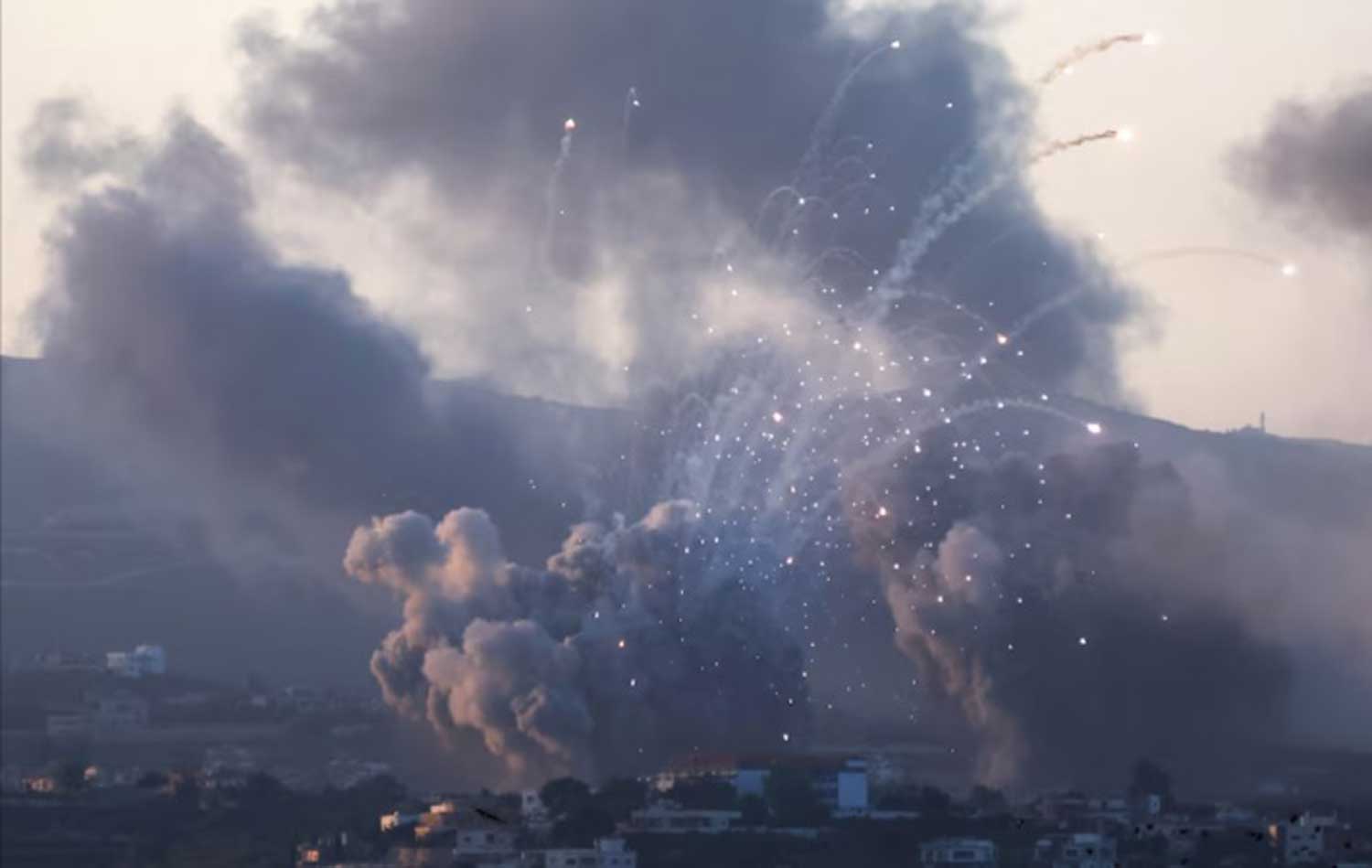
Smoke billows over southern Lebanon following Israeli strikes.

A significant increase in border hostilities between the Iran-supported Hezbollah group and Israel has sparked concerns over a potential new Israeli ground offensive in Lebanon. This development marks yet another chapter in the long-standing conflict along the Lebanese-Israeli border.

Historical context includes:

1948
Lebanon joins other Arab nations in opposing the newly established state of Israel. Approximately 100,000 Palestinians, who either fled or were forced from their homes in what was formerly British-controlled Palestine during the conflict, seek refuge in Lebanon. An armistice between Lebanon and Israel is reached in 1949.

1968
In retaliation for an assault on an Israeli airliner by Palestinian militants, Israeli commandos carry out the destruction of several passenger aircraft at Beirut airport. The Palestine Liberation Organization (PLO) moves its base of operations to Lebanon two years later after being expelled from Jordan, resulting in increased cross-border tensions.

1973

In 1973, Israeli special forces, operating under disguise, assassinated three Palestinian guerrilla leaders in Beirut as a response to the murder of Israeli athletes during the 1972 Munich Olympics. Throughout the 1970s, Palestinian guerrilla attacks on Israel and subsequent Israeli military reprisals against targets in Lebanon escalated, prompting many Lebanese to flee the southern regions of their country and exacerbating sectarian tensions, which contributed to the onset of civil war in Lebanon.

1978

By 1978, Israel launched an invasion of southern Lebanon, establishing a limited occupation zone in response to a militant attack near Tel Aviv. During this operation, Israel provided support to a local Christian militia known as the South Lebanon Army (SLA).

1982

In 1982, Israel expanded its military campaign, advancing all the way to Beirut following a series of retaliatory border exchanges. After a protracted and violent 10-week siege characterized by intense Israeli bombardment of West Beirut, thousands of Palestinian fighters were evacuated by sea. Tragically, during this period, hundreds of civilians in the Palestinian refugee camps of Sabra and Shatila were killed by Christian militiamen, who were permitted entry by Israeli forces after the assassination of Lebanon’s newly elected Maronite Catholic president via a car bomb.

Iran’s Revolutionary Guards form the Shi’ite Muslim militant group Hezbollah in Lebanon as a response to the Israeli invasion.

1983

In 1983, Israel withdrew from central Lebanon but maintained a military presence in the southern region, establishing a formal occupation zone approximately 15 kilometers deep, in collaboration with its ally, the South Lebanon Army (SLA). Hezbollah engages in guerrilla warfare against Israeli troops.

1993

In July 1993, Israel initiates “Operation Accountability,” a week-long military campaign targeting Lebanon. The stated objective is to directly confront Hezbollah, complicating the group’s ability to utilize southern Lebanon as a launch point for attacks on Israel, while also pressuring the Lebanese government to take action against Hezbollah.

1996

By 1996, as Hezbollah continues to launch attacks on Israeli forces in the south and fires rockets into northern Israel, Israel responds with a 17-day military operation known as “Operation Grapes of Wrath,” resulting in over 200 casualties in Lebanon, including 102 individuals who perish when Israel strikes a U.N. facility in the village of Qana.

2000

In 2000, Israel completes its withdrawal from southern Lebanon, concluding a 22-year occupation, following persistent assaults on its military positions in the region by Hezbollah.

2006

In July 2006, Hezbollah infiltrated Israel, abducting two Israeli soldiers and resulting in the deaths of others. This incident ignited a five-week conflict characterized by extensive Israeli airstrikes targeting Hezbollah positions and national infrastructure.

While Israeli ground troops advanced into southern Lebanon, the majority of the fighting was conducted through air assaults and rocket fire. The conflict concluded without Israel meeting its military goals, with Hezbollah proclaiming a “divine victory.” The toll included at least 1,200 Lebanese lives, predominantly civilians, and 158 Israeli fatalities, mainly soldiers.

2024

Fast forward to September 23, 2024, when Israel initiated “Operation Northern Arrows” against Hezbollah following nearly a year of intermittent hostilities along the Lebanese-Israeli border, coinciding with the ongoing Gaza conflict.

This operation was launched shortly after an explosion involving Hezbollah’s communication devices, which the group attributed to Israeli actions.

The escalation in violence followed the October 7, 2023, assault on southern Israel by Hamas-led militants. Hezbollah claimed its retaliatory strikes were in solidarity with Palestinians facing Israeli attacks in Gaza.

Israel’s military objective in the north was to facilitate the safe return of residents to their homes. In response, Hezbollah indicated that it would cease rocket attacks contingent upon a ceasefire in Gaza.

Israeli airstrikes intensified, targeting southern Lebanon, the Bekaa Valley, and even reaching the Christian-majority Keserwan district north of Beirut for the first time. Hezbollah retaliated with a series of rocket launches into Israeli territory.

The conflict resulted in hundreds of casualties and thousands of injuries in Lebanon, prompting tens of thousands to flee their homes in the south, seeking refuge in various locations across Lebanon and in war-torn neighboring Syria, primarily in schools.

Changes in nuclear doctrine are a signal to West, Kremlin says

0

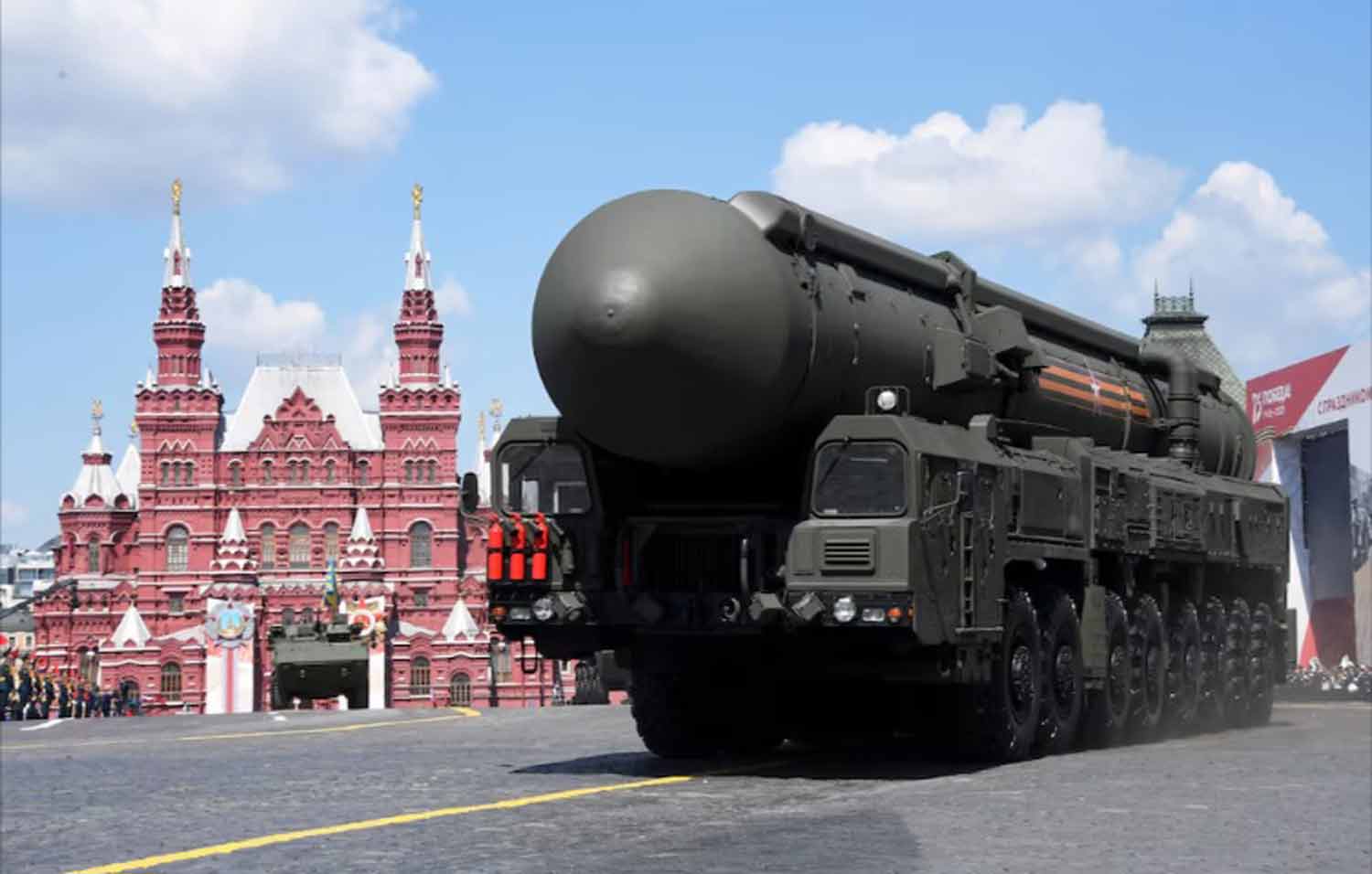
The Kremlin announced on Thursday that the modifications to Russia’s nuclear weapons doctrine, as articulated by President Vladimir Putin, should be interpreted as a warning to Western nations regarding the repercussions of their involvement in attacks against Russia.

Putin indicated on Wednesday that Russia might resort to nuclear weapons if it were targeted by conventional missiles, asserting that any assault on Russia backed by a nuclear state would be regarded as a collective attack.

The alteration of Russia’s official nuclear doctrine is a response from the Kremlin to discussions in the United States and the United Kingdom concerning the potential authorization for Ukraine to launch conventional Western missiles into Russian territory.

Kremlin spokesperson Dmitry Peskov confirmed that revisions to a document titled “The Foundations of State Policy in the Sphere of Nuclear Deterrence” have been established.

When questioned by journalists about whether these changes served as a message to the West, Peskov affirmed, “This should be considered a definite signal.”

He elaborated, stating, “This is a warning to these nations about the consequences of their participation in any form of attack on our country, not limited to nuclear means.”

Peskov characterized the current global situation as an “unprecedented confrontation,” which he attributed to the “direct involvement of Western nations, including nuclear powers,” in the conflict in Ukraine.

He also mentioned that a decision regarding the publication of the nuclear documents would be made at a later time.

Russia’s existing nuclear doctrine, articulated in a decree by President Putin in 2020, indicates that the country may resort to nuclear weapons in response to a nuclear strike from an adversary or a conventional assault that poses a threat to the nation’s survival.

When inquired about whether the potential abandonment of a post-Soviet moratorium on nuclear testing was part of the discussions regarding these changes, Peskov stated that he was unable to provide an answer, as the meeting held on Wednesday was largely classified.

Biden announced $8 billion in military aid to Ukraine

0
Ukraine's President Volodymyr Zelenskiy visits the Scranton Army Ammunition Plant in Scranton, Pennsylvania, U.S.

U.S. President Joe Biden announced on Thursday a military assistance package exceeding $8 billion for Ukraine, aimed at supporting Kyiv in its efforts to “win this war” against Russian aggressors, coinciding with President Volodymyr Zelenskiy’s visit.

This aid includes the initial delivery of a precision-guided glide bomb known as the Joint Standoff Weapon, which has a range of up to 81 miles (130 km). This medium-range missile significantly enhances Ukraine’s capabilities to engage Russian forces from safer distances. The bomb is designed to be deployed from fighter jets and is noted for its high accuracy in targeting. However, Biden will not disclose any plans for allowing Ukraine to utilize U.S. missiles for strikes deeper within Russian territory, according to a U.S. official.

Biden emphasized that supporting Ukraine, which has been under Russian invasion since February 2022, remains a top priority for the U.S. “That is why, today, I am announcing a surge in security assistance for Ukraine and a series of additional actions to help Ukraine win this war,” Biden stated, as he prepares to leave office in January.

Of the new aid, $5.5 billion is set to be allocated before the conclusion of the U.S. fiscal year on Monday, when the funding authority will expire. An additional $2.4 billion will be provided through the Ukraine Security Assistance Initiative, which enables the administration to procure weapons for Ukraine from manufacturers rather than depleting U.S. stockpiles.

This assistance will enhance Ukraine’s air defense capabilities, provide unmanned aerial systems, and supply air-to-ground munitions, while also bolstering Ukraine’s defense industrial base and supporting its maintenance and sustainment needs, Biden noted.

The president announced a plan for the Defense Department to refurbish and supply Ukraine with an additional Patriot air defense battery along with more Patriot missiles. Biden has directed the Pentagon to enhance training for Ukrainian F-16 pilots, which includes the training of an extra 18 pilots in the coming year. To address Russian sanctions evasion and money laundering, the U.S. will take action to disrupt what Biden referred to as “a global cryptocurrency network,” in collaboration with international partners.

Trump criticism of Zelenskiy

Biden also stated that he will host a leader-level meeting of the Ukraine Defense Contact Group in Germany next month to align the efforts of over 50 nations supporting Ukraine. Prior to his midday meeting with Biden (1600 GMT), Zelenskiy is scheduled to engage with both Democratic and Republican leaders at the Capitol.

Support for Ukraine’s defense has generally been bipartisan in the U.S., but it remains uncertain how many Republicans will be available to meet with Zelenskiy, especially given the increasing criticism of his administration from party figures, including Donald Trump, the Republican presidential candidate. Trump has been vocal in his criticism of the Ukrainian president during his campaign for the November 5 election and has, for the time being, declined Zelenskiy’s request for a meeting.

At a campaign rally in North Carolina, Trump expressed strong disapproval of Zelenskiy, stating, “We continue to give billions of dollars to a man who refused to make a deal, Zelenskiy.” He also held Biden and Vice President Kamala Harris accountable for permitting Russia’s invasion. Many congressional Republicans have expressed outrage over Zelenskiy’s visit to a munitions factory in Scranton, Pennsylvania, where Biden was raised, leading the Republican-led House Oversight Committee to initiate an investigation into Zelenskiy’s trip.

House Speaker Mike Johnson, a Republican who is not anticipated to meet with Zelenskiy on Thursday, has called for the dismissal of his ambassador to Washington due to the planned trip to Scranton. However, he clarified to reporters that this request should not be interpreted as a threat to block military assistance.

Israeli Foreign Minister rejects Lebanon ceasefire proposal

0
Smoke billows over southern Lebanon following Israeli strikes.

Israeli Foreign Minister Israel Katz firmly dismissed calls for a ceasefire with Hezbollah on Thursday, following requests from the United States and France for a 21-day pause in hostilities that have resulted in numerous casualties in Lebanon and heightened concerns about a potential ground invasion.

Katz stated, “There will be no ceasefire in the north. We will continue to combat the Hezbollah terrorist organization with all our strength until we achieve victory and ensure the safe return of northern residents to their homes,” via a post on the social media platform X.

His remarks extinguished hopes for a rapid resolution, despite Prime Minister Najib Mikati’s earlier optimism regarding the possibility of a ceasefire in Lebanon, where hundreds of thousands have been displaced in search of safety. The ongoing conflict, the most intense in nearly twenty years between Israel and the Iran-aligned Hezbollah group, has sparked fears of a renewed Israeli ground offensive along the Lebanese-Israeli border.

Hezbollah has been in conflict with the Israeli military since its establishment by Iran’s Revolutionary Guards in 1982, aimed at countering an Israeli invasion of Lebanon. Over the years, it has become Tehran’s most formidable proxy in the Middle East.

In response to escalating tensions, the United States, France, and several allies have called for an immediate 21-day ceasefire along the Israel-Lebanon border, while also advocating for a ceasefire in Gaza. This call followed extensive discussions at the United Nations on Wednesday.

Israeli Prime Minister Benjamin Netanyahu, en route to New York for a United Nations address, stated that he had not yet responded to the ceasefire proposal but had ordered the military to continue operations. Hardline members of his government insisted that Israel should reject any ceasefire and maintain its offensive against Hezbollah.

Israeli airstrikes overnight targeted approximately 75 Hezbollah sites in the Bekaa Valley and southern Lebanon, including weapons storage facilities and launchers prepared for use, according to the Israeli military on Thursday.

In a recent airstrike, at least 23 Syrians, predominantly women and children, lost their lives when Israel targeted a three-story building in the Lebanese town of Younine, as reported by the town’s mayor, Ali Qusas. Lebanon currently hosts around 1.5 million Syrians who have fled the civil war in their home country.

The Israeli military reported that numerous Hezbollah targets were struck, including militants, military installations, and arms depots, across various locations on Thursday morning.

Additionally, around 45 projectiles were launched from Lebanon towards the western Galilee region, with some intercepted and others landing in uninhabited areas, according to the Israeli military.

Israel expanded its airstrikes in Lebanon on Wednesday, resulting in at least 72 fatalities, as compiled from statements by the Lebanese health ministry, according to Reuters.

The ongoing conflict has raised concerns among neighboring countries regarding the safety of their citizens residing in Lebanon. According to a source from the Turkish defense ministry, Turkey is preparing for the potential evacuation of its citizens and other foreign nationals from Lebanon.

Israeli Prime Minister Netanyahu reiterated his commitment to ensuring that the tens of thousands of Israelis evacuated from northern border regions can safely return home. Finance Minister Bezalel Smotrich, who leads one of the two nationalist-religious factions within Israel’s ruling coalition, stated that Hezbollah must be defeated, asserting that only their surrender would facilitate the return of evacuees.

Lebanon’s Prime Minister Mikati expressed support for a ceasefire but emphasized that its success hinges on Israel’s willingness to adhere to international resolutions, especially as Israeli troops have been repositioning closer to Lebanon. When asked about the possibility of a ceasefire being established soon, Mikati responded to Reuters, “Hopefully, yes.”

Mikati’s interim government includes ministers affiliated with Hezbollah, which is widely regarded as the most influential political entity in the country. The proposed ceasefire would pertain to the Israel-Lebanon “Blue Line,” the boundary separating the two nations, and would create an opportunity for negotiations aimed at a diplomatic resolution to the conflict, according to a senior official from the Biden administration. UN Special Coordinator for Lebanon, Jeanine Hennis-Plasschaert, also endorsed the call for an immediate 21-day ceasefire to facilitate diplomatic efforts.

Israeli airstrikes significantly escalated

Israel has prioritized the security of its northern border and is facilitating the return of approximately 70,000 residents who were displaced due to frequent exchanges of fire initiated by Hezbollah a year ago, in support of Hamas in Gaza.

Since Monday, Israeli airstrikes have significantly escalated, coinciding with Lebanon’s deadliest day since the conclusion of its civil war in 1990, which resulted in over 550 fatalities. Approximately half a million Lebanese have been forced to evacuate their homes, and hospitals are struggling to cope with the influx of injured individuals. This wave of bombings follows a series of attacks last week, where explosive devices detonated across Lebanon, resulting in numerous casualties and injuries.

Israel’s military leadership has indicated that a ground offensive may be on the table, raising concerns about the potential for a broader conflict in the Middle East. Both Hezbollah and Hamas are part of a network of Iranian-backed armed groups operating in the region.

Before a U.N. Security Council meeting on Wednesday, Israel’s U.N. Ambassador Danny Danon expressed that Israel would support a ceasefire and favored a diplomatic resolution. He emphasized to the Security Council that Iran is at the center of the violence in the region, asserting that achieving peace necessitates addressing this threat.

Global leaders have expressed alarm over the rapid escalation of the conflict, which is occurring alongside Israel’s ongoing military actions in Gaza. This week, Israeli airstrikes have specifically targeted Hezbollah leaders and struck numerous locations throughout Lebanon, while Hezbollah has retaliated with rocket fire directed at Israel.

Sudan’s military initiates efforts to reclaim territory in capital

0
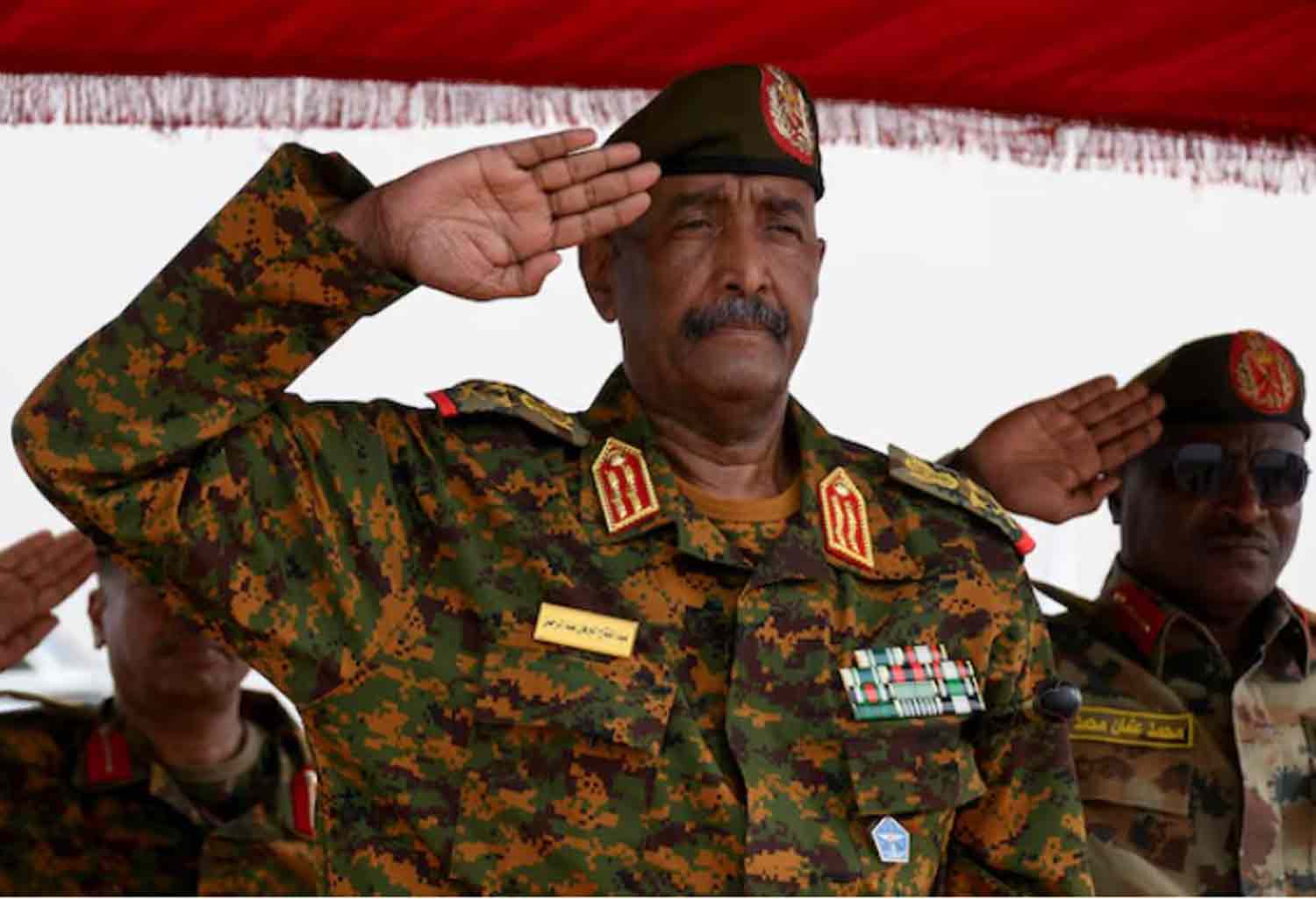
Sudan's General Abdel Fattah al-Burhan salutes as he listens to the national anthem after landing in the military airport of Port Sudan.

Sudan‘s military initiated a series of artillery and air strikes in the capital on Thursday, marking its most significant offensive to reclaim territory since the onset of its 17-month conflict with the Rapid Support Forces (RSF), according to witnesses and military officials.

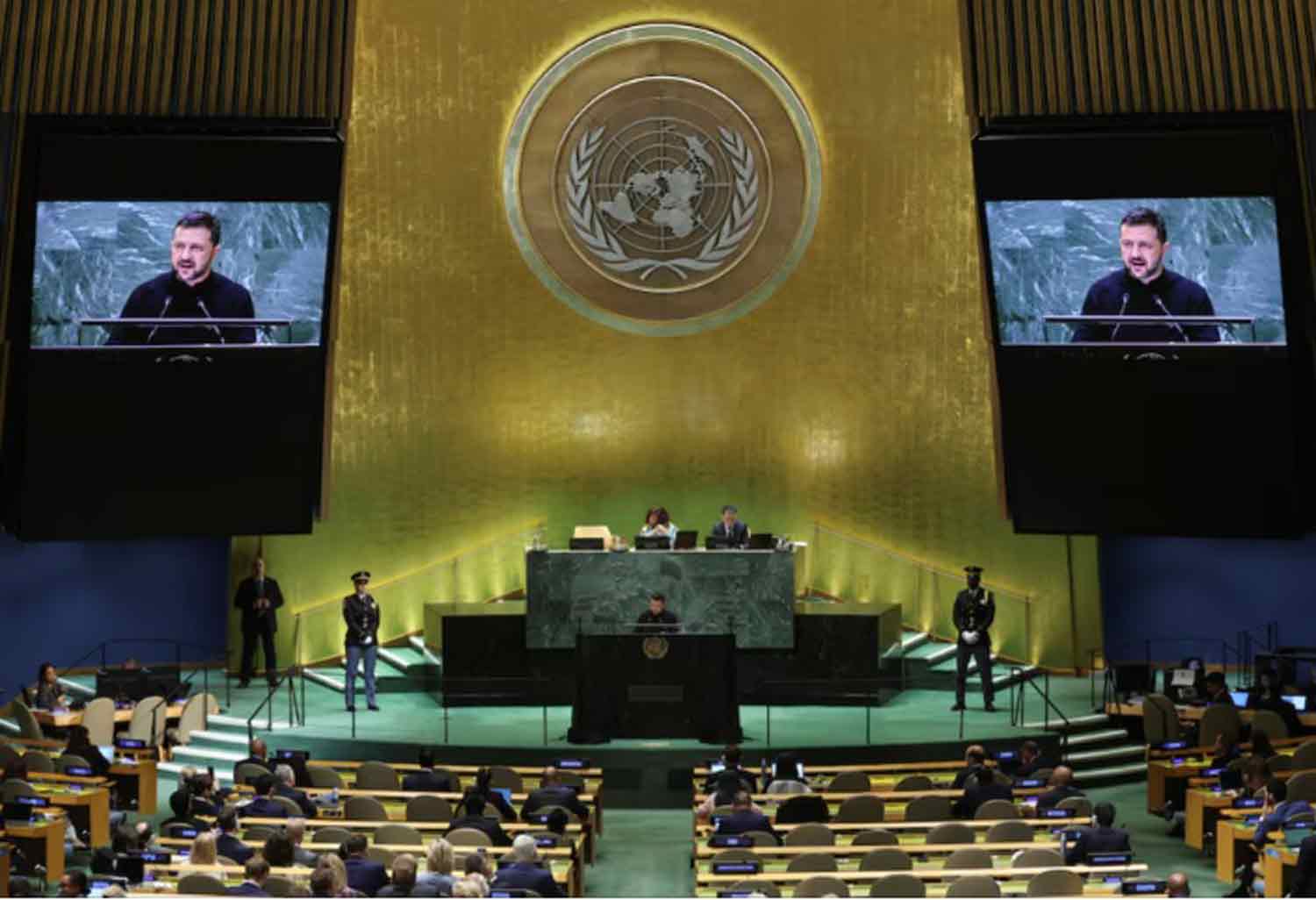
This military action follows the army’s loss of control over much of the capital at the beginning of the conflict and precedes an address by General Abdel Fattah al-Burhan, the army’s commander, at the United Nations General Assembly in New York later that day.

Witnesses reported intense bombardments and skirmishes as army units attempted to cross bridges over the Nile that link the three cities comprising the greater capital: Khartoum, Omdurman, and Bahri.

While the army managed to regain some territory in Omdurman earlier this year, it primarily relies on artillery and air support and has struggled to dislodge the more effective RSF ground forces entrenched in various areas of the capital.

In recent months, the RSF has continued to make territorial gains in other regions of Sudan, exacerbating a humanitarian crisis that has displaced over 10 million people and led to severe hunger and famine in parts of the country.

Diplomatic initiatives by the United States and other nations have stalled, particularly after the army declined to participate in discussions held in Switzerland last month.

Lebanon’s Prime Minister hopes for an early ceasefire

0
Smoke billows over southern Lebanon following Israeli strikes.

Lebanese Prime Minister Najib Mikati has conveyed optimism regarding the possibility of achieving a ceasefire to halt the ongoing conflict between Israel and Hezbollah, which is backed by Iran. This situation has significantly impacted Lebanon and heightened concerns about a potential ground invasion.

The United States, France, and several allied nations have advocated for an immediate 21-day ceasefire along the Israel-Lebanon border, while also supporting a ceasefire in Gaza, following extensive discussions at the United Nations on Wednesday.

Mikati has welcomed this call for a truce but emphasized that the success of such an agreement hinges on Israel’s commitment to upholding international resolutions, especially as it continues to position troops near the Lebanese border. When asked about the likelihood of securing a ceasefire in the near future, Mikati responded to Reuters, “Hopefully, yes.”

Mikati’s caretaker government includes ministers affiliated with Hezbollah, which is widely regarded as the most influential political entity in the country.

The proposed ceasefire would pertain to the “Blue Line” that serves as the boundary between Lebanon and Israel, facilitating negotiations for a possible diplomatic resolution to the ongoing conflict, as stated by a senior official from the Biden administration.

On Thursday, UN Special Coordinator for Lebanon, Jeanine Hennis-Plasschaert, expressed her support for an immediate 21-day ceasefire to create an environment conducive to diplomatic efforts.

Israel has prioritized the security of its northern border and the safe return of approximately 70,000 residents who have been displaced due to frequent hostilities since the outbreak of war in October between Israel and Hamas in Gaza, located on Israel’s southern border.

On Wednesday, Israel expanded its airstrikes in Lebanon, resulting in at least 72 fatalities, according to a compilation of reports from the Lebanese health ministry by Reuters. The ministry also reported that at least 223 individuals sustained injuries.

Israel’s military leader indicated that a ground offensive could be on the horizon, heightening concerns that the ongoing conflict might escalate into a broader war in the Middle East. In recent months, U.S. officials have been in discussions with representatives from both Israel and Lebanon to mitigate tensions, according to a senior official from the Biden administration.

Before a U.N. Security Council meeting on Wednesday, Israel’s U.N. Ambassador Danny Danon expressed that Israel would support a ceasefire and favored a diplomatic resolution. He also informed the Security Council that Iran is at the center of the violence in the region, asserting that achieving peace necessitates addressing this threat.

Global leaders have expressed alarm over the rapidly escalating conflict, which coincides with Israel’s military actions in Gaza against Hamas militants, who are also supported by Iran. The death toll in Lebanon has surged, prompting thousands to evacuate their homes.

This week, Israeli airstrikes have targeted Hezbollah leaders and struck numerous locations deep within Lebanon, displacing hundreds of thousands from the border area, while Hezbollah has retaliated with rocket fire into Israel.

Hezbollah has faced significant setbacks recently, with the assassination of several senior commanders and the destruction of thousands of communication devices used by its members, resulting in casualties. Since Monday, Lebanese hospitals have been overwhelmed with the injured, following Israeli bombings that claimed over 550 lives, marking the deadliest day in Lebanon since the end of its civil war in 1990.

North Korea may be able to produce a double-digit number of nuclear weapons, MP says

0
North Korean leader Kim Jong Un tours facilities during a visit to the Nuclear Weapons Institute and the production base of weapon grade nuclear materials.
North Korean leader Kim Jong Un tours facilities during a visit to the Nuclear Weapons Institute and the production base of weapon-grade nuclear materials at an undisclosed location in North Korea.

A South Korean lawmaker stated on Thursday that North Korea possesses sufficient plutonium and uranium to manufacture at least a double-digit quantity of nuclear weapons, according to information from the country’s intelligence agency.

The agency also anticipates the possibility of North Korea conducting a seventh nuclear test following the U.S. presidential election on November 5, as noted by Lee Seong-kweun, a member of the parliamentary intelligence committee.

In a report released in July, the Federation of American Scientists estimated that Pyongyang might have generated enough fissile material to create up to 90 nuclear warheads, although it is believed that the actual number assembled is closer to 50.

Lee pointed out that it is uncommon for North Korean state media to cover leader Kim Jong Un’s visit to a uranium enrichment site, indicating that the report issued earlier this month was likely intended to convey a message to Washington in advance of the U.S. presidential election.

Lee, addressing reporters following a briefing from South Korea’s National Intelligence Service, indicated that the report regarding the visit might serve domestic interests. “Given the dire economic circumstances, this could be seen as an effort to boost confidence among the populace,” Lee remarked.

North Korea maintains that its nuclear weapons and ballistic missile capabilities are essential for countering perceived threats from the United States and its allies. The regime frequently emphasizes these weapons as symbols of national pride and evidence of the country’s strength.

The North Korean Supreme People’s Assembly (SPA), which functions as the state’s nominal parliament, is scheduled to hold a new session on October 7 in Pyongyang. During this session, amendments to the constitution may be proposed, along with potential measures to redefine boundaries with South Korea, according to Lee.

The previous SPA meeting took place in January, during which leader Kim advocated for a constitutional change that would designate South Korea as the “primary foe.”


Naval vessels from New Zealand and Australia traversed the Taiwan Strait on Wednesday

0
New Zealand's Defence Minister Judith Collins

Naval ships from New Zealand and Australia transited the Taiwan Strait on Wednesday, as confirmed by New Zealand Defence Minister Judith Collins in a statement released on Thursday.

The vessels navigated the disputed strait starting at 2 PM local time on Wednesday, an action Collins characterized as a standard operation in line with international law. “The New Zealand Defence Force undertakes all operations in compliance with international law and established best practices,” she stated.

This marked the first occasion since 2017 that a New Zealand naval vessel has traversed the strait. Additionally, a Japanese newspaper reported that the two ships were accompanied by the Japanese Self Defense Force destroyer Sazanami, although Collins’ statement only referenced the New Zealand and Australian vessels.

There was no immediate response from Australia’s Department of Defence or the Defence Minister’s office.

Taiwan expressed concerns about China’s increased military operations

0

Taiwan‘s defense ministry expressed concerns on Thursday regarding the instability of policies from China, coinciding with an increase in military operations and live-fire exercises in the vicinity of the island. The ministry indicated that Beijing poses a significant challenge to its neighboring countries.

Taiwan, which operates under a democratic government and is regarded by Beijing as part of its territory, has reported a rise in Chinese military activities over the last five years. The Taiwanese government firmly disputes China’s claims of sovereignty.

On Thursday, the defense ministry noted the detection of extensive Chinese military maneuvers for the second consecutive day, involving 29 aircraft participating in a “joint combat readiness patrol” alongside Chinese naval vessels. The previous day, the ministry had alerted about 43 Chinese military aircraft operating in the region. Among these, 23 aircraft traversed south of Taiwan via the Bashi Channel, which separates Taiwan from the Philippines, and proceeded along the eastern coast of Taiwan, as indicated on a ministry map, although they did not breach territorial airspace.

The ministry highlighted a visit from September 18 to 20 by the head of China’s southern military command to the U.S. military in Hawaii, noting that concurrently, China conducted “multiple waves of live-fire attacks” during exercises in the Yellow and Bohai seas, close to the Korean peninsula and Japan.

It emphasized that China is striving to enhance its military capabilities while simultaneously fostering a façade of dialogue. This approach “underscores the hegemonic tendencies of an authoritarian regime that lacks consistent policy, presenting a significant challenge to neighboring nations,” the ministry stated.

China’s defense ministry has not provided any comments regarding the recent activities around Taiwan and has not responded to a request for comment from Reuters. A security source familiar with the situation, who requested anonymity due to the sensitive nature of the issue, informed Reuters that Wednesday’s flights were part of China’s annual military drills.

The People’s Liberation Army was engaged in simulated military operations in the Taiwan Strait and the South China Sea, aimed at honing their capabilities to deny access and “prevent foreign assistance” in the event of a regional conflict, according to the source.

Additionally, the Chinese air force conducted exercises to establish “air superiority” over the waters near Taiwan’s southwestern coast and practiced aerial refueling operations in the Bashi Channel, the source reported.

China last conducted comprehensive military exercises around Taiwan in late May, shortly after the inauguration of the new president, Lai Ching-te, who is viewed unfavorably by Beijing, which labels him a “separatist.”

Lai maintains that the future of Taiwan should be determined solely by its people and has consistently proposed dialogue with Beijing, only to face rejection.

U.S. and allies are pushing for a 21-day ceasefire along Israel-Lebanon border

0
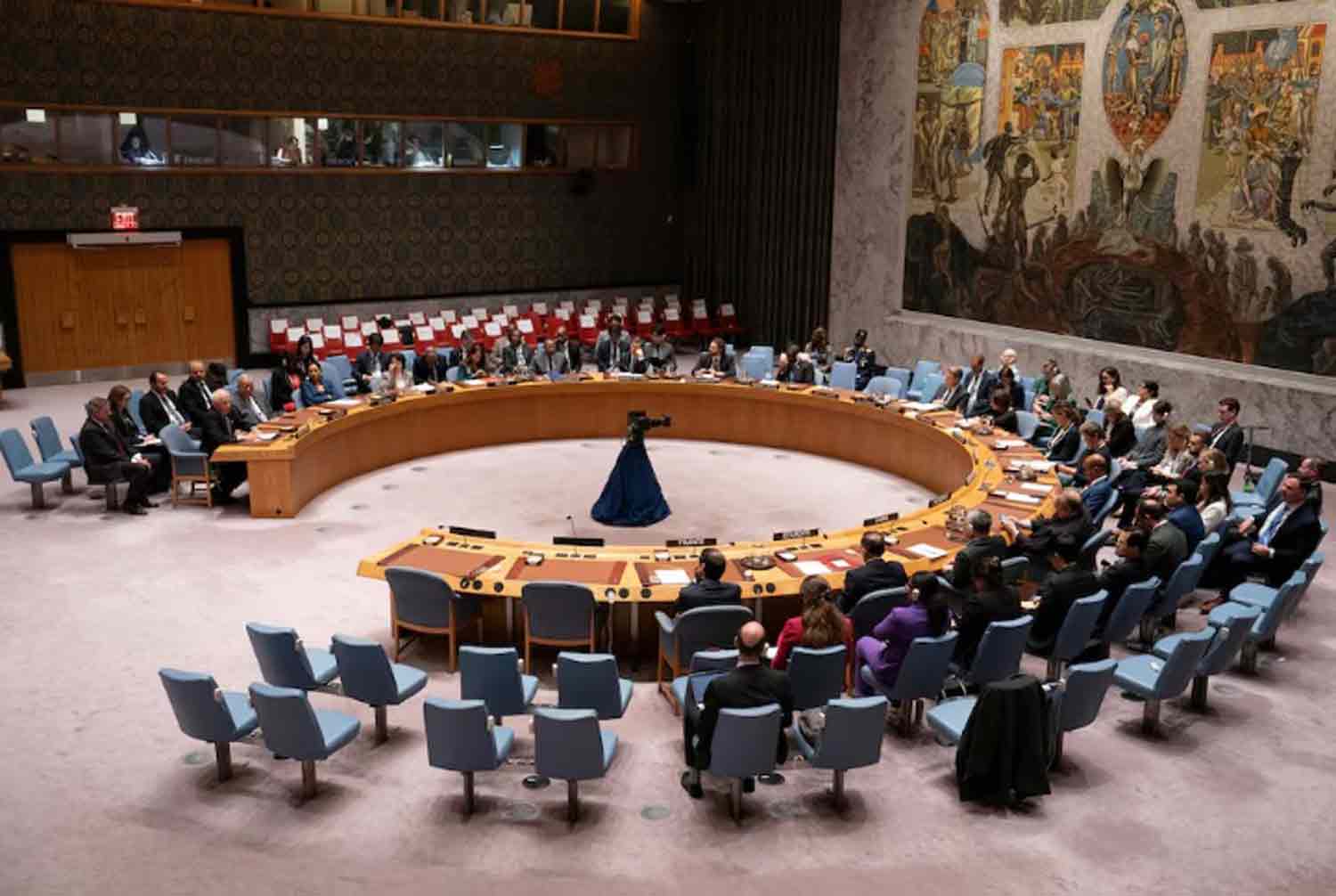
The United Nations Security Council meets on the escalation in fighting in Lebanon between Israel and Hezbollah during the United Nations General Assembly at U.N. headquarters in New York.

The United States, France, and several allied nations have urged for an immediate 21-day ceasefire along the IsraelLebanon border, while also advocating for a ceasefire in Gaza, following extensive discussions at the United Nations on Wednesday.

This ceasefire would pertain to the “Blue Line,” the boundary separating Lebanon and Israel, facilitating negotiations towards a possible diplomatic resolution of the ongoing conflict, as stated by a senior official from the Biden administration.

In a joint statement released by the White House, the countries emphasized, “We call on all parties, including the governments of Israel and Lebanon, to endorse the temporary ceasefire immediately.”

The allies who endorsed this statement include Australia, the United Arab Emirates, Saudi Arabia, and the European Union.

On the same day, Israel intensified its airstrikes in Lebanon, resulting in at least 72 fatalities, according to a compilation of reports from the Lebanese health ministry by Reuters. The ministry also reported that at least 223 individuals were injured.

Israel’s military leader indicated that a ground offensive could be on the horizon, heightening concerns that the ongoing conflict might escalate into a broader war in the Middle East. In recent months, U.S. officials have been in discussions with representatives from both Israel and Lebanon to mitigate tensions, according to a senior official from the White House.

“We have been engaged in these talks for quite some time,” the official noted, emphasizing that the goal is to transform these discussions into a more comprehensive agreement during the current 21-day ceasefire. The official also mentioned that President Biden has prioritized the potential for a ceasefire in nearly every dialogue with global leaders at this week’s United Nations General Assembly.

Following consultations with Israeli and Lebanese officials, the U.S. and its allies believe this is an opportune moment to advocate for a ceasefire, the official added. Israel’s U.N. Ambassador, Danny Danon, expressed to reporters prior to a U.N. Security Council meeting that Israel would support a ceasefire and favored a diplomatic resolution. He further stated that Iran is at the center of regional violence and that achieving peace necessitates addressing this threat.

Iran’s Foreign Minister, Abbas Araqchi, remarked to reporters before the council meeting that Iran stands by Hezbollah and would not remain passive if the situation in Lebanon deteriorated. Lebanese Prime Minister Najib Mikati expressed his support for the ceasefire, asserting that its success hinges on Israel’s commitment to uphold international resolutions. When asked if a ceasefire could be achieved soon, Mikati responded to Reuters, “Hopefully, yes.”

Global leaders have expressed alarm over the escalating conflict, which is occurring alongside Israel’s military actions in Gaza against Hamas militants, who are also supported by Iran. The death toll in Lebanon continues to rise, prompting thousands to evacuate their homes. Israeli Prime Minister Benjamin Netanyahu is expected to arrive in New York on Thursday and will address the U.N. General Assembly on Friday.

political challenges for Biden and Harris

The U.S. administration has been attempting for nearly a year to negotiate a ceasefire in Gaza, but these efforts have not yielded success. The ongoing conflict has posed significant political challenges for President Joe Biden and, by extension, Vice President Kamala Harris, particularly as escalating violence in Lebanon intensifies the pressure on the administration to pursue a diplomatic resolution.

On Wednesday, Israel intercepted a missile that the Iranian-backed Hezbollah claimed was targeting the Mossad intelligence agency’s headquarters near Tel Aviv, the largest city in Israel. Israeli officials clarified that the missile was actually headed toward civilian areas in Tel Aviv rather than the Mossad facility before it was intercepted.

General Herzi Halevi informed Israeli troops stationed at the Lebanon border, “You can hear the jets flying overhead; we have been conducting strikes throughout the day. This operation is intended to prepare for your potential entry and to further weaken Hezbollah.” A spokesperson from the Pentagon indicated that an Israeli ground invasion does not seem to be on the immediate horizon.

According to Lebanon’s foreign minister, as many as 500,000 individuals may have been displaced within the country. In Beirut, thousands of those displaced from southern Lebanon are currently taking refuge in schools and other facilities.

Israeli airstrikes focused on Hezbollah leaders

Israeli airstrikes this week have focused on Hezbollah leaders and struck numerous locations deep within Lebanon, prompting hundreds of thousands to flee the border area, while the group has launched multiple rocket attacks into Israel.

On Wednesday, a large crowd gathered in the suburbs of Beirut for the funeral of two senior Hezbollah commanders who were killed in Israeli strikes the previous day. Dressed in military fatigues, fighters carried the flag-draped coffins as a band played, while attendees chanted Hezbollah slogans and some mourned openly.

Israel reported that its air force was targeting southern Lebanon and the Bekaa Valley, a known Hezbollah stronghold further north, and announced the mobilization of two additional reserve brigades for operations along its northern border.

In a video message that did not address ongoing diplomatic efforts for a ceasefire, Netanyahu stated that Hezbollah was facing unprecedented levels of attack.

Israel has prioritized the security of its northern border and is facilitating the return of approximately 70,000 residents who were displaced due to frequent exchanges of fire since the outbreak of war in October between Israel and Hamas in Gaza, located on Israel’s southern border.

Since Monday, Lebanese hospitals have been overwhelmed with casualties, following Israeli bombings that resulted in over 550 deaths, marking the deadliest day in Lebanon since the end of its civil war in 1990.

Ukraine is seeking Modi’s help to end the conflict, a US publication reports

0
Prime Minister of India Narendra Modi and President of Ukraine Volodymyr Zelenskyi seen during official meeting in Kiev.

Ukraine regards India and Prime Minister Narendra Modi as the most suitable candidates to facilitate a peace agreement with Moscow that Kiev would find acceptable, according to a senior official quoted by Politico.

Following Modi’s visits to both Russia and Ukraine to engage with their leaders about the ongoing conflict, Kiev has increasingly perceived New Delhi as a key intermediary in its interactions with the Kremlin, the report states, referencing the unnamed Ukrainian official.

This information emerges a day after President Zelensky and Prime Minister Modi convened during the UN ‘Summit of the Future,’ part of the annual General Assembly session in New York.

The two leaders have held multiple meetings in recent months, including a gathering in June at the G7 Summit in Italy and another in Kiev last month, shortly after Modi’s discussions with Russian President Vladimir Putin in Moscow.

The India-Russia summit in July attracted significant attention from the West and faced open criticism from Zelensky, who remarked that Modi’s visit to Moscow was detrimental to peace initiatives.

These comments were not well received in New Delhi, prompting the Indian government to summon the Ukrainian ambassador. Additionally, the Indian administration expressed discontent with Zelensky’s subsequent statements following his meeting with Modi in Kiev, as noted by former diplomats and foreign policy analysts.

Zelensky informed reporters that India could potentially serve as the venue for the next ‘peace summit’ if it endorses the communique from the initial event held in Switzerland in June. Although the Indian delegation participated, it declined to endorse the final document, citing the absence of Russia, which India deems essential for any credible effort to resolve the conflict.

In a briefing about Prime Minister Modi’s recent discussions with Zelensky, Indian Foreign Secretary Vikram Misri stated that the conversations were centered on conflict resolution. However, he emphasized that “we are not currently at a point where we can discuss the second peace summit in detail,” adding that “there is still much work to be done before that can happen.”

Later that day, Indian Foreign Minister S. Jaishankar clarified that while India does not possess a specific “peace plan” for the Ukraine situation, it maintains dialogue with both Moscow and Kiev, a practice that “not many countries or leaders” engage in. He underscored that “eventually, negotiations must take place, and they must involve both parties; it cannot be one-sided.”

In a separate address to the UN Security Council, Zelensky announced his invitation to India, along with China, Brazil, and other nations, to participate in the preparations for a second “peace summit.” He also asserted that the conflict “cannot be resolved through discussions” and that “peace can only be achieved by compelling Russia.” Moscow responded by labeling Zelensky’s comments as “delusional.”

Zelensky’s suggested ‘victory plan’—which is said to have the potential to resolve the conflict with Moscow by year-end—has not been fully revealed. Nevertheless, sources suggest that it encompasses several elements, including Western security assurances similar to NATO’s collective defense framework, as well as ongoing Ukrainian operations in Russia’s Kursk region as a strategy for territorial negotiations. In a previous interview with ABC News, Zelensky emphasized that the plan aims to fortify Ukraine rather than engage in negotiations with Russia.

U.S. has sanctioned organizations linked to transport of Iranian oil to Syria

0

The U.S. Department of the Treasury announced on Wednesday that it has imposed sanctions on over a dozen entities and vessels linked to the transportation of Iranian crude oil and liquid petroleum gas to Syria and East Asia, acting on behalf of Iran’s Revolutionary Guards and Hezbollah.

Among the sanctioned vessels are four ships tied to Syrian shipping magnate Abdul Jalil Mallah, who was previously sanctioned by the U.S. in 2021, as well as his brother, Luay al-Mallah, who was also designated under U.S. sanctions on the same day.

The Treasury Department stated that the Mallah brothers have “continued to utilize their shipping operations to facilitate Iran’s harmful activities and those of its affiliates.”

Bradley T. Smith, the acting under secretary of the Treasury for Terrorism and Financial Intelligence, emphasized in the statement that “Iran remains heavily dependent on the illicit sale of oil and liquid petroleum gas by the Revolutionary Guards and Lebanese Hezbollah to finance its terrorist proxies and destabilizing actions.”

Putin issues a nuclear threat to the West over Ukraine

0
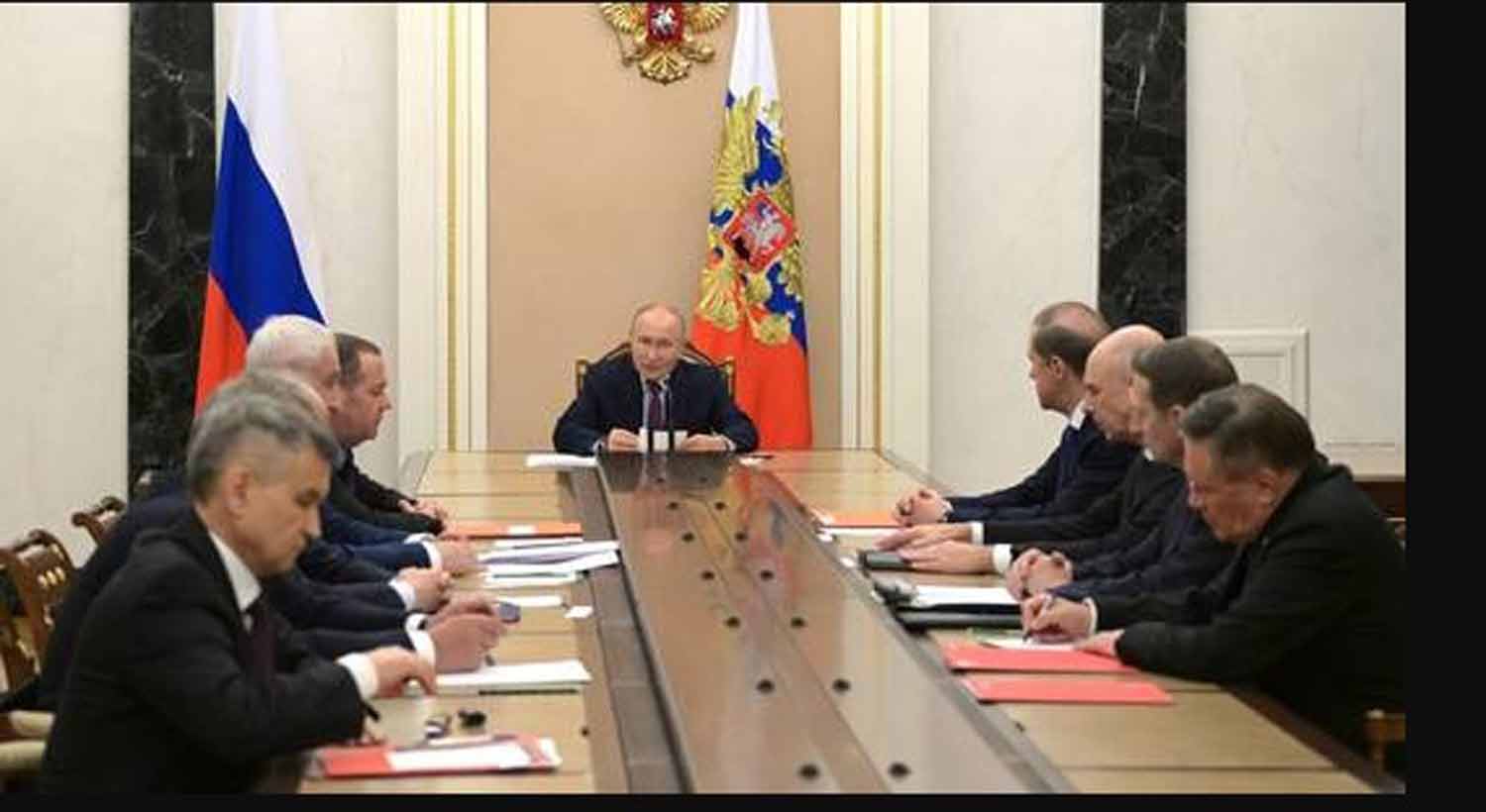
Russian President Vladimir Putin holds a permanent meeting of the Russian Security Council on nuclear deterrence.

President Vladimir Putin stated on Wednesday that Russia might resort to nuclear weapons if it faces an attack from any nation, asserting that a conventional assault on Russia backed by a nuclear power would be regarded as a collective attack.

During a meeting of Russia’s Security Council, which included senior officials, Putin mentioned that there have been suggestions to revise Russia’s nuclear doctrine and emphasized a significant proposed amendment.

“It is suggested that any aggression against Russia by a non-nuclear state, if supported or aided by a nuclear state, should be viewed as a joint attack on the Russian Federation,” Putin remarked.

He further clarified, “The criteria for Russia’s shift to nuclear weapon usage are explicitly defined,” noting that Moscow would contemplate such an action if it identified the initiation of a large-scale missile, aircraft, or drone assault against it.

Russia, according to Putin, has asserted its right to deploy nuclear weapons in the event of aggression directed at itself or Belarus, even if such aggression involves conventional arms.

He emphasized that these clarifications are meticulously measured and aligned with the contemporary military challenges confronting Russia.

Russia needs to revise its nuclear doctrine to explicitly outline the conditions under which it would initiate a nuclear strike, President Vladimir Putin stated during a national security council meeting on Wednesday. He proposed an expanded set of criteria, which would include “reliable information” indicating that a significant airstrike is being prepared against Russia.

Putin emphasized the necessity of broadening the list of threats and the nations or military alliances that would warrant a nuclear deterrent from Russia in the updated doctrine.

He asserted, “Any aggression against Russia by a non-nuclear state, with support from a nuclear power, should be regarded as a joint attack.”

Furthermore, Moscow would “consider” a nuclear response if it receives “reliable information” about a “massive” missile or airstrike launched by another country against Russia. The potential weapons involved in such an attack could range from ballistic and cruise missiles to strategic bombers and drones, he noted.

“We reserve the right to employ nuclear weapons in the event of aggression against Russia and Belarus,” the president stated, adding that this principle has already been coordinated with Minsk. He clarified that nuclear weapons could be utilized if an adversary poses a “critical threat to the sovereignty of either state through conventional means.”

Putin did not specify when the revisions to Russia’s nuclear doctrine would be implemented. Senior officials, including Deputy Foreign Minister Sergey Ryabkov and Kremlin spokesman Dmitry Peskov, have been discussing possible updates to the doctrine in recent months. In late August, Foreign Minister Sergey Lavrov mentioned that the document is “under review.”

Historically, the Russian leader has maintained a cautious stance regarding nuclear weapons. In June, he expressed hope that a nuclear confrontation between Moscow and the West would never occur.

Moscow “has no justification to even consider” the use of nuclear weapons, the president remarked during the St. Petersburg International Economic Forum. Later that month, he emphasized that Russia had no necessity to initiate a pre-emptive nuclear attack, asserting that “the adversary is assured of being annihilated in a retaliatory strike.” Nevertheless, he did not dismiss the possibility of adjustments to the doctrine at that time.

New US-led efforts to end hostilities in Lebanon and Gaza

0
Smoke billows over southern Lebanon following Israeli strikes.

The United States is leading a new diplomatic initiative aimed at resolving conflicts in both Gaza and Lebanon, treating the two situations as interconnected, according to six sources who spoke to Reuters. Ongoing discussions are taking place at the United Nations General Assembly in New York, as reported by two Lebanese officials, two Western diplomats, a source knowledgeable about Hezbollah’s perspective, and another source informed about the negotiations.

The White House National Security Council has not yet responded to a request for comment. Three Israeli officials indicated to Reuters that the U.S. and France are collaborating on ceasefire proposals, although no significant progress has been achieved thus far.

This initiative marks the first instance of linking the two fronts in a U.S. diplomatic effort, as noted by the sources. A senior Lebanese official, along with the source familiar with Hezbollah’s views and the source briefed on the discussions, suggested that the agreement could potentially facilitate the release of hostages taken by the Palestinian group Hamas during the attack on Israel on October 7 of last year, which ignited widespread hostilities in the region.

escalated military operations

Israel has recently escalated its military operations against Hezbollah in Lebanon, resulting in the deaths of several Hezbollah commanders during a strike on Friday.

Additionally, attacks on Monday reportedly claimed over 550 lives, including 50 children, according to Lebanese health authorities. This escalation has prompted diplomatic efforts aimed at de-escalating tensions on both fronts.

A senior Lebanese official, along with a source familiar with Hezbollah’s perspective, indicated to Reuters that Hezbollah is “open to any settlement that would encompass both Gaza and Lebanon.” Another Lebanese official emphasized that halting the conflicts would be “impossible” without a comprehensive agreement.

In a development reflecting the urgency of the situation, Lebanon’s caretaker prime minister, Najib Mikati, announced late Monday that he would travel to New York for discussions on the recent events, a trip he had not initially planned.

US withdraws Georgian PM’s invitation to Biden’s UN reception

0
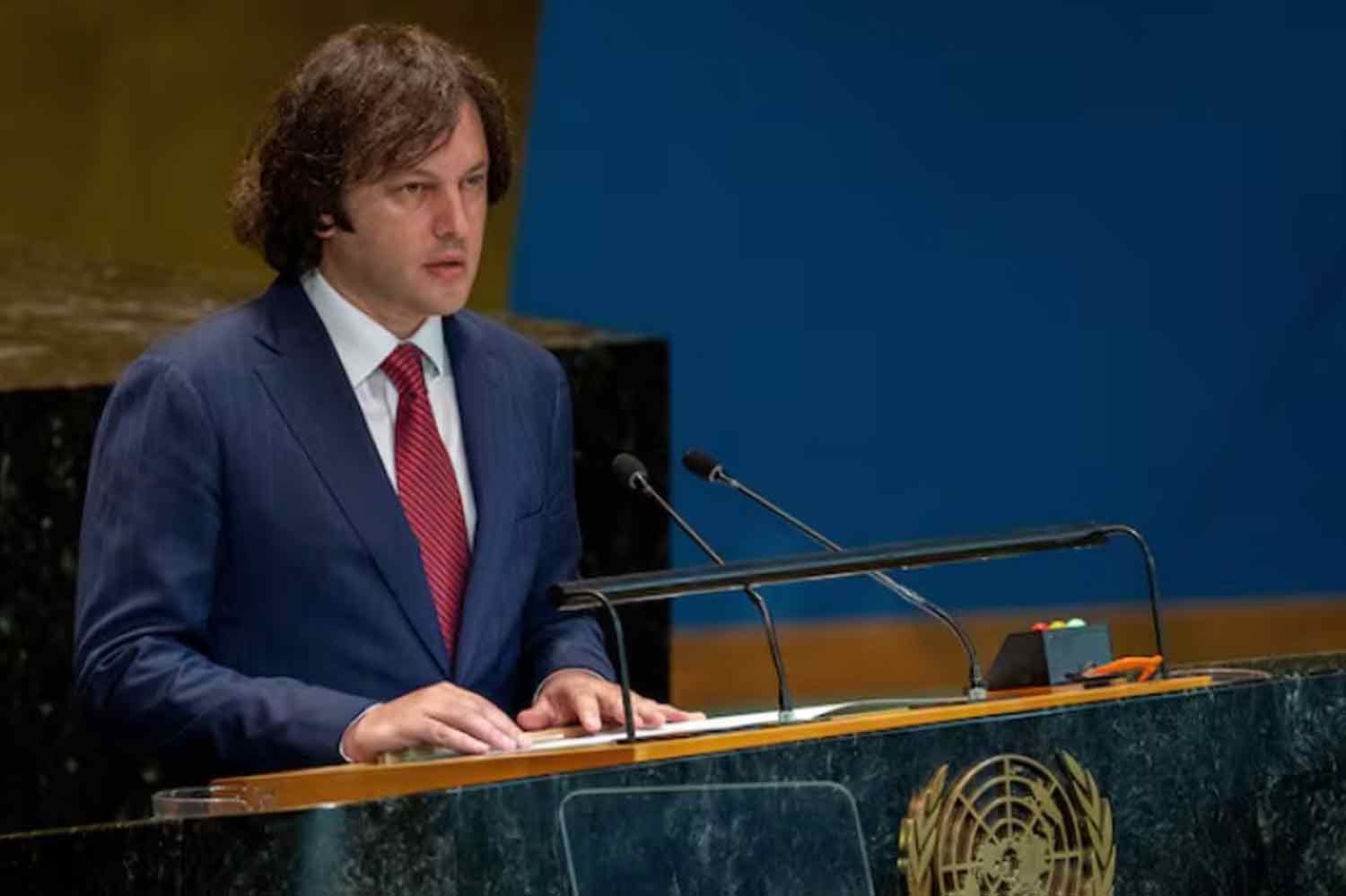
Prime Minister of Georgia Irakli Kobakhidze addresses the "Summit of the Future" in the General Assembly hall at United Nations headquarters in New York City.

The United States has rescinded an invitation extended to Georgia’s prime minister for a reception with world leaders hosted by President Joe Biden during this week’s U.N. General Assembly, according to a U.S. official. This decision marks a significant downturn in a previously strong relationship.

The official informed Reuters that the invitation to Prime Minister Irakli Kobakhidze has been withdrawn, and all meetings with the Georgian delegation have been canceled. This action is reportedly linked to Georgia’s enactment of a “foreign agents” law earlier this year. Recent discussions with the Georgian government led Washington to believe that Tbilisi is deliberately undermining its prospects for joining the European Union and NATO, the official noted.

Georgia’s Inter Press News reported that the U.S. embassy in Tbilisi indicated the invitation was revoked due to what it described as the Georgian government’s “anti-democratic actions, disinformation, and negative rhetoric towards the U.S. and the West.”

Parliamentary speaker Shalva Papuashvili described the retraction of the invitation as “frivolous.” Georgia, a candidate for EU membership and a significant recipient of U.S. aid since gaining independence from the Soviet Union in 1991, has recently experienced a deterioration in its relationships with Western nations due to allegations of authoritarianism and pro-Russian tendencies.

The ruling party, Georgian Dream, which is perceived to be under the influence of billionaire former Prime Minister Bidzina Ivanishvili, enacted the “foreign agents” law despite widespread criticism from Western countries, which viewed it as a reflection of Russian laws aimed at suppressing dissent.

This legislation mandates that organizations receiving over 20% of their funding from foreign sources register as foreign influence agents, subjecting them to strict disclosure requirements and substantial penalties for non-compliance.

As Georgian Dream aims for a fourth consecutive term in the upcoming parliamentary elections in October, Ivanishvili has hinted that, if victorious, the party may seek to prohibit the pro-Western opposition group, the United National Movement.

Recent opinion polls indicate that Georgian Dream continues to be the leading political party; however, it has experienced a decline in support since 2020, when it secured nearly 50% of the vote and a narrow majority in parliament.

In a Facebook post, senior MP Mamuka Mdinaradze from Georgian Dream accused President Biden of attempting to extend an electoral “lifeline” to the opposition in Georgia. Additionally, the relationship between the U.S. and Georgia has soured, as evidenced by the recent imposition of sanctions by the U.S. on two Georgian police commanders linked to the violent suppression of protest leaders opposing the foreign agent law.

Furthermore, the European Union, which has previously stated that Georgia’s application process is effectively stalled, warned last week that it might revoke its visa-free travel arrangement for Georgians if the upcoming October elections are not conducted in a free, fair, and peaceful manner.

Zelenskiy dismissed initiatives by China and Brazil aimed at resolving Ukraine conflict

0

Ukrainian President Volodymyr Zelenskiy on Wednesday dismissed the initiatives put forth by China and Brazil aimed at resolving the conflict in Ukraine, questioning their motives for proposing alternatives to his established peace plan. He cautioned, “You will not enhance your influence at the expense of Ukraine.”

Russia’s invasion of Ukraine began in February 2022. Nine months later, Zelenskiy introduced a 10-point peace initiative designed to achieve a fair resolution to the conflict, grounded in the principles of the U.N. Charter and international law. This proposal was rejected by Moscow.

“The peace formula has been in place for two years, and perhaps some are seeking a Nobel Prize for their political legacy through a mere frozen truce rather than genuine peace. However, the only rewards Putin will offer in return are increased suffering and calamities,” Zelenskiy stated during his address to the United Nations General Assembly, alluding to Russian President Vladimir Putin.

Zelenskiy emphasized that presenting “alternatives, half-hearted settlement proposals, or so-called sets of principles” would merely provide Putin with the political leeway to prolong the conflict.

China has been actively seeking the support of developing countries to adopt the six-point peace initiative it proposed in collaboration with Brazil in May. This initiative suggests convening an international peace conference “at a mutually agreed time recognized by both Russia and Ukraine, ensuring equal participation from all parties and a fair examination of all peace proposals.”

During his address to the General Assembly on Tuesday, Brazilian President Luiz Inacio Lula da Silva expressed his support for this plan.

Ukrainian President Zelenskiy responded to this initiative at the 193-member assembly, stating, “Any parallel or alternative efforts to pursue peace are essentially attempts to create a temporary pause rather than a resolution to the conflict.” He further remarked, “When the Chinese-Brazilian partnership seeks to amplify its message alongside voices from Europe or Africa, promoting an alternative to a comprehensive and just peace, it raises questions about their true intentions. It is crucial for everyone to recognize that no one should seek to enhance their influence at the expense of Ukraine.”

The President of Ukraine intends to present a “victory plan” to U.S. President Joe Biden during their meeting at the White House on Thursday.

Biden: While an all-out war in the Middle East is a possibility, it is not a certainty

0
President Joe Biden speaks during the United Nations General Assembly

U.S. President Joe Biden stated on Wednesday that a full-scale war in the Middle East could occur, but he also emphasized the potential for a resolution to the conflicts involving Israel, Gaza, and Hezbollah.

“While an all-out war is a possibility, I believe there remains an opportunity for a settlement that could significantly transform the entire region,” Biden remarked during his appearance on ABC’s “The View.”

Despite the killing of senior commanders, Hezbollah cannot be forced to kneel, Khamenei says

0

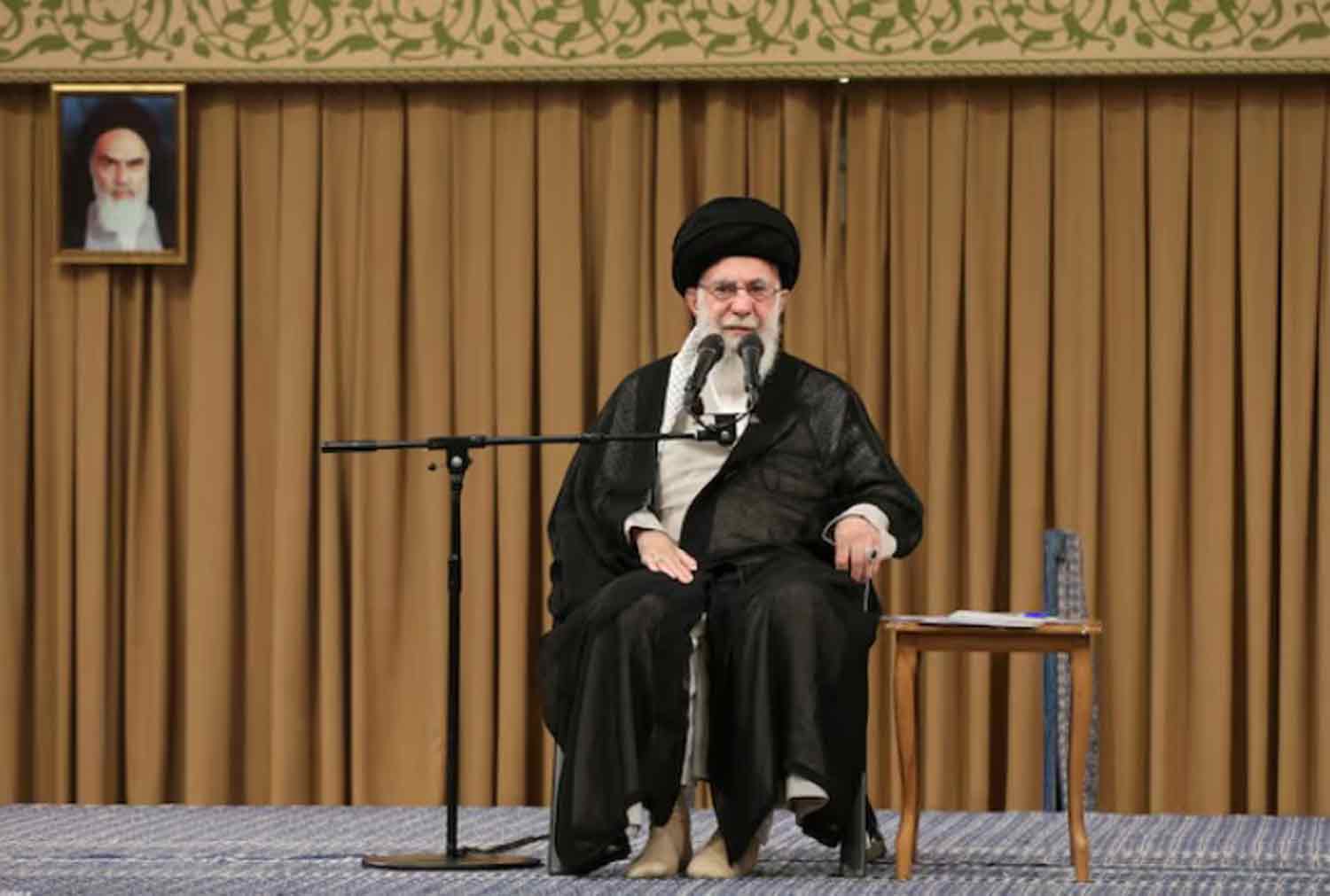
Iran’s Supreme Leader Ayatollah Ali Khamenei stated on Wednesday that the assassination of Hezbollah commanders will not incapacitate the group, following Israel’s targeted strikes against high-ranking members of the Iran-supported organization during a series of intense air raids across Lebanon.

Khamenei emphasized that Hezbollah’s organizational capabilities and manpower are robust enough to withstand the loss of a senior leader, despite it being a significant setback.

According to Lebanon‘s health minister, Israel‘s recent military campaign against Hezbollah has resulted in 569 fatalities since Monday. This marks the most lethal assault on Lebanon in nearly twenty years, occurring after almost a year of conflict between Israel and the militant group Hamas in Gaza.

Khamenei asserted that the “Palestinian and Lebanese resistance will ultimately prevail,” accusing Israel of targeting civilians due to its inability to overcome its adversaries.

Iran has been a supporter of Hezbollah since the group’s formation in Lebanon in 1982. Khamenei has accused Washington of contributing to the rising tensions in Lebanon, which have intensified following recent attacks that damaged pagers and handheld radios provided by Hezbollah.

He contended that despite U.S. claims of ignorance regarding Israeli plans, “the U.S. is both aware and involved,” further stating that President Joe Biden’s administration requires a success for the Zionist regime ahead of the upcoming presidential election in November.

Israeli airstrikes targeted Lebanon again as Hezbollah directs its efforts towards Tel Aviv

0

Israel expanded its airstrikes in Lebanon on Wednesday and intercepted a missile that Hezbollah claimed to have launched at the Mossad intelligence agency near Tel Aviv, escalating tensions between the two adversaries.

Hezbollah, which is backed by Iran, asserted that it aimed at the Mossad headquarters with what it referred to as a ballistic missile, marking the first significant threat to Tel Aviv in nearly a year of ongoing conflict.

Meanwhile, global leaders voiced their apprehension regarding the intensifying situation, which is occurring alongside Israel’s military actions in Gaza against Hamas, as the death toll in Lebanon continues to rise and thousands are displaced from their homes.

U.S. Secretary of State Antony Blinken stated that the United States and its allies are diligently working to prevent a full-scale war between Israel and Hezbollah. “The risk of escalation in the region is severe. The most effective solution is diplomacy, and our collaborative efforts are crucial to averting further escalation,” Blinken remarked during a meeting with officials and ministers from Gulf Arab states in New York.

Israeli airstrikes this week have focused on Hezbollah leaders and struck numerous locations deep within Lebanon, while Hezbollah has responded with extensive rocket fire into Israel.

On Wednesday morning, Hezbollah launched a strike that marked the first instance since the conflict erupted last October where one of its missiles was detected over Tel Aviv, Israel’s commercial center, raising concerns about a potential escalation in Israeli military responses.

Major General Ori Gordin, head of Israel’s northern command, informed troops on Tuesday that the country had entered a new phase in its military operations and that they should be ready for action, although it remains uncertain whether this indicated a possible ground invasion of southern Lebanon.

The Israeli military announced on Wednesday that it would be mobilizing two additional reserve brigades to the northern border to support operational efforts.

“This will facilitate ongoing combat against the Hezbollah terrorist organization, ensure the defense of the State of Israel, and create conditions for the residents of northern Israel to safely return to their homes,” the statement read.

Deadly day

Hundreds of thousands of Lebanese have been displaced from their homes, and hospitals are overwhelmed with casualties following a significant escalation in bombing on Monday, which resulted in over 550 fatalities, marking the deadliest day in Lebanon since the conclusion of the civil war from 1975 to 1990.

The violence continued unabated on Wednesday, with Israel announcing that its air force was conducting extensive operations in southern Lebanon and the Bekaa Valley, a region known to be a stronghold of Hezbollah.

In response, Hezbollah issued a statement claiming it had launched a ballistic missile aimed at the Mossad headquarters, asserting it was in solidarity with the Palestinian people in the Gaza Strip and in defense of Lebanon and its citizens.

Reuters has not been able to independently verify the specifics of the missile used. An Israeli spokesperson, Nadav Shoshani, stated that he could not confirm the intended target of Hezbollah’s missile launch from a Lebanese village.

A substantial missile was directed towards Tel Aviv, specifically targeting civilian areas, although the Mossad headquarters is not located in that vicinity, he stated. Israeli officials confirmed that the missile aimed at Tel Aviv was intercepted by a David’s Sling missile, which is designed to neutralize tactical ballistic missiles at low altitudes.

John Kirby, the White House national security spokesperson, expressed that the United States is profoundly concerned about the reports of a rocket attack targeting Mossad, yet remains optimistic that a diplomatic resolution can be achieved to mitigate the violence.

Hezbollah has accused Mossad of being responsible for the assassinations of its leaders and has also alleged that the agency executed an operation last week involving booby-trapped devices that resulted in the deaths of 39 individuals and injuries to nearly 3,000 others. Israel has not confirmed or denied its involvement in these incidents.

According to the Lebanese health minister, at least 51 people lost their lives and over 223 were injured due to Israeli airstrikes across five different locations in Lebanon on Wednesday.

attacks widened

Israel has broadened its attack zones since Tuesday night, targeting the beach resort town of Jiyyeh, located just south of Beirut, as well as Maaysrah for the first time. Additional strikes occurred in Bint Jbeil, Tebnin, and Ain Qana in the southern region, along with the village of Joun in the Chouf district near Sidon, and Maaysrah in northern Keserwan.

According to Lebanon’s foreign minister, up to half a million individuals may have been displaced. In Beirut, thousands of those fleeing southern Lebanon are taking refuge in schools and various other structures.

On Wednesday morning, the Lebanese Army evacuated over 60 residents from the Christian town of Alma Chaab, situated along the Israeli border, following overnight strikes. “At least two houses were completely destroyed, but fortunately they were unoccupied, and there were no fatalities,” reported resident Milad Eid.

Israeli officials indicated that the Galilee region in northern Israel experienced significant Hezbollah rocket fire on Wednesday morning. In Safed, an assisted living facility was struck, but authorities confirmed that there were no injuries.

White House express concern regarding a report about Russia’s covert drone project in China

0

The United States has expressed significant concern regarding a report indicating that Russia is engaged in a covert drone warfare initiative in China, which seems to involve a Chinese company supplying lethal support to a Russian firm that is under U.S. sanctions, as stated by a White House representative on Wednesday.

The U.S. has not found any evidence suggesting that the People’s Republic of China (PRC) was aware of these dealings or that there was any governmental participation in supplying lethal aid to Russia, according to a spokesperson from the National Security Council (NSC).

“Nonetheless, the PRC government bears the responsibility to ensure that its companies do not provide lethal assistance,” the spokesperson emphasized.

According to two sources from a European intelligence agency and documents reviewed by Reuters, Russia has initiated a weapons program in China aimed at developing and manufacturing long-range attack drones for deployment in the conflict in Ukraine.

“The transactions highlight that the PRC government’s efforts are evidently falling short,” the NSC spokesperson remarked.

The United States is ready to take swift action against the Chinese companies mentioned in the Reuters report and will investigate which banks facilitated transactions with the sanctioned Russian entity, the spokesperson added.

Washington will also collaborate with its European allies to determine the next steps.