Israel reportedly operated a covert network of military and intelligence positions across the Middle East during its conflict with Iran, including a secret deployment of elite personnel in Azerbaijan near Iran’s northern border, according to a new report citing multiple sources familiar with the matter.
The alleged deployment, first reported by CNN, offers a rare glimpse into how Israel may have dramatically expanded its operational reach during the war with Iran by establishing forward positions stretching across Iran’s northern, western, and southern periphery.
If accurate, the revelations suggest Israel constructed an unprecedented regional military architecture involving intelligence gathering, drone operations, emergency rescue planning, and logistical support aimed at sustaining repeated long-range operations against Iranian targets.
Israel’s Alleged Secret Presence in Azerbaijan
According to the report, Israeli military and intelligence units reportedly operated from several covert locations in southern Azerbaijan close to Iran’s northern border, at some points just around 60 miles from the Iranian city of Tabriz — a city struck during the conflict.
Sources cited in the report claimed Israel deployed elite military personnel, including special operations forces, Mossad officers, and heliborne rescue teams.
Their missions reportedly included intelligence gathering, drone operations, aerial rescue contingencies for downed Israeli pilots, and surveillance of military activity inside northern Iran.
From a military perspective, Azerbaijan’s geography provides a uniquely valuable position.
Its border proximity allows deep observation into northwestern Iran while offering significantly shorter operational distances for intelligence collection and emergency military support.
For Israel, such positioning would represent an important strategic advantage in any prolonged confrontation with Tehran.
Azerbaijan Denies the Claims
Azerbaijan has firmly rejected suggestions that its territory was used for operations against Iran.
According to CNN, a spokesperson for the Azerbaijani embassy in Washington dismissed the allegations as “unfounded claims” and denied any use of Azerbaijani territory for military operations targeting third countries.
The denial highlights the political sensitivity surrounding Baku’s relations with both Israel and Iran.
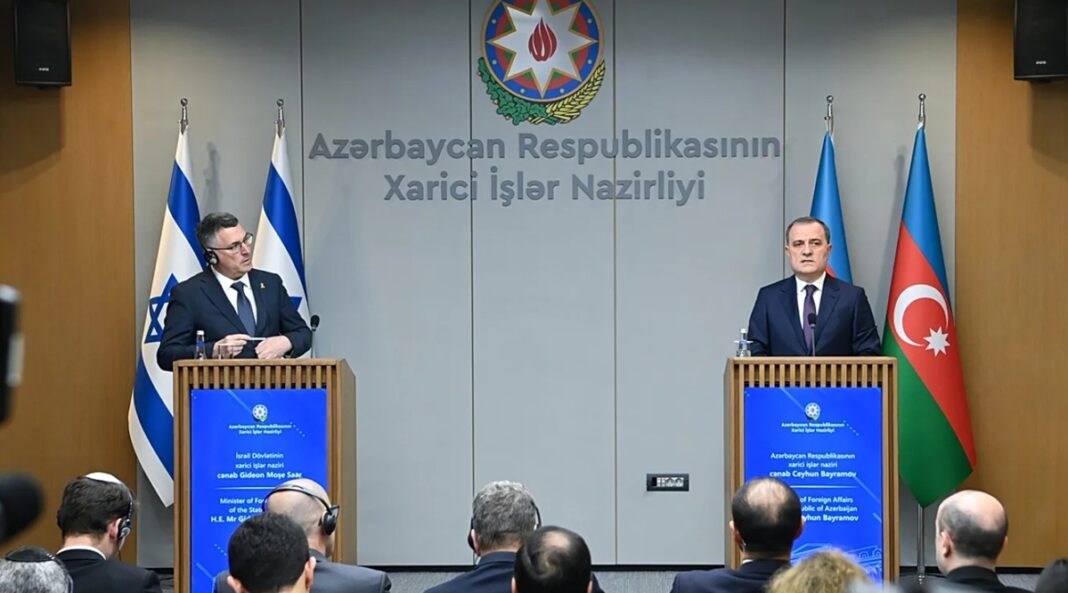
Azerbaijan maintains close security, energy, and defence ties with Israel while simultaneously sharing a long and strategically sensitive border with Iran.
Any confirmed military cooperation targeting Iran would likely carry significant regional diplomatic consequences.
Beyond Azerbaijan: Israel’s Wider Regional Network
The alleged Azerbaijan operation appears to have formed only one part of a broader regional military footprint.
According to the report, Israel also maintained covert positions in Iraq, the United Arab Emirates, and Somaliland during parts of the conflict.
In Iraq, Israeli facilities reportedly provided logistical support and emergency rescue capabilities.
Meanwhile, reports suggest Israel quietly deployed an Iron Dome air-defence battery to the UAE, alongside military personnel to operate the system during heightened tensions with Iran.
Somaliland — the self-declared republic in the Horn of Africa — reportedly offered Israel an additional long-range operational position that could potentially support aircraft movements during extended missions toward Iran.
Together, these locations would have effectively surrounded Iran from multiple directions, significantly expanding Israel’s intelligence visibility and military flexibility.
Why Azerbaijan Matters Strategically to Israel
Israel and Azerbaijan have maintained quietly expanding ties for years.
The relationship extends far beyond diplomacy.
Azerbaijan supplies Israel with a significant portion of its energy imports, while Israel has become an important provider of advanced military technology and weapons systems to Baku.
Israeli military systems reportedly played a notable role during Azerbaijan’s conflicts in Nagorno-Karabakh, while Azerbaijan became the first foreign customer for Israel’s Iron Dome system in 2016.
For Israel, Azerbaijan also represents a valuable intelligence position near one of its most important strategic adversaries.
For Azerbaijan, closer relations with Israel provide access not only to advanced military capabilities but also to broader diplomatic leverage in Washington.
The Intelligence Dimension
One of the report’s more striking claims suggests Israel began preparing covert infrastructure near the Azerbaijan-Iran border weeks before the conflict escalated.
Sources cited by CNN alleged Israeli operatives installed surveillance and intelligence equipment designed to monitor Iranian military activity and provide early warning regarding missile launches.
If true, the operation would underscore Israel’s long-standing emphasis on pre-positioned intelligence networks as part of its broader regional deterrence strategy.
Rather than relying exclusively on satellite or remote surveillance, forward intelligence sites closer to adversary territory can provide more detailed situational awareness during fast-moving conflicts.
A New Model of Regional Warfare?
The reported deployments may reflect a broader shift in how regional wars are increasingly fought.
Modern conflicts increasingly depend on dispersed intelligence networks, forward operating sites, covert partnerships, and layered logistical support rather than traditional large-scale military deployments.
For Israel, maintaining operational flexibility against Iran — particularly across long distances — requires regional positioning that reduces flight times, improves intelligence collection, and strengthens emergency contingencies.
The alleged network stretching from Azerbaijan to the Gulf and the Horn of Africa suggests Israeli planners may already be preparing for sustained long-range confrontation scenarios involving Iran.
What This Means for the Region
If independently confirmed, the revelations would likely deepen Iranian security concerns regarding neighbouring states and intensify regional intelligence competition.
For Iran, the possibility that Israeli forces operated close to its borders raises uncomfortable questions regarding regional vulnerabilities and counterintelligence effectiveness.
For Azerbaijan, the report risks increasing scrutiny of its strategic balancing act between Israel, Iran, Russia, and Turkey.
And for the broader Middle East, the story highlights how increasingly interconnected regional security dynamics have become, where conflicts rarely remain confined to a single battlefield.
At present, many of the claims remain unverified independently and rely heavily on unnamed sources.
But if even partially accurate, the reported deployments suggest the Iran-Israel confrontation involved far more extensive regional military preparation than previously understood.