India has approved defence procurement proposals worth approximately ₹52,000 crore (around US$6.1 billion) as New Delhi continues efforts to modernize its armed forces amid evolving regional security challenges.
The approvals were granted by the Defence Acquisition Council (DAC), chaired by Defence Minister Rajnath Singh, under the Acceptance of Necessity (AoN) process, which serves as the government’s initial administrative approval before procurement moves to tendering and contract negotiations.
The package includes systems intended for the Indian Army, Navy and Air Force, covering anti-drone electronic warfare, anti-tank missiles, air defence, loitering munitions, naval unmanned aircraft and high-altitude surveillance platforms.
Although the approvals authorize procurement, they do not represent signed contracts, and timelines for acquisition will depend on subsequent competitive and administrative processes.
Army Procurement Focuses on Air Defence and Battlefield Protection
A large portion of the procurement package is allocated to the Indian Army.
Among the approved projects is the AKASH TARANG Anti-UAV Electronic Warfare System, intended to detect and disrupt hostile unmanned aerial vehicles. The move reflects the increasing importance militaries worldwide are placing on counter-drone capabilities following the widespread use of UAVs in conflicts in Ukraine and the Middle East.
The Army is also expected to procure additional Man Portable Anti-Tank Guided Missiles (MPATGM). Developed by India’s Defence Research and Development Organisation (DRDO), the weapon is designed to engage armored vehicles at relatively short ranges and forms part of India’s broader effort to expand indigenous missile production.
The council also cleared procurement of additional Medium Range Surface-to-Air Missile (MRSAM) systems and Very Short Range Air Defence Systems (V-SHORADS), both intended to strengthen layered air defence against aircraft, helicopters, cruise missiles and drones.
India has steadily expanded its integrated air defence network in recent years as regional militaries increase investments in long-range precision weapons and unmanned systems.
Active Protection Systems and Loitering Munitions
Another approval covers Active Protection Systems (APS) for armored vehicles.
APS technology is designed to detect and intercept incoming anti-tank missiles before impact, although such systems have varying effectiveness depending on battlefield conditions and the nature of the incoming threat.
The Defence Acquisition Council also approved a Jet-Based Kamikaze Drone System, reflecting a broader global shift toward loitering munitions.
These expendable drones combine reconnaissance and strike functions and have become increasingly prominent in recent conflicts because they can engage targets at lower cost than many conventional precision-guided weapons.
Their inclusion suggests Indian planners are incorporating lessons from contemporary conflicts where inexpensive unmanned systems have played a growing operational role.
Navy Expands Maritime Surveillance Capabilities
For the Indian Navy, the procurement package includes Multi Influence Ground Mines (MIGM) intended for maritime area denial operations.
The Navy will also acquire Naval Shipborne Unmanned Aerial Systems (NSUAS) equipped with surveillance sensors to improve maritime domain awareness.
India has been expanding investments in maritime surveillance as competition increases across the Indian Ocean Region, where shipping security and naval presence remain important strategic considerations.
Another approved project is a Land-Based Testing Facility (LBTF) for electric propulsion systems, which will support future testing of propulsion technologies for naval platforms.
High-Altitude Surveillance for the Air Force
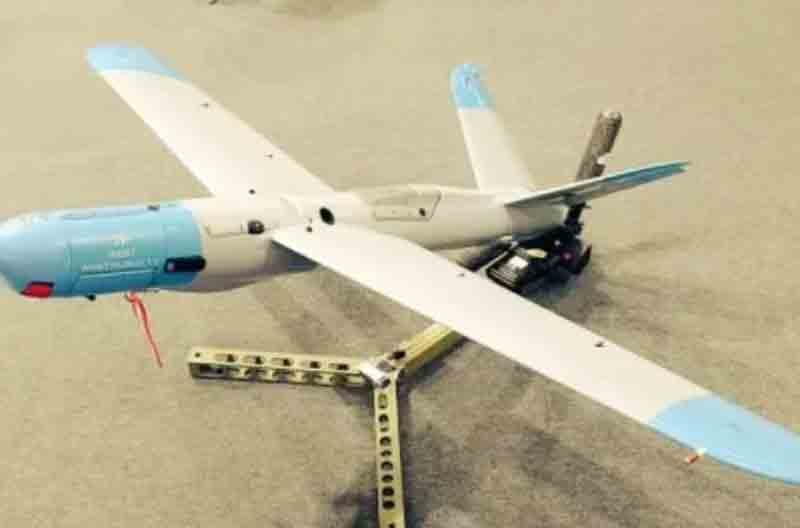
The Indian Air Force is set to receive a Fixed-Wing High Altitude Pseudo Satellite (FW-HAPS) capability.
Unlike conventional UAVs, HAPS platforms operate in the stratosphere for extended periods and are intended to provide persistent intelligence, surveillance and reconnaissance (ISR) coverage.
Such systems can also support telecommunications and remote sensing missions while complementing satellite and airborne surveillance assets.
Although several countries are investing in HAPS technology, operational deployment remains limited, making this an emerging capability rather than a mature operational system.
Part of India’s Broader Modernisation Programme
The approvals align with India’s continuing military modernization programme and the government’s emphasis on expanding domestic defence manufacturing under the Aatmanirbhar Bharat initiative.
Many of the systems approved by the Defence Acquisition Council are expected to involve Indian industry, although the extent of indigenous content will vary depending on each programme.
India has increasingly sought to reduce dependence on imported defence equipment while maintaining procurement partnerships with countries including France, Israel, Russia and the United States.
Regional Security Context
The procurement package comes amid a changing regional security environment marked by rapid military modernization across Asia.
China continues expanding its military capabilities, including advanced air defence systems, drones and fifth-generation aircraft, while Pakistan has also announced modernization efforts across several defence sectors.
At the same time, recent conflicts around the world have highlighted the growing importance of layered air defence, counter-drone technology, electronic warfare and precision strike systems.
India’s latest procurement approvals appear intended to address some of these evolving operational requirements, although the actual impact will depend on future contracts, production schedules, integration and operational deployment.
What the Approval Means
The US$6.1 billion package represents an early procurement milestone rather than immediate induction into service.
Several of the approved systems remain under development or will require additional testing and production before entering operational use.
If implemented according to plan, the acquisitions would expand India’s inventory of air defence, surveillance and battlefield support capabilities over the coming years. However, the programmes will likely face the same challenges common to major defence acquisitions, including production timelines, budget management, technology integration and long-term sustainment.