Iranian missile strikes that reportedly heavily damaged Naval Support Activity (NSA) Bahrain forced the U.S. Navy to relocate its primary regional logistics hub to Diego Garcia, fundamentally reshaping American naval sustainment operations during the 2026 Iran conflict. The shift preserved U.S. carrier strike operations but created a far longer and more vulnerable logistics network stretching more than 2,200 miles across the Indian Ocean.
The relocation highlights a key lesson from Operation Epic Fury: while nuclear-powered aircraft carriers can remain at sea for months, their combat effectiveness still depends on a resilient supply chain capable of delivering fuel, ammunition, spare parts, food, and other essential supplies.
Hegseth rejects reports of worsening conditions aboard the USS Abraham Lincoln, including a sailor going overboard and declining crew mental health, calling the reports “completely misrepresented.” pic.twitter.com/JicN9bkoBQ
— Molly Ploofkins (@Mollyploofkins) August 13, 2026
Bahrain Strike Forced a Major Logistics Shift
Before the conflict, Naval Support Activity Bahrain served as the logistical heart of the U.S. Fifth Fleet, providing:
- Command and control facilities
- Maintenance infrastructure
- Warehouses
- Communications hubs
- Fuel and ammunition storage
- Resupply piers
Its proximity to Gulf operating areas enabled rapid support for U.S. naval forces.
However, according to the report, Iranian strikes significantly damaged key infrastructure, disrupting the Navy’s ability to sustain carrier strike groups from Bahrain and forcing planners to relocate logistics operations to Diego Garcia.
Diego Garcia Became America’s Primary Naval Logistics Hub
Following the reported damage to Bahrain, the Pentagon shifted major logistics functions to Diego Garcia, the remote joint U.S.-U.K. military base located in the central Indian Ocean.
The island already possessed significant strategic advantages, including:
- Deep-water harbor
- Extensive fuel storage
- Maritime Prepositioning Ships
- A 12,000-foot bomber-capable runway
- Large ammunition depots
- Strategic airlift facilities
- Protected anchorage for naval vessels
The report states that Diego Garcia evolved from a supporting logistics facility into the principal sustainment hub for U.S. naval operations in the Middle East.
Longer Supply Routes Increased Operational Pressure
While Diego Garcia offered greater protection from short-range Iranian missile attacks, it dramatically increased the distance between logistics infrastructure and combat forces.
Instead of relatively short Gulf resupply missions, fleet oilers and supply ships were required to shuttle thousands of miles across the Indian Ocean before reaching deployed carrier strike groups.
According to the report, the longer routes:
- Increased fuel consumption
- Reduced resupply frequency
- Required additional escort resources
- Placed greater strain on Military Sealift Command vessels
- Expanded the area requiring maritime protection
The result was a more resilient but considerably less efficient logistics network.
USS Abraham Lincoln Reportedly Experienced Supply Challenges
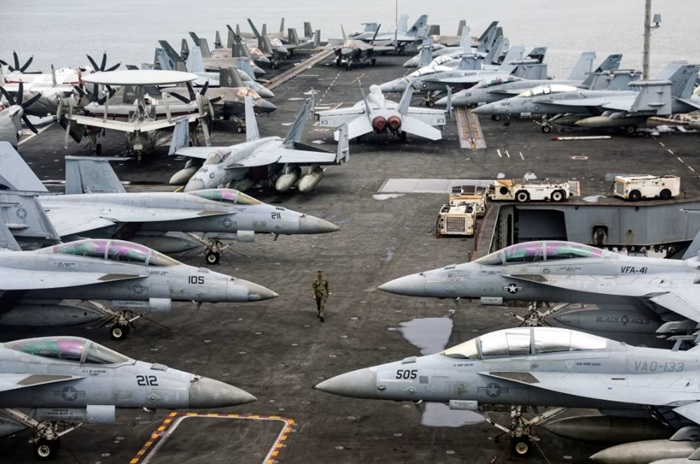
The report links the logistics disruption to reported shortages aboard the USS Abraham Lincoln (CVN-72).
By mid-August 2026, the Nimitz-class aircraft carrier had reportedly been deployed for approximately nine months, including more than 200 consecutive days without unrestricted liberty, placing significant strain on roughly 5,000 sailors and Marines.
Families and some lawmakers cited reports of:
- Limited fresh food
- Hygiene shortages
- Delayed mail
- Plumbing issues
- Laundry disruptions
- Crew fatigue
However, the report notes that official statements disputed aspects of these claims.
Acting Navy Secretary Hung Cao acknowledged temporary logistical disruptions but stated that no meals had been missed and emphasized that sailors continued completing their missions under difficult conditions.
Diego Garcia Also Became a Target
The relocation did not eliminate risk.
According to the report, Iran later launched two ballistic missiles toward Diego Garcia around March 20.
One missile reportedly landed in the Indian Ocean while another was intercepted before reaching the island.
Although neither missile struck the base, the attack demonstrated that Diego Garcia’s strategic sanctuary is becoming increasingly contested as Iran expands its long-range strike capabilities.
Diego Garcia’s Strategic Importance Continues to Grow
The report highlights Diego Garcia’s growing role as one of America’s most important overseas military installations.
Its infrastructure includes:
- Approximately 1.34 million barrels of fuel storage
- Multiple deep-water piers
- Roughly 20 protected anchorages
- Maritime Prepositioning Ships Squadron Two
- Strategic bomber facilities
- KC-135 tanker support
- C-17 strategic airlift operations
These capabilities allow the base to support simultaneous operations across the Middle East, Africa and the Indo-Pacific.
Logistics Became a Center of Gravity
Rather than directly targeting aircraft carriers, the report argues that Iran achieved greater operational effects by attacking logistics infrastructure.
Disrupting ports, fuel depots, warehouses and communications networks forced the United States to operate over much greater distances, increasing costs and reducing sustainment efficiency without sinking a single carrier.
The report concludes that modern naval warfare increasingly revolves around protecting logistics networks as much as protecting combat platforms themselves.
Broader Lessons for Future Conflicts
Military planners are expected to study the campaign closely as they prepare for potential future conflicts involving peer competitors.
The report suggests future operations—particularly in the Indo-Pacific—will require:
- More dispersed logistics hubs
- Greater numbers of auxiliary support ships
- Stronger missile defenses
- Expanded allied port access
- Improved repair capacity
- Greater supply-chain redundancy
As long-range precision weapons continue to improve, sustaining naval operations may increasingly depend on the survivability of logistics infrastructure rather than the endurance of individual warships.
Why It Matters
The reported relocation of U.S. naval logistics from Bahrain to Diego Garcia illustrates how attacks on support infrastructure can reshape an entire military campaign. While the move allowed the U.S. Navy to continue carrier operations and maritime security missions, it also exposed the growing importance—and vulnerability—of logistics networks in modern high-intensity warfare.