The United States and 18 partner nations have launched PANAMAX 2026, a large-scale multinational military exercise designed to rehearse the defense of the Panama Canal, one of the world’s most strategically important maritime chokepoints.
The 11-day exercise brings together U.S. Marines, the U.S. Coast Guard, Panamanian security forces, and military personnel from across the Americas to practice protecting the canal against potential security threats while ensuring uninterrupted maritime traffic.
Beyond tactical training, PANAMAX 2026 reflects growing concern over the vulnerability of critical infrastructure that underpins global trade and U.S. military mobility.
Regional security starts with strong partnerships.
During #PANAMAX26, defense and security forces from 19 partner nations are training together to strengthen interoperability and enhance the collective capability to safeguard the Panama Canal and counter regional threats,… pic.twitter.com/K0Feh876bo— U.S. Southern Command (@Southcom) August 7, 2026
Why the Panama Canal Matters Militarily
While the Panama Canal is best known as one of the world’s busiest commercial shipping routes, it also plays a vital role in U.S. military logistics.
The canal allows suitable naval vessels, auxiliary ships, and military cargo carriers to move between the Atlantic and Pacific Oceans without making the lengthy journey around Cape Horn at the southern tip of South America.
For the Pentagon, maintaining access to the canal provides:
- Faster naval redeployments
- Reduced transit times
- Lower fuel consumption
- Improved logistics efficiency
- Greater operational flexibility during crises
Although the U.S. military could still shift forces between oceans if the canal were closed, alternative routes would significantly increase deployment times and transportation costs.
Protecting a Critical Strategic Chokepoint
Unlike traditional military exercises focused solely on combat operations, PANAMAX centers on protecting a complex network of critical infrastructure.
Securing the Panama Canal requires safeguarding:
- Navigation channels
- Lock systems
- Ports
- Maritime approaches
- Control facilities
- Logistics hubs
- Communication networks
Any disruption affecting these systems could slow military deployments and impact international shipping.
The exercise therefore combines maritime security, infrastructure protection, and multinational command coordination into a single operational scenario.
What Is Being Tested During PANAMAX 2026?
The exercise simulates how multinational forces would respond to a major security incident threatening canal operations.
Training includes:
- Maritime surveillance
- Vessel interception
- Small-boat operations
- Boarding procedures
- Ground security missions
- Infrastructure protection
- Command-and-control coordination
- Personnel transfers
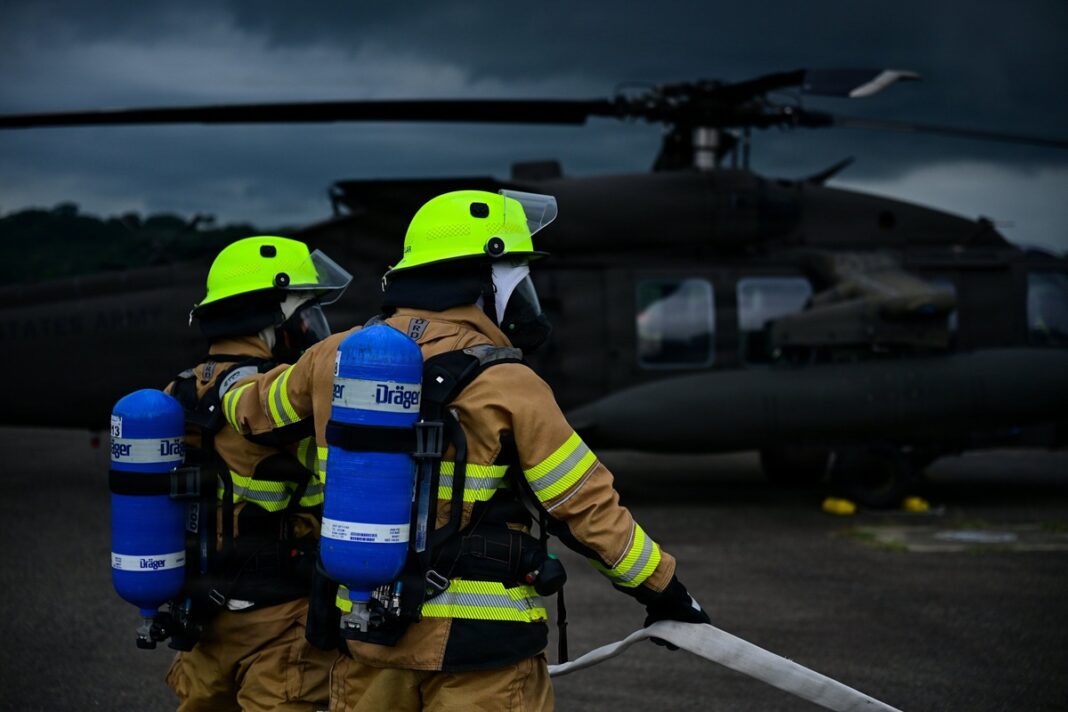
- Emergency response operations
Participating forces also practice rapidly sharing intelligence through a common operational picture to ensure coordinated decision-making during a crisis.
U.S. Marines Rehearse Canal Security Operations
The U.S. Marine Corps plays a major role in PANAMAX 2026.
Marines from Bravo Company, 1st Battalion, 6th Marine Regiment, assigned to the 2nd Marine Division, conducted training near Colón, a city located close to the canal’s Caribbean entrance.
Exercises included:
- Raid operations
- Infrastructure security
- Urban operations
- Amphibious training
- Joint missions with Panamanian forces
Colón holds particular strategic importance because of its proximity to major port facilities and canal infrastructure.
In a real-world contingency, Marines could be tasked with securing critical facilities, isolating threatened areas, or reinforcing security forces protecting canal operations.
U.S. Coast Guard Leads Maritime Security Missions
The U.S. Coast Guard remains central to the maritime component of the exercise.
Training aboard the Sentinel-class Fast Response Cutter USCGC Robert Ward brought together personnel from:
- Ecuador
- Panama
- Colombia
- United States
The exchanges focused on:
- Maritime interception
- Boarding operations
- Vessel familiarization
- Search procedures
- Personnel transfers
Meanwhile, Ecuador showcased its Esmeraldas-class missile corvette BAE Loja, allowing multinational crews to better understand how different naval platforms would operate together during combined security operations.
Small Boats Play a Critical Role
Small-boat operations formed another major component of the exercise.
Training near Panama City included:
- Precision maneuvering
- Ship-to-ship transfers
- Boarding drills
- Man-overboard recovery
- Maritime interception
These capabilities would become essential if suspicious vessels approached canal infrastructure or if security forces needed to rapidly deploy boarding teams.
Because the canal operates within confined waterways carrying large commercial vessels, standardized multinational procedures are essential to avoid navigational hazards during emergencies.
Interoperability Takes Center Stage
One of PANAMAX 2026’s primary objectives is improving interoperability among participating nations.
The exercise evaluates whether forces from 19 countries can rapidly:
- Exchange intelligence
- Coordinate operations
- Share communications
- Develop common situational awareness
- Execute joint responses
The multinational Exercise Control Group manages these activities through an integrated command cell designed to synchronize maritime and ground operations.
Military planners view this command-and-control architecture as one of the most important aspects of the exercise.
Military Advantages of PANAMAX 2026
Beyond tactical training, the exercise offers several operational benefits.
Protecting Strategic Mobility
Keeping the canal open preserves one of the U.S. military’s fastest maritime routes between the Atlantic and Pacific theaters.
Strengthening Regional Partnerships
Regular multinational exercises improve trust, interoperability, and crisis response among participating countries.
Enhancing Maritime Domain Awareness
Joint surveillance and information sharing help identify suspicious activity before threats escalate.
Testing Critical Infrastructure Protection
The exercise integrates naval, coast guard, and ground forces to defend infrastructure that could become a target during regional instability.
Improving Rapid Decision-Making
Multinational headquarters practice accelerating the process from threat detection to operational response, reducing delays during real-world emergencies.
Why the Panama Canal Remains Strategically Important
The Panama Canal handles approximately 6% of global maritime trade and remains one of the world’s most valuable transportation corridors.
For the United States, the waterway is not merely an economic asset—it also supports strategic military mobility by providing faster access between two major theaters of operation.
Growing geopolitical competition, concerns over critical infrastructure security, and increasing dependence on global supply chains have elevated the canal’s strategic importance in recent years.
As great-power competition expands into maritime domains, safeguarding key chokepoints has become an increasingly important element of national security planning.
Strategic Analysis
PANAMAX 2026 demonstrates how modern military exercises increasingly focus on protecting critical infrastructure rather than preparing solely for conventional combat.
For the Pentagon, defending the Panama Canal is ultimately about preserving strategic flexibility. A prolonged disruption would not prevent U.S. forces from moving between the Atlantic and Pacific, but it would increase transit times, fuel consumption, and logistical complexity while placing greater strain on alternative transportation networks.
The exercise also underscores the importance of multinational cooperation. By integrating U.S. Marines, Coast Guard units, Panamanian security forces, and partners from across the region, PANAMAX 2026 tests whether coalition forces can rapidly detect emerging threats, coordinate responses, and maintain uninterrupted canal operations during a crisis.
As geopolitical competition intensifies and maritime infrastructure becomes an increasingly attractive target for state and non-state actors, exercises like PANAMAX highlight the growing role of collective security in protecting the world’s most critical strategic waterways.