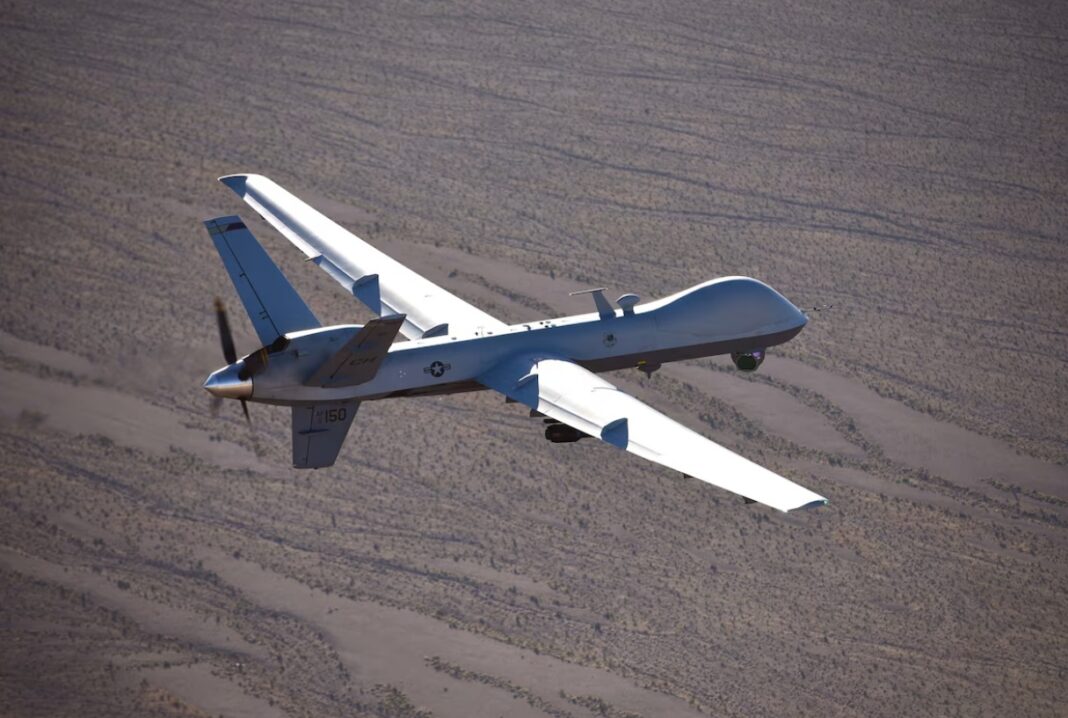
The United States has reportedly lost at least 45 MQ-9 Reaper drones during the 2026 Iran conflict, eliminating roughly one-quarter of the U.S. Air Force’s operational fleet and exposing critical vulnerabilities in America’s intelligence, surveillance, reconnaissance (ISR), and precision-strike capabilities.
According to officials cited in multiple reports, the losses accumulated throughout Operation Epic Fury and subsequent military exchanges with Iran, making the MQ-9 one of the most heavily attrited U.S. aircraft platforms of the conflict.
With each MQ-9 Reaper valued between $30 million and $50 million, the reported losses represent more than $1.3 billion in hardware alone, excluding maintenance, infrastructure, replacement costs, logistics, and operational disruptions.
JUST IN: 🇺🇸🇮🇷 1 IN 4 U.S. REAPERS GONE
At least 45 MQ-9 Reaper drones have reportedly been lost by the U.S. military during the war with Iran.
The reported losses are valued at roughly $1.3 billion, potentially representing around 25% of the entire U.S. Reaper fleet.
The… pic.twitter.com/XPDKrXlDFK
— War Radar (@War_Radar2) August 14, 2026
Reaper Became the Campaign’s ‘Most Valuable Player’
Despite the heavy attrition, U.S. Air Force Chief of Staff General Kenneth Wilsbach reportedly described the MQ-9 Reaper as the campaign’s “most valuable player.”
The aircraft remained central to American operations by conducting:
- Persistent intelligence collection
- Surveillance of Iranian military movements
- Maritime monitoring around the Strait of Hormuz
- Mobile missile launcher detection
- Precision strike missions
- Battle damage assessment
Its long endurance enabled commanders to maintain continuous surveillance over large operational areas without risking American pilots.
Why MQ-9 Reapers Suffered Heavy Losses
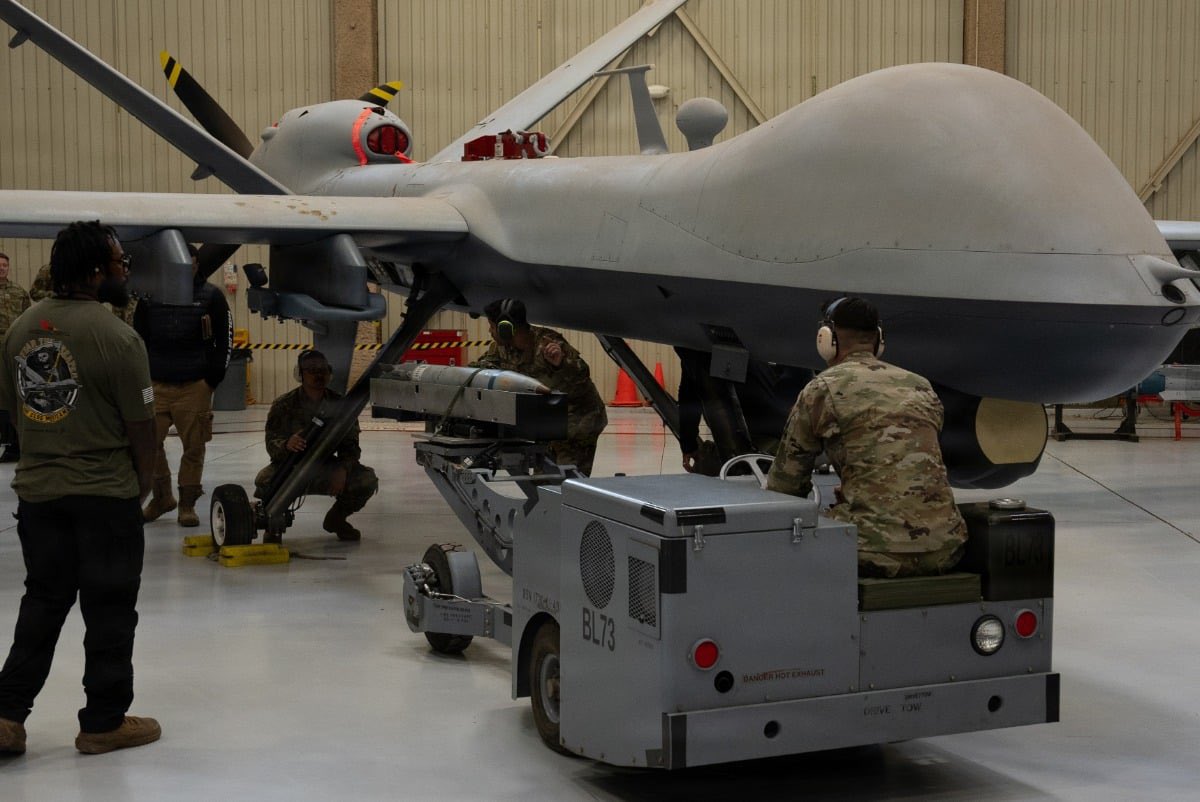
The Iran conflict demonstrated that the MQ-9 Reaper’s strengths in counterterrorism operations became weaknesses against a sophisticated integrated air defence network.
Unlike operations in Afghanistan or Iraq, Iranian forces reportedly employed:
- Layered surface-to-air missile systems
- Radar-guided interceptors
- Electronic detection networks
- Drone attacks on regional air bases
- Missile strikes against forward operating locations
The MQ-9’s relatively slow speed, non-stealth design, predictable flight patterns and limited self-protection systems made it increasingly vulnerable inside contested airspace.
Military analysts say the conflict illustrated that endurance alone is no longer enough when drones must repeatedly operate within the engagement zones of modern integrated air defence systems.
Not Just Shootdowns—Bases Also Came Under Attack

The reported losses were not limited to drones shot down during missions.
Several MQ-9s were reportedly destroyed on the ground during missile and drone attacks targeting U.S. regional bases.
According to available assessments, attacks damaged:
- Flight lines
- Maintenance facilities
- Fuel storage
- Satellite-control equipment
- Ground support infrastructure
The campaign highlighted that unmanned aircraft remain highly dependent on vulnerable logistics networks despite their ability to operate without onboard crews.
Losses Continued Throughout the Campaign
The reported attrition steadily increased as the conflict expanded.
According to available assessments:
- Early March: approximately 10–12 MQ-9 losses
- Early April: around 24 destroyed
- Late May: roughly 30 aircraft lost
- Late July: approximately 36 aircraft across multiple incidents
- By August 13: at least 45 MQ-9 Reapers reportedly destroyed or written off
Officials caution that precise numbers remain difficult to verify because classified information, combat conditions, accidents, and differing methodologies continue to complicate assessments.
Wider Air Campaign Also Costly
The Reaper losses formed only part of broader American aviation attrition during Operation Epic Fury.
The campaign reportedly also involved losses or damage to:
- F-15E Strike Eagles
- KC-135 Stratotankers
- A-10 Thunderbolt II aircraft
- MC-130J Commando II transports
- E-3 Sentry airborne warning aircraft
- HH-60W rescue helicopters
- MQ-4C Triton surveillance drones
Some losses occurred during combat operations, while others resulted from attacks on regional bases, friendly fire incidents, and operational accidents.
Production Challenge Adds to U.S. Concerns
One of the conflict’s most significant consequences is that replacing the lost aircraft will not be straightforward.
MQ-9A Reaper production ended in 2025 after the U.S. Air Force halted new procurement.
Current replacement options include:
- Refurbishing stored aircraft
- Reassembling airframes from remaining components
- Buying back previously exported aircraft
- Procuring the newer MQ-9B SkyGuardian
However, none of these options offers rapid wartime replenishment.
Analysts say rebuilding production capacity would require years because of specialized suppliers, manufacturing infrastructure and workforce limitations.
Pentagon Looking Toward Attritable Drones
The heavy losses have accelerated Pentagon efforts to develop lower-cost unmanned aircraft that can be produced in much larger numbers.
The report notes that the U.S. Air Force is increasingly shifting toward:
- Modular drone architectures
- Mass-produced attritable aircraft
- Open-system designs
- Artificial intelligence-enabled operations
- Distributed surveillance networks
Rather than relying on a small fleet of expensive UAVs, future concepts emphasize quantity, survivability through distribution, and rapid industrial replacement.
Lessons for Future Wars
The Iran conflict may prove to be a turning point in military drone doctrine.
For more than two decades, the MQ-9 Reaper dominated permissive battlefields against insurgent groups lacking advanced air defences.
The 2026 conflict demonstrated that peer-level or near-peer adversaries equipped with integrated air defence systems can impose severe costs on high-value unmanned aircraft.
Military planners increasingly believe future conflicts—particularly in the Indo-Pacific—will require:
- Dispersed basing
- Stronger electronic warfare protection
- Improved air defence support
- More survivable communications
- Larger numbers of affordable unmanned systems
- Greater industrial production capacity
The experience of Operation Epic Fury suggests that while the MQ-9 remains operationally invaluable, its future role in contested airspace will likely evolve as the Pentagon transitions toward a new generation of more resilient and attritable unmanned combat aircraft.
Why It Matters
The reported loss of 45 MQ-9 Reapers represents more than battlefield attrition. It signals a broader shift in modern air warfare, where persistent surveillance platforms that excelled in low-threat environments face growing challenges against advanced missile networks and electronic warfare systems. The conflict is expected to shape future U.S. investments in unmanned aviation, force posture, and defense industrial capacity for years to come.