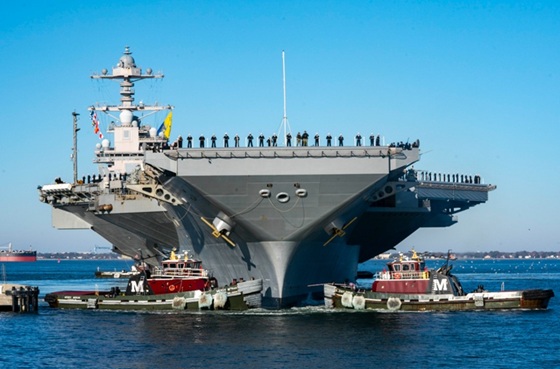
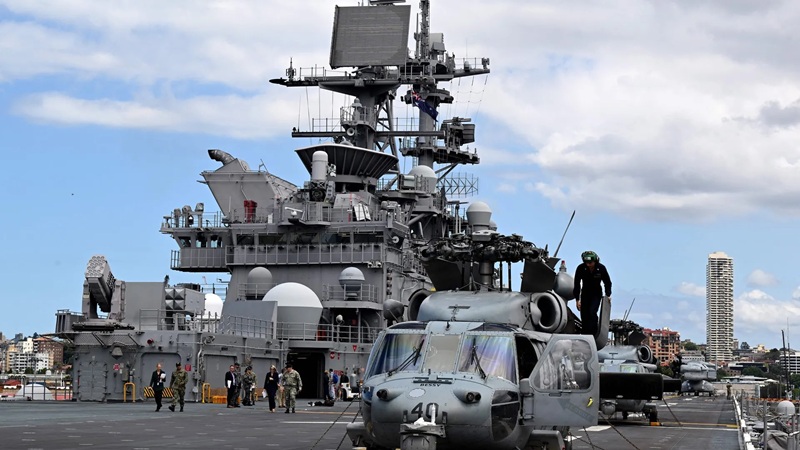
A U.S. Navy amphibious assault ship has reached a key waypoint in its journey toward the Middle East, with maritime tracking data showing the USS Tripoli approaching the Malacca Strait near Singapore.
The development marks a significant update in the vessel’s transit, placing it at one of the world’s most strategically important maritime chokepoints.
Latest Position Near Singapore
According to AIS tracking data, the USS Tripoli was observed Tuesday morning near the southwestern edge of the South China Sea, moving toward the Malacca Strait.
USS Tripoli (LHA 7) America-class amphibious assault ship westbound in the Singapore Strait – March 17, 2026 SRC: INST- sgshipspotting pic.twitter.com/iC4qBZUZML
— WarshipCam (@WarshipCam) March 17, 2026
The strait serves as a critical gateway between the Pacific and Indian Oceans, making it a standard but strategically important route for naval deployments heading west.
U.S. Navy vessels typically limit the use of AIS tracking systems, but signals are sometimes activated in congested waterways like Singapore to ensure navigational safety.
Key Transit Point in Global Maritime Routes
The Malacca Strait is one of the busiest shipping lanes in the world, handling a significant portion of global trade and energy shipments.
For naval forces, passing through this corridor signals:
- Entry into the Indian Ocean
- Transition from Indo-Pacific to Middle East theatre
- Progress toward operational deployment zones
The USS Tripoli’s presence in this area confirms it has completed a major portion of its transit from East Asia.
Deployment Context Remains Unchanged
While the ship’s movement is notable, the broader context of its deployment remains consistent.
The USS Tripoli is believed to be carrying elements of the 31st Marine Expeditionary Unit, which had already been ordered to deploy toward the Middle East.
However, the current update is focused on location tracking, not a new deployment decision.
Capabilities of USS Tripoli
The USS Tripoli is a large amphibious assault ship capable of functioning as a light aircraft carrier.
Key capabilities include:
- F-35B stealth fighter operations
- MV-22 Osprey tilt-rotor aircraft
- Amphibious landing operations
- Rapid troop deployment
These features make it a flexible platform for a wide range of missions once it reaches its destination.
What Comes Next?
After transiting the Malacca Strait, the USS Tripoli is expected to:
- Enter the Indian Ocean
- Continue westward toward the Middle East
- Potentially integrate into regional naval operations
The exact destination and mission remain undisclosed.
Strategic Significance
While not a new deployment, the ship’s current location is an important indicator of operational timing.
Its movement suggests:
- The deployment is progressing on schedule
- U.S. forces are moving closer to the Middle East theatre
- Additional naval activity may follow along similar routes
Tracking such movements provides insight into broader military positioning during periods of heightened tension.
Conclusion
The USS Tripoli’s approach to the Malacca Strait represents a key milestone in its transit from East Asia toward the Middle East.
Although the deployment itself was previously known, the ship’s current location offers a clearer picture of the timeline and trajectory of U.S. naval movements.
As it enters the Indian Ocean, attention will shift to its next reported position and eventual operational role in the region.