India is exploring the possibility of joining one of two major European sixth-generation fighter jet programs as it seeks to accelerate the modernization of its air force and avoid falling behind in next-generation combat capabilities.
According to local media reports, India’s Ministry of Defence has informed the parliamentary Standing Committee on Defence that it plans to “join forces with one of the consortia” working on advanced fighter aircraft.
The move signals a strategic shift as India looks beyond current-generation platforms toward future air dominance technologies.
BREAKING ⚠️
India will join either the Tempest or FCAS 6th generation fighter programs, Indian MoD tells Parliamentary Standing Committee on Defence pic.twitter.com/EC9N4d8zSS
— Livefist (@livefist) March 18, 2026
GCAP vs FCAS: The Two Sixth-Gen Contenders
India’s interest is focused on two major multinational programs:
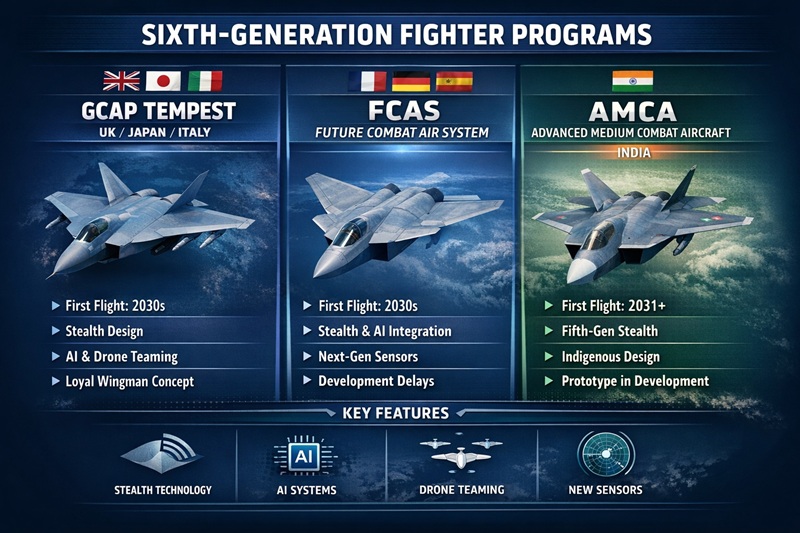
1. Global Combat Air Programme (GCAP)
- Partners: United Kingdom, Japan, Italy
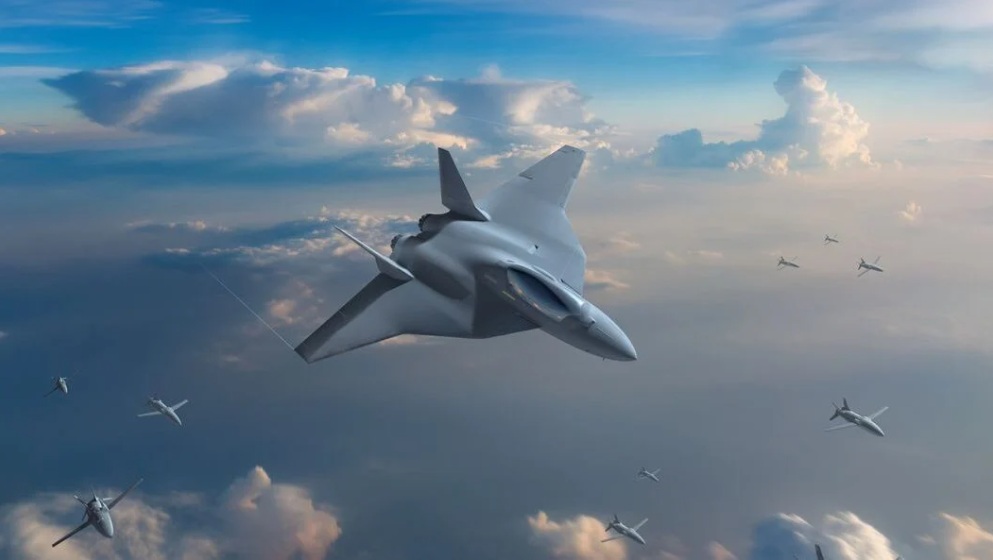
- Goal: Develop the Tempest sixth-generation fighter
- Timeline: Expected entry into service in the early 2030s
2. Future Combat Air System (FCAS)
- Partners: France, Germany, Spain
- Status: Facing delays and internal disagreements
Both programs aim to integrate advanced technologies such as:
- Artificial intelligence-assisted combat systems
- Network-centric warfare capabilities
- Stealth and next-generation sensors
- Manned-unmanned teaming (loyal wingman drones)
Strategic Motivation Behind India’s Interest
India’s defence planners are increasingly concerned about maintaining parity in an era of rapidly evolving air warfare.
The parliamentary committee emphasized the need for a structured roadmap to develop and acquire sixth-generation aircraft, noting that future conflicts will be heavily “air-centric.”
Joining an existing program could offer:
- Faster access to cutting-edge technology
- Reduced development costs
- Strategic partnerships with advanced aerospace nations
Challenges: Why Entry May Be Difficult
Despite India’s interest, analysts believe joining either program may be unlikely.
Defense analyst Dan Darling noted that existing consortium members are hesitant to expand participation due to:
- Technology security concerns
- Program complexity and timelines
- Industrial workshare conflicts
A previous case highlights these concerns—Japan reportedly resisted Saudi Arabia’s attempt to join GCAP due to fears of delays.
Instead, partner nations may prefer India as a future buyer rather than a development partner.
India’s Air Force Modernization Struggles
India has faced persistent challenges in upgrading its air combat capabilities:
Rafale Acquisition
- Ongoing induction of Dassault Rafale fighter jets from France
- Provides advanced multirole capability but limited in numbers
Tejas Program Issues
- Indigenous Tejas Light Combat Aircraft (LCA) program has faced delays
- Concerns over production scale and technological maturity
AMCA Fifth-Generation Project
- India’s planned Advanced Medium Combat Aircraft (AMCA)
- Still in early stages
- Prototype expected around 2031
These challenges have created capability gaps that India is trying to address through international collaboration.
The Bigger Picture: Race for Air Dominance
The global race for sixth-generation fighters is intensifying, with major powers investing heavily in next-generation air combat systems.
For India, joining GCAP or FCAS would not just be about acquiring aircraft—it would represent:
- Entry into elite aerospace ecosystems
- Access to future warfare doctrines
- Strategic positioning in global defense networks
However, the path forward remains uncertain.
Conclusion
India’s interest in sixth-generation fighter programs reflects the urgency of modernizing its air force in an increasingly competitive security environment.
While joining GCAP or FCAS could accelerate its ambitions, political, technological, and industrial barriers may limit its role to that of a future customer rather than a core partner.
Either way, the move highlights India’s determination to remain relevant in the next era of air warfare.