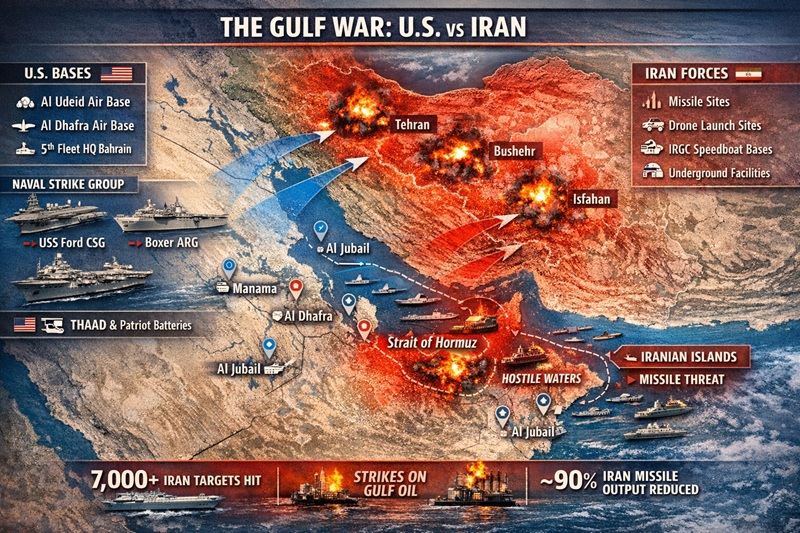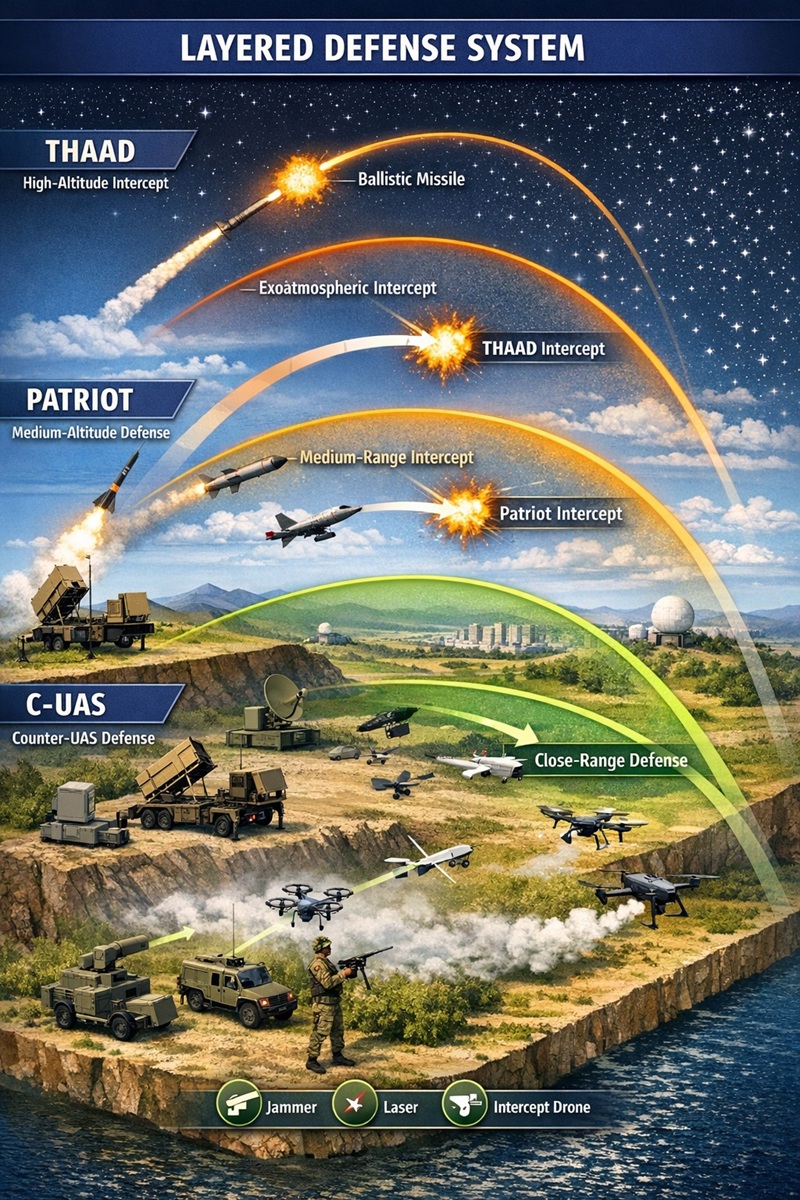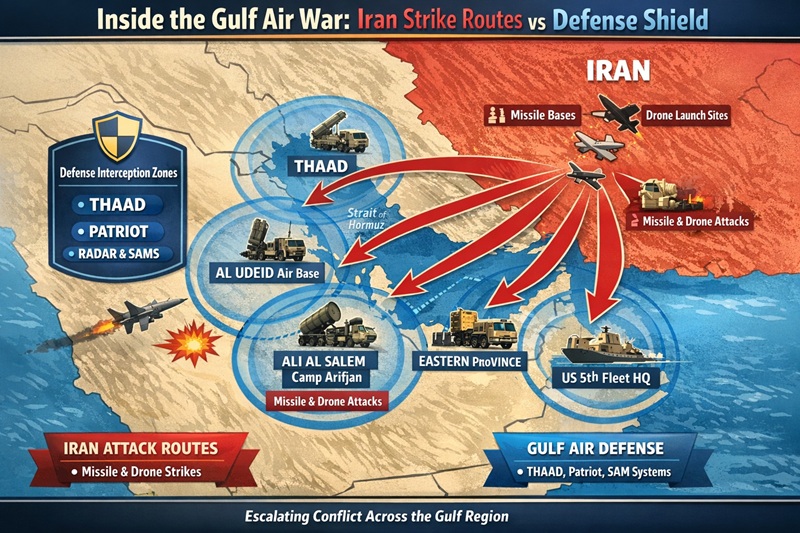
Friday, June 5, 2026
Home Blog Page 19

CENTCOM Confirms Friendly Fire Downed Three US F-15E Jets Over Kuwait During Operation Epic Fury

0

U.S. Central Command (CENTCOM) has confirmed that three American F-15E Strike Eagle fighter jets were mistakenly shot down by Kuwaiti air defense systems during active combat operations late March 1.

In an official press release issued from Tampa, Florida, CENTCOM stated that at 11:03 p.m. ET on March 1, three F-15E Strike Eagles flying in support of Operation Epic Fury went down over Kuwait due to an apparent friendly fire incident.

What Happened?

According to CENTCOM, the incident occurred during intense combat operations that included:

  • Iranian aircraft activity
  • Ballistic missile launches
  • Drone attacks

Amid the fast-moving engagement, Kuwaiti air defense systems mistakenly identified the U.S. fighter jets as hostile threats and fired on them.

The statement confirms:

“During active combat—that included attacks from Iranian aircraft, ballistic missiles, and drones—the U.S. Air Force fighter jets were mistakenly shot down by Kuwaiti air defenses.”

All Six Aircrew Survived

Each F-15E carries two crew members. CENTCOM confirmed that:

  • All six aircrew successfully ejected
  • All personnel were safely recovered
  • All are currently in stable condition

The command expressed gratitude to Kuwaiti defense forces for their recovery efforts and continued operational cooperation.

Kuwait has officially acknowledged the incident.

Cause: Confirmed Friendly Fire Under Combat Conditions

Earlier speculation suggested the aircraft may have been struck near the tail section by a missile. The CENTCOM statement now confirms the cause as friendly fire.

Friendly fire incidents can occur in high-intensity combat environments where:

  • Multiple airborne threats are present simultaneously
  • Air defense systems are operating under compressed timelines
  • Radar and identification systems are managing heavy saturation

In this case, Iranian aircraft, missiles, and drones were actively engaging targets in the region at the time of the shootdown.

Why This Happened: Air Defense Saturation Risk

Modern air defense systems are designed to rapidly intercept incoming threats. However, during large-scale missile and drone attacks, airspace becomes highly congested.

Under such conditions:

  • Identification Friend or Foe (IFF) systems are critical
  • Split-second decisions are required
  • Risk of misidentification increases

The presence of multiple hostile projectiles may have contributed to confusion within Kuwait’s defensive network.

Investigation Underway

CENTCOM stated:

“The cause of the incident is under investigation. Additional information will be released as it becomes available.”

The investigation will likely examine:

  • Radar tracking logs
  • Missile launch data
  • Identification protocols
  • Communication records between coalition forces

Such reviews typically assess procedural breakdowns and recommend improvements to prevent recurrence.

Strategic Implications

The shootdown highlights the risks of coalition air operations in contested environments, especially amid expanding regional conflict involving Iran.

Key concerns moving forward include:

  • Coordination between U.S. and Gulf air defense systems
  • Deconfliction procedures during high-intensity engagements
  • Confidence in integrated regional defense networks
  • Operational adjustments under Operation Epic Fury

Despite the incident, CENTCOM emphasized continued cooperation with Kuwait and ongoing operations in the region.

Conclusion

The crash of three U.S. F-15E Strike Eagles over Kuwait has now been officially attributed to friendly fire from Kuwaiti air defenses during active combat against Iranian threats.

While all six crew members survived, the incident underscores the complexity and danger of operating in highly contested airspace during large-scale missile and drone exchanges.

Further findings from the investigation will determine whether procedural, technical, or communication failures contributed to the misidentification.

Middle East War Update – March 2, 2026: US, Israel and Iran Escalate Missile Strikes as Regional Crisis Deepens

0
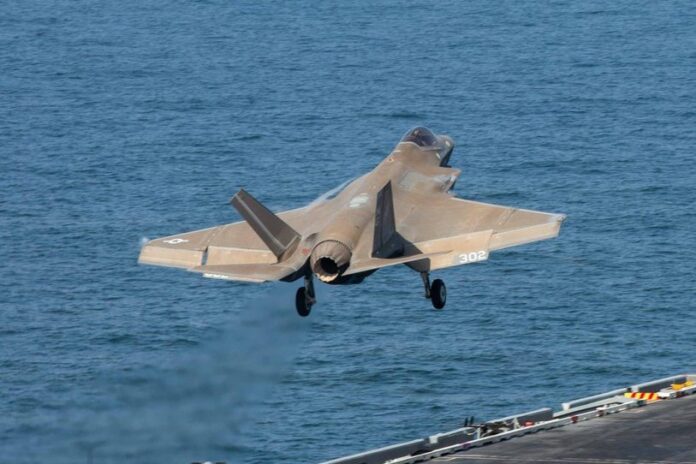
F-35 Lightning II stealth strike fighter jet

March 2, 2026 — The conflict between the United States, Israel, and Iran has entered a critical phase, with sustained missile exchanges, expanded air operations, and mounting regional instability across the Middle East.

Below is a structured situation report outlining the latest military developments, reported damage, and political reactions.

Immediate Military Developments

US and Israeli Operations

  • The United States carried out targeted air operations using B-2 Spirit stealth bombers against Iranian ballistic missile silos and underground launch facilities as part of Operation Epic Fury.
  • US forces launched long-range ATACMS ballistic missiles via M142 HIMARS systems, reportedly targeting Iranian Zulfiqar short-range missile assets and air defense systems.
  • Israel conducted one of its largest air campaigns to date, deploying approximately 200 fighter aircraft against more than 500 missile and air defense targets in western and central Iran.
  • Israeli forces also reported simultaneous operations against Hezbollah-linked targets in Lebanon.

Iranian Counterattacks

  • Iran launched multiple waves of missile and drone attacks against Israeli territory, marking at least the 10th wave of retaliatory strikes.
  • Iranian military sources claimed strikes against the US Ali Al Salem Air Base in Kuwait and hostile naval assets in the northern Indian Ocean.
  • Iranian state media reported that ballistic missiles targeted the USS Abraham Lincoln carrier strike group.
  • GPS jamming activity has intensified in the Strait of Hormuz, potentially affecting precision-guided munitions and maritime navigation.

Reported Losses and Damage

Casualties

  • The Iranian Red Crescent reported 555 fatalities inside Iran following US-Israeli airstrikes.
  • Lebanese authorities reported at least 31 deaths and 149 injuries from Israeli air operations.
  • China confirmed the death of one Chinese national in Iran and evacuated approximately 3,000 citizens.

Military Losses

  • Kuwait’s Ministry of Defense confirmed that multiple US military aircraft crashed within its territory; all crew members survived.
  • Reports indicated at least two F-15E aircraft were lost in what may have been a friendly-fire incident, though investigations are ongoing.
  • Several US bases across the region have reportedly come under missile fire.

Aviation and Civilian Disruption

  • More than 3,400 commercial flights have been canceled since the conflict escalated.
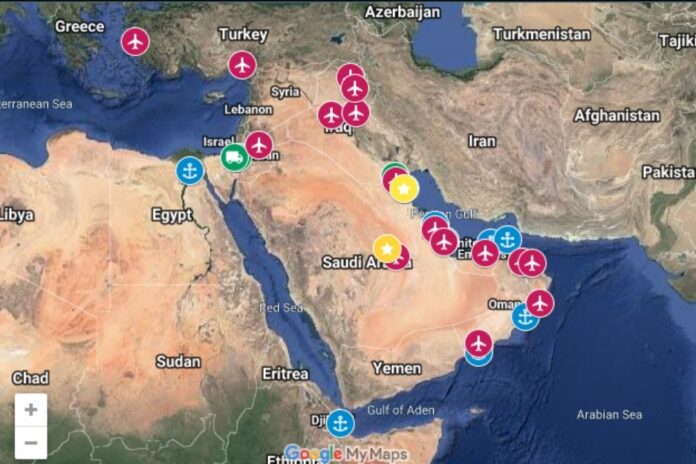
  • Major airports including Dubai International, Abu Dhabi, Doha Hamad International, and Sharjah suspended operations.
  • Approximately 300,000 travelers are reportedly stranded across Gulf states.
  • Regional airspace closures are causing global aviation disruptions.

Energy Market Impact

  • Brent crude oil futures surged approximately 9% to around $79 per barrel.
  • US benchmark crude rose roughly 8% to $73 per barrel.
  • Dutch natural gas prices climbed 23% amid concerns over supply disruptions.

Nearly 20% of global oil and LNG shipments pass through the Strait of Hormuz, raising fears of a prolonged energy shock if maritime instability continues.

Political Statements and Strategic Signals

United States

President Donald Trump stated that Iran’s new interim leadership had expressed interest in negotiations, though no timeline was confirmed.
US counterterrorism and intelligence agencies are on high alert, and security measures have been tightened in major American cities.

Reports from US officials indicate growing concern inside the Pentagon about escalation risks and uncertainty over Iran’s command-and-control structure.

Iran

Iranian Foreign Minister Abbas Araghchi declared that Tehran would decide “when and how” the war ends, emphasizing that Iran’s decentralized defense strategy remains operational despite heavy strikes on the capital.

Iranian officials claim their missile-launch capacity remains intact.

Europe and Regional Actors

  • The United Kingdom signaled defensive involvement but ruled out participation in expanded strike waves.
  • Germany stated it has no intention of joining military operations against Iran.
  • France expressed readiness to assist Gulf partners defensively.
  • Qatar warned that Iranian strikes on its territory would not go unanswered.

Strategic Assessment

As of March 2, 2026:

  • Missile exchanges show no signs of slowing.
  • Energy markets are reacting sharply to supply risk.
  • Airspace disruptions are expanding.
  • Political pressure is mounting in Washington, Tel Aviv, and regional capitals.

Military analysts suggest the conflict may shift toward a prolonged attrition phase if neither side reduces strike tempo.

With missile inventories being rapidly consumed and defensive systems under strain, the coming days will be decisive in determining whether diplomatic channels reopen — or whether escalation deepens further.

Why Did the US F-15 Crash in Kuwait? Possible Friendly-Fire Scenario Under Review

0

A United States McDonnell Douglas F-15 Eagle crashed in Kuwait during heightened military tensions across the Middle East following the February 28 escalation involving the United States, Israel, and Iran.

The aircraft went down during morning hours. The pilot successfully ejected moments before impact and survived the crash.

While U.S. officials have not yet released a formal statement on the cause, video footage circulating online has prompted speculation about what may have brought the fighter jet down.

What the Footage Shows

Videos show the aircraft:

  • Losing stability mid-air
  • Sustaining visible damage near the tail section
  • Spinning multiple times before impact
  • Bursting into flames upon ground contact

Witnesses reported hearing a loud explosion, followed by heavy black smoke rising from the crash site.

The pilot deployed the ejection seat seconds before the aircraft struck the ground and was later seen conscious on the ground before being transported away by local civilians.

Focus on the Tail Section Damage

The most notable detail from the footage is apparent impact damage near the aircraft’s rear fuselage.

Damage to the tail section of an F-15 is critical because it houses:

  • Vertical stabilizers
  • Flight control surfaces
  • Hydraulic systems
  • Engine exhaust components

A missile strike in this area could immediately destabilize the aircraft, causing loss of control and uncontrolled spin — consistent with the footage observed.

Possible Cause: Defensive Missile Misfire?

One theory circulating online suggests a potential friendly-fire incident.

According to unverified reports:

  1. An Iranian missile may have targeted the U.S. embassy in Kuwait.
  2. Air defense systems were activated to intercept the incoming threat.
  3. A defensive interceptor missile may have unintentionally struck the nearby F-15.
  4. The Iranian missile reportedly continued toward its intended target.

It is important to emphasize that this scenario remains speculative. No official confirmation has been issued by U.S. or Kuwaiti authorities.

However, friendly-fire incidents during high-intensity air defense engagements are historically documented risks, particularly in complex, fast-moving airspace environments.

The Air Defense Challenge

Modern air defense systems are designed to:

  • Detect and intercept incoming ballistic or cruise missiles
  • Engage threats at high speed
  • Operate under compressed decision timelines

In tense conflict conditions, especially when multiple aerial objects are present, distinguishing between hostile missiles and friendly aircraft can become extremely challenging.

Kuwait hosts critical U.S. military infrastructure and serves as a key logistics hub for regional operations. Any missile attack in its airspace would trigger immediate defensive responses.

Alternative Possibilities

While the missile-strike theory is receiving attention, other possibilities remain:

  • Mechanical failure under combat conditions
  • Structural damage unrelated to air defense systems
  • Direct strike by hostile missile or drone
  • Engine failure caused by debris or shockwave

A formal investigation will likely examine flight data recorders, radar logs, and missile tracking information before conclusions are reached.

Strategic Context

The crash occurred amid escalating hostilities following joint U.S.-Israeli operations against Iranian targets.

With air defense systems on high alert across Gulf states, airspace congestion and rapid missile interceptions increase the probability of accidental engagements.

If confirmed as friendly fire, the incident would highlight:

  • The complexity of integrated air defense coordination
  • The risks of high-tempo missile exchanges
  • The strain placed on regional airspace management

What Happens Next?

Key questions remain:

  • Was the F-15 struck by an interceptor missile?
  • Was it targeted directly by hostile fire?
  • Did a mechanical malfunction contribute?
  • What do radar and defense logs show?

Until official findings are released, the exact cause of the crash remains unconfirmed.

What is clear is that the aircraft suffered sudden loss of control after apparent damage to its tail section — a critical area for flight stability.

As investigations proceed, the incident underscores how rapidly escalating missile exchanges can create unpredictable and dangerous consequences in contested airspace.

Missile Defense Math: Can the U.S. Sustain Interceptor Stocks in a Prolonged War with Iran?

0
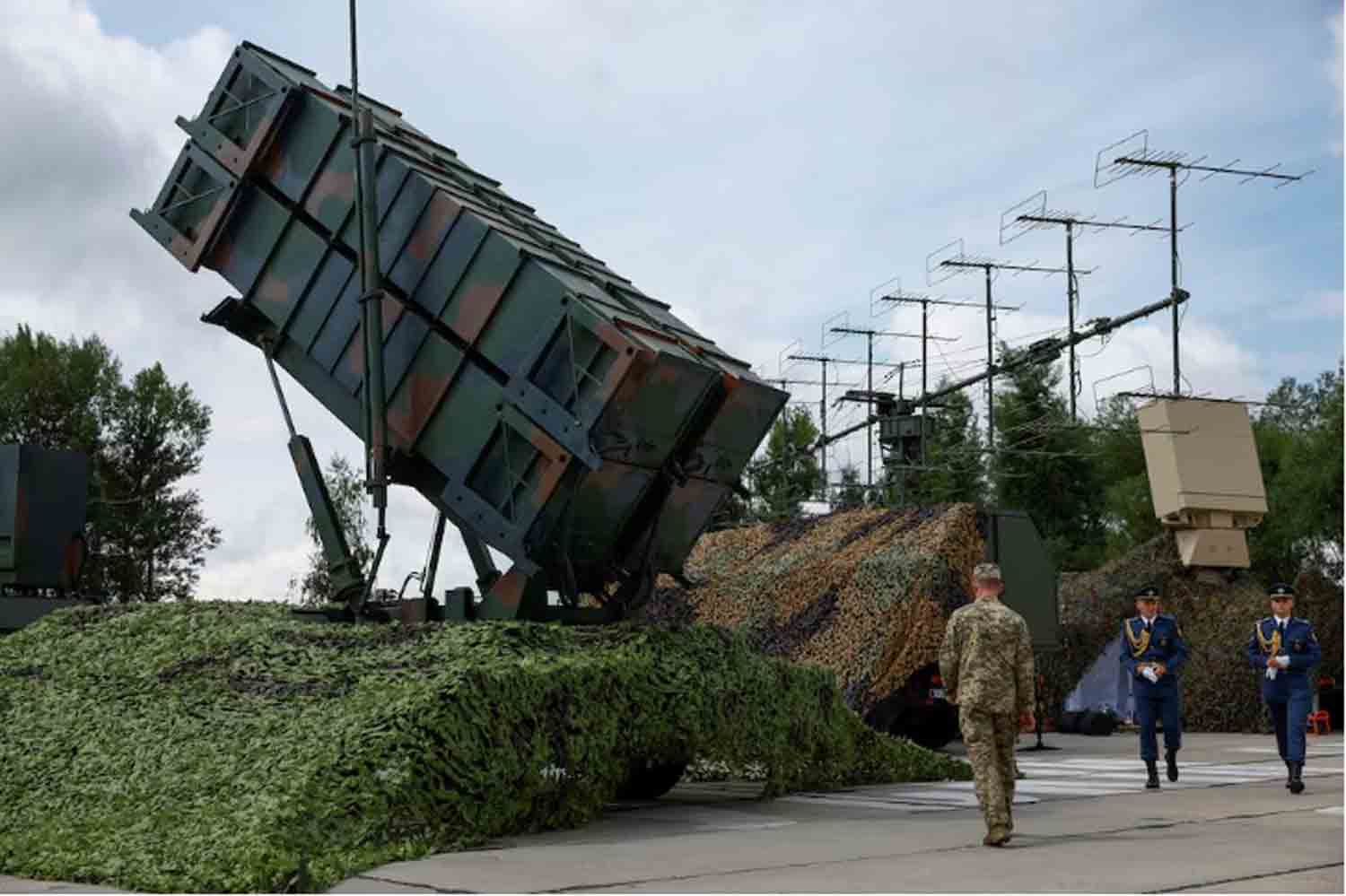
Surface-to-air missile launchers of the Patriot system of 37th Air Defense Missile Squadron from the 3rd Warsaw Air Defense Missile Brigade stand during a demonstration training of the IOC Initial Operational Capability of the anti-aircraft and anti-missile system and its integration into a IBCS command system, Sochaczew.

A recent report by The Wall Street Journal raised concerns about the sustainability of U.S. missile defense stocks amid escalating tensions with Iran.

According to the report, the precise size of America’s air-defense interceptor inventory — referred to by the Pentagon as “magazine depth” — is classified. However, repeated conflicts with Iran and its regional proxies have steadily consumed air defense supplies across the Middle East.

As confrontation risks growing into a prolonged campaign, the issue may no longer be battlefield firepower — but economics and industrial capacity.

The Cost-Exchange Problem: Cheap Missiles vs. Expensive Interceptors

Image

At the heart of the issue is what defense analysts call the cost-exchange ratio.

Iran’s arsenal includes:

  • Ballistic missiles
  • Cruise missiles
  • Low-cost drones

Many of these systems are relatively inexpensive and can be produced in large numbers.

In contrast, U.S. defensive interceptors — such as Patriot, THAAD, and naval missile defense interceptors — are:

  • Technologically complex
  • Expensive (often costing millions per interceptor)
  • Time-consuming to manufacture

This imbalance creates a strategic dilemma: even if U.S. and Israeli defenses successfully intercept incoming threats, they may burn through stocks faster than they can replenish them.

Lessons from the Houthi Campaign

The United States recently faced a similar dynamic when combating Houthi forces in Yemen, who were armed with Iranian-supplied drones and missiles.

During a 6–7 week campaign:

  • The U.S. reportedly spent approximately $7 billion in strike operations
  • Despite heavy bombardment, the Houthis retained the ability to launch attacks

In that conflict, the issue centered more on expensive precision-guided munitions used offensively against low-cost launch systems.

Against Iran, however, the challenge is compounded: the U.S. and Israel are expending both offensive precision weapons and defensive interceptor missiles simultaneously.

Iran’s Strategic Patience

Reports suggest that during a recent 12-day war scenario, Iran may have deliberately conserved portions of its more advanced missile inventory in anticipation of potential escalation.

If Tehran calculates that time favors its industrial output, it may opt for a prolonged campaign, relying on:

  • Lower-cost mass drone production
  • Incremental missile launches
  • Strategic pacing of higher-end systems

Iran’s defense planners appear to understand the arithmetic: if U.S. interceptor production cannot keep pace, sustained pressure could gradually erode defensive capacity.

Can the U.S. Outproduce Iran?

U.S. missile interceptor production involves:

  • Complex supply chains
  • Advanced microelectronics
  • Multi-layered testing and certification

While the U.S. defense industrial base is robust, ramping up interceptor production takes months or years — not weeks.

If Iran’s drone and missile output outpaces U.S. interceptor replenishment, Washington could face difficult strategic choices:

  • Prioritizing which targets to defend
  • Accepting higher risk in certain regions
  • Scaling back offensive operations
  • Accelerating emergency production contracts

Political Calculations and Strategic Risk

President Donald Trump has publicly stated that he sought regime change in Iran. However, some analysts argue that such expectations may have assumed a rapid collapse of Tehran’s leadership structure.

If Iranian forces continue attacking Gulf targets a week or more into a sustained conflict, interceptor inventories could become even more critical.

The question facing policymakers is whether military planning adequately accounted for a prolonged engagement rather than a short, decisive campaign.

The Strategic Question Ahead

The missile defense issue is not about technological capability — U.S. systems have demonstrated high interception rates.

The real question is sustainability.

If a conflict turns into a battle of industrial endurance:

  • Can the U.S. maintain sufficient interceptor stocks?
  • Can Iran maintain steady drone and missile output?
  • Will allies share the defensive burden?
  • How long can both sides sustain current expenditure rates?

History shows that modern warfare increasingly hinges not only on battlefield superiority but also on production capacity and cost efficiency.

As tensions persist, the “missile defense math” may become one of the most decisive factors in shaping the trajectory of U.S.–Iran conflict.

Trump Says US-Identified Iranian Successor Candidates ‘All Dead’ After Joint US-Israel Strikes

0
U.S. President Donald Trump speaks, on the day of Tulsi Gabbard's swearing in ceremony as Director of National Intelligence, in the Oval Office at the White House in Washington, D.C.

President Donald Trump told ABC News that potential Iranian leadership figures previously identified by the United States were killed during Saturday’s joint US-Israeli military strikes.

In an interview with ABC’s Jonathan Karl, Trump described the operation as devastating to Iran’s leadership structure.

“The attack was so successful it knocked out most of the candidates,” Trump said. “It’s not going to be anybody that we were thinking of because they are all dead. Second or third place is dead.”

His comments come amid mounting uncertainty over Iran’s political future following reports that longtime Supreme Leader Ali Khamenei was killed in the strikes.

Succession Questions Loom in Tehran

With Khamenei’s reported death, attention has turned to how Iran’s power transition will unfold. Under Iran’s political system, the Assembly of Experts is responsible for appointing a new Supreme Leader, but in times of crisis, internal security forces — particularly the Islamic Revolutionary Guard Corps (IRGC) — may play a decisive role.

Trump suggested that individuals Washington had previously assessed as potential successors were among those killed in the operation.

The president also directly referenced Khamenei’s killing, stating:

“I got him before he got me. They tried twice. Well I got him first.”

Reference to 2024 Assassination Plot

Trump’s remarks appear to reference a 2024 Justice Department case involving a foiled plot to assassinate him before the presidential election.

According to court documents released by the U.S. Department of Justice, Iranian officials allegedly instructed suspect Farhad Shakeri to surveil and ultimately attempt to assassinate Trump. Federal charges were filed in connection with the disrupted plot.

The administration has framed the recent strikes as both preemptive and retaliatory in nature.

Casualty Projections Could Rise

In a separate interview with The New York Times, Trump acknowledged that casualties in the ongoing conflict with Iran could increase beyond the three U.S. service members confirmed killed so far.

“Three is three too many as far as I’m concerned,” Trump said. “If you look at projections… it could be quite a bit higher than that.”

Earlier reporting indicated the three U.S. service members were killed in a suspected drone strike early Sunday in Kuwait.

While official Pentagon projections have not been publicly detailed, Trump suggested that military estimates anticipate further risks as operations continue.

Escalation and Regional Impact

The conflict between the United States and Iran has rapidly intensified, with both sides exchanging missile and drone strikes across multiple locations in the region.

Key concerns now include:

  • Leadership stability inside Iran
  • Potential IRGC consolidation of power
  • Risk of expanded regional conflict
  • Rising U.S. casualty counts
  • Impact on global energy markets

With Trump signaling that key Iranian leadership figures are no longer viable successors, questions remain about whether Iran will stabilize under a new authority structure or enter a period of internal turbulence.

Strategic Uncertainty Ahead

As the situation evolves, analysts are closely watching:

  • Iran’s official confirmation regarding leadership losses
  • The Assembly of Experts’ response
  • IRGC command movements
  • U.S. force posture adjustments in the Gulf

Trump’s assertion that U.S.-identified candidates are “all dead” adds a new layer of uncertainty to an already volatile regional landscape.

The coming days will likely determine whether the conflict escalates further or transitions into a political reshaping inside Tehran.

Pakistani Jets Bomb Bagram Air Base and Eastern Afghan Provinces Amid Escalating Tensions with Taliban

0
The Afghan Taliban have announced their readiness to defend against attacks by Pakistani warplanes by publishing these photos.

Pakistani fighter jets reportedly carried out airstrikes on Afghanistan early Sunday morning, targeting Bagram Air Base and multiple locations in eastern provinces, according to local sources and eyewitness accounts.

Video footage circulating online shows smoke and flames rising from areas near Bagram following the reported strike. Residents in surrounding districts said they heard the sound of at least two fighter jets followed by explosions in the early hours.

The Taliban administration has not issued an official statement on the alleged bombing of Bagram, but reports indicate sporadic air activity and anti-aircraft fire in Kabul and other provinces.

Airstrikes Reported in Multiple Provinces

Local reports suggest that Pakistani aircraft conducted strikes in several areas overnight, including:

  • Barmal, Gomal, Margha, Sarobi, and Argun districts in Paktika province
  • Ghani Khel district in Nangarhar province
  • Additional unspecified areas in eastern Afghanistan

In Nangarhar’s 29th Valley area of Ghani Khel district, a residential house was reportedly hit, resulting in the death of a school student. Casualty figures across other locations remain unconfirmed.

A spokesman for the Taliban’s Nangarhar police headquarters, Sayed Tayyip Hammad, stated that Pakistani aircraft entering Afghan airspace were being fired upon by local forces.

Pakistani Aircraft Reportedly Patrolling Kabul and Eastern Regions

Residents in Kabul reported hearing sustained gunfire, which they said was directed at aircraft flying overhead. Witnesses in Nangarhar, Kapisa, and parts of Kabul province also reported ongoing aerial patrols by Pakistani jets.

There has been no official confirmation from Islamabad regarding the strikes at the time of publication.

Rising Cross-Border Security Tensions

The reported airstrikes come amid ongoing security tensions between Pakistan and the Taliban-led government in Afghanistan.

Islamabad has repeatedly accused militant groups operating from Afghan territory of launching cross-border attacks into Pakistan, particularly in Khyber Pakhtunkhwa and Balochistan provinces. The Taliban administration has denied harboring anti-Pakistan militants, but clashes and border incidents have increased over the past year.

Bagram Air Base — once the largest U.S. military installation in Afghanistan before the 2021 withdrawal — remains a symbolically and strategically important location, though its current operational status under Taliban control is limited.

Casualty Figures and Official Response Awaited

At this stage:

  • No comprehensive casualty count has been released
  • The Taliban have not issued a central official statement
  • Pakistan has not publicly acknowledged the reported strikes

The situation remains fluid, with residents reporting intermittent gunfire and continued aerial movement.

Regional Implications

If confirmed, strikes on Bagram and multiple eastern provinces would mark one of the most significant direct Pakistani aerial operations inside Afghanistan.

Such actions risk:

  • Escalating military confrontation between Islamabad and Kabul
  • Destabilizing border regions
  • Increasing militant retaliation risks
  • Complicating regional diplomatic efforts

With both sides yet to provide full official accounts, the coming hours will be critical in determining whether the situation de-escalates or expands further.

US Regional Allies Struggle to Respond as Trump Shifts From Diplomacy to Full-Scale Strikes on Iran

0

The abrupt shift from diplomacy to military action against Iran has left many U.S. regional allies in the Middle East reeling, as President Donald Trump ordered major combat operations that effectively sidelined ongoing negotiations.

Just hours before the strikes began, Oman’s Foreign Minister Badr Albusaidi met with U.S. Vice President JD Vance in Washington to press for continued diplomatic progress between the United States and Iran. According to a source familiar with the talks, Albusaidi felt the vice president had engaged seriously, but was pessimistic about a diplomatic breakthrough given the sizable U.S. military buildup in the region. Crucially, he had “no idea” that coordinated strikes were imminent.

Within roughly 16 hours of that meeting, President Trump announced the launch of “major combat operations,” marking a dramatic departure from negotiations — and leaving many partners scrambling to recalibrate their strategies.

Allies Caught Between Diplomacy and Military Escalation

The sudden escalation has exposed divisions and uncertainty among U.S. partners:

  • Oman, traditionally a diplomatic intermediary between the U.S. and Iran, saw its mediation efforts overtaken by military action at the eleventh hour.
  • Several governments in the Gulf who had urged caution found themselves informed of the strikes only through military channels or direct calls from U.S. officials.
  • Regional capitals are now confronting the implications of deeper conflict and backlash, even as Iran’s retaliatory strikes unfold.

Some allies, such as Saudi Arabia and the United Arab Emirates, had privately encouraged a harder stance against Tehran behind closed doors — reportedly influencing U.S. decision-making. Yet the speed and scale of the shift surprised many diplomatic interlocutors.

Diplomatic Channels Undercut

Before the strikes, nuclear negotiations between Washington and Tehran were advancing cautiously, with rounds held in Oman and Geneva. Iran had signaled willingness to discuss restrictions on its nuclear activities, and mediators worked under the hope that progress could be made.

Analysts argue the Trump administration’s move undercut these channels, turning a potential diplomatic opening into a major confrontation. This comes even as Washington maintained a robust military posture across the Middle East — the largest regional deployment in decades — signaling that diplomacy was taking place under the shadow of overwhelming force.

Strategic Dilemma for Gulf Partners

U.S. allies face a complex strategic dilemma:

  • On one hand, they rely on American security guarantees against Iranian regional influence.
  • On the other hand, they bear the direct risk of instability from conflict spillover and retaliation.

Many Gulf states host U.S. military bases and are now adjusting security protocols amid Iranian counterstrikes, including missile and drone attacks targeting U.S. positions across the region.

While some neighboring governments have cautiously supported U.S. actions, others have signaled concern about regional escalation and underscored the need for renewed diplomatic engagement.

What Comes Next?

The turn from diplomacy to open military confrontation raises pressing questions for U.S. regional allies:

  • Can diplomatic engagement with Tehran be revived after such a breach in trust?
  • How will Gulf states balance cooperation with Washington against domestic and regional stability concerns?
  • Will military escalation deepen divisions between U.S. policy and partner preferences?

As the conflict unfolds, regional capitals are closely watching for both diplomatic signals and security implications, unsure whether the current trajectory will lead to de-escalation or further entrenchment in conflict.

Operation Epic Fury: US Deploys Tomahawk Missiles, F-35 Stealth Jets and LUCAS Kamikaze Drones Against Iran

0
F-35 Lightning II stealth strike fighter jet

The United States deployed a powerful mix of long-range cruise missiles, stealth aircraft, and low-cost one-way attack drones in strikes against Iranian targets on Saturday, marking one of the most technologically diverse combat operations in recent years.

According to United States Central Command (CENTCOM), the strikes were part of Operation Epic Fury, with images released showing Tomahawk cruise missiles in flight, as well as F/A-18 Hornet and F-35 Lightning II fighter jets conducting missions over the region.

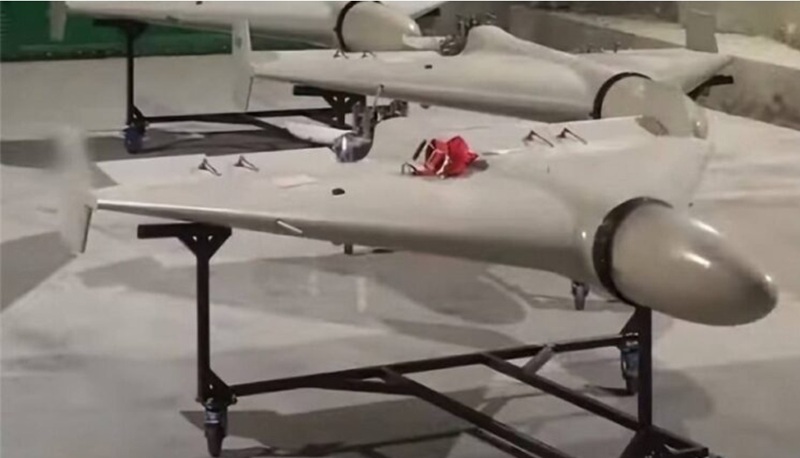
For the first time in combat, the U.S. military also used low-cost one-way attack drones modeled after Iranian Shahed systems.

First Combat Use of LUCAS Kamikaze Drones

Image

CENTCOM confirmed the use of suicide drones resembling the LUCAS (Low-Cost Unmanned Combat Attack System), manufactured by Arizona-based Spektreworks.

The Pentagon stated that these one-way attack drones were modeled after Iran’s Shahed drone design — a system widely used in regional conflicts.

Key details:

  • Estimated cost: Approximately $35,000 per unit
  • Designed for “affordable mass” deployment
  • Intended for scalable production by multiple manufacturers

The concept of “affordable mass” has gained momentum following lessons from the Ukraine war, where inexpensive loitering munitions have reshaped modern battlefield economics.

The move signals a doctrinal shift: combining advanced high-cost systems with low-cost saturation tools to overwhelm defenses.

Tomahawk Cruise Missiles: Deep-Strike Precision

Image

The operation also included the use of Tomahawk Land Attack Missiles.

Produced by Raytheon (RTX), the Tomahawk is a precision-guided cruise missile capable of striking targets up to 1,000 miles (1,600 km) away.

Technical overview:

  • Length: 20 feet (6.1 meters)
  • Wingspan: 8.5 feet
  • Weight: ~3,330 pounds
  • Average cost: $1.3 million per missile
  • Non-nuclear configuration

Tomahawks can be launched from sea or land platforms and are designed for deep-strike missions in heavily defended airspace.

The U.S. plans to purchase 57 Tomahawks in 2026, while production capacity is expected to increase toward 1,000 missiles annually under recent Pentagon agreements.

These missiles have previously been used in operations including U.S. and UK strikes against Houthi targets in Yemen.

F-35 and F/A-18 Fighter Jets Lead Air Operations

Image

Photographs released by CENTCOM show:

  • F/A-18 Hornet multirole fighter jets
  • F-35 Lightning II fifth-generation stealth aircraft

The F-35 Lightning II is designed to evade radar detection and deliver precision-guided munitions. It can also carry anti-radiation missiles capable of targeting and destroying enemy radar systems, effectively blinding air defenses.

The F/A-18 Hornet, manufactured by Boeing, is a versatile aircraft capable of both air-to-air and air-to-ground missions, carrying a wide range of bombs and missiles.

The F-35 is also operated by the Israeli Air Force, underscoring the interoperability dimension of regional operations.

A Multi-Layered Strike Strategy

Operation Epic Fury reflects a layered strike doctrine combining:

  1. Long-range cruise missiles (Tomahawks)
  2. Stealth penetration aircraft (F-35)
  3. Multirole strike fighters (F/A-18)
  4. Low-cost one-way attack drones (LUCAS)

This blend of high-end precision weapons and scalable drone warfare illustrates how modern conflicts increasingly balance technological superiority with cost-efficient volume.

Strategic Significance

The use of both billion-dollar stealth jets and $35,000 kamikaze drones highlights the evolving nature of U.S. military strategy.

Key implications include:

  • Greater emphasis on drone saturation
  • Expanded use of stand-off strike capability
  • Increased integration of affordable mass concepts
  • Enhanced flexibility in targeting layered air defenses

As tensions with Iran intensify, Operation Epic Fury may represent a template for future U.S. strike campaigns: combining stealth, precision, and affordability into a single operational framework.

Unverified Reports of Senior Iranian Leaders Killed: What We Know, What’s Claimed, and What Could Happen Next

0
A woman holds an image of Iran's Supreme Leader Ayatollah Ali Khamenei as Iranian demonstrators protest against the U.S.-Israeli strikes, in Tehran, Iran, February 28, 2026.

A wave of unconfirmed reports circulated today claiming that several senior Iranian political and military figures were killed in ongoing U.S.–Israeli operations. While some names have been publicly listed by Israeli sources, many claims remain unverified, and no independent confirmation has been issued by Iranian authorities.

Given the scale of the claims — including reports concerning Iran’s Supreme Leader — it is critical to distinguish between confirmed information, official statements, and battlefield speculation.

Reported Names: What Has Been Claimed

Among the figures reportedly killed (all unconfirmed at time of writing) are:

  • Ali Khamenei – Supreme Leader of Iran
  • Mojtaba Khamenei – Son of the Supreme Leader
  • Aziz Nasirzadeh – Minister of Defense
  • Ali Shamkhani – Senior Security Adviser
  • Mohammad Pakpour – IRGC Commander (conflicting reports reference ground forces)
  • Ali Reza Tangsiri – IRGC Navy Chief
  • Mohammad Shirazi – Head of the Military Bureau of the Supreme Leader
  • Saleh (Salah) Asadi – Intelligence Chief of Khatam al-Anbiya Headquarters
  • Hossein Jabal Ameli – Senior figure linked to SPND

Israeli military sources reportedly released a list naming several of these individuals, but Tehran has not confirmed these deaths.

At this stage, none of the claims regarding the death of Ali Khamenei have been independently verified.

Satellite Imagery and Bunker Strike Claims


Satellite imagery circulating online appears to show three impact points inside a residential compound in Tehran reportedly associated with the Supreme Leader.

Analysts suggest the strike pattern resembles bunker-busting munitions, possibly indicating an attempt to target a hardened underground shelter.

If accurate, the timing of the strike may have been intended to trap occupants inside a protected structure before impact. However, these interpretations are based on imagery analysis and remain unconfirmed.

Is Khamenei Dead or Alive?

At present, there is no verified confirmation of Ayatollah Khamenei’s status.

Operationally, if a leadership decapitation strike had occurred around 10 a.m. Tehran time, observers note that Iran’s military response machinery activated immediately afterward — with coordinated missile and drone counterstrikes expanding across multiple fronts.

That rapid and structured response suggests that:

  • Iran’s command-and-control network remains operational
  • Decision-making channels are functioning
  • Military coordination appears intact

Whether this indicates continuity of top leadership or a pre-delegated chain of command remains unclear.

What U.S. Intelligence Assessed Before the Strike

According to sources briefed on intelligence assessments, the Central Intelligence Agency evaluated possible post-strike scenarios in Iran over the past two weeks.

Among the scenarios considered:

  • Hardline Islamic Revolutionary Guard Corps (IRGC) figures consolidating power
  • Internal elite power struggle
  • Limited instability without full regime collapse

The CIA reportedly did not conclude with certainty that regime change would occur, even if the Supreme Leader were killed.

The agency declined public comment.

Trump’s Public Position on Regime Change

In a morning video address, Donald Trump described Tehran as a “terrorist regime” and encouraged Iranian citizens to assume control of their government.

When asked how long U.S. military operations would continue, Trump responded:

“As long as we want it to… It’s done such damage already. They are incapacitated, essentially.”

When asked who might lead Iran if the regime falls, he added:

“Yes. We have a very good idea.”

However, Washington has not publicly identified any preferred successor figures.

Wartime Succession Signals Inside Iran

According to Iran’s Students’ News Agency (ISNA), Vice President Mohammad Reza Aref was informed of contingency plans placing him in charge during wartime conditions.

There has been no explicit statement regarding President Masoud Pezeshkian’s operational capacity.

Witnesses also reported security roadblocks near government offices in Tehran, though the reasons remain unclear.

Could the IRGC Take Power?

One of the most plausible scenarios discussed by analysts is an IRGC-dominated consolidation of power.

The IRGC’s institutional purpose is safeguarding Iran’s clerical system. In a crisis:

  • It possesses command authority
  • Controls major security assets
  • Maintains internal discipline

If Supreme Leader authority were disrupted, IRGC leadership could assume interim control rapidly.

The “Decapitation Strategy” Theory

Former Iranian insider Jaber Rajabi previously argued that removing approximately “10 key individuals” could trigger regime change without systemic collapse.

He claimed:

  • A small elite circle holds real power
  • Thousands of secondary officials could be sidelined via amnesty
  • Internal networks could facilitate transition

While such exile claims are often overstated, the concept reflects a longstanding debate about whether targeted leadership removal could produce controlled transformation rather than chaos.

Strategic Reality vs. Information War

At present, several key points remain clear:

  1. Claims of mass leadership casualties remain unverified.
  2. Iranian counterstrikes suggest command continuity.
  3. U.S. officials previously assessed multiple post-strike scenarios — none certain.
  4. Regime change rhetoric has intensified publicly.

The battlefield picture shows structured Iranian retaliation rather than systemic collapse — at least for now.

What Happens Next?

Possible trajectories include:

  • Controlled IRGC consolidation
  • Prolonged military escalation
  • Internal elite fragmentation
  • Public unrest catalyzed by sustained strikes

However, without verified confirmation regarding senior leadership casualties, conclusions remain speculative.

In high-intensity conflicts, information warfare often moves faster than facts.

Until official confirmation emerges, the status of Iran’s top leadership remains unknown — and the strategic implications remain fluid.

What the DOD Says About Day One of Operation Epic Fury Against Iran

0
F-35 Lightning II stealth strike fighter jet

The U.S. Department of Defense (DOD) says that Operation Epic Fury officially began in the early hours of February 28, following direct authorization from the President of the United States.

According to the Pentagon, the operation was launched by United States Central Command (CENTCOM) at approximately 1:15 a.m. Eastern Time, initiating coordinated strikes against Iranian military infrastructure assessed to pose imminent threats.

Initial Strike Objectives

According to the DOD, Day One operations prioritized dismantling elements of Iran’s security apparatus. Targets included:

  • Islamic Revolutionary Guard Corps (IRGC) command and control centers
  • Iranian air defense systems
  • Ballistic missile launch sites
  • Drone launch infrastructure
  • Military airfields

The Pentagon described these sites as locations presenting an immediate operational threat to U.S. forces and regional stability.

Multi-Domain Precision Strikes

The Defense Department stated that the first wave of the campaign involved precision-guided munitions launched from air, land, and sea platforms.

This multi-domain approach underscores what officials describe as the largest regional concentration of American military firepower in a generation.

In a statement released by the Pentagon, CENTCOM Commander Brad Cooper said:

“The President ordered bold action, and our brave Soldiers, Sailors, Airmen, Marines, Guardians, and Coast Guardsmen are answering the call.”

Iranian Retaliation and U.S. Defense

According to the DOD’s account of the first 24 hours, U.S. and partner forces successfully defended against hundreds of Iranian missile and drone attacks launched in response to the strikes.

Pentagon officials reported:

  • No U.S. casualties
  • No combat-related injuries
  • Minimal damage to U.S. installations
  • No operational disruptions

The Defense Department emphasized that integrated air and missile defense systems performed effectively during the retaliatory wave.

First Combat Use of Task Force Scorpion Strike Drones

The Pentagon also confirmed that CENTCOM’s Task Force Scorpion Strike employed low-cost one-way attack drones for the first time in combat.

According to the DOD, these systems were integrated alongside conventional precision weapons, representing an evolution in U.S. strike doctrine that combines advanced firepower with scalable unmanned systems.

Largest Firepower Deployment in Decades

The Defense Department characterized Operation Epic Fury as involving the most significant regional deployment of American military firepower in a generation.

While specific force numbers were not disclosed, officials indicated that the operation integrates:

  • Advanced strike aircraft
  • Naval missile platforms
  • Land-based precision systems
  • Layered air and missile defenses

Pentagon Framing of Day One

According to the DOD’s official framing, Day One of Operation Epic Fury focused on:

  1. Neutralizing imminent threats
  2. Degrading Iranian missile and drone infrastructure
  3. Maintaining force protection
  4. Demonstrating rapid response capability

The Pentagon has not provided a timeline for subsequent phases but indicated that operations will continue as necessary.

Blue Sparrow Missile Debris Found After US–Israeli Strikes on Iran: What It Means for Middle East Escalation

0
Blue Sparrow Air-Launched Missiles

Images circulating after the 28 February 2026 US–Israeli strikes on Iran appear to show debris consistent with Israeli Blue Sparrow missile boosters discovered in western Iraq and parts of Syria .

If confirmed, this would mark the operational use of an air-launched ballistic missile (ALBM) in a high-intensity regional confrontation — a development with major implications for missile defense, deterrence, and escalation dynamics in the Middle East.

However, Israeli and US authorities have not officially confirmed the weapons used. Current assessments are based on open-source imagery and debris analysis rather than formal military disclosure .

What Is the Blue Sparrow Missile?

Image

The Blue Sparrow is part of the Sparrow missile family developed by Rafael Advanced Defense Systems.

Originally designed as a ballistic target missile for testing Israel’s Arrow missile defense system, the Sparrow family includes:

  • Black Sparrow
  • Blue Sparrow
  • Silver Sparrow

Blue Sparrow technical characteristics (open-source estimates):

  • Length: ~6.5 meters
  • Launch weight: ~1.9 tons
  • Single-stage solid-fuel booster
  • Inertial + satellite guidance
  • Estimated range: Up to 2,000 km depending on launch conditions

Though developed as a target missile, analysts note its modular design allows integration of high-explosive warheads, making it potentially adaptable as a long-range precision strike weapon .

Why the F-15 Matters

Image

Public imagery from past test campaigns confirms integration of Sparrow missiles on Israeli F-15I Ra’am and F-15 variants .

This provides Israel with:

  • Air-launched ballistic strike capability
  • Stand-off launch distances beyond adversary air defenses
  • Reduced risk to manned aircraft
  • High-speed, high-altitude ballistic trajectories

The 1,500–2,000 km range envelope means F-15 crews could theoretically release weapons without entering Iranian airspace .

What the Debris Suggests — and What It Doesn’t

Open-source intelligence accounts report:

  • Booster sections resembling Blue Sparrow found in Iraq
  • Similar debris observed in prior 2024–2025 long-range strikes
  • Nighttime Israeli F-15 departures coinciding with strike timelines

However:

  • No official confirmation from the Israel Defense Forces
  • No public forensic investigation
  • Imagery sourced largely from social media

Therefore, it is more accurate to state that debris is “consistent with Sparrow-series hardware” rather than confirmed combat use .

Maintaining this distinction is crucial amid intense information warfare surrounding the US–Israel–Iran confrontation.

Why an Air-Launched Ballistic Missile Changes the Equation

If Blue Sparrow or a related system was used operationally, it represents a significant doctrinal shift.

Strategic Advantages:

  • Faster impact speeds than cruise missiles
  • Steeper ballistic trajectories
  • Greater difficulty for air defense interception
  • Deep-strike capability against hardened targets

Regional Implications:

  • Increased pressure on Iranian integrated air defenses
  • Greater strain on Iraqi and Syrian airspace control
  • Complications for Gulf missile defense planning
  • Heightened escalation risk

Airspace closures across Iran, Iraq, and Israel following the strikes illustrate the broader regional shockwave .

Dual-Use Technology and Escalation Dynamics

The Sparrow family’s modular payload design — originally for inert test payloads — enables potential adaptation into operational strike configurations .

This dual-use architecture blurs lines between:

  • Defensive missile testing
  • Offensive precision strike capability

Such ambiguity complicates deterrence signaling and escalation management.

The Bigger Picture: Evolution of Long-Range Strike Warfare

The current confrontation highlights several trends:

  1. Stand-off precision warfare over direct penetration
  2. Increased use of air-launched ballistic systems
  3. Reliance on modular missile architectures
  4. Information battles around battlefield evidence

Until official confirmation emerges, claims of Blue Sparrow combat use remain plausible but unverified .

However, the broader takeaway is clear:
Air-launched ballistic missiles are becoming a central feature of modern Middle Eastern conflict dynamics.

Iran Destroys US AN/FPS-132 Radar in Qatar: Gulf Missile Defense Architecture Faces Major Setback

0
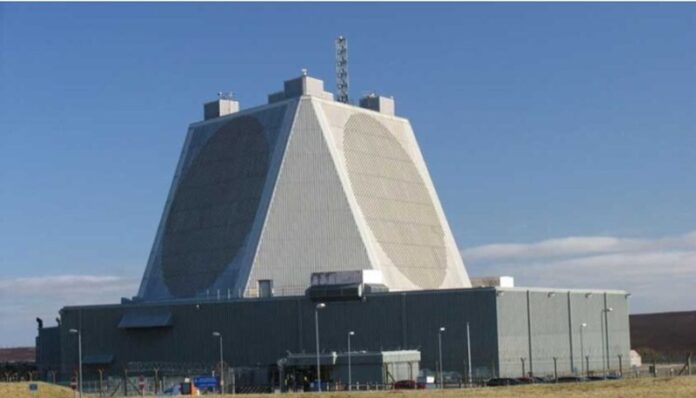
US-operated early warning radar system stationed in Qatar

In a dramatic escalation of the ongoing US-Israel-Iran confrontation, Iran’s Islamic Revolutionary Guard Corps (IRGC) has reportedly destroyed a key US-operated early warning radar system in Qatar, marking a major strategic development in Middle Eastern security dynamics .

According to official confirmations referenced in the report, the targeted system was the AN/FPS-132 Block 5 Upgraded Early Warning Radar (UEWR), positioned near Al Udeid Air Base in Qatar — the largest US military installation in the Middle East.


The destruction of this high-value radar asset signals a new phase in the conflict, where fixed US strategic infrastructure is directly targeted.

The AN/FPS-132 Radar: A Cornerstone of US Missile Defense

Image

The AN/FPS-132 Block 5 UEWR is one of the most advanced ballistic missile detection systems deployed by the United States. Developed by Raytheon Technologies, the radar:

  • Detects ballistic missile launches at distances up to 5,000 kilometers
  • Provides 360-degree phased-array coverage
  • Integrates with the US Ground-Based Midcourse Defense (GMD) system
  • Enhances early detection and interception timing

Installed in Qatar under a US$1.1 billion agreement approved in 2013, the radar formed a central pillar of Gulf missile defense architecture .

Its mission was particularly focused on monitoring Iranian ballistic missile activity across the region.

Strategic Importance of Al Udeid Air Base

Image

Located in Qatar, Al Udeid Air Base hosts more than 10,000 US personnel and serves as a forward command hub for US Central Command (CENTCOM) operations.

The radar installation near this base provided:

  • Early warning against ballistic missile threats
  • Extended interception decision time for Patriot and THAAD systems
  • Integrated surveillance coverage for Gulf allies

Its destruction potentially reduces response times and weakens layered air defense coordination across the Gulf .

How Iran Reportedly Executed the Strike

Iran’s IRGC Aerospace Force allegedly used advanced ballistic missiles such as:

  • Fattah-1
  • Kheibar Shekan

These systems are designed for high speed, maneuverability, and improved survivability against missile defenses .

Additionally, Iranian operations reportedly included:

  • Shahed-136 drone strikes against US-linked infrastructure in Bahrain
  • Missile strikes targeting Muwaffaq Salti Air Base in Jordan

The Shahed-136, a relatively low-cost loitering munition, highlights the asymmetric strategy of using inexpensive systems to neutralize high-value assets .

Regional Implications: Qatar, Bahrain, and Jordan at Risk

The strike has broader geopolitical implications:

Qatar

As host to major US forces, Qatar now faces elevated strategic risk and may need to reassess security posture .

Bahrain

Home to the US Fifth Fleet, attacks on radar infrastructure challenge maritime security in the Persian Gulf .

Jordan

Strikes near Muwaffaq Salti Air Base threaten forward US airpower deployments .

Strategic and Global Consequences

The destruction of the AN/FPS-132 radar raises serious strategic questions:

  • Can fixed billion-dollar defense infrastructure survive precision missile warfare?
  • Will the US deploy mobile or naval-based radar replacements?
  • Could Gulf Cooperation Council (GCC) states diversify defense partnerships toward China or Europe?

Financial markets are also likely to react, particularly in:

  • Energy futures
  • Defense sector equities
  • Gulf sovereign risk premiums

The Gulf region remains central to global oil supply chains, meaning any sustained instability could ripple across global markets .

A Turning Point in Modern Warfare?

This episode reflects a broader transformation in warfare:

  • Precision-guided ballistic missiles
  • Hypersonic-capable systems
  • Low-cost unmanned saturation attacks
  • Vulnerability of fixed infrastructure

If confirmed at scale, the strike may redefine deterrence calculations in the Middle East, challenging the perception of invulnerability long associated with advanced US missile defense networks .

As tensions intensify and retaliatory options loom, the region stands at a volatile crossroads — one where miscalculation could trigger far wider escalation.

Why Air Campaigns Fail at Regime Change: Historical Lessons for Trump and Iran

0

For more than a century, great powers have believed that air campaigns could reshape politics from the sky. From the firebombing of cities in World War II to precision drone strikes in the 21st century, the promise has been the same: destroy enough military and political infrastructure, and the regime will fall.

Now, as former U.S. President Donald Trump faces mounting pressure over Iran policy, history offers a sobering warning. Air campaigns may devastate targets — but they rarely produce friendly regime change. More often, they harden resistance, fuse national identity with ruling elites, and trigger delayed retaliation.

Below are three historical lessons that policymakers ignore at their peril.

Lesson 1: Air Power Rarely Produces Friendly Regime Change

Image

Since World War I, dozens of bombing campaigns have sought to coerce or collapse governments from the air. Strategic bombing theorists once believed civilians would turn against their leaders under aerial assault. Reality proved far more complicated.

  • During the Blitz, Nazi Germany bombed London relentlessly. Britain did not surrender; resistance intensified.
  • In 1999, NATO bombed Serbia under the leadership of Slobodan Milošević. While Belgrade ultimately made concessions over Kosovo, the campaign did not produce a pro-NATO leadership installed by air power alone.
  • The 2003 U.S. “Shock and Awe” campaign toppled Saddam Hussein’s regime — but regime change required a full-scale ground invasion. Air strikes alone were insufficient.
  • Since 2022, Vladimir Putin has repeatedly struck Kyiv and other Ukrainian cities. Rather than collapsing, Ukrainian national cohesion strengthened under Volodymyr Zelenskyy.

The pattern is consistent: air power can destroy infrastructure and degrade military capability. It does not reliably reshape political loyalty or produce a cooperative government aligned with the attacker.

Lesson 2: External Attack Fuses Regime and Nation

Image

Bombing transforms domestic politics. External attack often creates a “rally-around-the-flag” effect — even among citizens who oppose their leaders.

When a country faces foreign assault:

  • Political opposition tends to close ranks.
  • Public criticism shifts toward the external enemy.
  • National identity fuses with regime survival.

Consider the hypothetical: if Iran assassinated Donald Trump, would American Democrats praise Tehran? Or would domestic divisions narrow in the face of foreign aggression?

Similarly, despite internal dissent in Iran, foreign military strikes would likely strengthen nationalist sentiment rather than empower pro-Western factions. History shows that populations rarely align with external bombers to remove their own governments.

In Ukraine, Russian strikes did not fracture society — they reinforced resistance. In Serbia during NATO’s 1999 campaign, domestic support for the regime initially increased despite widespread dissatisfaction beforehand.

External attack often legitimizes the regime it seeks to weaken.

Lesson 3: Retaliation Is Often Delayed and Asymmetric

Image

The absence of immediate retaliation does not mean success.

States — especially those with regional networks or asymmetric capabilities — often respond on their own timeline. Retaliation may come:

  • Months or years later
  • Through proxy groups
  • Via cyber operations
  • Through attacks on economic infrastructure
  • By escalating conflicts in neighboring regions

After U.S. operations in the Middle East, responses frequently emerged through non-state actors rather than direct state confrontation. Modern warfare increasingly blurs the lines between state and proxy, overt and covert, kinetic and cyber.

In the case of Iran, retaliation would likely be multidimensional — from regional proxy escalation to cyber campaigns targeting financial or energy systems. The immediate battlefield calm can mask long-term instability.

Strategic patience, not immediate counterstrike, often defines asymmetric retaliation.

Why This Matters Now

If the United States were to pursue regime change in Iran primarily through air power, historical precedent suggests three risks:

  1. Political failure — Destruction without political transformation.
  2. National consolidation — Strengthening the regime internally.
  3. Long-term blowback — Delayed retaliation beyond conventional battlefields.

Air campaigns may satisfy short-term political demands for action. But history — from World War II to Ukraine — demonstrates that bombing alone rarely engineers durable political outcomes.

As Trump confronts escalating tensions with Tehran, the weight of history suggests that regime change from the sky remains one of the most persistent — and least reliable — illusions of modern warfare.

US Plans Phased Strikes on Iran as Tehran’s Rapid Retaliation Tests Gulf Defenses

0
Smoke rises after Iran carried out a missile strike on the main headquarters of the US Navy 5th Fleet in Manama, Bahrain, on Saturday.

The United States has designed a phased military strategy against Iran, featuring escalating rounds of strikes separated by operational pauses, according to a senior U.S. official.

Each phase is expected to last one to two days, followed by a pause to:

  • Assess battle damage
  • Reset operational posture
  • Evaluate Iran’s response
  • Consider diplomatic or military “off-ramps”

This structure suggests Washington is attempting to balance pressure with escalation control, avoiding an uncontrolled regional war.

Iran’s Rapid Retaliation Surprises Analysts

Despite expectations that Tehran would respond, the speed and scale of retaliation have surprised military observers.

Following joint operations by the United States and Israel, Iran launched missiles quickly — testing the extensive air defense network the U.S. has built across the Gulf over the past several years.

Regional defense systems now being tested include:

  • Integrated radar coverage
  • Patriot and other missile defense systems
  • Naval-based interception platforms
  • Airspace coordination among Gulf states

This defensive posture, developed over months and years, is now facing real-time operational stress.

Iran’s Missile Capacity: 2,000–3,000 Missiles

Intelligence estimates suggest Iran possesses between 2,000 and 3,000 missiles capable of launch.

However, analysts note a critical limitation: launcher availability.

According to intelligence assessments:

  • Iran may have only one-third of the missile launchers it possessed before the June attacks last year.
  • Reduced launcher capacity should theoretically slow firing rates.

If those assessments are accurate, experts expected a slower, more staggered Iranian response.

Instead, Tehran mounted a rapid and large-scale counterattack — faster than many predicted.

Evidence of Prior Preparation

The speed of retaliation suggests Iran had prepared contingency plans in advance.

Military analysts now believe:

  • Iranian forces anticipated a high-intensity strike scenario.
  • Missile units were likely pre-positioned.
  • Command authority may have been predelegated.
  • Rapid-launch protocols were already activated.

The magnitude of the initial response indicates readiness beyond routine defensive posture.

Testing the Gulf Defense Architecture

The unfolding conflict is effectively a real-world stress test of U.S.-aligned defense architecture across the Gulf.

This includes coordination among key regional states such as:

  • Bahrain
  • United Arab Emirates
  • Qatar
  • Saudi Arabia

The ability of these states to intercept incoming threats will shape both political and military calculations moving forward.

Strategic Implications

The next phase of escalation depends on several key variables:

  1. Launcher survivability: Can Iran sustain its missile tempo?
  2. Defense effectiveness: Can Gulf systems maintain interception rates?
  3. US restraint mechanisms: Will Washington activate diplomatic off-ramps?
  4. Israeli targeting: Will leadership or infrastructure strikes intensify?

If Iran’s launcher shortages are real, its ability to sustain high-intensity barrages may be limited. However, its demonstrated preparedness suggests it may have optimized what remains of its launch capacity.

Conclusion: Controlled Escalation or Widening Conflict?

The U.S. phased strike model signals intent to manage escalation carefully. Yet Iran’s faster-than-expected retaliation shows that Tehran anticipated confrontation and prepared accordingly.

The coming days will determine whether:

  • The pause-and-assess model stabilizes the conflict
  • Or rapid action-reaction cycles overwhelm escalation control

For now, Gulf defense systems — and the broader regional security architecture — are being tested in ways not seen in years.

Israel Targets Iran’s Top Leadership: Khamenei Reportedly Among Assassination Targets in Massive Airstrikes

0
Iran's Supreme Leader Ayatollah Ali Khamenei speaks during a meeting

The Israeli Air Force carried out extensive strikes across Iran on Saturday morning in what officials described as an effort to eliminate senior political and military leadership — including Supreme Leader Ali Khamenei.

According to Israeli and U.S. officials cited in media reports, the coordinated operation marks one of the most ambitious attempts to destabilize Iran’s ruling structure since the 1979 Islamic Revolution.

Objective: Regime Destabilization

An Israeli official stated that the broader objective is to create conditions for the downfall of Iran’s leadership.

“The goal is to create all the conditions for the downfall of the Iranian regime,” the official said, adding that the outcome would also depend on whether the Iranian public mobilizes internally.

This signals a shift from purely military deterrence toward a potential regime-change strategy.

Leadership Targets Identified

Israeli officials said the strikes targeted the entire Iranian leadership apparatus — political and military.

Reportedly targeted individuals include:

  • Masoud Pezeshkian
  • Ahmad Vahidi
  • Ali Shamkhani
  • Mahmoud Ahmadinejad

Israeli sources also indicated that locations linked to Khamenei’s residence and government compound were struck.

However, officials acknowledged that it may take several hours to determine which, if any, senior figures were killed.

Division of Roles: U.S. and Israeli Focus Areas

A senior U.S. official told reporters that American strikes are primarily targeting Iran’s missile program and launch infrastructure.

In contrast, Israeli operations are focused on two tracks:

  1. Targeting missile capabilities
  2. Eliminating senior Iranian leadership

This dual approach suggests a coordinated strategy aimed at both degrading military capabilities and destabilizing political command structures.

Netanyahu and Trump Statements

In a public address, Israeli Prime Minister Benjamin Netanyahu said:

“Our joint action will create the conditions for the brave Iranian people to take their destiny into their own hands.”

He called on various ethnic communities within Iran — Persians, Kurds, Azeris, Baluchis, and Ahwazis — to seek political change.

Meanwhile, U.S. President Donald Trump urged Iranian civilians to remain indoors during the bombing campaign and suggested that, once operations conclude, they should “take over” their government.

His remarks strongly indicate support for internal political upheaval following military pressure.

Strategic Implications

If confirmed, direct targeting of Iran’s Supreme Leader would represent a dramatic escalation in Middle Eastern conflict dynamics.

Potential implications include:

  • Intensified Iranian retaliation
  • Expansion of hostilities across the Gulf region
  • Increased risk to U.S. troops and allies
  • Mobilization of Iranian proxy networks
  • Heightened regional polarization

Targeting leadership rather than solely infrastructure reflects a high-risk strategy aimed at rapid destabilization.

Uncertainty Remains

Iranian officials have confirmed that multiple senior figures were targeted, but casualty confirmations remain unclear.

The next 24–72 hours will likely determine:

  • The survival or loss of key Iranian officials
  • The scale of Iran’s retaliation
  • Whether regional actors escalate or attempt mediation

Conclusion

The latest Israeli air campaign represents a significant shift in scope and intent. By directly targeting Iran’s senior leadership while the U.S. focuses on missile infrastructure, the operation blends military degradation with political destabilization.

Whether this strategy results in regime collapse, prolonged regional war, or controlled escalation remains uncertain. What is clear is that the Middle East has entered one of its most volatile moments in decades.

Iran Fires Missiles at Gulf States: Strategic Fallout Across Bahrain, UAE, Qatar, Kuwait, Jordan

0
Smoke rises in the sky after blasts were heard in Manama, Bahrain, February 28, 2026.

In a dramatic escalation, Iran launched missiles that crossed or targeted multiple sovereign states in a single morning. The strikes affected key Gulf and regional countries — some directly hit, others intercepting incoming projectiles.

Here’s what happened in each country and the broader strategic consequences.

Bahrain: Fifth Fleet Headquarters Struck

Bahrain confirmed a hit near the headquarters of the US Navy’s Fifth Fleet in Manama.

  • Bahrain’s state news agency acknowledged the strike.
  • No casualty figures were immediately released.
  • The Fifth Fleet oversees US naval operations across the Persian Gulf.

If verified, this marks a direct challenge to American naval command infrastructure in the region.

UAE: Interceptions and Civilian Casualty

In the United Arab Emirates:

  • Multiple missiles were intercepted by Emirati air defenses.
  • One civilian in Abu Dhabi was reportedly killed due to falling debris.
  • The UAE Ministry of Defense confirmed successful interceptions.

This represents a direct violation of Emirati sovereign airspace by a neighboring maritime state.

Qatar: Missile Intercepted, No Damage

Qatar reported:

  • One missile intercepted.
  • No casualties or damage.
  • Confirmation from the Qatari Interior Ministry.

Qatar hosts Al Udeid Air Base, a central US military facility in the region. Despite maintaining diplomatic channels with Tehran in past crises, it now finds itself directly targeted.

Kuwait: Airspace Violated

Kuwait’s state news agency KUNA confirmed that missiles were “dealt with” in Kuwaiti airspace.

  • No damage reported.
  • No confirmed casualties.

Kuwait has maintained neutrality in Gulf tensions since 1991. Iranian ballistic missiles flying over its territory represent a serious breach of sovereignty.

Jordan: Direct Interception

Jordan confirmed two Iranian ballistic missiles were shot down by its armed forces.

Notably:

  • Jordan had previously intercepted Iranian missiles in June 2025 in defense of Israel.
  • This time, the missiles reportedly targeted Jordan directly.

This marks a qualitative escalation in Tehran-Amman tensions.

Saudi Arabia: Unconfirmed Claims

Iranian outlet Fars News claimed strikes on Saudi Arabia.

  • No confirmation from Saudi officials.
  • No independent verification from major international outlets.

Whether the strikes occurred — or whether Riyadh has yet to disclose them — both scenarios carry major strategic implications.

Strategic Impact: A Region Pushed Toward Coalition

In attempting retaliation against the US and Israel, Iran’s missile launches crossed or targeted multiple sovereign states — including countries that had not attacked Iran.

Key points:

  • Several Gulf states were neutral or semi-neutral.
  • Airspace violations occurred across multiple jurisdictions.
  • Civilian casualties were reported in at least one country.
  • No confirmed destruction of US strategic assets.
  • No reported American troop casualties among tens of thousands deployed regionally.

This creates a new legal and political dynamic: states whose sovereignty was breached now have justification to join a potential coalition response.

Military Asymmetry and Perception

While Iranian missiles were largely intercepted across four countries, Israeli strikes reportedly hit intended targets inside Tehran, including sites linked to the IRGC and sensitive leadership areas.

This perceived asymmetry — intent versus effectiveness — may shape regional responses over the next 72 hours.

What to Watch Next

Security analysts are closely monitoring:

  • Potential joint Gulf statements
  • Airspace coordination between Riyadh, Abu Dhabi, Manama, and Kuwait City
  • Formal coalition-building measures
  • Expanded US engagement

The coming days will determine whether this episode stabilizes — or whether Iran’s broad missile salvo reshapes the Gulf security architecture.

Conclusion

Rather than isolating its adversaries, Iran’s multi-country missile launch may have widened the conflict’s scope. By crossing multiple borders in a single escalation cycle, Tehran may have transformed previously neutral actors into potential participants in the next phase of confrontation.

The Middle East now stands at a decisive moment — one that could redefine regional alliances and military coordination for years to come.

Iran Strikes Escalate: How the New Conflict Differs from the 12-Day War

0
Smoke is left in the sky after blasts were heard in Doha, Qatar on Saturday.

The first hours of the current military campaign against Iran reveal a conflict that is structurally and strategically different from the earlier 12-Day War. Differences in timing, objectives, coordination, and escalation patterns suggest a far more expansive and dangerous confrontation.

Here’s what we know so far.

1. Timing Signals Maximum Disruption

Explosions were reported across Tehran early in the morning, marking a notable shift from the previous conflict, which began with nighttime strikes.

Launching operations at the start of Iran’s calendar week appears designed to maximize:

  • Government disruption
  • Leadership vulnerability
  • Civil-military confusion
  • Psychological shock

The shift in timing indicates deliberate strategic messaging and operational planning.

2. A Clear Decapitation Strategy

Early reports suggest approximately 30 targets were hit in the first wave. These reportedly included:

  • Leadership residences
  • Intelligence facilities
  • Security command nodes
  • Even areas associated with the Supreme Leader’s office

Unlike previous operations that prioritized military infrastructure, this campaign appears aimed directly at leadership structures — a hallmark of a “regime decapitation” strategy.

Such strategies attempt to destabilize command-and-control systems at the outset, reducing coordinated defensive responses.

3. Direct U.S. Participation from the Start

A major shift from the earlier 12-Day War is the apparent direct involvement of the United States from the beginning.

President Donald Trump described the operation as defending American lives and neutralizing immediate threats. However, his statements encouraging the Iranian people to oppose their government strongly suggest regime change may be an underlying objective.

American officials reportedly characterized the campaign as extensive and closely coordinated with Israel — marking a clear escalation in US engagement.

4. Phased Operational Design

The operational structure appears carefully sequenced:

Phase 1:

  • Missile strikes targeting leadership nodes
  • Suppression of air defense systems
  • Strikes on southern strategic sites such as Chabahar

The likely goal: clear the path for expanded air force operations against:

  • Missile bases
  • Strategic infrastructure
  • Command centers

This layered approach reflects a more comprehensive military design than the previous limited exchange.

5. Rapid Iranian Retaliation

Iran’s response was unusually swift. Missile launches reportedly began within hours, with impacts reported in:

  • Tel Aviv
  • Haifa

Iranian statements declared that no “red lines” remain, signaling full-force retaliation.

This rapid response suggests possible predelegated authority within Iran’s military structure — allowing continuous retaliation without waiting for centralized political authorization.

Such a posture significantly increases escalation risks.

6. Expansion Beyond Israel

Another critical difference: the confrontation quickly extended beyond Israeli territory.

Reports of explosions in Gulf Cooperation Council (GCC) states indicate strikes targeting U.S. bases — marking immediate direct confrontation with Washington.

This sharply contrasts with Iran’s June 2025 strike on Al Udeid Air Base in Qatar, which was widely interpreted as symbolic and calibrated to enable de-escalation.

The current strikes appear operational rather than symbolic.

7. Multi-Front Escalation: The Red Sea Factor

The conflict is no longer confined to Iran and Israel.

Yemen’s Houthi movement has announced renewed operations in the Red Sea, threatening maritime security and commercial shipping lanes.

This development transforms the confrontation into a multi-front regional conflict involving:

  • Israel
  • Iran
  • U.S. forces
  • Gulf states
  • Red Sea maritime corridors

A Conflict with Fewer Restraints

Compared to the 12-Day War, the early indicators suggest:

  • Greater coordination
  • Broader targeting scope
  • Direct US involvement
  • Faster retaliation cycles
  • Immediate regional spillover

Most significantly, previous “red lines” appear to have eroded. The removal of restraint mechanisms increases the probability of miscalculation.

The Strategic Question Ahead

The key question now is whether escalation stabilizes into controlled, calibrated exchanges — or whether the collapse of prior limits pushes the Middle East into a prolonged regional war.

With regime decapitation objectives, direct U.S. participation, rapid Iranian counterstrikes, and expanding fronts, this conflict already exceeds the structure of the previous 12-Day War.

The coming days will determine whether this remains a contained high-intensity confrontation — or evolves into a defining regional war.

US Declares War on Iran: How Trump’s Strategy Differs from the 2003 Iraq Invasion

0
SMOKE RISING AFTER US ATTACK IN IRAN

The United States’ declaration of war on Iran aimed at achieving regime change has drawn immediate comparisons to the 2003 Iraq invasion under President George W. Bush. However, while the echoes of Iraq are unmistakable, the strategy pursued by President Donald Trump differs in four significant ways.

This evolving crisis also places Iran and Israel at the center of an increasingly volatile Middle East confrontation.

1. No Attempt at UN Security Council Approval

Before launching the 2003 invasion of Iraq, the Bush administration sought backing from the United Nations Security Council, arguing that Iraq possessed weapons of mass destruction.

In contrast, Trump did not attempt to secure international authorization before initiating military operations against Iran. The absence of UN engagement signals a unilateral approach, potentially increasing diplomatic isolation and global criticism.

2. No Congressional Authorization Vote

In 2002, 77 US Senators voted to authorize military force against Iraq, while 23 voted against it. The Senate vote provided political legitimacy and bipartisan backing for Bush’s war effort.

This time, Trump did not seek a Senate vote prior to launching strikes. The lack of Congressional authorization raises constitutional and political questions about executive war powers and domestic support for prolonged military action.

3. A Much Smaller Coalition

The Iraq invasion was conducted by a broad international alliance known as the “Coalition of the Willing,” officially comprising 49 countries.

By contrast, the current military campaign appears limited primarily to US-Israel coordination. Israeli Prime Minister Benjamin Netanyahu has publicly supported regime change in Tehran and praised Trump’s leadership.

The narrower coalition may complicate long-term sustainability, burden-sharing, and international legitimacy.

4. Air Power Instead of Ground Troops

Perhaps the most significant operational difference lies in military deployment.

The Iraq invasion involved massive ground troop deployments aimed at occupying territory and dismantling Saddam Hussein’s regime. Trump has implied that the current strategy will rely primarily on air power.

Historically, air campaigns alone have rarely achieved full regime change without accompanying ground operations. Analysts warn that while airstrikes can degrade infrastructure, they often fail to decisively overthrow entrenched governments.

Trump’s Justification: Missiles and Nuclear Ambitions

In a video address, Trump described the operation as “massive and ongoing,” claiming Iran was developing long-range missiles capable of threatening Europe, US forces overseas, and eventually the American homeland.

However, intelligence sources cited in media reports indicate there is no current evidence that Iran possesses missiles capable of striking the United States. Iran does maintain short- and medium-range ballistic missile capabilities that threaten US forces and allies in the Middle East.

Trump also accused Tehran of rebuilding its nuclear program after prior US strikes that he previously claimed had destroyed nuclear facilities.

Israel’s Position: Regime Change as Strategic Goal

Netanyahu framed the joint US-Israel action as an opportunity for the Iranian people to overthrow what he described as a “murderous terrorist regime.” He called on Iranians to “cast off the yoke of tyranny” and pursue a free and peaceful future.

Israel is reportedly preparing for several days of sustained strikes, with the possibility of extending operations if necessary.

The alignment between Washington and Jerusalem underscores Israel’s longstanding security concerns regarding Iran’s nuclear program and regional proxy networks.

Regional Implications and Escalation Risks

The unfolding campaign carries significant risks:

  • Retaliation against US troops in the Middle East
  • Escalation through proxy groups
  • Disruption of commercial shipping routes
  • Broader regional destabilization

The strategic gamble appears to rest on the assumption that sustained airstrikes and political pressure could trigger internal regime collapse.

History, however, offers mixed lessons. The Iraq War led to prolonged insurgency, regional instability, and geopolitical consequences that continue to shape Middle Eastern politics more than two decades later.

Conclusion: A High-Stakes Gamble

While the rhetoric surrounding regime change in Iran recalls 2003, the execution strategy is markedly different: no UN approval, no Senate vote, a minimal coalition, and reliance on air power.

Whether this approach will achieve its stated objectives—or instead open a new chapter of regional conflict—remains uncertain. What is clear is that the stakes are extraordinarily high, not only for Iran and Israel, but for the global security order itself.

USS Gerald R. Ford Off Israel: Strategic Shield Against Iran or Escalation Signal?

0

The deployment of the USS Gerald R. Ford off Israel’s Mediterranean coast has sparked intense strategic debate. Rather than positioning near Iran’s southern coastline or in the Gulf, the world’s largest and most expensive warship — valued at approximately $13.3 billion — has anchored near Haifa.

The move raises a key geopolitical question: Why place America’s most advanced aircraft carrier off Israel instead of closer to Iranian territory?

Defense analysts suggest the answer lies in a deliberate division of offensive and defensive naval strategy as tensions with Iran escalate.

Two Carriers, Two Missions: Sword and Shield Doctrine

Image

Image

While the USS Abraham Lincoln operates closer to Iran’s strike envelope, reportedly positioned for rapid offensive capability, the Ford’s placement off Israel signals a defensive architecture.

Strategic observers describe this as:

  • Lincoln positioned as the “sword” — capable of launching airstrikes into Iranian airspace within hours.
  • Ford positioned as the “shield” — providing missile defense coverage over Israeli territory.

This dual-carrier structure separates offensive strike capability from defensive deterrence, a configuration not seen at this scale in decades.

Why Off Israel?

Image

The Ford’s strike group includes advanced Aegis missile defense systems designed to intercept ballistic and cruise missiles. If Iran were to retaliate against U.S. strikes by targeting Israeli cities such as Tel Aviv or Haifa, those projectiles would pass through the defensive envelope of the carrier group.

This positioning creates a powerful strategic dynamic:

  • Any Iranian missile aimed at Israel risks interception by U.S. naval systems.
  • Retaliatory fire toward Israel could simultaneously threaten U.S. naval assets.
  • Engagement with Israel’s airspace becomes intertwined with potential engagement against U.S. forces.

In essence, the deployment embeds American assets directly into Israel’s defensive grid.

Escalation Management or Escalation Guarantee?

Some analysts argue the Ford’s placement serves as escalation insurance — ensuring that any Iranian retaliation would involve U.S. forces, thereby solidifying alliance cohesion and political legitimacy for expanded military action.

Others interpret the move as deterrence by proximity. By positioning the carrier where Iranian retaliation might occur, Washington increases the cost of escalation for Tehran.

The logic is clear:

  • If Iran strikes Israel, U.S. assets are immediately involved.
  • If U.S. assets are engaged, the conflict automatically widens.
  • The threshold between limited strike and broader war narrows significantly.

This architecture effectively links U.S. and Israeli defense outcomes in a single operational theater.

Strategic Implications for the Middle East

The Mediterranean deployment suggests several broader implications:

  1. Integrated U.S.–Israel Defense Posture
    The positioning reinforces joint missile defense and operational coordination.
  2. Deterrence Signaling to Iran
    Iran must calculate retaliation paths carefully, knowing U.S. forces are within engagement range.
  3. Alliance Assurance
    The deployment signals to regional partners that Washington remains deeply committed to Israel’s security.
  4. Operational Flexibility
    The Lincoln remains positioned for offensive strike operations, preserving rapid response capability.

Historical Context

While dual-carrier deployments have occurred before, explicitly separating offensive and defensive missions in this way recalls large-scale Pacific theater strategies during World War II. However, today’s environment involves missile saturation, drone swarms, and layered air defense systems — adding complexity absent in historical analogues.

Risks and Uncertainties

The strategy carries inherent risks:

  • Missile interception failures could draw the U.S. directly into conflict.
  • Iranian asymmetric tactics, including drones and proxy forces, complicate the defensive umbrella.
  • A miscalculation on either side could accelerate escalation beyond initial strike parameters.

Carrier strike groups represent both deterrence tools and high-value targets. Their placement is never accidental.

Conclusion

The deployment of the USS Gerald R. Ford off Israel reflects a calculated strategic choice. Rather than redundancy, it represents a deliberate architecture separating offense and defense while intertwining U.S. and Israeli security outcomes.

Whether this posture prevents escalation or ensures it unfolds under American-defined conditions remains an open question. What is clear is that the carrier’s positioning sends a powerful signal across the region: any retaliation calculus must now factor in the presence of America’s most advanced naval asset in the Eastern Mediterranean.

F-22 Raptor 2.0 Revealed: USAF Extends Range and Stealth for Indo-Pacific Air Dominance

0

The unveiling of the production-representative “Raptor 2.0” scale model at the Air & Space Forces Association’s Warfare Symposium signals a calculated shift in U.S. airpower strategy as Washington confronts intensifying peer competition in the Indo-Pacific .

Presented by Lockheed Martin, the upgrade reframes the F-22 Raptor not as a sunset platform, but as an extended air dominance node engineered to survive longer, see farther, and operate deeper inside contested battlespace environments .

Why Raptor 2.0 Now?

Image

According to the document, the urgency stems from three converging pressures :

  • Expanding Chinese airpower and long-range anti-access/area denial (A2/AD) systems
  • Proliferation of integrated air defense networks
  • Growing sensor density that compresses survivability margins for legacy stealth aircraft

Flashpoints such as the South China Sea and Taiwan Strait are explicitly highlighted as regions where operational distance and endurance now matter as much as stealth .

The Core Problem: Range and Endurance

Originally fielded in 2005, the F-22 was designed for Cold War-era assumptions about basing and engagement geometry. While its radar cross-section is famously small and its supercruise capability remains formidable, its roughly 530-nautical-mile combat radius increasingly clashes with Indo-Pacific realities .

With only 187 aircraft produced—far below the originally envisioned 750—the fleet faces structural scale limits that modernization must offset qualitatively .

Stealth-Shaped External Fuel Tanks: Extending Reach

Image

Raptor 2.0 introduces stealth-contoured external fuel tanks designed to increase range without resorting to conventional drop tanks that dramatically increase radar signature .

Key features include:

  • Faceted low-observable geometry to minimize radar returns
  • Jettison capability before high-intensity combat
  • Reduced tanker dependency in dispersed basing scenarios

In a theater defined by maritime expanses and vulnerable tanker assets, even marginal range extensions can reshape sortie generation and survivability calculus .

However, trade-offs exist. Added mass and drag could affect acceleration and sustained supercruise performance under maximum load conditions .

IRST Pods: Restoring Passive Detection

Image

Raptor 2.0 also restores infrared search and track (IRST) capability via underwing Advanced Sensor Pods .

Passive IRST detection allows the aircraft to:

  • Identify targets without emitting radar energy
  • Preserve electromagnetic silence
  • Detect stealth adversaries such as China’s Chengdu J-20 or Russia’s Sukhoi Su-57

The upgrade supports distributed sensor fusion, enabling IRST-equipped aircraft to share targeting data with “clean” F-22s lacking pods .

Still, underwing pods introduce aerodynamic and signature compromises—highlighting the constant balancing act between stealth purity and expanded capability .

Maintenance and Budget Considerations

The document notes that added external components may increase maintenance complexity, especially given the F-22’s historically demanding radar-absorbent material upkeep .

Budget tensions also loom large. Modernization funding competes with next-generation air dominance programs, making Raptor 2.0 a strategic “bridge” rather than a wholesale redesign .

Notably, no propulsion upgrades are included in the disclosed scope—suggesting cost containment and a focus on sensor and endurance improvements over engine replacement .

Strategic Impact: Signaling and Deterrence

Raptor 2.0 does not expand fleet size, but it enhances qualitative edge. The upgrade:

  • Extends operational reach into contested zones
  • Complicates adversary anti-access strategies
  • Reinforces U.S. commitment to fifth-generation air superiority

It also serves alliance reassurance purposes, demonstrating continued U.S. investment in high-end air dominance capabilities amid rising stealth-versus-stealth competition .

Timeline and Operational Outlook

Flight testing milestones in early 2024 indicate the concept has progressed beyond modeling, with integration targeted around 2026 under the FY2025 budget framework .

Operational validation will ultimately determine whether the trade-off between:

  • Extended range
  • Passive detection
  • Performance impact
  • Maintenance burden

achieves the intended equilibrium in Indo-Pacific strategic competition .

Conclusion

Raptor 2.0 represents a measured yet consequential recalibration of U.S. air superiority doctrine. Rather than replacing the F-22, the modernization extracts additional utility from a limited fleet, adapting it to longer distances, denser sensors, and stealth-versus-stealth rivalry.

In an era where survivability margins are tightening and engagement envelopes are shrinking, Raptor 2.0 signals that the United States intends to preserve its air dominance edge—even as sixth-generation platforms loom on the horizon .