Saturday, June 6, 2026
Home Blog Page 36

China’s Wang Yi Lands in Pakistan: A Power Play to Cement an Ironclad Alliance

0

ISLAMABAD, August 21, 2025 — Chinese Foreign Minister Wang Yi arrived in Pakistan today for a pivotal three-day visit, warmly welcomed by Deputy Prime Minister and Foreign Minister Senator Mohammad Ishaq Dar at Nur Khan Airbase. The visit, which includes co-chairing the sixth round of the Pakistan-China Foreign Ministers’ Strategic Dialogue, underscores the deepening of the “All-Weather Strategic Cooperative Partnership” between Beijing and Islamabad. Against a backdrop of regional volatility and shifting global alliances, Wang Yi’s trip signals China’s unwavering commitment to its closest South Asian ally.

The agenda is packed with high-stakes discussions, from advancing the China-Pakistan Economic Corridor (CPEC) to addressing security concerns and navigating regional dynamics. The visit follows a intensified India-Pakistan tensions, notably after the April 2025 Pahalgam attack, which killed 26 and sparked a brief military standoff. Wang Yi’s stop in Islamabad comes on the heels of talks in New Delhi, highlighting China’s delicate balancing act between engaging India and bolstering Pakistan.

A Strategic Reaffirmation

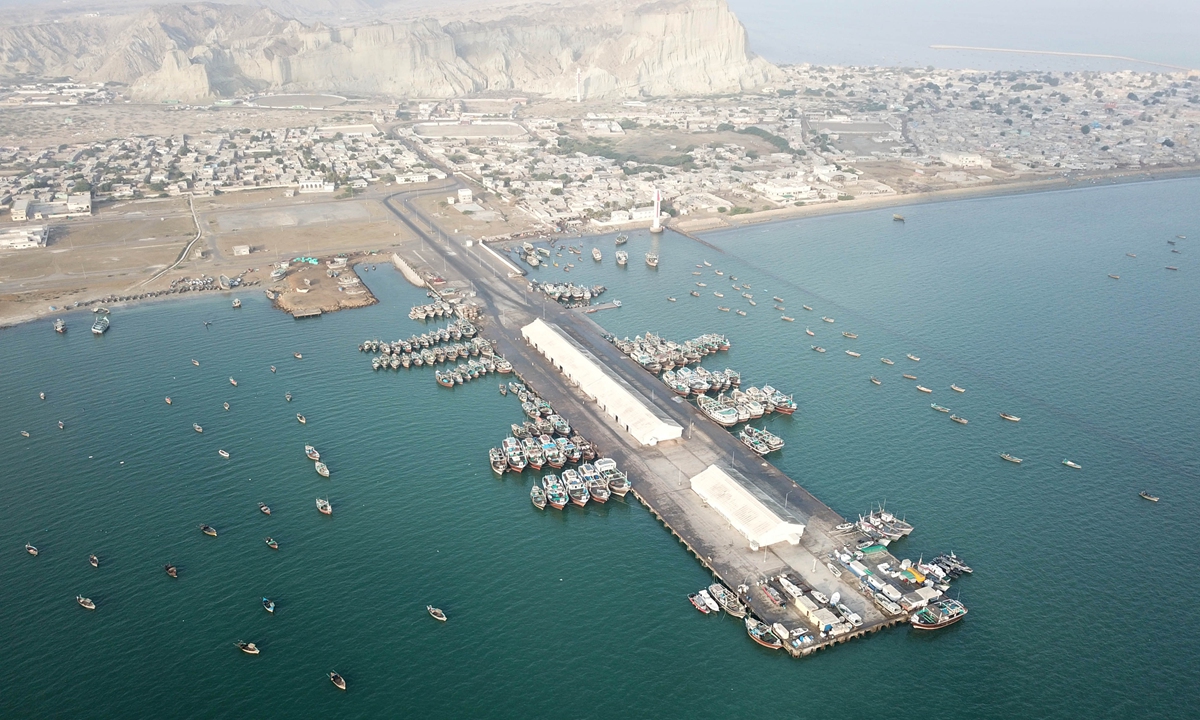
The “ironclad” friendship between China and Pakistan, rooted in diplomatic ties since 1951, is a cornerstone of both nations’ foreign policies. The Strategic Dialogue will review bilateral relations, with a focus on expanding CPEC—a flagship of China’s Belt and Road Initiative. With billions invested in infrastructure, energy, and the Gwadar Port, CPEC remains a linchpin of economic cooperation. Pakistan seeks fresh Chinese investments in mining, agriculture, and industrialization to bolster its struggling economy, while China eyes strategic access to the Arabian Sea.

However, the visit isn’t just about economics. Security concerns loom large, with Beijing pressing Pakistan to protect Chinese nationals working on CPEC projects. Over 20 Chinese citizens have been killed in attacks since 2021, including a deadly October 2024 bombing in Karachi targeting engineers. Wang Yi is expected to push for enhanced measures.

Regional and Global Context

The timing of the visit is telling. Pakistan’s recent overtures to the United States, including engagements with President Donald Trump, have raised eyebrows in Beijing, which views Pakistan as a counterweight to the U.S.-India axis. China’s support for Pakistan’s stance on terrorism and sovereignty, coupled with its call for India-Pakistan dialogue, reflects a strategy to maintain influence over both rivals while prioritizing Islamabad.

The visit also ties into trilateral cooperation with Afghanistan, following a May 2025 meeting in Beijing where Pakistan and Afghanistan agreed to upgrade ties. China aims to extend CPEC into Afghanistan, promoting regional stability and countering U.S. and Indian influence. Yet, India remains wary, particularly after allegations of Chinese intelligence support to Pakistan during the May 2025 conflict, a charge Beijing denies.

Challenges and Opportunities

For Pakistan, Wang Yi’s visit is a chance to secure economic aid and reaffirm China’s backing against India. But balancing this with ties to the U.S. and Turkey could strain relations if Beijing senses a shift in loyalty. For China, the visit reinforces its South Asian foothold, though it must navigate Pakistan’s volatile security environment and India’s opposition to CPEC projects in Kashmir.

As Wang Yi and Dar sit down for talks, the world watches a partnership that shapes South Asia’s geopolitical chessboard. From economic corridors to military cooperation, the China-Pakistan alliance remains a force to be reckoned with, even as regional tensions and global rivalries test its resilience.

Pakistan’s New Rocket Force and Fatah-IV Missile: A Game-Changer in South Asian Security

0

Islamabad, August 21, 2025 – In a bold move to bolster its military capabilities, Pakistan has unveiled the Army Rocket Force Command (ARFC) and the Fatah-IV cruise missile, signaling a strategic shift toward precision-strike warfare and heightened deterrence against regional rival India. Announced by Prime Minister Shehbaz Sharif on Pakistan’s 78th Independence Day, the ARFC, modeled on China’s People’s Liberation Army Rocket Force, aims to centralize the country’s missile assets, while the Fatah-IV enhances its long-range precision capabilities. These developments, set against the backdrop of recent tensions with India, have sparked debates about their implications for South Asia’s volatile security landscape.

The Army Rocket Force Command: A New Era of Deterrence

On August 13, 2025, during Independence Day celebrations, Prime Minister Sharif introduced the ARFC, a dedicated command designed to streamline Pakistan’s missile and rocket operations for conventional warfare. This force consolidates assets previously scattered across artillery brigades and specialist units, equipping them with mobile missile brigades, hardened launch facilities, and advanced logistical networks. Integrated with cutting-edge Intelligence, Surveillance, and Reconnaissance (ISR) systems, the ARFC enables real-time targeting and rapid response, enhancing Pakistan’s ability to conduct coordinated missile salvos. The ARFC’s creation follows a brief but intense conflict with India in May 2025, the most significant since 1999.

After this clash Pakistan increased defense budget in June 2025, a focus on countering India’s Cold Start Doctrine for rapid, limited operations. The ARFC is poised to deliver multi-axis strikes with ballistic, cruise, and potentially hypersonic missiles, reducing the time from target acquisition to engagement and strengthening Pakistan’s conventional deterrence.

Fatah-IV: Precision Power

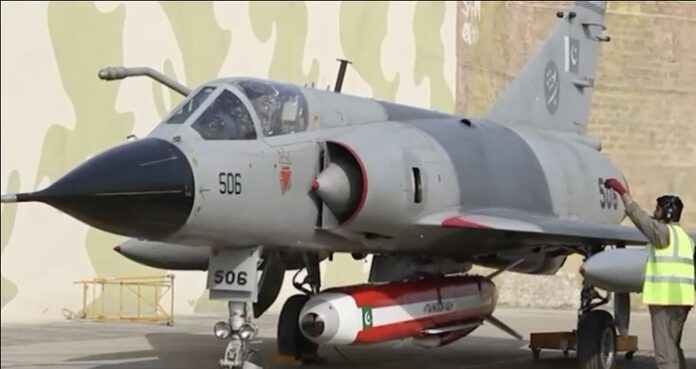
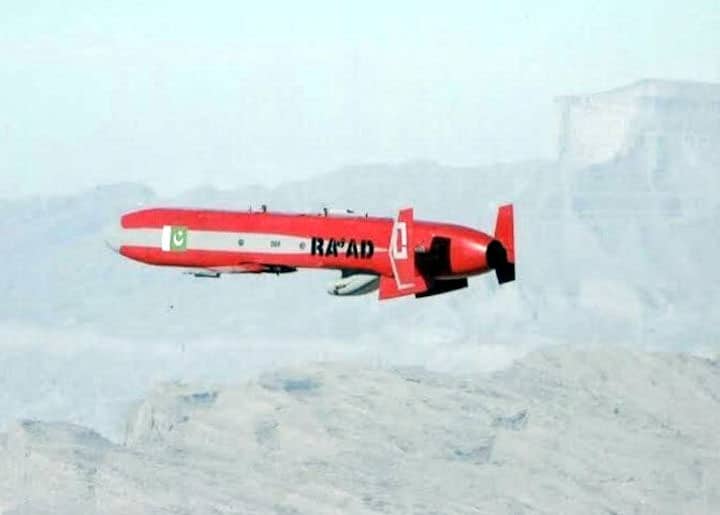
Unveiled A day before the ARFC announcement, on August 12, 2025, Pakistan showcased the Fatah-IV, a subsonic surface-to-surface cruise missile, at Jinnah Stadium in Islamabad. This two-stage, solid-fuel missile boasts a 750-kilometer range, a 330-kilogram high-explosive warhead, and an accuracy of five meters (Circular Error Probable). Equipped with GPS and terrain contour matching guidance, possibly including terrain-hugging capabilities, the Fatah-IV is designed for precision strikes on high-value, mobile, or hardened targets deep in hostile territory.

Inducted into the ARFC, the Fatah-IV enhances Pakistan’s ability to target Indian airfields, command centers, and air defenses without escalating to nuclear conflict. Its public debut during Independence Day celebrations underscores Pakistan’s intent to project military strength. Reports indicate additional Fatah variants are in development, suggesting a sustained push toward advanced missile technology.

Strategic Implications and Regional Dynamics

The ARFC and Fatah-IV mark a doctrinal evolution for Pakistan, transitioning from traditional artillery to a precision-strike era. Analysts see this as a direct response to India’s military advancements. The ARFC could disrupt India’s operational tempo in conventional conflicts, potentially forcing quicker escalation to nuclear thresholds, aligning with Pakistan’s “full-spectrum deterrence” doctrine.

The China-Pakistan military alliance is central to these developments, with Chinese technology transfers, including J-35 stealth fighters and HQ-19 anti-ballistic systems, playing a significant role. The ARFC’s structure mirrors China’s PLARF, raising questions about Pakistan’s reliance on its ally. This move counters the growing US-India defense partnership, which includes advanced missile and space technologies, intensifying regional rivalries.

Indian analysts view the ARFC as a challenge to their security architecture, prompting calls for India to establish its own rocket force to maintain strategic parity. The Fatah-IV’s precision and range threaten key Indian assets, complicating New Delhi’s planning for rapid operations. Meanwhile, the United States has expressed concerns about Pakistan’s missile program, particularly its development of larger rocket motors, which could enable strikes beyond South Asia. Sanctions imposed in December 2024 targeted Pakistan’s ballistic missile efforts, but Islamabad insists its capabilities are solely for regional deterrence, rejecting US claims as “devoid of rationality.”

Economic and Global Considerations

Maintaining the ARFC and advanced missile systems like the Fatah-IV is costly, a challenge for Pakistan’s economy. The 20% defense budget hike and negotiations for 40 Chinese fighter jets reflect a post-conflict push to modernize, but sustainability remains a concern.

Globally, the ARFC’s establishment raises fears of an arms race in South Asia, a region already fraught with nuclear risks. The US’s warnings about an “emerging threat” may overstate Pakistan’s immediate capabilities, but they underscore the need for dialogue to prevent escalation. Pakistan’s focus remains on countering India, but the potential for long-range missile development keeps the international community on edge.

Looking Ahead

Pakistan’s ARFC and Fatah-IV signal a strategic pivot toward precision and deterrence, reshaping South Asian security dynamics. While presented as defensive measures, their timing and capabilities suggest a broader ambition to assert regional influence amid tensions with India.

As Pakistan strengthens its military ties with China and navigates economic challenges, the ARFC’s success will depend on balancing technological advancements with diplomatic efforts to avoid destabilizing the region.

NATO’s Bold New Play: Crafting Ukraine’s Security Shield Amid Russian Tensions

0

As the war in Ukraine rages on, U.S. and NATO military planners are diving into a high-stakes mission to forge post-conflict security guarantees that could redefine the region’s future. Sparked by President Donald Trump’s August 18, 2025, vow to stand by Kyiv and end Russia’s aggression, these efforts aim to arm Ukraine with a robust defense while sidestepping a direct clash with Moscow. From European troops under U.S. command to cutting-edge air support, the options are ambitious but teeter on a knife’s edge of diplomatic and military challenges. Here’s the inside scoop on the plans, their stakes, and the tightrope walk ahead.

The Catalyst: Trump’s Summit and Vague Promises

At a recent summit with heavyweights like French President Emmanuel Macron, German Chancellor Friedrich Merz, and NATO Secretary General Mark Rutte, Trump pledged ironclad security assurances for Ukraine. Special envoy Steve Witkoff stirred the pot, claiming Russian President Vladimir Putin greenlit NATO-style “Article 5-like” protections, though the details are hazy at best. Ukrainian President Volodymyr Zelenskyy, cautiously hopeful, is demanding answers within 10 days, reflecting Kyiv’s urgent need for a lifeline against Russia’s onslaught.

On August 20, 2025, NATO’s top brass met virtually to hash out the summit’s fallout. U.S. Air Force General Alexus Grynkewich led the charge, with General Dan Caine, Chairman of the Joint Chiefs, in tow. The Pentagon is burning the midnight oil, running exercises to move beyond the billions in weapons already sent to Ukraine since Russia’s 2022 invasion. Trump’s stop-and-go aid pauses in February and July 2025 rattled nerves, but resumed shipments signal a shift toward long-term strategies.

Options on the Table: A Delicate Balancing Act

Planners are sketching out bold frameworks to secure Ukraine without poking the Russian bear too hard:

1. European Troops, U.S. Playbook: Picture 15,000–20,000 European troops in Ukraine, flying national flags to dodge the NATO label that makes Moscow twitch. Under U.S. command, they’d bolster Ukraine’s forces as a “reassurance force,” steering clear of front-line combat. The UK’s already eyeing sky and port defense gigs.

2. U.S. Airpower, No Boots: Trump’s nixed U.S. ground troops but is hyping air support—think Patriot systems or even a no-fly zone patrolled by American jets. “Nobody has stuff we have,” he bragged, hinting at tech dominance, though this risks a direct U.S.-Russia showdown.

3. Command Central: The White House floats the U.S. as a coordinator, dishing out intelligence, satellite feeds, and training without boots on the ground. It’s a low-risk power play to keep Washington in the driver’s seat.

Russia’s Line in the Sand

Moscow’s not playing ball. The Kremlin’s Foreign Ministry has slammed any NATO troop presence as a dealbreaker, branding it a threat to Russia’s security. Putin’s demands include a veto on Ukraine’s NATO bid and control over Donetsk and Crimea. Kremlin aide Yuri Ushakov swatted down talk of a Zelenskyy summit, doubling down on Russia’s hardline stance. This clashes head-on with Ukraine’s refusal to cede territory, with Zelenskyy insisting any concessions go to a public vote.

Strategic Stakes: A Global Chessboard

The plans are a geopolitical high-wire act:

U.S. Maneuvering: Trump’s airpower focus keeps U.S. troops out of harm’s way, dodging domestic backlash. But commanding European forces could ruffle allied feathers over sovereignty.

Europe’s Big Bet: European leaders are game, but fielding thousands of troops demands cash and guts. Smaller nations might balk, wary of Russia’s wrath.

Russia’s Red Lines: Analyst John Mearsheimer argues Russia’s war was about stopping NATO’s creep. Even non-NATO troops could trigger Moscow’s ire, derailing peace or sparking worse.

Ukraine’s Fears: Kyiv’s worried that flimsy guarantees without NATO membership won’t stop Russia’s next move. Zelenskyy’s no-concession stance complicates the dealmaking.

Hurdles and Headaches

The road’s rocky. Vague promises and Witkoff’s shaky credibility—his past claims haven’t always held water—fuel doubts. Zelenskyy’s 10-day deadline looms, but planners warn a deal acceptable to all sides is no quick fix. A no-fly zone sounds sexy but risks a U.S.-Russia face-off, while Russia’s territorial demands could sink talks.

X posts capture the divide: some cheer European “cast-iron” guarantee plans, others flag U.S. hesitancy, and Ukrainians demand long-term muscle, not quick deals.

Beyond the Battlefield

The focus on troops and jets often overshadows Ukraine’s bigger needs—rebuilding its economy, infrastructure, and stability. Security guarantees are only half the battle; without a plan for Ukraine’s recovery, even the best-laid defenses could crumble. Trump’s opaque Putin talks and Witkoff’s dubious claims only deepen the fog, leaving analysts questioning if this is real progress or diplomatic theater.

Conclusion: A World on Edge, A Future in the Balance

The race to forge Ukraine’s security shield is nothing short of a global showdown. NATO’s planners are pulling out all the stops—European troops, U.S. airpower, intricate coordination—but every move risks Russian backlash or Ukrainian skepticism. As Zelenskyy counts down the days and Putin digs in, the world holds its breath. Will this bold vision lock in Ukraine’s safety, or will it unravel under the weight of competing agendas? The next few weeks could redraw the map of European security—or ignite new flashpoints. Keep your eyes peeled as NATO and the Pentagon race against time to turn promises into reality. Follow the unfolding drama through NATO briefings and Pentagon updates—history’s being written, and the stakes couldn’t be higher.

Israel’s Gaza City Takeover Plan Ignites Global Fury and Jeopardizes Palestinian Statehood

0
Buildings lie in ruin in North Gaza, amid the ongoing conflict between Israel and Hamas, as seen from Israel.
In a significant escalation of the Israel-Hamas conflict, Israel’s security cabinet, led by Prime Minister Benjamin Netanyahu, approved a plan on August 8, 2025, to take control of Gaza City, the largest urban center in the Gaza Strip with an estimated population of one million. The operation, described as a phased military takeover, aims to disarm Hamas, secure the release of hostages, demilitarize the region, establish Israeli security control, and create an alternative civilian administration excluding both Hamas and the Palestinian Authority. This move, coupled with recent settlement expansions in the West Bank, has drawn widespread domestic and international condemnation, with critics warning it could irreparably harm prospects for a Palestinian state.

Details of the Gaza City Plan

The approved plan focuses on Gaza City as the initial phase of a broader strategy, with Israeli media suggesting a gradual approach rather than a full occupation of the entire Gaza Strip. The Israeli Defense Forces (IDF) are mobilizing tens of thousands of reservists, with satellite imagery showing a significant buildup of troops and equipment near Gaza’s borders. The operation includes:
Evacuation and Displacement: Civilians in Gaza City are expected to be displaced to southern areas, potentially Al-Mawasi, with evacuation notices likely to be issued. The IDF claims it will provide humanitarian aid to civilians outside combat zones, though specifics remain vague. The controversial Gaza Humanitarian Foundation (GHF), backed by Israel and the US, may oversee aid distribution, despite criticism from the UN and aid agencies for its militarized approach.
Military Strategy: The plan involves encircling Gaza City, conducting ground raids, and reinforcing IDF units in northern Gaza. The IDF already controls approximately 75% of the Gaza Strip, with Gaza City, parts of central Gaza, and coastal areas like Al-Mawasi remaining outside full Israeli control. The operation is expected to feature intense military action, including airstrikes and demolitions, as seen in recent assaults on Gaza City’s Zeitoun neighborhood.
Timeline: Reports indicate the evacuation of Gaza City could be completed by early October 2025, followed by a ground offensive and siege targeting Hamas militants remaining in the city.

Domestic and International Opposition

The plan has faced significant pushback within Israel and globally:
Domestic Resistance: Lieutenant General Eyal Zamir, the army’s chief of staff, reportedly opposed a full Gaza takeover, citing risks to the remaining 20–24 hostages believed to be alive and the strain on Israel’s military resources. The Hostages Families Forum and many Israelis, backed by public opinion polls favoring a ceasefire to secure hostage releases, have condemned the plan as reckless.
International Condemnation: The international community has reacted strongly:
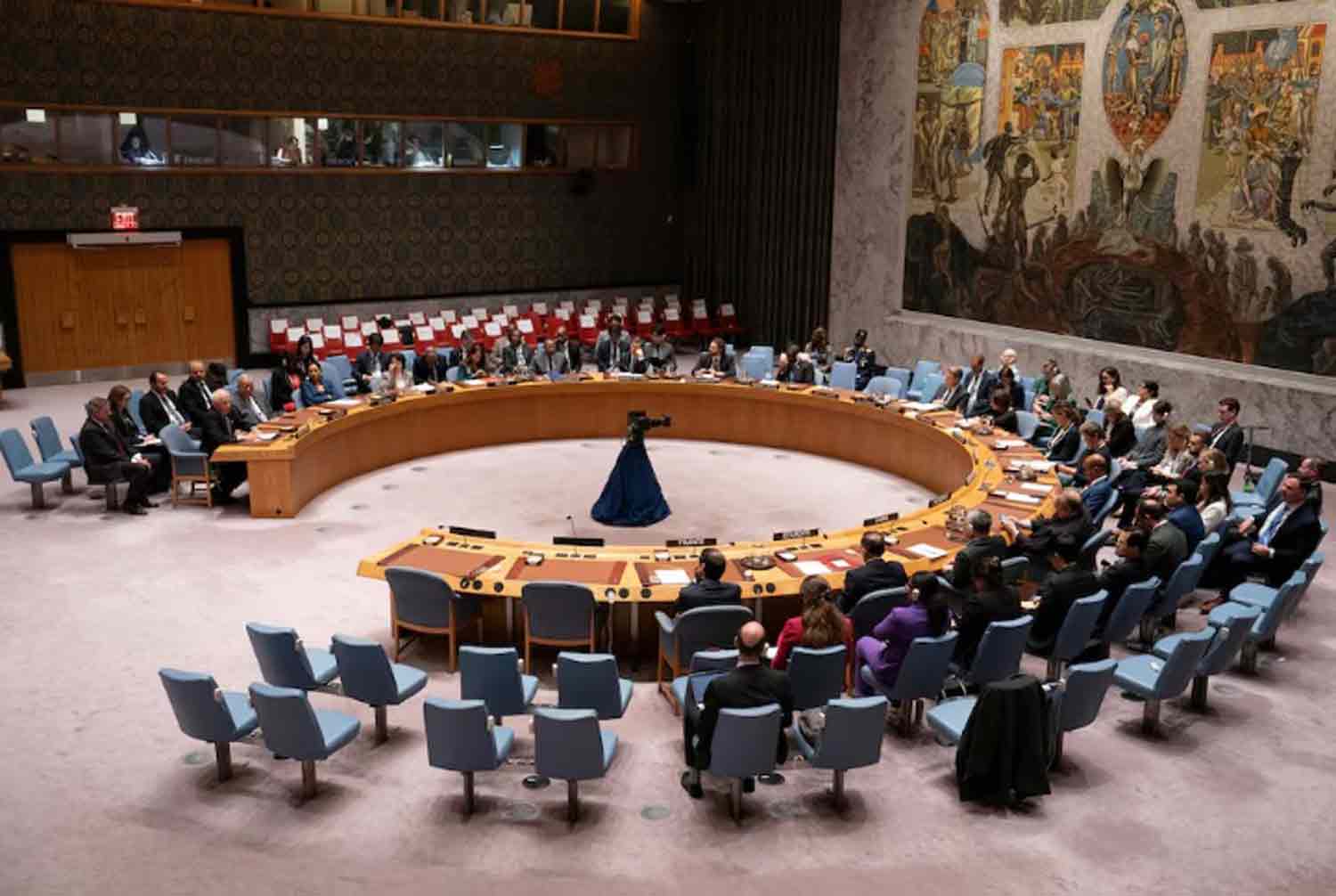
United Nations: The UN has warned that the operation violates international law, predicting “massive forced displacement” and increased civilian deaths. The UN Security Council, excluding the US and Panama, convened an emergency meeting on August 9, 2025, to address the crisis.
Western Allies: Germany suspended military exports to Israel that could be used in Gaza, with Chancellor Friedrich Merz calling the plan’s alignment with legitimate aims “increasingly difficult to understand.” The UK’s Prime Minister Keir Starmer labeled the escalation “wrong,” while Belgium, Italy, Australia, and New Zealand issued joint calls for Israel to reconsider.
Arab and Muslim Nations: Saudi Arabia, Qatar, Iran, and Indonesia accused Israel of ethnic cleansing and genocide, with the Palestinian Authority describing the plan as an “unprecedented provocation” and a “fully-fledged crime.”
United States: The US response has been notably restrained, with President Donald Trump stating that the decision is “pretty much up to Israel.” US Ambassador Mike Huckabee echoed this sentiment, though Trump expressed frustration with Hamas’s refusal to negotiate a “reasonable settlement.”
Hamas’s Response: Hamas condemned the plan as a “new war crime,” vowing “fierce resistance” and warning that Israel’s occupation would face significant challenges. The group accused Netanyahu of prioritizing personal interests over hostage safety.

Threat to Palestinian Statehood

The Gaza City plan, combined with recent Israeli actions in the West Bank, is seen as a deliberate effort to undermine prospects for a Palestinian state. On August 20, 2025, Israeli Finance Minister Bezalel Smotrich announced the approval of 3,401 new settlement homes in the E1 area of the occupied West Bank, explicitly stating the move was intended to “erase the Palestinian state.” This, alongside the Gaza operation, directly challenges the two-state solution, which envisions an independent Palestinian state in the West Bank and Gaza Strip with East Jerusalem as its capital.
The International Court of Justice (ICJ) declared Israel’s presence in the Occupied Palestinian Territory unlawful in its July 19, 2024, advisory opinion, citing violations of international law, including the prohibition on acquiring territory by force and the Palestinian right to self-determination.
Critics argue that the Gaza City plan and settlement expansions risk further entrenching this illegal occupation, potentially constituting war crimes and crimes against humanity, such as forced displacement and starvation.

Humanitarian and Strategic Implications

Humanitarian Crisis: Gaza’s 2.1 million residents, 90% of whom are already displaced, face worsening conditions. The plan could displace up to one million people from Gaza City, exacerbating famine and malnutrition. Reports indicate 1,760 Palestinians have been killed seeking food since May 2025, with the healthcare system operating at less than 20% capacity due to shortages.
Strategic Risks for Israel: Former Israeli security officials argue that further military action is unlikely to eliminate Hamas’s ideological influence, despite its reduced military capacity. The operation risks increasing Israeli casualties, alienating allies, and further isolating Israel diplomatically, especially as the International Criminal Court has issued arrest warrants for Netanyahu and former Defense Minister Yoav Gallant for war crimes.
Ceasefire Talks: The plan jeopardizes ongoing ceasefire negotiations, with Hamas accepting a 60-day truce proposal to release half of the remaining 50 hostages, but Israel’s escalation has stalled progress. Hamas accuses Netanyahu of derailing talks for political gain.

Global and Regional Dynamics

The Gaza City plan risks further destabilizing the Middle East, with Jordan and Egypt refusing to support an occupation-backed administration in Gaza. Growing international support for Palestinian statehood, with countries like the UK, Canada, and France planning to recognize a Palestinian state at the UN General Assembly in September 2025, highlights Israel’s increasing diplomatic isolation. The US’s ambivalence under Trump may embolden Israel but risks straining relations with other Western allies.

Palestinian Perspective

For Palestinians in Gaza City, who have endured 22 months of war with over 61,000 deaths, the plan represents a continuation of displacement and suffering. Residents like Mahmoud Abdel Salam Ahmed express despair, noting there is “nowhere left to flee” in the besieged Strip. The operation is widely viewed as an attempt to cement Israeli control and eliminate hopes for self-determination.

Conclusion

Israel’s approval of a plan to occupy Gaza City on August 8, 2025, marks a critical escalation in the Israel-Hamas conflict, with preparations for a phased military takeover, mass civilian displacement, and controversial humanitarian aid mechanisms. Coupled with West Bank settlement expansions, the move is seen as a direct challenge to Palestinian statehood, drawing condemnation from the UN, Western allies, and Arab nations.
While Israel frames the operation as essential to defeating Hamas and securing hostages, critics warn of humanitarian catastrophe, increased violence, and further diplomatic isolation. The UN Security Council’s response and stalled ceasefire talks will be pivotal in determining the conflict’s next phase.

Veiled in Secrecy: India’s Three Amendment Bills Spark Suspicion and Political Firestorm

0

On August 20, 2025, at 3:30 PM PKT, India’s Lok Sabha became a battleground of political fervor as Union Home Minister Amit Shah introduced three pivotal amendment bills:

The Constitution (One Hundred and Thirtieth Amendment) Bill, 2025, The Government of Union Territories (Amendment) Bill, 2025, and The Jammu and Kashmir Reorganisation (Amendment) Bill, 2025. These bills, aimed at reshaping governance, electoral processes, and public accountability, have ignited fierce debate, with opposition parties branding them as a covert assault on democracy. The government’s decision to shroud the bills’ specifics in secrecy has fueled suspicion, casting a shadow over their intent and intensifying political tensions. Below is a detailed exploration of each bill, their proposed changes, potential impacts, and the controversy surrounding their opaque introduction.

1. The Constitution (One Hundred and Thirtieth Amendment) Bill, 2025

What It Is

The Constitution (One Hundred and Thirtieth Amendment) Bill, 2025, seeks to amend India’s Constitution to establish a mechanism for removing high-ranking public officials—such as the Prime Minister, Union Ministers, Chief Ministers, or state ministers—who face allegations of corruption or serious criminal offenses and have been detained for at least 30 days. Presented as a tool to uphold public office integrity, the bill’s lack of transparency regarding its exact provisions has raised alarm bells.

 Proposed Changes

While the specific constitutional articles targeted remain undisclosed, the bill likely modifies provisions like Article 75 (Union Ministers), Article 164 (State Ministers), or Article 102/191 (disqualifications for Parliament or state legislatures). Key changes include:

Automatic Removal After Detention: Officials detained for 30 days or more on charges of corruption or serious offenses will be removed from their positions.

Broad Scope: The bill applies uniformly to central and state-level elected officials, aiming for a consistent standard across India’s political hierarchy.

Judicial or Administrative Process: The removal mechanism may involve judicial or administrative oversight, but the lack of clarity on this process has fueled skepticism.

Secrecy and Suspicion

The government’s reluctance to share the bill’s full text or detailed provisions has amplified suspicions about its true intent. Opposition leaders, including West Bengal Chief Minister Mamata Banerjee, who labeled the bill a “super-emergency” and a “Hitlerian assault on Indian democracy,” argue that the secrecy suggests a hidden agenda to target political rivals. Without transparent disclosure, critics fear the bill could empower politically motivated arrests, allowing the ruling party to destabilize opposition-led governments under the guise of anti-corruption measures. The absence of public consultation or pre-introduction debate further deepens distrust, with many questioning why such a significant constitutional change was introduced with minimal clarity.

 Potential Impacts

Strengthening Accountability: If implemented fairly, the bill could restore public trust by ensuring that officials facing serious charges are swiftly removed, aligning with the government’s anti-corruption rhetoric.

Deterrence Against Corruption: The threat of removal could discourage malfeasance among public officials, reinforcing ethical governance.

Risk of Misuse: The opaque nature of the bill’s provisions raises fears of selective enforcement, particularly against opposition leaders. For example, a 30-day detention could be engineered to remove a Chief Minister before elections, disrupting state governance.

Legal and Constitutional Challenges: The detention-based removal mechanism may violate due process, as detention does not equate to conviction. Critics warn that this could lead to Supreme Court challenges, especially given the bill’s vague framework.

Political Instability: Removing key figures like Chief Ministers could trigger governance crises, particularly in states with fragile political coalitions.

Judicial Overreach: The bill’s reliance on detention could empower law enforcement and the judiciary to influence political outcomes, potentially turning them into “political players,” as critics fear.

Political Reaction

The bill’s introduction sparked chaos in the Lok Sabha, with opposition MPs from the Trinamool Congress (TMC), Congress, and others storming the well, tearing copies of the bill, and chanting “Tanashahi nahi chalegi” (dictatorship will not prevail). Congress MP K C Venugopal cited past allegations against Amit Shah to question the bill’s motives, while TMC MPs called it a “black day for democracy.” Union Minister Ramdas Athawale defended the bill, emphasizing its impartial application, but the government’s secrecy has overshadowed these assurances. The bill’s referral to a Joint Committee of Parliament, with a report due by the first day of the last week of the next session, suggests an attempt to address concerns, but the lack of transparency continues to fuel opposition outrage.

2. The Government of Union Territories (Amendment) Bill, 2025

What It Is This bill amends laws governing Union Territories, likely the Government of Union Territories Act, 1963, to align their electoral schedules with the “One Nation, One Election” policy, a flagship initiative of the Modi government. The bill’s specifics remain closely guarded, adding to the perception of a covert agenda.

 Proposed Changes

Building on the Constitution (129th Amendment) Bill, 2024, which advocates for synchronized Lok Sabha and state elections, the bill includes:

Election Synchronization: Adjusting Union Territory assembly elections (e.g., Delhi, Puducherry, Jammu and Kashmir) to coincide with Lok Sabha polls.

Term Adjustments: Mechanisms to align assembly terms, potentially through provisions for premature dissolutions or extensions.

Administrative Streamlining: Possible reforms to facilitate simultaneous elections, such as clarifying the Lieutenant Governor’s role in electoral processes.

Secrecy and Suspicion

The government’s failure to disclose the bill’s full text or engage in public consultation has heightened suspicions about its intent. Opposition parties, including AIMIM MP Asaduddin Owaisi, who submitted a notice opposing the bill, argue that the secrecy masks an attempt to erode Union Territory autonomy. The lack of clarity on how election synchronization will affect local governance structures, particularly in politically sensitive Union Territories like Delhi, has led to accusations that the bill prioritizes central control over regional interests. The absence of transparent debate before introduction has left stakeholders, including voters in Union Territories, in the dark about potential impacts.

Potential Impacts

Cost and Efficiency Gains: Synchronizing elections could save billions of rupees annually, as noted by the High-Level Committee on Simultaneous Elections chaired by former President Ram Nath Kovind, reducing the administrative burden of frequent polls.

Policy Continuity: Fewer elections mean less disruption from the Model Code of Conduct, enabling sustained development in Union Territories.

Higher Voter Turnout: Streamlined schedules could reduce voter fatigue, boosting participation, as seen in India’s early simultaneous elections (1951–1967).

Federalism Concerns: The secrecy surrounding the bill fuels fears that it could undermine the unique governance needs of Union Territories, particularly those with legislative assemblies like Delhi, where local issues may be overshadowed by national priorities.

Logistical Hurdles: Aligning diverse Union Territory elections could face significant logistical challenges, especially without clear implementation details.

Political Backlash: The bill’s opaque introduction risks alienating regional parties and voters, who may perceive it as a centralizing move by the BJP-led government.

Political Reaction

The bill faced protests alongside its counterparts, with opposition MPs decrying its lack of transparency and potential to diminish Union Territory autonomy. Its referral to a Joint Committee reflects the government’s acknowledgment of resistance, but the secrecy surrounding its provisions continues to stoke controversy.

3. The Jammu and Kashmir Reorganisation (Amendment) Bill, 2025

What It Is

This bill amends the Jammu and Kashmir Reorganisation Act, 2019, which restructured the former state into two Union Territories—Jammu and Kashmir (with a legislative assembly) and Ladakh (without one)—following the abrogation of Article 370. The bill’s details remain largely undisclosed, amplifying concerns about its motives.

Proposed Changes

While specific provisions are not fully outlined, the bill likely includes:

Electoral Alignment: Synchronizing Jammu and Kashmir’s assembly elections with Lok Sabha polls, aligning with the simultaneous election framework.

Governance Tweaks: Adjustments to the Legislative Assembly’s powers or the Lieutenant Governor’s role, addressing ambiguities in the 2019 Act.

Administrative Reforms: Streamlining governance to enhance efficiency in the Union Territory.

Secrecy and Suspicion

The government’s decision to withhold the bill’s full text has intensified suspicions, particularly given Jammu and Kashmir’s sensitive political history. The lack of transparency has led opposition parties to view the bill as a covert attempt to further centralize control, reducing the elected assembly’s authority. Critics, including regional parties like the National Conference and People’s Democratic Party, argue that the secrecy signals a disregard for local aspirations, especially in a region still grappling with the fallout of Article 370’s abrogation. The absence of public or stakeholder consultation has deepened distrust, with many questioning whether the bill prioritizes national agendas over regional stability.

Potential Impacts

Governance Efficiency: The bill could streamline administration in Jammu and Kashmir, addressing governance challenges since 2019, such as delays in assembly elections.

Electoral Integration: Synchronization with national elections could stabilize the region’s political framework, aligning it with broader Indian electoral processes.

Development Focus: Fewer elections could shift focus to development and security, critical in a region marked by unrest.

Political Sensitivity: The secrecy surrounding the bill risks inflaming tensions in Jammu and Kashmir, where changes to governance are viewed with suspicion.

Local Autonomy: Amendments could further centralize authority with the Lieutenant Governor, diminishing the elected assembly’s role and alienating local stakeholders.

Security Implications: Perceived erosion of local representation could exacerbate unrest, complicating the region’s fragile security situation.

Political Reaction: The bill triggered fierce protests in the Lok Sabha, with opposition MPs tearing copies and raising slogans, reflecting the region’s contentious status. Its referral to a Joint Committee underscores the need for careful scrutiny, but the government’s secrecy has heightened opposition resolve to challenge it.

The Secrecy Factor: A Common Thread of Controversy The overarching concern uniting opposition to these bills is the government’s secretive approach. By introducing them without public disclosure of their full texts or prior consultation, the Modi government has invited accusations of undermining democratic processes. The lack of transparency has led to speculation that the bills are designed to consolidate central power, target opposition leaders, and reshape India’s federal structure to favor the ruling BJP. Mamata Banerjee’s “super-emergency” remark and the opposition’s dramatic protests—tearing bills and storming the Lok Sabha well—reflect a deep-seated fear that the secrecy conceals authoritarian motives. Without clear communication or public debate, the government risks losing public trust, even if the bills’ intentions are benign. The referral to a Joint Committee offers a chance to address these concerns, but only transparent deliberation can dispel the cloud of suspicion.

Political Dynamics and Broader Context

The introduction of these bills at 3:30 PM PKT on August 20, 2025, marked a turning point in India’s parliamentary session, with opposition MPs staging unprecedented protests. The TMC, Congress, and other parties accused the government of pushing an “anti-democratic” agenda, while the BJP and allies like Ramdas Athawale defended the bills as essential for accountability and electoral efficiency. The secrecy surrounding the bills has amplified these divisions, with opposition leaders framing them as a power grab disguised as reform. The referral of all three bills to a Joint Committee, with a report due by the first day of the last week of the next session, signals the government’s recognition of the need for consensus. However, the lack of transparency has already damaged the bills’ legitimacy, making the committee’s deliberations critical. The bills align with the Modi government’s broader agenda—anti-corruption measures and “One Nation, One Election”—but their opaque introduction risks derailing these goals in a polarized political climate.

Challenges and Unanswered Questions

Opaque Provisions: The absence of public access to the bills’ full texts limits understanding of their scope, fueling speculation and distrust.

Constitutional Validity: The Constitution (130th Amendment) Bill’s detention-based removal mechanism could face Supreme Court challenges for violating due process.

Federal Tensions: The secrecy surrounding the Union Territory and Jammu and Kashmir bills raises concerns about eroding federalism, particularly in opposition-ruled regions.

Public Perception: The government’s failure to communicate the bills’ benefits transparently could bolster opposition narratives of authoritarianism, especially in an election year.

Conclusion

The three amendment bills introduced on August 20, 2025, represent a bold but contentious attempt to reshape India’s governance and electoral landscape. The Constitution (130th Amendment) Bill seeks to enforce accountability through a controversial removal mechanism, but its secrecy fuels fears of political misuse. The Government of Union Territories (Amendment) Bill and Jammu and Kashmir Reorganisation (Amendment) Bill aim to streamline elections and governance, yet their opaque introduction raises concerns about centralization and regional autonomy. The government’s secretive approach has cast a long shadow over these reforms, transforming a potentially transformative agenda into a lightning rod for suspicion.

As the bills head to a Joint Committee, transparent deliberation and public engagement are essential to restore trust and ensure their alignment with democratic principles. For now, these bills stand at the heart of a fierce political battle, with their fate—and India’s democratic trajectory—hanging in the balance.

U.S. Keeps Watchful Eye on Fragile India-Pakistan Ceasefire, Says Rubio

0
U.S. Secretary of State Marco Rubio at the State Department in Washington, U.S.

In a recent appearance on NBC News’ Meet the Press on August 17, 2025, U.S. Secretary of State Marco Rubio underscored the United States’ vigilant monitoring of the delicate ceasefire between India and Pakistan, a region where tensions have historically flared with devastating consequences. “One of the complications of ceasefires is maintaining them, which is very difficult,” Rubio stated. “Every single day, we keep an eye on what is happening between Pakistan & India.” His remarks highlight the critical role of U.S. diplomacy in sustaining peace between the two nuclear-armed neighbors following a brief but intense conflict earlier this year.

The ceasefire, announced on May 10, 2025, followed a rapid escalation sparked by a terrorist attack in Pahalgam, Kashmir, on April 22, which claimed 26 civilian lives. The attack prompted India’s offensive. The conflict’s swift resolution, credited by Rubio and Vice President JD Vance to U.S.-mediated talks, marked a significant diplomatic achievement for the Trump administration. Rubio, speaking on EWTN’s The World Over on August 8, described President Donald Trump as the “president of peace,” noting that the U.S. “got involved directly” to secure the truce. Pakistan’s Foreign Minister Ishaq Dar echoed this sentiment, praising Trump and Rubio’s “pivotal role” in de-escalating tensions.

Rubio’s comments reflect broader U.S. efforts to stabilize volatile regions, with the India-Pakistan ceasefire listed alongside other diplomatic successes, such as negotiations between Cambodia-Thailand and Rwanda-DRC. The U.S. has also tied its involvement to economic incentives. Rubio’s emphasis on daily oversight underscores the fragility of the ceasefire, given the deep-rooted rivalry over Kashmir and the nuclear capabilities of both nations.

As the U.S. continues to monitor the situation, Rubio’s statements signal a commitment to not just maintaining the ceasefire but pursuing a lasting peace. The administration’s proactive diplomacy, coupled with its strategic interests in South Asia, positions the U.S. as a key player in preventing further escalation in one of the world’s most volatile regions.

Pentagon Simulates Ukraine’s Battlefields in Alaska to Revolutionize Drone Testing

0

The U.S. Department of Defense (DOD), through its Defense Innovation Unit (DIU), conducted a drone testing event in late June 2025 near Fort Wainwright, Alaska, aiming to replicate the electronic warfare (EW) conditions observed in Ukraine’s ongoing conflict. The trial involved five commercial companies testing drones and radio prototypes against simulated EW threats, such as jamming of navigation and command-and-control systems. This initiative reflects the Pentagon’s broader push to enhance its unmanned aerial system (UAS) capabilities by exposing commercial systems to real-world battlefield conditions, a response to the critical role drones have played in Ukraine. The testing highlighted both the potential and the challenges of integrating small, commercial firms into the DOD’s supply chain, as well as the need for more accessible and realistic testing environments to accelerate drone development and deployment.

Key Details

1. Testing Environment and Objectives:

– The DIU selected a remote range in Alaska to simulate Ukraine-like conditions, where drones face intense EW threats, including GPS jamming and communication disruptions. Alaska was chosen for its minimal civilian infrastructure, reducing risks of signal interference, and its long summer daylight hours, enabling extended testing.

– The trial focused on assessing whether the drones could maintain navigation, acquire targets, and operate effectively under simulated EW conditions. Most systems tested were prototypes, marking their first exposure to field conditions outside controlled lab settings.

2. Participants and Performance:

– Five companies participated, though only AV (formerly AeroVironment) and Dragoon were named in related reports. Two Ukrainian firms, paired with U.S. software companies, were involved but tested separately due to operational constraints in Ukraine.

– Initial results showed mixed performance. Many drones struggled with jamming and immature technology, with issues like failing to maintain targets or navigate routes. However, companies made progress by iterating solutions during the four-day event, aligning with DIU’s goal of fostering rapid adaptation.

3. Challenges in Testing Infrastructure:

– The DOD faces significant hurdles in providing suitable testing environments. Most U.S. ranges restrict active EW testing due to policies from the Federal Aviation Administration (FAA) and Federal Communications Commission (FCC), which aim to protect GPS and communication signals for civilian use.

– Advanced ranges like White Sands Missile Range are oversubscribed, making access difficult for smaller programs or commercial firms. Additionally, the EW equipment used in Alaska, primarily from the Army’s 11th Airborne Division, was outdated, designed for older threats and less effective against modern, software-defined systems.

4. Strategic Initiatives:

– The DIU launched Project G.I., a prize challenge to identify “ready-now” UAS for small military units operating in disrupted environments. Selected companies will participate in live demonstrations, with potential funding or contracts for further development.

– The Range Strike Group, a new DIU effort, is tasked with addressing testing access issues by identifying policy hurdles and proposing solutions to streamline approvals for EW testing.

– The Pentagon is also implementing broader policy reforms, such as Defense Secretary Pete Hegseth’s July 2025 directive to treat small UAS (under 55 pounds) as consumable commodities, reducing bureaucratic oversight and encouraging their use in combat.

5. Broader Context:

– The urgency of these efforts stems from the U.S. lagging behind adversaries like China and Russia in small UAS production. China’s DJI dominates global drone sales, while U.S. laws prohibit military purchases of Chinese drones, highlighting the need for a robust domestic industry.

– Ukraine’s rapid iteration and fielding of drones in combat provide a model for the U.S., which seeks to emulate this agility. However, logistical and political barriers have prevented testing in Ukraine itself, leading to the choice of Alaska as a domestic alternative.

Analysis

1. Strategic Implications:

– The Alaska trials underscore the Pentagon’s recognition that modern warfare increasingly relies on affordable, expendable drones, as demonstrated in Ukraine. The DOD’s push to replicate these conditions signals a shift toward prioritizing rapid innovation over traditional, slow acquisition processes.

– By treating small UAS as consumables, the Pentagon aims to reduce the financial and bureaucratic burdens that deter soldiers from using drones, potentially increasing their adoption across units. This aligns with Hegseth’s directive to equip every squad with low-cost drones by 2026.

2. Challenges and Risks:

– The mixed performance of the tested drones highlights a gap in the U.S. drone industrial base, particularly in developing systems resilient to advanced EW threats. The reliance on outdated EW equipment during testing further complicates assessments of system maturity.

– The lack of an acquisition partner for the DIU’s Artemis project, which aims to field low-cost, long-range attack drones, illustrates persistent bureaucratic resistance within the DOD. This “valley of death” between prototype and production remains a significant barrier.

– Policy restrictions on EW testing and limited range availability could delay progress, especially for small firms lacking resources to navigate complex FAA and FCC approvals.

3. Opportunities:

– Initiatives like Project G.I. and the Range Strike Group could democratize access to testing, fostering innovation among smaller companies and diversifying the DOD’s supplier base.

– The Pentagon’s investment in domestic drone production, backed by hundreds of millions in funding, could stimulate the U.S. industrial base, reducing reliance on foreign suppliers and enhancing national security.

– Lessons from Ukraine, where daily field testing drives rapid iteration, suggest that embedding engineers with warfighters and increasing testing frequency could accelerate U.S. drone development.

Recommendations

1. Expand Testing Infrastructure:

– The DOD should prioritize developing dedicated EW testing ranges with modern equipment to simulate advanced threats. Streamlining FAA and FCC approvals, as suggested by the Range Strike Group, could reduce delays and make testing more accessible.

2. Foster Public-Private Collaboration:

– The DIU should strengthen partnerships with commercial firms through programs like Project G.I., offering clear pathways to production contracts. Incentives like advance purchase commitments could encourage investment in domestic drone manufacturing.

3. Integrate Lessons from Ukraine:

– While testing in Ukraine is not feasible, the DOD could facilitate controlled exchanges with Ukrainian operators to share insights on EW resilience and rapid iteration, potentially through virtual simulations or limited on-site collaborations.

4. Address Bureaucratic Barriers:

– The DOD should identify and empower acquisition partners for projects like Artemis to bridge the gap between prototyping and fielding. Hegseth’s reforms, such as decentralizing procurement authority to brigade-level officers, should be implemented swiftly to ensure momentum.

Conclusion

The Pentagon’s Alaska drone trials represent a critical step toward adapting to the evolving demands of modern warfare, where small, affordable UAS are pivotal. By seeking Ukraine-like conditions, the DOD acknowledges the need for realistic testing environments to prepare drones for contested battlefields. However, challenges in technology maturity, testing infrastructure, and bureaucratic inertia highlight the complexity of this transition. Strategic initiatives like Project G.I., the Range Strike Group, and policy reforms offer promising avenues to close these gaps, but sustained investment and collaboration will be essential to achieve drone dominance by 2027, as envisioned by the Pentagon.

China’s Secretive “Doomsday” Torpedo Drone Stuns World, Rivaling Russia’s Poseidon

0

In a striking display of military ambition, China appears poised to showcase a formidable new unmanned underwater vehicle (UUV) during rehearsals for an upcoming military parade, as evidenced by photographs circulating on social media and reported by defense outlets. The images, captured in late July 2025, depict a massive, black, torpedo-shaped drone being transported on a flatbed truck, sparking intense speculation about its capabilities, purpose, and technological underpinnings. While Chinese authorities have yet to officially name or describe the system, its appearance has drawn inevitable comparisons to Russia’s Poseidon, a nuclear-powered, nuclear-armed underwater drone unveiled by President Vladimir Putin in 2019 as part of Russia’s arsenal of “superweapons.”

The UUV’s sleek, elongated design, estimated to be over 10 meters in length based on the proportions seen in the photographs, suggests a platform engineered for stealth, endurance, and potentially devastating payloads. Observers have noted its resemblance to Poseidon, formally known as Status-6, a strategic weapon designed to travel thousands of miles underwater to deliver nuclear warheads against coastal cities, naval bases, or carrier strike groups. However, while the visual similarities are undeniable, Chinese sources have hinted that their system may diverge significantly in both technology and mission.

According to a 2024 report by the South China Morning Post (SCMP), China has been actively pursuing nuclear-powered undersea systems, with research focusing on a novel propulsion concept. The SCMP cited Chinese researchers who described a UUV powered by a disposable nuclear reactor, capable of propelling the drone at speeds exceeding 30 knots (approximately 35 miles per hour) for up to 200 hours. This reactor, once depleted, would detach and sink to the ocean floor, allowing the vehicle to switch to battery power for the final phase of its mission, potentially executing a conventional or nuclear strike. This innovative approach to propulsion could enable unprecedented range and endurance, making the UUV a versatile tool for both tactical and strategic operations.

Despite the SCMP’s insights, critical details about the Chinese UUV remain shrouded in secrecy. The photographs from the parade rehearsals confirm the system’s physical existence but offer no clarity on its propulsion system, operational range, payload capacity, or intended role. Analysts are divided on whether the drone is designed for strategic deterrence, like Poseidon, or for more localized missions, such as targeting naval assets in the South China Sea or disrupting undersea infrastructure like communication cables. The possibility of nuclear armament remains unconfirmed, though the system’s size and reported nuclear propulsion suggest it could carry significant payloads, conventional or otherwise.

The comparison to Russia’s Poseidon has fueled intense debate among defense analysts. Poseidon, first revealed in a televised address by Putin, is a doomsday weapon designed to bypass traditional missile defenses by traveling underwater at extreme depths and distances. With a reported range of 10,000 kilometers and the ability to carry a multi-megaton nuclear warhead, Poseidon is intended to ensure Russia’s retaliatory capability in a nuclear conflict. Its development has been a cornerstone of Russia’s strategic posturing, with deployments reportedly underway in the Arctic and Pacific regions by 2025.

In contrast, Chinese researchers have sought to distance their project from Poseidon. Guo Jian, a nuclear scientist at the China Institute of Atomic Energy, published an article in the Journal of Unmanned Underwater Systems in 2024, emphasizing “substantial differences” between China’s UUV and its Russian counterpart. While Guo did not disclose specifics, he suggested that China’s design prioritizes flexibility and technological innovation over sheer destructive power. For instance, the disposable reactor concept, if realized, would mark a significant departure from Poseidon’s continuous nuclear propulsion, potentially reducing costs and environmental risks while maintaining operational effectiveness.

The unveiling of this UUV comes at a time of heightened geopolitical tensions, particularly in the Indo-Pacific region, where China’s naval ambitions have drawn scrutiny from the United States, Japan, and other regional powers. The South China Sea, a contested hotspot, could serve as a primary operational theater for such a system, allowing China to project power, deter adversaries, or conduct covert operations. Alternatively, the drone could be part of China’s broader strategy to counter U.S. naval dominance, particularly in response to carrier strike groups and submarine patrols.

The parade rehearsals, believed to be in preparation for a major national event, underscore China’s intent to showcase its technological prowess and military modernization. The UUV’s public debut, even in a limited capacity, signals Beijing’s confidence in its undersea capabilities and its willingness to compete with global powers in the domain of autonomous naval warfare. However, the lack of official commentary leaves room for speculation about the system’s readiness, with some analysts suggesting it may still be in the prototype or testing phase.

As global attention turns to this enigmatic new weapon, questions abound: Is China’s UUV a direct answer to Poseidon, or does it represent a distinct vision for undersea warfare? Could its deployment reshape naval strategies in the Indo-Pacific? For now, the answers remain as elusive as the depths the drone is designed to navigate.

India’s Rafale Dreams Clash with France’s Source Code Secrets

0
Rafale Marine [Rafale M] fighter

India’s pursuit of 114 additional Rafale fighter jets through a government-to-government (G2G) deal with France represents a critical step in addressing the Indian Air Force’s (IAF) dwindling squadron strength, but it is mired in a contentious dispute over access to the aircraft’s source code. This strategic move, driven by the urgent need to modernize India’s air capabilities amid rising tensions in the Indo-Pacific, highlights both the deepening India-France defense partnership and the challenges of achieving technological sovereignty in high-stakes arms procurement.

The IAF is pushing for the acquisition of 114 Rafale jets under the long-delayed Multi-Role Fighter Aircraft (MRFA) program, initially estimated to cost over ₹1.2 lakh crore (approximately $14.5 billion). The urgency stems from a significant reduction in operational fighter squadrons, projected to drop to 29 by late 2025 following the retirement of the aging MiG-21 fleet, far below the sanctioned strength of 42.5 squadrons needed to counter threats from China and Pakistan. The recent 2025 India-Pakistan conflict, Pakistan’s claims of downing Rafales—denied by India—have raised questions about the aircraft’s performance and vulnerabilities, adding pressure to bolster the IAF’s fleet.

The proposed G2G deal aims to bypass the protracted MRFA tender process, which has been stalled for nearly eight years due to technical, commercial, and procedural hurdles. A direct deal with France is seen as faster and more cost-effective, leveraging existing infrastructure at Ambala and Hasimara airbases, which already host 36 Rafales acquired in a 2016 €7.8 billion deal. These bases are equipped to support additional squadrons, reducing logistical costs. Moreover, the Indian Navy’s planned acquisition of 26 Rafale-M jets for carrier operations by 2028–2030 would enhance platform commonality across services, streamlining training, maintenance, and spare parts logistics. The IAF argues that expanding the Rafale fleet aligns with India’s “Make in India” initiative, with most jets expected to be manufactured domestically through partnerships like the one between Dassault Aviation and Tata Advanced Systems, which will produce Rafale fuselages in Hyderabad starting in 2028.

However, a significant obstacle is France’s refusal to share the Rafale’s source code, which governs critical systems like the Thales RBE2-AESA radar and Modular Mission Computer (MMC). India seeks access to integrate indigenous weapons, such as the Astra Mk1 air-to-air missile and Rudram anti-radiation missile, and to enable independent software upgrades, reducing reliance on French vendors. This aligns with India’s “Atmanirbhar Bharat” (Self-Reliant India) initiative, which emphasizes technological autonomy. Without the source code, India faces costly delays and dependency on Dassault for modifications, a problem experienced with the Mirage-2000 fleet. French manufacturers, including Dassault, Thales, Safran, and MBDA, are wary of sharing this proprietary technology, citing intellectual property protection, commercial interests, and strategic security concerns. They fear code leakage to adversaries like China or Russia, reduced demand for French weapons like the Meteor missile, and the precedent it could set for other Rafale buyers like Egypt and Qatar. There are also concerns about reverse engineering and potential vulnerabilities from unregulated modifications.

France has proposed alternatives, such as joint Indo-French software development teams and Secure Software Programming Kits (SSPK), but these fall short of India’s demand for full control. The dispute echoes broader global tensions between buyer sovereignty and seller proprietary rights. For instance, Israel received partial access to the F-35’s software architecture, and Russia allowed India to customize the Su-30MKI, highlighting that such concessions are possible with trusted partners. India’s frustration is compounded by the strategic importance of the Rafale, equipped with advanced features like supercruise capabilities, a Thales radar that can track 40 targets and engage eight simultaneously, and the Spectra electronic warfare suite. These capabilities are vital for India’s two-front war doctrine against Pakistan and China, especially as China is expected to supply Pakistan with 40 fifth-generation J-35A stealth fighters.

The source code dispute has broader implications for India’s defense modernization. While the IAF considers interim options like Russia’s Su-57 or the U.S. F-35 until the indigenous Advanced Medium Combat Aircraft (AMCA) is operational by 2035, the Rafale remains a cornerstone of its strategy. The controversy also raises questions about the viability of India’s self-reliance goals in a software-defined battlespace, where control over mission-critical systems is paramount. France’s stance risks straining bilateral ties, despite recent collaborations like the Rafale-M deal and engine co-development talks with Safran for the AMCA.

The IAF’s push for 114 Rafales reflects a pragmatic response to immediate operational needs and long-term strategic goals. However, the source code standoff underscores the complexities of balancing national interests in high-technology defense partnerships. As India navigates this dispute, the outcome will shape not only its air force modernization but also the future of India-France defense cooperation and global norms around technology transfer in arms deals.

Putin, Trump Float Ukraine Peace Plan with Bold Land Swap Proposal

0

At an Alaska summit, Russian President Vladimir Putin and U.S. President Donald Trump discussed a controversial peace deal for Ukraine, sources close to Moscow revealed. The proposal has Ukraine surrendering much of its eastern Donetsk and Luhansk regions, while Russia would return smaller pockets in Sumy and Kharkiv.

Russia also seeks recognition of its 2014 Crimea annexation, lifting of some Western sanctions, official status for the Russian language in Ukraine, and freedom for the Russian Orthodox Church, despite Kyiv’s claims of its ties to Moscow’s war efforts.

Trump, speaking to Fox News, claimed the two were “pretty close to a deal,” but Ukraine’s consent is uncertain. President Volodymyr Zelenskiy, set to meet Trump in Washington on Monday, has rejected ceding Donetsk, a vital defensive region.

Putin’s plan dismisses Zelenskiy’s ceasefire demand, requiring a full agreement first. Sources, speaking anonymously, noted the proposal’s status as a starting point or final offer remains unclear.

Trump briefed Zelenskiy and European leaders, mentioning potential non-NATO security guarantees for Ukraine, possibly resembling NATO’s Article 5.

Taliban’s Economic Crisis Fuels Internal Rifts: A Regime on the Brink?

0

Since seizing control of Afghanistan in August 2021, the Taliban has grappled with an economic crisis that threatens not only the nation’s stability but also the cohesion of its leadership. The collapse of foreign aid, frozen national reserves, and a controversial opium ban have plunged Afghanistan into economic turmoil, exacerbating longstanding divisions among Taliban leaders. These internal rifts, driven by ideological clashes, regional rivalries, and competing economic interests, could reshape the regime’s future and Afghanistan’s precarious place in the region.

A Nation in Economic Freefall

Afghanistan’s economy has been in dire straits since the Taliban’s return to power. The abrupt halt of $8 billion in annual foreign aid—previously accounting for 40% of GDP—and the freezing of $9 billion in foreign reserves have triggered a 20% GDP contraction. Sanctions, declining humanitarian aid (from $3 billion in 2022 to $2 billion in 2023), and restrictive policies like the ban on women’s education and employment have deepened poverty, with most Afghans unable to meet basic needs. The Taliban’s 2022 opium ban, while ideologically motivated, wiped out $1 billion in rural income and over 700,000 jobs, further fueling economic distress.

Despite some successes—stabilizing the exchange rate, curbing inflation, and boosting revenue through taxation and reduced corruption—the Taliban’s economic management remains fragile. The regime’s reliance on mining and limited foreign partnerships, coupled with minimal investment in social services, has left Afghanistan teetering on the edge of a humanitarian catastrophe.

Fractures Within the Taliban

The economic crisis has exposed deep divisions within the Taliban’s leadership, a coalition of factions united in war but increasingly fractured in governance. At the center is Supreme Leader Haibatullah Akhundzada, whose hardline vision of Islamic rule, enforced from Kandahar, prioritizes ideological purity over pragmatic solutions. His Propagation of Virtue and Prevention of Vice Law and the opium ban reflect this stance, but they have alienated key figures like Interior Minister Sirajuddin Haqqani and Defense Minister Mullah Mohammad Yaqoob.

Akhundzada’s consolidation of power, favoring loyalists from southern Pashtun strongholds like Kandahar and Helmand, has marginalized non-Pashtun and northern factions. His restructuring of the Rahbari Shura in May 2023, appointing allies like Khairullah Khairkhwa, sidelined influential players like Haqqani, whose network reportedly profits from the heroin trade. This economic disparity, particularly over the opium ban’s fallout, has fueled tensions, as rural communities and some factions bear the brunt of lost income.

Ideological divides further complicate matters. Pragmatic leaders advocate for engaging with the West to unlock aid and legitimacy, but Akhundzada’s distrust of foreign influence stifles these efforts. The ban on women’s participation in public life, for instance, has deterred donors, prolonging economic isolation. Meanwhile, competition over mining revenues and taxation has intensified, with figures like Haji Bashir Noorzai dominating resource control, creating further friction.

Why It Matters

The growing schisms within the Taliban have profound implications. Internally, the regime’s stability is at risk. While Akhundzada’s grip on the military reduces the immediate threat of an uprising, the exclusion of powerful factions like the Haqqani network could spark covert resistance or even a splintering of the Taliban. Economic mismanagement, particularly the lack of alternatives to the opium economy, risks alienating rural communities, potentially fueling unrest.

Regionally, these tensions affect Afghanistan’s neighbors. Pakistan, frustrated by the Taliban’s failure to curb the Tehrik-e-Taliban Pakistan (TTP), faces security challenges, while Central Asian states worry about spillover instability. The Taliban’s economic dependence on China and Russia, coupled with internal disagreements over foreign engagement, could shift regional power dynamics, especially if pragmatic factions gain influence.

Globally, the Taliban’s internal struggles complicate international efforts to address Afghanistan’s humanitarian crisis. Western sanctions and frozen reserves, while aimed at pressuring the regime, have primarily harmed civilians, raising questions about their efficacy. The lack of a unified international approach—some nations engage pragmatically, others demand reforms—further isolates Afghanistan, emboldening Akhundzada’s hardline stance.

Recent Developments and Future Outlook

Recent moves, like a reported $10 billion energy deal with Azizi Energy in 2025 to generate 10,000 megawatts, signal attempts to bolster the economy. However, without broader reforms, such investments may enrich loyalist factions, deepening internal divides. The end of U.S. emergency aid in April 2025 and reduced NGO funding have intensified economic pressures, particularly for women reliant on aid-related jobs. Regional tensions, including Pakistan’s concerns over a strong Afghan government, further complicate recovery efforts.

Looking ahead, the Taliban’s ability to navigate its economic crisis hinges on resolving internal rifts. A shift toward pragmatic governance—easing restrictions on women and engaging with global partners—could unlock aid and stabilize the economy. However, Akhundzada’s dominance makes this unlikely in the near term. If economic conditions worsen, the risk of factional splits or localized unrest grows, potentially destabilizing Afghanistan and the region.

A Critical Perspective

While some praise the Taliban’s economic stabilization efforts, such as improved revenue collection, these measures prioritize regime survival over public welfare. Policies like the opium ban and women’s restrictions, though ideologically driven, undermine long-term recovery by alienating communities and donors. The international community faces a dilemma: continued isolation risks pushing Afghanistan toward collapse, while engagement without reform empowers hardliners. Targeted aid bypassing the regime and support for pragmatic factions could offer a path forward, but success requires navigating the Taliban’s complex internal dynamics.

In a nation where economic survival hangs by a thread, the Taliban’s leadership must confront its own divisions or risk fracturing the fragile regime it fought to build.

Modi’s Explosive Demographic Warning: Decoding the Claims, Motives, and Fallout of India’s New Mission

0

On August 15, 2025, during his Independence Day address from the iconic Red Fort, Prime Minister Narendra Modi ignited a firestorm of debate by warning of a “premeditated conspiracy” to reshape India’s demographic landscape through illegal infiltration, particularly in border regions. Announcing a “High-Powered Demography Mission” to counter this perceived threat, Modi’s speech has thrust a contentious issue into the national spotlight, raising questions about the actors involved, the evidence behind his claims, and the political and social ramifications. This article provides a comprehensive analysis of Modi’s statements, the alleged perpetrators, his motives, and the broader implications for India’s diverse society, drawing on available data and public discourse.

What Did PM Modi Say?

In a 90-minute address, Modi framed demographic change as an existential crisis for India. He alleged a “deliberate and well-planned conspiracy” to alter the nation’s demographic composition through illegal immigration, particularly in border states like Assam, West Bengal, Bihar, and Jharkhand. Describing infiltrators as “ghuspaithiyas” (intruders), he accused them of “snatching the livelihoods” of Indian youth, “targeting” women, and “encroaching on the lands of innocent tribal communities.” These actions, he argued, threaten national security, social cohesion, and economic progress, sowing seeds of division that could undermine India’s unity.

To address this, Modi unveiled plans for a “High-Powered Demography Mission” to tackle the issue in a “planned and time-bound manner.” While he offered no specifics on the mission’s structure, funding, or methods, he pointed to recent actions like the Special Intensive Revision (SIR) of electoral rolls in Bihar, which excluded 65 lakh voters, some suspected to be illegal immigrants, as evidence of proactive measures. Modi stressed that no nation tolerates such infiltration, urging India to adopt a zero-tolerance stance. The speech focused heavily on border areas, where demographic shifts have long fueled political and social tensions. By positioning the issue as a national emergency, Modi sought to galvanize public support and set the stage for decisive action.

Who is Allegedly Behind the Demographic Change?

Modi’s speech avoided naming specific perpetrators, leaving the “conspiracy” vague but laden with implications. Contextual clues and political discourse suggest the following groups are implicated:

1. Illegal Immigrants from Bangladesh:

The term “ghuspaithiyas” is a charged one, commonly associated with illegal immigrants from Bangladesh, particularly Bangladeshi Muslims. Border states like Assam and West Bengal have faced cross-border migration since the 1971, driven by economic hardship and political instability. Reports from outlets like News18 suggest Modi’s remarks target “Bangladeshi and Rohingya migrants,” seen as altering the demographic balance in these regions.

2. Rohingya Refugees:

The reference to infiltrators likely includes Rohingya Muslims, a persecuted minority from Myanmar who have settled in small numbers in India. The BJP has consistently labeled Rohingya settlers as a security threat, with Union Home Minister Amit Shah advocating for their deportation in past statements.

3. Unspecified External or Internal Forces:

The phrase “premeditated conspiracy” implies organized efforts, potentially involving external actors (e.g., Bangladesh or other neighboring entities) or internal political groups that benefit from demographic shifts. However, Modi provided no concrete evidence or names, leaving the accusation open to interpretation. This ambiguity allows the BJP to cast a wide net, implicating opposition parties or foreign entities without direct accountability.

4. Historical Context:

The issue of demographic change is deeply rooted in India’s northeast and eastern states. For example, Assam’s National Register of Citizens (NRC) in 2019 excluded 19 lakh people, many suspected to be Bangladeshi migrants. West Bengal’s politics have similarly been shaped by debates over Bengali-speaking Muslim immigrants. Modi’s speech taps into this historical narrative, amplifying concerns about cultural and economic displacement.

Modi’s Motives: Politics, Ideology, and Governance

Modi’s decision to elevate demographic change to a national issue reflects a blend of political strategy, ideological alignment, and governance priorities. Below are the key motives driving his rhetoric:

1. Political Strategy and Electoral Gains:

Mobilizing the Voter Base: With state elections approaching in Assam, West Bengal, and Bihar, Modi’s remarks are strategically timed to resonate with Hindu and tribal communities who perceive illegal immigration as a threat to their cultural identity and economic opportunities. The BJP has historically leveraged this issue to consolidate voters, as seen in the 2019 Assam elections and the 2021 West Bengal polls.

Countering Opposition Narratives: Opposition parties like the Congress, Trinamool Congress (TMC), and Dravida Munnetra Kazhagam (DMK) have accused the BJP of targeting Muslims through policies like the Citizenship Amendment Act (CAA). Modi’s speech serves as a preemptive strike, framing the opposition as soft on illegal immigration and positioning the BJP as the defender of national interests.

Regional Dynamics: In Assam, where the BJP has allied with regional parties to address demographic concerns, Modi’s rhetoric reinforces the party’s commitment to protecting indigenous communities. The reference to tribal land encroachment directly appeals to tribal voters in Jharkhand and the northeast, key electoral demographics.

2. Ideological Alignment with the RSS:

– Modi’s speech included praise for the Rashtriya Swayamsevak Sangh (RSS), the BJP’s ideological parent, which has long voiced concerns about the declining Hindu population share relative to minorities, particularly Muslims. A 2024 report by the Economic Advisory Council to the PM (EAC-PM) noted a 7.82% increase in the Muslim population share between 1950 and 2015, contrasted with a 7.81% decline in the Hindu share. By framing demographic change as a conspiracy, Modi aligns with the RSS’s narrative, strengthening ties with this influential organization amid discussions of BJP leadership transitions.

3. National Security and Governance

Border Security Concerns: Illegal immigration in border areas poses legitimate challenges, including cross-border smuggling, militancy, and strained bilateral relations. Modi’s focus on border states reflects efforts to bolster security infrastructure, such as fencing along the 4,096-kilometer India-Bangladesh border, which has been a priority for the BJP government.

Policy Institutionalization: The High-Powered Demography Mission signals an intent to formalize efforts to address illegal immigration, potentially through expanding the NRC, strengthening voter identification (as seen in Bihar’s SIR), or conducting land surveys to prevent encroachment, as suggested by Modi’s advisor, PK Mishra.

Electoral Integrity: The Bihar SIR, which removed 65 lakh voters, underscores Modi’s emphasis on cleaning electoral rolls to prevent non-citizens from influencing elections. This aligns with the BJP’s broader push for electoral reforms.

4. Broader Governance Narrative

– Modi linked the demographic issue to other reforms, such as GST rationalization and administrative efficiency, to present a comprehensive vision of governance. By positioning himself as a strong leader tackling existential threats, he aims to maintain his image as a decisive figure ahead of 2025’s political challenges, including state elections and economic pressures.

Critical Analysis: Evidence, Risks, and Implications

Modi’s claims, while politically charged, demand scrutiny for their evidence base, potential risks, and broader implications. Below is a detailed analysis:

1. Evidence and Context:

Demographic Data: The EAC-PM’s 2024 report provides some basis for concerns about demographic shifts, noting a rise in the Muslim population share in border states. For instance, Assam’s Muslim population grew from 25.2% in 1971 to 34.2% in 2011, partly attributed to illegal immigration. West Bengal’s Muslim population similarly increased to 27% by 2011. However, attributing these changes solely to a “conspiracy” oversimplifies complex factors like higher birth rates, internal migration, and historical settlement patterns post-1971.

Lack of Specificity: Modi’s failure to name specific actors or provide evidence of a “premeditated conspiracy” risks fueling speculation. The term “ghuspaithiyas” is emotionally charged, evoking images of external enemies, but without concrete data, it may amplify fear rather than clarity. For example, no official figures quantify the scale of illegal immigration in recent years, making it difficult to assess the “conspiracy” claim.

Bihar’s Electoral Roll Revision: The SIR exercise, which removed 65 lakh voters in Bihar, supports Modi’s narrative of tackling illegal immigration. The Election Commission suspects some excluded voters were non-citizens, but opposition parties argue that many were legitimate residents, particularly Muslims, disenfranchised due to procedural errors or bias. This highlights the challenge of distinguishing citizens from non-citizens without robust, transparent mechanisms.

2. Risks of Polarization

Communal Tensions: Opposition leaders, including Congress’s Jairam Ramesh and TMC’s Mamata Banerjee, have criticized Modi’s remarks as divisive, alleging they target Bengali-speaking Muslims and could inflame communal tensions. In West Bengal, where Muslims constitute 27% of the population, such rhetoric risks escalating unrest, as seen during the 2019 CAA protests, which led to widespread violence.

Alienation of Minorities: The focus on “infiltrators” and demographic change may alienate India’s 200 million Muslims, who already face scrutiny under BJP policies like the CAA. This could undermine social cohesion, a concern Modi himself acknowledged in his call for unity.

Vigilante Actions: Emotive language like “ghuspaithiyas” has historically fueled vigilante actions, such as mob violence against suspected immigrants in Assam. The Demography Mission must establish clear guidelines to prevent misuse by local authorities or groups.

3. Implementation Challenges

State-Center Tensions: Immigration enforcement is a state subject, complicating the Demography Mission’s execution in opposition-ruled states like West Bengal and Jharkhand. For example, Mamata Banerjee has resisted NRC implementation, citing humanitarian concerns, and may challenge the mission’s authority.

Complex Identification Processes: Identifying illegal immigrants is fraught with challenges, as seen in Assam’s NRC, where 19 lakh exclusions led to legal and humanitarian disputes. The Demography Mission risks similar controversies without transparent, fair mechanisms to distinguish citizens from non-citizens.

Resource Allocation: Addressing demographic change requires significant resources, from border fencing to biometric identification systems. The mission’s success hinges on adequate funding and coordination, details of which remain unclear.

4. International Implications

India-Bangladesh Relations: Framing immigration as a conspiracy may strain ties with Bangladesh, a key trade and security partner. Bangladesh’s interim government, led by Muhammad Yunus, faces domestic challenges, and Modi’s remarks could complicate bilateral cooperation on border management, such as joint patrols or repatriation agreements.

Human Rights Scrutiny: The treatment of Rohingya refugees, already a contentious issue, may draw international criticism if the Demography Mission leads to deportations or harsh measures. India’s non-signatory status to the 1951 Refugee Convention limits its obligations, but global human rights organizations closely monitor its policies.

5. Public and Political Reactions

Supportive Voices: Pro-BJP outlets like News18 and OpIndia have hailed Modi’s speech as a bold move to address a “demographic war” ignored by previous governments. They cite actions like Assam’s land evacuation drives (freeing 9,000 hectares from encroachers) and anti-conversion laws in states like Uttarakhand as evidence of a broader strategy to protect indigenous communities.

Opposition Criticism: Congress, TMC, and DMK have accused Modi of fear-mongering and targeting Muslims for electoral gains. Jairam Ramesh called the speech “despicable,” alleging it sows division, while DMK’s Kanimozhi criticized the BJP’s “politics of hate.” These reactions highlight the polarized political landscape.

Public Sentiment on X: Posts on X reflect divided opinions. Some users praise Modi as a protector of national interests, citing concerns about “Islamic influx” in border areas. Others label the speech as anti-Muslim propaganda, warning of social unrest. These posts, while not representative, underscore the issue’s divisive nature.

6. Broader Demographic Considerations

– Modi’s focus on illegal immigration overlooks other demographic challenges, such as India’s aging population (projected to reach 20% by 2050), urban-rural migration, and declining fertility rates (below replacement levels in states like Kerala and Tamil Nadu). A comprehensive Demography Mission would address these issues, but Modi’s speech prioritized a narrower, politically charged narrative.

– The mission’s scope remains ambiguous. Will it focus solely on immigration, or will it tackle broader population dynamics like workforce shortages or regional imbalances? Without clarity, it risks being perceived as a tool for electoral mobilization rather than a holistic policy.

The Road Ahead: Opportunities and Challenges

The High-Powered Demography Mission offers opportunities to strengthen border security, protect tribal lands, and ensure electoral integrity, addressing concerns in states like Assam and Bihar. For example, Assam’s land evacuation drives have reclaimed significant territory, and similar efforts could be scaled up. However, the mission faces significant challenges:

Transparency and Fairness: To avoid accusations of bias, the mission must establish clear, evidence-based criteria for identifying illegal immigrants, drawing lessons from the NRC’s controversies.

Bipartisan Cooperation: Success depends on cooperation from opposition-ruled states, which is uncertain given political rivalries. Engaging state governments through dialogue will be critical.

Balancing Security and Inclusion: The mission must balance national security with India’s pluralistic ethos, ensuring minorities are not unfairly targeted. As India approaches key elections in 2025 and 2026, the BJP’s focus on demographic change may intensify, reshaping political alliances and voter priorities. Opposition parties must counter with a balanced approach, acknowledging immigration concerns while advocating for inclusive policies to prevent social fracturing.

Conclusion

Prime Minister Narendra Modi’s explosive warning of a “premeditated conspiracy” to alter India’s demography through illegal infiltration has sparked a national debate with far-reaching implications. By announcing a High-Powered Demography Mission, Modi aims to address perceived threats to national security, tribal rights, and economic stability, particularly in border states. His motives blend electoral strategy, ideological alignment with the RSS, and governance priorities, but the lack of specific evidence and emotive rhetoric risk fueling communal tensions and diplomatic challenges. The mission’s success hinges on transparent implementation, bipartisan cooperation, and a nuanced approach that avoids alienating India’s diverse communities.

As India grapples with this complex issue, the debate over demographic change will shape its political, social, and international trajectory. Whether the Demography Mission becomes a unifying force or a divisive wedge depends on how Modi’s government navigates the delicate balance between security imperatives and the principles of inclusion that define India’s democratic identity.

Pakistan’s Power Play: Anti-Taliban Summit Signals Standoff with Kabul

0

Pakistan is set to host a pivotal meeting of anti-Taliban Afghan exiles on August 25 and 26, 2025, in Islamabad, a move signaling heightened tensions with the Taliban-led government in Afghanistan. Announced by former U.S. Ambassador to Afghanistan Zalmay Khalilzad on X, the conference will unite civil society representatives and former jihadists advocating for the removal of the current Afghan regime. Khalilzad labeled Pakistan’s decision “very foolish and provocative,” warning that it could exacerbate the “significant lack of trust and cooperation” between the two nations and risks backfiring.

A Strategic Message to Kabul

Afghan journalist Sami Yousafzai, also on X, revealed that Pakistan, frustrated with the Taliban’s inaction against the Tehreek-e-Taliban Pakistan (TTP), is inviting two factions: civil society members and anti-Taliban political leaders, including figures from the National Resistance Front (NRF) led by Ahmad Massoud. Potential attendees include Ustad Mohaqiq, Qanuni, Ustad Sayyaf, and Pashtun leaders. Yousafzai noted that Pakistan aims to send a clear message to Kabul: Islamabad has multiple strategies to counter the Taliban’s support for terrorist groups like the TTP, which has intensified attacks on Pakistani soil.

This summit follows a similar gathering in Tehran four months ago, attended by Massoud and others, indicating a regional push to consolidate anti-Taliban opposition. Pakistan initially scheduled the meeting for June 25, 2025, then postponed it to July 25 before settling on the current dates. Yousafzai suggested Pakistan is planning two additional similar events, underscoring its intent to maintain pressure on the Taliban.

Regional Dynamics and Diplomatic Efforts

Pakistan’s hosting of the summit reflects its growing frustration with the Afghan Taliban, whom Islamabad accuses of ignoring two decades of support during the Taliban’s insurgency. Pakistan has faced international criticism and the burden of hosting millions of Afghan refugees, only to see the Taliban permit TTP operations from Afghan territory. The TTP’s escalating attacks, including a December 2024 ambush in South Waziristan that killed 16 Pakistani soldiers, have fueled Pakistan’s discontent.

Ahead of the summit, a trilateral meeting involving the foreign ministers of Pakistan, Afghanistan, and China is scheduled for August 20, 2025, in Kabul. This diplomatic effort will test whether the Taliban responds to Pakistan’s concerns about the TTP. Pakistan continues to advocate for positive relations but has adopted a more assertive stance, bolstered by strengthening ties with the U.S. and regional players like China, which shares concerns about militancy in Afghanistan.

The Role of the Afghan Opposition

The NRF, led by Ahmad Massoud, has urged Pakistan to collaborate on fostering regional peace and stability. Pakistan’s engagement with the NRF and other opposition groups marks a shift from its historical support for the Taliban, as it seeks leverage against Kabul. However, this move risks further straining ties with the Taliban and could inflame anti-Pakistan sentiment in Afghanistan, particularly over the disputed Durand Line.

Implications and Challenges

Pakistan’s summit is a high-stakes gamble to pressure the Taliban into addressing the TTP issue. While it signals Islamabad’s willingness to engage anti-Taliban factions, it may deepen mistrust and escalate tensions. The upcoming trilateral meeting will be critical in determining whether diplomacy can ease the standoff or if Pakistan’s provocative approach will lead to further regional instability. As Pakistan observes the Taliban’s response, the outcome will shape the future of Afghanistan-Pakistan relations and the broader South Asian security landscape.

Alaska Summit: A Diplomatic Spectacle or a Strategic Stalemate? Analyzing the Trump-Putin Talks

0

The Trump-Putin summit on August 15, 2025, at Joint Base Elmendorf-Richardson in Anchorage, Alaska, was billed as a bold step toward resolving the Russia-Ukraine war. With fighter jets overhead, a red-carpet welcome, and the symbolic backdrop of a former Russian territory, the meeting captured global attention. Yet, nearly three hours of talks between U.S. President Donald Trump and Russian President Vladimir Putin yielded no ceasefire, no concrete agreements, and raised more questions than answers. This analysis dissects the strategic motivations, geopolitical implications, and underlying dynamics of the summit, exploring why it fell short of its lofty ambitions and what it reveals about the current state of U.S.-Russia relations, Ukraine’s precarious position, and the broader global order.

Strategic Motivations: A Game of Optics and Power

The summit was a calculated move for both leaders, each leveraging the event to advance distinct agendas. For Putin, the Anchorage meeting was a diplomatic coup. Since Russia’s 2022 invasion of Ukraine, Putin has faced Western isolation, compounded by an International Criminal Court arrest warrant. Being welcomed on U.S. soil with military honors and a private ride in Trump’s armored limousine, “the Beast,” was a propaganda victory. Russian state media hailed the summit as a “historic” return to the global stage, portraying Putin as a statesman capable of engaging the U.S. president directly. By securing this platform without conceding on Ukraine or softening demands—such as control over Donetsk, Luhansk, Zaporizhzhia, and Kherson—Putin reinforced his domestic image as a resolute leader while signaling to non-Western allies (e.g., China, India) that Russia remains a global player.

Trump’s motivations were equally strategic but rooted in domestic and international posturing. Campaigning on ending the Russia-Ukraine war “in 24 hours,” Trump used the summit to project himself as a dealmaker capable of succeeding where others failed. The choice of Alaska, a U.S. military base with historical ties to Russia, underscored American strength while nodding to bilateral history (Alaska’s 1867 purchase for $7.2 million). By hosting Putin, Trump aimed to differentiate himself from traditional Western leaders, whom he has criticized for escalating tensions with Russia. His dismissal of the 2016 election interference probe as a “hoax” alongside Putin and suggestions of a future Moscow meeting were designed to appeal to his base, which favors a less confrontational Russia policy. However, the absence of a tangible deal risked undermining his narrative, exposing the gap between his rhetoric and diplomatic reality.

Geopolitical Implications: A Fractured Transatlantic Alliance

The summit’s most significant geopolitical fallout was its impact on Ukraine and the transatlantic alliance. The exclusion of Ukrainian President Volodymyr Zelenskyy was a deliberate choice, reflecting Trump’s belief that direct U.S.-Russia talks could bypass Kyiv. This move alarmed Ukraine and European allies, who feared a deal imposing unfavorable terms, such as territorial concessions or neutrality pledges. Zelenskyy’s post-summit remarks underscored this concern: “The war continues, and it is precisely because there is neither an order nor a signal that Moscow is preparing to end this war.” His absence, coupled with Trump’s vague references to “land swaps,” suggested a willingness to prioritize U.S.-Russia dialogue over Ukraine’s sovereignty, a stance that could erode trust in U.S. leadership.

European leaders expressed skepticism about the summit’s prospects. Czech Foreign Minister Jan Lipavsky, for instance, questioned Putin’s commitment to peace, noting Russia’s continued attacks on Ukrainian civilian infrastructure during the talks. The lack of transparency—evidenced by a brief, 12-minute joint press conference with no questions—further fueled distrust. Analysts argue that Trump’s approach risks fracturing NATO unity, as European nations reliant on U.S. support for Ukraine’s defense question whether Washington will pressure Kyiv into a settlement that favors Russia. This dynamic plays into Putin’s broader strategy of exploiting divisions within the West, weakening the collective resolve that has sustained Ukraine’s resistance since 2022.

Tactical Maneuvering: Putin’s Stalling vs. Trump’s Urgency

The summit revealed a stark contrast in the leaders’ tactical approaches. Putin’s strategy was one of strategic patience. By emphasizing “root causes” of the conflict—such as NATO expansion and Ukraine’s Western alignment—he deflected pressure for immediate concessions while maintaining Russia’s battlefield momentum. Russian forces reportedly advanced in Donetsk during the talks, suggesting Putin used the summit to buy time, projecting openness to dialogue without altering his maximalist demands. His proposal for future talks in Moscow further indicates a desire to prolong negotiations, potentially weakening Western support for Ukraine as war fatigue grows.

Trump, conversely, appeared driven by urgency. His campaign promise to swiftly end the war created domestic pressure for a quick win. By hosting Putin early in his second term, Trump sought to deliver a high-profile diplomatic achievement. Yet, his failure to secure a ceasefire or even a preliminary framework exposed the limits of his approach. Trump’s threats of “severe consequences”—such as secondary sanctions on Russia’s oil buyers like China and India—were not acted upon, suggesting a reluctance to escalate economic pressure post-summit. His openness to territorial adjustments, while vague, hinted at a willingness to compromise in ways that could alienate Ukraine and its supporters. This mismatch in timelines—Putin’s long game versus Trump’s need for immediate results—underscored the summit’s stalemate.

Symbolic and Economic Subtexts: Alaska and Beyond

The choice of Alaska was laden with symbolic and economic significance. Beyond its historical Russian connection, Alaska’s Arctic location highlighted shared U.S.-Russia interests in a region holding 13% of global oil and 30% of natural gas reserves. Putin’s aides emphasized potential cooperation in Arctic development, trade, and space, suggesting a broader agenda to reset bilateral ties. For Trump, this aligned with his “America First” economic priorities, as Arctic resources could bolster U.S. energy dominance. However, these discussions remained aspirational, overshadowed by the immediate failure to address the Ukraine crisis.

The summit’s optics—red carpets, fighter jet flyovers, and the “Pursuing Peace” slogan—were designed to project progress but masked underlying tensions. Putin’s arrival in a Russian-made Aurus limousine and the leaders’ private ride in “the Beast” were choreographed to convey equality and personal rapport. Yet, these gestures did little to bridge substantive divides, as Putin’s insistence on addressing NATO’s role and Trump’s focus on a quick ceasefire remained irreconcilable.

Public and Expert Sentiment: A Polarized Reception

Public and expert reactions to the summit reflect deep polarization. A Pew Research Center survey conducted prior to the summit indicated that 59% of Americans lacked confidence in Trump’s Russia policy, with 33% believing he favored Russia excessively. On X, opinions were sharply divided: some users hailed Trump’s initiative as a “power move” to end the war, while others decried it as a “symbolic humiliation” for Ukraine, given Zelenskyy’s exclusion. Expert analyses, such as those in The Independent, leaned critical, with one pundit asserting, “Putin clearly won,” citing his diplomatic gains without concessions. Others noted that Trump’s domestic audience might view the summit favorably as a bold departure from establishment policies, even if it yielded no results.

Long-Term Outlook: A Path to Moscow or a Dead End?

The summit’s lack of concrete outcomes raises questions about its place in the broader trajectory of U.S.-Russia relations. Putin’s suggestion of a follow-up meeting in Moscow signals an intent to sustain dialogue, potentially on his terms. For Trump, the absence of a deal risks domestic and international criticism, particularly if Ukraine faces pressure to accept unfavorable terms. The exclusion of Zelenskyy and NATO allies underscores the need for their inclusion in future talks to ensure legitimacy and alignment with Western interests.
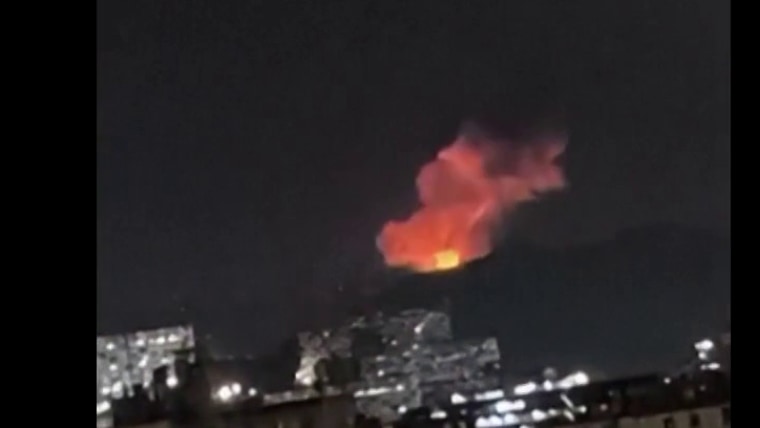
Analysts suggest Putin will continue leveraging diplomacy to stall while pursuing military gains, exploiting Trump’s desire for a legacy-defining deal. Trump, in turn, faces a delicate balancing act: maintaining his “peace president” image without alienating allies or conceding too much to Russia. The summit’s failure to deliver immediate results highlights the complexity of resolving a war rooted in irreconcilable visions of European security. Without Ukraine’s active participation and a clear U.S. strategy to counter Putin’s intransigence, the Alaska summit may be remembered as a diplomatic spectacle rather than a turning point.

Conclusion

The Trump-Putin summit in Alaska was a high-stakes gamble that delivered symbolic wins but no substantive progress. Putin emerged with enhanced legitimacy and no concessions, while Trump’s dealmaker image took a hit amid a lack of tangible outcomes. The exclusion of Ukraine and vague talk of “land swaps” strained transatlantic trust, while Putin’s stalling tactics highlighted his strategic advantage.

As the Russia-Ukraine war continues, the summit underscores the challenges of reconciling personal diplomacy with geopolitical realities. Whether it paves the way for further talks or remains a footnote in U.S.-Russia relations depends on Trump’s next moves and whether Ukraine’s voice is finally heard.

Pakistan’s FATAH-IV cruise missile intensifies the South Asian missile development competition

0

Pakistan has surprised regional defense observers by introducing the FATAH-IV, a next-generation subsonic ground-launched cruise missile engineered to penetrate deep into adversarial territory with unmatched accuracy and survivability.

The missile’s public introduction during Pakistan’s Independence Day festivities at Jinnah Stadium, Islamabad, was not merely a demonstration of national pride—it served as a calculated display of strength intended to convey to New Delhi that Islamabad is narrowing the precision-strike gap. With a range of 750 kilometers, an accuracy of within five meters, and a 330-kilogram high-explosive warhead, the FATAH-IV is designed to eliminate high-value, mobile, or fortified targets well beyond Pakistan’s borders without escalating to a nuclear confrontation.

Traveling at 0.7 Mach and weighing 1,530 kilograms, the missile utilizes a low-altitude, terrain-following flight path—flying just 50 meters above ground level—to evade detection by most conventional radar systems until moments before impact. This capability for low-level penetration, combined with precision guidance, renders the FATAH-IV a powerful weapon against enemy command centers, airbases, logistics hubs, and integrated air defense systems.

Strategic signal to India

Pakistan’s introduction of the FATAH-IV is broadly viewed as a measured strategic signal to India, particularly following the two nations’ increasing missile deployments and recent military maneuvers along the Line of Control (LoC) and in the Indian Ocean Region (IOR). Military analysts indicate that New Delhi, adhering to its trend of competitive procurement, is likely to announce or reveal a comparable long-range precision-strike system in the near future—potentially utilizing the Nirbhay subsonic cruise missile program or a modified version of the BrahMos.

The unveiling of the FATAH-IV—set against the backdrop of escalating tensions in Kashmir and India’s growing defense collaboration with the United States and France—highlights Islamabad’s determination to sustain strategic balance in both deterrence and conventional strike capabilities.

The FATAH-IV is mounted on a Chinese Taian TA5450 8×8 high-mobility truck, which carries three missiles in sealed, ready-to-launch canisters. This selection of launch platform provides significant strategic mobility, enabling Pakistan to swiftly relocate its cruise missile batteries to evade pre-emptive strikes and to introduce uncertainty into enemy targeting cycles.

In contemporary missile strategy, such mobility greatly improves survivability while facilitating shoot-and-scoot tactics that lessen vulnerability to counter-battery fire and pre-launch detection. The canisterized launch system of the missile also guarantees quick deployment, minimal setup time, and the capacity to remain in a constant state of readiness for both planned and retaliatory strikes.

In contrast to the earlier FATAH-I and FATAH-II—short-range ballistic missile systems utilized during recent confrontations in Kashmir—the FATAH-IV signifies a significant advancement into the domain of precision land-attack cruise missiles (LACMs). While the FATAH-I and II were crafted for high-volume, short-range saturation attacks, the FATAH-IV offers a standoff capability, enabling Pakistan to strike targets without risking its launch assets to enemy counterstrikes.

Its introduction signifies a purposeful expansion of Pakistan’s missile arsenal from conventional ballistic systems to versatile, survivable, and reusable cruise missile platforms. Defense analysts observe that the development of the FATAH-IV reflects global patterns where modern militaries are increasingly prioritizing cruise missiles for precision strikes, survivability, and adaptability in high-threat scenarios.

High-value attacks without breaching the nuclear threshold

The FATAH-IV is positioned strategically between tactical battlefield missiles and strategic nuclear-capable systems, enhancing the Babur cruise missile family—Pakistan’s main nuclear-capable LACM. While the Babur can be equipped with both conventional and nuclear warheads, the FATAH-IV is specifically designed for conventional precision strikes, enabling Pakistan to carry out high-value attacks without breaching the nuclear threshold.

By incorporating such systems into its arsenal, Islamabad effectively broadens its flexible response options in any escalation scenario, providing military planners with additional tools for controlled, proportional retaliation. The Pakistan Army has already shown its readiness to utilize conventionally armed missiles in active combat. In May, amid intense clashes with Indian forces, Pakistan reportedly deployed FATAH-I and FATAH-II systems—potentially alongside other short-range missile types—against Indian positions. The FATAH-IV now provides a significantly greater range, allowing Pakistan to target strategic locations in mainland India, including airbases in Punjab, command headquarters in Haryana, and logistical hubs deep within Rajasthan, without needing to position launchers near contested borders.

Penetrating Indian defence

India’s air defense network—centered around the Russian S-400 Triumf system and enhanced by domestic Akash NG and Israeli Barak-8 interceptors—poses a significant challenge to any incoming attack. Nevertheless, the FATAH-IV’s low radar cross-section, terrain-hugging design, and capability to approach from unpredictable angles significantly diminish the effectiveness of such defenses. In a real conflict situation, coordinated launches of FATAH-IVs, along with decoy drones and electronic warfare tactics, could overwhelm or blind air defense radars, creating opportunities for subsequent strikes by aircraft or other missile systems.

Doctrinal change in missile strategy

The introduction of the FATAH-IV indicates a doctrinal change in Pakistan’s missile strategy—from deterrence through potential retaliation to proactive, high-precision conventional combat operations. This change mirrors a wider trend in contemporary warfare, where long-range precision strike systems are utilized to weaken an opponent’s combat capabilities before direct engagement occurs.

Comparable to Western cruise missiles

By deploying a missile that can evade defenses and target critical nodes with little warning, Pakistan acquires a means to disrupt India’s operational tempo, logistics, and command continuity during the crucial initial hours of a conflict. Although the precise details of the FATAH-IV’s guidance system remain classified, defense analysts speculate that it utilizes a hybrid navigation system that combines inertial navigation systems (INS), satellite navigation (likely BeiDou and GPS), and possibly terrain contour matching (TERCOM) for accurate low-altitude flight. Its 5-meter circular error probable (CEP) is comparable to Western cruise missiles such as the U.S. Tomahawk Block IV, positioning it among the most precise systems in South Asia’s missile arsenal.

This level of accuracy results in a reduced number of missiles required to neutralize a target, facilitating a more efficient utilization of limited resources and complicating the defense strategies of adversaries.

Global proliferation of cruise missiles on the rise

The unveiling of Pakistan’s FATAH-IV occurs at a moment when the global proliferation of cruise missiles is on the rise. China has already deployed the CJ-10 series, India is working on extended-range versions of the BrahMos, and Iran has showcased both land-attack and anti-ship cruise missiles in actual combat scenarios.

In this context, the FATAH-IV provides Pakistan with a weapon that not only fortifies its military stance against India but also boosts its reputation as a regional missile power.

However, for advocates of global arms control, this advancement raises alarms regarding the diminishing thresholds of conventional warfare and the growing reliance on precision-strike systems in politically unstable areas.

While Pakistan is currently concentrating on domestic deployment, the FATAH-IV—or a modified export version—might eventually attract interest from allied countries in search of cost-effective precision-strike solutions.

Potential buyers could include Middle Eastern nations confronting asymmetric threats or Southeast Asian countries aiming to enhance their anti-access/area denial (A2/AD) capabilities. If combined with indigenous or Chinese targeting technologies, such an export could further amplify Pakistan’s defense-industrial reach beyond South Asia.

Arms race in South Asia

The FATAH-IV marks a significant advancement in Pakistan’s capacity to project power and influence the operational landscape well before any ground forces are deployed. It transcends being just a technological achievement; it signifies a doctrinal shift—evolving Pakistan’s missile capabilities from primarily serving as deterrents to becoming nimble, precision-strike tools that can incapacitate an enemy’s combat infrastructure within the initial moments of a conflict.

With a reach of 750 kilometers, it ensures that no vital Indian military facility in the northern, central, or even parts of the eastern theatre is safe from its targeting, compelling New Delhi to reassess its airbase distribution, logistics hubs, and command bunker placements. The FATAH-IV’s survivability—anchored in its mobility, terrain-following flight capabilities, and reduced radar visibility—establishes it as a constant threat that India’s integrated air defense system cannot overlook, necessitating the allocation of substantial resources for missile interception and early warning systems.

From an operational perspective, it provides Islamabad with a standoff strike capability that can disrupt troop mobilization, paralyze aerial operations, and cut off supply routes without crossing nuclear thresholds, thereby maintaining control over escalation while still delivering strategic damage. Regionally, its deployment accelerates the ongoing precision-strike arms race in South Asia, where cruise missiles, UAV swarms, and long-range guided rockets are set to play a dominant role in the early stages of any conflict.

Furthermore, it conveys to other regional players—such as China, Iran, and the Gulf states—that Pakistan is establishing itself as a sophisticated cruise missile power, capable of both homegrown innovation and operational integration comparable to more technologically advanced military forces.

As India considers its response—whether by increasing its BrahMos stockpile, hastening the Nirbhay initiative, or acquiring new foreign systems—both countries risk entering a self-reinforcing cycle of missile modernization that could alter the military equilibrium of the subcontinent for years to come. In this new landscape, the initial strike in a South Asian conflict is more likely to originate from low-flying, terrain-concealing missiles like the FATAH-IV, which can strike unexpectedly, hit with remarkable accuracy, and leave defenders in disarray. Ultimately, the FATAH-IV is not merely another component of Pakistan’s military capabilities—it serves as a strategic tool aimed at shifting the dynamics of warfare, providing Islamabad with both a psychological and operational edge in a region where the line between deterrence and destruction becomes increasingly blurred.

Sudarshan Chakra: India’s 2035 Quest for an Unbreakable Defense Shield

0
Indian Prime Minister Narendra Modi attends the narrow format meeting of the BRICS summit in Kazan.

India’s Prime Minister Narendra Modi, in his Independence Day address on August 15, 2025, announced Mission Sudarshan Chakra, a strategic initiative to develop a comprehensive, indigenous air-defense system by 2035. This “national security shield” aims to protect India’s military, civilian, and strategic infrastructure, including railway stations, hospitals, and religious sites, from evolving threats such as missiles, drones, and other aerial attacks. The mission draws inspiration from Lord Krishna’s mythological weapon, the Sudarshan Chakra, symbolizing precision, power, and the ability to neutralize threats and strike back.

Context

Geopolitical and Security Environment

Recent Tensions with Pakistan: The announcement comes in the wake of heightened tensions with Pakistan. Modi claimed that this operation showcased India’s technological prowess and self-reliance, setting the stage for a more robust defense framework.

Regional Threats: Beyond Pakistan, India faces security challenges from China, particularly along the Line of Actual Control (LAC). The need for a modern, multi-layered defense system is driven by the evolving nature of warfare, including cyber threats, drone attacks, and missile-based assaults.

Global Strategic Dynamics: Modi’s speech highlighted India’s resistance to external pressures, such as U.S. trade tariffs and demands to open agricultural markets, signaling a broader push for strategic autonomy.

Global Benchmarks

Comparison to Israel’s Iron Dome: Experts suggest Mission Sudarshan Chakra may be modeled on Israel’s Iron Dome. However, India’s system is envisioned to be broader, integrating AI-driven surveillance, precision targeting, and offensive capabilities tailored to India’s unique security needs.

Challenges

Jet Engine Development: Modi’s call for indigenous fighter jet engines highlights a critical gap. The Kaveri engine project, initiated in 1989, remains incomplete despite ₹2,035 crore in expenditure, illustrating the complexity of developing advanced propulsion systems. Delays in technology transfer agreements, such as with GE Aerospace for the Tejas Mark 2, underscore reliance on foreign expertise.

R&D Timelines: Developing a multi-layered defense shield integrating AI, precision targeting, and offensive capabilities within a decade is ambitious. Similar systems, like Israel’s Iron Dome, required decades of iterative development and significant investment.

Cybersecurity Integration: Protecting civilian infrastructure (e.g., hospitals, railway stations) requires robust cybersecurity measures, an area where India is still building capacity.

High Costs: Developing a system as sophisticated as Sudarshan Chakra will require substantial investment in R&D, manufacturing, and testing. For comparison, Israel’s Iron Dome development involved billions of dollars, with ongoing costs for maintenance and upgrades.

Global Trade Pressures: U.S. tariffs on Indian goods (25-50% as of August 2025) could strain India’s economy, potentially diverting resources from defense projects.

Supply Chain Risks: Dependence on critical minerals and components for advanced systems remains a challenge, despite progress in semiconductor manufacturing.

Scale and Coverage: Protecting a vast country like India, with diverse terrain and population centers, requires a scalable and resilient system. Ensuring nationwide coverage by 2035 is a logistical challenge.

Interoperability: Integrating new systems with existing platforms (e.g., S-400, BrahMos) and ensuring coordination across the Army, Navy, and Air Force will require significant effort.

Maintenance and Upgrades: A system of this scale will need continuous upgrades to counter evolving threats, requiring long-term commitment and expertise.

Regional Sensitivities: The mission’s announcement amid tensions with Pakistan and criticism of the Indus Waters Treaty could escalate regional tensions۔

Public Expectations: High-profile announcements raise expectations. Any delays or setbacks, as seen with the Kaveri engine project, could lead to public and political criticism.

Risks and Mitigation

Technological Risks: The complexity of integrating AI, surveillance, and offensive systems requires sustained R&D investment. Collaborations with global partners (e.g., Israel for missile defense expertise) could accelerate progress without compromising self-reliance.

Economic Risks: High costs could strain India’s budget, especially amid global trade challenges.

Geopolitical Risks: Aggressive rhetoric against Pakistan and the suspension of the Indus Waters Treaty could escalate tensions.

Execution Risks: India’s history of delays in projects like Kaveri suggests execution challenges. Clear timelines, accountability mechanisms, and regular progress reviews are essential.

Comparative Perspective

Israel’s Iron Dome: The Iron Dome’s success lies in its ability to intercept short-range rockets with high accuracy. However, India’s Sudarshan Chakra aims for broader coverage, including long-range missiles and drones, it has to address a larger geographical and population scale.

U.S. THAAD and Patriot Systems: These systems offer advanced missile defense but are expensive and rely on U.S. technology. India’s focus on indigenous development avoids such dependencies but requires significant technological leaps.

China’s Defense Systems: China’s rapid advancements in missile defense and hypersonic weapons highlight the competitive landscape. India needs balance speed, innovation, and cost to keep pace.

Conclusion

Mission Sudarshan Chakra is an ambitious and strategically significant initiative that aligns with India’s goals of self-reliance, technological advancement, and robust national security. However, challenges in technology development (e.g., jet engines), high costs, and the need for nationwide coverage pose significant hurdles. Achieving the 2035 timeline will require sustained investment, public-private collaboration, and effective project management.

Trump’s Arctic Bargain: Trading Alaska’s Riches for Peace with Putin

0
Ukraine's President Volodymyr Zelensky (R) meets with US President Donald Trump (L) on the sidelines of Pope Francis' funeral at St. Peter's Basilica at the Vatican.

In a stunning diplomatic maneuver, U.S. President Donald Trump is reportedly preparing to offer Russian President Vladimir Putin access to Alaska’s vast reserves of rare earth minerals and natural resources as part of a high-stakes bid to secure a ceasefire in the ongoing Russia-Ukraine war.

The proposal, detailed in an August 13, 2025, report by The Telegraph, has sparked intense debate, with critics calling it a dangerous concession to Moscow and supporters viewing it as a pragmatic step toward ending a conflict now in its third year.

Set to unfold at a summit on August 15, 2025, at Joint Base Elmendorf-Richardson in Anchorage, Alaska, this audacious plan raises critical questions about U.S. sovereignty, geopolitical strategy, and the future of Ukraine. Below, we delve into the specifics of the proposal, its strategic implications, and the polarized reactions it has provoked.

The Proposal: A Transactional Approach to Peace

According to The Telegraph, Trump’s offer centers on economic incentives designed to persuade Putin to halt Russia’s military campaign in Ukraine. The key components include:

1. Access to Alaskan Resources:

– The proposal reportedly grants Russia access to untapped oil, gas, and rare earth mineral reserves in the Bering Strait, a strategically vital region separating Alaska from Russia’s Chukotka Peninsula. The Bering Sea and adjacent Chukchi Sea are estimated to hold 13% of the world’s undiscovered oil reserves and significant gas deposits, making them a lucrative prize. Joint exploration or resource-sharing agreements in these areas could bolster Russia’s Arctic ambitions while offering the U.S. economic benefits.

– Rare earth minerals, critical for technologies like electric vehicle batteries and renewable energy systems, are also part of the deal. Alaska’s mineral wealth, including deposits of lithium, cobalt, and rare earth elements, could be leveraged to sweeten the offer.

2. Control Over Ukrainian Minerals:

– The plan includes allowing Russia to access lithium and other rare earth mineral deposits in Ukrainian territories currently under its control, such as parts of Donetsk and Zaporizhzhia. Ukraine holds approximately 10% of global lithium reserves, with two major deposits in Russian-occupied areas. These resources are vital for the global transition to green energy, making them a significant bargaining chip.

– This aspect of the proposal has drawn sharp criticism, as it appears to reward Russia’s territorial gains, potentially undermining Ukraine’s sovereignty and international efforts to isolate Moscow.

3. Sanctions Relief for Russia’s Aviation Sector:

– Trump is considering easing U.S. sanctions on Russia’s aviation industry, which has been crippled since 2022 due to Western restrictions on spare parts and maintenance for its fleet of over 700 Boeing and Airbus aircraft. Lifting these sanctions could provide Russia with economic relief while benefiting U.S. manufacturers like Boeing, aligning with Trump’s “America First” economic agenda.

– This move would also address Russia’s growing federal budget deficit, which is 4.4 times higher than last year, compounded by labor shortages and soaring interest rates.

4. Summit Logistics:

– The summit, scheduled for August 15, 2025, will take place at Joint Base Elmendorf-Richardson, a military installation in Anchorage chosen for its proximity to the Bering Strait and symbolic significance in U.S.-Russia Arctic relations.
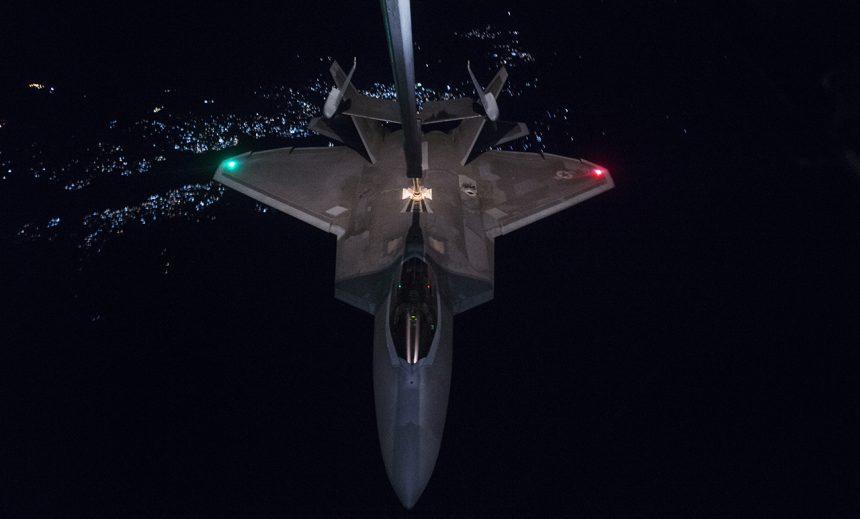
– Trump has signaled plans for a potential follow-up meeting with both Putin and Ukrainian President Volodymyr Zelensky to advance peace negotiations, emphasizing Kyiv’s inclusion in any final agreement.

– The White House has remained tight-lipped, stating it does not comment on “deliberative conversations that may or may not be happening,” leaving the proposal’s specifics unconfirmed.

Strategic Context: A High-Risk Diplomatic Play

The proposal reflects Trump’s transactional approach to foreign policy, leveraging economic incentives to achieve geopolitical goals. The Russia-Ukraine war, which began in February 2022, has reached a stalemate, with devastating human and economic costs. Ukraine’s counteroffensive has stalled, and Russia faces mounting economic pressures, making both sides potentially open to negotiation. Trump’s strategy appears to exploit Russia’s vulnerabilities while offering concessions that align with his domestic economic priorities.

The Bering Strait’s strategic importance cannot be overstated. As Arctic ice melts, the region is becoming a focal point for resource extraction and navigation routes, with Russia already producing 80% of its gas output from Arctic fields. Joint U.S.-Russia exploration in the Chukchi Sea could reshape Arctic geopolitics, but it risks escalating tensions with other Arctic nations like Canada and Norway. Meanwhile, offering Russia access to Ukrainian minerals raises ethical and legal questions, as it could legitimize Moscow’s territorial gains.

Trump has paired his incentives with a warning of “very severe consequences” if Putin rejects the deal, suggesting a dual strategy of carrot and stick. This approach contrasts with his earlier campaign rhetoric, which promised harsher sanctions on Russia, highlighting the complexity of his diplomatic calculus.

Geopolitical and Economic Implications

The proposal carries far-reaching implications for global alliances, resource competition, and U.S. domestic politics:

1. U.S. Sovereignty and Arctic Competition:

– Critics argue that granting Russia access to Alaskan resources undermines U.S. sovereignty and strengthens Moscow’s position in the Arctic, a region of increasing strategic importance. Former GOP Representative Adam Kinzinger, in a post on X, called the plan “a betrayal of American interests,” warning that it could cede critical assets to a rival power.

– The Arctic is a contested space, with the U.S., Russia, Canada, and other nations vying for control over resources and shipping routes. Allowing Russia a foothold in Alaskan waters could shift the balance of power, potentially alienating allies like Canada, which shares maritime boundaries in the region.

2. Ukraine’s Sovereignty and Global Precedent:

– Offering Russia control over Ukrainian lithium deposits has sparked outrage among Ukraine’s supporters. President Zelensky has insisted that any peace deal excluding Kyiv would produce “dead solutions,” emphasizing the need for security guarantees and territorial integrity.

– Critics warn that the proposal sets a dangerous precedent, signaling that territorial aggression can be rewarded with economic concessions. This could embolden other authoritarian regimes, undermining the rules-based international order.

3. Economic Trade-Offs:

– For Russia, access to Alaskan resources and sanctions relief could alleviate economic pressures, including a ballooning budget deficit and reliance on Chinese support. However, it risks entrenching Russia’s dependence on resource exports, a long-term economic vulnerability.

– For the U.S., the deal could boost domestic industries, particularly aviation and mining. Recent U.S. agreements with Ukraine and Kazakhstan for mineral supplies suggest a broader strategy to secure critical resources, with Alaska’s reserves as a potential bargaining chip.

4. Domestic and International Backlash:

– Public reaction in the U.S. has been polarized, with thousands expected to protest in Anchorage before the summit. Social media platforms like X have amplified criticism, arguing that the proposal oversteps presidential authority and warning of a “sellout” of Ukraine.

– European allies, particularly the U.K., have expressed cautious support for a deal that ends the war without appearing to reward Russia. However, Ukraine’s insistence on being part of negotiations complicates the path forward.

Challenges and Feasibility

The proposal’s feasibility remains uncertain. Key challenges include:

Legal and Political Hurdles: U.S. presidents lack unilateral authority to allocate state resources like Alaska’s minerals, which would require congressional approval and coordination with Alaska’s state government. Governor Mike Dunleavy has not publicly commented, and the proposal’s specifics remain unverified.

Ukrainian Resistance: Zelensky’s firm stance against deals that exclude Kyiv suggests that any agreement bypassing Ukraine could collapse. Ukraine’s allies, including NATO members, are likely to demand robust security guarantees, such as NATO membership or permanent troop deployments.

Russian Intentions: Putin’s willingness to negotiate is unclear. While Russia’s economic struggles provide leverage, Moscow may view the proposal as a sign of Western weakness, demanding further concessions.

Public and Congressional Opposition: The plan’s unpopularity, reflected in X posts and planned protests, could pressure Congress to block any resource-sharing agreements. Bipartisan criticism, including from figures like Kinzinger, underscores the political risks.

Expert and Public Perspectives

Analysts like Andreas Østhagen from the Fridtjof Nansen Institute note that Anchorage is a logical venue for Arctic-focused talks, given its proximity to the Bering Strait. However, they caution that joint exploration would require delicate negotiations to avoid escalating U.S.-Russia tensions. On X, sentiment is overwhelmingly negative, with users questioning the strategic wisdom of ceding resources to a geopolitical adversary.

Conclusion: A Risky Bet on Peace

Trump’s reported offer to Putin represents a bold, if controversial, attempt to end the Russia-Ukraine war through economic incentives. By leveraging Alaska’s mineral wealth and Ukrainian resources, the proposal seeks to exploit Russia’s economic vulnerabilities while advancing U.S. interests. However, it risks alienating allies, undermining sovereignty, and setting a precedent for rewarding aggression.

As the August 15 summit approaches, the world watches to see whether Trump’s gamble will yield peace or provoke further conflict. The outcome will depend on Putin’s response, Ukraine’s inclusion, and the ability to navigate domestic and international backlash.

Trump and Putin’s Alaska Gambit: A High-Stakes Summit to End the Ukraine War?

0
President Donald Trump and President Vladimir Putin.

On August 15, 2025, the icy landscapes of Alaska will host a historic summit between U.S. President Donald Trump and Russian President Vladimir Putin, a meeting charged with the potential to reshape the Russia-Ukraine war—now grinding through its third year since Russia’s 2022 invasion.

The choice of Alaska, a former Russian territory sold to the U.S. in 1867, is laden with symbolism: for Putin, a nod to Russia’s imperial past; for Trump, a bold assertion of American dominance on home soil. But with Ukrainian President Volodymyr Zelenskyy excluded and European allies wary, the summit risks becoming a diplomatic tightrope walk, balancing Trump’s promise of peace against the realities of Putin’s ambitions.

Here’s what’s at stake, what the leaders want, and whether a deal is even possible.

The Stakes: A War-Weary World Watches

The Russia-Ukraine conflict has claimed tens of thousands of lives, displaced millions, and disrupted global energy and food markets. Russia occupies roughly 18% of Ukraine’s territory, including parts of Donetsk, Luhansk, Zaporizhzhia, and Kherson, while Ukraine’s recent battlefield losses—Russia gained 6,000 km² since 2023—have weakened its negotiating position.

Trump, now over 200 days into his term, faces pressure to deliver on his campaign pledge to end the war “within 24 hours,” a promise that looks increasingly ambitious with his approval rating at 38%. Putin, meanwhile, sees the summit as a chance to break his diplomatic isolation and cement territorial gains, leveraging Russia’s economic resilience and nuclear clout.

The exclusion of Ukraine is a glaring issue. Zelenskyy has called negotiations without Kyiv “dead decisions,” warning they undermine peace and echo historical betrayals like the 1945 Yalta Conference. European leaders, including EU High Representative Kaja Kallas, insist on Ukraine’s territorial integrity, making any deal without Kyiv’s consent a potential fracture point for NATO unity.

What Each Leader Wants?

Trump’s Playbook: Trump is wielding economic leverage, threatening secondary sanctions on nations like India and China for buying Russian oil, which funds Putin’s war machine. Recent moves, like 50% tariffs on Indian imports, signal his willingness to play hardball. Domestically, he needs a win to shore up support, with only 64% of his base approving his Ukraine policy. He’s floated “land swapping” as a solution, calling it “complicated” but feasible, and may push for a ceasefire to avoid deeper U.S. involvement while opening Arctic energy deals for American firms.

Putin’s Endgame: For Putin, the summit is a propaganda victory, restoring his global stature after years of isolation. He seeks to legitimize Russia’s control over annexed regions and secure Ukraine’s neutrality to block NATO expansion. Territorial swaps—ceding small areas in Sumy or Kharkiv for Donbas strongholds like Slavyansk—could be on the table, alongside economic relief from sanctions. Putin’s battlefield momentum gives him little incentive to compromise, but he may offer a temporary truce to buy time.

Ukraine’s Red Lines: Zelenskyy demands full restoration of Ukraine’s 1991 borders, including Crimea, and ironclad security guarantees. Ukraine’s constitution bans territorial concessions without a referendum, and public sentiment fiercely opposes ceding land. Kyiv’s drone strikes and battlefield innovations show resilience, but without U.S. military aid, its leverage is waning.

Possible Outcomes: Deal or Deadlock?

The summit could yield several scenarios, each with profound implications:

1. Ceasefire with Territorial Swaps:

Putin might propose Ukraine cede parts of Donetsk and Luhansk for a halt in offensives elsewhere. Trump’s openness to “land swapping” suggests he could entertain this, but Ukraine’s rejection—backed by its constitution and European allies—makes it unlikely. Such a deal risks alienating NATO and emboldening Putin for future aggression, as over a third of peace agreements since 1975 have collapsed.

2. Temporary Ceasefire:

A freeze along current lines could be a face-saving compromise, allowing Trump to claim progress and Putin to pause without conceding gains. Zelenskyy has noted Russia’s openness to a ceasefire, but without security guarantees, it’s a shaky truce that could let Russia regroup. This scenario is moderately likely but lacks legitimacy without Ukraine’s involvement.

3. No Deal:

If Putin demands maximalist terms—like annexing four regions and Ukraine’s neutrality—and Trump refuses to pressure Kyiv, talks could collapse. Trump has signaled he’s ready to walk away, as he did with North Korea’s Kim Jong Un. This is the most likely outcome given the wide gap between Russia’s demands and Ukraine’s red lines, potentially leading to escalated U.S. sanctions or arms support for Ukraine.

4. Side Deals on Nuclear or Arctic Issues:

The summit could pivot to broader issues like nuclear arms control or Arctic resource development, with 13% of global oil reserves at stake. While tempting, this risks sidelining Ukraine and appearing as appeasement, with low likelihood given Putin’s focus on territorial gains.

Risks and Realities

The summit carries significant risks. Excluding Ukraine and Europe could fracture NATO unity and evoke a “Yalta 2.0” betrayal, strengthening authoritarian narratives globally. Putin gains a propaganda boost simply by attending, and any deal rewarding aggression could set a precedent for conflicts in places like Taiwan or the Baltics. Trump risks domestic backlash if the summit echoes the criticized 2018 Helsinki meeting, while his sanctions on allies like India could disrupt global trade and strain partnerships.

Putin’s history of breaking ceasefires, like the Minsk agreements, suggests any deal is a tactical pause, not a resolution. Trump’s belief in personal rapport with Putin may underestimate Russia’s strategic deception, while Ukraine’s resilience and Europe’s resolve limit his room to maneuver. A deal without Kyiv’s consent is likely to unravel, leaving the war unresolved and Trump’s legacy at risk.

A Path Forward

For a sustainable outcome, Trump must include Ukraine and NATO allies in follow-up talks, potentially through a trilateral summit. Announcing a major weapons package or tougher sanctions post-summit could strengthen Ukraine’s hand and deter Russian advances. Any ceasefire needs robust monitoring, prisoner repatriation, and reconstruction funds from frozen Russian assets. Focusing on Arctic or nuclear deals risks diluting the urgency of Ukraine’s plight and should be avoided. If Putin stonewalls, Trump must be prepared to walk away, using the summit to refine U.S. strategy rather than forcing a flawed agreement.

Conclusion: A Summit on Thin Ice

The Trump-Putin Alaska summit is a high-stakes gamble with long odds for a lasting Ukraine peace deal. Putin’s battlefield gains and economic resilience give him leverage, while Trump’s domestic pressures and Ukraine’s exclusion complicate the path to agreement. A temporary ceasefire or deadlock is most likely, but any deal must prioritize Ukraine’s sovereignty and NATO unity to avoid destabilizing the global order. As the world watches, the summit’s outcome will test Trump’s dealmaking prowess, Putin’s strategic calculus, and the resilience of international alliances in a fractured world.

Operation Sindoor Fizzles or Strategic Masterstroke? Indian Air Force Bets Big on Long-Range Missiles

0
Brahmos missile

Following the unsuccessful Operation Sindoor and the loss of six aircraft, the Indian Air Force (IAF) is focusing on enhancing its long-range missile capabilities. This initiative aims to create a surface-to-surface and air-to-air missile system with a range exceeding 200 km, thereby bolstering the air defense framework with precision strike abilities.

The Pakistan Army’s deployment of advanced stand-off weapons—munitions launched from a distance to bypass enemy defenses—was pivotal in Operation Marka-e-Haq. India’s pride, the Russian-made S-400 missile defense system, along with the Rafale aircraft, also did not succeed in this operation. PL-15 missiles launched from Pakistan’s J-10 aircraft achieved a record by downing a Rafale from 200 km away in a stand-off position.

Additionally, Pakistan’s Fatah missiles targeted Indian airbases, radars, and command and control centers, highlighting the critical role of long-range munitions in contemporary warfare. The Indian military’s losses emphasized the necessity for a more extensive arsenal of long-range missiles to address emerging threats from Pakistan and China.

The failure of Operation Sindoor, coupled with insights gained from the ongoing Russia-Ukraine conflict, highlights the significance of standoff capabilities, layered air defense, and the integration of electronic warfare (EW). Consequently, the Indian Air Force is expediting its missile modernization efforts.

Strategic Imperatives Driving the Expansion

The IAF’s missile expansion is driven by several key factors:

1. Regional Threat Dynamics:

Pakistan: The operation revealed Pakistan’s reliance on advanced air defense systems like the HQ-9 and the deployment of PL-15E air-to-air missiles with a range exceeding 200 km (previously underestimated at 150 km). This necessitates missiles that can outrange and outmaneuver Pakistani defenses.

China: The growing China-Pakistan-Turkey defense axis, coupled with China’s deployment of advanced PL-15 missiles and HQ-9B/C systems, poses a significant threat along India’s northern borders. The IAF seeks parity or superiority in long-range engagements.

Two-Front Scenario: India’s defense strategy must account for simultaneous threats from Pakistan (western front) and China (northern front), requiring versatile, multi-platform missile systems.

2. Lessons from Modern Warfare: – The Russia-Ukraine conflict has highlighted the efficacy of stand-off weapons, mobile air defenses, and EW in countering sophisticated adversaries. Operation Sindoor reinforced these lessons, particularly the need for precision strikes from beyond enemy air defense ranges.

Gaps in India’s EW capabilities, such as dedicated EW aircraft and secure data links, were evident during the operation, prompting a broader push for multi-domain integration.

3. Self-Reliance and Global Standing:

– The Atmanirbhar Bharat (self-reliant India) initiative emphasizes indigenous defense production. The IAF’s expansion plan balances local R&D with selective foreign acquisitions to reduce dependency while meeting immediate operational needs.

– India’s defense production reached a record Rs 1,50,590 crore in FY 2024-25, reflecting a robust industrial base to support missile development.

Key Missile Systems in the Expansion Plan

The IAF’s missile arsenal expansion focuses on air-to-ground, air-to-air, and surface-to-air systems, with an emphasis on ranges exceeding 200 km. Below is a detailed breakdown of the systems involved:

1. BrahMos Supersonic Cruise Missile

Overview:

A joint Indo-Russian venture, the BrahMos missile is a cornerstone of India’s stand-off capabilities. With a speed of Mach 2.8 and a range of 290–400 km.

Expansion Plans: – The IAF and Indian Navy have placed large-scale orders for air-launched and ship-based variants. A new production facility in Lucknow, inaugurated in May 2025, aims to produce 80–100 missiles annually, with plans to scale up to 150 BrahMos-NG units.

BrahMos-NG: This next-generation variant, weighing 1,290 kg (compared to 2,900 kg for the current model), is designed for multi-platform deployment, including lighter aircraft like the LCA Tejas. It will allow Su-30 MKI jets to carry multiple missiles, enhancing firepower.

Strategic Role: The missile’s versatility and precision make it ideal for targeting enemy air bases, command centers, and naval assets. Its integration with Veer-class warships strengthens India’s maritime strike capabilities.

2. Astra Air-to-Air Missile

Overview: The indigenous Astra Mk-1, with a range of 80–110 km, has been integrated with the LCA Tejas and Su-30 MKI, but the IAF seeks variants with ranges exceeding 200 km to counter adversaries like China’s PL-15.

Expansion Plans

– The Defence Research and Development Organisation (DRDO) is developing Astra Mk-2 and Mk-3, aiming for ranges of 150–200 km and beyond. These variants will feature advanced guidance systems and improved propulsion for long-range engagements.

– The IAF is prioritizing Astra’s integration across its fleet, including Rafale and MiG-29 aircraft, to ensure a robust air-to-air combat capability.

Strategic Role

Extended-range Astra missiles will provide the IAF with a competitive edge in beyond-visual-range (BVR) engagements, critical for air superiority in contested airspace.

3. Russian R-37 Missile

Overview:

The R-37, a Russian air-to-air missile with a 200+ km range, is under consideration for acquisition. Known for its hypersonic speed (Mach 6) and ability to engage high-value targets like AWACS and ELINT platforms, it complements India’s existing arsenal.

Expansion Plans

– The IAF is evaluating the R-37 for integration with Su-30 MKI and MiG-29 aircraft, leveraging Russia’s long-standing defense partnership with India.

– The missile’s acquisition is seen as a stopgap measure while DRDO develops indigenous long-range solutions like the Astra Mk-3.

Strategic Role

The R-37 will enhance India’s ability to neutralize high-value airborne threats, such as Pakistan’s Saab 2000 Erieye AEW&C or China’s KJ-500, at extended ranges.

4. Air LORA Missile

Overview:

The Israeli-developed Air LORA, a 400-km range air-launched ballistic missile (ALBM), was inspired by the Rampage missile (250 km range). Capable of carrying a 570 kg warhead, it is designed to destroy hardened targets like command centers, airfields, and air defense units.

Expansion Plans

– The IAF plans to integrate Air LORA with Su-30 MKI jets, which can carry up to four missiles, significantly boosting strike capacity.

– A partnership with Bharat Electronics Limited (BEL) will facilitate local manufacturing under the Make in India initiative, reducing costs and enhancing self-reliance.

Challenges

Integration with Rafale jets faces hurdles due to France’s reluctance to share source codes, limiting compatibility to Russian and indigenous platforms.

Strategic Role

Air LORA’s long range and precision make it ideal for deep-strike missions, enabling the IAF to target enemy infrastructure while remaining outside the reach of air defenses.

5. Air Defense Systems

S-400 Triumf: – Overview: India claims S-400, with a 400 km kill range, was a game-changer in Operation Sindoor. It forced Pakistani jets to operate at low altitudes or deep within their territory.

Expansion Plans: India has received three of five contracted S-400 squadrons, with the remaining two expected by 2026. The IAF is pushing for two additional squadrons to bolster its air defense network.

Strategic Role: The S-400 provides a robust shield against aircraft, missiles, and UAVs, enhancing India’s deterrence against both Pakistan and China.

Project Kusha

Overview: An indigenous long-range surface-to-air missile (LRSAM) system with a 400 km range, Project Kusha aims to complement the S-400. However, delays in development have raised concerns about India’s reliance on foreign systems.

Expansion Plans: The IAF has urged DRDO to expedite the project, with a target operational date in the late 2020s.

Strategic Role: Once operational, Project Kusha will form a critical component of India’s layered air defense, reducing dependency on imported systems.

Akash Missile

Overview: The indigenous Akash system (25–30 km range) was used to intercept UAVs and airborne threats during Operation Sindoor.

Expansion Plans: The IAF is scaling up Akash deployments to create a dense air defense network, particularly along the western and northern borders.

Strategic Role: Akash serves as a cost-effective, locally produced solution for countering low-altitude threats, including drones and cruise missiles.

Procurement and Modernization Roadmap

The IAF has presented a comprehensive roadmap to the Ministry of Defence, outlining its modernization priorities:

1. Missile Acquisitions

– A $7.64 billion deal approved in 2025 includes 110 air-launched BrahMos missiles, 87 heavy-duty drones, and other precision-guided munitions.

– Additional orders for Air LORA, R-37, and extended-range Astra missiles are under negotiation, with a focus on balancing cost and capability.

2. Platform Enhancements

– The IAF is pushing for additional Rafale jets and fifth-generation fighters, such as the AMCA (Advanced Medium Combat Aircraft), to serve as platforms for advanced missiles.

– Su-30 MKI and MiG-29 aircraft will remain the backbone of missile integration due to their compatibility with Russian and indigenous systems.

3. Electronic Warfare and Data Links

– Operation Sindoor exposed the need for dedicated EW aircraft and secure data links to coordinate multi-domain operations. The IAF is exploring options like the Embraer EMB-145I for enhanced EW capabilities.

4. Indigenous R&D

– Increased funding for DRDO projects like Astra, BrahMos-NG, and Project Kusha aligns with the Atmanirbhar Bharat initiative. However, delays in indigenous programs have prompted interim reliance on foreign systems.

Challenges and Public Discourse

Despite the ambitious scope of the expansion, several challenges remain:

1. Integration Issues

– Integrating advanced missiles like Air LORA and Rampage with Rafale jets is hindered by France’s reluctance to share source codes, forcing reliance on Russian platforms like Su-30 MKI.

– Compatibility issues with foreign systems underscore the need for indigenous solutions with open architectures.

2. Cost and Sustainability

– The high cost of advanced systems like the S-400 and Air LORA, coupled with maintenance expenses, has sparked debate on defense spending. Public discourse on platforms like X emphasizes the need for transparency in procurement processes.

3. R&D Delays

– Delays in Project Kusha and other DRDO programs have raised concerns about over-reliance on foreign suppliers, prompting calls for accelerated indigenous development.

4. Operational Gaps

– The lack of dedicated EW aircraft and robust data links limits the IAF’s ability to conduct seamless multi-domain operations. Addressing these gaps is critical for future conflicts.

Strategic Implications

The IAF’s missile arsenal expansion is a strategic response to a volatile regional security environment. By prioritizing long-range precision strike and air defense capabilities, India aims to achieve the following:

Deterrence Against Pakistan and China

Extended-range missiles like BrahMos, Air LORA, and Astra ensure India can strike deep into enemy territory while remaining outside the reach of air defenses. The S-400 and Project Kusha provide a robust shield against retaliatory strikes.

Two-Front Readiness

The expansion prepares the IAF for a potential two-front conflict, with versatile systems deployable across western and northern borders.

Global Power Projection

By combining indigenous advancements with selective foreign acquisitions, India is positioning itself as a formidable defense power, capable of influencing regional stability.

Self-Reliance

The emphasis on BrahMos-NG, Astra, and Project Kusha aligns with India’s goal of reducing dependency on foreign suppliers, bolstering its defense-industrial base.

Conclusion

The enhancement of the Indian Air Force’s missile capabilities following Operation Sindoor marks a crucial advancement in India’s defense modernization efforts. In the wake of Operation Sindoor’s shortcomings, the Indian Air Force aims to establish a robust collection of long-range air-to-ground, air-to-air, and surface-to-air missiles. Systems such as BrahMos, Astra, Air LORA, R-37, S-400, and Project Kusha demonstrate a well-rounded strategy to address both immediate operational requirements and long-term self-sufficiency. Despite facing challenges related to integration, costs, and research and development, the Indian Air Force’s strategic plan positions India to effectively address regional threats while underscoring its commitment to global strategic autonomy.

Pakistan Unveils Army Rocket Force Command: A Bold Strike Toward Regional Dominance

0

On August 14, 2025, during Pakistan’s 78th Independence Day celebrations, Prime Minister Shehbaz Sharif announced the establishment of the Army Rocket Force Command at a grand ceremony in Islamabad’s Jinnah Sports Stadium. The event, also marking the “Marka-e-Haq” (Battle for Truth), celebrated Pakistan’s victory over India in a four-day conflict in May 2025.

The announcement of this new military command signals a transformative step in Pakistan’s defense strategy, enhancing its conventional and strategic capabilities to counter regional threats, particularly from India.

Details of the Army Rocket Force Command

The announcement was made amidst a display of national pride, with a military parade featuring the Pakistan Army, Navy, Air Force, Punjab Rangers, Frontier Corps, and Special Service Group (SSG) Commandos, complemented by a flypast of fighter jets and an exhibition of equipment used in the “Marka-e-Haq” at Shakarparian Parade Ground. Attendees included President Asif Ali Zardari, Chief of Army Staff Field Marshal Syed Asim Munir, senior civilian and military leaders, and foreign dignitaries from allies such as China, Saudi Arabia, Türkiye, and Azerbaijan.

PM Sharif also unveiled a digital memorial for the “Battle for Truth,” highlighting contributions across Army, Air Force, Navy, Cyber, and Space domains, underscoring Pakistan’s multi-domain warfare ambitions.
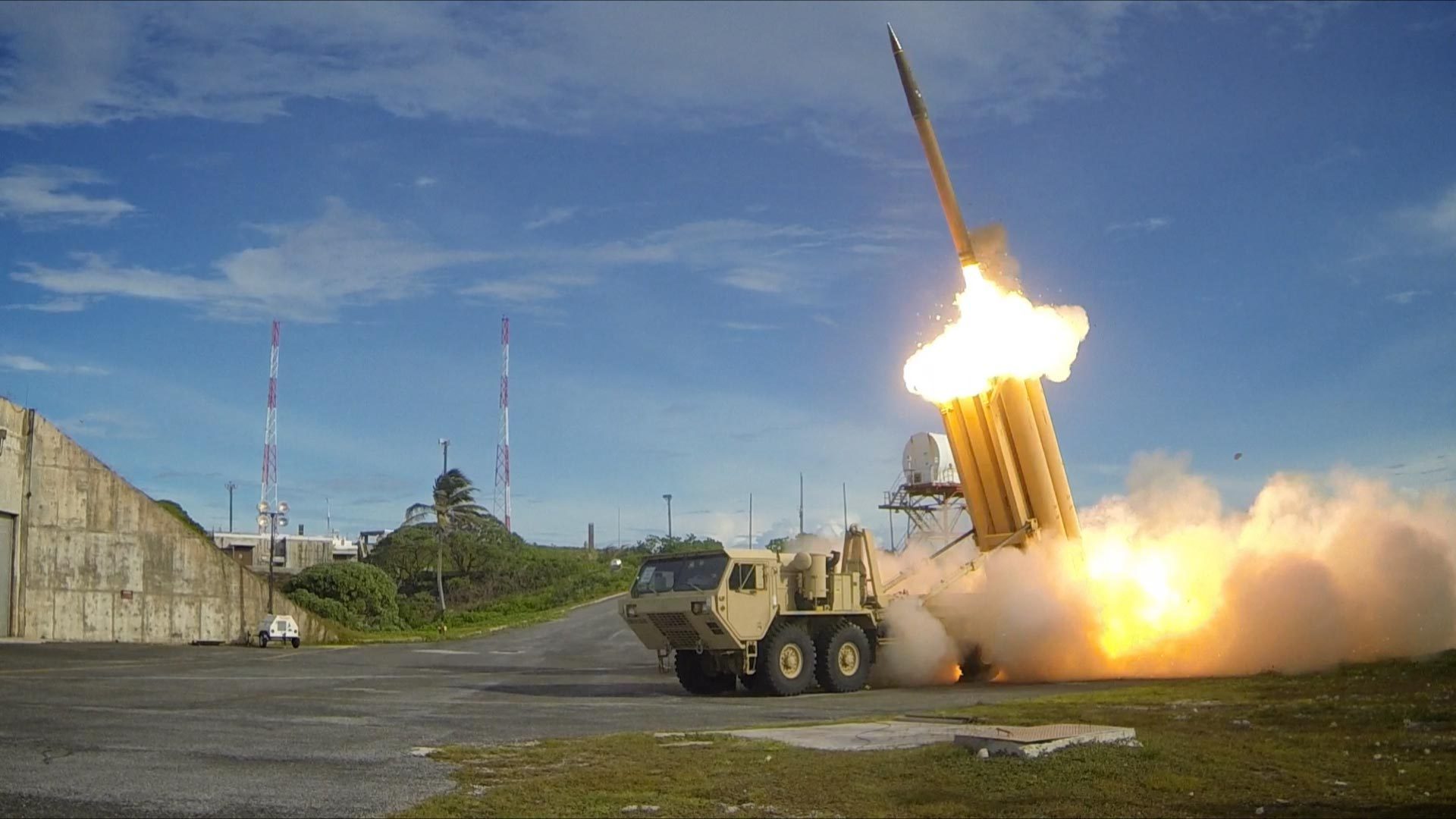
The Army Rocket Force Command is envisioned as a specialized branch equipped with cutting-edge technology, designed to manage Pakistan’s growing arsenal of guided rockets, ballistic missiles, and cruise missiles. While specific details about its structure remain limited, it is likely to operate under the National Command Authority (NCA), chaired by the Prime Minister, with the Strategic Plans Division (SPD), led by a three-star general, serving as its secretariat. This mirrors the organizational framework of Pakistan’s existing Strategic Forces Command (SFC), which oversees nuclear and conventional missile systems across the Army, Navy, and Air Force, with the Army Strategic Forces Command (ASFC) alone employing 12,000–15,000 personnel.

The new command is expected to integrate and expand upon existing missile units, potentially absorbing assets like the Fatah-series Guided Multi-Launch Rocket Systems (GMLRS), ballistic missiles (e.g., Shaheen-III, Ghauri), and cruise missiles (e.g., Babur, Ra’ad). PM Sharif emphasized its role in enabling Pakistan to “strike from all directions,” suggesting a focus on mobile, precise, and long-range systems capable of targeting enemy infrastructure deep within hostile territory.

The announcement framed the command as a direct response to India’s aggression in the May 2025 conflict, where Sharif stated Pakistan “reduced India’s pride to dust.”

 Importance of the Army Rocket Force Command

The establishment of the Army Rocket Force Command marks a pivotal moment in Pakistan’s military modernization, with far-reaching implications for regional security and global geopolitics:

1. Enhanced Regional Deterrence:

The command strengthens Pakistan’s ability to counter India’s military advancements, particularly its Cold Start Doctrine and Integrated Battle Groups (IBGs), which aim for rapid, limited incursions into Pakistani territory. By deploying systems like the Fatah-II, with a 400 km range and high precision, Pakistan can target Indian airbases, radar installations, and logistics hubs, disrupting operational plans before they materialize. This creates a “denial” capability, shrinking the space for conventional conflict below the nuclear threshold.

2. Strategic Balance:

India’s acquisition of advanced systems like the S-400 air defense system and BrahMos cruise missile has shifted the regional balance. The Rocket Force Command counters this by offering cost-effective, domestically produced systems capable of saturating defenses and striking deep targets. Fatah-II’s low radar cross-section and maneuverability make it challenging for even advanced defenses to intercept.

3. Global Defense Market Ambitions:

Pakistan’s showcase of the Fatah-II at the World Defense Show 2024 in Saudi Arabia highlighted its growing defense industry. The Rocket Force Command positions Pakistan as a potential exporter of rocket technology, strengthening ties with allies like China, Türkiye, and Middle Eastern nations. This aligns with PM Sharif’s economic vision under the “Charter of Stability,” which has reduced inflation to 5% and interest rates to 11%.
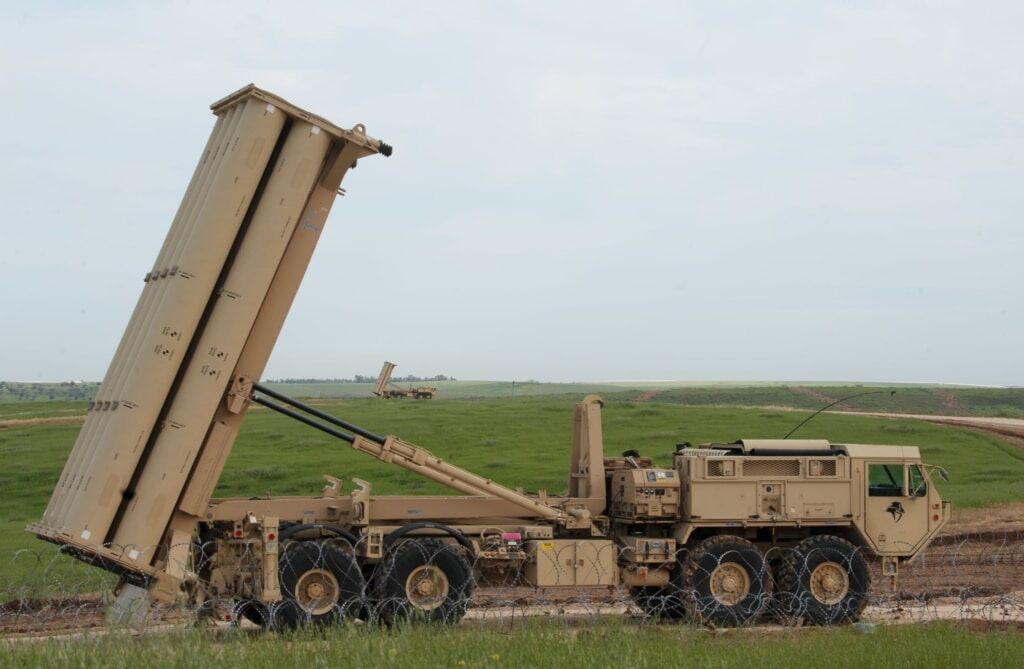
4. National Unity and Morale:

The announcement, tied to the “Marka-e-Haq” narrative, reinforces Pakistan’s resilience and military prowess. By celebrating a swift victory over India and unveiling a high-tech command, the government aims to boost national pride and unity, especially in the context of recent economic recovery and diplomatic successes, such as US President Donald Trump’s role in securing a ceasefire.

5. Doctrinal Evolution:

The command reflects a shift from massed artillery barrages to precision-guided, deep-strike capabilities. This aligns with modern warfare trends, where rapid, high-impact strikes can disrupt enemy operations without escalating to all-out war. It also complements Pakistan’s existing nuclear deterrence, providing a conventional layer to its strategic arsenal.

Intent Behind the Establishment

The creation of the Army Rocket Force Command is driven by multiple strategic objectives:

1. Countering India’s Aggression:

PM Sharif’s speech explicitly linked the command to Pakistan’s response to India’s actions in May 2025, described as a “failed attempt” to undermine Pakistan. The command aims to deter future aggression by enabling precise, long-range strikes that disrupt India’s operational tempo, targeting critical infrastructure like airfields, command centers, and supply lines.

2. Strengthening Deterrence:

By integrating conventional and nuclear-capable systems, the command enhances Pakistan’s deterrence posture. Sharif reiterated that Pakistan’s nuclear arsenal is defensive, but the Rocket Force Command adds a credible conventional deterrent, reducing reliance on nuclear escalation in limited conflicts. Systems like the Babur-3 submarine-launched cruise missile ensure a second-strike capability, reinforcing strategic stability.

3. Cost-Effective Modernization:

Unlike expensive air or naval platforms, rocket systems like Fatah-II are relatively affordable, domestically produced, and easier to maintain. This allows Pakistan to modernize its forces without matching India’s platform-for-platform spending, addressing resource constraints while maintaining operational effectiveness.

4. Geopolitical Projection:

The announcement, made in the presence of key allies, signals Pakistan’s growing military and technological prowess. It strengthens strategic partnerships, particularly with China, which may provide technological support given similarities to its People’s Liberation Army Rocket Force (PLARF). The command also positions Pakistan as a regional power capable of influencing outcomes in conflicts like Kashmir and Palestine, as Sharif emphasized.

5. Psychological Warfare:

The ability to conduct deep strikes creates uncertainty for adversaries, forcing them to divert resources to protect rear areas. The “Marka-e-Haq” narrative amplifies this psychological impact, portraying Pakistan as a resilient nation capable of defeating a larger adversary.

Capabilities of the Army Rocket Force Command

The Army Rocket Force Command leverages Pakistan’s existing missile and rocket systems, with the following capabilities:

1. Rocket and Missile Systems:

Fatah-Series: The Fatah-I (140 km range) and Fatah-II (400 km range) are guided GMLRS with a Circular Error Probable (CEP) of less than 10–50 meters, using INS/GPS guidance for high precision. Fatah-II can carry high-explosive warheads to target airbases, radar sites, and munitions depots, with a low radar cross-section to evade defenses.

Ballistic Missiles: The Shaheen-III (2,750 km range), Ghauri, Ghaznavi, Abdali, and Nasr (70 km, tactical nuclear-capable) provide strategic and tactical options for both conventional and nuclear strikes.

Cruise Missiles: The Babur (ground and submarine-launched, 450–700 km) and Ra’ad (air-launched) offer flexibility across land, sea, and air domains, with stealth features to penetrate defenses.

2. Mobility and Survivability:

The command employs mobile 8×8 tactical vehicles for “shoot-and-scoot” operations, enabling rapid deployment and relocation to avoid counter-battery fire or airstrikes. This enhances survivability against India’s air superiority and reconnaissance capabilities.

3. Precision and Saturation:

The command can execute salvo strikes, combining rockets, cruise missiles, and loitering munitions to overwhelm air defenses like India’s S-400. Fatah-II’s precision allows surgical strikes on high-value targets, while saturation attacks ensure penetration of layered defenses.

4. Command, Control, Communication, and Intelligence (C4I):

The command likely leverages the SPD’s existing C4I infrastructure, ensuring seamless coordination across domains. Integration with Pakistan’s emerging cyber and space capabilities, as highlighted in the “Battle for Truth” memorial, enhances situational awareness and targeting accuracy.
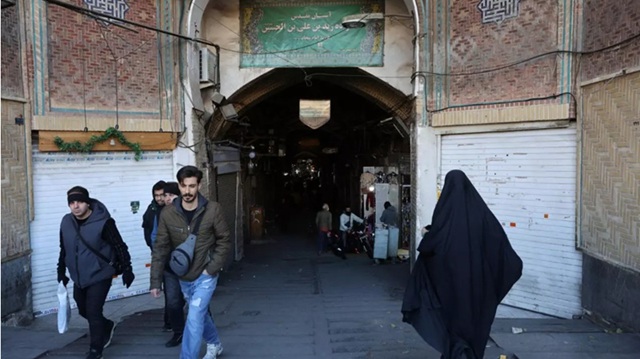
5. Indigenous Production:

Systems like Fatah-II, developed by Global Industrial & Defence Solutions (GIDS), reflect Pakistan’s growing self-reliance in defense manufacturing. This reduces dependence on foreign suppliers like China, though technical collaboration may continue.

6. Operational Reach:

With Shaheen-III’s 2,750 km range and Fatah-II’s 400 km range, the command can target strategic locations across India, including the Andaman and Nicobar Islands, and potentially beyond, as speculated in some analyses (e.g., Israel). This extends Pakistan’s strategic footprint.

Strategic and Operational Analysis

1. Strategic Implications:

The Army Rocket Force Command shifts Pakistan’s military doctrine toward proactive, precision-guided strikes, reducing reliance on nuclear escalation for deterrence. It undermines India’s assumptions of rear-area safety, forcing it to bolster air defenses and accelerate programs like BrahMos-II and Pinaka Mk-II. However, this risks escalating the regional arms race, as India may respond with further modernization, potentially destabilizing South Asia.

2. Operational Feasibility:

Integrating existing systems under a unified command is practical, given the SPD’s experience with the SFC. The Fatah-series, already operational, provides a ready foundation, while ballistic and cruise missiles add strategic depth. However, scaling to a large-scale rocket force requires significant investment in production, training, and infrastructure, which could strain Pakistan’s economy despite recent improvements.
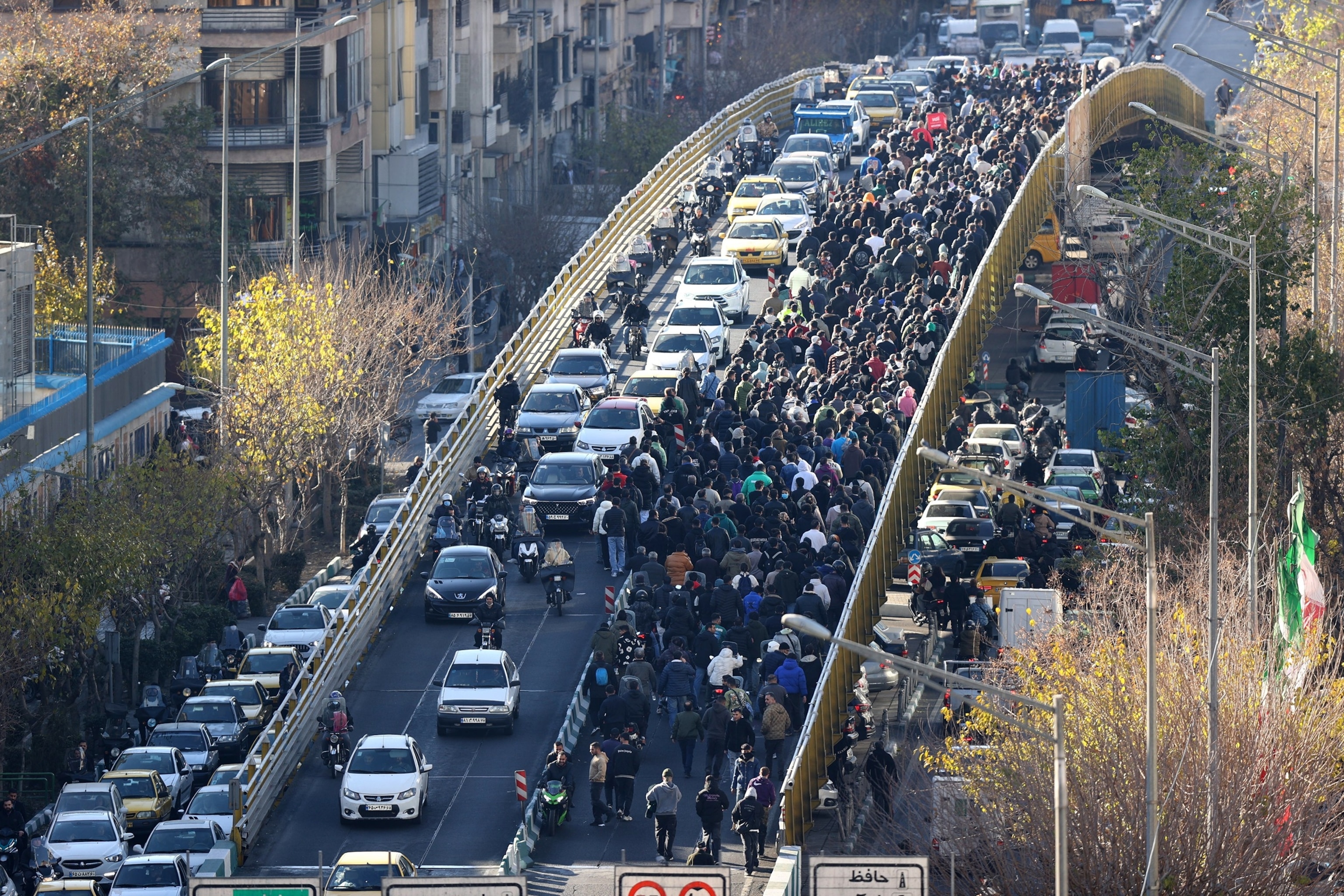
3. Regional Dynamics:
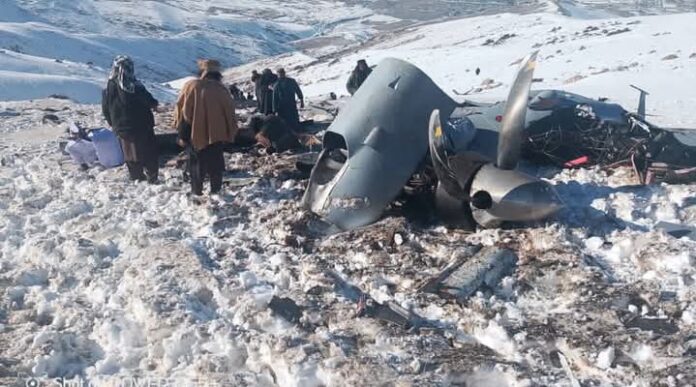
The command challenges India’s operational planning by enabling deep strikes that disrupt logistics and command nodes. It also strengthens Pakistan’s position within regional alliances, particularly with China, which may view the command as a counterweight to India’s alignment with the US and Quad. Middle Eastern allies like Saudi Arabia may see Pakistan as a reliable defense partner, boosting export potential.

4. Geopolitical Risks:

The high-profile announcement, tied to a narrative of defeating India, may invite scrutiny from global powers, particularly the US, over missile proliferation concerns. Pakistan must navigate diplomatic channels carefully to avoid sanctions, especially given its emphasis on nuclear deterrence as defensive. Sharif’s acknowledgment of Trump’s ceasefire role suggests an effort to maintain Western goodwill.

5. Challenges and Limitations:

Economic Constraints: Sustaining a high-tech rocket force requires significant funding, which could compete with domestic priorities despite economic gains (e.g., 5% inflation, 11% interest rates).

Technological Maturity: While Fatah-II and Shaheen-III are advanced, achieving aspirational goals like a 5,000 km-range rocket force demands breakthroughs in propulsion and guidance systems.

Cybersecurity: Sharif’s reference to “digital terrorism” highlights the need for robust cybersecurity to protect C4I systems from hacking or disruption, especially given India’s growing cyber capabilities.

Training and Integration: A new command requires extensive training to ensure interoperability across Army, Navy, and Air Force units, as well as integration with cyber and space domains.

Broader Implications

The Army Rocket Force Command positions Pakistan as a formidable regional player, capable of projecting power through precision and reach. It aligns with PM Sharif’s vision of a “strong, prosperous, and united Pakistan,” leveraging military modernization to complement economic recovery. The command’s emphasis on indigenous systems like Fatah-II underscores Pakistan’s technological progress, reducing reliance on foreign suppliers and enhancing strategic autonomy.

However, the command’s establishment risks escalating tensions with India, particularly if perceived as lowering the threshold for conventional conflict. India’s response—potentially accelerating its own missile programs or deepening alliances with the US—could lead to a destabilizing arms race. Pakistan must balance its military ambitions with diplomatic efforts to maintain stability, especially given its reliance on allies like China and Saudi Arabia for economic and technical support.

Globally, the command enhances Pakistan’s stature as a defense exporter and strategic partner, particularly in the Muslim world. Its ability to strike deep targets and integrate multi-domain capabilities (land, sea, air, cyber, space) positions it as a modern, adaptable force. Yet, the command’s success hinges on Pakistan’s ability to sustain investment, counter adversary defenses, and navigate geopolitical pressures.

Conclusion

The Army Rocket Force Command, announced by Prime Minister Shehbaz Sharif on August 14, 2025, marks a strategic leap for Pakistan’s military. By consolidating advanced rocket and missile systems under a dedicated command, Pakistan aims to enhance deterrence, counter India’s military edge, and project power regionally and globally.

With systems like Fatah-II and Shaheen-III, the command offers precision, mobility, and multi-domain integration, reflecting Pakistan’s evolving defense doctrine. However, its success depends on overcoming economic, technological, and diplomatic challenges, while managing the risks of regional escalation.

As Pakistan celebrates its Independence Day and “Marka-e-Haq,” the Rocket Force Command symbolizes a bold step toward a stronger, self-reliant future.