Monday, June 8, 2026
Home Blog Page 58

Australian Bushmaster acquires enhanced mobility to counter drone threats

0
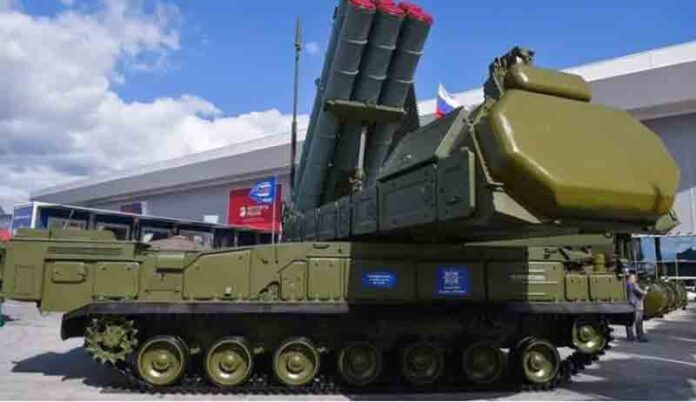
Bushmaster Protected Mobility Vehicle

Thales Australia revealed a major enhancement to its Bushmaster Protected Mobility Vehicle by incorporating a state-of-the-art anti-drone system developed by Dedrone, a subsidiary of Axon. This innovative feature enables the vehicle to identify, monitor, and neutralize drone threats while on the move, representing a significant improvement in its operational capabilities.

The announcement followed successful trials conducted near Thales’ facility in Bendigo, Victoria, where the system demonstrated its effectiveness against aerial threats in simulated combat scenarios. This advancement addresses the increasing use of drones in contemporary warfare, with the goal of bolstering the safety and adaptability of a vehicle that is already extensively utilized by military forces.

This integration is the result of a partnership between Thales Australia, a prominent entity in the nation’s defense sector, and Dedrone by Axon, a U.S.-based pioneer in counter-drone technology, highlighting progress in tackling emerging combat challenges.

The Bushmaster Protected Mobility Vehicle, designed and produced by Thales Australia, is a four-wheel-drive armored vehicle intended for transporting infantry in hostile environments. Originally developed in the 1990s to fulfill the Australian Army’s requirements for enhanced troop mobility, the vehicle commenced full production after successful trials in 1998.

Its design emphasizes survivability, mobility, and payload capacity, making it a flexible platform for various military operations. The Bushmaster is characterized by its unique V-shaped monocoque hull, which is engineered to redirect blasts from mines and improvised explosive devices (IEDs) away from its occupants. This design choice has effectively safeguarded soldiers, allowing the vehicle to endure substantial explosive forces while preserving its operational functionality.

Weighing around 12.5 tons in its standard configuration, this vehicle can achieve a maximum road speed of 62 miles per hour and has an operational range of approximately 500 miles, contingent on various conditions and load factors.

The interior of the Bushmaster is designed to accommodate up to 10 personnel, which includes a driver and a commander, along with eight additional seats for infantry members. The cabin features ergonomic seating equipped with four-point harnesses and generous headroom, as well as storage space for personal weapons and mission-related equipment.

Three roof hatches serve as emergency exits and defensive positions, while an air conditioning system ensures crew comfort in extreme weather conditions. The vehicle’s armor is designed to withstand small arms fire up to 7.62mm caliber and can be upgraded with scalable ballistic kits to counter more significant threats. Over the years, Thales has created various models tailored for different functions, such as troop transport, command, ambulance, mortar carrier, and direct fire support.

Certain models are equipped with remote weapon stations that can mount machine guns or missile systems, while others feature advanced communication systems for effective battlefield coordination. This versatility has allowed the Bushmaster to remain relevant as military requirements have evolved.

The recently integrated Dedrone system enhances the Bushmaster’s capabilities. Acquired by Axon, a company recognized for its public safety technologies like body cameras and Tasers, Dedrone specializes in counter-unmanned aerial system (C-UAS) solutions.

The technology integrates artificial intelligence with passive radio frequency sensors to detect drones from considerable distances—often several miles—without requiring visual confirmation. Once a drone is identified, the system monitors its flight path and, if it is classified as a threat, utilizes electronic disruption to neutralize it.

This “smart jamming” specifically targets the drone’s communication link, compelling it to either land or return to its operator, all while ensuring that friendly systems remain unaffected. Its capability to execute these functions while in motion distinguishes it from stationary Counter-Unmanned Aerial Systems (C-UAS), providing a proactive defense against increasingly prevalent aerial threats in global conflicts.

This advancement arrives at a pivotal moment as drones are transforming warfare, particularly in regions like Ukraine, where low-cost unmanned systems are employed for reconnaissance and offensive operations. The Bushmaster’s ability to counter such threats while on the move could be vital in dynamic combat environments.

Jeff Connolly, CEO of Thales Australia and New Zealand, stated that this integration reflects insights gained from recent conflicts. “We’ve recognized the changing landscape of warfare and have adapted the Bushmaster to address these challenges,” he remarked in a statement following the announcement. “This capability provides forces with a tactical advantage in unpredictable settings.”

Aaditya Devarakonda, CEO of Dedrone by Axon, also highlighted the partnership’s significance. “By merging our technology with Thales’ battle-tested platform, we enhance situational awareness and defense against drones,” he pointed out, emphasizing the system’s contribution to modernizing battlefield mobility.

The Bushmaster’s operational track record demonstrates its dependability. Since its launch, over 1,300 units have been manufactured, with the vehicle being utilized by nine countries across various continents. Australia, its primary operator, has deployed it in East Timor, Iraq, and Afghanistan, where it has received accolades for safeguarding troops from roadside explosives and ambushes.

In Iraq, beginning in 2005 with the Al Muthanna Task Group, the V-hull design of the Bushmaster proved effective in saving lives during IED attacks, a capability that was later validated in Afghanistan with the Special Operations Task Group. Since the start of Russia’s invasion, Ukrainian forces have received 120 Bushmasters from Australia and have praised the vehicle’s resilience in challenging combat situations.

Several countries, including the United Kingdom, New Zealand, the Netherlands, Japan, Indonesia, Fiji, Jamaica, and most recently Ukraine, have adopted the Bushmaster, often customizing it to meet their specific requirements. For example, the Netherlands outfitted some units with remote weapon stations for their operations in Afghanistan, while Indonesia collaborated with Thales to develop the Sanca variant for peacekeeping efforts.

The Bushmaster’s design has evolved based on combat experiences. A significant event in Afghanistan involved an Australian unit that survived a severe IED explosion, which damaged their vehicle but resulted in only minor injuries to the crew, highlighting the vehicle’s protective features.

Ukrainian troops have similarly acknowledged the Bushmaster for its ability to provide both mobility and safety in the midst of intense artillery and drone warfare. These practical applications have led to various upgrades, including the integration of Dedrone technology, as well as earlier improvements like digital dashboards, hybrid electric drives, and cold-weather kits. Thales is also investigating future configurations, such as a 6×6 version and a missile-equipped “Strikemaster” concept, although these are still under development.

The collaboration between Thales and Dedrone, facilitated by Axon, leverages their unique strengths. Thales, with a workforce of over 4,300 in Australia, has maintained a long-term partnership with the Australian Defence Force, manufacturing the Bushmaster at its Bendigo facility since the early 2000s.

On the other hand, Dedrone offers a global presence, with its Counter-Unmanned Aircraft Systems (C-UAS) technology operational in 33 countries, including six G7 nations, and utilized at 926 locations, from airports to military installations. This partnership enables the Bushmaster to benefit from Dedrone’s expertise, providing a retrofit solution for current fleets—an appealing option for military forces looking for budget-friendly enhancements. Testing conducted near Bendigo replicated scenarios similar to those in ongoing European conflicts, confirming the system’s applicability to contemporary threats.

For the United States, this advancement could have wider ramifications. Although the U.S. has yet to adopt the Bushmaster, its military has expressed interest in comparable protected mobility vehicles, and American companies like Oshkosh have previously collaborated with Thales on similar initiatives.

The increasing prevalence of drone warfare, as seen in conflicts across the Middle East and Eastern Europe, has led the Pentagon to prioritize C-UAS solutions, with systems like Dedrone already deployed by federal agencies. The latest upgrade of the Bushmaster may shape how allies engage in joint operations or share technology, especially as NATO members such as the UK and Netherlands enhance their own capabilities.

Looking forward, the future of the Bushmaster indicates ongoing evolution. Thales intends to broaden its range of upgrades, potentially integrating more sophisticated sensors or hybrid propulsion systems to address upcoming requirements. The Australian government, which has recently ordered over 40 additional Bushmasters for its army, regards the vehicle as a fundamental element of its defense strategy, supporting numerous jobs in Victoria and beyond.

Currently, the integration of Dedrone represents a pragmatic solution to a pressing issue, combining established hardware with advanced technology to adapt to the evolving landscape of warfare. As armed forces around the globe contend with aerial dangers, this Australian advancement provides insight into the future of armored mobility.

U.S. readies the F-35 Lot 20 production facility for international partners

0
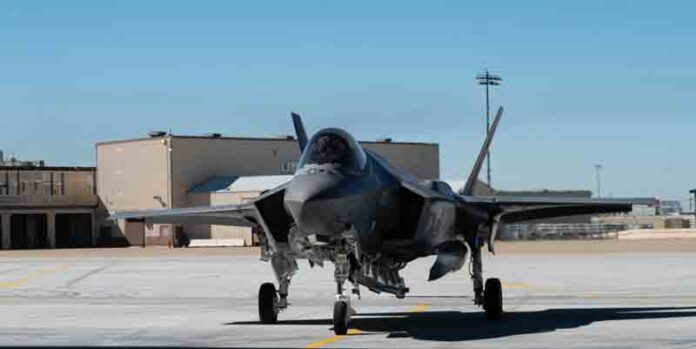
F-35 jet lands on the USS Carl Vinson aircraft carrier during the Rim of the Pacific (RIMPAC) military exercises about 100 miles south of Oahu, Hawaii, U.S.

The U.S. Department of State has approved a crucial advancement in the F-35 Joint Strike Fighter initiative, authorizing a contract modification valued at up to $238 million for Lockheed Martin Aeronautics Co. based in Fort Worth, Texas.

This announcement, made on March 24, 2025, involves an undefinitized modification to an existing fixed-price incentive contract, which directs the aerospace leader to acquire long-lead materials, parts, and components necessary for the production of F-35 aircraft under Lot 20.

In contrast to earlier contracts that primarily addressed U.S. military requirements, this initiative is aimed at non-U.S. Department of Defense partners and Foreign Military Sales clients, indicating an escalation in preparations for the next stage of the world’s most advanced fighter jet program.

This decision highlights Washington’s dedication to providing its allies with state-of-the-art airpower while sustaining the progress of a program that has encountered scrutiny regarding its costs and delays.

The contract modification, identified as P00001 under contract N0001925C0070, does not officially initiate Lot 20 production but establishes essential groundwork. Long-lead items, including specialized alloys, avionics components, and engine parts, typically require extensive timeframes for manufacturing and delivery.

By securing these materials at this stage, Lockheed Martin aims to minimize potential bottlenecks when production commences—anticipated later this year or in early 2026. This announcement coincides with the nearing conclusion of negotiations for Lots 18 through 20, a comprehensive deal estimated at around $34 billion for 478 aircraft.

Sources familiar with the situation, who requested anonymity due to ongoing discussions, suggest that this action demonstrates confidence in the imminent finalization of the broader contract.

The F-35 program, managed by Lockheed Martin in collaboration with the Pentagon’s Joint Program Office, is a fundamental element of U.S. defense strategy and international military partnerships. Since its launch, the aircraft has been promoted as a fifth-generation multirole fighter, designed for stealth missions, advanced sensor integration, and network-centric warfare.

To date, over 990 F-35s have been delivered globally, with the U.S. aiming to procure a total of 2,456 across its Air Force, Navy, and Marine Corps variants. The recent inclusion of non-Department of Defense partners and Foreign Military Sales customers in this contract underscores the program’s expanding international presence.

New operators such as Finland, Romania, and the Czech Republic have recently joined the ranks of F-35 users, complementing a coalition that already features key allies like the United Kingdom, Australia, and Japan.

A representative from Lockheed Martin refrained from disclosing specific details regarding the timeline for Lot 20 production but reiterated the company’s commitment to fulfilling global demand. “We are collaborating closely with our government and international partners to ensure the F-35 program continues to meet its commitments,” the spokesperson stated in an email. “This modification is crucial for maintaining that momentum.”

The Pentagon has not yet issued an official statement regarding the contract; however, a Defense Department official confirmed to reporters that this initiative is part of broader efforts to enhance production efficiency and support allies facing changing security challenges.

The timing of this announcement is significant, considering the program’s contentious history. The F-35 has often been at the center of controversy, with critics highlighting its $1.7 trillion lifecycle cost and various developmental challenges, including software issues and engine reliability concerns.

Supporters contend that the exceptional capabilities of the F-35 warrant the investment, especially in light of escalating tensions in areas such as Eastern Europe and the Indo-Pacific. The emphasis on international partners in this contract adjustment indicates that the U.S. views the F-35 as more than merely a domestic asset; it serves as a means to enhance alliances.

“This initiative goes beyond aircraft production; it’s about cultivating a network of competent allies,” stated John Venable, a senior defense analyst at the Heritage Foundation and a former F-16 pilot. “The F-35’s interoperability acts as a force multiplier for coalition missions.”

The specific number of aircraft designated for Lot 20 remains undisclosed, as the final details of the Lots 18-20 agreement are still being finalized. Historical trends provide some insights; for example, Lot 15 comprised 129 aircraft, while previous multiyear agreements like Lot 14 included 375 planes over a three-year period.

If the anticipated 478 aircraft for Lots 18-20 are distributed evenly, each lot could potentially consist of approximately 159 jets. However, production figures frequently fluctuate based on customer demands, and Lot 20’s focus on non-DoD and FMS clients may alter that estimate. Analysts predict that this lot could encompass between 120 and 180 aircraft, although Lockheed Martin and the Pentagon have not disclosed specific details until the contract is fully finalized.

The process of finalizing this modification—essentially securing the ultimate cost and terms—may take several months, which is typical for contracts that involve long-lead procurement. Until this is completed, the $238 million ceiling serves as a maximum estimate, indicating that the actual cost could be lower based on negotiations and material needs.

It is evident that this decision keeps the F-35 production line operational, which is crucial for Lockheed Martin as it manages both domestic and international demand. The Fort Worth facility, where all F-35s are assembled, employs thousands and has become a significant economic center in Texas, linking the program’s success to U.S. industrial interests.

For international customers, the implications are equally significant. Countries purchasing the F-35 through the Foreign Military Sales program depend on prompt delivery to upgrade their air forces and address emerging threats.

For instance, Finland secured a $9.4 billion agreement in 2022 for 64 F-35As, with deliveries expected to commence in 2026—potentially coinciding with the timeline for Lot 20. Romania is also in discussions to become the second NATO member in Eastern Europe to acquire the jet, a decision viewed as a reaction to Russian aggression following the conflict in Ukraine.

“The F-35 provides these nations with a qualitative advantage,” stated Rebecca Grant, an aerospace expert and president of IRIS Independent Research. “However, it is the U.S. production schedule that determines when they will receive it.”

The larger context of this contract modification highlights a program at a pivotal moment. While earlier production lots encountered delays due to technical issues—such as the shift to the Block 4 configuration, which enhances sensors and weaponry—recent years have shown signs of stabilization.

Lot 19 is presently in production, with aircraft being manufactured for U.S. and allied forces. Preparations for Lot 20 indicate that Lockheed Martin and the Pentagon are eager to learn from previous mistakes by securing supply chains in advance.

Industry experts highlight that the emphasis on long-lead items stems from experiences during the COVID-19 pandemic, which caused delays in the delivery of essential components such as titanium forgings and microelectronics.

The F-35’s significance extends beyond manufacturing; it plays a crucial role in U.S. foreign policy. Its export to allied nations enhances military relationships and ensures interoperability in joint operations, which is increasingly important as NATO and Indo-Pacific partners confront advanced threats from countries like Russia and China.

“The F-35 is more than just a piece of equipment; it serves as a diplomatic tool,” remarked Peter Layton, a former officer in the Royal Australian Air Force and a visiting fellow at Griffith University. “Each aircraft delivered strengthens the framework of deterrence.” However, this framework comes at a price, with taxpayers in the U.S. and allied nations continuing to finance what is the most expensive weapons system ever developed.

As preparations for Lot 20 progress, uncertainties about the program’s future remain. The Pentagon has indicated intentions to increase annual production to approximately 150-160 aircraft in the upcoming years, but budget limitations and competing initiatives—such as the Next Generation Air Dominance program—could impact this plan.

Currently, this contract modification ensures the F-35 remains on track, bridging the gap between current production levels and future deliveries. It is a practical measure, lacking in fanfare, yet essential for maintaining a program that has transformed modern aerial warfare.

The last component of this situation will come to light once the contract for Lots 18-20 is completely signed, which is expected to happen later this year. In the meantime, Lockheed Martin’s facility in Fort Worth will start accumulating the necessary materials for Lot 20, guaranteeing that the assembly lines can commence operations immediately once approval is granted.

For U.S. allies anticipating their aircraft and for the American defense sector relying on the F-35’s success, this discreet yet significant action represents another development in a narrative that intertwines strategy with stealth.

Russia’s Stoyki corvette demonstrates its strength with strikes in the Baltic Sea

0
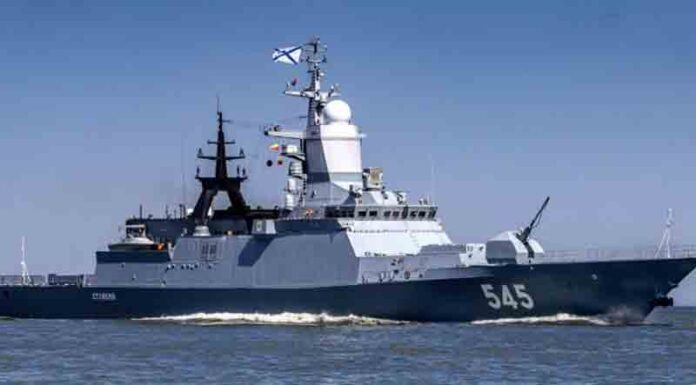
Russia’s Stoyki corvette

The Russian Navy’s corvette Stoyki, part of the Steregushchiy class, recently undertook a series of advanced military drills in the Baltic Sea, demonstrating its sophisticated combat capabilities. During a scheduled training mission, the crew performed electronic missile launches utilizing the Uran anti-ship missile system and engaged in simulated attacks on both aerial and naval targets using air defense and artillery systems.

These exercises, conducted in one of Europe’s most strategically critical maritime areas, encompassed a wide range of operations—from countering hypothetical enemy vessels to addressing aerial threats and executing electronic warfare strategies.

The Russian Ministry of Defense reported that all training objectives were successfully achieved, with the Stoyki’s crew effectively “destroying” assigned targets in a controlled environment. Although a specific date for the exercises was not disclosed, they are part of Moscow’s ongoing strategy to sustain a strong naval presence amid escalating tensions with NATO in the Baltic region.

During the operation, the Stoyki’s missile and artillery teams employed the Uran system, recognized for its accuracy against surface ships, to simulate attacks on a fleet of enemy vessels. The crew also addressed air defense scenarios, successfully neutralizing incoming aerial threats through a combination of artillery and anti-aircraft systems as the simulated targets entered the ship’s engagement zone.

In addition to combat training, the exercises included electronic warfare tactics, such as jamming, as well as drills focused on ship survivability, navigation through narrow passages, and countermeasures against underwater and sabotage threats.

A statement from the Baltic Fleet’s press office, as reported by the Russian Ministry of Defense, characterized the exercise as a thorough evaluation of the corvette’s multifunctional capabilities, highlighting its importance in maintaining maritime security.

The Stoyki is well-acquainted with the Baltic Sea, a maritime area surrounded by NATO countries such as Estonia, Latvia, Lithuania, and the recently added members Finland and Sweden. This latest military exercise occurs amid increased military activities from both Russian and Western forces in the region, highlighting ongoing geopolitical tensions.

Experts believe that these drills serve various functions, including assessing operational readiness, enhancing crew proficiency, and conveying a message of deterrence. Dr. Michael Petersen, a naval specialist at the U.S. Naval War College, remarked, “The Baltic Sea is a contested space.”

“Russia conducts these exercises to demonstrate its capability to project power near NATO’s borders, particularly as the alliance expands its presence.” The timing and location of the exercise add to its importance, although Moscow has not directly linked it to any particular event.

The Steregushchiy-class corvettes, designed by the Almaz Central Marine Design Bureau, signify a modern advancement in Russia’s naval strength. The Stoyki, with hull number 545, was constructed at the Severnaya Verf shipyard in St. Petersburg, with its keel laid on November 27, 2006. It was launched on May 30, 2012, and officially joined the Baltic Fleet upon commissioning on May 18, 2014, with a flag-raising ceremony taking place two months later on July 27.

Measuring 343 feet in length and displacing 2,200 tons when fully loaded, this vessel surpasses the dimensions of conventional corvettes, leading NATO to categorize it as a frigate. Its steel hull and composite superstructure are designed with stealth capabilities, featuring a minimized radar profile achieved through innovative hull design and radar-absorbent materials, which enhance its effectiveness in coastal waters.

The ship’s weaponry significantly contributes to its adaptability. It is equipped with the Uran missile system, which includes Kh-35 anti-ship missiles that can engage targets at distances of up to 260 kilometers, although training exercises typically utilize shorter ranges for safety and operational control.

For air defense, the Stoyki incorporates the Redut vertical launch system, which has replaced the previous Kashtan close-in weapon system on later models of this class. The Redut system is capable of launching 9M96E medium-range surface-to-air missiles, derived from the S-400 system, providing defense against aircraft, drones, and incoming missiles.

Furthermore, the corvette is armed with a 100mm A-190 deck gun for engaging surface and aerial threats, two AK-630M 30mm close-in weapon systems for point defense, and twin 330mm torpedo tubes for anti-submarine operations. It also features a hangar and deck space for a Kamov Ka-27 helicopter, which enhances its capabilities for detecting and targeting submarines or surface threats at extended ranges.

With a crew of approximately 100, the Stoyki is driven by a combined diesel-and-diesel (CODAD) propulsion system, which includes four Kolomna 16D49 engines generating 23,664 horsepower across two shafts. This configuration allows for a maximum speed of 27 knots and a cruising range of about 4,000 nautical miles at 14 knots, enabling prolonged missions in the Baltic Sea and beyond.

The design of the ship prioritizes survivability, featuring nine watertight compartments and sophisticated damage control systems, as evidenced by recent survivability drills. Its electronic warfare suite, utilized during exercises to disrupt simulated threats, enhances its physical armament, establishing it as a versatile platform for contemporary naval warfare.

The operational history of the Stoyki underscores its significant involvement in Russia’s Baltic Fleet. Since its commissioning, the vessel has engaged in a variety of exercises and deployments, frequently alongside sister ships such as Steregushchiy, Soobrazitelnyy, and Boikiy. In April 2015, it participated in a Baltic Fleet task force focused on anti-aircraft and anti-submarine operations, successfully firing artillery at both sea and aerial targets while coordinating with naval aviation units.

In November 2016, the corvette executed a successful simulated strike using the Uran system against a complex target set, which included a mock cruise missile, during exercises in the Baltic Sea. Additionally, in June 2018, it took part in an extensive deployment to the North Atlantic, traveling thousands of miles over several months alongside Boikiy, the tanker Kola, and the tug Viktor Konetsky.

The Stoyki has also contributed to Russia’s naval presence in strategically contested waters. In November 2019, it returned to its homeport in Baltiysk after completing a 30-day mission in the Baltic Sea with the landing ship Kaliningrad, during which it covered over 4,000 nautical miles. More recently, in April 2023, it was reported to have navigated from the Mediterranean to the Baltic via the Atlantic, accompanied by Soobrazitelnyy and the frigate Admiral Grigorovich.

These missions demonstrate the corvette’s resilience and versatility, attributes that were evident in its latest exercises. The vessel’s capability to address a range of threats—including surface vessels, aircraft, submarines, and electronic warfare—establishes it as a crucial component of Russia’s regional strategy.

The strategic significance of the Baltic Sea is immense. Spanning from Denmark to the Gulf of Finland, it links Russia’s Kaliningrad exclave to the mainland and functions as a critical corridor for trade and military operations. Its proximity to NATO countries further enhances its status as a geopolitical hotspot.

Since Russia’s annexation of Crimea in 2014 and the ensuing conflict in Ukraine, military operations in the area have escalated. NATO has increased its presence through exercises such as Northern Coasts and the deployment of naval vessels from the U.S., U.K., and other allied nations. In response, Russia has conducted its own military drills, including the significant Ocean-2024 exercise earlier this year, which utilized assets from the Baltic Fleet.

This backdrop explains Russia’s rationale for these exercises. In addition to ensuring crew readiness and testing equipment, these drills serve to showcase military capabilities in a region where demonstrating naval strength acts as a diplomatic tool. Katarzyna Zysk, a professor at the Norwegian Institute for Defence Studies, noted in a recent discussion that “Russia aims to make its adversaries aware of the Baltic Fleet’s active and credible presence.”

“These exercises are equally focused on deterrence as they are on preparedness.” The implementation of electronic launches—simulated firings without actual munitions—provides realistic training while reducing the risk of escalation, a sensible approach given the busy waters of the Baltic Sea.

For American audiences, Stoyki’s exercise may draw parallels to U.S. naval operations, such as those involving the Littoral Combat Ship (LCS) program, although the Steregushchiy-class vessels are more heavily armed and less modular. The U.S. Navy has been closely monitoring similar Russian activities, frequently deploying assets like the Sixth Fleet to observe movements near NATO waters.

In March 2021, a detachment from the Baltic Fleet, which included the Stoyki’s sister ship Boikiy, made an unannounced passage through the English Channel, leading to HMS Sutherland monitoring their movements. These interactions highlight the ongoing cat-and-mouse scenario, although there has been no reported direct response from the U.S. regarding this particular maneuver.

The capabilities of the Stoyki also raise concerns among its potential adversaries. The Uran system’s Kh-35 missiles, which travel at Mach 0.8 and operate at low altitudes, present a risk to smaller NATO vessels, despite their limited range and payload compared to Russia’s Kalibr missiles deployed on larger ships.

While the Redut system is considered advanced, its reliability in combat situations has been questioned, as noted in Western defense assessments, including those from the Center for Naval Analyses. Nevertheless, the Stoyki’s combination of artillery and electronic warfare systems enhances its effectiveness as a formidable adversary in confined maritime environments like the Baltic Sea.

Looking to the future, the Steregushchiy-class fleet is expected to expand. The Russian Navy intends to acquire a minimum of 30 of these vessels across its four primary fleets, with additional ships currently being constructed at Severnaya Verf and the Amur Shipyard. The Stoyki may also receive upgrades, as reports indicate that its lead ship, Steregushchiy, is scheduled for a refit to incorporate Kalibr-NK cruise missiles.

Currently, the Stoyki’s operations are focused on the Baltic Sea, where it continues to conduct patrols and training exercises. The most recent drills, which emphasized multi-domain operations, reinforce this mission, keeping the corvette—and Russia’s naval aspirations—at the forefront of attention for observers across the Atlantic.

Spy chiefs to face Senate questioning over Yemen group chat controversy

0
john ratcliffe, CIA director

This incident marks one of the most alarming breaches of national security in recent years. The disclosure that President Donald Trump’s national security team engaged in discussions about military actions in Yemen via an unclassified group chat indicates a reckless disregard for America’s confidential information and the safety of US personnel on a perilous mission.

The group message, brought to light on Monday by Atlantic editor Jeffrey Goldberg—who was inadvertently included in the chat—points to a concerning laxity in national security protocols and a lack of competence as the nation confronts various global threats.

The choice to use Signal, an encrypted messaging app that is still accessible on devices susceptible to foreign intelligence infiltration, further implies a disregard for stringent regulations governing the management of classified information, which would typically result in severe consequences for lower-ranking officials.

“This was grossly negligent,” stated Ryan Goodman, a former special counsel at the Defense Department, during an interview with CNN’s Erin Burnett on Monday. “That aligns with the legal definition of ‘gross negligence in mishandling classified information’… especially if it is shared with unauthorized individuals. A journalist was present on that call, indicating that a disclosure did occur.”

The absence of public accountability or resignations from senior officials illustrates a White House culture characterized by impunity, compounded by the appointment of staunch loyalists to the Justice Department and FBI—agencies that would typically be expected to initiate prompt investigations.

In response to demands from Democrats for investigations and oversight, House Speaker Mike Johnson downplayed the issue, highlighting the GOP’s surrender of its authority to its dominant president.

Meanwhile, Trump claimed ignorance regarding the conversation, instead launching an attack on the Atlantic, a publication he has long criticized for its coverage during his first term.

Additionally, he shared a sarcastic social media post related to the incident from Elon Musk, the head of the Department of Government Efficiency. Defense Secretary Pete Hegseth, who was mentioned by the Atlantic for allegedly sharing sensitive strike plans in the chat, criticized journalist Goldberg upon arriving in Hawaii, labeling him a “deceitful and highly discredited” reporter and denying that anyone was “texting war plans.”

These remarks, which contradicted the well-documented findings of the report, reflect a recurring strategy by the Trump administration to fabricate an alternative narrative to undermine dissent.

However, the details surrounding the chat, which the White House acknowledged as likely authentic, are troubling. Beth Sanner, a former senior intelligence official, stated on CNN’s “The Lead” that although the Signal thread may not have been compromised by foreign intelligence, the danger of high-ranking officials using cell phones for such sensitive communications is significant.

Sanner commented on the Trump national security team, stating, “This indicates a clear pattern of misunderstanding regarding classified information and the necessary protections it requires. Instead of questioning how this journalist gained access, they should be reflecting on why they are involved in this situation.”

This inquiry is expected to be directed at Director of National Intelligence Tulsi Gabbard and CIA Director John Ratcliffe during a Senate Select Committee on Intelligence hearing on global threats, as reported by the Atlantic. Both officials were part of the message chain.

The Concerns Raised by The Atlantic’s Report

Intelligence scandals capture the attention of Washington because everyone in the government—officials, legislators, analysts, and journalists—recognizes their seriousness and the legal implications involved. However, for many Americans outside the political sphere, who may be more focused on the rising costs of groceries, healthcare, and education for their children, these issues can feel remote.

Beyond the potential dangers to military personnel in active combat, incidents like this reveal broader insights into the character and functioning of an administration, often mirroring the personality of the individual in the Oval Office.

The Signal chat controversy involves sensitive operational plans and other highly classified details regarding U.S. military actions in Yemen, shared in a group thread that included journalist Goldberg, who was reportedly added by national security adviser Mike Waltz.

The administration has not provided a public rationale for the existence of the thread, which has sparked numerous questions that are likely to become increasingly politically damaging as more information comes to light.

Key concerns include:

It is astonishing that top officials in Trump’s administration would discuss such a sensitive issue outside of a highly classified environment. The group chat reportedly included Vice President JD Vance, Hegseth, Secretary of State Marco Rubio, Waltz, White House Chief of Staff Susie Wiles, Gabbard, and Ratcliffe, among others. Even more alarming is that Hegseth shared operational details regarding strikes in Yemen, including specifics on targets, weaponry, and attack sequences, as reported by The Atlantic.

The White House has not clarified why these officials opted not to utilize available secure communication methods for classified discussions, such as secure phones, computer systems, or locations like the White House Situation Room and sensitive compartmented information facilities (SCIFs) accessible in their agencies, throughout Washington, and during international travel.

While there is no indication that the multiple strikes against Iran-backed Houthi rebels in Yemen were compromised, discussing such sensitive topics outside of classified environments poses risks to the safety of American forces engaged in combat. This situation is particularly damaging for Hegseth, who has pledged to bring “common sense” back to Pentagon leadership and to prioritize the protection of “war fighters.”

This incident seems to confirm the concerns of critics who warned that Trump appointed individuals to senior national positions based on their public persona rather than their experience, including Hegseth, a former Fox News anchor. The unexpected decision by Waltz, a seasoned and decorated Green Beret, to include Goldberg in the Signal chat is particularly perplexing.

The conversation also prompts inquiries about other sensitive national security discussions that may have occurred outside of secure environments. Given the informal nature of the group chat, it seems unlikely that this is the sole instance of such dialogue.

Furthermore, according to reports from The Atlantic, there is a possibility that the conversation may have violated the law, specifically the Espionage Act, which prohibits the unauthorized disclosure of classified information or its removal from designated custody. Goodman remarked, “If we had an independent Justice Department, I am confident they would be investigating this. If it involved lower-level officials, I believe they would be scrutinizing it as well.”

The casual approach to national security matters appears to stem from the highest levels of leadership, even though the president was not part of the chat highlighted by Goldberg. Trump faced criminal charges for improperly storing national security documents at his Mar-a-Lago resort after his presidency ended in 2021. This case was controversially dismissed by a Florida judge appointed by Trump last year. Additionally, early in his administration, the president disclosed highly classified information to the Russian foreign minister and ambassador to the US during a meeting at the White House. Shortly thereafter, US intelligence agencies were compelled to extract one of their top covert assets from within the Russian government, as reported by administration officials to CNN at that time.

There is a notable degree of hypocrisy regarding the sharing of classified information via a third-party application by senior officials. Notably, Trump and several aides relentlessly criticized 2016 Democratic nominee Hillary Clinton for classified materials found on her private server during her tenure as secretary of state. Moreover, several current officials, including Hegseth at the Pentagon, have initiated leak investigations.

Many Republicans appeared to downplay the significant breach of classified information. Johnson casually remarked that the administration would “tighten up and ensure it doesn’t happen again.” Alabama Senator Tommy Tuberville, a close ally of Trump, stated, “We all make mistakes,” and told CNN’s Manu Raju that this was part of the “transition and growth” for the new administration. In contrast, Senate Majority Leader John Thune committed to investigating what transpired in the Signal chat.

The Atlantic’s account of the texts reveals intriguing insights. It indicates that Vance, despite his strong public endorsement of Trump’s views, was not initially supportive of the strikes against the Houthis. Additionally, Vice President Hegseth and senior White House official Stephen Miller expressed disdain for America’s allies, agreeing that they should compensate the U.S. for the strikes, as these actions would enhance their economies by restoring freedom of navigation after months of Houthi assaults on shipping. Hegseth reportedly typed, “VP: I fully share your loathing of European free-loading. It’s PATHETIC.”

Democrats, who are struggling to gain momentum against Trump, capitalized on The Atlantic’s report to portray the administration as reckless. House Minority Leader Hakeem Jeffries criticized the Secretary of Defense, claiming he is “the most unqualified person ever to lead the Pentagon in American history.” Delaware Senator Chris Coons urged CNN’s Phil Mattingly for an immediate oversight hearing and accountability.

Trump was informed about the Atlantic article on Monday afternoon, according to two sources who spoke with CNN’s Alayna Treene. The president expressed contempt for Goldberg, who previously reported that Trump referred to American war dead as “suckers” and “losers” during his first term.

However, sources indicate that Trump continues to support his team and has no intention of dismissing Waltz.

Greenland officials condemn the US delegation’s visit following Trump’s remarks on a possible acquisition

0
JD Vance and his wife Usha Vance

Greenlandic leaders have expressed their disapproval of an upcoming visit by a prominent U.S. delegation to the semi-autonomous Danish territory, which President Donald Trump has previously suggested the U.S. should acquire. The delegation, set to tour a U.S. military base and observe a dogsled race, will be headed by Usha Vance, spouse of Vice President JD Vance, and will also include White House national security adviser Mike Waltz and Energy Secretary Chris Wright.

Trump has emphasized the idea of U.S. annexation of Greenland since his eldest son, Donald Trump Jr., made a private visit to the resource-rich island in January. Mute Egede, Greenland’s outgoing prime minister, labeled the delegation’s visit, scheduled from Thursday to Saturday, as a “provocation” and stated that his caretaker government would not engage with them. “Not long ago, we could rely on the Americans, who were our allies and friends, and with whom we collaborated closely,” Egede remarked to the local newspaper Sermitsiaq. “But that era has passed.”

The Greenlandic government, known as Naalakkersuisut, is currently in a caretaker mode following the March 11 parliamentary elections, which were won by the Democrats, a pro-business party advocating for a gradual approach to independence from Denmark. Jens-Frederik Nielsen, the leader of the Democrats, called for political unity and criticized the timing of the U.S. delegation’s visit during coalition discussions and ahead of municipal elections next week, stating it “once again demonstrates a lack of respect for the Greenlandic people.”

Brian Hughes, spokesperson for the White House National Security Council, stated that the visit by the U.S. delegation “offers a chance to strengthen partnerships that honor Greenland’s self-determination and promote economic collaboration.” “This visit is simply an opportunity to learn about Greenland, its culture, history, and people, as well as to attend a dogsled race that the United States is proud to sponsor,” Hughes added.

ENHANCED SECURITY MEASURES

Late Sunday, two U.S. Hercules military transport aircraft landed in Nuuk, the capital of Greenland, delivering security personnel and armored vehicles, as reported by Sermitsiaq. Additionally, approximately 60 police officers from Denmark arrived in Nuuk on the same day, according to state broadcaster KNR.

Greenland’s advantageous location and its abundant oil, gas, and mineral resources present potential benefits for the U.S. It is situated along the most direct route between Europe and North America, which is crucial for the U.S. ballistic missile warning system.

Waltz and Wright are scheduled to visit the Pituffik space base, a U.S. military installation in Greenland. The White House announced that they would receive briefings from U.S. service members stationed there. Following this, they will accompany Vance to explore historical sites and participate in the national dogsled race.

In a video shared by the U.S. consulate in Greenland, Vance expressed that her visit aims to “honor the longstanding history of mutual respect and collaboration between our nations.”

Former President Trump, who initially proposed the idea of purchasing Greenland in 2019, has reiterated his calls for U.S. acquisition of the island since returning to the White House in January, even suggesting the possibility of using force to achieve this goal.

Both the governments of Greenland and Denmark have expressed their opposition to any U.S. takeover. Danish Prime Minister Mette Frederiksen commented in writing on the U.S. delegation’s visit, stating, “This is something we take seriously.” She emphasized that while Denmark seeks cooperation with the United States, a NATO ally, it must be grounded in “the fundamental rules of sovereignty,” noting that both Copenhagen and Greenland’s future government would be involved in any discussions with the U.S. regarding the island.

JF-17 Revolutionized: Pakistan’s PFX Alpha Upgrade Seeks to Enhance Independence and Establish Sovereignty

0
Pakistan’s JF-17 Simulator Transfer to Bangladesh Signals Strategic Shift

In the vibrant atmosphere of the International Defence Exhibition and Seminar 2024 (IDEAS) in Karachi, Pakistan is signaling a significant evolution in its airpower strategy. The National Aerospace Science and Technology Park (NASTP), under the auspices of the Pakistan Air Force (PAF), has launched an ambitious project aimed at modernizing its JF-17 Thunder fleet.

This initiative, known as the “Operational Capability Upgrade” (OCU) and internally referred to as “PFX Alpha,” is not just a simple enhancement; it represents the initial stage of Pakistan’s next-generation fighter program, provisionally named “PFX.”

The JF-17 Thunder, developed in collaboration with China’s Chengdu Aircraft Corporation, has been a cornerstone of Pakistan’s air combat capabilities, symbolizing the nation’s quest for defense industrial independence. With the OCU underway, the aircraft is set for a comprehensive upgrade of its avionics and radar systems.

Insiders suggest that PFX Alpha will facilitate the integration of advanced air-to-air and air-to-surface precision-guided munitions, including indigenous options like the Rasoob 250 glide bomb and the AZB-81LR, a long-range smart weapon designed for deep-strike operations.

Beyond a mere technical enhancement, PFX Alpha signifies a subtle yet impactful strategic shift.

Senior defense analysts in Islamabad view this initiative as a reflection of the PAF’s increasing ambition to take sovereign control over the development of the JF-17, a capability that has historically been constrained by Pakistan’s significant technological dependence on China. Since its introduction, the JF-17 has represented a partnership of geopolitical convenience between the two nations, grounded in shared strategic interests, particularly in counterbalancing Indian airpower.

Despite the narrative of self-sufficiency, the essential subsystems of the aircraft—such as radar, electronic warfare, and weapons integration—have predominantly remained under the control of Chinese companies like the Aviation Industry Corporation of China (AVIC) and the China Electronics Technology Group Corporation (CETC).

AVIC and CETC are among the most influential state-owned defense conglomerates in China, playing pivotal roles in the nation’s aerospace, electronics, and military-industrial sectors. This reliance has become increasingly problematic for Pakistan as it seeks to enhance the JF-17’s capabilities in response to rapidly changing regional threats and to foster indigenous innovation.

The challenges of this interdependence became evident when the Pakistan Air Force (PAF) sought to upgrade the JF-17 with advanced Active Electronically Scanned Array (AESA) radar. Although Pakistan expressed strong interest in Italy’s Leonardo Grifo-E, discussions reportedly fell through due to both AVIC and Leonardo’s reluctance to share proprietary source codes, highlighting the political and technological tensions that often accompany multilateral defense initiatives.

Acknowledging the necessity to bridge this capability gap, the PAF took a significant step in 2020 by setting up a domestic integration facility aimed at managing the fusion of weapons and subsystems for the JF-17. Since then, it has reached important milestones, including the integration of locally produced precision munitions and foreign technologies, such as the ASELPOD targeting pod from Turkey’s ASELSAN and the Ra’ad air-launched cruise missile (ALCM), which is a crucial component of Pakistan’s strategic deterrent strategy.

The PFX Alpha initiative is set to enhance the indigenization efforts by integrating locally developed radar systems, electronic warfare capabilities, and advanced avionics, along with the potential addition of electro-optical/infrared (EO/IR) targeting systems. This progression aims to elevate the aircraft to meet modern fourth-plus generation standards.

These upgrades could provide the JF-17 with improved survivability in complex air defense scenarios and greater versatility across multiple domains, enabling precision strikes in contested areas and intelligence, surveillance, and reconnaissance (ISR) operations in asymmetric conflict zones such as Balochistan and along the Line of Control (LoC).

From a geopolitical perspective, this initiative emerges during a significant shift in the regional airpower landscape. As India continues to incorporate Rafale multirole fighters and advance its indigenous Tejas Mk1A and AMCA programs, Pakistan must adapt its strategy for air superiority. In this light, PFX Alpha represents not just an enhancement of capabilities but a strategic imperative.

Ultimately, Pakistan’s pursuit of greater autonomy in its aerial operations through the JF-17 OCU signifies a broader shift aimed at minimizing reliance on foreign supplies, enhancing system integration flexibility, and nurturing a sustainable domestic military-industrial base. While the success of PFX Alpha in transforming the JF-17 into a genuinely independent airpower platform remains uncertain, the objective is clear: Pakistan is forging its own path in the aerospace defense sector.

Germany is investing billions to greatly strengthen its military capabilities at a crucial moment for Europe

0
A member of German army Bundeswehr exercises during a presentation to German Defence Minister Boris Pistorius during his visit to the airborne brigade of German army Bundeswehr in Saarlouis, Germany.

As the Trump administration continues its efforts to negotiate a resolution to the conflict in Ukraine—potentially favoring Moscow over Kyiv—European nations are, for the first time in decades, turning their attention to enhancing their military capabilities. This shift is particularly evident in Germany, where the Bundeswehr, the country’s armed forces, has suffered from years of inadequate funding. However, this trend is about to change.

Chancellor-designate Friedrich Merz has recognized that it is time for Germany to significantly increase its military investments, reaching levels not seen since the Cold War era.

Recently, Germany enacted a significant reform to its constitutional debt limit, which will release billions of euros for military spending. If Germany allocates 3.5% of its GDP over the next decade, this could total approximately €600 billion ($652 billion).

In a confidential location in central Germany, five NATO allies participated in joint training exercises, simulating an attack by a “foreign adversary” on one of the alliance’s members.

The full-scale invasion of Ukraine in February 2022 marked a pivotal moment for Europe, signaling the return of war and the end of the détente that had prevailed since the fall of the Iron Curtain.

In Berlin, this event initiated what is referred to in German as the “Zeitenwende,” or “turning point,” marking the start of renewed efforts to increase military expenditure.

Outgoing Chancellor Olaf Scholz emphasized the necessity for a new defense and security strategy, highlighting the need for special focus on the Bundeswehr.

He established a one-time fund of €100 billion aimed at “comprehensive investment” in the Bundeswehr, which required an amendment to the Basic Law, Germany’s constitution.

Although the establishment of that fund was positively received, the execution of the policy has been underwhelming, and internal conflicts within the government ultimately resulted in Scholz’s departure from his position.

Merz is now aiming to invigorate the “Zeitenwende.”

Sudha David-Wilp, a senior fellow at the German Marshall Fund of the United States, a think tank, informed CNN that “Merz and his coalition must expedite this… There is now significant great power competition, and hard power is the currency of international relations.”

While a simulated attack was taking place, Merz was in Berlin articulating his new vision for the military. “For at least a decade, and likely much longer, we have relied on a false sense of security in our society… We are now facing a paradigm shift in defense policy.”

Since the mid-Cold War period, Germany’s military spending as a percentage of GDP has significantly declined. It reached a peak of 4.9% in 1963 but fell to a historic low of just 1.1% in 2005.

It was only in 2024 that Germany finally met the NATO defense spending benchmark of 2%, marking the first time in over three decades.

While Merz appears dedicated to enhancing Germany’s military capabilities and establishing a more robust defense framework, a report from the Parliamentary Commissioner for the Armed Forces, Eva Högl, indicated that substantial work remains.

Released last week, the report highlighted that the Bundeswehr failed to meet recruitment goals, has an aging combat force, and suffers from inadequate barracks and basic infrastructure. At the report’s launch, she stated, “the Bundeswehr still lacks sufficient resources in every area.”

In 2018, Germany pledged to increase its active military personnel to 203,000 by 2025, a target that was later extended to 2031. According to the report, “the Bundeswehr has once again fallen short of its original goal.” Högl noted that the current strength of the Bundeswehr stands at 181,174 personnel.

The Högl report emphasized the increasing age of military personnel, noting that servicemen and women are “growing older.” The average age rose from 32.4 in 2019 to 34 currently.

One of the most critical findings in the report was the financial requirement for infrastructure improvements, stating that €67 billion is needed. It characterized the condition of barracks and facilities as “still in a disastrous state.”

Additionally, there is a noticeable change in public perception regarding the Bundeswehr. Historically, Germans have been quite sensitive about their military image due to the country’s past, but recent polling indicates a shift towards a more favorable view.

A survey by German public broadcaster ARD conducted in March revealed that 66% of participants support increasing defense spending and funding for the Bundeswehr, while 31% believe that spending should either remain unchanged or be reduced.

Furthermore, 59% of respondents agreed that Germany should significantly raise its debt to address “upcoming tasks, particularly in defense and infrastructure.”

As Merz takes steps to revitalize Germany’s military capabilities, he expresses confidence in steering the nation towards a more secure and prosperous future.

“Germany is back,” he proclaimed last week in Berlin. “Germany is making a substantial contribution to the defense of freedom and peace in Europe.”

Canadian Prime Minister Carney unexpectedly calls for an election, alleging that Trump seeks to undermine Canada

0
Canada's Prime Minister Mark Carney announces a federal election, after his meeting at Rideau Hall with Governor General Mary Simon to dissolve parliament, in Ottawa, Ontario, Canada.

Canadian Prime Minister Mark Carney announced on Sunday that a snap election will be held on April 28, emphasizing the need for a strong mandate to confront the challenges posed by U.S. President Donald Trump, who he accused of wanting to undermine Canada for America’s gain.

Carney’s remarks highlight the significant decline in relations between the U.S. and Canada, traditionally close allies and key trading partners, particularly following Trump’s imposition of tariffs on Canadian goods and his provocative suggestion of annexing Canada as the 51st state.

Although the next election was not scheduled until October 20, Carney aims to leverage a notable resurgence in support for his Liberal Party since January, coinciding with Trump’s threats against Canada and the resignation of former Prime Minister Justin Trudeau.

Upon taking office on March 14, Carney expressed a willingness to collaborate with Trump and acknowledged his respect for him. However, his tone shifted dramatically on Sunday.

“We are confronting the most serious crisis of our time due to President Trump’s unwarranted trade policies and his threats to our sovereignty,” Carney stated to reporters after receiving approval from the Governor General, the representative of King Charles, for the election.

“Our strategy must focus on fostering a robust economy and ensuring a secure Canada. President Trump asserts that Canada is not a legitimate country. He aims to dismantle us so that America can dominate us. We will not allow that to occur.”

The White House has yet to respond to Carney’s statements. On March 6, Trump postponed a broad 25% tariff on certain Canadian products for 30 days, but he has since enacted tariffs on steel and aluminum imports and threatened additional tariffs on Canadian dairy and lumber as of April 2.

ESTABLISHING A FOUNDATION

“Current polling indicates that Canadians’ primary concern is the potential adverse effects of Donald Trump and the looming tariffs,” stated Nik Nanos, chief data scientist and founder of Nanos Research. Nanos added that Carney is “likely laying the groundwork for a more assertive stance on April 2nd.”

Carney, a former central banker with no prior experience in politics or election campaigns, secured the Liberal leadership two weeks ago by convincing party members that he is the most capable candidate to address the challenges posed by Trump. He now has five weeks to gain the support of Canadians. On Sunday, Carney suggested reducing the lowest income tax bracket by one percentage point.

Recent polls indicate that the Liberals, who have been in power since 2015 and were significantly trailing the official opposition Conservatives earlier this year, have now gained a slight lead over their opponents. “We have shifted from an election focused on change to one that is primarily about leadership,” remarked Darrell Bricker, CEO of Ipsos Public Affairs.

“The Conservatives’ ability to criticize the Liberals has been significantly weakened, as voters are concentrating on immediate issues and the near future rather than the past decade,” he noted in a phone interview. The Conservatives have attempted to depict Carney as an elitist intent on perpetuating the high government spending policies of the Trudeau administration. They also question his transparency regarding the transfer of his personal financial assets into a blind trust.

Carney reacted defensively last week when questioned about the trust, accusing the reporter of fostering “conflict and ill will.” This tense response may provide the Conservatives with hope that Carney could falter during his inaugural campaign.

A successful outcome will largely depend on strong performance in Quebec, a province where French is predominantly spoken. Carney faced challenges during a press conference when he was asked to respond in French; he initially misunderstood the question and replied in English instead. In contrast, Conservative leader Pierre Poilievre is fluent in French and has extensive political experience, having participated in seven elections.

At a press conference on Sunday to kick off his campaign, Poilievre stated, “What we need to do is put Canada first for a change,” emphasizing that his proposed policies, which include tax reductions and increased resource production, would attract investment and enhance Canada’s self-sufficiency, enabling it to better confront Trump.

Laura Stephenson, a political science professor at Western University in London, Canada, suggested that Carney’s lack of experience may not be as significant due to the influence of Trump. “I believe we might see a bit more leniency than is typically afforded to politicians during this campaign,” she remarked.

An Angus Reid online poll conducted with 4,009 participants last week indicated that the Liberals hold 42% of public support, while the Conservatives are at 37%. Angus Reid noted that the margin of error is approximately 1.5%, with a confidence level of 95%.

Ukraine, US teams hold talks in Saudi Arabia, US envoy hopeful on ending war

0
Steve Witkoff, Trump's envoy to the Middle East.

Ukrainian and U.S. delegations convened on Sunday to discuss measures aimed at safeguarding energy facilities and critical infrastructure, as stated by Ukraine‘s defense minister. This meeting is part of a diplomatic initiative led by U.S. President Donald Trump to bring an end to three years of conflict.

Taking place in Saudi Arabia, the discussions precede a scheduled meeting on Monday between U.S. and Russian representatives. U.S. special envoy Steve Witkoff conveyed a sense of optimism regarding the potential to resolve Europe’s most lethal conflict since World War II.

“I believe that (Russian President Vladimir Putin) is inclined towards peace,” Witkoff remarked during an interview with Fox News on Sunday. “I anticipate that we will witness significant advancements in Saudi Arabia on Monday, particularly concerning a ceasefire for Black Sea shipping between the two nations. This could naturally lead to a broader ceasefire in hostilities.”

Ukrainian President Volodymyr Zelenskiy noted that his country’s delegation was engaging in a “completely constructive manner,” emphasizing the usefulness of the discussions and the ongoing efforts of the delegations.

“Regardless of our discussions with partners today, it is crucial for us to compel Putin to issue a genuine order to halt the attacks,” Zelenskiy stated in a televised address. The Ukrainian delegation, led by Defense Minister Rustem Umerov, aimed to facilitate “a just peace and enhance security,” although Zelenskiy characterized the talks as primarily “technical.”

Last week, Putin accepted Trump’s proposal for a 30-day cessation of attacks on each other’s energy infrastructure, but this narrowly defined ceasefire quickly came into question, as both sides reported ongoing strikes.

A significant drone assault by Russia on Kyiv during the night resulted in the deaths of at least three individuals, including a 5-year-old child. The attack also ignited fires in high-rise residential buildings and caused widespread damage across the capital, according to Ukrainian officials on Sunday.

In a related development, Russian authorities reported on Sunday that their air defense systems had intercepted 59 Ukrainian drones aimed at the southwestern regions of the country, claiming that the strikes had resulted in one fatality in Rostov.

Ukrainian President Zelenskiy, amid ongoing Russian advances in eastern Ukraine, has endorsed Trump’s proposal for a comprehensive 30-day ceasefire.

‘under control’

Trump stated on Saturday that efforts to prevent further escalation in the Ukraine-Russia conflict were “somewhat under control.” The United States is aiming to establish a broad ceasefire within weeks, with a target for a truce agreement by April 20, as reported by Bloomberg News, citing sources familiar with the discussions.

White House National Security Adviser Mike Waltz mentioned on Sunday that the U.S. is exploring various confidence-building measures to facilitate an end to the war, including addressing the future of Ukrainian children taken to Russia. When asked about the objectives for the wider negotiations, Waltz indicated that once a ceasefire in the Black Sea is established, discussions would shift to the line of control, which pertains to the actual front lines.

“This will involve details regarding verification mechanisms, peacekeeping, and maintaining the current boundaries,” Waltz explained. “Ultimately, this will lead to a broader and lasting peace.” Trump’s communications with Putin—two publicly acknowledged phone calls and potentially additional discussions—have raised concerns among European leaders, who worry that Washington may be distancing itself from Europe in pursuit of a peace agreement with Russia as part of a larger deal involving oil prices, the Middle East, and competition with China.

Britain and France are at the forefront of European initiatives to enhance military and logistical assistance for Ukraine, with several nations revealing intentions to boost their defense budgets in an effort to lessen their dependence on the United States.

Nonetheless, Witkoff downplayed the worries expressed by Washington’s European NATO partners regarding the possibility that a peace agreement in Ukraine could encourage Putin to target other neighboring countries. “I don’t believe he has ambitions to conquer all of Europe. This situation is significantly different from what we experienced during World War Two,” Witkoff stated.

What is the US F-47? An Overview of Boeing’s Next-Gen Stealth Fighter Transforming Air Superiority

0

The United States has officially chosen Boeing’s F-47 as the focal point of the Next Generation Air Dominance (NGAD) program, representing a significant advancement in the future of American aerial combat. In a landmark announcement, former President Donald Trump revealed the $20 billion contract awarded to Boeing, putting an end to months of speculation regarding which defense contractor would spearhead the U.S. Air Force’s most ambitious fighter initiative in decades.

An artist’s depiction of the U.S. Air Force’s Next Generation Air Dominance (NGAD) platform showcases the sixth-generation F-47 stealth fighter. The NGAD system aims to provide state-of-the-art capabilities and ensure air superiority for the Joint Force in future high-intensity conflicts. (U.S. Air Force graphic)

So, what is the F-47, and why is it poised to become the most crucial combat aircraft of the 21st century?

Essentially, the F-47 is a sixth-generation stealth fighter—an advanced, crewed platform intended not only to succeed the aging F-22 Raptor fleet but also to serve as the command hub of a highly interconnected, multi-domain warfare system. This aircraft represents more than just an improved fighter jet; it signifies a revolutionary approach to executing air dominance operations in highly contested scenarios.

Developed under the NGAD initiative, the F-47 is part of a comprehensive “system-of-systems” strategy that integrates manned fighters, autonomous drones (referred to as Collaborative Combat Aircraft, or CCA), advanced sensor technologies, and artificial intelligence. The objective is to achieve air superiority not solely through enhanced performance, but also through information dominance, interoperability, and adaptability.

Boeing has introduced a design characterized by a streamlined, blended wing-body configuration, moving away from conventional fighter shapes to achieve superior stealth and aerodynamic performance. Although details remain classified, it is believed that the airframe utilizes advanced multispectral stealth technologies to minimize detection across radar, infrared, acoustic, and electronic domains. Engineers have suggested the potential inclusion of active stealth capabilities, which may allow the aircraft to adjust its emissions in real-time based on threats or mission requirements.

Beneath its exterior, the F-47 is equipped with a cutting-edge variable-cycle adaptive engine, likely stemming from the Air Force’s Next Generation Adaptive Propulsion (NGAP) initiative. This innovative engine can switch between performance modes instantaneously, optimizing for both high-speed thrust and long-range fuel efficiency while managing heat signatures to improve survivability.

However, it is the aircraft’s advanced systems that may be the key to success in future conflicts. The F-47 features a fully digital cockpit and a battle management system powered by artificial intelligence. This allows the pilot to take on the role of a mission commander, coordinating a network of semi-autonomous drones and manned platforms across various operational domains.

The integration of AI enables the F-47 to prioritize threats dynamically, analyze sensor data at machine speed, and adapt to battlefield conditions in real-time. Additionally, the fighter will act as a command center for multiple Collaborative Combat Aircraft (CCA) drones, which are unmanned systems capable of performing electronic warfare, intelligence, surveillance, reconnaissance missions, or providing additional weaponry in combat as supportive wingmen.

The platform features an open-systems architecture, which is essential for enabling rapid upgrades in response to evolving threats. Boeing’s focus on software modularity and plug-and-play functionality allows the F-47 to incorporate new sensors, weapons, and mission systems more quickly than conventional fighters. It will be fully aligned with the Pentagon’s Joint All-Domain Command and Control (JADC2) initiative, facilitating seamless integration across land, air, sea, space, and cyber domains.

From a strategic perspective, the F-47 is being designed with a specific focus on the Indo-Pacific region, where the extensive distances and the increasing threat from China’s integrated air defenses necessitate a fighter capable of independent operations deep within contested areas. Its long range, stealth characteristics, and ability to coordinate with drones make it exceptionally equipped to penetrate anti-access/area-denial (A2/AD) environments—an increasingly critical capability in U.S. military strategy.

“A Boeing executive remarked anonymously, ‘This aircraft is not focused on winning dogfights; it’s about achieving dominance across the entire battlespace. The F-47 will be the most advanced, connected, and lethal air platform ever developed by the U.S.’”

Choosing Boeing over Lockheed Martin—previously considered the frontrunner due to its experience with the F-22, F-35, and early Next Generation Air Dominance (NGAD) prototypes—indicates a shift in priorities and industrial strategy. This decision also revitalizes Boeing’s defense aviation division, particularly its fighter production operations in St. Louis, Missouri.

The F-47 has reportedly been in covert flight testing for several years, and it is now transitioning to the next stage: comprehensive development, testing, and eventual production. The Air Force aims to achieve initial operational capability by 2030, although experts caution that significant obstacles lie ahead. With an estimated cost exceeding $300 million per aircraft, the F-47 is set to become one of the most expensive fighter jets ever manufactured, prompting concerns regarding procurement volume, maintenance expenses, and long-term viability.

In addition to financial considerations, the program must address the intricate ethical and operational dilemmas associated with AI-driven warfare, autonomous collaboration, and the dynamics of human-machine command authority. The manner in which these issues are resolved will influence not only the future of the F-47 but also the overall landscape of airpower in the decades to come.

Nonetheless, the F-47’s role as a key component of the Next Generation Air Dominance (NGAD) initiative marks a pivotal moment in military aviation. As great-power competition re-emerges as a central theme in global politics, the United States is banking on the integration of stealth, speed, intelligence, and autonomy to provide its forces with a competitive advantage in future aerial engagements.

Japan, China, and South Korea are engaged in discussions to seek consensus on regional security matters

0
Chinese Foreign Minister Wang Yi, Japanese Foreign Minister Takeshi Iwaya and South Korean Foreign Minister Cho Tae-yul pose for the cameras during the 11th Trilateral Foreign Minister’s Meeting (Japan-China-ROK) in Tokyo

Top diplomats from Japan, China, and South Korea convened in Tokyo on Saturday, aiming to find common ground on regional security and economic matters amid increasing geopolitical uncertainty. Japanese Foreign Minister Takeshi Iwaya remarked at the meeting’s outset, “In light of the escalating international challenges, we may indeed be at a pivotal moment in history.”

He emphasized the necessity of transcending divisions and confrontations through dialogue and collaboration. This gathering marks the first meeting of the countries’ chief diplomats since 2023 and is anticipated to address a range of issues, including North Korea’s nuclear program and trade relations, setting the stage for a forthcoming trilateral leaders’ summit following last year’s meeting in Seoul.

Iwaya is also scheduled to engage in separate bilateral discussions with his Chinese and South Korean counterparts, which will include the first high-level economic dialogue with China in six years. This week, Iwaya indicated that these discussions would encompass the ban on Japanese seafood imports that China imposed after the release of wastewater from the Fukushima nuclear plant in 2023.

US and Israel are set to discuss Iran, while Tehran contemplates its response to a letter from Trump

0

The United States and Israel are preparing to hold a strategic meeting regarding Iran‘s nuclear program as President Donald Trump’s administration intensifies its maximum pressure strategy against Tehran.

The Trump administration aims to diminish the volume of Iranian oil exported to China, which is by far Iran’s largest crude oil buyer.

On Thursday, the US imposed sanctions on a refinery located in Shandong Province, eastern China, as well as on vessels supplying oil to Chinese facilities associated with the Houthis in Yemen.

The focus of these sanctions is on “Teapot refineries,” which are small, privately owned refineries in China that process Iranian crude oil.

State Department spokesperson Tammy Bruce stated, “These sanctions are part of President Trump’s maximum pressure campaign to reduce Iran’s oil exports, including those to China, to zero.”

She emphasized that “China is the largest importer of Iranian oil,” noting that Tehran utilizes these oil revenues to “finance attacks” against US allies and to support “terrorism.”

This marks the fourth round of sanctions imposed by Trump on China.

In January, Reuters reported that China’s state-owned Shandong Port Group had begun blocking tankers that were under US sanctions, which dealt a significant blow to Iran, whose aging shadow fleet transports most of its oil to China.

Trump’s two-month ultimatum for an agreement

The sanctions initiative coincides with reports from Axios indicating that Israel and the United States are set to convene to address Iran’s nuclear program.

Trump and Israeli Prime Minister Netanyahu have previously met at the White House to discuss matters concerning Iran. This particular working group was formed in 2009 during the Obama era.

The relationship between the Obama administration and Netanyahu’s government was fraught with conflict, particularly regarding the 2015 nuclear agreement, which reached a peak when Netanyahu addressed Congress to criticize Obama’s diplomatic efforts with Iran.

Trump presents a new challenge for Netanyahu, who firmly opposes any nuclear agreement.

In January, Trump eased the pressure he had placed on Netanyahu to achieve a ceasefire in Gaza. He has authorized expedited arms sales to Israel, including 2,000-pound bombs that were previously delayed by the Biden administration. Additionally, he has expressed US backing for Israel’s renewed military actions in the Gaza Strip.

On the issue of Iran, Trump is adopting a hardline stance.

In addition to the sanctions, earlier this month, Israel and the US carried out a joint air force exercise in the Eastern Mediterranean, which featured long-range bombers. Analysts interpret this drill as a signal to Iran regarding the US’s readiness for a possible strike on Tehran’s nuclear sites.

Simultaneously, Trump has expressed his desire for a nuclear agreement. In March, he disclosed that he had sent a letter to Iran’s Supreme Leader, Ayatollah Ali Khamenei, requesting discussions.

“There are two approaches to dealing with Iran: through military action or by negotiating a deal,” Trump stated. “I would rather negotiate because I have no intention of harming Iran. They are wonderful people.”

Axios reported on Friday that Trump’s letter included a “two-month deadline for establishing a new nuclear agreement.”

Tensions between Iran hawks and isolationists

During his live annual televised address on Friday, which coincided with Nowruz, the Persian New Year, Khamenei remarked that US threats against Iran “will lead to nowhere.”

On Thursday, Iranian Foreign Minister Abbas Araghchi characterized the letter as “more of a threat,” while also suggesting it might present some opportunities.

Araghchi noted that Tehran is currently considering its response, which will be announced in the coming days.

To date, Trump’s diplomatic efforts have not instilled much confidence in Iran regarding the potential for initiating talks.

The White House angered both Israel and the Washington establishment by engaging in direct discussions with Hamas. However, in response to the backlash, the Trump administration quickly shifted its stance, supporting Israel’s military actions in Gaza. Trump also withdrew the nomination of his envoy who had met with Hamas, with his approval.

In Ukraine, despite portraying himself as a “peacemaker,” Trump has struggled to facilitate a ceasefire between Ukraine and Russia, even though Kyiv has expressed willingness for a truce.

Next week, a meeting in Washington will bring together US and Israeli officials, including Prime Minister Netanyahu’s key advisors, Strategic Affairs Minister Ron Dermer and national security adviser Tzachi Hanegbi.

Dermer, known for his hardline views on Iran, was previously barred from the White House during the Obama administration, according to a former US official speaking to MEE.

On the US side, Trump’s national security adviser, Mike Waltz, will participate, accompanied by representatives from the State Department, the Pentagon, and the US intelligence community.

Europe’s hesitation to seize Russian assets for Ukraine’s financial needs is a complicated matter

0

Three years of conflict in Ukraine have imposed a significant financial burden on Europe, amounting to nearly $122 billion in direct aid, in addition to billions invested in the continent’s military and defense sectors.

Despite this, the region has yet to utilize the $229 billion in Russian central bank assets that are currently frozen within the European Union, a consequence of Vladimir Putin’s full-scale invasion of Ukraine in 2022.

Recently, French lawmakers approved a non-binding resolution urging their government to utilize these frozen Russian assets to “support military efforts in Ukraine and aid in its reconstruction,” specifically advocating for the use of the assets themselves rather than merely the interest accrued.

Both the United States and Canada have already enacted legislation allowing for the confiscation of frozen Russian assets. In its final days, the Biden administration also sought to encourage European allies to seize these immobilized funds.

Progress was made last week when the European Parliament reached an agreement on a resolution to appropriate frozen Russian assets for Ukraine’s “defense and reconstruction.” However, the resolution has yet to be voted on by the parliament’s members.

The EU is currently leveraging the interest generated from these frozen assets to support multi-billion-dollar loans to Ukraine. Nevertheless, European governments remain cautious about seizing the principal amount. As UK Prime Minister Keir Starmer remarked on March 15, it is a “complicated issue.”

Cash Reserves at Stake

The issues at hand are both economic and legal in nature.

French government spokesperson Sophie Primas emphasized to reporters last Wednesday that the government will not engage with Russian assets, cautioning that such actions could create a perilous precedent that might deter foreign investment in Europe, even as they explore legal options to utilize the funds.

The argument suggests that a nation like China may hesitate to invest in Europe, knowing it could face sanctions if it were to invade Taiwan.

For years, Russia has been relocating its official funds away from the United States, likely due to concerns about potential consequences stemming from its actions in Ukraine and Georgia.

There is historical precedent for similar actions by the US, which seized German assets after World War II, as well as assets from Afghanistan and Iraq, noted Professor Olena Havrylchyk, an economist at the Panthéon-Sorbonne University in Paris, adding that Moscow has not shared the same apprehensions regarding Europe.

In recent years, central banks in Europe have voiced concerns—albeit in diplomatic terms—that confiscating foreign assets could negatively impact the euro’s status as a reserve currency, according to Havrylchyk in an interview with CNN.

However, ongoing support for Ukraine will continue to impose financial burdens on Europe, and the interest generated from Russia’s assets will not suffice.

Havrylchyk pointed out that European taxpayers must be prepared to accept this reality if the outright seizure of Russian funds is not a viable option.

Havrylchyk asserts that a nuclear-armed Russia is unlikely to consent to reparations as part of any peace agreement, indicating that Kyiv’s prospects for compensation should rely on funds already held by Western nations.

“The world is not governed solely by economic principles,” she remarked. “International law prioritizes justice over mere property rights.”

Legal Concerns

Europe’s reluctance to seize, rather than merely freeze, Russian assets is rooted in a fundamental tenet of international law: the protection of a state’s foreign assets from confiscation.

According to Frédéric Dopagne, a professor of public international law at the University of Louvain in Belgium, the rationale for seizing Russia’s assets is crucial. He noted that reparations for the damage Russia has inflicted on Ukraine, along with strengthening Ukraine’s defense capabilities against further aggression, represent the most compelling legal arguments Europe could present.

When the US enacted the 2024 bipartisan Rebuilding Economic Prosperity and Opportunity for Ukrainians Act, it justified the seizure of Russian assets within the US by stating that these funds would be allocated for Ukraine’s reconstruction. Additionally, French lawmakers who discussed a non-binding resolution last Wednesday approved an amendment that explicitly excluded the use of Russian assets for financing Europe’s defense initiatives.

Approximately two-thirds of all frozen Russian assets are held within the EU, making the stakes—and potential advantages—significantly greater for European governments compared to their American counterparts.

Dopagne from the University of Louvain noted that Europe’s reluctance stems in part from a lack of historical examples.

Following World Wars I and II, Germany was obligated to pay reparations through international agreements. However, with a ceasefire currently unattainable for Moscow, any post-war settlement with Russia seems far off, according to Dopagne.

This raises a critical question for Western leaders regarding Ukraine: “Is it feasible to discuss reparations before establishing a peace treaty?” Dopagne remarked.

“It would be unprecedented,” he continued, although it cannot be entirely dismissed.

Need for Unanimous Agreement

The discussions surrounding this issue have not yet gained sufficient momentum.

Countries like Belgium, which possesses the majority of frozen Russian funds (approximately $193 billion, as reported by the Institute of Legislative Ideas, a Ukrainian think tank), remain skeptical. Support from major economies such as Germany would be crucial for wider European consensus.

Any action taken by the EU would almost certainly necessitate unanimous agreement from all member states, a challenging outcome given the pro-Russian sentiments in the Hungarian and Slovak governments.

Officials in the Biden administration had anticipated leveraging Russia’s frozen assets as a bargaining chip in peace talks, compelling Putin to negotiate. However, with Donald Trump’s warm gestures towards Moscow and the initial steps towards a peace agreement after three years of conflict, a European seizure of Russian funds is more likely to hinder rather than facilitate negotiations.

For the time being, Moscow’s financial reserves appear to remain securely out of reach for Europe.

Satellite imagery reveals significant destruction at a Russian airbase

0

Recent satellite images from Maxar Technologies have unveiled significant damage at a missile storage facility within Russia’s Engels-2 airbase, following a recent drone strike by Ukraine.

Situated in the Saratov region of Russia, this airbase is a crucial launch point for the Kremlin’s long-range strategic bombers.

Images captured on March 21 depict numerous large blast craters where missile storage buildings previously existed. Some structures appear entirely destroyed, while others exhibit severe roof and structural damage. The Engels base has been a central hub for Tu-160 and Tu-95MS bombers, which are often deployed to launch Kh-101 and Kh-555 cruise missiles at Ukrainian targets.

Ukrainian sources indicate that the strike was executed using An-196 Liutyi strike drones. The attack reportedly aimed not only at the missile storage area but also at a facility for pre-launch preparations of Russia’s air-launched cruise missiles.

The visible damage from space highlights the growing capability and precision of Ukraine’s long-range unmanned aerial systems. The Engels-2 base has been consistently utilized to coordinate long-range missile operations against Ukrainian infrastructure, marking it as a significant military target.

Open-source analysts have pointed out that the specific storage areas affected in this strike contained containers for Kh-101/Kh-555 cruise missiles, which have been regularly used in Russian assaults on Ukrainian cities and energy facilities throughout the conflict.

While Russia has not officially acknowledged the full extent of the damage, local reports and videos from the vicinity indicate secondary explosions and emergency response efforts near the base.

The Engels-2 airfield remains one of Russia’s most vital strategic aviation installations. Any damage to its infrastructure could hinder future missile launches and logistical operations.

Trump proposes an agreement to reintegrate Turkey into the F-35 program

0
F-35 jet lands on the USS Carl Vinson aircraft carrier during the Rim of the Pacific (RIMPAC) military exercises about 100 miles south of Oahu, Hawaii, U.S.

U.S. President Donald Trump is considering a possible route for Turkey to rejoin the F-35 fighter jet program, provided that Ankara makes its Russian-supplied S-400 air defense system non-operational, as reported by Fox News.

During a recent phone conversation with Turkish President Recep Tayyip Erdogan, Trump showed interest in completing the $23 billion deal for 40 F-16s and modernization kits for 79 existing Turkish aircraft. He also indicated a willingness to discuss Turkey’s long-desired return to the F-35 program, which would reverse the decision made by Washington in 2019 to expel Turkey from the fifth-generation jet partnership.

Sources informed Fox News that one potential solution could involve dismantling the S-400 system or relocating it to a U.S.-controlled facility in Turkey to prevent it from gathering intelligence on NATO assets like the F-35.

The S-400 situation has been a persistent barrier to U.S.-Turkey defense collaboration. In 2019, the White House stated, “The F-35 cannot coexist with a Russian intelligence collection platform,” highlighting the “detrimental impacts” on NATO security.

While Congress has already approved the F-16 sale, negotiations between Turkey’s defense ministry and Lockheed Martin remain unresolved. Trump’s advisors have reportedly sought legal and technical advice on how to move forward without breaching the Countering America’s Adversaries Through Sanctions Act (CAATSA), which currently prohibits arms sales to nations operating Russian defense systems.

According to the Turkish government’s summary of the recent call, Erdogan emphasized to Trump the need to lift CAATSA sanctions, finalize the F-16 procurement, and secure Turkey’s re-entry into the F-35 program. The U.S. has not released an official summary of the discussion.

Fox News has reported that Trump is open to the possibility of hosting Erdogan in the United States soon to facilitate ongoing discussions. These renewed talks arise as Turkey evaluates a separate proposal from the United Kingdom regarding Eurofighter Typhoon jets, which could heighten competition in the fighter jet procurement sector.

The potential resumption of F-35 sales to Turkey is likely to be controversial. Israel and Greece—both U.S. allies in the region—have expressed concerns regarding Turkey’s defense strategy, pointing to Ankara’s support for groups such as Hamas and Hezbollah, as well as its recent diplomatic rift with Israel stemming from the Gaza conflict.

As negotiations progress, Trump’s willingness to consider new terms indicates a potential shift in U.S.-Turkey defense relations, contingent upon Turkey’s readiness to alter its stance on the S-400.

US Ghost Jet Revealed: The F-47 Emerges After Five Years of Stealth Operations

0

On March 21, 2025, President Donald Trump revealed that Boeing has been awarded a contract to create the F-47, a next-generation fighter jet set to transform air superiority for the United States Air Force.

During a press conference at the White House, Trump characterized the aircraft as “the most advanced, powerful, and lethal fighter ever built,” marking a significant achievement in the Pentagon’s Next Generation Air Dominance program, known as NGAD.

The announcement, made in the presence of military officials and industry leaders, disclosed that an experimental version of the F-47 has been in secret flight testing for about five years, with intentions to achieve full operational capability by the decade’s end.

This decision represents a crucial advancement in the U.S. military’s strategy to uphold aerial dominance in light of increasing competition from countries such as China and Russia, whose advanced fighter initiatives have raised alarms among defense analysts.

The F-47 is the result of years of covert development under the NGAD program, which was initiated to replace aging aircraft like the F-22 Raptor, a key component of American air superiority since its debut in 2005.

According to Trump, the jet’s capabilities exceed those of any aircraft currently in the U.S. inventory, with an estimated unit cost of $300 million, reflecting its state-of-the-art technology and ambitious design.

Boeing, based in Arlington, Virginia, secured the contract over rivals such as Lockheed Martin, the manufacturer of both the F-22 and the F-35 Lightning II.

While the specific characteristics of the F-47 remain under wraps, military officials at the announcement suggested that it boasts exceptional stealth capabilities, agility, and seamless integration with unmanned systems, establishing it as a key element in the future of aerial combat.

Information regarding the F-47’s development began to emerge prior to the White House announcement. The Next Generation Air Dominance (NGAD) program, managed by the Air Force, has been underway for over ten years, with initial reports of a prototype aircraft taking to the skies as early as September 2020.

At that time, Will Roper, who was the Air Force’s acquisition chief, disclosed that a prototype had already set records, although he refrained from naming the manufacturer or detailing the aircraft’s specifications. This level of confidentiality continued until this week when President Trump confirmed Boeing’s involvement and officially designated the project as the F-47.

The president mentioned that the jet’s experimental phase commenced approximately five years ago, which aligns with speculation that test flights may have occurred at secure sites such as Area 51 in Nevada or Edwards Air Force Base in California, although these locations have not been officially verified.

The F-47’s estimated cost of $300 million per unit has already ignited debate among lawmakers and defense experts. In comparison, the F-22 Raptor, which the F-47 is intended to replace, has a price tag of around $150 million per aircraft, while the F-35, a multirole fighter utilized by various branches of the U.S. military and allied nations, ranges from $80 million to $100 million depending on the variant.

The high price tag of the F-47 is indicative of the sophisticated systems it incorporates, including what officials refer to as cutting-edge stealth technology that makes it almost undetectable by enemy radar.

Moreover, the aircraft is engineered to function in conjunction with Collaborative Combat Aircraft (CCAs)—unmanned drones that enhance the F-47’s operational range and firepower without putting additional pilots at risk.

This integration of manned and unmanned systems signifies a transformation in the Air Force’s approach to future warfare, where interconnected combat and artificial intelligence are expected to play pivotal roles.

Boeing’s choice over Lockheed Martin, a well-established name in fighter jet manufacturing, surprised some analysts. Despite facing significant cost overruns and technical issues, Lockheed’s F-35 program has successfully delivered over 1,000 units, solidifying its position in contemporary military aviation.

Conversely, Boeing has encountered its own challenges, including setbacks in its KC-46 tanker initiative and the notable grounding of its 737 MAX commercial aircraft following two tragic accidents in 2018 and 2019.

Nonetheless, Boeing’s expertise with military jets like the F/A-18 Super Hornet and its involvement in classified projects likely strengthened its proposal for the Next Generation Air Dominance (NGAD) program.

A representative from Boeing, who requested anonymity due to the sensitive nature of the contract, stated that the company is “honored to collaborate with the Air Force on this groundbreaking platform,” although they refrained from providing further details until additional approval from the Pentagon is secured.

The Air Force has been discreet regarding the technical details of the F-47, but insights from military officials offer some understanding of its capabilities.

During a recent event at the White House, General Charles Q. Brown Jr., the Air Force Chief of Staff, briefly highlighted that the aircraft is designed for “contested environments” where adversaries have advanced air defense systems.

Analysts suggest that this indicates the F-47 is specifically designed to counter threats from systems such as Russia’s S-400 missile defense and China’s HQ-9, which endanger older stealth aircraft like the F-22 and F-35.

Brown also mentioned the jet’s “adaptable design,” implying it may feature modular systems that can be upgraded over time, contrasting with the fixed designs of earlier fighter jets that often required expensive retrofitting to address new threats.

One of the most compelling elements of the F-47’s design is the integration of Collaborative Combat Aircraft. These drones, developed alongside the Next Generation Air Dominance (NGAD) program, are intended to act as “loyal wingmen,” capable of performing functions such as electronic jamming, reconnaissance, or even delivering munitions, allowing the F-47 pilot to concentrate on command and control tasks.

The idea is not entirely novel—Boeing’s Loyal Wingman initiative, created for Australia, showcased similar technology with its MQ-28 Ghost Bat. However, the scale and sophistication that the Next Generation Air Dominance (NGAD) program promises elevate it to a new level.

At a 2023 symposium organized by the Air Force Association, Major General Thomas J. Lawhead, a prominent figure in the NGAD planning process, referred to the integration of Collaborative Combat Aircraft (CCA) as a “game-changer.” He highlighted that a single F-47 could potentially manage multiple drones in real-time, significantly enhancing its combat capabilities without expanding its physical presence.

The strategic backdrop for the F-47’s development is crucial. China’s J-20 Mighty Dragon, a stealth fighter launched in 2017, and Russia’s Su-57 Felon, which became operational in 2020, have significantly closed the technological gap with U.S. air forces.

Both of these aircraft feature advanced radar systems, long-range missiles, and varying levels of stealth, posing a challenge to the previously unassailable position of the F-22. The Pentagon’s 2022 China Military Power Report, released by the Department of Defense, cautioned that Beijing intends to deploy a fleet of over 1,000 fighter jets by 2035, many of which will be J-20s or newer models.

Likewise, Russia has made substantial investments in hypersonic weapons and electronic warfare, capabilities that could undermine older U.S. aircraft in future conflicts. The F-47, expected to be deployed around 2030, represents the Air Force’s strategy to counter these threats, ensuring that American pilots retain a competitive advantage in any potential confrontation.

Funding for the F-47 program is likely to spark debate in Congress. The Air Force’s budget proposal for fiscal year 2026, anticipated later this year, is expected to allocate significant resources for NGAD, building on the $1.5 billion already invested in research and development through 2024, according to the Government Accountability Office.

Critics, including some members of the House Armed Services Committee, have raised concerns about whether the substantial expense of the F-47 is warranted, particularly in light of the Pentagon’s ongoing funding for the F-35 and advancements in technologies such as hypersonic missiles.

Representative Adam Smith, a senior Democrat from Washington state, stated in a recent interview with Defense News that “we must ensure that every dollar spent translates into tangible capabilities, rather than mere assurances.”

On the other hand, proponents contend that neglecting to upgrade the fighter fleet could jeopardize air superiority against adversaries, a situation that could have dire consequences for national security.

Public sentiment regarding the F-47 announcement has been varied, as seen in early discussions on social media platforms like X. Aviation fans celebrated the introduction of a new American fighter, with one user describing it as “a beast that will safeguard our skies for decades.”

Conversely, some voiced doubts about the aircraft’s cost, with one commenter remarking, “Three hundred million per plane? That better come with a guarantee to win every war.”

The confidentiality surrounding the jet’s development has also sparked speculation, including unverified assertions that it features directed-energy weapons such as lasers—a claim the Pentagon has neither confirmed nor denied. These rumors are expected to continue until more definitive information is released, potentially during congressional hearings or upcoming Air Force presentations.

For Boeing, securing the F-47 contract offers an opportunity to regain momentum after a difficult decade. Following Trump’s announcement, the company’s stock experienced a 4% increase in after-hours trading, reflecting investor confidence in its military sector.

However, timely and budget-compliant delivery of the F-47 will be essential for sustaining this momentum, particularly given the scrutiny the Next Generation Air Dominance (NGAD) program is likely to encounter as it advances.

The Air Force intends to gradually retire the F-22, with the last of its approximately 180 Raptors expected to be decommissioned by the mid-2030s, allowing the F-47 to take a prominent role.

As the NGAD initiative progresses, the F-47 remains somewhat enigmatic, with its complete capabilities known only to a limited number of individuals within the Pentagon and Boeing.

What is evident is that this aircraft signifies a significant investment in the future of aerial warfare, merging human creativity with state-of-the-art technology to address the challenges of an evolving landscape.

Whether it fulfills its promise as the “most advanced fighter ever built” will hinge on years of testing, refinement, and, crucially, the unpredictable nature of the battlefield it aims to conquer.

At this moment, the announcement signifies the start of a new era in American military aviation, one that is poised to influence the skies for many years ahead.

Elon Musk meets with the Pentagon, push for prosecuting information leakers

0
Elon Musk arrives for a meeting at the Pentagon in Washington, D.C., U.S., March 21, 2025 in this screengrab obtained from a video

Billionaire Elon Musk convened a meeting at the Pentagon on Friday morning that lasted over an hour, during which he urged the prosecution of any Pentagon officials responsible for leaking misleading information regarding his visit. As a close associate of President Donald Trump, Musk is implementing significant reductions in U.S. federal government spending and was anticipated to receive briefings on several sensitive issues. According to The New York Times, he was to be informed about classified military strategies concerning China, a claim that both Musk and Trump have refuted.

Musk arrived in a motorcade and promptly ascended to meet with U.S. Defense Secretary Pete Hegseth. It remains uncertain if U.S. generals participated in the meeting remotely. Hegseth mentioned on X that the discussion would center on “innovation, efficiencies & smarter production.” The visit commenced shortly before 9 a.m. and lasted approximately 80 minutes. Upon leaving, Musk was observed sharing a light moment with Hegseth, expressing that the meeting was productive.

Prior to his Pentagon visit, Musk criticized The New York Times, labeling it as “pure propaganda.” He stated on X, “I look forward to the prosecutions of those at the Pentagon who are leaking maliciously false information to NYT. They will be found.”

Trump also dismissed the report, asserting, “China will not even be mentioned or discussed,” in a post on Truth Social the day before the meeting. Gaining access to a highly classified military plan would significantly broaden Musk’s influence as a Trump advisor, particularly in his role advocating for reductions in U.S. government expenditure. This situation raises concerns about potential conflicts of interest for Musk, who leads Tesla and SpaceX and has business dealings in China as well as with the Pentagon.

The White House has indicated that Musk will step back from his responsibilities if any conflicts of interest emerge between his business activities and his involvement in reducing federal government expenditures.

Last week, Tulsi Gabbard, the Director of National Intelligence, announced that she has initiated an investigation into leaks originating from within the intelligence community and is also examining internal chat rooms for potential employee misconduct.

Records made public in 2021 by the Justice Department, in response to a Freedom of Information Act lawsuit filed by the independent watchdog group Project on Government Oversight, revealed that during Trump’s first term, his administration referred more media leaks for criminal investigation each year than had been seen in the previous 15 years.

South Korea deploys fighter jets to intercept Russian military aircraft

0
KF-15 aircraft

South Korea’s Ministry of National Defense called in a senior Russian military representative in Seoul on Thursday to lodge a formal complaint after Russian military aircraft repeatedly entered the country’s air defense identification zone, known as KADIZ.

The ministry reported that several Russian warplanes entered the zone over the East Sea earlier that day, coming as close as 20 kilometers to South Korean airspace. These aircraft reportedly did not respond to multiple radio communications from Seoul.

In reaction, South Korea deployed its fighter jets to monitor and track the Russian aircraft.

This incident marks the eighth such incursion since March 11, raising fresh concerns in Seoul regarding the increasing frequency and nature of Russian air operations near the peninsula.

In a statement, the defense ministry indicated that Colonel Nikolai Marchenko, the defense attaché at the Russian Embassy in Seoul, was summoned to express a formal protest and urge Moscow to take measures to prevent future occurrences. The ministry underscored that these repeated, unannounced flights into KADIZ are unacceptable and could heighten tensions in the region.

Although an air defense identification zone is not recognized as sovereign airspace under international law, it is an area where states typically require foreign aircraft to identify themselves for security and coordination reasons.

The Joint Chiefs of Staff noted that a similar incursion took place just days prior, on Saturday, when several Russian aircraft entered the zone during what seemed to be air drills. Once again, these aircraft did not provide prior notice and did not respond to South Korean communication attempts.

While South Korean officials have not specified the types of Russian aircraft involved, the pattern of repeated, uncoordinated flights has led to increased scrutiny of Moscow’s military activities in Northeast Asia.

Seoul asserts that it will persist in promptly addressing any unauthorized actions within its air defense zone. The Defense Ministry emphasized that Russia’s activities must come to an end, particularly in light of the increasing geopolitical tensions in the Indo-Pacific area.

Pentagon announces the sale of SM-2 spare parts to five allied nations

0
Standard Missile-2

Raytheon Company has received a $141 million modification to an existing contract for the provision of Standard Missile-2 (SM-2) production spares to important U.S. allies via the Foreign Military Sales (FMS) program. The Pentagon disclosed the contract details in a release that outlined the purchase distribution and production schedule.

As stated by the U.S. Department of Defense, this firm-fixed-price modification facilitates the acquisition of spare parts for the governments of Japan, Australia, the Netherlands, Spain, and Germany. Japan holds the largest portion at 57%, followed by Australia at 19%, the Netherlands at 13%, Spain at 6%, and Germany at 5%.

The Department of Defense indicated in its contract announcement that the work will take place at two U.S. locations—72% in East Camden, Arkansas, and 28% in Tucson, Arizona—with an expected completion date set for June 2030.

The SM-2 is a long-range surface-to-air missile designed for fleet area air defense and ship self-defense. Produced by Raytheon, it is engineered to intercept and neutralize aircraft and anti-ship missiles mid-flight, and it is widely utilized by both the U.S. Navy and allied naval forces.

This agreement was facilitated through the Naval Sea Systems Command in Washington, D.C., which manages the procurement and lifecycle support for naval weapon systems.

The SM-2 continues to be manufactured to fulfill the defense needs of both the U.S. and its international partners, especially in the Indo-Pacific and European regions, where maritime deterrence is a critical focus.

Italy’s Meloni caught in a dilemma between loyalty to Trump and commitment to Europe

0

Italian Prime Minister Giorgia Meloni is navigating a complex political landscape as Europe seeks to strengthen its defenses. A nationalist who holds a strong admiration for U.S. President Donald Trump, she faces the challenge of reconciling her ideological alignment with Washington and Italy’s strategic connections to the European Union, according to analysts.

Meloni was the sole EU leader present at Trump’s inauguration in January and has been careful to avoid criticizing the U.S. president, even as he has imposed tariffs on Europe and threatened to withdraw support for Ukraine in its conflict with Russia.

Although she has participated in urgent discussions with European allies regarding the disruptions caused by Trump’s foreign policy, her level of engagement has sometimes appeared lackluster, leading domestic critics to accuse her of isolating Italy within the EU. Since taking office in 2023, Meloni has rejected claims that she is influenced by Trump as she prepares for a summit of European leaders this week. “I do not follow either Europe or the United States blindly… I am in Europe because Italy is in Europe, and we are not considering going elsewhere, but I also want a united West,” she stated in parliament.

Since founding her Brothers of Italy party in 2012, Meloni has prioritized strong relations with the United States in her foreign policy while moderating her earlier, more intense euroscepticism. Trump’s aggressive approach towards traditional allies, aimed at bolstering American influence, has unsettled pro-Atlanticists and compelled Europe to quickly reassess its geopolitical strategies and enhance its defenses. This upheaval has stalled Meloni’s aspirations to act as a conduit between Europe and the White House, as France and Britain, the continent’s two nuclear powers, take the lead in responding to Trump, while Germany captures attention with plans for significant military spending increases.

Currently, Meloni lacks the influence necessary to act as a mediator with Trump, according to Giovanni Orsina, a political science professor at Luiss University in Rome. He noted that if Trumpism transitions into a more constructive phase, she may find an opportunity to engage, drawing on both political and personal connections.

DEFENSE BUDGET

Last month, Meloni urged for an “immediate summit” between the United States and its allies following Trump’s criticism of Ukrainian President Volodymyr Zelenskiy during a White House meeting, but her request went unheeded by Washington. Sources from Meloni’s office, who wished to remain anonymous, indicated that the Italian Prime Minister is aiming for a meeting with Trump in late March or early April, coinciding with the European Union’s plans to impose counter tariffs on €26 billion ($28 billion) worth of U.S. goods in retaliation for American tariffs on steel and aluminum.

In her recent parliamentary speech, Meloni expressed doubts about the effectiveness of retaliatory tariffs and called for Europe to maintain its military collaboration with the United States within NATO. Alarmed by Trump’s remarks suggesting he might not defend NATO allies in the future, the European Commission has proposed a plan to increase military spending across the bloc by €800 billion ($869 billion), while France has indicated it may consider extending its nuclear protection to European partners.

“It is essential for Europe to prepare to fulfill its responsibilities, but it is at best naive and at worst reckless to believe that it can do so independently of NATO,” Meloni stated, refraining from commenting on whether Italy, which carries significant debt, would increase its defense budget. Italy is among the lowest spenders on defense within NATO, allocating only 1.5% of its gross domestic product in 2024, which falls short of the 2% guideline set by NATO and far from the 5% that Trump has called for.

This has diminished her influence in Washington, according to diplomats.

“Trump believes that everyone should contribute,” stated Kurt Volker, a former U.S. NATO ambassador who served during the initial Trump administration. “He is likely to target other nations before focusing on Italy… but it will definitely be on his radar,” he informed Reuters.

ITALIAN INDUSTRY

In spite of U.S. pressure, Meloni encounters resistance from her coalition partner, the far-right League, regarding participation in the European Commission’s “ReArm” initiative. “Ask our mothers what they think… You’ll find they all respond the same way: ‘No’,” remarked Economy Minister Giancarlo Giorgetti, a prominent member of the League.

Public backing for increased defense spending in Italy is minimal, particularly given the anti-war sentiments expressed by Pope Francis. An IPSOS poll conducted this month revealed that 39% of voters opposed the ReArm initiative, while only 28% supported it, with the remainder undecided.

Nevertheless, Italy’s substantial arms industry, featuring major players like Leonardo and Fincantieri, risks losing out on significant opportunities if Meloni opts out of the project. “It is crucial for the defense sector to expand, grow, and generate new jobs at this time, and it would be unusual for Italy to overlook such an opportunity,” European Commissioner for Defence Andrius Kubilius told reporters on Wednesday.

Nathalie Tocci, director of Italy’s Institute of International Affairs think tank, noted that Meloni cannot remain neutral between Washington and Brussels indefinitely. “Her inclination is towards America, but ultimately she will heed the practical reality that Italy is part of Europe. Our economy is closely linked with Germany, and that cannot be altered,” she stated.