A recent report by Iranian journalist Mehdi Parpanchi, published in The Frame, suggests that Tehran’s public display of political unity masks a deep internal divide over negotiations with the United States.
At the center of the controversy is a confidential letter reportedly sent by senior Iranian officials to Mojtaba Khamenei, warning that the country’s economic situation has reached a critical point and urging serious engagement with Washington on the nuclear issue.
“There was a secret letter to the leader. Some officials signed it; others refused. The letter leaked. A figure close to Ghalibaf threatened legal consequences for the disclosure. Hardline MPs accused the negotiating team of violating the Leader’s red line. Nour News warned that… pic.twitter.com/zjlOgE4AuB
— Mehdi Parpanchi (@Parpanchi) April 24, 2026
A Letter That Echoes a Historic Turning Point
The reported letter carries historical weight.
Observers have drawn comparisons to 1988, when senior officials warned Ruhollah Khomeini that Iran could not sustain the war with Iraq—leading to a dramatic policy reversal.
Today, the new letter appears to signal a similar moment:
- economic pressure is intensifying
- strategic limits are being reached
- parts of the leadership see negotiations as unavoidable
Who Signed—and Who Refused
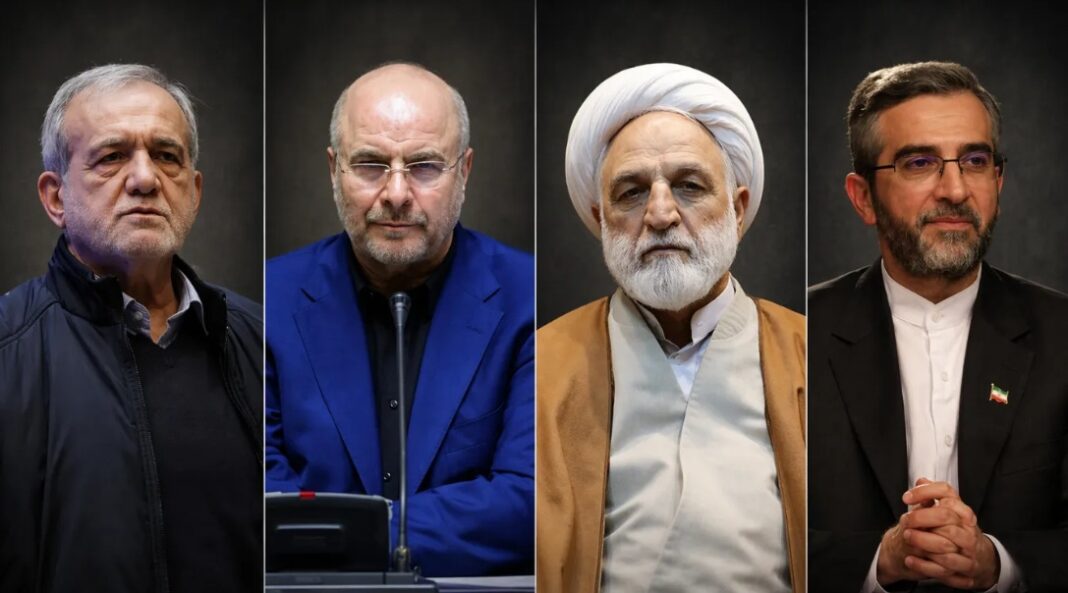
According to the report, the letter included signatures from senior figures such as:
- Mohammad Bagher Ghalibaf
- Masoud Pezeshkian
- Abbas Araghchi
- Mostafa Pourmohammadi
However, not all officials supported the initiative.
Notably, Ali Bagheri Kani is reported to have refused to sign—and allegedly played a role in the letter’s leak into political circles.
The Leak That Sparked a Political Storm
The letter was intended to remain strictly confidential.
But once leaked, it triggered immediate backlash:
- legal threats over disclosure
- accusations of disloyalty
- internal blame games
A figure close to Ghalibaf warned that leaking confidential state documents could carry severe legal consequences, highlighting how sensitive the issue has become.
Public Unity, Private Division
Soon after the leak, Iran’s top leadership moved quickly to present a unified front.
- Ghalibaf declared: “There are no hardliners or moderates”
- President Masoud Pezeshkian echoed the same message
- Judiciary chief Gholam-Hossein Mohseni Ejei dismissed internal divisions entirely
These synchronized statements emphasized:
- unity under the Supreme Leader
- rejection of factional labels
- commitment to resistance
But according to the report, these were less about unity—and more about damage control.
The Real Divide: Negotiation vs Resistance
At the heart of the crisis is a fundamental strategic disagreement:
One camp believes:
- Iran’s economic crisis requires urgent negotiation
- a nuclear deal is necessary to stabilize the country
The other camp argues:
- negotiating the nuclear issue violates leadership red lines
- engagement with the U.S. signals weakness or surrender
This divide is not tactical—it is existential.
The Mojtaba Khamenei Factor
According to the report, Mojtaba Khamenei had drawn a firm red line:
Iranian officials should not discuss the nuclear issue with the United States.
However, negotiators reportedly crossed that line during talks, triggering backlash from hardline figures who accused them of violating core principles.
Why Talks Stalled
The internal dispute helps explain why negotiations failed to progress.
Critics within Iran argued that:
- the delegation made “strategic mistakes”
- discussions went beyond approved limits
- the “resistance strategy” was being undermined
The result was not just diplomatic friction—but a full-blown internal political confrontation.
Unity Tweets as Political Signaling
The coordinated public statements by Iranian leaders now take on a different meaning.
Rather than proving unity, they appear to be:
- signals of loyalty to the leadership
- attempts to contain political fallout
- efforts to deny visible fractures
In short, the messaging was aimed inward as much as outward.
Conclusion: A System Under Pressure
The sequence of events suggests that Iran is facing a critical internal moment:
- a severe economic crisis
- strategic disagreement at the top
- growing pressure over nuclear policy
While Tehran insists there is no division, the evidence points to a significant internal debate over the country’s future direction.
As Parpanchi’s report indicates, the narrative of unity may be less a reflection of reality—and more a necessary political shield.