
China has renewed its criticism of the United States and Japan’s security policies, arguing that the Indo-Pacific region is entering a period of heightened strategic competition that could increase the risk of confrontation.
In a commentary published by the state-run China Daily, Chinese analysts described Japan’s recently released 2026 defense white paper as evidence of Tokyo’s continuing shift toward a more assertive military posture. The article also criticized Washington’s evolving nuclear strategy and called for the establishment of a broader, more inclusive Asian security framework.
Although the commentary reflects Beijing’s perspective rather than official government policy, it offers valuable insight into how Chinese strategists increasingly view the changing balance of power in Asia.
Why China Is Concerned About Japan’s New Defense Strategy
According to the commentary, Beijing believes that Japan’s latest defense white paper portrays China as the region’s primary security challenge while advocating stronger military cooperation with the United States and other allies.
Chinese analysts argue that Tokyo’s efforts to expand intelligence capabilities and increase defense spending signal a departure from the pacifist principles that shaped Japan’s post-war security policies.
The commentary also links contemporary developments to historical disputes that continue to influence relations between China and Japan, including disagreements over wartime atrocities and the legacy of the Second World War.
From Beijing’s perspective, these historical issues remain closely connected to present-day security concerns.
China’s Concerns Over America’s Nuclear Strategy
The article also focuses heavily on reports that the United States is reviewing its nuclear posture and considering a greater emphasis on tactical nuclear weapons in future conflicts involving major powers.
Chinese analysts argue that such policies could lower the threshold for nuclear escalation and increase uncertainty throughout the Indo-Pacific region.
According to the article, Beijing believes that growing military cooperation between Washington and its regional allies risks creating an increasingly polarized security environment.
Chinese officials and researchers have repeatedly criticized what they describe as the formation of exclusive military blocs in the Asia-Pacific region.
China’s Vision of Security

The commentary outlines an alternative model that Chinese strategists refer to as an “inclusive security architecture.”
This concept rests on several key principles:
- Respect for sovereignty
- Non-interference in domestic affairs
- Peaceful coexistence
- Collective security arrangements
- Economic integration
- Diplomatic engagement
Chinese strategists argue that the security of one nation should not come at the expense of another country’s interests.
This principle, often referred to as “indivisible security,” has become an increasingly important element of Chinese foreign policy.
The Importance of the Bandung Principles
The article repeatedly refers to the 1955 Bandung Conference, which brought together newly independent Asian and African states.
Chinese analysts view the conference as the foundation of a more independent regional order based on:
- Mutual respect
- Territorial integrity
- Equality among nations
- Peaceful conflict resolution
- Economic cooperation
Beijing believes that these principles could serve as the basis for a new regional security framework capable of reducing tensions among major powers.
Why China Supports ASEAN-Centered Security Arrangements
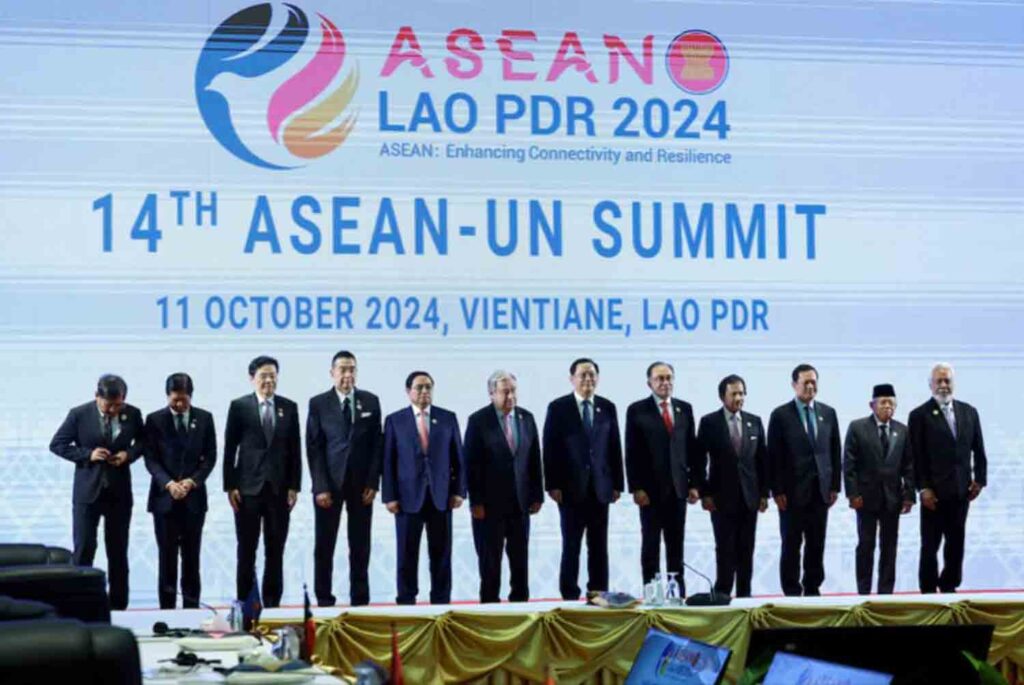
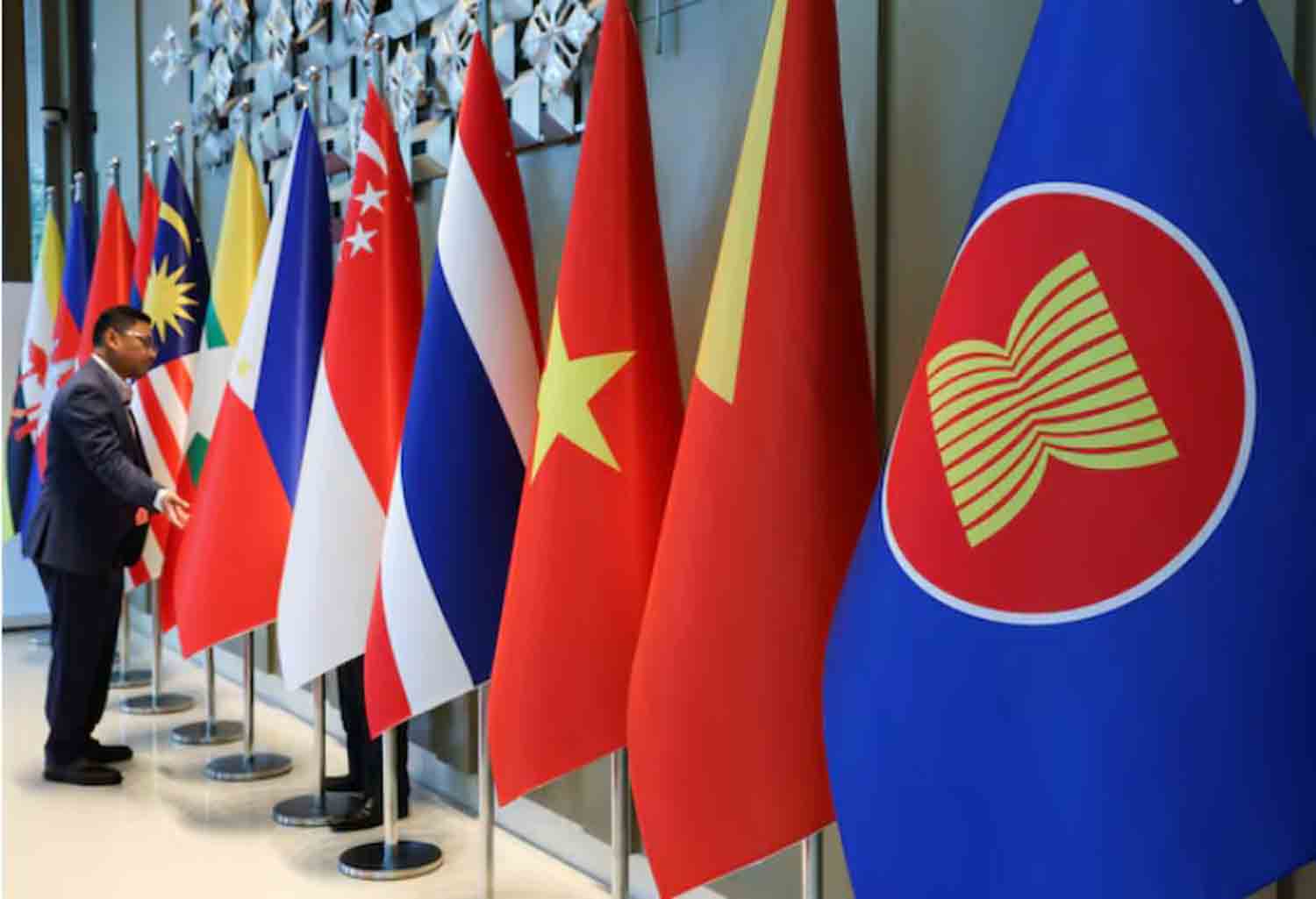
The commentary also emphasizes the role of the Association of Southeast Asian Nations (ASEAN) in preserving regional stability.
According to Chinese analysts, ASEAN’s emphasis on consensus-building and multilateral dialogue offers a practical alternative to alliance-based security arrangements.
Beijing has consistently supported ASEAN’s central role in regional diplomacy, particularly within forums such as:
- The ASEAN Regional Forum (ARF)
- The East Asia Summit (EAS)
- The Regional Comprehensive Economic Partnership (RCEP)
China views these institutions as mechanisms capable of balancing competing interests while reducing the risk of confrontation.
Economic Security Remains Central to Beijing’s Strategy
Beyond military affairs, the commentary highlights China’s growing emphasis on economic resilience.
Chinese analysts argue that technological development, diversified energy supplies, domestic industrial capacity and alternative financial systems will become increasingly important in future geopolitical competition.
This approach aligns closely with Beijing’s broader strategy of reducing dependence on foreign technologies and strengthening domestic production capabilities.
What China’s Security Thinking Reveals
The article provides an important glimpse into the strategic thinking currently emerging within Chinese policy circles.
Several themes stand out.
Opposition to military alliances
Beijing continues to oppose what it sees as Cold War-style alliances and bloc politics.
Preference for multipolarity
Chinese policymakers increasingly emphasize the development of a multipolar international system in which power is distributed more evenly among several major states.
Integration of economics and security
China increasingly treats economic development, technology, energy security and military modernization as interconnected elements of national power.
Emphasis on strategic patience
Chinese strategists often present diplomacy, long-term planning and economic influence as alternatives to direct military confrontation.
The Contradiction at the Heart of the Debate
Western governments argue that China’s rapid military modernization, expanding naval presence and increasingly assertive regional posture have compelled neighboring countries to strengthen their defenses.
China, on the other hand, maintains that expanding military alliances are driving instability and increasing the risk of miscalculation.
These competing perspectives continue to shape one of the most important geopolitical rivalries of the twenty-first century.
Strategic Analysis
The China Daily commentary should be viewed as an expression of China’s broader strategic outlook rather than as an official policy statement.
Nevertheless, it illustrates several priorities that are likely to remain central to Beijing’s long-term strategy:
- Reducing American military influence in Asia.
- Expanding regional security arrangements that do not rely on Western alliances.
- Strengthening China’s economic and technological independence.
- Increasing the role of diplomacy in managing regional disputes.
- Promoting a multipolar international order.
Ultimately, Beijing’s vision of security differs fundamentally from the alliance-based system that has defined the Indo-Pacific region for decades.
As competition between the United States and China intensifies, the contest may become as much a struggle between competing security models as a competition between military powers.