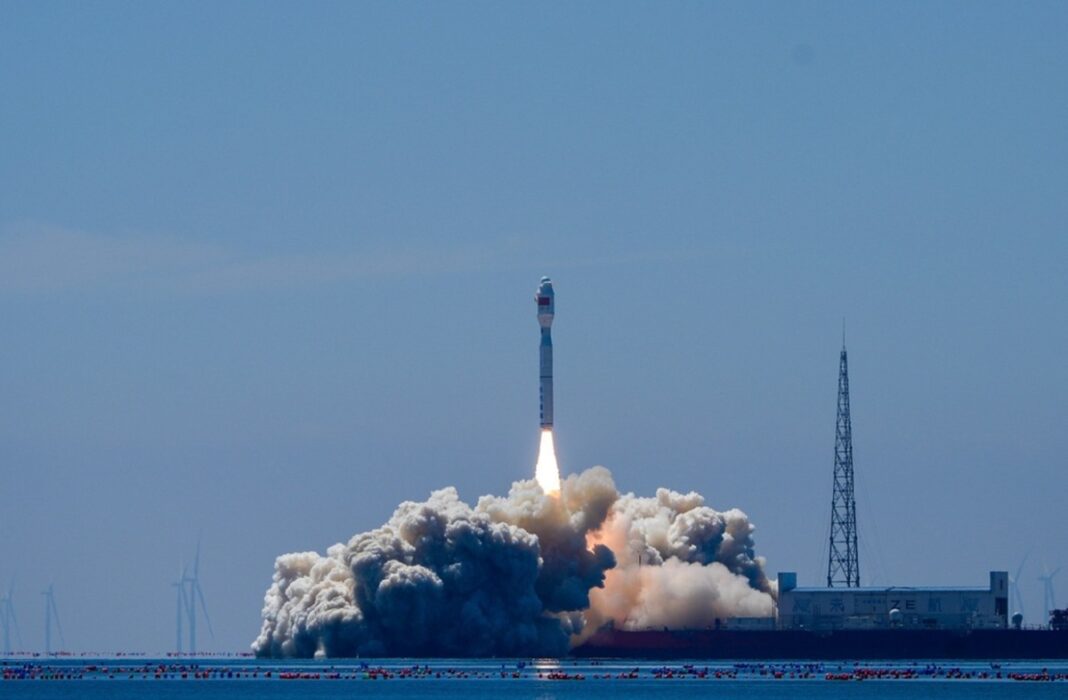
China has publicly showcased what appears to be its air-based nuclear strike capability for the first time, marking a significant milestone in the modernization of the People’s Liberation Army (PLA) and completing Beijing’s long-developing nuclear triad.
A video jointly released by the Central Military Commission’s Political Work Department, the Cyberspace Administration of China, and China Media Group showed an H-6N strategic bomber flying alongside two J-20 stealth fighters while carrying what appears to be a JL-1 nuclear-capable air-launched ballistic missile beneath its fuselage.
🇨🇳 China showcases airborne nuclear strike capability for first time
New footage shows an H-6N strategic bomber flying with two J-20 stealth fighters while carrying what appears to be a JL-1 nuclear-capable air-launched ballistic missile, China Daily reported. pic.twitter.com/yCl8T9vP44
— Sputnik (@SputnikInt) August 5, 2026
Although Chinese authorities did not officially describe the missile as operational or provide details about the exercise, defence analysts view the footage as Beijing’s clearest public demonstration yet of its emerging airborne nuclear strike capability.
A Landmark Moment for China’s Nuclear Forces
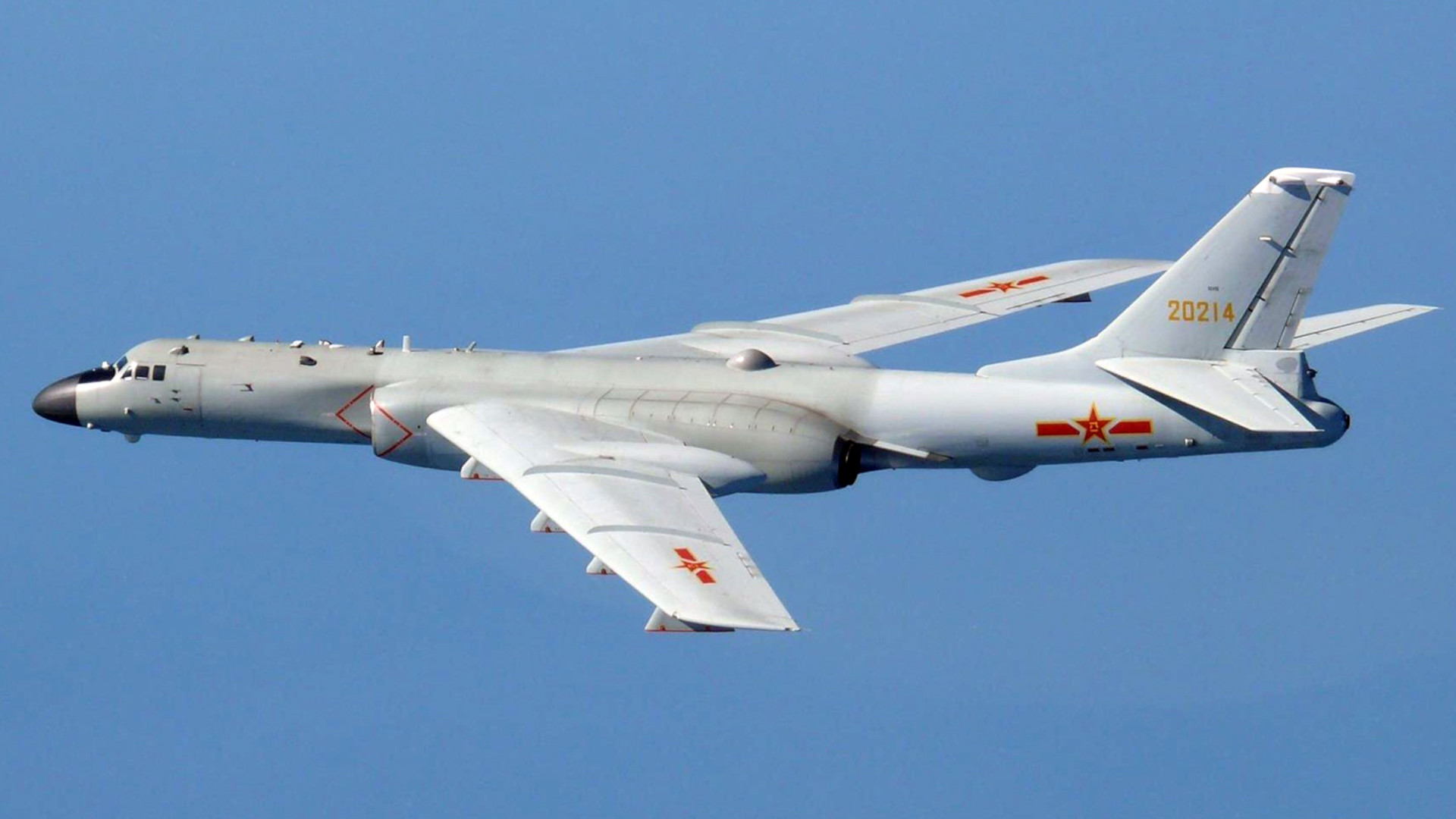
The footage forms part of a simulated joint combat scenario in which a unified command headquarters orders coordinated strikes against an enemy naval force.
Alongside the H-6N bomber, the video also features several of China’s advanced precision-strike systems, including:
- DF-21D anti-ship ballistic missile
- YJ-20 ship-launched hypersonic anti-ship missile
- YJ-12 air-launched supersonic anti-ship missile
- J-20 fifth-generation stealth fighter
However, the H-6N carrying the large under-fuselage missile attracted the greatest attention because it represents the first public indication that China’s air force may now possess an operational airborne nuclear delivery platform.
The Chinese military has not disclosed when the footage was recorded or identified the exercise in which it was filmed.
What Is the JL-1 Air-Launched Ballistic Missile?
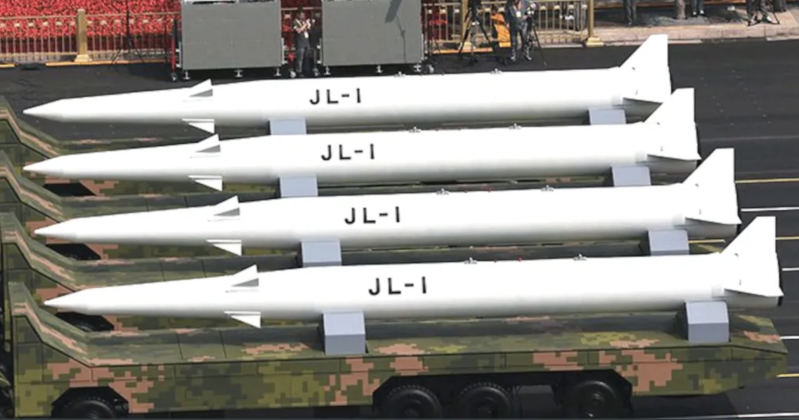
According to the source material, the missile carried by the H-6N is believed to be the JL-1, a long-range air-launched ballistic missile capable of carrying a nuclear payload.
The missile was first publicly displayed during China’s large military parade in September 2025, where Beijing also revealed several strategic missile systems, including:
- DF-31BJ intercontinental ballistic missile
- DF-61 strategic missile
- DF-5C silo-based intercontinental ballistic missile
The designation “JL” reportedly stands for Jinglei, meaning “Shocking Thunderclap” in Chinese.
Although Beijing has not officially released technical specifications, defence analysts believe the missile has been developed specifically to provide the PLA Air Force with a credible nuclear strike capability.
China’s Nuclear Triad Is Now Taking Shape
The latest demonstration is significant because it appears to complete China’s nuclear triad—the ability to deliver nuclear weapons from land, sea, and air.
Land-Based Nuclear Forces
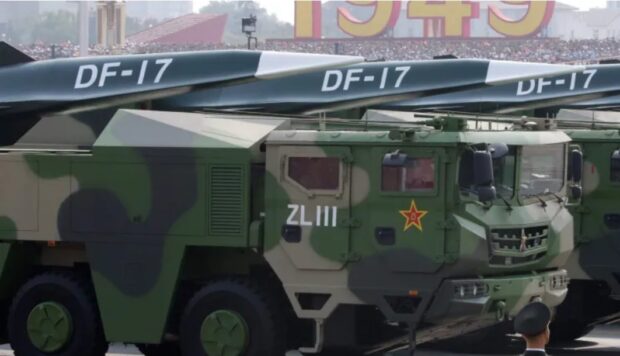
China possesses one of the world’s largest and fastest-growing inventories of land-based ballistic missiles.
These include:
- DF-41 intercontinental ballistic missile (ICBM)
- DF-31AG
- DF-31A
- DF-5B/DF-5C
- DF-26 intermediate-range ballistic missile (dual-capable)
Many of these systems are road-mobile, improving survivability and making them harder to detect during a conflict.
The DF-41, in particular, is widely assessed to have an intercontinental range exceeding 12,000 kilometers and the ability to carry multiple independently targetable reentry vehicles (MIRVs).
Sea-Based Nuclear Deterrent
China’s second nuclear leg consists of the People’s Liberation Army Navy (PLAN) ballistic missile submarine force.
The fleet includes:
- Type 094 Jin-class nuclear-powered ballistic missile submarines (SSBNs)
- Developing Type 096 next-generation SSBNs
These submarines are equipped with submarine-launched ballistic missiles (SLBMs), including:
- JL-2
- JL-3 (under continued development and deployment)
The sea-based deterrent provides China with a survivable second-strike capability, ensuring it can retaliate even if land-based missile forces are attacked.
Air-Based Nuclear Capability
For decades, China’s air force represented the weakest component of its strategic nuclear forces.
Unlike the United States and Russia, which have long operated dedicated nuclear-capable strategic bombers, the PLA Air Force lacked a modern airborne nuclear delivery platform.
The introduction of the H-6N changes that assessment.
Unlike earlier H-6 variants, the H-6N features:
- A recessed fuselage section designed to carry large external missiles
- Aerial refueling capability
- Extended operational range
- Improved avionics
- Long-range precision strike capability
These modifications allow the bomber to launch strategic weapons from outside heavily defended airspace while remaining supported by escort fighters such as the J-20.
China’s Nuclear Arsenal Is Expanding Rapidly
China’s public demonstration comes amid a period of rapid expansion in its strategic nuclear forces.
According to recent assessments by the Stockholm International Peace Research Institute (SIPRI) and the U.S. Department of Defense, China’s nuclear arsenal has grown significantly over the past several years.
Open-source estimates suggest Beijing now possesses more than 600 operational nuclear warheads, with projections indicating that number could exceed 1,000 warheads by 2030 if current expansion trends continue.
China has also undertaken an unprecedented construction program involving hundreds of new missile silos across western China, reinforcing expectations that its strategic deterrent will continue expanding throughout the coming decade.
From Minimum Deterrence to a More Flexible Nuclear Force
Historically, China maintained what it described as a policy of minimum nuclear deterrence, relying on a relatively small arsenal capable of surviving a first strike and delivering retaliation.
However, many defence analysts believe Beijing is gradually transitioning toward a more flexible and survivable nuclear posture.
Several developments support that assessment:
- Expansion of missile silo fields
- Larger road-mobile missile forces
- Modernized ballistic missile submarines
- MIRV-equipped intercontinental missiles
- Improved early-warning systems
- Air-launched nuclear strike capability
Together, these systems increase the diversity and survivability of China’s strategic deterrent.
Strategic Implications
The public appearance of the H-6N carrying what appears to be a JL-1 nuclear-capable missile represents more than a symbolic demonstration.
It signals China’s growing confidence in its strategic forces and highlights Beijing’s continued investment in building a more resilient and diversified nuclear deterrent.
While Chinese authorities have not officially confirmed the operational status of the airborne system or released technical details about the missile, the footage strongly suggests that the PLA Air Force is assuming a much larger role in China’s nuclear posture.
Combined with expanding land-based missile forces and an increasingly capable ballistic missile submarine fleet, the development reflects China’s ongoing transformation into a more comprehensive nuclear power with credible land, sea, and air-based strategic strike capabilities.