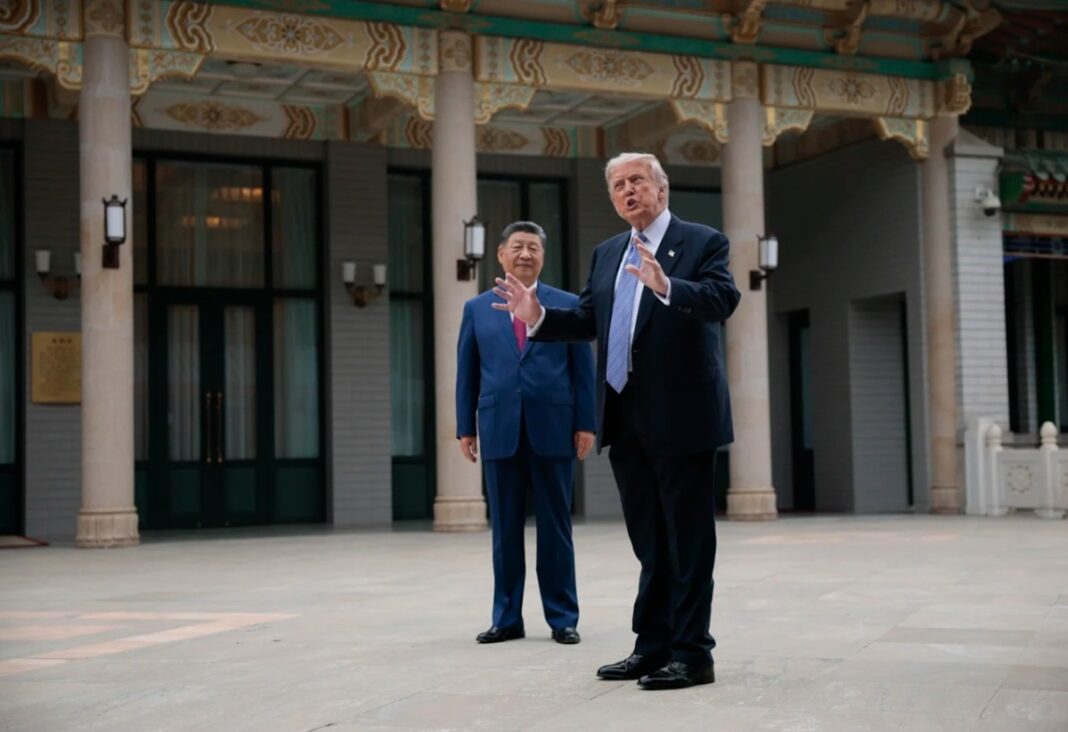
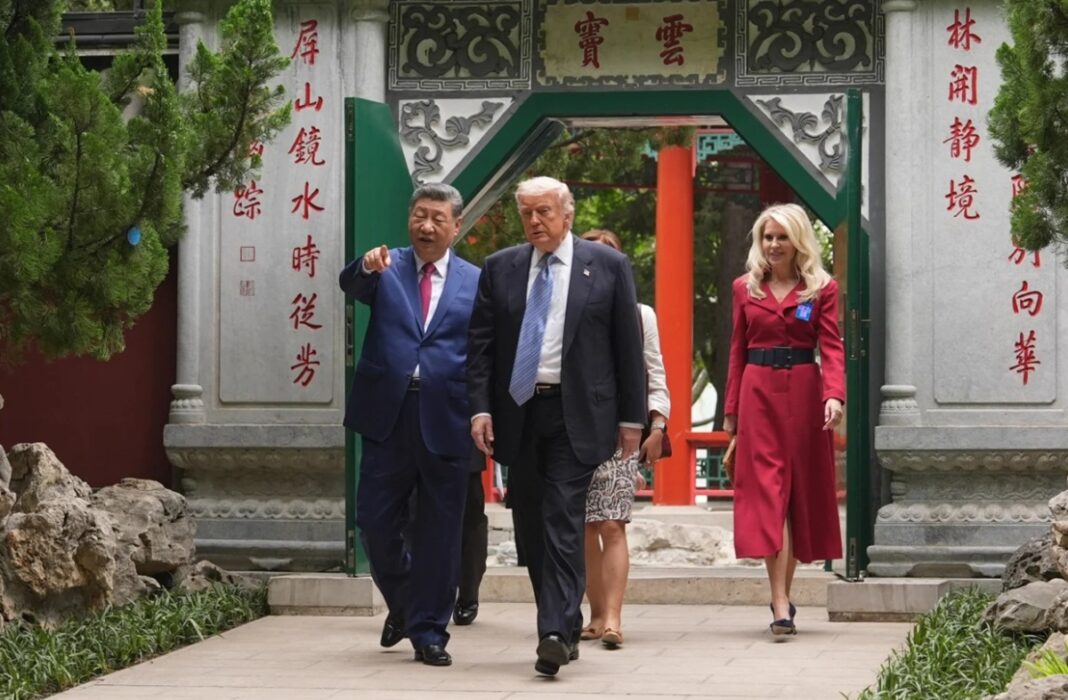
U.S. President Donald Trump concluded his high-profile visit to Beijing on Friday without major breakthroughs on several of the most sensitive issues shaping U.S.-China relations — including Taiwan, tariffs, and efforts to reopen the Strait of Hormuz.
Speaking to reporters aboard Air Force One after meetings with Chinese President Xi Jinping, Trump confirmed that discussions touched on Taiwan and regional security but stopped short of revealing firm commitments.
The closely watched summit came at a time of mounting geopolitical strain:
- The ongoing Iran conflict
- Disruptions to global oil markets
- Taiwan-related military tensions
- Continuing U.S.-China trade frictions
Yet despite expectations of substantive agreements, Trump signaled that many issues remain unresolved.
Trump: ‘No Commitment Either Way’ on Taiwan
Taiwan emerged as one of the most sensitive issues discussed during the summit.
Trump told reporters:
“On Taiwan, he feels very strongly. I made no commitment either way.”
The remarks came after Beijing’s official readout stated that Xi warned:
Mishandling Taiwan could lead to confrontation between China and the United States.
Trump later confirmed that arms sales to Taiwan were discussed “in great detail” but suggested no final decision had been reached.
“I’ll be making decisions,” Trump said.
He added:
“The last thing we need right now is a war that’s 9,500 miles away.”
Q: Would the US defend Taiwan if it came to it?
TRUMP: I don’t want to say. That question was asked to me today by President Xi. I said, ‘I don’t talk about it.’ pic.twitter.com/t8ZiSBPJ7C
— Open Source Intel (@Osint613) May 15, 2026
Will the U.S. Defend Taiwan? Trump Avoids Direct Answer
Trump also declined to directly answer whether Washington would defend Taiwan in the event of military conflict with China.
According to Trump, Xi directly raised the question during talks.
“That question was asked to me today by President Xi,” Trump said.
Trump responded:
“I said I don’t talk about that.”
The ambiguity is significant because U.S. policy toward Taiwan traditionally rests on strategic ambiguity — deliberately avoiding clear commitments to deter both Chinese aggression and unilateral Taiwanese independence moves.
Xi Pushes Washington on Taiwan Policy Shift
The summit followed increasing pressure from Beijing for Washington to move beyond merely “not supporting” Taiwanese independence toward actively opposing it.
China considers Taiwan:
A breakaway province that must eventually reunify with the mainland.
Beijing has repeatedly warned against:
- Expanded U.S. arms sales
- High-level political engagement with Taipei
- Increased military cooperation
Trump’s refusal to commit either way will likely be scrutinized closely by:
- Taiwan
- U.S. Indo-Pacific allies
- Chinese policymakers
Tariffs Surprisingly Not Discussed
In a notable revelation, Trump said tariffs were not discussed during the two-day summit.
“We didn’t discuss tariffs,” Trump said.
“It wasn’t brought up.”
The comment surprised observers given that trade tensions have long defined the bilateral relationship.
Earlier meetings between U.S. and Chinese trade officials in South Korea reportedly yielded “positive discussions” ahead of Trump’s arrival in Beijing.
Trade remains a major issue because:
- The U.S. still maintains substantial tariffs on Chinese goods
- Export controls continue targeting advanced technologies
- Rare earths competition remains intense
Trump’s statement suggests:
The summit prioritized geopolitical stabilization over trade confrontation.
Strait of Hormuz: China Pressure on Iran Left Uncertain
Another key issue was the crisis surrounding the Strait of Hormuz, where disruptions continue to threaten global energy markets.
Asked whether Xi committed to pressuring Iran to reopen the waterway, Trump avoided making strong claims.
“I’m not asking for any favors, because when you ask for favors, you have to do favors in return.”
Trump nevertheless suggested Xi likely wants the strait reopened.
“China gets a significant portion of its oil from the Gulf.”
Trump also repeated a longstanding energy talking point:
“We get none. We don’t need it.”
That claim oversimplifies U.S. energy exposure, however, as global oil price shocks still affect American markets indirectly.
China’s Iran Oil Dependence Complicates Diplomacy
China remains Iran’s largest oil customer.
According to energy analytics firm Kpler:
- Iran exports approximately 1.69 million barrels per day
- Roughly 90% goes to China
China officially opposes U.S. sanctions on Iranian oil and has historically resisted participating in pressure campaigns against Tehran.
Iran reportedly relies on:
- Aging tanker fleets
- Indirect shipping networks
- Obscured oil origins
to sustain exports despite sanctions.
Some Iranian crude is reportedly relabeled through intermediary routes before reaching Chinese refiners.
Trump Weighs Sanctions Relief for Chinese Firms Buying Iranian Oil
Trump also revealed that he is considering:
Lifting sanctions on Chinese companies buying Iranian oil.
“I’m going to make a decision over the next few days. We did talk about that.”
Such a move would represent a significant policy shift because Washington has increasingly targeted Chinese refiners accused of circumventing sanctions.
Potential sanctions relief could:
- Ease U.S.-China tensions
- Encourage diplomatic cooperation on Iran
- Stabilize oil markets
But it could also provoke criticism among Iran hawks in Washington.
No Grand Bargain — But Diplomatic Openings Remain
Despite high expectations, the summit produced:
❌ No tariff breakthrough
❌ No clear Taiwan commitment
❌ No confirmed China pressure on Iran
❌ No Hormuz security agreement
However, both sides appeared interested in:
✔ Maintaining leader-level engagement
✔ Preventing strategic escalation
✔ Keeping diplomatic channels open
For Washington and Beijing, the visit may have been less about immediate agreements and more about:
Managing competition without triggering crisis.
Conclusion: Strategic Ambiguity Dominates Trump-Xi Summit
Trump’s Beijing visit ended with many of the world’s most pressing flashpoints still unresolved.
From Taiwan to tariffs and the Strait of Hormuz, the summit highlighted:
A relationship defined less by cooperation — and more by careful management of rivalry.
For now:
- Taiwan remains strategically ambiguous
- Trade tensions remain unresolved
- Iran diplomacy remains uncertain
- Energy security concerns continue to grow
The biggest takeaway may be this:
Neither Washington nor Beijing appears ready for confrontation — but neither side is yet prepared to fundamentally compromise either.