As the conflict involving Iran, the United States and Israel enters a more dangerous phase, Gulf Arab states are increasingly turning to China rather than Washington to help prevent further disruption to the Strait of Hormuz and the Red Sea—two of the world’s most critical maritime trade routes.
Gulf governments believe Beijing’s deep economic relationship with Tehran gives it leverage that could help reduce tensions and encourage Iran to avoid actions that threaten regional energy exports. The development reflects not only China’s expanding diplomatic role in the Middle East but also growing doubts among Gulf capitals about the effectiveness of U.S. influence in containing the crisis.
The emerging diplomatic shift raises an important strategic question: Can China translate its economic influence into meaningful political leverage over Iran, or are Gulf expectations exceeding Beijing’s willingness to act?
Why Gulf States Are Looking to China
The renewed conflict has placed Gulf Arab states in a difficult position.
Although many Gulf governments have long viewed Iran as a regional rival, the current confrontation has also exposed their own economic vulnerabilities. Any disruption to maritime traffic through the Strait of Hormuz or the Bab el-Mandeb Strait threatens oil exports, shipping routes and broader regional stability.
Gulf officials have quietly encouraged China to use its close economic ties with Tehran to help preserve freedom of navigation and reduce the risk of further escalation.
Unlike previous regional crises, this diplomatic outreach reflects an acknowledgement that Beijing now occupies a central position in the Middle East’s economic landscape.
China’s Unique Relationship With Both Sides
China occupies a position no other major power currently enjoys.
It is simultaneously:
- The largest purchaser of Gulf energy exports.
- Iran’s biggest trading partner.
- A major investor across Gulf Cooperation Council (GCC) states.
- An increasingly important supplier of technology and infrastructure.
This unique position allows Beijing to maintain working relationships with countries that often stand on opposing sides of regional disputes.
Rather than choosing alliances based primarily on security commitments, China has focused on expanding trade, investment and economic cooperation across the region.
Gulf States Want Diplomacy—Not Another War
Gulf governments hope Beijing can encourage Tehran to return to negotiations rather than allow military confrontation to spiral further.
Their concern extends beyond military exchanges.
A prolonged conflict could result in:
- Disruptions to global oil supplies.
- Higher energy prices.
- Increased shipping insurance costs.
- Reduced investor confidence.
- Greater regional instability.
For Gulf economies that depend heavily on uninterrupted energy exports, maintaining open sea lanes has become an urgent strategic priority.
The Strait of Hormuz Remains the World’s Most Critical Energy Chokepoint
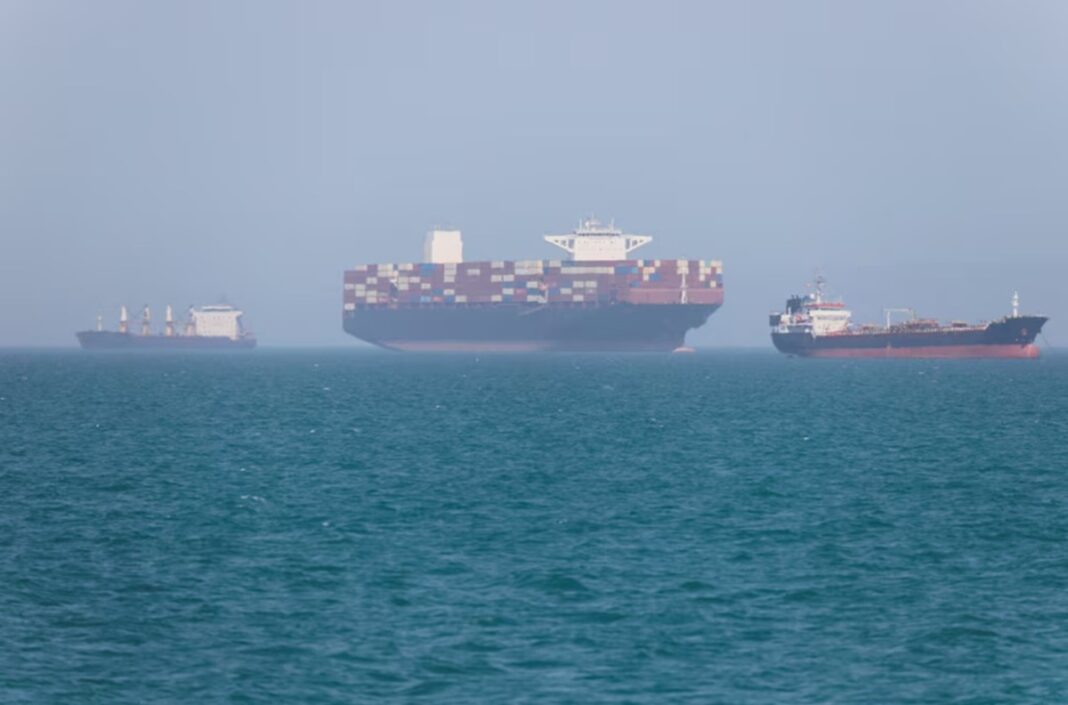
The Strait of Hormuz remains one of the most strategically important waterways on the planet.
Roughly one-fifth of global oil trade passes through the narrow maritime corridor linking the Persian Gulf to international markets.
Any sustained disruption could have immediate consequences for:
- Global oil prices.
- LNG exports.
- International shipping.
- Asian energy security.
- European energy markets.
Iran has repeatedly emphasised that it retains strategic control over the waterway and has linked its maritime posture to broader regional security concerns.
China Wants Stability—but Avoids Choosing Sides
While Gulf states hope China will exert greater influence over Tehran, Beijing has been careful not to publicly pressure Iran.
Instead, Chinese diplomacy has focused on:
- Calling for ceasefires.
- Encouraging dialogue.
- Supporting negotiated settlements.
- Promoting regional stability.
Chinese Foreign Minister Wang Yi has held numerous discussions with regional leaders, while China’s Special Envoy for the Middle East has travelled across Gulf capitals and Iran in an effort to reduce tensions.
However, Beijing has avoided publicly criticising Iranian threats to maritime traffic, reflecting its longstanding preference for diplomatic neutrality.
Beijing’s Diplomatic Model Faces Its Biggest Test
China’s diplomatic credibility in the Middle East grew significantly after it brokered the Saudi Arabia-Iran rapprochement in 2023, an agreement widely viewed as one of Beijing’s most significant foreign policy achievements.
The current crisis now represents the first major test of that diplomatic success.
If China cannot persuade Tehran to moderate its behaviour during a regional conflict, questions may emerge regarding the limits of Beijing’s political influence despite its substantial economic relationships.
Several analysts interviewed by Reuters argue that China possesses considerable commercial leverage but remains reluctant to convert that influence into direct political pressure.
Economic Influence Does Not Automatically Translate Into Strategic Leverage
One of the central themes emerging from the Reuters report is the distinction between economic partnership and geopolitical influence.
China purchases vast quantities of oil from both Gulf Arab states and Iran while investing heavily in regional infrastructure.
Yet analysts caution that strong commercial ties do not necessarily enable Beijing to dictate strategic decisions made by sovereign governments during wartime.
Iran’s security calculations are shaped by national defence priorities, regional rivalries and ideological considerations that extend well beyond economic relationships.
Why China Is Proceeding Carefully
Several factors explain Beijing’s cautious approach.
Unlike the United States, China:
- Has no formal defence treaties in the Gulf.
- Maintains only limited military deployments in the region.
- Avoids direct involvement in overseas conflicts.
- Prefers diplomacy over military intervention.
China’s broader foreign policy has consistently prioritised economic engagement while avoiding binding security commitments outside East Asia.
This approach allows Beijing to preserve relationships with competing regional actors without assuming responsibility for regional security.
China’s Balancing Act Between Tehran and the Gulf
China’s challenge lies in maintaining strong relations with all major regional players simultaneously.
Beijing must balance:
- Strategic cooperation with Iran.
- Expanding investment in Saudi Arabia.
- Growing economic ties with the UAE and Qatar.
- Stable energy imports from Gulf producers.
- Broader competition with the United States.
Openly siding with either Iran or Gulf Arab states could jeopardise years of carefully cultivated diplomatic relationships.
As a result, Beijing continues to favour quiet diplomacy rather than public pressure.
Pakistan’s Emerging Role
Reuters also reports that China has encouraged Pakistan to facilitate communication between Washington and Tehran as part of broader efforts to revive diplomatic negotiations.
If accurate, the development highlights Pakistan’s continuing relevance as a country maintaining working relations with both Iran and the United States while enjoying an exceptionally close strategic partnership with China.
Although Islamabad has not publicly outlined any mediation role, Pakistan’s geographic location and diplomatic channels position it as a potentially useful interlocutor if negotiations resume.
Can China Replace the United States as the Gulf’s Key Security Partner?
Despite China’s expanding economic footprint, most analysts believe Beijing is unlikely to replace Washington’s traditional security role in the Gulf anytime soon.
The United States continues to maintain:
- Large military bases.
- Naval forces.
- Air defence networks.
- Security partnerships.
- Long-standing defence agreements.
China has shown little appetite for assuming comparable military responsibilities.
Instead, Beijing appears more comfortable promoting diplomatic initiatives while relying on economic interdependence to protect its regional interests.
Strategic Implications
The Gulf’s increasing reliance on China for diplomatic engagement with Iran reflects a significant shift in Middle Eastern geopolitics. While the United States remains the region’s dominant military power, Beijing has emerged as an influential economic and diplomatic actor capable of engaging all sides without formal alliance commitments.
However, the current crisis also exposes the limits of China’s approach. Its extensive trade relationships provide channels for dialogue, but they do not automatically translate into decisive leverage over Tehran’s security decisions.
Whether Beijing can help prevent further disruption in the Strait of Hormuz may ultimately determine not only the future of this crisis but also China’s long-term credibility as a major diplomatic power in the Middle East.
Conclusion
The latest regional tensions have placed China in an unfamiliar position. Gulf Arab states increasingly expect Beijing to move beyond economic engagement and play a more active diplomatic role in managing one of the world’s most dangerous security crises.
For China, the challenge is balancing its close ties with Iran against its growing economic interests across the Gulf while avoiding direct confrontation with the United States. How Beijing navigates this delicate balancing act will shape perceptions of its global leadership and its ability to influence events beyond Asia.