Iran has reportedly signed a deal to acquire 300 to 400 Chinese-made man-portable air defence systems (MANPADS) as it seeks to strengthen its short-range air defence network following months of conflict with the United States and Israel, according to a Reuters report citing multiple sources familiar with the negotiations.
The report says the contract, valued at US$60–70 million, covers Chinese QW-12 and FN-16 shoulder-fired surface-to-air missiles and represents one of Tehran’s largest publicly reported efforts to reinforce its air defences since the recent conflict exposed vulnerabilities around military installations and strategic infrastructure.
However, one aspect of the report has drawn an immediate and categorical response from Pakistan.
Pakistan Rejects Reports of Weapons Transit
Reuters, citing anonymous sources, reported that the initial shipments could travel from Urumqi in western China through Pakistan before reaching Iran.
Pakistan’s military has firmly denied those claims.
In a statement quoted by Reuters, the Inter-Services Public Relations (ISPR) described suggestions that Pakistan would facilitate the transfer of Chinese air defence weapons to Iran as:
“Absolutely concocted and false.”
The Reuters report notes that Pakistan’s Foreign Ministry did not immediately respond to requests for comment, while the ISPR’s public rejection represents Islamabad’s only official position on the reported transit route.
From Pakistan’s perspective, the denial is significant because it distances Islamabad from speculation regarding military logistics involving two neighbouring strategic partners.
What Is Iran Reportedly Buying?
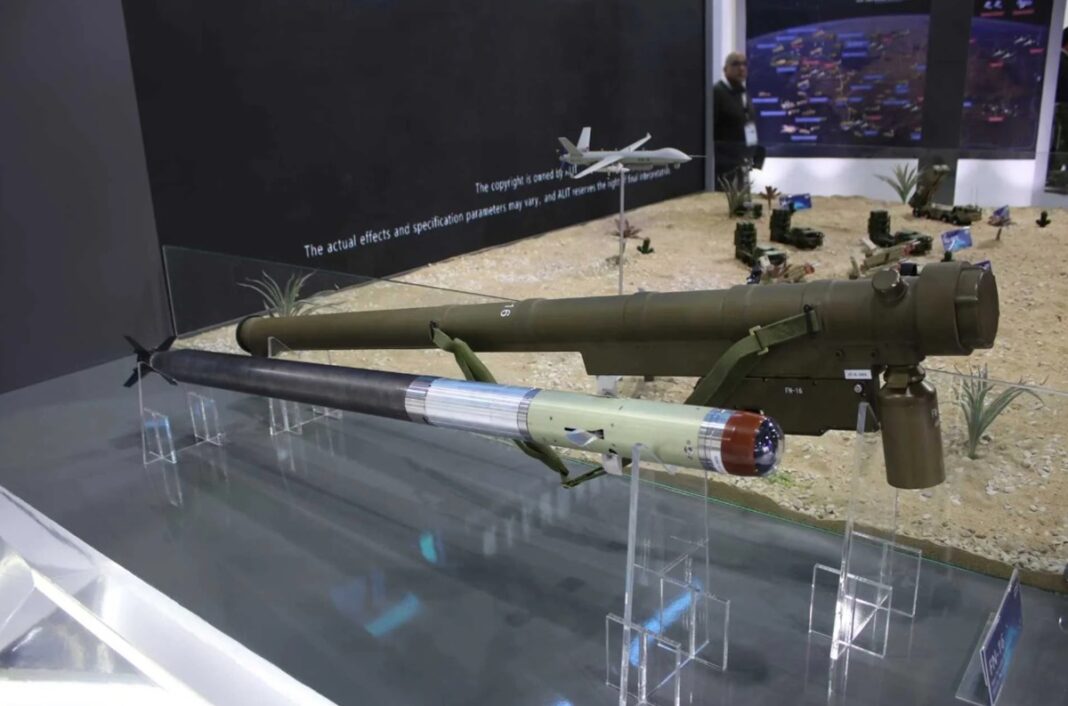
According to Reuters, the agreement includes between 300 and 400 MANPADS, including:
- QW-12
- FN-16
The missiles are designed to engage:
- Low-flying aircraft
- Attack helicopters
- Unmanned aerial vehicles (UAVs)
- Some cruise missile threats at short range
Unlike large surface-to-air missile batteries, MANPADS can be rapidly deployed by small teams and frequently relocated, making them more difficult to detect and target.
Reuters reports that the contract was arranged through Zhongqing Baoshang International Investment, a Hong Kong-based intermediary, although neither the company nor Chinese authorities confirmed the deal.
China Rejects the Report
China’s Foreign Ministry dismissed the Reuters report.
According to Reuters, Beijing stated:
“The relevant reports are completely groundless. China has consistently played a role in promoting peace and ending the conflict.”
The parent company of the reported intermediary also did not immediately comment on the allegations.
As of publication, there has been no official confirmation from either Beijing or Tehran that the reported agreement has been signed.
Why Does Iran Need More Short-Range Air Defence?
Military analysts say recent fighting exposed weaknesses in Iran’s ability to defend fixed military sites against precision-guided weapons, drones and low-flying aircraft.
While Iran has invested heavily in:
- Ballistic missiles
- Cruise missiles
- Drones
- Radar systems
- Long-range air defence
portable air defence systems provide an additional protective layer around:
- Military bases
- Missile launch sites
- Energy infrastructure
- Command centres
- Logistics hubs
Their mobility allows defenders to reposition quickly as operational requirements change.
QW-12 vs FN-16
| Feature | QW-12 | FN-16 |
|---|---|---|
| Origin | China | China |
| Type | MANPADS | MANPADS |
| Guidance | Infrared | Infrared |
| Targets | Aircraft, helicopters, drones | Aircraft, helicopters, drones |
| Mobility | Shoulder-fired | Shoulder-fired |
| Primary Role | Short-range air defence | Short-range air defence |
Defence analysts generally regard the QW-12 as less advanced than newer Chinese systems such as the QW-18 and QW-19, but it remains capable of engaging low-altitude aerial threats.
Iran’s Broader Rearmament Effort
Reuters reports that the MANPADS acquisition forms part of a wider Iranian effort to rebuild military capabilities following months of conflict.
According to the report, Tehran is simultaneously seeking to restore air defence coverage while continuing domestic production of missiles and drones despite longstanding international sanctions.
Reuters also notes that Iran has previously explored acquiring Chinese anti-ship cruise missiles, although it could not confirm whether that separate agreement was finalised.
Pakistan’s Position Remains Unchanged
Pakistan has maintained balanced diplomatic relations with both China and Iran, while also emphasising regional stability and dialogue.
The ISPR’s denial indicates Islamabad does not want to be portrayed as a logistical participant in any reported transfer of military equipment linked to the ongoing regional confrontation.
Given Pakistan’s geographic position between China and Iran, speculation regarding potential transit routes periodically emerges during periods of heightened regional tension. However, in this case, Pakistan’s military has publicly rejected the claim.
What Is Confirmed—and What Remains Unverified?
Confirmed
- Reuters reported that Iran has allegedly agreed to purchase hundreds of Chinese MANPADS.
- Pakistan’s ISPR has officially denied claims that Pakistani territory would be used to transport the weapons.
- China has rejected the Reuters report as “groundless.”
Not Confirmed
- Neither Iran nor China has officially confirmed the reported missile contract.
- Delivery schedules remain unverified.
- There is no independent confirmation that shipments will occur.
- Claims regarding transit through Pakistan rely on anonymous sources and have been officially denied by Islamabad.
Strategic Implications
If the reported acquisition proceeds, it would strengthen Iran’s ability to defend military facilities and critical infrastructure against drones, helicopters and low-flying aircraft while complementing its broader layered air defence network.
At the same time, Pakistan’s swift rejection of reports linking it to the alleged transfer underscores Islamabad’s effort to avoid being drawn into speculation surrounding military cooperation between Tehran and Beijing.
Until official confirmation emerges from the governments involved, the reported deal—and especially claims regarding delivery routes—should be treated with caution. Reuters attributes much of the information to anonymous sources, while both China and Pakistan have publicly disputed key elements of the report.