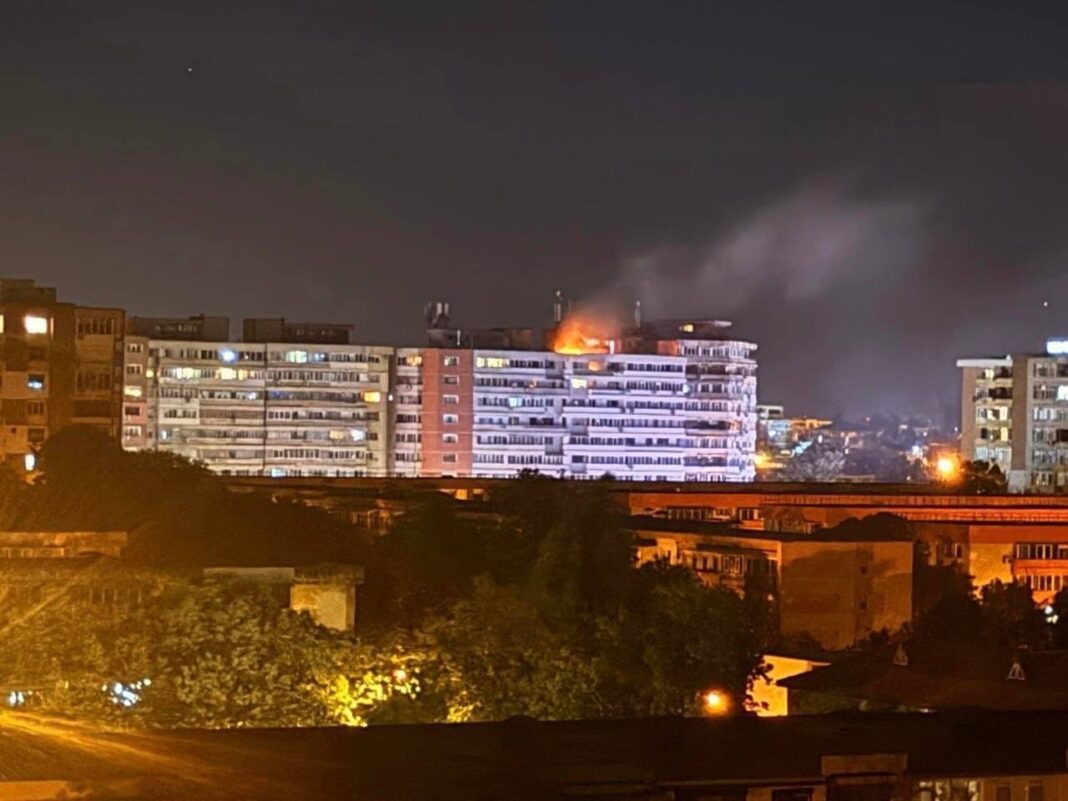
A Russian drone strike on a residential apartment building in Galați has triggered Romania’s most serious diplomatic confrontation with Russia since the start of Moscow’s full-scale invasion of Ukraine.
The incident prompted Romania to summon Russia’s ambassador, convene its highest national security body and draw an unusually sharp response from the European Commission, which linked the attack directly to a new package of sanctions against Moscow.
Romania’s Ministry of Defense has confirmed that a one-way attack drone entered Romanian Airspace tonight during a Russian attack on Ukraine, being tracked until it struck a block of residential flats in the Eastern Romanian city of Galați. Two F-16 Fighter Falcons with the Air… pic.twitter.com/YgANhYyFPT
— OSINTdefender (@sentdefender) May 29, 2026
The escalation came after Romanian authorities confirmed that the drone which struck a residential building overnight in Galați was of Russian origin, injuring civilians and reigniting concerns that the war in Ukraine is increasingly spilling onto NATO territory.
Romania Summons Russia’s Ambassador
Romanian Foreign Minister Oana-Silvia Toiu confirmed Friday that Bucharest summoned Russia’s ambassador to the Ministry of Foreign Affairs following confirmation from Romania’s defense ministry that the drone was Russian.
“Romania’s security is our absolute priority,” Toiu said.
She added that Romania would formally communicate the diplomatic consequences of what Bucharest described as irresponsible Russian behavior and discuss next steps involving European sanctions.
Summoning an ambassador represents one of the strongest diplomatic signals short of expulsion and highlights how seriously Romania is treating the incident.
Romania Activates Highest National Security Body
The response escalated further when Romanian President Nicușor Dan convened the Supreme Council of National Defense (CSAT), Romania’s highest-level security institution.
The council includes:
- Prime Minister
- Defense Minister
- Foreign Minister
- Intelligence chiefs
- Senior national security officials.
Its activation is typically reserved for crises requiring immediate top-level decisions and signals Bucharest views the incident as far more serious than a routine airspace violation.
Officials are expected to review Romania’s drone interception rules after the drone struck a civilian building despite military response efforts.
Civilians Injured in First Major NATO Territory Casualty Incident
The Galați incident marks an important turning point.
Romania has recorded 28 Russian drone incursions into its airspace since Moscow began targeting Ukrainian Danube export infrastructure.
But previous incidents ended with diplomatic protests and no civilian casualties.
This time, the consequences were different.
Authorities confirmed:
- A woman suffered first-degree burns
- A 14-year-old experienced an acute stress reaction
after a fire broke out in a 10th-floor apartment struck by the drone.
The injuries represent the First confirmed civilian casualties from a Russian drone on NATO and EU territory.
That distinction is likely to shape future alliance discussions.
EU Moves Quickly Toward More Sanctions
Reaction from Brussels came within hours.
European Commission President Ursula von der Leyen strongly condemned the incident and directly tied it to upcoming sanctions.
“Russia’s war of aggression has crossed yet another line,” von der Leyen said.
She added:
“A Russian drone incursion struck a densely populated area in Romania, injuring civilians. On EU territory.”
Von der Leyen also confirmed the 21st EU sanctions package against Russia is now being prepared.
Although sanctions were already under discussion following Russian drone activity near Baltic states, the Galați strike appears to have accelerated political momentum.
The new measures are expected to further tighten:
- Financial restrictions
- Technology access
- Sanctions evasion routes.
NATO Responds — But Stops Short of Article 5
NATO Secretary General Mark Rutte condemned what the alliance called “Russia’s recklessness.”
The alliance reiterated support for Romania and pledged continued strengthening of eastern flank defenses.
However, NATO stopped short of treating the strike as an Article 5 event which would trigger collective defense obligations.
That mirrors NATO’s approach during all previous Russian drone incursions into Romanian territory.
Despite repeated violations, the alliance has consistently judged them insufficient to qualify as deliberate armed attacks against a NATO member.
Romania Had Legal Authority to Shoot It Down
The incident is likely to intensify scrutiny over Romania’s air defense response.
Under Law No. 73 of 2025 Romanian forces already possess legal authority to engage unauthorized drones during peacetime if lives or infrastructure are threatened.
On the night of the strike, Romania reportedly scrambled:
- Two F-16 fighter jets
- One military helicopter
with authorization to engage.
Yet the drone still reached a civilian apartment building.
That operational gap — between legal authority and successful interception — is expected to become a central question during Romania’s security review.
A Pattern Bucharest Says Is Getting Worse
Romanian officials increasingly argue the issue is not isolated.
Foreign Minister Oana-Silvia Toiu previously warned several incursions appeared intentionally dangerous.
She told media that in at least Two earlier incidents Russian drones reportedly carried explosives and were “Designed to be deadly.”
Romania is now coordinating responses with:
- Baltic states
- Eastern flank NATO allies
to present what officials describe as:
A unified deterrence message to Moscow.
The Bigger Strategic Question
The Galați strike underscores a growing problem for NATO:
How should the alliance respond to repeated “gray zone” military incidents?
Russian drones crossing into alliance territory, without triggering full-scale war, create difficult strategic dilemmas.
Too little response risks normalization.
Too much response risks escalation.
For now, Romania appears to be activating every instrument available below the threshold of military retaliation:
✔ Diplomatic summons
✔ Security council activation
✔ EU sanctions pressure
✔ NATO defense strengthening.
But whether that changes Russian behavior remains uncertain.
After all, Romania has already documented 27 previous incursions with little evidence of deterrence success.
Conclusion: A Dangerous New Threshold for Europe
The strike in Galați may ultimately represent more than another border incident.
For the first time since the Ukraine war began, Russian military activity has caused confirmed civilian injuries on NATO and EU territory.
Romania’s response — from ambassador summons to national security mobilization — shows Bucharest increasingly believes the risk is growing.
The question now is whether diplomatic pressure and sanctions can alter Moscow’s operational behavior — or whether NATO’s eastern border is entering a more dangerous phase of confrontation.