
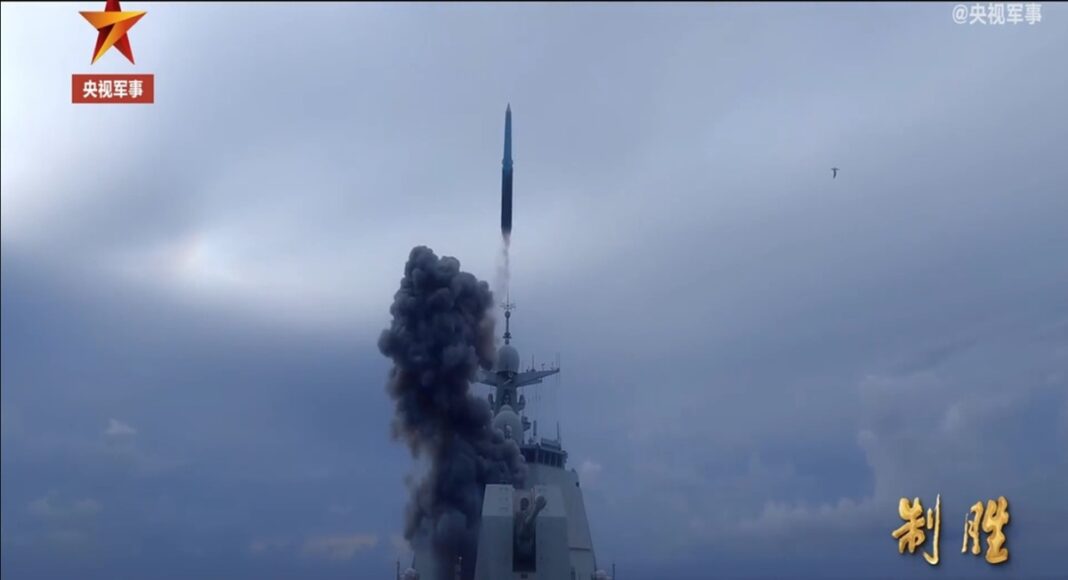
China has provided the clearest indication yet that its YJ-20 hypersonic anti-ship missile may be expanding beyond the PLA Navy’s largest destroyers.
New footage aired by Chinese state broadcaster CCTV shows a Type 052D guided-missile destroyer launching what Chinese media identified as the YJ-20, marking the first publicly released video of the missile being fired from this class of warship. If the integration is confirmed across the fleet, it would significantly increase the number of Chinese naval vessels capable of launching long-range hypersonic anti-ship strikes.
The footage appeared in a trailer for the six-part documentary “Zhìshèng” (Achieve Victory), produced ahead of the 99th anniversary of the People’s Liberation Army (PLA) on August 1.
Why the Type 052D Integration Matters
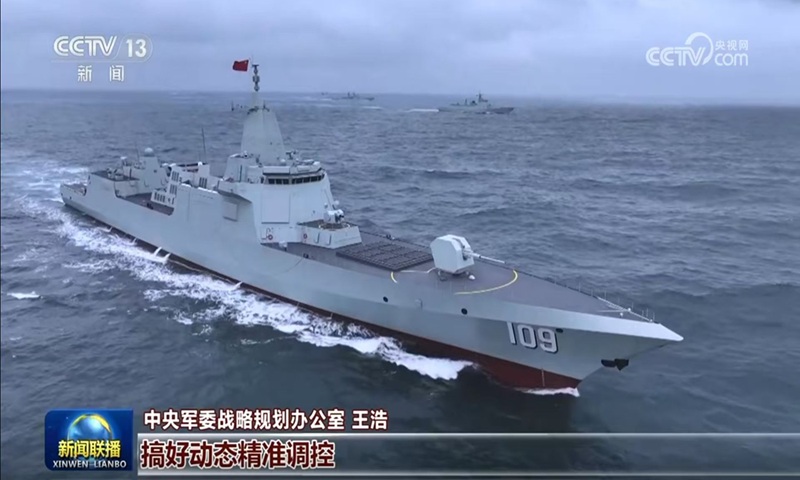
Until now, official Chinese footage had only shown the YJ-20 being launched from the larger Type 055 Renhai-class destroyer, following a reported finalization test conducted aboard the destroyer Wuxi in late 2025.
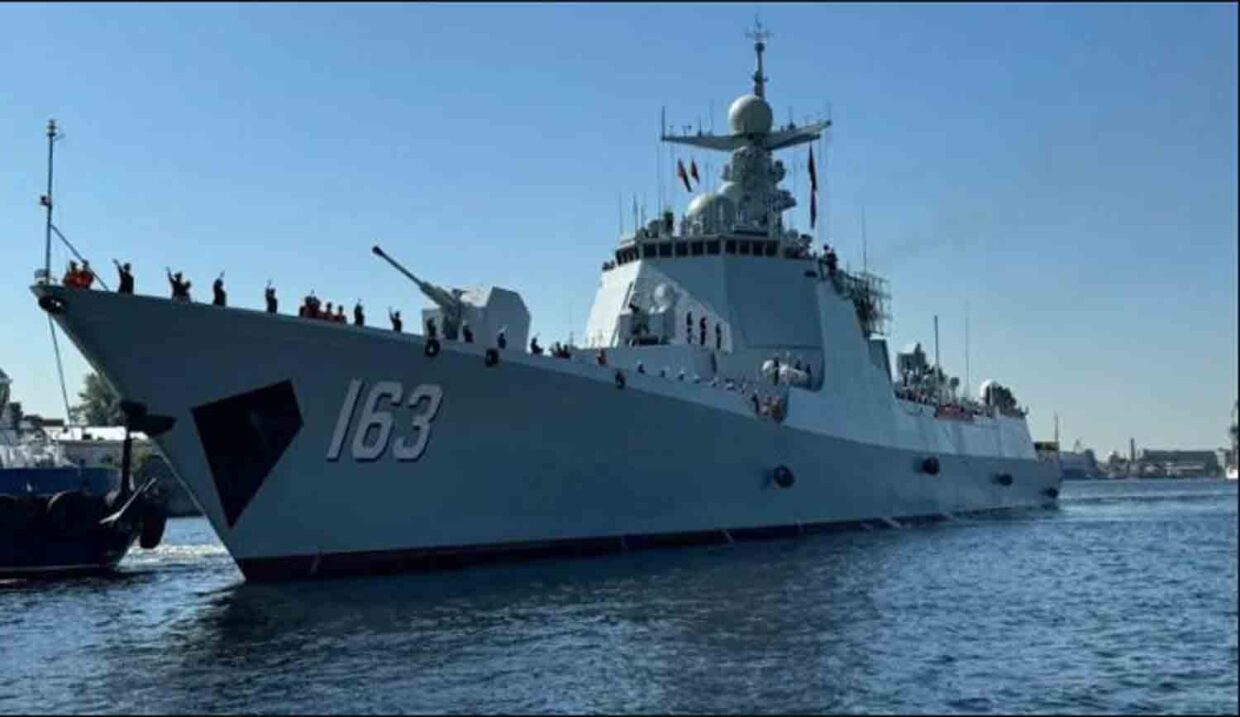
The latest video suggests the missile is now compatible with the Type 052D, a much more numerous class of destroyers that forms the backbone of the PLA Navy’s surface fleet.
This distinction is strategically important.
China currently operates:
- Around 10 Type 055 destroyers
- Approximately 35 Type 052D destroyers, with additional ships still under construction
If the YJ-20 is fielded across the Type 052D fleet, the PLA Navy would dramatically increase the number of platforms capable of conducting hypersonic anti-ship missions, enhancing operational flexibility across the Western Pacific and beyond.
What Is the YJ-20 Hypersonic Missile?

The YJ-20 was officially unveiled during China’s 2025 Victory Day military parade, where it appeared alongside several other next-generation anti-ship missile systems.
Although Beijing has released only limited official specifications, Chinese military commentators describe the weapon as a hypersonic anti-ship missile capable of flying at speeds exceeding Mach 5.
Open-source assessments suggest the missile may employ either:
- a boost-glide vehicle, or
- an aero-ballistic flight profile
Both concepts are designed to combine extreme speed with terminal maneuverability, making interception significantly more difficult than traditional cruise missiles.
Cold Launch System Offers Operational Flexibility
The newly released footage also reveals that the missile is fired using a cold-launch system.
Under this method, compressed gas ejects the missile from the ship’s vertical launch system (VLS) before the rocket motor ignites.
Cold-launch technology reduces stress on launch cells, improves safety aboard the vessel and allows different missile types to share standardized launch systems.
This approach reflects China’s continued emphasis on modular naval weapon integration.
Hypersonic Speed Complicates Naval Defence
According to Chinese military analysts quoted by state media, the YJ-20 uses a maneuverable glide vehicle capable of changing direction during the terminal phase of flight.
Unlike conventional ballistic missiles that generally follow predictable trajectories, maneuvering hypersonic weapons can alter altitude and direction while approaching their target.
If these claims accurately reflect the missile’s operational capability, defending against such weapons becomes considerably more challenging because they compress warning times and reduce opportunities for interception.
Independent verification of the missile’s full performance characteristics, however, remains limited.
Estimated Performance Remains Based on Open Sources
While China has not officially released detailed technical specifications, multiple defence analyses estimate that the missile could possess:
- Speeds exceeding Mach 6
- Terminal attack speeds approaching Mach 9
- A range greater than 1,000 kilometres (620 miles)
Analysts also believe the missile may combine:
- satellite navigation,
- mid-course guidance updates,
- and active radar or infrared seekers during its terminal attack.
These assessments remain based primarily on open-source analysis rather than official technical documentation.
Strengthening China’s Anti-Access Strategy
Perhaps the most significant implication of the new footage is what it suggests about China’s evolving Anti-Access/Area Denial (A2/AD) strategy.
Rather than concentrating advanced hypersonic weapons aboard a limited number of flagship destroyers, Beijing appears to be distributing the capability across a much larger portion of its surface fleet.
Such an approach would complicate operational planning for any adversary by increasing the number of warships capable of launching long-range precision strikes against high-value naval targets.
For regional navies, including those operating in the Western Pacific, a broader deployment of hypersonic anti-ship missiles could further increase the importance of integrated air and missile defence, electronic warfare, and long-range maritime surveillance.
Standardized Vertical Launch Systems Increase Flexibility
Both the Type 055 and Type 052D destroyers are equipped with standardized vertical launch systems capable of carrying multiple categories of weapons.
Traditionally, Type 052D launch cells have accommodated:
- HHQ-9 long-range surface-to-air missiles
- YJ-18 anti-ship cruise missiles
- CJ-10 land-attack cruise missiles
- CY-5 anti-submarine rockets
Whether every launch cell aboard the Type 052D can accommodate the larger YJ-20 missile remains unclear, and Chinese authorities have not released technical details confirming the missile’s full operational integration across the class.
Comparison with the Type 055 Destroyer
The apparent integration of the YJ-20 with the Type 052D is arguably more significant than its earlier deployment on the larger Type 055 Renhai-class destroyer.
The Type 055 is China’s most capable surface combatant, equipped with 112 vertical launch system (VLS) cells and designed for long-range air defence, anti-submarine warfare, and precision strike missions. However, only about 10 Type 055 destroyers are currently in operational service.
By contrast, the PLA Navy has already commissioned around 35 Type 052D destroyers, with additional vessels continuing to enter service. Expanding the YJ-20 to this larger fleet would dramatically increase the number of Chinese warships capable of launching hypersonic anti-ship attacks without relying solely on the smaller Type 055 force.
Implications for U.S. and Allied Navies
If deployed operationally across the Type 052D fleet, the YJ-20 would strengthen China’s ability to threaten high-value naval targets at extended ranges.
Potential targets could include:
- Aircraft carriers
- Amphibious assault ships
- Guided missile cruisers
- Large destroyers
- Logistics and support vessels
Military planners generally view hypersonic anti-ship weapons as particularly challenging because they combine:
- Very high speed
- Long engagement range
- Terminal maneuverability
- Reduced warning time
These characteristics can compress an opponent’s decision-making cycle and complicate interception efforts, especially during high-intensity naval operations.
For the United States and its regional allies, a larger number of PLAN destroyers carrying hypersonic missiles would require greater emphasis on integrated air and missile defence, distributed naval operations, electronic warfare, and persistent maritime surveillance.
A Key Element of China’s A2/AD Strategy
The YJ-20 appears to fit within China’s broader Anti-Access/Area Denial (A2/AD) strategy, which seeks to discourage or complicate the deployment of opposing naval forces into contested areas.
Rather than relying on a single weapon system, China’s layered A2/AD approach combines:
- Long-range anti-ship missiles
- Ballistic missile systems
- Submarines
- Carrier aviation
- Integrated air defence
- Space-based surveillance
- Maritime reconnaissance assets
If hypersonic missiles become standard equipment aboard both Type 055 and Type 052D destroyers, Beijing would possess a much larger number of launch platforms capable of operating throughout the First Island Chain and increasingly into the broader Western Pacific.
Has the YJ-20 Entered Full Operational Service?
Despite the latest footage, several important questions remain unanswered.
China has not officially confirmed:
- Full operational deployment across the Type 052D fleet
- Production numbers
- Operational range
- Missile inventory
- Deployment timelines
It is also unclear whether the launch shown by state media represented:
- a routine operational firing,
- a qualification test,
- or part of an ongoing evaluation programme.
While official videos, military parade appearances, and launches from both the Type 055 and Type 052D indicate that the programme has progressed significantly, independent confirmation of large-scale operational deployment remains limited.
Pentagon Continues to Monitor China’s Hypersonic Expansion

China’s expanding hypersonic missile programme has attracted increasing attention from defence planners worldwide.
The U.S. Department of Defense’s 2025 report to Congress assessed that China possesses one of the world’s largest hypersonic missile arsenals and continues to invest heavily in both conventional and nuclear-capable hypersonic technologies.
The apparent expansion of the YJ-20 to additional destroyer classes aligns with broader assessments that Beijing is prioritizing long-range precision strike capabilities alongside rapid naval modernization.
PLA Navy Modernization Extends Beyond a Single Missile
The YJ-20 is only one component of China’s broader naval modernization effort.
Recent milestones highlighted by Chinese authorities include:
- The commissioning of the Fujian aircraft carrier
- Sea trials of the Type 076 amphibious assault ship
- Continued production of Type 055 and Type 052D destroyers
- Expansion of submarine construction programmes
- Greater emphasis on integrated, network-centric warfare
Together, these developments reflect Beijing’s long-term objective of building a modern navy capable of operating well beyond China’s immediate coastline.
Strategic Assessment
The latest footage showing a Type 052D destroyer launching the YJ-20 hypersonic anti-ship missile marks another notable step in China’s naval modernization, though several aspects of the programme remain unverified.
If the missile is fielded across the Type 052D fleet, the PLA Navy would significantly expand the number of warships capable of conducting long-range hypersonic strikes, reinforcing China’s evolving anti-access/area-denial strategy in the Indo-Pacific.
At the same time, key questions remain regarding production scale, deployment status, missile inventory, and operational performance under combat conditions. Until those details are independently verified, assessments of the YJ-20’s full military impact should be treated with appropriate caution.
What is clear, however, is that China’s continued investment in advanced naval platforms and hypersonic weapons is reshaping the strategic environment in the Western Pacific. As regional navies respond with new missile defence systems, distributed operations, and enhanced maritime surveillance, competition in the Indo-Pacific is likely to become increasingly defined by long-range precision strike capabilities rather than fleet size alone.
Frequently Asked Questions (FAQ)
What is the YJ-20 missile?
The YJ-20 is a Chinese hypersonic anti-ship missile that reportedly uses either a boost-glide or aero-ballistic flight profile to strike high-value naval targets at very high speeds.
Which Chinese warships can carry the YJ-20?
Official footage has shown launches from both the Type 055 and Type 052D destroyers. However, China has not confirmed whether the missile has entered full operational service across the entire Type 052D fleet.
Why is the Type 052D launch significant?
The PLA Navy operates far more Type 052D destroyers than Type 055s. Integrating the YJ-20 with this class would substantially increase the number of Chinese warships capable of launching hypersonic anti-ship strikes.
Has China confirmed the missile’s full specifications?
No. Most publicly available estimates regarding the YJ-20’s speed, range, and guidance system are based on open-source analysis and expert assessments rather than official technical data.