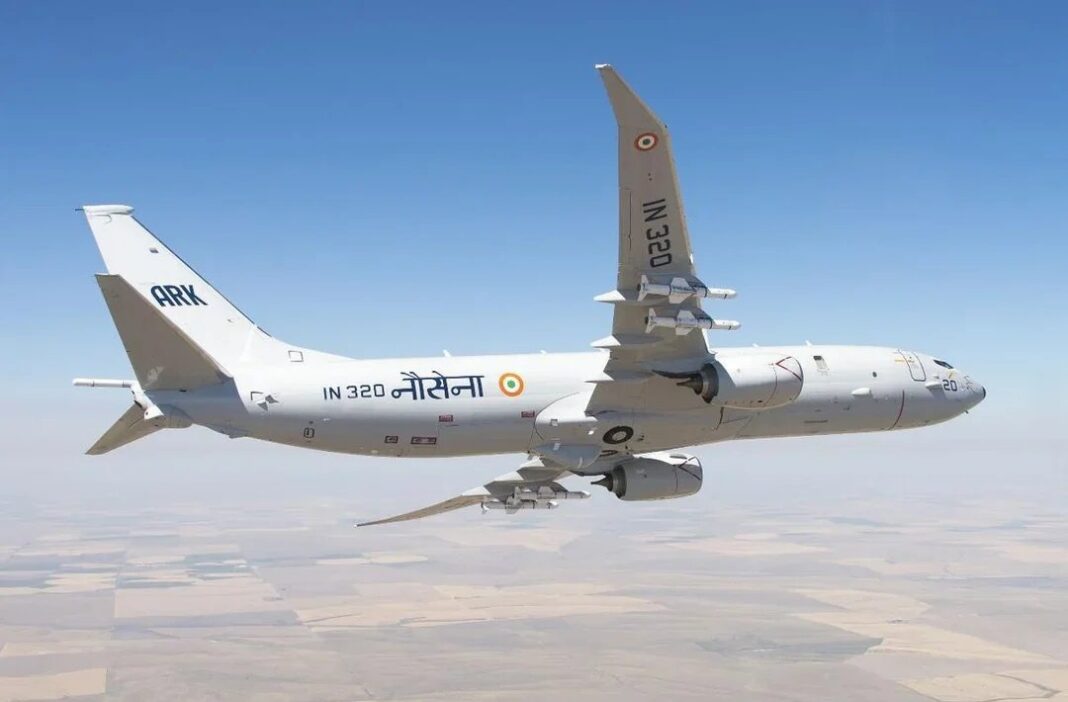
Repeated patrols by the P-8I Neptune near Pakistan’s coastline are increasingly highlighting a quieter but strategically consequential rivalry unfolding beneath the waters of the Arabian Sea.
Open-source flight tracking data shows sustained operations by Indian Navy maritime reconnaissance aircraft near Pakistan’s southern maritime approaches, suggesting New Delhi is intensifying efforts to monitor an undersea environment that could become decisive during any future India– Pakistan crisis.
Interestingly Indian airforce reconnaissance and maritime patrol P-8I Neptunes have been flying around the Pakistani coast for the last couple days likely submarine hunting and a show of force.
— WarMonitor🇺🇦🇬🇧 (@WarMonitor3) May 29, 2026
Far from routine surveillance, analysts say the patrols reflect a broader competition centered on:
Submarine detection, undersea intelligence and maritime deterrence.
Why India’s P-8I Flights Matter
The P-8I Neptune is India’s most advanced maritime reconnaissance and:
Anti-submarine warfare (ASW)
platform.
Derived from the:
Boeing P-8 Poseidon,
the aircraft combines:
✔ Long-range surveillance
✔ Submarine detection
✔ Maritime strike capability
✔ Real-time intelligence sharing.
According to open-source tracking data, one aircraft identified as IN329 operating under callsign FD29F, conducted extended patrols roughly 180–190 kilometers south of Karachi in recent days.
Flying around:
- 20,000 feet altitude
- 280 knots
the aircraft reportedly remained outside Pakistani sovereign airspace while preserving optimal surveillance geometry for monitoring naval activity near Karachi, Pakistan’s principal naval logistics hub.
The Real Objective: Underwater Situational Awareness
The patrol patterns strongly resemble classic:
Anti-submarine warfare surveillance profiles.
Such missions typically involve:
- Sonobuoy deployment
- Acoustic intelligence gathering
- Radar surveillance
- Electronic signal monitoring.
The objective is not merely to observe ships.
It is to:
Map the underwater battlespace.
Modern submarine warfare increasingly depends on:
Acoustic intelligence libraries
that catalog the unique underwater signatures of rival submarines long before conflict begins.
For Indian planners, collecting these signatures early may prove decisive in future crisis scenarios.
Pakistan’s Hangor-Class Submarines Are Changing the Equation
The timing of India’s surveillance push is particularly significant.
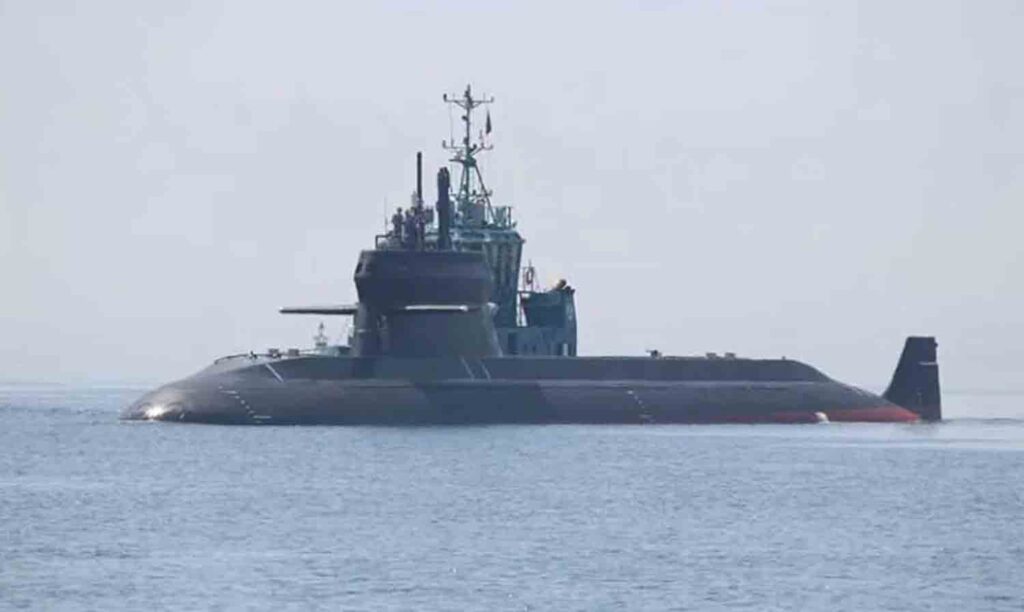
Pakistan is currently inducting:
Hangor-class submarine
boats derived from China’s Type 039A submarine design.
These quieter, more survivable submarines are expected to significantly improve Pakistan’s underwater warfare capability.
Modern submarines can:
✔ Threaten naval formations
✔ Target commercial shipping
✔ Strike strategic infrastructure
✔ Operate covertly for extended periods.
That poses new complications for India’s long-standing maritime superiority ambitions along its western seaboard.
For New Delhi, the challenge is not merely tracking submarines — but understanding how they sound underwater before crisis conditions emerge.
P-8I: Surveillance Aircraft or Strategic Signal?
India’s patrols also carry an important signaling dimension.
Because the aircraft remained visible through:
Open-source flight tracking networks
thousands of observers were able to monitor the missions in near real time.
That visibility itself carries strategic value.
Without issuing any formal statement, India effectively demonstrated:
Persistent maritime awareness near Pakistan’s most sensitive naval gateway.
The patrols therefore function not only as intelligence operations — but also as:
Deterrence signaling.
The message is straightforward:
Critical maritime approaches remain under observation.
What Makes India’s P-8I So Important?
Key Capabilities of the P-8I:
✔ 10+ hour endurance missions
✔ Sonobuoy acoustic detection systems
✔ Advanced maritime radar
✔ Electro-optical / infrared sensors
✔ Magnetic anomaly detection (MAD)
✔ MK-54 lightweight torpedoes
✔ Harpoon anti-ship missiles
✔ Real-time ISR networking
The aircraft can rapidly shift from Surveillance platform to Strike platform if required.
The Arabian Sea Is Becoming an Undersea Strategic Theater
What is unfolding increasingly reflects a broader transformation in South Asia military competition.
The contest is no longer centered solely on:
- Fighter aircraft
- Missile inventories
- Conventional troop deployments.
Instead,
Underwater dominance is becoming central to deterrence credibility.
The Arabian Sea connects:
- Energy routes
- Commercial shipping corridors
- Strategic naval logistics.
Control over maritime information inside this space could shape future conflicts long before missiles are fired.
China Is Quietly Part of the Equation
The rivalry extends beyond India and Pakistan.
Growing:
China
naval activity across the:
Indian Ocean
is steadily reshaping Indian maritime planning.
Chinese submarines increasingly operate in waters surrounding South Asia,
forcing India to expand surveillance beyond traditional Pakistan-focused calculations.
That makes aircraft like the P-8I Neptune central not just to bilateral competition — but to India’s wider Indo-Pacific strategy.
Post-Operation Sindoor Environment Raises Stakes
The latest activity comes less than a year after Operation Sindoor, which heightened military tensions between the two nuclear-armed rivals.
That crisis reinforced the value of:
Intelligence, surveillance and reconnaissance (ISR)
as a foundational component of modern military competition.
Publicly visible patrols now carry added importance.
They signal readiness, endurance and operational persistence — without crossing escalation thresholds.
Pakistan has not publicly protested the recent flights, though analysts note any high-value ISR aircraft operating near critical maritime infrastructure would almost certainly be monitored closely by Pakistani defense systems.
The Bigger Strategic Picture
The repeated P-8I patrols underscore a defining characteristic of modern military competition:
Persistent surveillance is increasingly becoming power projection.
In the twenty-first century,
the ability to:
✔ Observe continuously
✔ Reduce uncertainty
✔ Track adversary movement
✔ Shape decision-making
can become as strategically valuable as kinetic military power.
For India, these patrols help preserve:
Freedom of action in the Arabian Sea.
For Pakistan, they underscore the urgency of strengthening:
Submarine survivability and counter-surveillance capabilities.
And for the broader region, they highlight how strategic competition is increasingly occurring:
Before conflict begins — and often without a single shot fired.
Conclusion: The Next India-Pakistan Rivalry May Begin Underwater
India’s repeated P-8I Neptune missions near Pakistan’s coastline are about far more than surveillance.
They represent:
Preparation of the future battlespace.
As Pakistan introduces quieter submarines and China expands its Indian Ocean presence, underwater intelligence is becoming central to regional deterrence.
The battle for strategic advantage in South Asia may increasingly depend not on who fires first — but on: