Last-minute negotiations between Washington and Ottawa have collapsed, triggering a fresh round of tariffs and retaliation. The immediate dispute covers about $20 billion in Canadian exports, but the bigger question is whether Donald Trump’s trade strategy is beginning to undermine the economic integration that has defined North America for decades.
The United States and Canada have failed to reach a last-minute trade agreement, sending the two countries back into an escalating trade confrontation just as negotiators appeared to be close to a deal.
U.S. President Donald Trump had delayed the latest tariff deadline by three days after both sides signalled that progress had been made. But negotiations broke down late Friday, and the United States subsequently imposed 50% tariffs on roughly $20 billion worth of Canadian goods.
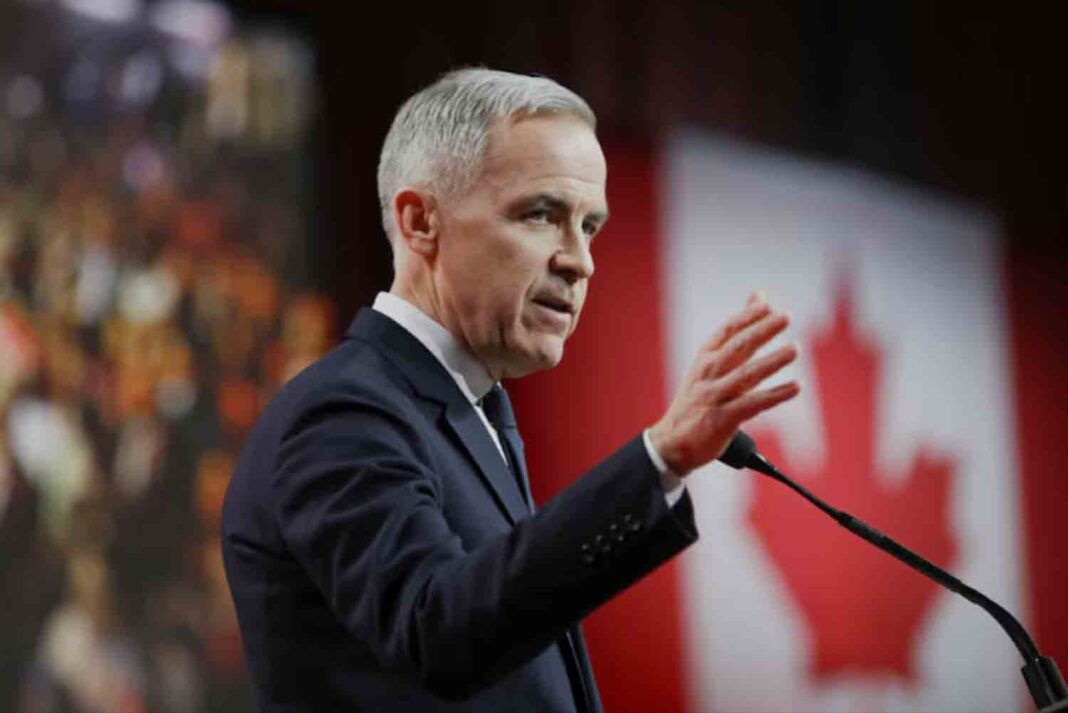
Canadian Prime Minister Mark Carney responded by suspending negotiations and ordering Canada’s negotiators back to Ottawa.
Canada will impose its own dollar-for-dollar retaliatory tariffs from September 8, targeting a range of U.S. products including steel, dairy, agricultural equipment, appliances and electronics.
The immediate tariff battle is relatively limited compared with the enormous scale of bilateral trade.
But the implications are much broader.
The confrontation now raises fundamental questions about the future of USMCA, North American supply chains, Canadian economic diversification and Trump’s use of tariffs as a long-term instrument of economic and foreign policy.
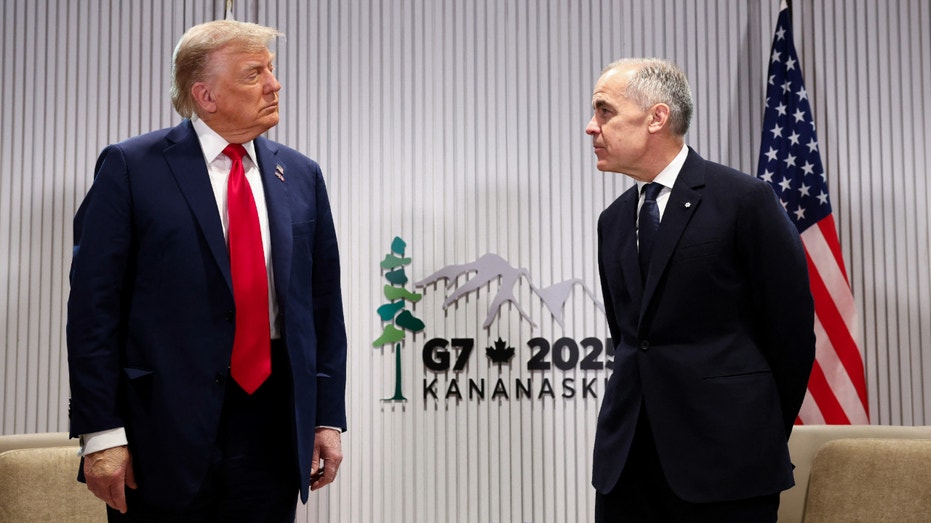
How the US-Canada Trade Talks Collapsed
The breakdown came after several days of increasingly optimistic signals from Washington and Ottawa.
Trump had postponed the tariff deadline to give negotiators additional time.
Earlier in the week, he said the two sides had effectively reached a deal, although he acknowledged that the agreement still required final documentation.
Carney’s government also indicated that significant progress had been made.
But the final stage proved impossible.
Carney said Washington introduced last-minute changes that Canada considered unfair and economically damaging.
He particularly objected to U.S. efforts to restrict Canada’s ability to establish trade agreements with other countries.
The Canadian prime minister argued that Washington’s final demands offered too little in return for the concessions being sought.
U.S. Trade Representative Jamieson Greer gave the opposite account, saying Canada had declined to finalise terms that Washington believed had already been agreed.
The result is a familiar problem in Trump-era trade negotiations: both sides now claim the other walked away from the deal.
What Are Trump’s New Canada Tariffs?
The new U.S. tariffs took effect Saturday and cover approximately $20 billion in Canadian exports.
That represents only about 5% of Canada’s exports to the United States, meaning the immediate tariff package is much narrower than a blanket tariff on Canadian trade.
The affected products include a wide range of consumer and industrial goods, including:
- alcoholic beverages;
- dairy products;
- furniture;
- appliances;
- electronics;
- agricultural machinery;
- paper and pulp;
- hockey equipment; and
- other manufactured products.
The United States has so far protected some strategically important Canadian imports, particularly energy, critical minerals and fish.
That distinction is important because the United States remains heavily integrated with Canada in energy, mining and manufacturing.
Canada Announces Dollar-for-Dollar Retaliation
Carney has rejected the idea that Canada should simply absorb the new U.S. tariffs.
Ottawa will impose matching tariffs beginning September 8.
The Canadian response will cover U.S. products in sectors including steel, dairy, agricultural machinery, appliances, electronics and other goods. (Reuters)
Carney has also promised additional assistance for Canadian workers and businesses affected by the dispute.
The message from Ottawa is increasingly clear:
Canada is willing to negotiate, but not at any price.
That represents an important political shift in the relationship.
Why the $20 Billion Figure Is Misleading
The headline number—$20 billion—is relatively small compared with total U.S.-Canada commerce.
The two economies are among the most deeply integrated in the world.
Energy crosses the border.
Automotive components cross the border multiple times.
Agricultural products move in both directions.
Manufacturers rely on suppliers located on the other side of the border.
As a result, the biggest economic consequence of the latest tariffs may not come from the products directly affected.
It could come from uncertainty about what happens next.
Businesses need predictable rules.
If companies cannot determine whether a product will face 10%, 25% or 50% tariffs six months from now, they cannot confidently plan investment, production or sourcing.
That uncertainty can become an economic cost in its own right.
The Real Target: North America’s Integrated Supply Chain
The United States and Canada did not build their economic relationship around simple imports and exports.
They built an integrated production system.
The automobile industry is perhaps the clearest example.
A component can cross the border several times before becoming part of a finished vehicle.
The same applies to machinery, metals, electronics, energy infrastructure and agricultural processing.
Tariffs disrupt that model.
A tariff on a Canadian component does not necessarily hurt only the Canadian producer.
It can also increase costs for the American factory that needs that component.
This is why trade wars between neighbouring economies can produce unexpected consequences.
The exporter and importer are often parts of the same industrial system.
USMCA Is Now Under Greater Pressure
The latest breakdown also raises the biggest question of all:
What happens to the United States-Mexico-Canada Agreement?
USMCA was designed to provide predictable rules for North American trade.
But repeated tariff disputes are weakening that certainty.
Even when individual products remain covered by preferential trade arrangements, companies now have to consider whether those protections will remain intact.
The uncertainty is particularly serious for industries that require long-term investment.
A company building a factory expects the rules governing its supply chain to remain relatively stable for years.
If tariff policy can change rapidly through executive action, businesses may begin reconsidering where they invest.
That could gradually alter the geography of North American manufacturing.
Trump’s Tariff Strategy Is About More Than Trade
Trump does not view tariffs merely as taxes on imports.
He has increasingly used them as instruments of economic leverage.
The logic is straightforward:
Washington has the world’s largest consumer market.
Foreign companies depend on access to that market.
Therefore, tariffs can be used to pressure trading partners into changing policies that Washington considers unfair.
Canada, however, presents a special challenge.
It is not a distant trading partner that can easily be replaced.
It is a neighbour whose economy is deeply connected to the United States.
That creates mutual dependence.
Section 338 Gives Trump Another Tariff Tool
One of the most important developments in the latest dispute is the legal mechanism behind the new tariffs.
The Trump administration has invoked Section 338 of the Tariff Act of 1930 to impose the latest 50% duties.
U.S. Trade Representative Jamieson Greer said in July that Trump was using Section 338 to impose tariffs on nearly $20 billion of Canadian imports in response to what Washington described as discriminatory Canadian measures affecting U.S. motor vehicles, alcoholic beverages and dairy products.
The significance goes beyond Canada.
Section 338 provides the administration with another potential mechanism for imposing tariffs when it determines that a foreign country is discriminating against U.S. commerce.
That makes the current dispute a test case for a potentially broader Trump trade strategy.
Why Canada Is Refusing to Give Up Critical Minerals
One of the most strategically important elements of Carney’s response concerns critical minerals.
Canada possesses significant mineral resources that are important to modern industries, including:
- batteries;
- electric vehicles;
- aerospace;
- electronics;
- defence;
- renewable energy; and
- advanced manufacturing.
The United States wants reliable access to such resources as Washington attempts to reduce dependence on China.
Canada therefore possesses something the United States increasingly needs.
This creates an unusual form of leverage.
Washington has the larger market.
Canada has strategically important resources and supply chains.
Neither country can easily disengage from the other.
Energy Is the Biggest Constraint on Trump
The most important exception to the current tariff regime is energy.
Canada is a critical supplier of oil, natural gas and electricity to the United States.
A broad tariff on Canadian energy could raise costs for American refineries, manufacturers and consumers.
That is especially sensitive when American households are already dealing with elevated fuel prices.
This explains why Washington has so far avoided treating all Canadian exports equally.
There is a practical limit to economic pressure when the targeted country supplies goods that the imposing country itself urgently needs.
Canada Has Its Own Leverage
Canada is economically more dependent on the United States than Washington is on Canada in aggregate.
But that does not mean Ottawa has no leverage.
Canada can influence:
- energy supplies;
- critical minerals;
- electricity;
- agricultural products;
- metals;
- industrial inputs; and
- access to its enormous natural-resource base.
Canada can also retaliate politically and economically.
And, perhaps most importantly, it can begin diversifying its trade.
That may be Trump’s biggest long-term problem.
Trump May Be Accelerating Canadian Economic Diversification
For decades, Canada’s dependence on the United States was regarded primarily as an economic advantage.
The American market was enormous, nearby and relatively predictable.
The latest tariff dispute is changing that calculation.
Ottawa is increasingly talking about:
economic sovereignty, trade diversification and strategic resilience.
Canada cannot replace the U.S. market.
But it can reduce its dependence on it.
That means pursuing stronger commercial relationships with Europe, Asia-Pacific countries, India and other markets.
If successful, the strategy would not end Canada-U.S. trade.
It would simply make Canada less vulnerable to U.S. tariff pressure.
Could China Benefit?
There is an important geopolitical paradox here.
Washington is attempting to strengthen American supply chains and reduce dependence on China.
But if U.S. pressure pushes Canada to diversify its trade, China and other Asian economies could eventually gain opportunities.
That does not mean Canada is preparing to align strategically with Beijing.
Canada has its own serious concerns about China’s economic and security policies.
But trade relationships create their own momentum.
If Canadian companies need alternative markets, Asian economies will naturally become more attractive.
The Automotive Industry Faces the Greatest Risk
The automotive sector is particularly vulnerable because it is built around cross-border integration.
American and Canadian factories depend on each other’s components.
A tariff can therefore increase production costs on both sides.
The U.S. administration had reportedly been considering reducing Canada’s existing automotive tariff burden as part of a potential deal.
But the failure of the negotiations means uncertainty remains.
That could encourage manufacturers to rethink their production strategies.
The danger is not merely higher prices.
It is long-term investment relocation.
Once a company builds a new factory somewhere else, that decision can last for decades.
Steel and Aluminum Show the Same Problem
Steel and aluminum are another major flashpoint.
Trump has already imposed high tariffs on Canadian metals.
But steel and aluminum are inputs into American manufacturing.
They are used in:
- automobiles;
- aircraft;
- machinery;
- construction;
- appliances;
- defence equipment; and
- infrastructure.
Protecting American steel producers can therefore benefit one part of the economy while increasing costs for another.
That is one of the central dilemmas of protectionism.
Who Actually Pays Trump’s Tariffs?
Tariffs are frequently described politically as payments made by foreign countries.
Economically, the picture is more complicated.
The U.S. importer generally pays the tariff to the U.S. government.
The importer can then attempt to pass that additional cost through the supply chain.
The final burden can therefore fall on a combination of:
- American importers;
- Canadian exporters;
- wholesalers;
- retailers; and
- consumers.
How the cost is divided depends on competition and market conditions.
This means a tariff imposed on Canadian products can ultimately affect American prices.
The Political Dimension Is Becoming More Important
The trade dispute is no longer simply an economic argument.
It is becoming a question of national identity and sovereignty in Canada.
Carney’s rhetoric reflects this transformation.
Instead of arguing only about tariff rates, Ottawa is increasingly framing the dispute around Canada’s ability to determine its own economic future.
That resonates with a Canadian public that has become increasingly sensitive to Washington’s pressure.
For Carney, accepting a deal that appears to surrender Canadian economic policy to Washington could carry a political price.
Trump Faces His Own Political Risk
The U.S. president also faces a difficult calculation.
Tariffs can appeal to voters who want stronger protection for American industries.
But prolonged trade conflict can produce:
- higher consumer prices;
- supply shortages;
- higher manufacturing costs;
- retaliatory tariffs against American exporters;
- uncertainty for businesses; and
- pressure on inflation.
American farmers are particularly vulnerable to retaliation.
So are manufacturers that depend on Canadian inputs.
The political benefits of tariffs therefore depend on whether voters see the promised industrial gains before they feel the higher costs.
The Biggest Threat Is Supply-Chain Fragmentation
The immediate tariff numbers can be measured.
The long-term consequences are harder to quantify.
Consider a company planning a new manufacturing plant.
It now has to ask:
- Will tariffs still exist in five years?
- Will USMCA remain reliable?
- Could another tariff be announced?
- Will Canada retaliate?
- Should suppliers be moved into the United States?
- Should the company diversify outside North America?
Those questions can change investment decisions.
And once companies begin redesigning supply chains, the consequences can outlast the political dispute that caused them.
The North American Economic Model Is Being Tested
For decades, the United States, Canada and Mexico built an increasingly integrated economic region.
The result was a huge continental market with relatively efficient movement of:
- goods;
- capital;
- energy;
- components;
- agricultural products; and
- industrial inputs.
That integration gave North America an important advantage over competitors.
The current trade war puts that model under pressure.
If tariffs become a permanent feature of North American commerce, companies may begin treating the U.S.-Canada border as an economic barrier rather than a supply-chain bridge.
That would represent a fundamental change.
Canada Is Not Simply Going to Walk Away From the United States
There is an important reality check.
Canada cannot replace the United States as its primary trading partner overnight.
Geography makes the relationship too valuable.
The American market is enormous.
Transportation costs favour North American trade.
Canadian industries are deeply integrated with U.S. companies.
Therefore, even if Ottawa accelerates diversification, the United States will remain Canada’s most important economic partner for the foreseeable future.
The likely outcome is not decoupling.
It is diversification.
Canada wants more options without abandoning the American market.
Three Possible Futures for the Trade War
1. Negotiations Resume
Economic pressure could eventually force both governments back to the negotiating table.
Washington wants concessions.
Ottawa wants tariff relief and predictable rules.
A compromise remains possible.
The latest collapse does not necessarily mean negotiations are permanently over.
2. A Managed Trade War
The two countries could maintain selected tariffs while negotiating sector-by-sector agreements.
This would create a more complicated trading relationship but could prevent a total breakdown.
3. Long-Term Economic Fragmentation
The most damaging scenario would be prolonged uncertainty that encourages companies to permanently redesign their supply chains.
Canada would accelerate diversification.
American companies would increase domestic sourcing.
Cross-border investment would weaken.
North American economic integration would gradually become less efficient.
That would be the most consequential outcome.
What Does This Mean for Mexico?
Mexico cannot ignore the dispute.
The three countries form a single North American production ecosystem under USMCA.
If U.S.-Canada trade relations deteriorate, companies operating across the continent will reassess their supply chains.
Some production could move from Canada to the United States.
Some could move to Mexico.
Others could leave North America entirely.
Mexico therefore has both an opportunity and a risk.
It could attract investment from companies seeking tariff-free or lower-tariff access to the U.S. market.
But if Washington moves toward a much more protectionist North American policy, Mexico could also face greater pressure in its own trade relationship with the United States.
The China Factor Makes North American Unity More Important
The dispute is occurring at a particularly sensitive time in global economic competition.
The United States is attempting to compete with China in:
- manufacturing;
- semiconductors;
- electric vehicles;
- batteries;
- critical minerals;
- artificial intelligence; and
- defence production.
Canada and Mexico are natural partners in that effort because of their geography and resource base.
A fragmented North American market could therefore weaken the very economic bloc Washington needs to strengthen its position against China.
This is the strategic contradiction at the heart of the current trade war.
What Happens to USMCA?
The future of USMCA is now one of the most important questions.
The agreement was intended to provide certainty.
But if tariffs can be imposed outside its framework, companies may question how much protection the agreement actually provides.
That does not necessarily mean USMCA will collapse.
It does mean that its credibility is under pressure.
The upcoming review and renegotiation process will therefore be crucial.
The outcome could determine whether North America moves toward:
deeper economic integration
or
managed economic competition between its three largest economies.
The Bigger Lesson From the Trump-Carney Dispute
The latest confrontation demonstrates the limits of using economic power against a highly integrated ally.
The United States has enormous leverage because Canada depends heavily on American consumers.
But Canada also controls resources and supply chains that Washington needs.
That means neither side can impose unlimited costs without eventually paying part of the price itself.
The trade war therefore becomes a contest not simply of economic strength but of economic interdependence.
And interdependence makes coercion complicated.
What It Means for the Global Economy
The implications extend beyond North America.
The U.S.-Canada dispute sends a message to America’s other trading partners:
access to the U.S. market may increasingly depend on political negotiations rather than simply on trade agreements.
That could encourage countries to diversify their markets.
It could accelerate regional trade blocs.
It could also encourage governments to build domestic production capacity for strategic goods.
In other words, Trump’s tariff policy may contribute to a broader shift away from the highly integrated global trading system of the previous decades.
The Bottom Line
The collapse of US-Canada trade talks is much bigger than the immediate $20 billion tariff package.
The United States has imposed 50% tariffs on selected Canadian goods, while Canada has announced dollar-for-dollar retaliation beginning September 8. (Reuters)
On their own, those measures are unlikely to destroy either economy.
The real danger is what comes next.
If Washington and Ottawa return to negotiations and restore predictable rules, the latest confrontation may eventually become another chapter in a long-running trade dispute.
But if tariffs become a permanent feature of the relationship, the consequences could be much more profound.
Canadian companies will diversify.
American manufacturers will rethink supply chains.
Mexico will adjust its strategy.
Investors will demand greater protection against political risk.
And the economic architecture built around USMCA could gradually weaken.
That is why the most important question is not:
How much will Trump’s new tariffs cost Canada?
It is:
How much will the United States and Canada be willing to sacrifice from their deeply integrated economic relationship before both sides recognise that the cost of separation is greater than the benefit of confrontation?
For now, the trade war is back.
But the bigger battle is over the future of North America’s economic order.